Global Football Tournament Drives Travel Surge, with Group Stage Booking Growth Nearly Double Knockout Round’s: Trip.com Data
A major football tournament spanning the United States, Canada and Mexico (11 June – 19 July) is set to drive a surge in international travel to North America this summer, with Trip.com booking data revealing year\-on\-year growth of nearly 70% across the 16 host cities.

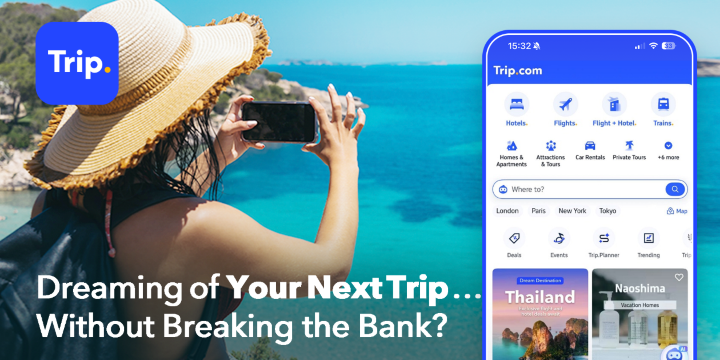
Spend Smarter, Travel Better: Eight Clever Ways to Save with Trip.com
We all love a holiday, but we love a good deal even more. Whether you’re planning a spontaneous summer escape, a long-awaited adventure, or just a quick weekend recharge, savvy travellers are turning to smarter tools to stretch their travel budgets further. Trip.com’s all-in-one app offers features designed to help you spend less and experience more. From flexible flight [https://www.trip.com/flights/] searches to loyalty perks that unlock real-world value. No need to cut back when you can travel smarter. Here are eight Trip.com insider tips to spend smarter and travel better on your next trip. Smarter Flight Choices Start with Flexibility 1. Discover Lower Fares with Flexible Search Tools Travellers willing to be flexible with destinations or travel dates can find lower fares using Trip.com’s discovery-led pages such as “Anywhere”, “Cheap Flights”, and “Best Deals”. Rather than locking into a fixed plan, these features allow users to explore the most cost-effective options available at any given time or season. Start on the homepage and tap ‘Flights’. Just beneath the search bar, you’ll spot an icon labelled ‘Anywhere’. Tap in and explore the best-value destinations waiting for you. 2. Unlock Affordable Business Class Options Premium travel can be accessible to you. By comparing dates, routes, and airline combinations, travellers can uncover cost-effective Business Class fares, sometimes at only a marginal increase over Economy. On the Trip.com platform, head over to the “Business Class Top Picks” section, where you can unearth Business Class flight deals and enjoy priority check-in and boarding. This is particularly valuable for long-haul journeys, where comfort can significantly enhance the overall travel experience. Head into ‘Flights’ from the homepage, then scroll down until you see ‘Business Class Top Picks’. Hit ‘Explore’ to uncover premium seats at smarter prices. 3. Track Prices and Book at the Right Time Timing remains one of the most important factors in securing a good deal. With the price alert functionality, users can monitor routes and receive notifications when fares drop to their preferred price, which they can set in advance. This removes the need for constant manual checking and ensures travellers can act quickly when prices are right for them. Tap into ‘Flights’ from the homepage and look just below the search bar for ‘Price Alert’. Set it up here and track fares without lifting a finger. Maximise Value for Stays 4. Unlock Hotel Discounts After Booking Flights Travellers who book flights through Trip.com can access exclusive hotel discounts [https://www.trip.com/hotels/] of up to 25% when completing their accommodation booking within 90 days. This is through “Flyer Exclusive” discounts, which encourage a more connected booking journey, rewarding users with more loyalty Trip Coins to spend later. Once your flight is booked, you’re in. When browsing hotels, look out for the ‘Flyer Exclusive’ label to unlock special rates just for you. 5. Bundle Flights and Hotels for Greater Savings Packaging flights and hotels together remains one of the simplest ways to reduce overall travel costs. Trip.com’s bundled offerings allow travellers to secure savings across both elements of their trip, combining convenience with cost efficiency. All travellers have to do is navigate to the Flight + Hotel [https://www.trip.com/packages/] module from the homepage, enter their travel search, and the platform will showcase the best deals compared to booking separately. From the homepage, tap ‘Flight + Hotel’ to plan both in one go, and enjoy savings across your trip. Turn Loyalty into Tangible Savings 6. Earn and Spend with Trip Coins Trip Coins form the backbone of Trip.com’s loyalty ecosystem. Travellers earn Coins on bookings across flights, hotels, and more, which can be redeemed like cash on future purchases. Depending on loyalty level, customers can earn 200% more Trip Coins on all bookings. At checkout, don’t forget to apply your Trip Coins, use them like cash and instantly bring down the total. 7. Access VIP Airport Lounges at No Extra Cost For Platinum loyalty members and above, Trip.com offers complimentary access to VIP airport lounges in over 700 airports worldwide, transforming the airport experience from crowded and stressful to calm and comfortable. Platinum tier members and above, who have completed at least 1 hotel stay in the past year and have filled out their member profile, can activate their VIP lounge perk. Airport lounge access is seamlessly integrated into the platform, with a QR code provided for entry. Add a VIP Lounge during checkout, or head to your booking details and select the option marked with the membership reward label to access it. 8. Upgrade Airport Transfers for Free Higher-tier members, such as Diamond users and above, can benefit from complimentary car upgrades at over 700 airports worldwide (T&Cs apply), allowing travellers to elevate their journey on arrival, without additional cost. From the homepage, tap your tier badge in the top right to view your benefits. Head to ‘Airport Transfers’, tap ‘Book’, and enjoy your complimentary upgrade. Shift Towards Smarter Travel With the right tools, saving money on travel doesn’t mean cutting corners; it means travelling smarter. Whether it’s your summer holiday, a festive getaway, or a spontaneous escape, Trip.com helps you unlock more value at every step of your journey. Download Trip.com [http://trip.com/] and start spending smarter and travelling better.
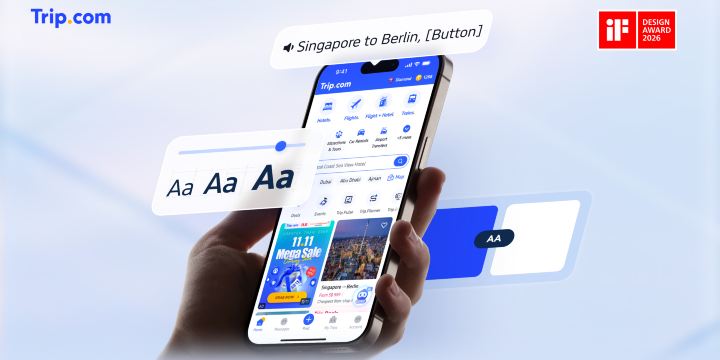
Trip.com Wins the iF DESIGN AWARD 2026 for Outstanding Inclusive Design
Trip.com is proud to announce that its Trip for Everyone project has been awarded the prestigious iF DESIGN AWARD 2026. The iF DESIGN AWARD is recognised as one of the world's most renowned design honours. Run by the independent iF Design Foundation in Germany, the award has served as a global benchmark for outstanding design excellence and impact for over 70 years. The sought-after design accolade was awarded to Trip.com in the Branding & Communication Design discipline as part of iF DESIGN AWARD’s Apps/ Software category, recognising its innovative design and outstanding design feature of Trip for Everyone. With a strategic shift toward Universal Design, Trip.com is providing a digital app solution that enhances the planning and booking experience for travellers with diverse physical and situational needs. From visually impaired travellers to elderly users, Trip.com’s Trip for Everyone allows customers to plan trips and explore the world equally and autonomously. To turn this vision into reality, Trip.com upgraded its visual system with dynamic font scaling and higher colour contrast, optimised the experience for full-screen readers and keyboard navigation, and built AI-powered travel tools, such as an itinerary planner, live guide, and menu translator. Its product has helped over one million users, and 83% of users reported improved clarity. This year’s iF DESIGN AWARD saw over 10,000 submissions from 68 countries. Winning signals Trip.com as an industry leader and Trip for Everyone as among the most outstanding designs in its field – an impressive achievement that underlines the highly competitive nature and significance of winning this award. Further information about the Trip for Everyone can be found on the official ifdesign.com [https://ifdesign.com/en/winner-ranking/winner-overview/?awardId=2&sort=random&yearId=0] website under “Winners & iF Ranking”: Trip.com: Trip for Everyone [Trip.com:%20Trip%20for%20Everyone]
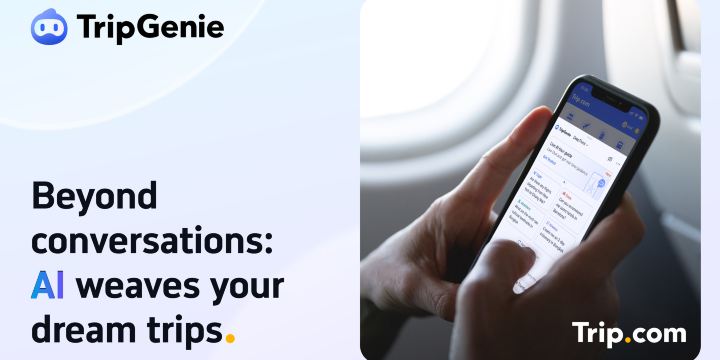
Three Years of TripGenie: How Travellers Around the World are Using AI Differently
TripGenie’s third anniversary milestone: AI-assisted bookings surge 400% year-on-year Use of real-time AI tools such as menu assistant and live translation increase by around 300% year-on-year Regional insights: Asia favours last-minute AI guidance; Europe and North America plan early As AI becomes an everyday part of travel planning, one thing is increasingly clear: while the technology may be global, how travellers use it is anything but uniform. On the cusp of TripGenie's third anniversary, new data from Trip.com’s AI travel assistant reveals that three years of real-world usage have surfaced new patterns in how travellers plan, decide and navigate their journeys. What began as a functional tool has evolved into a trusted end-to-end travel companion, and in doing so, has revealed how culture, geography and travel habits shape the role AI plays across the travel journey. Cultural Differences in AI Use AI usage shows that planning rhythms vary significantly by market, reflecting unique travel behaviours. For instance, travellers from Hong Kong, Singapore, Malaysia, Italy and France use AI the most during their travel experience. Data shows that travellers in highly connected, short-haul travel markets tend to interact with TripGenie more often per trip, relying on it as a real-time decision-making partner. This includes pre-hotel bookings, attraction guides, and in-destination inspiration, reflecting the fast-paced travel styles seen in markets like Hong Kong, Singapore and Malaysia. In contrast, travellers in parts of Europe and North America typically engage AI earlier in the planning cycle. In markets such as Germany and the United Kingdom, planning windows are longer and more deliberate, with travellers consulting TripGenie weeks in advance. Most of these inquiries are for flight and hotel products, helping to reduce risk and provide reassurance before booking. Decision speed also varies sharply. For example, travellers in South Korea and Taiwan often finalise hotel bookings just days before departure, with AI supporting decisions surrounding location and nearby amenities. While a general trend across Asia, Japan is an exception, with travellers typically booking accommodation weeks in advance, reflecting a preference for certainty and early confirmation. Southern European markets such as Italy, France and Spain sit between these two ends of the spectrum, displaying moderately spontaneous booking behaviours. Using AI across the Travel Journey Travellers increasingly use AI across multiple stages of their journey, with TripGenie data showing that users are moving from broad exploratory questions to focused booking and itinerary-related decisions, signalling that AI is becoming an integral part of travel planning. TripGenie AI-assisted order volume on Trip.com increased by around 400% year-on-year, indicating a deeper reliance on AI for inspiration and bookings. Use of core TripGenie tools, such as hotel comparison, menu assistance, and live translation, increased by around 300% year-on-year, signalling that travellers now use AI as a reliable tool across a trip, rather than a one-off search feature. Moreover, pre- and post-sales service inquiries now account for around a quarter of all interactions. Travellers are increasingly comfortable relying on TripGenie to handle nuanced, real-world scenarios, from itinerary changes to in-destination questions. AI: A Trusty Guide for Smart Decisions As travel decisions become more complex, AI helps travellers reduce uncertainty at every step, from exploring options and asking questions to choosing with confidence. Nearly 60% of TripGenie interactions are now booking-related, spanning hotels, flights and attractions. Travellers frequently ask practical questions to seek reassurance: Does this hotel meet their needs? Is the location safe? Does this travel policy apply? Moreover, beyond conversational interaction, users also progress to compare travel options, such as TripGenie's hotel comparison feature, which streamlines the process and reduces the number of clicks needed by 80%, and fosters higher engagement with a 45% increase in 7-day AI revisit rates. How Travellers Use AI Across Key Travel Products When it comes to travel, three basic things are needed: a flight, somewhere to stay and something to see. But how AI is used across these products differs greatly. Flights: AI has become a useful tool to clarify concerns. Over half of travellers frequently consult AI to confirm lounge eligibility, baggage rules and premium services before booking. This is because such information is often scattered across airline websites, credit card terms and fine print, making it time-consuming to interpret without AI assistance. Accommodation: AI reduces risk by verifying facilities, distances and suitability across a wide range of accommodation types. Among users who used TripGenie’s hotel comparison tools, over half selected a hotel that directly matched the AI’s recommendation. By allowing travellers to quickly confirm policies and property details that would otherwise require cross-checking multiple sources or contacting hotels directly, AI helps reduce booking uncertainty. Attractions: Attractions-related queries are increasingly centred on cultural moments, unique experiences, and overall tourist value. Many turn to AI for real-time inspiration, asking what to do today, which experiences are worth their time, or how to explore a destination like a local. This reflects AI’s strength in providing contextual and narrative-driven insights, helping travellers understand the cultural meaning and experiential value behind attractions Beyond Text: The Rise of Multimodal AI Travel As travel unfolds in real time, travellers are increasingly engaging with TripGenie beyond text alone. Globally, a growing share of users now upload images to support their queries, from menus and street signs to landmarks, hotel rooms and transport information. Revisit rates among these users remain high, with a 7-day revisit rate twice that of the platform as a whole. This shift reflects how travellers experience the world: visually, intuitively and often in unfamiliar environments. Notably, users who engage with image-based interactions show significantly higher short-term revisit rates than the platform average, signalling strong satisfaction and deeper trust. Despite different use patterns, one thing remains consistent: across markets, TripGenie supports local travel behaviour rather than reshaping it. Whether supporting long-term planners or last-minute decision-makers, Trip.com’s AI adapts seamlessly across the travel journey, reinforcing its position as a globally available yet locally nuanced travel companion.
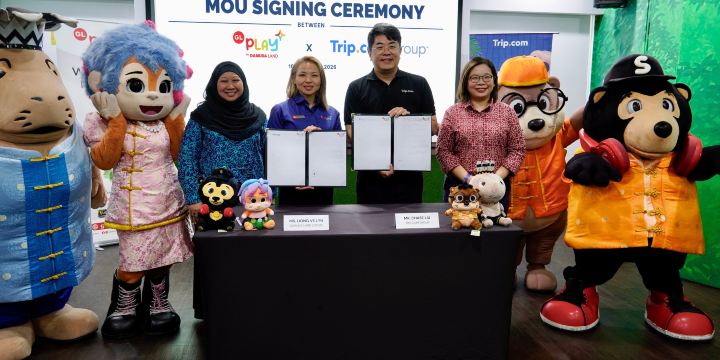
Trip.com Group and Gamuda Land’s GL Play Deepen Partnership to Drive Theme Park Tourism
Global travel service provider Trip.com Group and GL Play, the leisure and hospitality arm of leading property developer Gamuda Land, today signed a milestone Memorandum of Understanding (MoU) to deepen their strategic collaboration, with a shared goal of driving visitor demand and enhancing guest experiences across some of Malaysia’s premier theme parks. The expanded partnership will combine Trip.com [https://www.trip.com] Group’s global and regional reach, digital travel ecosystem, and data-driven marketing capabilities with GL Play’s award-winning portfolio of leisure destinations. Focusing on GL Play’s flagship attractions, including SplashMania Waterpark [https://my.trip.com/guide/attraction/tiket-splashmania-waterpark.html?curr=MYRhttps://my.trip.com/guide/attraction/tiket-splashmania-waterpark.html?curr=MYR] , Paya Indah Discovery Wetlands [https://my.trip.com/travel-guide/attraction/tanjung-dua-belas/paya-indah-wetlands-58294568/https://my.trip.com/travel-guide/attraction/tanjung-dua-belas/paya-indah-wetlands-58294568/] , Discovery Park [https://my.trip.com/travel-guide/attraction/tanjung-dua-belas/discovery-park-144582727https://my.trip.com/travel-guide/attraction/tanjung-dua-belas/discovery-park-144582727] , and FunPark [https://my.trip.com/travel-guide/attraction/rawang/funpark-gamuda-luge-gardens-148882747https://my.trip.com/travel-guide/attraction/rawang/funpark-gamuda-luge-gardens-148882747] , the collaboration aims to raise the profile of these attractions among domestic and international travellers, particularly across the Asia market. In addition, Trip.com Group and GL Play are working closely to enhance the end-to-end customer journey at the parks by offering multi-language support and multiple payment options. This collaboration ensures a seamless and convenient experience from ticket purchase through to park entry, leveraging the existing self-service Trip.com ticketing kiosks available at park entrances. Planned initiatives also include enhancements to the kiosks to offer new ticket options, such as priority lane access at select rides, helping visitors maximise their time and enjoyment at the parks. To support these efforts, the MoU also sets the stage for greater system connectivity between Trip.com Group and GL Play. This marks GL Play’s first-ever direct API integration with an online travel agency (OTA), enabling more seamless ticketing, diversified product offerings, and improved booking convenience for travellers. Mr Chase Liu, General Manager of International Attractions & Tours Business Development, Trip.com Group, said, “Attractions are playing an increasingly important role in how travellers plan their trips, as demand for immersive and entertainment-led experiences continue to grow. Based on our data, theme parks were ranked among the top attractions booked by travellers worldwide for the first quarter of 2026. Through this partnership with GL Play, we’re excited to make it easier than ever for travellers across Asia and beyond to plan, discover and enjoy some of Malaysia’s most distinctive attractions.” Ms Liong Ve Lyn, Senior General Manager, Leisure & Hospitality, Gamuda Land, said, “This strengthened collaboration allows us to deliver more efficient, innovative, and streamlined experiences to our visitors. By working closely with Trip.com Group, we’re focused on drawing more local and international guests to our parks, while further raising Malaysia’s position as a world-class leisure destination.” With Visit Malaysia Year 2026 and Visit Selangor 2026 underway, the partnership aligns with both national and state ambitions to increase tourist arrivals and showcase diverse tourism offerings on the global stage. As GL Play’s flagship attractions are key tourism drivers within the state, this collaboration underscores a shared commitment to positioning Selangor as a world-class destination for international travellers. Commemorating the expanded strategic partnership, customers who purchase tickets via the Trip.com self-service kiosks at SplashMania will enjoy additional 10% off at the SplashMania’s retail shop – Maniacs Closet – as well as 15% off at FunPark, Paya Indah Discovery Wetlands and Discovery Park. This limited time promotion will run until 31st December 2026*. For more information, visit trip.com or glplay.com.my. * Subject to Terms and Conditions. All promotional offers are available on a first-come, first-served basis within the specified period and while stocks last.
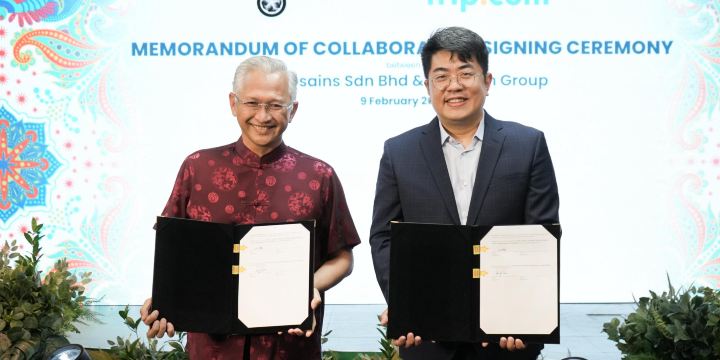
Petrosains Sdn Bhd and Trip.com Group Partner to Enable Global Online Booking of Petronas Twin Towers Sky Experience Visits
Visitors to the PETRONAS Twin Towers can now purchase Sky Xperience tickets directly via Trip.com, following a new partnership between Petrosains Sdn. Bhd. and Trip.com Group aimed at simplifying travel planning and enhancing the visitor experience in Kuala Lumpur. Formalised through a Memorandum of Collaboration (MoC), the partnership enables travellers to purchase PETRONAS Twin Towers [https://my.trip.com/travel-guide/attraction/kuala-lumpur/petronas-twin-towers-76109/https://my.trip.com/travel-guide/attraction/kuala-lumpur/petronas-twin-towers-76109/] Sky Xperience tickets directly via Trip.com’s global travel platform, alongside curated travel bundles that integrate accommodation, transportation and attractions. The initiative aims to simplify trip planning while delivering a seamless, end-to-end visitor experience for international and regional tourists. Joint marketing initiatives across digital and onsite platforms will further strengthen the international visibility of both the PETRONAS Twin Towers and Petrosains, positioning Kuala Lumpur as a destination that combines world class attractions with meaningful educational experiences. Ezarisma Azni Mohamad, Chief Executive Officer of Petrosains Sdn. Bhd., said the collaboration reflects a shared commitment to accessibility and experiential tourism. “Partnering with Trip.com Group allows us to offer travellers a more seamless way to experience not just the PETRONAS Twin Towers, but also the interactive science and learning journeys at Petrosains. This collaboration allows us to showcase Malaysia as a destination that blends iconic landmarks with engaging, knowledge driven experiences.” Leveraging Trip.com Group’s extensive global network, the partnership is expected to drive increased international visitation through special co-branded offerings that combine tower visits, Petrosains experiences, hotels, transportation and curated activities. “Today’s travellers are looking beyond basic sightseeing to experiences that feel distinctive and meaningful,” said Chase Liu, General Manager of International Attractions & Tours Business Development, Trip.com Group. “This partnership expands our growing range of unique attractions, connecting visitors to one of Malaysia’s most recognisable landmarks and making it easier for them to plan tailored itineraries that reflect their travel needs. We’re excited to work with Petrosains to help further cement Kuala Lumpur’s appeal as a must-visit travel destination across Asia and beyond.” The collaboration builds on the PETRONAS Twin Towers’ recognition on Trip.Best Global Rankings 2025, where it was listed among the Asia 100 Best Things to Do [https://my.trip.com/toplist/tripbest/annual/2025/asia-100001427842/?locale=en-MY&curr=MYRhttps://my.trip.com/toplist/tripbest/annual/2025/asia-100001427842/?locale=en-MY&curr=MYR] , underscoring the landmark’s strong global appeal and visitor satisfaction. Beyond the towers, visitors will also gain greater exposure to Petrosains’ signature science centre, Petrosains, The Discovery Centre located in Suria KLCC, which includes interactive galleries featuring more than 300 hands on exhibits, immersive science shows and exciting science demonstrations. The MoC reflects both organisations’ commitment to innovation, tourism growth and delivering memorable visitor experiences, while supporting Visit Malaysia 2026 through value-added collaborations that strengthen Malaysia’s tourism ecosystem. For more information on booking tickets or to download the app, visit trip.com [https://my.trip.com].
Trip.com Expands Local Collaborations in Malaysia Through Strategic Partnership with Galaxy Asia Car Rental
Collaboration aims to enhance visibility, convenience, and trust for travellers ahead of Visit Malaysia Year 2026, as Trip.com sees car rental bookings rise.