2D1N · Private Tours · Kumanokodo 2 Day Walking Tour from Osaka
5.0/5
Perfect
1review


All Photos (9)


Private Tours
Fully flexible itinerary · 1-on-1 customer service · Private car/guide

Group size
Flexible (travel independently)

Departure city: Osaka

Service language:English

2-day itinerary
Day 1 | Kumanokodo Walking (Kurisugawa ⇒ Gyuba Douji )  No photos yet Kii-Tanabe Station Meet with your guide at Kii-Tanabe Station 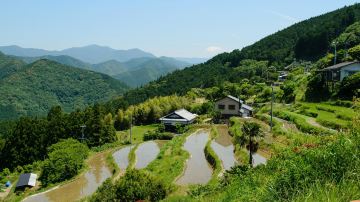 Kumano Kodo Kan Pilgrimage Center 5.0/5 (no tickets required) Daimon Oji There used to be a torii gate from Kumano Hongu Grand Shrine at this site. The name Daimon comes from the"big gate"of Kumano Hongu Grand Shrine. Dai means"big"and mon means"gate". There are other Daimon gate in the Kumano region.Koyasan's Daimon is a huge gate with guardian dieties. Daimon-zaka is a long slope leading up to the Nachi Grand Shrine gates. This oji is not as old as other ojis built in the Heian era. There seemed to have been shrine buildings at one time,but by the middle of the Edo era(1603-1868),all the buildings were gone. The curerent building was rebuilt in 1989. Beyond the building a small pagoda and a greenish-color stone monument are seen. This monument was built bu Kishu Domain which has become the present day Wakayama prefectural government. Activity duration: approx. 1 hr Harijizo-son Shrine For generations, it has been cherished by locals and pilgrims alike as a guardian that watches over the safety and well-being of travelers walking the long pilgrimage route. 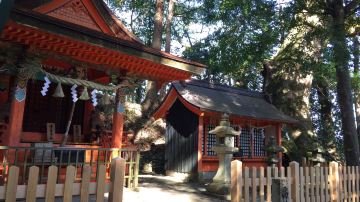 Takahara Kumano Shrine (no tickets required) This shrine is the oldest existing shrine along the Kumano Kodo in the Nakahechi area. The deity of this shrine is said to have been transferred from Kumano Hongu Grand Shrine. The first recorded reference to this shrine occurred in 1109. The name of this shrine is seen in Kumano Gokoki, a travel journal written by Fujiwara Teika. According to his journal, he visited this shrine. The shrine is sometimes referred to as Takahara Oji although it is not an oji. The main building was built in the Kasuga Taisha shrine style in 1544. It is a beautiful vermilion color building with a cypress bark roof. There are several giant, old camphor trees on the shrine grounds. Takahara has been written about by poets through the ages. The area around Takahara holds beautiful views in all seasons. A local pageantry with people dressed in period costumes of a thousand years ago is held every year on November 3. Activity duration: approx. 30 mins Accommodation Stay at Yumonine Onsen or Kawayu Onsen Hotel Dining Dinner |
Day 2 | Kumanokodo Walking (Hashinnmon Oji ⇒ Hongu Taisha) Mizunomi Oji Mizunomi Oji is near the abandoned school grounds of Misato Elementary School. This oji has a long history.There is a legend about this area. The founder of the Shingon sect of Buddhism, Kobo Daishi, traveled all over this part of Japan looking for a place to establish Shingon Buddhism. He went to the south of the country of Kii near Nachi Falls and founded a temple called Amida-jiTemple. But, he was not satisfied with the place to establish his seat of religion and continued to look for a perfect place. He must have traveled this path many times until he chose Mt. Koya. One day Kobo Daishi was walking in this area. He decided to take a rest at this place. He sat down and stuck his walking stick in the ground. Then, water is said to have gushed out. He must have been very happy to have fresh,delicious water while he rested. Activity duration: approx. 1 hr·(no tickets required) No photos yet Fushiogamioji (no tickets required) We had our lunch at Fushi-ogami Oji rest house. Pilgrims could see Oyu-no-hara ( old Hongu grand shrine) here for the first time on Kumano-Kodo from Kyoto route. They were probably so excited and kneed down, bowed and prayed. This activity is the origin of this Oji and at the village name "Fushi-ogami". Activity duration: approx. 1 hr No photos yet The Site of Sangenchaya (no tickets required) Take rest at here Activity duration: approx. 30 mins No photos yet Kumano Hongu Taisha 4.4/5 (no tickets required) A long stone staircase leads to the sacred grounds of the Kumano Hongu Taisha located on a ridge surrounded by giant cedar and cypress trees. It is one of the Kumano Sanzan, three grand shrines of Kumano, and head shrine of over 3,000 Kumano shrines across Japan. Activity duration: approx. 1 hr Tanabe Arrival Tanabe station. Take local train to Shin-Osaka station about 2h20min Activity duration: approx. 2 hrs·(no tickets required) Dining Breakfast |
All times are in local time.
Diamond ratings are assigned by Trip.com. For specific rating standards, please refer to the hotels section on Trip.com.
For hotels that cannot be selected during the booking process, please refer to the arrangements made by the travel agency.
Attraction images are for reference only.
Need to adjust your itinerary? Feel free to do so.
Change the number of days in the itinerary?
Change hotels?
Change attractions?
Contact Tour Operator
Details
Deep within the forested mountains of the Kii Peninsula lies the Kumano Kodo, one of only two pilgrimage routes in the world designated as a UNESCO World Heritage site. For over a millennium, people from all levels of society—from emperors to commoners—have made the arduous journey to these sacred grounds in search of spiritual rebirth.
This meticulously planned 2-day tour offers a seamless, hassle-free way to experience the highlights of this ancient trail, complete with professional English-speaking guidance, comfortable transportation, and authentic local stays.
If you have a JR Pass, please select "People who have JR Pass". If not, please select "People who don't have JR Pass".

Reviews