





 4.5/5
4.5/5 traveller0102
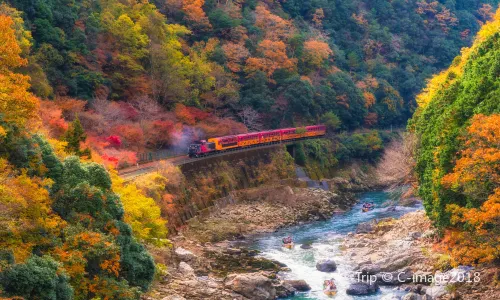
A 25 minute scenic ride. As others said there's the 'rich' carriage which is open air which is great if not too cold! Great views, but one way is enough. Could consider catching the normal train back or taking the Hozugawa boat ride back down. You can get a commemorative stamp but only at the Saga Station
 4.7/5
4.7/5 贝小贝193
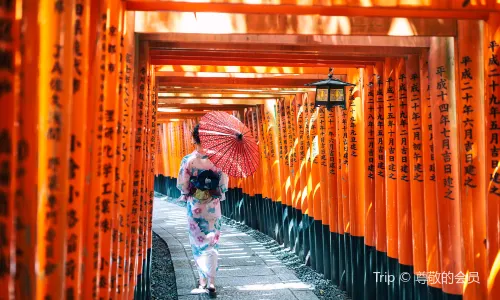
Visit Fushimi Inari Taisha, known for its Thousand Torii Gates and Foxes. Fushimi Inari Taisha is a famous shrine in Kyoto, Japan. Founded in the 8th century, Inari is the deity of agriculture and commerce, and pilgrims come to pray for good harvests, prosperous business, and safe travel. It is one of the most popular shrines in Kyoto. The shrine boasts a variety of stone fox statues, as foxes are considered messengers of the deity Inari. Ema with fox-like faces is a special feature. The most famous feature is the dense cluster of vermilion Thousand Torii Gates behind the main shrine building, a symbol of Kyoto and even featured in the film "Memoirs of a Geisha." Hundreds of these vermilion torii gates form a path leading to the summit of Mt. Inari, interspersed with dozens of stone fox statues.
 4.7/5
4.7/5 KuMa_Y
Lying serenely on the banks of the Hozu River in the western suburbs of Kyoto, Arashiyama takes its name from "mountain mist," and indeed, a thin mist often lingers in the mornings, like a veil covering the face, adding a touch of mysterious beauty. In spring, Arashiyama's waters shimmer beneath the Togetsukyo Bridge, where cherry blossoms shimmer in the water. A blanket of pink and white cherry blossoms hangs down, weighing down branches. Occasionally, petals drift onto the river, drifting eastward with the current, like a scene from a ukiyo-e painting come alive. Visitors row boats upstream or stroll along the shore, mesmerized by this fleeting beauty. The Sagano train whirrs through the mountains, its windows framing a moving painting. In late autumn, a different atmosphere unfolds. The mountains transform from green to red, layer upon layer, a vibrant display. The stone steps of Jojakko-ji Temple, blanketed in crimson leaves, rustle as they step, like the earth's own sigh. The bamboo forest path is deep and secluded, the rustling of bamboo tips like crackling jade, and sunlight filtering through the gaps creates a dappled, shimmering scene. The tranquility of this place contrasts perfectly with the bustle of tourists not far away. Movement and stillness, noise and silence, coexist in remarkable harmony. There are temples in the mountains, and within these temples are monks. In the dry landscape garden of Tenryu-ji Temple, one or two monks can often be seen sweeping fallen leaves with brooms, their movements slow and Zen-like. They sweep more than just leaves; they clearly sweep the grime of our hearts. Occasionally, the long, deep ring of a bell echoes from the Great Compassion Pavilion, startling a few jackdaws, which suddenly fly off into the distance. Drifting down the Hozu River, the water is clear and shallow, and fish swim and flutter. The boatman, holding a bamboo pole, tells legends of mountain spirits and water monsters in a raspy yet intimate Kansai dialect. A teahouse stands on the shore, where an elderly woman kneels to serve tea. The bitter aroma of matcha blends with the sweetness of wagashi, evoking a sense of tranquility. The beauty of Arashiyama lies not in its dramatic heights but in its tranquility; not in its bustle but in its serene stillness. The scenery changes with each season, but the beauty of its tranquility remains constant, inviting one to forget the worries of the world and simply wish to become a wisp of mist in the mountains, a leaf in the forest, living with nature.
 44.7/5
 mosy2018
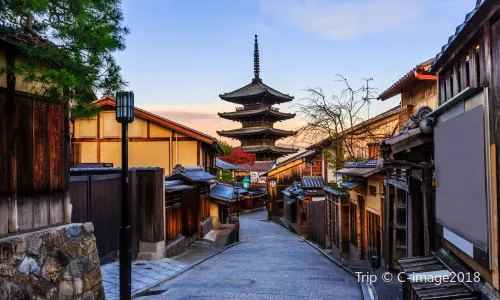
I went to this place for a walk. It is actually the only way to Kiyomizu Temple. It was like going back to the Tang and Song dynasties. The buildings and scenery on the street have well preserved the style of ancient China. I didn't expect that I could travel through Kyoto in a completely natural way. There were a lot of pedestrians wearing kimonos, both men and women, and their hairstyles matched, which was very eye-catching. There was a scene every step up the slope. Walk and rest and look at the goods in the surrounding shops. It was very local and a very leisurely street. The feeling in the morning and evening was completely different. The lights were dim at night, and it was still very beautiful. People would not feel tired while walking around. It was really great!
 54.7/5
 M84***97
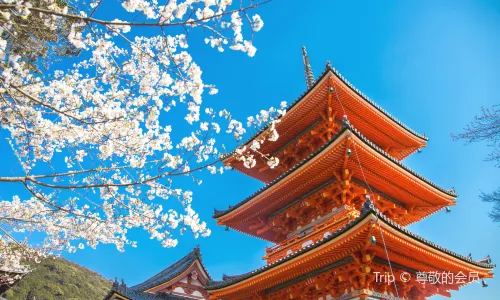
Many people say that Kiyomizu-dera Temple needs to be visited early in the morning, because going before the crowds arrive allows you to capture less crowded scenes and find your desired photo spots (such as the Kiyomizu Stage where Shinichi and Ran share their iconic kiss, and the small terrace with a view of the stage for a group photo). However, it's important to note that during the autumn foliage season, both the Kiyomizu Stage and the five-story pagoda are backlit in the early morning. Without sunlight, the autumn leaves will appear much dimmer. Therefore, while going early allows you to avoid crowds, you inevitably won't be able to fully appreciate the beauty of the autumn leaves and the temple itself.
 64.8/5
 Randomstuffsg
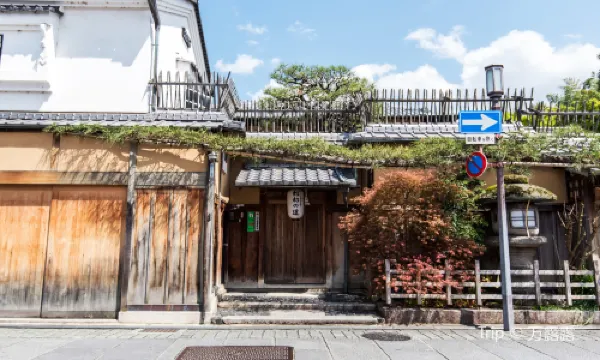
Gion is one of Kyoto’s most enchanting districts, where old Japan comes alive through preserved wooden machiya houses, quiet tea rooms, and the occasional sight of a geisha hurrying down lantern-lit streets. It’s beautiful both day and night, offering a perfect blend of culture, tradition, and timeless charm.
 74.6/5
 鹰鲨
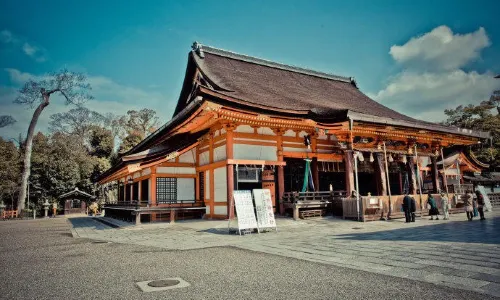
鹰鲨It takes about 40 to 50 minutes to walk from Kiyomizu-dera Temple. There are crowds of tourists on the road, which is quite interesting. The attractions are free. There is a night market outside, and there are not many tourists. There is beauty water on the right side of the shrine. Be sure to wash your face with it, it really works.
 84.8/5
 sAviOr_07
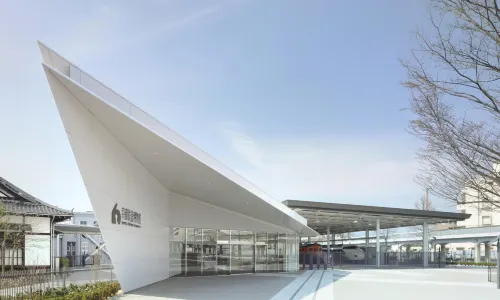
The Kyoto Railway Museum, another place to check off my collection. I bought tickets with my Suica card. It's quite large, with three floors. There's outdoor seating on the first floor, outdoor seating on the third floor, and a restaurant and a play area for children on the second floor. It comprehensively introduces the Shinkansen, steam locomotives, etc., and also shows the operating system principles, the seats inside the trains, staff uniforms, tickets, etc. Interactive experiences include train operation simulations, etc. A very well-made and excellent place.
 94.7/5
 BiancaAriel
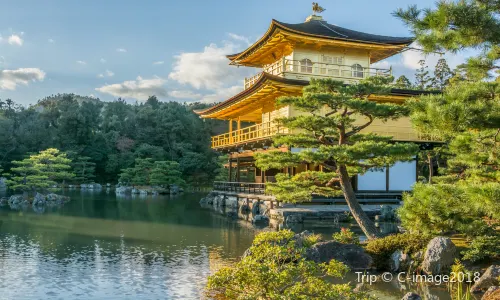
I was surprised that there were many foreign tourists after getting off at the bus stop. The direction signs stand out. There are security personnel wearing uniforms on the crosswalk at the entrance. Admission tickets are only available in cash. The size of the tourist area is not large, so you don't have to walk for a long time. The trees are well managed. I can't get close to the building, but I was moved enough just to see it from a distance. If I live nearby, I might come here for a walk every day.
 104.5/5
 魔女锦鲤
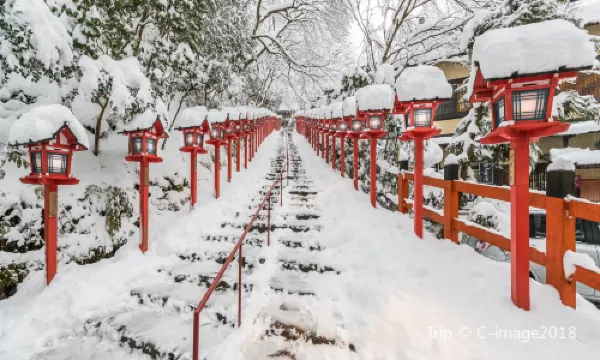
魔女锦鲤Going up the mountain along the flat road, the vermilion torii in front of you is the Kifune Shrine. There are many red lanterns on both sides of the long stairs, which is also the most photographed place in Kifune Shrine - the lantern-offering shrine. On the side of the bottom of the stairs, many photographers have already occupied favorable shooting positions, waiting for the lights to be turned on at night. Kifune Shrine is an ancient shrine at the western foot of Kurama Mountain and the head shrine of Kifune Shrine. This is also the source of water for Kyoto. Kifune Shrine enshrines the most revered water god of Kyoto people. It has a history of more than 1,600 years, which is longer than the history of Kyoto itself. The steps paved with bluestone slabs extend from the torii to the main shrine of the shrine. Vermilion lanterns stand on both sides of the shrine. Looking from the bottom up, they are densely packed all the way, which is very spectacular.
 Take the Sagano Romantic Train through the scenic Arashiyama in Kyoto

 No. 1 of Night Attractions in Kyoto