


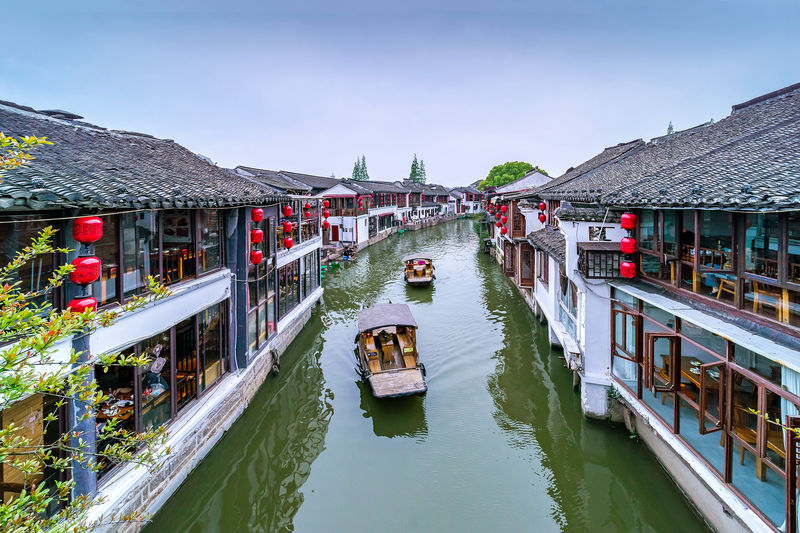
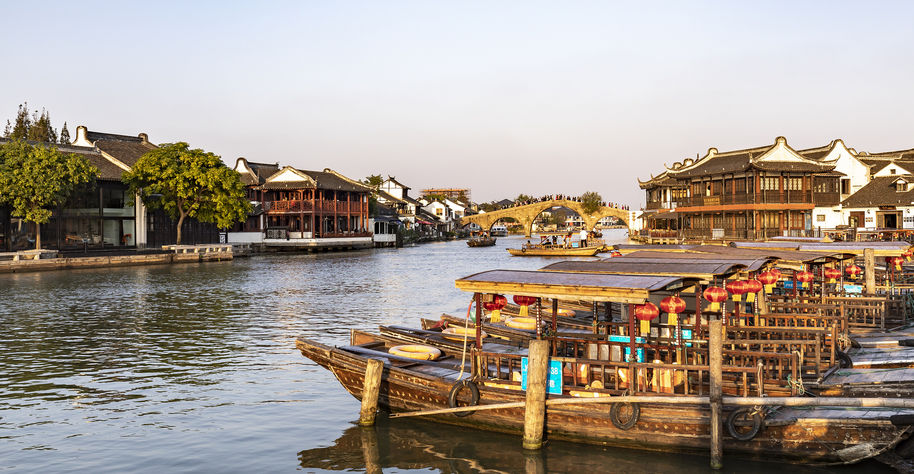
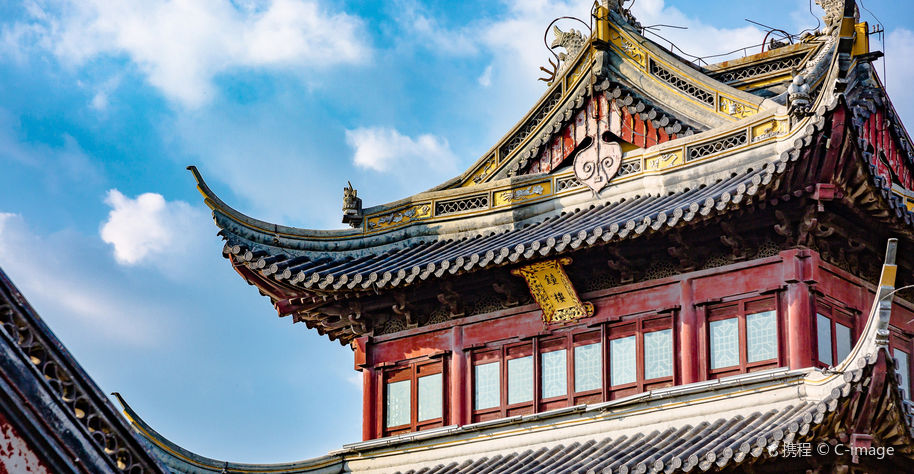
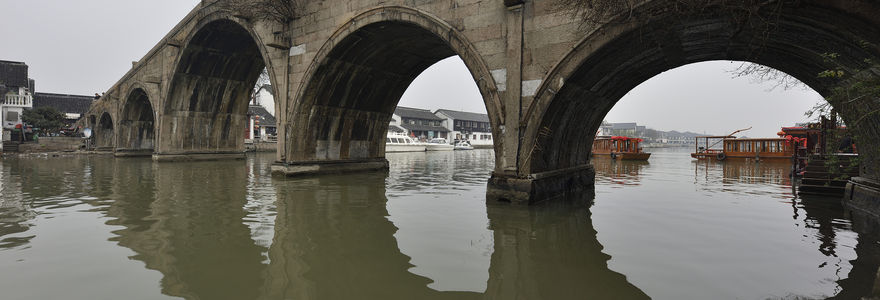



▲ Zhujiajiao ancient town is located in Qingpu District, Shanghai, and is a typical representative of Jiangnan water towns, often referred to as the "Venice of Shanghai." Its history dates back to the Neolithic Age 7,000 years ago. It developed into a village market during the Tang and Song dynasties, expanded significantly in the Yuan dynasty, and was officially established as a town in 1612 during the Ming dynasty due to prosperous water transport and commerce. It reached its peak in the Qing dynasty and has long been praised as "superior to the three Jings."

▲ Rowboat: Kezhi Garden pier - Fangsheng Bridge pier - North Street pier, 200/boat, one-way Kezhi Garden pier - Fangsheng Bridge pier - City God Temple pier, 300/boat, one-way The rowboat is a representative traditional wooden vessel of China's Jiangnan watertowns, using human-powered "oar sculling" as its core propulsion method. With its unique lever principle, it achieves efficient and smooth navigation, hailed as the "one oar equals three paddles" crystallization of aquatic wisdom. Travelers often say, "A trip to Jiangnan isn't complete without a rowboat ride." Its slow pace and immersive quality make it a poetic antidote to modern fast-paced life.

▲ Kezhi Garden, also known as "Ma Family Garden," is a rare manor-style private garden from the Republican era in the Jiangnan region, blending traditional Chinese garden art with Western architectural elements. It is hailed as "a renowned scholarly garden combining Chinese and Western styles." Frequently visited by foreign travelers and university groups as a representative of Jiangnan culture, it serves as an important window for overseas audiences to understand Chinese private gardens.

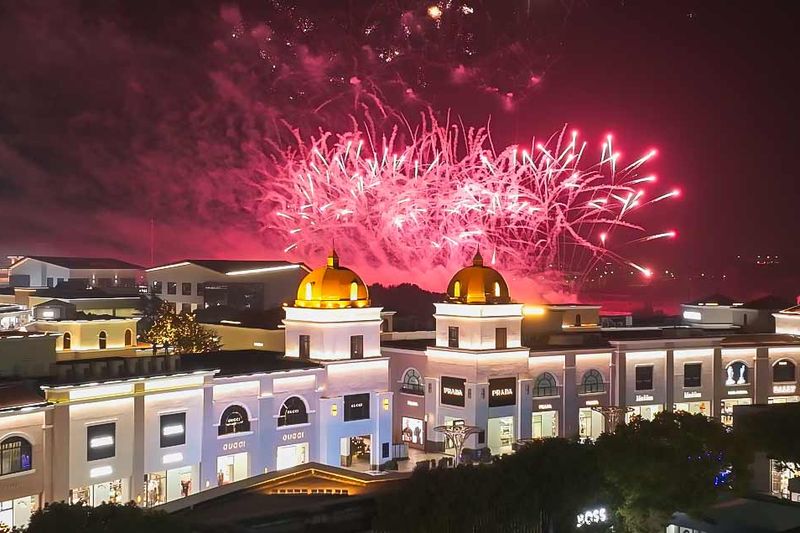
▲ Bailian qingpu outlet opened in 2006, integrating international luxury discounts, jiangnan cultural aesthetics and modern shopping experience. It is a must-visit commercial landmark for travelers in the yangtze river delta to "shop smart and have fun".