Hanshan

Things to do in Hanshan

Search attractions or local attractions & tours
Search

Explore top experiences

Top 10 attractions in Hanshan

View all Attractions
Nanjing Museum
No. 2 of Family-friendly Attractions in Jiangsu

Nanjing Museum

8.2
4.7/5
4.1k reviews
The Nanjing Museum is located at the southern foot of Purple Mountain, on the north side of Zhongshan Gate. Here, you can see ancient artifacts such as the jade burial suit sewn with silver thread, appreciate painting and calligraphy art, and even take a stroll down old streets for a journey through time. Museum historyThe museum was established in 1933 and completed in 1948, with its main hall modeled after the mountain gate of Dule Temple in Tianjin. After expansion in 2009 and opening to the public on November 6, 2013, it became the second largest museum in China after the National Museum of China, featuring six halls: the History Hall, Special Exhibition Hall, Digital Hall, Art Hall, Republican Era Hall, and Intangible Cultural Heritage Hall. Museum layoutThe museum's main buildings are divided into two sections, left and right. After walking a short distance on the right side, you will reach the museum's old main hall, modeled after the Dule Temple. Behind the "Dule Temple" is the History Gallery, while the other five galleries are all on the left side. You can either tour from the five galleries on the left to the History Gallery on the right, or from the History Gallery to the five galleries on the left. It is recommended to visit the History Gallery first, because the special exhibition hall housing the "treasure of the museum" is located to the left of the History Gallery. You can follow the order of History Gallery - Special Exhibition Hall - Digital Gallery - Republican Era Gallery - Art Gallery - Intangible Cultural Heritage Gallery to tour the entire museum. History exhibition hallThe history museum displays cultural relics arranged in chronological order from ancient times to the Ming and Qing dynasties. Walking through it feels like strolling through five thousand years of Jiangsu's civilization. Highlights include: the jade burial suit sewn with silver thread, a wall built brick by brick during the Southern and Northern Dynasties with brick carvings faintly depicting the "Seven Sages of the Bamboo Grove" upon closer inspection, and more. Special exhibition hallThe "Splendors of the Prosperous Age" area of the special exhibition hall displays official kiln porcelain from the Qing Dynasty, the "Fine Clocks and Watches Exhibition" displays ancient Chinese timekeeping devices and Western clocks and watches, and "Approaching Buddhist Statues" features resplendent, exquisitely crafted Buddhist statues. As for the "treasure of the museum," the gilt Tibetan-style stupa from the early years of the Zhengtong reign of the Ming Dynasty (1436–1439 CE), a single exhibit occupies an entire room, and its sheer grandeur alone is stunning enough. This museum treasure was unearthed from the underground palace of the Hongjue Temple Pagoda on Niushou Mountain in Nanjing. On a square red sandstone base, four blue-and-white porcelain vases surround a golden stupa in the center, and in front of the stupa is a small gold coffin and silver outer coffin, upon which lies a golden reclining statue of Shakyamuni. Digital galleryThe digital pavilion uses modern technology to present ancient themes, with exhibits such as the animation "Picture Scroll of Scenes in the Southern Capital" (similar to the Along the River During the Qingming Festival in the China Pavilion at the World Expo). What is quite interesting is that there are many interactive games here, and you can touch the screen to play games set in ancient times. Art venueThe art museum displays sculptures, calligraphy, and paintings. The exhibited paintings by Fu Baoshi, which use Chinese ink painting techniques to depict Eastern European red-roofed buildings, squares, and sculptures, are quite distinctive. Republic of China galleryThe Republic of China Gallery has transformed the entire indoor space into a street scene from the Republic of China period. Trams are displayed on the street, and shops with Republic-era style line both sides, open for business and selling items that evoke nostalgia. At a general store, you can buy "mouse droppings" (also known as kumquat pills), a snack from childhood. The post office offers Nanjing Museum postmarks, and at the Librairie Avant-Garde upstairs, the staff wear period clothing; if you want to mail a postcard, the bookstore also sells stamps. Intangible cultural heritage museumThe intangible cultural heritage museum displays folk handicrafts such as woodblock prints, paper cuttings, gold foil, and festive lanterns. Here you can enjoy performances such as Kunqu opera, Baiju, and Pingtan. Reference performance times: 14:00-16:00.In the small theater, you can watch 3D films for free, and the film is about 20 minutes long.The small theater in the intangible cultural heritage museum will also be open to the public on weekends and public holidays at 19:00 if there are traditional Chinese opera performances, and tickets are required.Nanjing · 76.3 km from Hanshan
Hongcun Village
No. 1 of Night Attractions in Anhui

Hongcun Village

8.6
4.5/5
50k reviews
Hongcun Village is a classic Huizhou-style ancient village, renowned as a "village in a Chinese painting." A visit here offers two unmissable experiences: first, the water landscapes shaped by its irrigation system, with Nanhu Lake and Yuezhao Pond as the crown jewels; second, the exquisite "three carvings" of Huizhou architecture—brick, stone, and wood carvings—intricate enough to rival paper-cut art. Here, cultural heritage and natural beauty blend seamlessly into a harmonious whole. The ancient village was first built during the Shaoxing era of the Southern Song dynasty and gradually developed from the Yongle era of the Ming dynasty into a unique "ox-shaped village" layout. The two ancient trees at the village entrance form the "ox horns," the densely packed Ming and Qing Huizhou-style buildings in the village form the "ox body," the four bridges over the stream west of the village form the "ox feet," Yuezhao Pond is the "ox stomach," Nanhu Lake is the "ox belly," and the water channels flowing past every household are the "ox intestines." Sightseeing can begin at Nanhu Lake in the south of the village. Nanhu Lake is a bow-shaped artificial lake dug during the Wanli era of the Ming dynasty, with a broad expanse of water; the Huabridge crossing the lake is where Li Mubai led his horse in the film Crouching Tiger, Hidden Dragon. On the north bank of the lake, Nanhu Academy was formed by merging six original private schools by the lakeside, and its layout is exceptionally spacious. Heading north along the lake's north bank, visitors can also stop by ancient residences such as Jingde Hall and Wang Daxie's Former Residence (Zhenqi Hall). Continuing north leads to Yuezhao Pond at the village center, a half-moon-shaped pond dug during the Yongle era of the Ming dynasty, surrounded by Huizhou-style buildings reflected in its waters—one of the best spots for photography in the ancient village. However, visitors crowd around Yuezhao Pond year-round, so patience is needed to capture an empty shot. At the center of Yuezhao Pond's north bank stands Lexu Hall, also known as the Wang Clan Ancestral Hall, a surviving Ming dynasty building in the village with a simpler style than Qing dynasty architecture. On the western end of Yuezhao Pond's north side is Jingxiu Hall, built during the Qing dynasty. Further north, visitors can tour Chengzhi Hall, the residence of late Qing salt merchant Wang Dinggui. The residence is fully equipped with a study, kitchen, stable, bodyguard room, and servants' quarters, and even includes a "Paishan Pavilion" for playing mahjong; the house has its own pond and well, so water is available without leaving the premises. The exquisite Huizhou three carvings are worth examining closely—some wood carvings are even coated with gold powder, lavish and magnificent. Other ancient buildings in the village worth seeing include Deyi Hall, Shuren Hall, and Taoyuan Residence.China · Yi County
Slender West Lake
2026 Global 50 - Spring Outings

Slender West Lake

8.5
4.7/5
83.6k reviews
"In March when flowers bloom, head to Yangzhou." When visiting Yangzhou in spring, a trip to Slender West Lake is a must. This narrow stretch of waterway offers the perfect blend of natural beauty and cultural heritage. Stroll along the banks to admire scenic views, explore historic pavilions adorned with classical poetry and paintings, or cruise the lake by boat to experience the leisurely pleasure Emperor Qianlong once enjoyed during his royal visits. The attraction is quite expansive, stretching from the Great Rainbow Bridge in the southeast all the way north along the lake to Guanyin Mountain, passing dozens of attractions along the way. There are four main entrances (east, south, west, and north), with most visitors starting their tour at the south entrance on Great Rainbow Bridge Road. This renowned lakeside garden boasts breathtaking natural views. In spring, the area is shaded by lush willows and adorned with camellias, pomegranates, azaleas, and peach blossoms, attracting visitors from across the country to enjoy the seasonal blooms. For centuries, countless literati have lingered here, composing poetry and creating paintings that left behind numerous artistic treasures and stories. The site also features many landscape structures ingeniously designed to harmonize with its natural surroundings. The Five Pavilion Bridge in Shugang Slender West Lake Scenic Area is the iconic attraction with over 200 years of history. Featuring five wind pavilions atop, each of the bridge's fifteen arches cradles a moon during full moon nights. Another renowned attraction is the Twenty-Four Bridge, inspired by Du Mu's poetic line "Where is the jade-like beauty teaching flute-playing on the moonlit Twenty-Four Bridge?" While the original bridge no longer exists, visitors can admire its reconstructed version today. This was also a stop during Emperor Qianlong's southern tours in the Qing Dynasty. Architectural views like the Great Rainbow Bridge, Slender West Lake Scenic Area's Fishing Terrace, White Pagoda, and the Twenty-Four Bridges' Xichun Platform all bear inseparable historical anecdotes connected to Emperor Qianlong. During summer nights, the illuminated pavilions and moonlit reflections on the lake create a magical atmosphere. The nightlife experience here is entirely boat-based, offering a relaxing way to beat the summer heat while enjoying gentle lake breezes.China · Yangzhou
Confucius Temple-Qinhuai Scenic Area
2026 Global 100 - Night Attractions

Confucius Temple-Qinhuai Scenic Area

8
4.7/5
7.3k reviews
The Confucius Temple-Qinhuai Scenic Area refers to the Qinhuai River area centered around the Confucius Temple, where the streets, alleys, residences, and historical sites along both banks form a continuous stretch. It has been a bustling and lively part of Nanjing since ancient times. The line "The swallows that skimmed by painted eaves in bygone days are dipping now among the humble homes' doorways" by Liu Yuxi describes this very place. The Wuyi Lane mentioned in the poem still lies hidden among the alleys near the Confucius Temple. Exploring history along the river is the highlight of this area: The Dacheng hall of Confucius temple stands by the water, with a towering screen wall across the Pan pond in front; the nearby Jiangnan examination hall was the imperial testing site for provincial exams during the Ming and Qing dynasties, now replaced by the China imperial examination museum; Zhan garden and Egret isle park both originated from the mansion gardens of Xu Da's family, a founding general of the Ming dynasty—the former also houses the Taiping heavenly kingdom history museum; scattered along both banks within walking distance are historical sites like Meixiang tower (former residence of "Peach blossom fan" heroine Li Xiangjun), the well-preserved Zhonghua gate with its urn-shaped defense system, Wu Jingzi's residence (author of "The scholars"), and ancient ferry relics like Taoye crossing, easily connected into a historical walking trail. Cuisine is also a signature feature of this area: "The eight Qinhuai delicacies" refer to sixteen famous dishes from eight time-honored snack restaurants, including Yongheyuan's crab-shell yellow sesame cakes and dried shrimp shreds, Qifangge's duck oil crispy cakes and sesame oil dried shreds, Jiangyouji's beef pot stickers, and Lianhu pastry shop's osmanthus-filled glutinous rice balls. The Confucius Temple area and Laomendong are lined with teahouses, snack shops, and various stores, offering plenty of opportunities to rest and grab a bite when tired, along with the chance to pick up some souvenirs. The highlight comes after nightfall: board a painted boat from the pier in front of the Confucius Temple, listen to the guide while admiring the white walls and black tiles illuminated by riverside lanterns—this is the classic "night mooring on the Qinhuai" experience. From Chinese New Year to the Lantern Festival each year, the Qinhuai River Lantern Festival (also known as the Jinling Lantern Festival), listed as a national intangible cultural heritage, takes place here. The Confucius Temple, Laomendong, and along the Qinhuai River are adorned with lanterns and decorations. "Visiting the Confucius Temple to see lanterns during New Year" remains a cherished tradition for Nanjing locals. Even on ordinary days, the area buzzes with cultural temple fairs, food festivals, and other celebrations, offering unique surprises in different seasons.Nanjing · 72.2 km from Hanshan
Taoyangli Historical and Cultural District
No. 1 of Family-friendly Attractions in Jiangxi

Taoyangli Historical and Cultural District

8.4
4.6/5
11.8k reviews
Taoyangli Historical and Cultural District is located in the heart of Jingdezhen's old town, a historic neighborhood that grew around the ruins of the imperial kiln from the Ming and Qing dynasties. The old saying "Taoyang thirteen li, with tens of thousands of households" refers to this area. The imperial porcelain used by the royal families of the Ming and Qing dynasties was exclusively produced by the imperial kiln here, while rejected tribute items were shattered and buried on-site. The layers of underground porcelain fragments share the same origin as the collections in the Palace Museum, making this place often referred to as the key to understanding the porcelain capital. The core attractions of the district are concentrated around the ruins of the Taoyangli Historical and Cultural District and the imperial kiln museum. The ruins of the Taoyangli Historical and Cultural District have now been transformed into an archaeological site park, preserving relics such as kilns and workshops. The Longzhu pavilion, perched atop Zhushan hill, has been the iconic structure of the imperial kiln since the Ming dynasty and later became the symbol of Jingdezhen. The Zhushan hill beneath it was formed by layers of discarded porcelain fragments from imperial kilns throughout history. Nearby, the imperial kiln museum draws inspiration from traditional egg-shaped wood-fired kilns, featuring multiple brick arches arranged in a staggered layout. Many exhibits in the museum are restored from porcelain fragments unearthed at the site, including the Ming dynasty blue-and-white dragon jar—a signature exhibit pieced together from tons of discarded dragon jar fragments. Adjacent to the museum, the Xu family kiln, an old wood-fired kiln, still operates periodic firings. During kiln openings, the gate is wide open, allowing visitors to watch artisans retrieve freshly fired porcelain from saggars. The district also features winding alleyways lined with kiln-brick residences, guild halls, porcelain shops, and remnants of modern ceramic industry. The restored South goods street and Red shop street now host old teahouses, taverns, music bars, and craft workshops where you can observe traditional processes like clay throwing and porcelain painting, with some workshops offering hands-on experiences. It's recommended to set aside half a day for the visit—start with the kiln site and museum, then meander through the streets around Zhongshan north road and Longgang lane, where many historic courtyard houses hidden in deep alleys await patient discovery.China · Jingdezhen
Jiuhua Mountain
No. 3 of Best Things to Do in Southern Anhui

Jiuhua Mountain

8.3
4.8/5
28.6k reviews
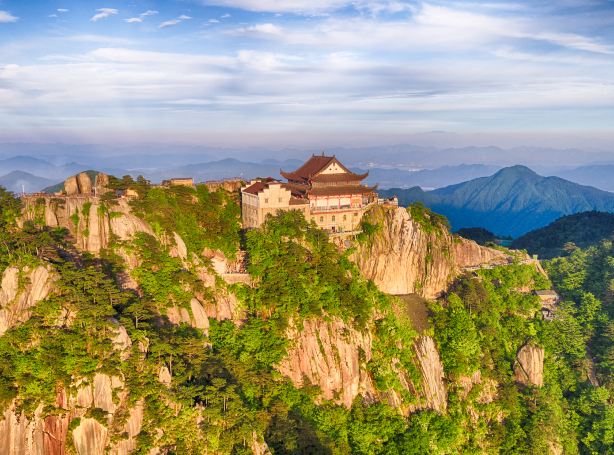
Jiuhua Mountain is located southeast of Chizhou. During the Kaiyuan reign of the Tang Dynasty (719 AD), Prince Jin Qiaojue of the ancient Silla Kingdom (an ancient regime on the Korean Peninsula) came here to practice Buddhism. Because various auspicious signs before and after his death closely resembled those of Ksitigarbha Bodhisattva, he was recognized as an incarnation of Ksitigarbha Bodhisattva and revered as Jin Ksitigarbha. Thus, Jiuhua Mountain became Ksitigarbha Bodhisattva's bodhimanda and, together with Mount Putuo, Mount Wutai, and Emeishan, was listed as one of the Four Sacred Buddhist Mountains. The preserved bodies of eminent monks from various dynasties are a major feature here. Under the perpetually humid climate, the bodies of these monks have been preserved after their passing. Currently, there are five such flesh-body bodhisattvas available for viewing. Jiuhua Street on the mountain is ring-shaped and serves as the core tourist hub of the attraction. Most trips to the various attractions start from Jiuhua Street, and many important temples are also located here. Temples are scattered throughout the mountain, and three key temples are recommended: Baisui Palace, the Hall of the Flesh Body, and Huacheng Temple. Except for Baisui Palace, which is built on a small hill, the latter two are both within the area of Jiuhua Street. To reach Baisui Palace, it takes about half an hour on foot up the mountain, or you can take the cable car. Baisui Palace enshrines the flesh body of the Ming Dynasty monk Wuxia, one of the oldest extant flesh-body bodhisattvas on Jiuhua Mountain, who was imperially conferred the title of "Response Body Bodhisattva." The Hall of the Flesh Body enshrines the flesh body of the Tang Dynasty Jin Dizang; the flesh body is sealed within a pagoda, so visitors cannot directly view the true body, but they may walk clockwise around the pagoda inside the hall. Huacheng Temple is the founding ancestral temple of Jiuhua Mountain and also the site of the Jiuhua Mountain History and Cultural Relics Museum, which houses the "Huayan Blood Sutra," copied by monk Wuxia over twenty-eight years using his own finger blood, a national first-class cultural relic. In addition to the two flesh bodies at Baisui Palace and Roushen Baodian, the other three flesh-body bodhisattvas are: Monk Mingjing of Zhantan Zen Forest, Monk Ciming of Dizang Zen Temple, and Master Renyi, a bhikkhuni, of Tonghui Zen Forest. Master Renyi is a bhikkhuni flesh body that can be visited. These three temples are all located on Jiuhua Street and can be visited in sequence. In the evening, the Qiyuan Zen Temple, the foremost of the four great monasteries, is brightly lit, and many large-scale Buddhist ceremonies are held here. Travelers may observe quietly, but must strictly observe Buddhist etiquette, refraining from loud noise and pointing at will. Travelers on a 1-day tour generally only need to visit the key temples; those with plenty of energy can continue upward from Baisuigong to Dongya Temple, and walk from Roushen Hall to **Shangchan Hall and Xiaotiantai**. Travelers on a 2-day tour can visit temples on the first day and hike up the mountain to enjoy the natural scenery on the second day, with three options: the Tiantai scenic area, the Huatai scenic area, or the ridge traverse from Tiantai to Huatai. Visiting Tiantai or Huatai separately generally takes about half a day; the Tiantai–Huatai traverse is a hiking route with a certain level of intensity, so it is recommended to set aside a full day. Tiantai is located on the south side, with its entrance at Fenghuang Pine south of Jiuhua Street; from Tiantai Temple at the top, you can enjoy the sunrise and sea of clouds and overlook the panoramic view of Jiuhua Street. Huatai is located in the northern part of the attraction, where the natural scenery is more pristine and pure, with exotic peaks and grotesque rocks scattered in varied forms; every May, rhododendrons bloom across the mountains in succession. The entrances to the two scenic areas are far apart, but they are connected by a hiking trail along the ridge. This place is foggy year-round, especially in spring and fall, when clouds and mist shroud the temple, giving it a sense of a Buddhist wonderland. Foggy days are often accompanied by drizzle, so bringing a rain poncho is recommended. In winter, snowy scenery is common in the mountains, but the steps are wet and slippery, so be sure to take anti-slip precautions when climbing.China · Qingyang
Hangzhou Songcheng Show Park
No. 2 of Family-friendly Attractions in Zhejiang

Hangzhou Songcheng Show Park

8.3
4.7/5
37.9k reviews
Give me one day, and I'll give you a thousand years! Hangzhou Songcheng Show Park is an attraction that transcends time and defies imagination, with twenty theaters and hundreds of shows. You can't see it all in one day, but there's always something for you. The attraction features crisscrossing streets like East Street, West Street, North Street, Shijing Street, Rainbow Bridge, and Fenghua Lane, presenting a bustling Song Dynasty atmosphere with pervasive Chinese and ancient styles. Every step offers a new view at Punk Street, Song City Gate, Sky Tree, Time Tree, Love Tree, Cloud Ladder Walk, and Performance Square, creating a time-travel experience. Boating on Song River feels like wandering through a painting, immersing in the rich Jiangnan charm. Revel at the Forest Theater or harmonize with the wind at the Cliff Theater. The main show, Hangzhou Songcheng Show Park, is a must-see performance in one's lifetime. Featuring scenes of ancient battles and beautiful dancers, it is ranked alongside Las Vegas's "O" show and the Moulin Rouge in Paris as one of the "world's three famous shows." Performances like "Lijiang love song", "Captain Cook", "Cliff concert", "Tossing the embroidered ball", "Guozhuang dance" and "Flash mob" showcase diverse styles. Large-scale experiential projects such as the light and shadow museum, "Liaozhai haunted house", "Virtual space" and "Dream space" offer thrilling adventures. Immersive plays like "The earthquake", "Battle of Triangle Hill" and "Azaleas" depict earth-shattering scenes and war-torn landscapes, providing a soul-stirring red-themed journey. Hangzhou Songcheng Show Park is a family-friendly destination for creating cherished memories. Children can explore the fairy valley and take on aerial adventures to unleash their nature. Seniors can stroll through rows of workshops to rediscover childhood memories. The attraction is entirely traveler-centric, with covered walkways connecting major theaters and attractions to provide comfortable experiences in all weather conditions. It is a photogenic check-in destination integrating travel, performances, and vacation. The Romance Hotel adjacent to the attraction offers you a convenient vacation experience. Purchase the attraction and hotel package for multiple entries and more discounts. Hangzhou Songcheng Show Park, give me one day, and I'll give you a thousand years!China · Hangzhou

Experiences you can't miss in Hanshan

Featured Culture & history in Hanshan

View all Culture & history
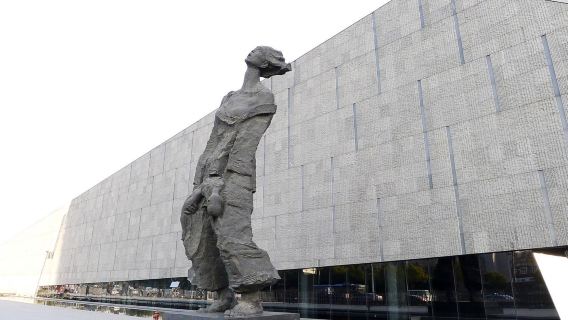
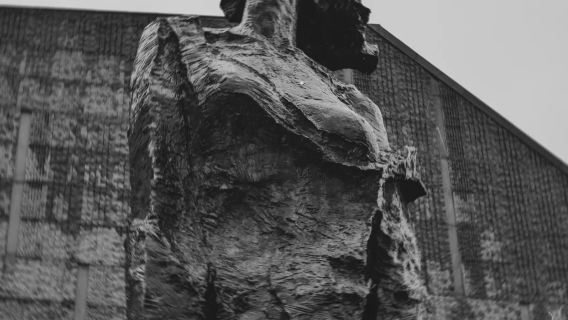
Nanjing The Memorial Hall of the Victims in Nanjing Massacre by Japanese Invaders Chinese Guided Group Day Tour
󱌍
FromUS$29.54
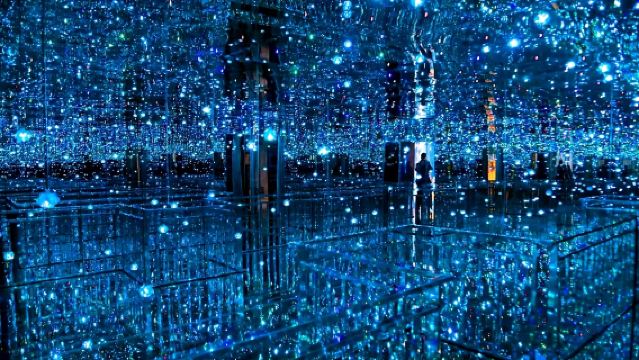
Nanjing Van Gogh Star Sky Art Museum (immersive 4D light show + sunflower field tour)
󱌍
4.0/5
· 7 reviews· 81 booked
Duration: 2 hrs
English
Free cancellation
Instant confirmation
FromUS$6.77
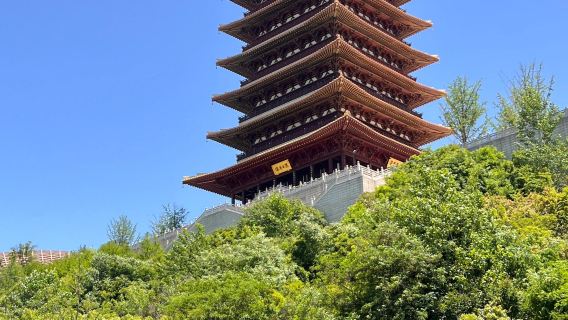
2-Hour Guided Tour at the Nanjing Massacre Memorial Hall (Main Exhibition Hall)
󱌍
5.0/5
· 1 review
Duration: 2 hrs
English
Free cancellation
FromUS$223.72
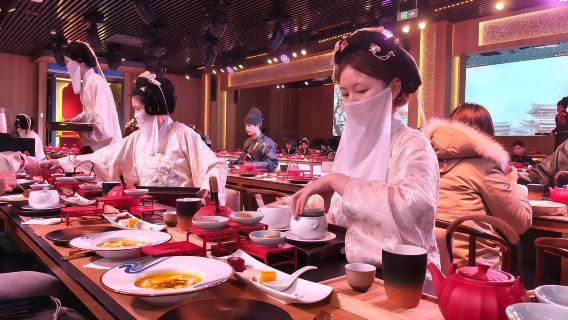
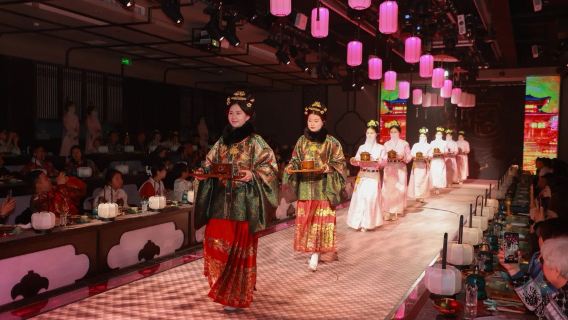
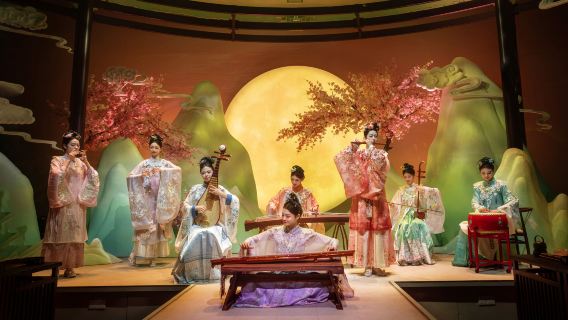
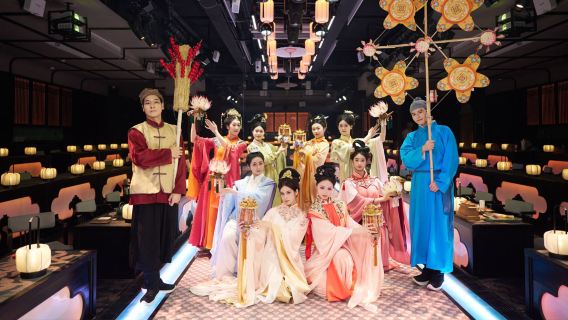
Nanjing Jinling Menghua: Hanfu Styling, Six Dynasties Dinner Show & Jinling Cuisine
󱌍
Duration: 2 hrs
English
Free cancellation
Instant confirmation
FromUS$45.11
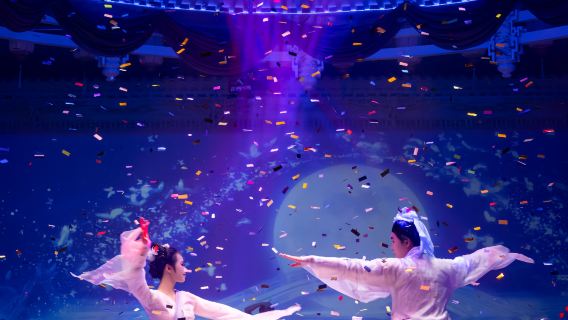
Nanjing Poetry Feast: Multi-Dynasty Hanfu Styling,6 Dynasties Dinner Show &Jinling Cuisine
󱌍
Duration: 2.1 hrs
English
Free cancellation
Instant confirmation
FromUS$121.03
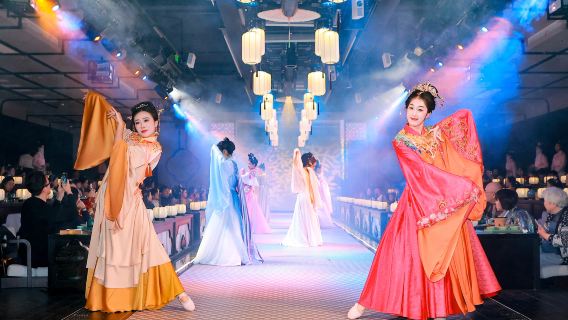
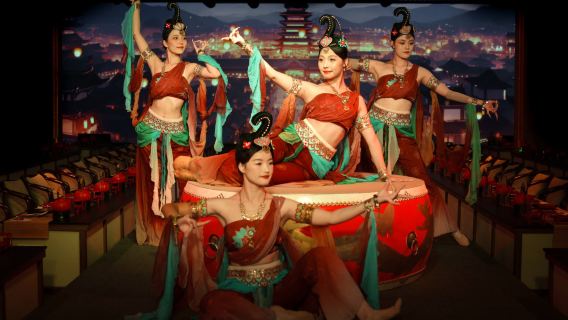
Nanjing Yanle Feast Under Heaven | Immersive Six Dynasties Royal Banquet Show
󱌍
Duration: 2 hrs
English
Free cancellation
Instant confirmation
Book now for tomorrow
FromUS$81.04

Featured Food & drink in Hanshan

View all Food & drink
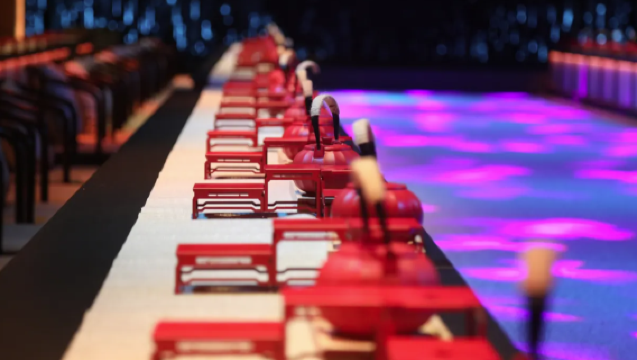
Nanjing Jinling dream of splendor palace banquet (ancient imperial-style royal feast + spectacular song and dance performance)
󱌍
FromUS$44.81
Jinling Dream Splendor: Ming Dynasty Themed Banquet +Hanfu Styling + Traditional Performances & Food
󱌍
FromUS$104.95
One Poem One Flavor, Unlock Jinling Elegant Feast
󱌍
Duration: 130 mins
English
Free cancellation
Instant confirmation
FromUS$115.47
Hanshan Today's weatherOvercast 14-19℃
Hanshan weather for the next 2 days11/4: 12-17℃, 11/5: 11-21℃

Free things to do in Hanshan

What travelers say about Hanshan

user-avatar
冬天寻梦人November 1, 2026
5.0
The Nanjing Museum is definitely worth a visit. It was incredibly crowded during the National Day holiday. Luckily, I managed to get in as soon as it opened and capture a photo of a quiet moment. The guided tour made the experience much clearer, more engaging, and more informative. You can easily spend a whole day there, enjoying tea and watching performances. Although I haven't quite figured out where to eat yet, it was a very fulfilling and memorable day! The guide's explanations introduced me to several of the museum's most prized possessions and special exhibitions. Later, I went back to explore them more thoroughly.

Nanjing Museum

user-avatar
118***83November 2, 2026
4.0
These two ancient villages have different styles. Hongcun is more beautiful, but it's too commercialized. Nanping is less crowded, quieter, and still has original inhabitants. I prefer it more.

Hongcun Village

user-avatar
青水月September 19, 2026
4.0
The Confucius Temple and Jiangnan Examination Hall along the Qinhuai River in Nanjing offer stunning nighttime views. A stroll through them in the gentle autumn breeze is incredibly pleasant. There are free performances and some attractions that charge admission, so you can choose what to do. In short, anyone visiting Nanjing should definitely check them out.

Nanjing Confucius Temple

user-avatar
沈丘木华黎October 31, 2026
5.0
While Yangzhou is often described as a paradise in March, the city also boasts beautiful scenery in the crisp autumn air. With fewer crowds, the autumn colors offer a unique charm, especially the Slender West Lake, which is breathtakingly beautiful and truly refreshing.

Slender West Lake

user-avatar
Anonymous userOctober 7, 2026
4.0
If you haven't been there, it's worth a visit. It's a famous spot in Nanjing, always packed with people. As for the boat tour, if you haven't been before, you can take a ride, but it's probably a one-time thing, so the price isn't great. It's a 40-minute round trip on the boat, listening to the announcements, watching the night view of the Qinhuai River, with its many bridges along the banks. You can learn about history, see the waterscape and night view, and soak in the atmosphere.

Confucius Temple-Qinhuai Scenic Area

user-avatar
_TS***4dNovember 2, 2026
4.0
Slowly enjoy the day to night roaming around the imperial klin factory, longzhu pavilion, the alleyways of the ancient town.

Taoyangli Historical and Cultural District

user-avatar
_CF***84October 31, 2026
5.0
Jiuhua Mountain is definitely worth visiting; it's truly a sacred place. It's very popular, and tickets were extremely difficult to get during the Spring Festival. Jiuhua Mountain is quite large, so it's best to stay overnight on the mountain. It snowed that day, so we saw beautiful snow-covered trees and rime ice. The night sky over Jiuhua Mountain is also stunning, with clear starlight. As for the food, it's Anhui cuisine, which is a bit salty; you can ask the restaurants to make it less salty. Overall, it's a very good place.

Jiuhua Mountain

user-avatar
Anonymous userNovember 3, 2026
5.0
Watching "Romance of the Song Dynasty" is like traveling through a thousand years of time. The light of Liangzhu, the banquet dance of the Song Dynasty, the Yue Family Army's resistance against the Jin Dynasty, and the legend of Liang Shanbo and Zhu Yingtai and the White Snake unfold in succession. The sound, light, electricity and water curtain stage intertwine, creating a breathtaking experience. In just one hour, you can witness the splendor of Hangzhou from ancient times to the present. It is truly a "must-see performance in a lifetime".

Hangzhou Songcheng Show Park

user-avatar
M29***20October 30, 2026
5.0
The night view of Wunvzhou is truly stunning, with Hui-style architecture illuminated by lights, creating a truly immersive atmosphere. A must-see is the intangible cultural heritage of iron flower making, where a shower of golden sparks creates a breathtaking spectacle. There are also performances of fire kettles and light shows. During the day, you can stroll through the Wenchang Bookstore, take a ride on a traditional rowing boat, and enjoy photo opportunities on the ancient streets. It's recommended to stay inside the scenic area for unlimited entry and exit, avoiding the crowds after performances. Food prices within the scenic area are relatively high, and it gets very crowded during holidays; for a more comfortable experience, it's best to travel during off-peak times.

Wunvzhou Resort

user-avatar
136***74October 21, 2026
5.0
Thank you, Ms. Yu, for your professional, meticulous, and engaging lecture. In just two hours, we learned about the history of porcelain development from the Song, Yuan, Ming, and Qing dynasties, as well as the Republic of China and the founding of the People's Republic of China, and appreciated exquisite porcelain pieces from each dynasty. Furthermore, Ms. Yu used her extensive professional knowledge to introduce various methods for identifying the age, type, use, style, and quality of porcelain, opening a new world for us. She even thoughtfully reminded us of the precautions for taking photos with the Silent Buddha. Her lecture was truly sincere and packed with valuable information. This trip was incredibly rewarding and I'm full of energy! 🥰

Jingdezhen China Ceramics Museum

Trip Moments in Hanshan

Popular cities near Hanshan

Frequently asked questions

You can give Nanjing Jinling dream of splendor palace banquet (ancient imperial-style royal feast + spectacular song and dance performance) and Nanjing feast of the world • imperial (immersive ancient imperial-style performance + royal audio-visual feast) a try. Before you go, please check their opening hours and menus online. Reservations are recommended, especially during peak hours.

Get help anytime, anywhere within 30 secondsContact customer support

Change and cancellation policies vary by attractions and tours. Please check the product details page for more information.

Ticket prices may vary between weekdays and weekends, as well as during peak and off-peak seasons. When booking with Trip.com, you can also use Trip Coins to get extra savings. For more tips on booking discounted tickets, please visit Trip.com for the latest information.