Lingshou

Things to do in Lingshou

Search attractions or local attractions & tours
Search

Explore top experiences

Top 10 attractions in Lingshou

View all Attractions
Zhengding Ancient City
No. 2 of Night Attractions in Hebei

Zhengding Ancient City

7.6
4.7/5
590 reviews
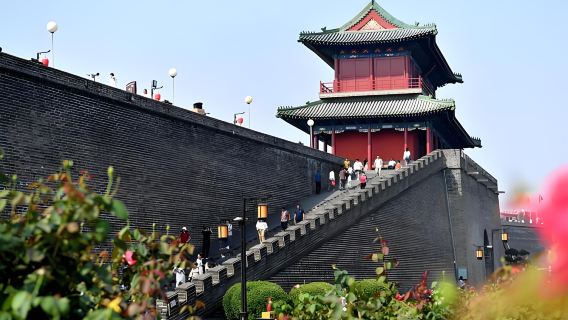
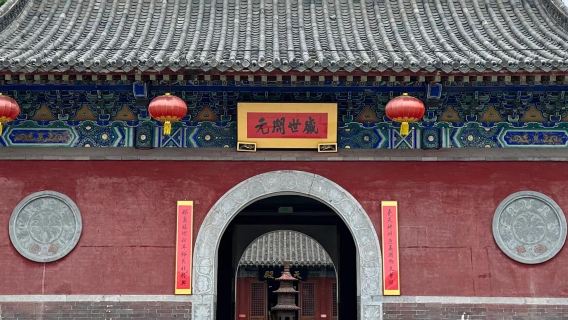
Zhengding Ancient City is located 15 km north of Shijiazhuang, the capital of Hebei Province. Built according to traditional Chinese planning concepts and architectural styles, it embodies China's historical and cultural characteristics from the 5th to 19th centuries, showcasing the wisdom and perseverance of ancient laborers. Historically known as one of the "Three Northern Strongholds" alongside Baoding and Beijing, its southern gate still bears a stone inscription reading "Stronghold of Three Passes." Zhengding is also the hometown of Zhao Zilong, a renowned general from the Three Kingdoms period. The long and rich history has endowed Zhengding Ancient City with magnificent and uniquely styled cultural relics and historic sites, renowned for its "Three Invisible Mountains, Nine Non-Flowing Bridges, Nine Towers, Four Pagodas, and Eight Great Temples, along with Twenty-Four Exquisite Memorial Archways." "Three Invisible Mountains" refers to the fact that Zhengding was historically the administrative center of the Zhongshan State, Hengshan Commandery, and Changshan Commandery, yet the area itself has no mountains. "Nine Non-Flowing Bridges" describes a single-arched three-path stone bridge in front of the Longxing Temple, as well as the pan bridges (ancient pan bridges typically featured three parallel bridges) in front of the Prefectural Confucian Temple and the Zhengding County Confucian Temple—none of which have flowing water. "Nine Towers, Four Pagodas, and Eight Great Temples" refers to the original four gate towers, four corner towers, and the Yanghe Tower within the city; the four pagodas are the Tianning Temple Pagoda, Huata Pagoda of Guanghui Temple, Xumi Pagoda, and Chengling Pagoda of Linji Temple; the eight great temples include Longxing Temple, Guanghui Temple, Linji Temple, Kaiyuan Temple in Zhengding Ancient City, Tianning Temple, Hongji Temple, Sheli Temple, and Chongyin Temple—the latter three of which have been destroyed. Zhengding once boasted 24 magnificent memorial archways, including the Xu Family Archway, Liang Family Archway, Ancient Changshan County, Supreme Virtue Reaching Heaven, Virtue Matching Heaven and Earth, and Wooden Bell for All Affairs. However, due to historical changes, weathering, and especially the destruction during the decade-long Cultural Revolution, many precious cultural relics were damaged. Yet with 9 nationally protected relics, 6 provincially protected relics, and over 10 county-level protected relics, Zhengding still retains the grandeur of a renowned historical and cultural city. The ancient city of Zhengding was designated as a provincial-level historical and cultural city in 1990 and recognized as a national historical and cultural city in 1994. Zhengding's tourism features a unique blend of "modern and ancient," "elegant and folk" characteristics. Among its historical sites, the Longxing Temple, originally built in 586 AD during the Sui Dynasty and expanded under the decree of Emperor Zhao Kuangyin, the founding emperor of the Song Dynasty, stands majestic and well-preserved. It enjoys high acclaim both domestically and internationally, praised by renowned architect Liang Sicheng as "the foremost temple beyond the capital." The temple's "Reclining Guanyin" mural sculpture was hailed by Lu Xun as "the Goddess of Eastern Beauty."Revolving Sutra LibraryDubbed by physicists as a prime example of Newton's laws in action, along with China's scripture cabinets. The Sui Dynasty Longzang Temple Stele is one of the country's renowned ancient stone inscriptions, showcasing the evolution from Han clerical script to Tang regular script, praised by Kang Youwei as "the finest Sui stele." Standing 22 meters tall, the grand Buddha statue is among China's earliest and tallest surviving bronze standing Buddhas. The cross-shaped Mani Hall exemplifies classic Song Dynasty architectural techniques. Zhengding's vicinity also boasts four famous pagodas, including Huagong Pagoda at Guanghui Temple—a brilliant fusion of diamond throne and floral pagoda styles. Tianning Temple's...Lingxiao PagodaIt is the foremost wooden pavilion tower in China. The symmetrical arrangement of the Tang Dynasty bell tower and ancient pagoda at Kaiyuan Temple in Zhengding Ancient City exemplifies the transition in Chinese Buddhist temple architecture from pagoda-centered to hall-centered layouts. The Chengling Pagoda at Linji Temple serves as the reliquary pagoda for Master Yixuan, founder of the Linji school of Buddhism, and has become a symbol of Sino-Japanese friendship. Located within Zhengding, the Zhengding Rongguo Mansion was meticulously designed and constructed according to descriptions in Cao Xueqin's literary masterpiece "Dream of the Red Chamber" while strictly adhering to China's "Great Qing Code", making it the country's first architectural complex replicating Ming-Qing architectural styles. Most scenes from the TV series adaptation of "Dream of the Red Chamber" were filmed here. The Qing Dynasty-style Ningrong Street by Rongguo Mansion's west gate stretches over 200 meters, where pivotal scenes like "Imperial Consort Yuan's Homecoming" and "Qin Keqing's Funeral" were shot. With over 1,600 years of history, Zhengding Ancient City's walls were originally earthen fortifications during the Eastern Jin Dynasty, rebuilt in stone during the Northern Zhou Dynasty, expanded into earthen walls during the Tang Dynasty, and finally reconstructed as 24-li (approximately 12 km) brick walls during the Ming Dynasty. The surviving 8,106-meter Ming-era walls feature four magnificent gates: Yingxu (later renamed Huancui) to the east, Changle to the south, Zhenyuan to the west, and Yong'an to the north. While time has eroded the western and northern gates, the eastern gate was entirely buried under 1960s military fortifications. In 2001, the southern gate tower and 50-meter flanking walls were restored through public donations of original bricks and a CNY 3.99 million investment.Zhengding · 24.8 km from Lingshou
Longxing Temple
No. 11 of Best Things to Do in Hebei

Longxing Temple

7.1
4.8/5
4.4k reviews
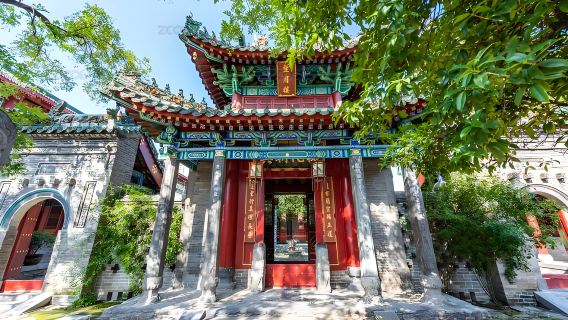
Longxing Temple, also known as the Great Buddha Temple, is one of China's most historically significant Buddhist monasteries with extensive architectural scale and remarkable preservation. This ancient architectural complex holds outstanding historical and cultural value as a monumental religious site. Longxing Temple traces its origins back to 586 AD during the Sui Dynasty, initially named Longcang Temple before being renamed during the Tang Dynasty. In 971 AD under Emperor Taizu of the Northern Song Dynasty, an imperial decree commissioned the casting of a magnificent 42-arm bronze statue of the Thousand-Hand Guanyin Bodhisattva within the temple, accompanied by the construction of the Great Mercy Pavilion. Subsequent expansions formed a Song Dynasty architectural complex centered around this pavilion. The temple underwent repairs and additions during the Jin, Yuan, and Ming Dynasties. Major renovations ordered during the reigns of Kangxi and Qianlong in the Qing Dynasty established its final layout: monastic living quarters in the east, Buddhist ceremonial spaces in the center, and imperial lodging in the west. In 1710, Emperor Kangxi personally inscribed the "Longxing Temple" plaque as a mark of reverence. From the late Qing through the Republic era, social upheaval and warfare led to the temple's decline. After the founding of New China, systematic restoration and preservation efforts by the government gradually restored the temple to its former grandeur. Longxing Temple boasts an expansive scale and diverse architectural styles, stretching approximately 600 meters from north to south and 200 meters from east to west. Its main structures are symmetrically arranged along a central axis, featuring key buildings such as the Heavenly King Hall, Mani Hall, Ordination Platform, Great Mercy Pavilion, Amitabha Hall, Vairocana Hall, and Dragon Soaring Garden from south to north. Visitors can explore along the central axis, with a complete tour typically taking 2–3 hrs. The temple is also known as the "Great Buddha Temple," a name derived from its enshrined 21.3-meter-tall Thousand-Armed and Thousand-Eyed Guanyin statue in the Great Mercy Pavilion. This majestic bronze statue, commissioned by Emperor Zhao Kuangyin during the Northern Song Dynasty, stands as one of China's most monumental ancient copper-cast Buddhist sculptures, earning the temple its nickname and making it a must-see attraction. The Mani Hall is another must-see highlight, featuring a vividly colored seated Avalokitesvara statue on its northern wall. This unique statue combines lifelike realism with divine beauty in its posture and vibrant hues. Lu Xun once praised it as "personifying divinity," earning it the title "Goddess of Eastern Beauty." The hall itself boasts distinct Song Dynasty architecture, with its original structure preserved. Its particularly special bracket set design was hailed by renowned architect Liang Sicheng as a "singular example" of Song-era construction, making it an architectural masterpiece of immense artistic and research value. Beyond these two main attractions, the temple houses other equally precious artifacts and structures. These include the Longxing Temple Ordination Platform in the Ordination Hall, the Northern Song Dynasty revolving sutra cabinet in the Revolving Sutra Cabinet Hall, the 7.4-meter-tall Northern Song wooden Maitreya statue in the Cishi Pavilion, imperial stele inscriptions by Emperors Kangxi and Qianlong in the Imperial Stele Pavilion, and the Sui Dynasty Longcang Temple Stele revered as the "origin of regular script"—all rare historical treasures worth admiring in detail. Additionally, the Dajue Liushi Hall ruins and Longteng Garden offer unique experiences, making them highly recommended stops for visitors.Zhengding · 25.3 km from Lingshou
Rong Mansion Scenic Spot
No. 10 of Family-friendly Attractions in Hebei

Rong Mansion Scenic Spot

6.8
4.4/5
3.3k reviews
Rong Mansion Scenic Spot in Zhengding was China's first film and television shooting base, built for the 1987 TV series "Dream of the Red Chamber." This ancient-style architectural complex features Ming and Qing dynasty designs, consisting of a mansion and street section. Construction began in December 1984 and opened to the public in July 1986. In 1983, China Central Television (CCTV) planned to produce the grand TV series "Dream of the Red Chamber" and sought local government cooperation to build a temporary outdoor set for Rongguo Mansion. The then Party Secretary of Zhengding County keenly recognized the business opportunity, contacted CCTV, and quickly reached an agreement where Zhengding would provide the land free of charge to construct the full-scale Rongguo Mansion set. In July 1986, after 1 year and 8 months of construction, the Rongguo Mansion attraction was completed, covering 55 acres with an investment exceeding CNY 3.5 million. The completion of Rongguo Mansion significantly boosted Zhengding's tourism industry, pioneering a national model that became known as "China's tourism, the Zhengding model." The Rongguo Mansion is designed and constructed based on the "Rongguo Mansion" depicted in the Chinese classical masterpiece "Dream of the Red Chamber." The main attractions include the Rongguo Mansion scenic area, Ningrong Street scenic area, and the Cao Xueqin Memorial Hall. Covering an area of 37,000 square meters with a building area of 6,400 square meters, the mansion features 212 rooms and 102 corridors. The entire estate is divided into eastern, central, and western sections, each designed as a five-courtyard quadrangle in Ming and Qing architectural styles. The central section serves as Jia Zheng's official courtyard, adorned with solemn imperial-style paintings, while the eastern and western sections are inner residential courtyards featuring vibrant Suzhou-style paintings. The interiors boast elegant floor-standing floral partitions and exquisite Ming and Qing-style furniture. With 23 scenes, 88 character figures, and over 1,600 antiques and calligraphy pieces, the mansion vividly recreates the grandeur of a "household of lavish feasts and a family steeped in poetry and literature." After Rongguo Mansion was completed, the 36-episode TV series "Dream of the Red Chamber" was filmed here for nearly two months, capturing over 2,000 scenes. Key sequences like "Yuanchun's Home Visit" and "Qin Keqing's Funeral" were shot on location. Since then, it has served as the filming site for 200 productions including "The Kangxi Dynasty," "Who Will Dominate," "Hai Tang Yi Jiu," and the child actor version of "Dream of the Red Chamber." Today, it has evolved into a premier attraction integrating film production, tourism, and the promotion of Red Chamber culture.Zhengding · 24.8 km from Lingshou
Hebei Museum
No. 5 of Family-friendly Attractions in Hebei

Hebei Museum

7.3
4.8/5
1.5k reviews
The Hebei Museum, formerly known as the Hebei Provincial Museum, was established in 1953. It is a provincial-level comprehensive museum of Hebei Province, a national patriotism education demonstration base, and a key museum jointly built by the central and local governments. The Hebei Museum consists of four parts: the main campus, Jianhua campus, Yucai campus, and West Street campus. The main campus is located at the Cultural Plaza in Shijiazhuang and is divided into the south and north areas. The north area was built in 1968, and the south area is a newly expanded area. The buildings of the two areas are harmonious and unified, majestic and magnificent, and constitute a landmark cultural view of Shijiazhuang. The Jianhua campus and Yucai campus serve as cultural relic warehouses, with a total collection of more than 340,000 items. Leveraging the advantages of the cultural relic collections of provincial-level cultural and museum institutions, Hebei Museum selects highlights from Hebei's history and presents 10 permanent exhibitions: "Hebei in the Stone Age," "Shang Dynasty Civilization in Hebei," "Songs of Generosity and Sorrow — Stories of Yan and Zhao," "The Majestic Spirit of the Warring States — Ancient Zhongshan State," "The Swan Song of the Great Han — Mancheng Han Tombs," "Quyang Stone Carvings," "Murals of the Northern Dynasties," "Famous Kilns and Fine Porcelain," "Flames of Resistance — Heroic Hebei," and "'Enjoy Hebei' Intangible Cultural Heritage Reception Hall — Exhibition of Hebei Province's Intangible Cultural Heritage Protection Achievements." Through more than 5,000 exquisite cultural relics (sets) and modern display methods, it chronicles the continuous history of human development in Hebei over the past 2 million years. Hebei Museum also holds numerous temporary exhibitions each year on topics such as history, art, nature, science and technology, current affairs, and folk customs, greatly enriching people's spiritual and cultural life. Over the years, Hebei Museum has made positive contributions in the collection, protection, research, exhibition, publicity and education of cultural relics, as well as domestic and international exchanges. Hebei Museum was rated as a "National Civilized Unit" in 2015 and won the title of "National Innovative Museum" in 2018. With its profound historical and cultural heritage, modern exhibitions, and a clean and comfortable open environment, Hebei Museum warmly welcomes visitors from all directions.Shijiazhuang · 32.3 km from Lingshou
Shijiazhuang Pilu Temple Museum
No. 5 of Fall Viewing Attractions in Shijiazhuang

Shijiazhuang Pilu Temple Museum

5.3
4.6/5
168 reviews
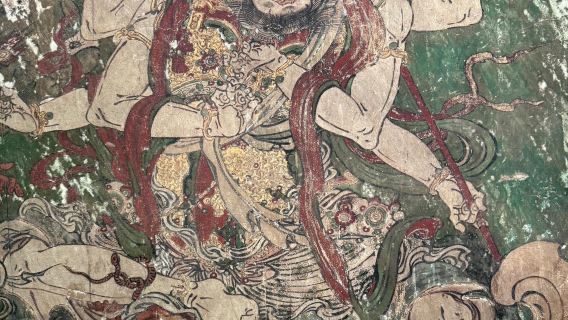
Pilu Temple is located in the northwest of Shijiazhuang City, Hebei Province, east of Shangjing Village, Xinhua District, 10 kilometers from the city center. It was first built during the Tianbao period of the Tang Dynasty and is a famous Buddhist temple with a long history in the city. Pilu Temple covers an area of 28 acres. It is famous for its exquisite religious murals from the Ming Dynasty, and also preserves a number of precious historical relics such as stone carvings and statues from the Western Han Dynasty. It is a national key cultural relic protection unit. The murals of Pilu Temple are a treasure house of traditional Chinese culture and a pearl in mural art. Compared with other murals in China, the murals of Pilu Temple have three unique characteristics: First, the content of the murals is very rich and all-encompassing. In addition to the gods of Buddhism, Taoism and Confucianism, there are also some paintings reflecting the social customs of the time and ancient figures. Second, the painting skills are exquisite, the styles are rich, and the line types are complete. Various characters are painted with different lines, such as fluttering ribbons, folds in the wind, and colorful clouds flowing around them, with rich and vivid expressions and distinct and different personalities. Third, the characters in the picture use the technique of gilding on a large area, with exquisite workmanship, and the characters have a strong three-dimensional sense, achieving an artistic effect of both spirit and form, vividness and lifelikeness.Shijiazhuang · 20.6 km from Lingshou

Experiences you can't miss in Lingshou

Featured Culture & history in Lingshou

View all Culture & history
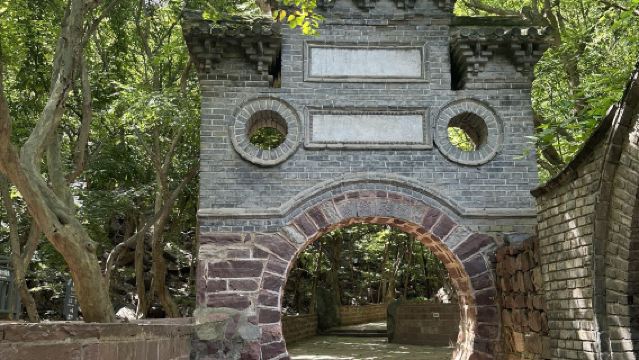
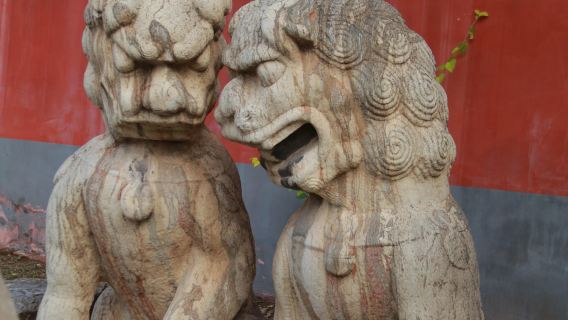
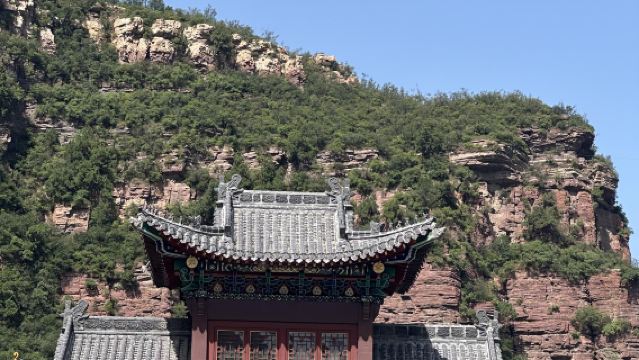
One-day tour of Zhengding Ancient City + Longxing Temple + Rongguo Mansion + Zhaozhou Bridge in Shijiazhuang, Hebei: Chartered car + admission
󱌍
FromKRW 51,625
One-day private tour of Zhengding Ancient City + Longxing Temple + Rongguo Mansion + Zhaozhou Bridge in Shijiazhuang, Hebei
󱌍
Duration: 3.8 hrs
English
Free cancellation
Instant confirmation
Book now for tomorrow
FromKRW 95,409
Lingshou Today's weatherClear 3-21℃
Lingshou weather for the next 2 days11/3: 6-19℃, 11/4: 4-15℃

Free things to do in Lingshou

What travelers say about Lingshou

user-avatar
冰咖啡彩虹糖August 22, 2026
5.0
Stepping into Manshan Huaxi Valley, nestled deep in the Taihang Mountains of Shijiazhuang, the city's heat and hustle and bustle are instantly shut out. As a national AAAA-level tourist attraction, its 98% forest coverage blankets the entire valley in lush greenery, with an average summer temperature of only 19.1℃, making it a recognized summer resort and health retreat in the Taihang Mountains. A clear stream flows through the entire area, terraced fields of flowers cascade down the slopes, and waterfalls, tranquil lakes, unique peaks, and fairytale villages are scattered throughout, offering both the majestic tranquility of pristine landscapes and the vibrant fun of trendy attractions.

Manshan Huaxi Valley

user-avatar
Anonymous userOctober 5, 2026
5.0
This is a Buddhist holy site well worth visiting. The Thousand-Handed and Thousand-Eyed Buddha and the mural of the Reclining Guanyin are historical and artistic treasures that have been preserved intact for future generations to appreciate and understand history! An even greater gain was visiting the memorial hall of Mr. Liang Sicheng, where I learned about the contributions he and Lin Huiyin made to the preservation of historical sites in my country and their transmission in education, so that we, the later generations, can appreciate these historical sites!

Zhengding Ancient City

user-avatar
Milky-wayOctober 24, 2026
5.0
The tour guide's two-hour lecture vividly and engagingly recounted the six wonders of Longxing Temple interwoven with historical stories, filling this trip to Zhengding Ancient City with reverence for cultural relics and historical sites. In particular, the ancient wooden architecture, which embodies the wisdom of the Chinese working people, sparked my keen interest in mortise and tenon joints.

Longxing Temple

user-avatar
Anonymous userOctober 9, 2026
4.0
📍Zhengding·Rongguo Mansion|A Dream of Red Mansions Through the Ages, Cao Xueqin Forever I first read *Dream of the Red Chamber* when I was probably only seven or eight years old. My family had a 1972 edition, which my father kept on top of the bookshelf. Kids, the more you forbid them from seeing it, the more curious they become, so I climbed up to the top of the bookshelf and secretly peeked through it, hiding behind piano sheet music. I couldn't recognize all the characters, let alone understand the poems, but I just couldn't put it down. I was obsessed for many years afterward, reading it countless times and devouring many works on *Dream of the Red Chamber* studies. Later, my reading became more diverse, and I gradually put it down. But some things are hard to let go of. For our generation, who wasn't raised on CCTV's *Journey to the West* and *Dream of the Red Chamber*? When I think of Bao and Dai, only Ouyang Fenqiang and Chen Xiaoxu's images come to mind; any other portrayal just doesn't feel right. I've been to the Grand View Garden in Beijing a few times. This time in Zhengding, naturally, I wanted to see Rongguo Mansion at night. This is one of China's earliest film and television shooting bases. In 1983, during the location scouting for the filming of *Dream of the Red Chamber*, Xi Jinping, then Secretary of the Zhengding County Party Committee, strongly advocated for the production team to choose Zhengding as the filming location, transforming what was originally planned as a temporary outdoor set into a permanent building. In 1986, the Rongguo Mansion was completed, and *Dream of the Red Chamber* was filmed there for nearly two months, with approximately 4,000 shots completed there, including key scenes such as "Imperial Concubine's Visit to Her Family" and "Qin Keqing's Funeral." On May 2, 1987, the 36-episode television series *Dream of the Red Chamber* premiered on CCTV. This year, 2026, marks the 40th anniversary of the completion and opening of the Rongguo Mansion. Next year will be the 40th anniversary of the broadcast of the 1987 television series *Dream of the Red Chamber*. Standing here tonight feels like keeping a 40-year promise. Cao Xueqin lived less than fifty years, *Dream of the Red Chamber* was written approximately 270 years ago, the 1987 television series aired nearly 40 years ago, and the Rongguo Mansion was completed 40 years ago. The numbers keep changing. But some things remain the same. Standing before Rongxi Hall, I suddenly recalled the image of myself at eight years old, perched atop the bookshelf, flipping through books. Back then, I couldn't understand the lines, "Full of absurd words, a handful of bitter tears"... Cao Xueqin left posterity a story that will never end. Dream of the Red Chamber will always be read, and there will always be those who push open their doors at night to experience this dream that has lasted for over two hundred years.

Rong Mansion Scenic Spot

user-avatar
揽月踏山河March 18, 2025
5.0
Wuyuezhai is located at the eastern foot of Taihang Mountain in the northwest of Lingshou County, Hebei Province. It is a national forest park and AAAA-level tourist attraction. Its main features are: The geological features are unique. It is composed of ancient metamorphic rocks. After the Himalayan movement, it has formed a fault block with an altitude of 1000-2150 meters. The mountain is steep, the gully is deep and the slope is steep. The main peak, Wuyuezhai Peak, is 1946.5 meters above sea level. The five peaks stand side by side, resembling a bonsai; the Seven Women Peaks are of different shapes and lifelike; there are also pictographic peaks such as Nantianzhu and Baima Cliff. The vegetation coverage rate is as high as 98%, with large areas of original secondary forests, lush trees and a wide variety of species. It is a "natural oxygen bar". There are many mountain springs and waterfalls everywhere. There are more than 700 large and small waterfalls, such as the magnificent Yanzhao First Waterfall, clear streams and deep pools. It belongs to the temperate continental monsoon climate. The average temperature in summer is about 19℃, which is cool and comfortable. It is an ideal summer resort. In spring, you can enjoy the mountain flowers, which are in full bloom and colorful. In summer, you can enjoy the sea of ​​clouds, which is magnificent and unpredictable. In autumn, you can enjoy the red leaves, maple leaves, birch leaves and other colorful leaves, which are all over the forest. Profound humanities and history It is said that five poisonous dragons were suppressed by the peaks transformed from the gemstones of the Five Mountains, so Wuyue Village got its name and is full of mythological colors. You can experience local folk customs, taste farm meals and feel the joy of harvest in the surrounding farmhouses. Wuyue Village combines strange peaks, forests, waterfalls and sea of ​​clouds. It is an ideal place for sightseeing, summer vacation, fitness and recuperation, and mountaineering adventure.

Wuyuezhai Scenic Area

user-avatar
望雁October 18, 2026
5.0
The Hebei Provincial Museum is definitely worth a visit. It boasts a rich and diverse collection of exhibits, arranged scientifically and logically. It also offers a wide variety of cultural and creative products and activities. It's not only suitable for teenagers but also for children.

Hebei Museum

user-avatar
akira10121111October 17, 2026
5.0
Take subway line 1, transfer to line 3, and get off at Gaozhuxia Station. Exit D (there's a long staircase to climb after exiting). You can either take bus 115 or a taxi. A taxi costs 10-13 yuan and takes about 12 minutes. Take bus 115 to Shangjing Pilu Temple Station. After getting off, walk forward for about half a minute. There's a white bridge on your right. Cross the bridge and you'll see Houshe North Residential Area. Don't enter the residential area. There's a white Pilu Temple sign on your left (Figure 1). Turn left and walk to the end of the road for about 1 minute. To return, you can take bus 115 across the street (Figure 2 was taken from the bridge). The bus stop is on the right-hand side of the opposite side, marked with a circle. The bus journey is estimated to take 30 minutes, but the waiting time is long.

Shijiazhuang Pilu Temple Museum

user-avatar
189***03May 8, 2025
5.0
It is suitable for family trips with the elderly and children. It is more relaxing, with good environment and facilities. I will go there again. The RV environment is also good. Children can play in the park during the day. There are friends' favorite trains and cute pet parks, and you can also ride horses. Adults can barbecue and have leisure and entertainment.

Huaxi Gushuqiao Park

user-avatar
_WB***59August 11, 2026
5.0
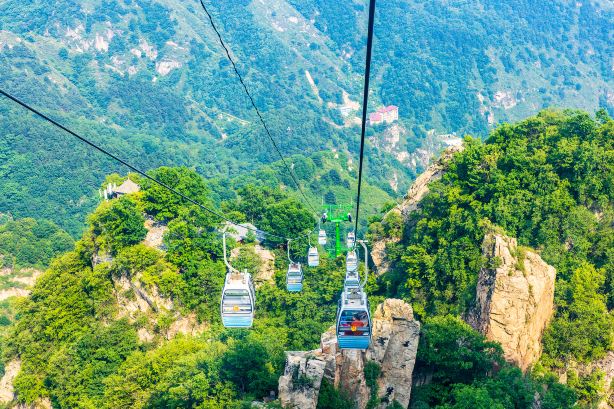
The cable car ride up and down was quite easy; walking around the top wasn't tiring at all. From the cable car station, I noticed the stairs looked incredibly long if you wanted to climb up yourself. Also, the middle station (the entrance to the slide) and the end station are on two different mountain peaks, requiring you to go up and down the stairs. The scenery at the summit was fantastic, with cliffs and precipices typical of the Taihang Mountains. To get to Wanfo Cave, you need to climb a short, rather steep staircase. The descent isn't far, but the drop is significant; some steps are as high as my calf. Wanfo Cave was cool and shrouded in mist. There are some shops on and at the foot of the mountain; bottled water is 2 yuan, very affordable. However, the KFC at the foot of the mountain wasn't open.

Baodu Scenic Spot

user-avatar
M52***93October 31, 2026
5.0
The experience at Longquan Ancient Town exceeded my expectations! The ancient buildings are arranged in a charming, staggered pattern, with the Yingyue River flowing through the town, giving it a distinctly Jiangnan water town feel. There are numerous live performances and NPC interactions throughout the day, creating a fantastic atmosphere. As night falls and the lights come on, a boat trip at night is incredibly photogenic. The town offers a wide variety of snacks, a comfortable pace of exploration, and a single ticket that allows you to see various shows—great value for money! It's a perfect weekend getaway for family and friends.

Longquan Ancient Town · Drama Illusion City

Trip Moments in Lingshou

Popular cities near Lingshou

Frequently asked questions

How can I contact Trip.com customer support?

Get help anytime, anywhere within 30 secondsContact customer support

Change and cancellation policies vary by attractions and tours. Please check the product details page for more information.

Ticket prices may vary between weekdays and weekends, as well as during peak and off-peak seasons. When booking with Trip.com, you can also use Trip Coins to get extra savings. For more tips on booking discounted tickets, please visit Trip.com for the latest information.