Qingyang

Things to do in Qingyang

Search attractions or local attractions & tours
Search

Explore top experiences

Top 10 attractions in Qingyang
View all Attractions
Jiuhua Mountain
No. 3 of Best Things to Do in Southern Anhui

Jiuhua Mountain

8.4
4.8/5
29.1k reviews

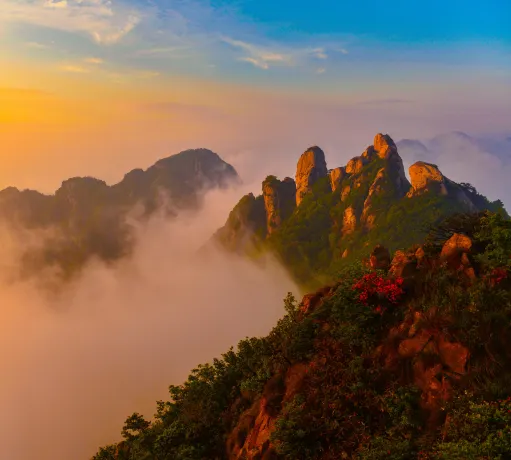
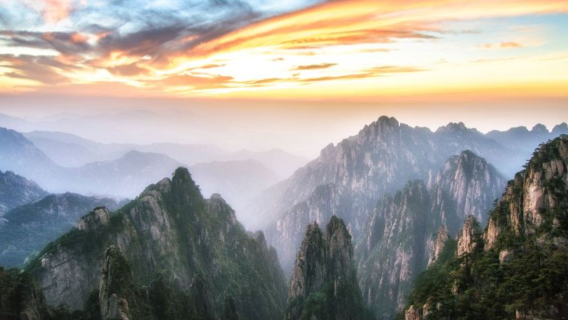
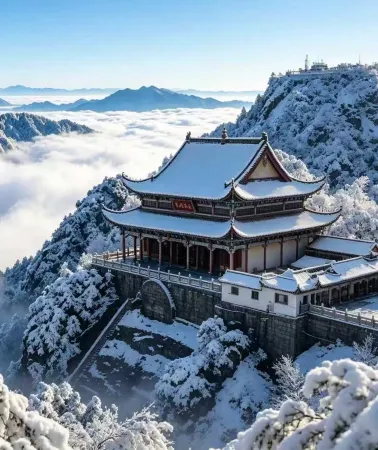
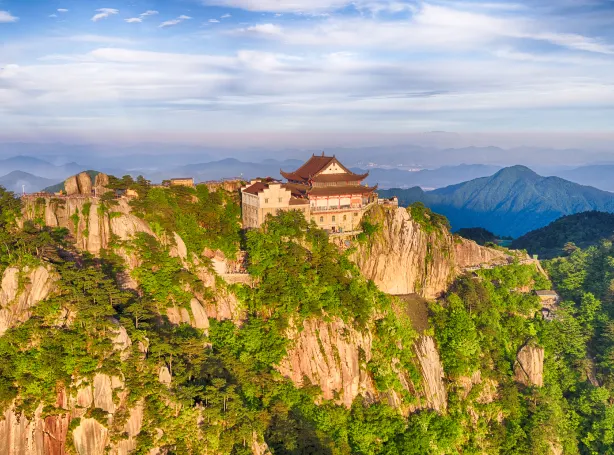
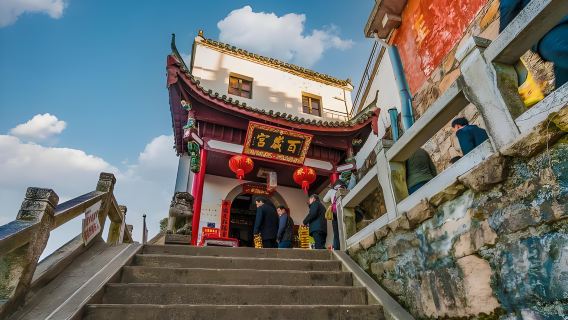
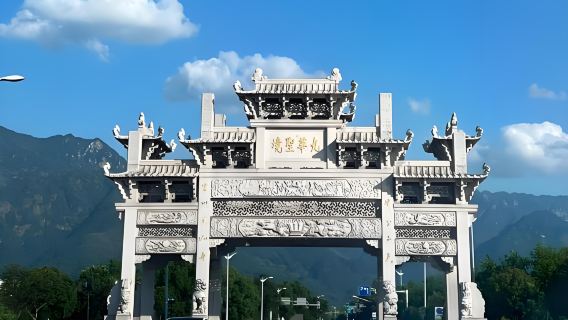
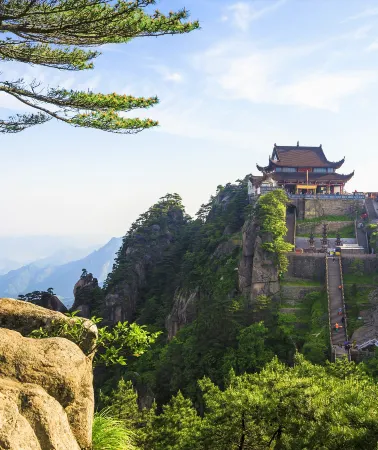
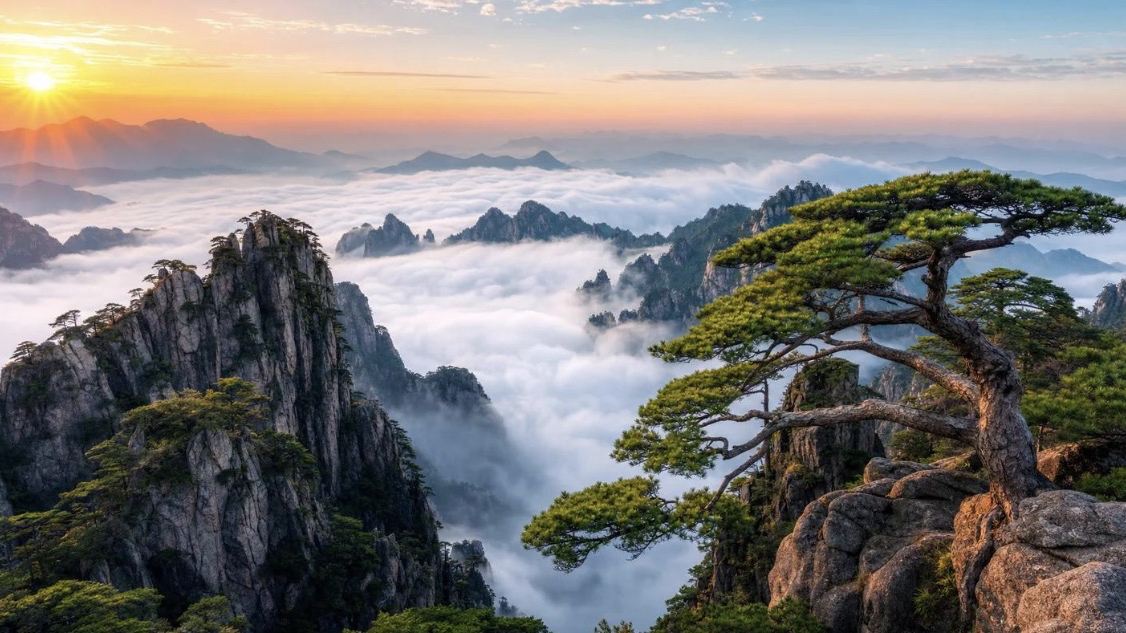
Jiuhua Mountain is located southeast of Chizhou. During the Kaiyuan reign of the Tang Dynasty (719 AD), Prince Jin Qiaojue of the ancient Silla Kingdom (an ancient regime on the Korean Peninsula) came here to practice Buddhism. Because various auspicious signs before and after his death closely resembled those of Ksitigarbha Bodhisattva, he was recognized as an incarnation of Ksitigarbha Bodhisattva and revered as Jin Ksitigarbha. Thus, Jiuhua Mountain became Ksitigarbha Bodhisattva's bodhimanda and, together with Mount Putuo, Mount Wutai, and Emeishan, was listed as one of the Four Sacred Buddhist Mountains. The preserved bodies of eminent monks from various dynasties are a major feature here. Under the perpetually humid climate, the bodies of these monks have been preserved after their passing. Currently, there are five such flesh-body bodhisattvas available for viewing. Jiuhua Street on the mountain is ring-shaped and serves as the core tourist hub of the attraction. Most trips to the various attractions start from Jiuhua Street, and many important temples are also located here. Temples are scattered throughout the mountain, and three key temples are recommended: Baisui Palace, the Hall of the Flesh Body, and Huacheng Temple. Except for Baisui Palace, which is built on a small hill, the latter two are both within the area of Jiuhua Street. To reach Baisui Palace, it takes about half an hour on foot up the mountain, or you can take the cable car. Baisui Palace enshrines the flesh body of the Ming Dynasty monk Wuxia, one of the oldest extant flesh-body bodhisattvas on Jiuhua Mountain, who was imperially conferred the title of "Response Body Bodhisattva." The Hall of the Flesh Body enshrines the flesh body of the Tang Dynasty Jin Dizang; the flesh body is sealed within a pagoda, so visitors cannot directly view the true body, but they may walk clockwise around the pagoda inside the hall. Huacheng Temple is the founding ancestral temple of Jiuhua Mountain and also the site of the Jiuhua Mountain History and Cultural Relics Museum, which houses the "Huayan Blood Sutra," copied by monk Wuxia over twenty-eight years using his own finger blood, a national first-class cultural relic. In addition to the two flesh bodies at Baisui Palace and Roushen Baodian, the other three flesh-body bodhisattvas are: Monk Mingjing of Zhantan Zen Forest, Monk Ciming of Dizang Zen Temple, and Master Renyi, a bhikkhuni, of Tonghui Zen Forest. Master Renyi is a bhikkhuni flesh body that can be visited. These three temples are all located on Jiuhua Street and can be visited in sequence. In the evening, the Qiyuan Zen Temple, the foremost of the four great monasteries, is brightly lit, and many large-scale Buddhist ceremonies are held here. Travelers may observe quietly, but must strictly observe Buddhist etiquette, refraining from loud noise and pointing at will. Travelers on a 1-day tour generally only need to visit the key temples; those with plenty of energy can continue upward from Baisuigong to Dongya Temple, and walk from Roushen Hall to **Shangchan Hall and Xiaotiantai**. Travelers on a 2-day tour can visit temples on the first day and hike up the mountain to enjoy the natural scenery on the second day, with three options: the Tiantai scenic area, the Huatai scenic area, or the ridge traverse from Tiantai to Huatai. Visiting Tiantai or Huatai separately generally takes about half a day; the Tiantai–Huatai traverse is a hiking route with a certain level of intensity, so it is recommended to set aside a full day. Tiantai is located on the south side, with its entrance at Fenghuang Pine south of Jiuhua Street; from Tiantai Temple at the top, you can enjoy the sunrise and sea of clouds and overlook the panoramic view of Jiuhua Street. Huatai is located in the northern part of the attraction, where the natural scenery is more pristine and pure, with exotic peaks and grotesque rocks scattered in varied forms; every May, rhododendrons bloom across the mountains in succession. The entrances to the two scenic areas are far apart, but they are connected by a hiking trail along the ridge. This place is foggy year-round, especially in spring and fall, when clouds and mist shroud the temple, giving it a sense of a Buddhist wonderland. Foggy days are often accompanied by drizzle, so bringing a rain poncho is recommended. In winter, snowy scenery is common in the mountains, but the steps are wet and slippery, so be sure to take anti-slip precautions when climbing.

Qingyang · 18.2 km from downtown
Jiuhua Street

Jiuhua Street

4.7
4.7/5
115 reviews

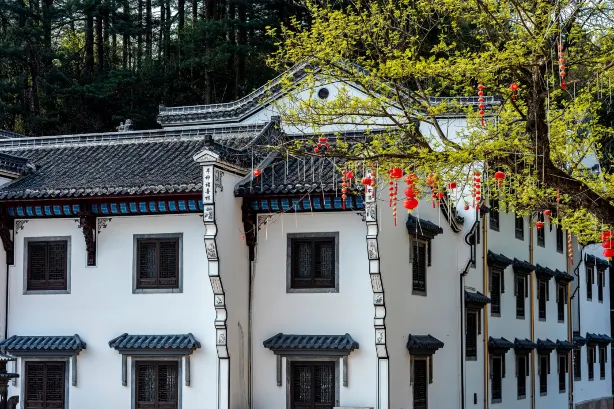
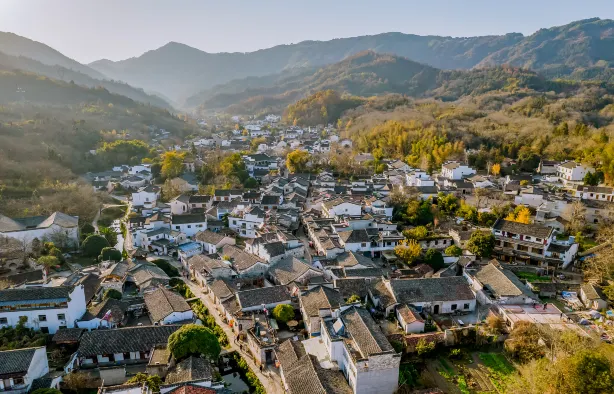
Jiuhua Street is located in the heart of Jiuhua Mountain. It is a circular town surrounded by temples and serves as a transfer hub for the core area of Jiuhua Mountain. The area around the street and the central zone are filled with temples and are bustling with incense offerings. Among them, Huacheng Temple is the founding temple of Jiuhua Mountain, with a history dating back to the Tang Dynasty, and it houses precious cultural relics such as Ming Dynasty scriptures; Zhiyuan Temple is one of the four major temples of Jiuhua Mountain and features magnificent halls; Zhantan Chanlin is located in the center of Jiuhua Street and is also known as Zhantanlin Temple. In addition, various large and small temples such as Jingjie Retreat, Wanglong Nunnery, Huatian Temple, Julong Temple, Minggong Chan Temple (closed to the public), Putian Nunnery, and Tiantai-Jingtu Nunnery at Jiuhua Mountain are scattered throughout the area. Besides the temples, Taibai Academy is said to be the site where the poet Li Bai studied, adding a touch of literary atmosphere to Jiuhua Street. The architectural complex of Jiuhua Street is primarily in the style of southern Anhui residences, with white walls and brown tiles interspersed with yellow temple walls. Strolling through the streets, you can feel the solemn atmosphere of this famous Buddhist mountain while also finding convenient places to rest and dine, making it a natural outpost for visiting various attractions in Jiuhua Mountain.

Qingyang · 18 km from downtown
Zhaji Village
No. 7 of Night Attractions in Anhui

Zhaji Village

7.2
4.3/5
3.8k reviews

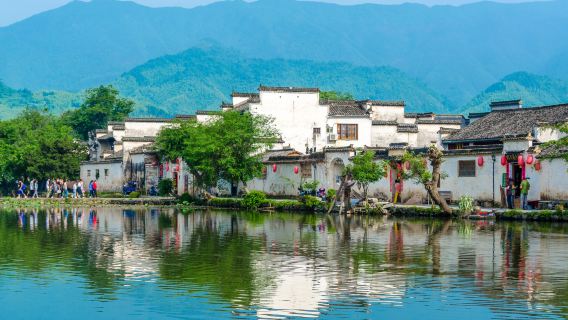
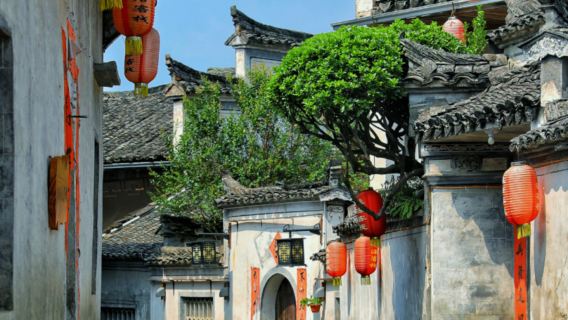
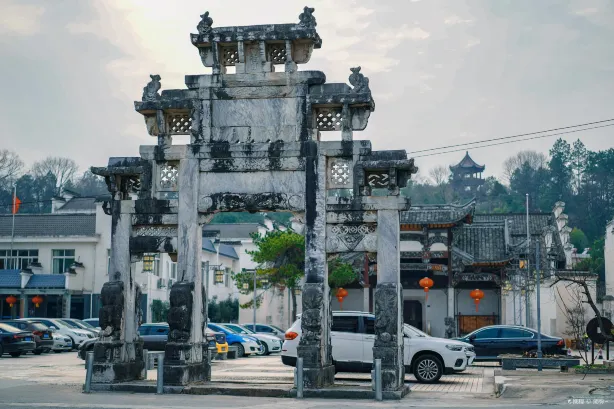
Zhaji Village is about 20 km from Peach Blossom Pool to the east, where Li Bai wrote "the Peach Blossom Pool is a thousand feet deep." Travelers often visit the two together. This ancient Huizhou-style village has been home to the Zha family since its ancestor Zha Wenxi settled here. Cen Stream, Xu Stream, and Shi StreamSanxiConverging in the village, the Hui-style buildings with white walls and black tiles are built along the stream. There are many ancestral halls in the village, and the Hui-style three carvings of brick, wood, and stone on the buildings are very exquisite. The students who come to sketch everywhere are also a beautiful sight. Its main touring route is circular, with the main entrance in the east. The Zhaji Art Museum at the entrance of the pedestrian street (New Street) houses rich cultural relics such as jade articles, ancient building components, and stone inscriptions. If you are not in a hurry, you can pay a visit. After walking through the pedestrian street, you have officially entered the village. It is recommended to first tour the southern half of the loop, because the attractions along the Xu Stream in the south are relatively concentrated. The Baogong Hall (Dunsu Hall), rebuilt during the reign of Emperor Tongzhi of the Qing Dynasty, is located in the eastern section of Xu Stream. Here you will encounter a branch road heading southwest, and two important buildings are deep along the road. First you reach the Degong Hall, built in the Yuan Dynasty. The appearance of the gate is ingenious—it is a memorial archway, and the pillars in the hall are made of precious nanmu wood. Then you reach the Ming Dynasty's Airi Hall, which is the inn in the ghost film "Desolate Village Inn." Unfortunately, although it is said to be one of the more completely preserved residences in the village, it has been closed to the public for a period of time. Return to Baogong Hall and tour westward along Xu Stream. Remember to pay attention to the ancient bridges of various shapes over the stream. On one side of the Ming Dynasty Honglou Bridge is the Honglou Pavilion, and the combination of bridge and pavilion is very unique. After visiting attractions such as the Zhaji Ancient Building Complex-Honggong Hall, if you continue west, you can reach the Painters' Village, named because many painters have built their own painting bases here. Hu Ge's hometown in "Life Revelation" is nearby, named Yuegui Villa. Then walk the northern half of the loop, where there are attractions such as the Qing Dynasty Yuqing Hall and the Ming Dynasty Xiangyi Hall. Among them, Erjia Hall is the largest ancestral hall in the village, built in the early Qing Dynasty, and the Hui-style three carvings on the building are well worth seeing. When you are about to return to the pedestrian street, do not miss the inconspicuous herbal medicine shop Cunren Hall; the owner is an expert who deeply understands Chinese medicine. The conventional way of touring is roughly like this. If you like rustic fun, you can find the branch road to Qingshan on the way from Cunren Hall to the pedestrian street, cross a mountain ridge to visit Qingshan Pagoda, and smell the fragrance of cloud-mist tea all over the mountain; you can also take a half-mountain stroll along Zhaji Primary School-Fafeng Well-Linzhi Bridge; you can also climb Rusong Mountain in the southeast and visit Rusong Pagoda; or cycle 5 km northeast to Hou'an to visit the Memorial Hall of Wang Jiaxiang's Former Residence and enjoy the pastoral scenery along the way. Bicycles can be rented on the pedestrian street or at some inns. If you do not know exactly how to follow these routes, just ask the locals. Food and accommodation here are very convenient. You can eat at the inns. Hairy tofu, tea, osmanthus rice wine, fall chestnuts, and kiwi fruit are all local specialties. The accommodation conditions deep in the village are relatively simple, but the scenery is good. Many students stay on the pedestrian street at the village entrance, and young people easily chat happily together. There are also simple entertainment activities on the street such as billiards, internet cafes, and KTV. Some inns in the village have viewing platforms in high places. If you are not staying overnight, going upstairs to take photos requires an extra fee, such as the well-reputed Guangyuan Lou; it is said that its promotional photos were taken at this house.

Jing County · 23 km from Qingyang
18% offFrom DKK 54.42
Roushen Temple

Roushen Temple

4.4
4.7/5
297 reviews

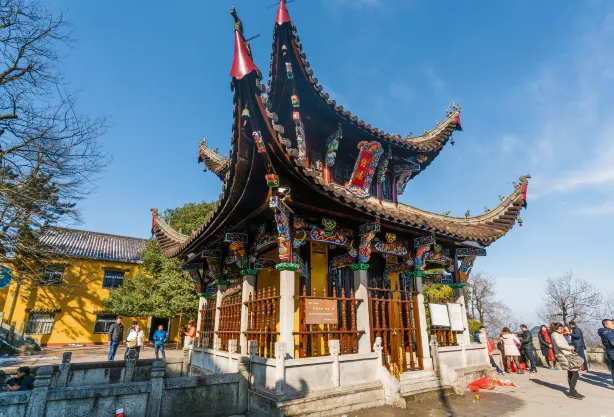
Roushen Temple is located on Shenguang Ridge in Jiuhua Mountain, and is the core place of worship for this Ksitigarbha Bodhisattva monastic site. During the Kaiyuan era of the Tang Dynasty, the monk Jin Qiaojue, who was of Silla royal descent, crossed the sea to Jiuhua Mountain. After more than 70 years of ascetic practice, he passed away at the age of 99 in the 10th year of the Zhenyuan era. The monks followed Buddhist funeral rites and placed his physical body into a jar. Three years later, when the jar was opened, his face appeared lifelike and his body had not decayed. He was then revered as the incarnation of Ksitigarbha Bodhisattva. A pagoda was built on the ridge to enshrine him, and a hall was expanded upon the pagoda's base, creating a unique layout of "a pagoda within the hall, a jar within the pagoda, and the physical body within the jar." Legend has it that divine light frequently appeared at the pagoda's base, which is how Shenguang Ridge got its name. This hall, first built during the Zhenyuan era of the Tang Dynasty, was destroyed and rebuilt many times. During the Wanli reign of the Ming Dynasty, it was bestowed with the plaque "Protecting the Nation Roushen Pagoda." The existing structure generally follows the layout from its reconstruction in the late Qing Dynasty. Today's temple features red walls and stone pillars, with iron tiles covering the roof. In the center of the hall stands a seven-story wooden pagoda over 10m high. Inside the pagoda, more than 100 statues of Ksitigarbha are enshrined layer by layer, and the physical body of Jin Qiaojue is enshrined within the pagoda. Pilgrims and tourists who come here usually enter the hall to walk clockwise around the pagoda to pray for blessings, following the custom of circling an odd number of times. The hall is filled with candle smoke and bustling crowds. It is advisable to walk softly and move slowly with the flow of people. Around the 30th day of the seventh lunar month, the birthday of Ksitigarbha Bodhisattva, there are an exceptionally large number of pilgrims visiting the mountain. The incense in front of the hall burns continuously all day, and the Buddhist atmosphere is particularly strong.

Qingyang · 18.7 km from downtown
Huatai Viewing Platform

Huatai Viewing Platform

4.3
4.6/5
270 reviews

Huatai Viewing Platform is located within the Huatai Viewing Platform area, situated on the northeast side of Jiuhuashan Tiantai Scenic Area, and is a viewing platform for overlooking the natural mountain scenery of Jiuhua Mountain. Huatai is composed of granite peak clusters such as Huatai and Xiaohuatai. It is named for its abundance of mountain flowers and is known for the saying, "The spiritual mountain of Jiuhua is most beautiful at Huatai." The entire mountain range stretches from north to south, with a silhouette resembling a giant reclining Buddha. Details such as the bridge of the nose and the Adam's apple are clearly discernible. This is the iconic wonder of Huatai, the "Natural Sleeping Buddha," which is regarded by believers as a manifestation of Ksitigarbha Bodhisattva. Standing on the viewing platform and looking into the distance, you can see unique peaks such as Tianmen Peak, Liantai Peak, and Luohan Peak surrounding you. Strange rocks like Luohan Shaidu, Dinghai Shenzhen, and Rhino Gazing at the Moon are vivid and lifelike, resembling an unfolding landscape scroll of granite. The scenic area's high-altitude plank road is built along the cliff face, with a total length of approx. 1.7 km. It connects scenic spots such as "Mother and Child" and "Ksitigarbha's Boots." Along the way, you can also view the silhouette of the Natural Sleeping Buddha from different angles. The plank road is generally flat, making it a physically friendly trail within Jiuhua Mountain. Huatai has unique attractions in every season: in late spring and early summer, alpine rhododendrons bloom one after another along the ridges in red, yellow, white, and purple, stretching out in patches and known as the "Flower Market in the Sky." Summers are cool, and after rain, you can often see a sea of clouds surging in the morning. In the fall, the forests are painted in vibrant colors. In winter, after snow, the mountains are covered in crystal-clear rime and icicles. Visitors with plenty of energy can also climb to the summit of Huatai, which is nearly 1,300m above sea level, to look out over the peaks of Jiuhua Mountain and overlook the Minyuan Bamboo Sea and Jiuhua Street.

Qingyang · 17.9 km from downtown
Baisui Palace

Baisui Palace

4.2
4.7/5
307 reviews

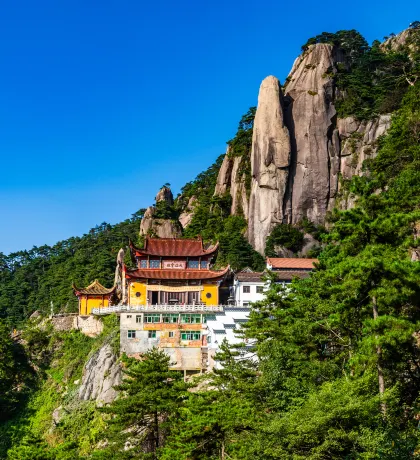
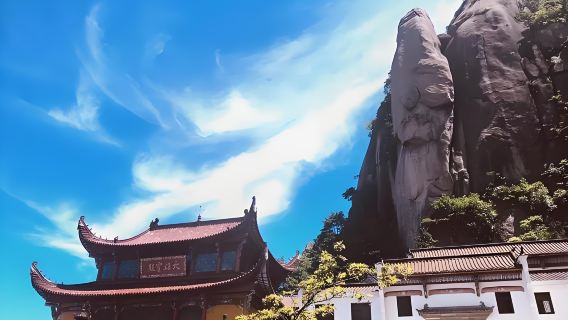
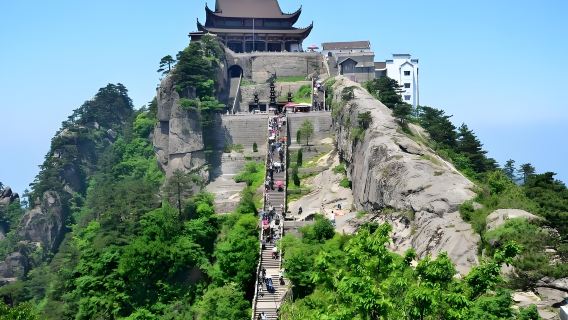
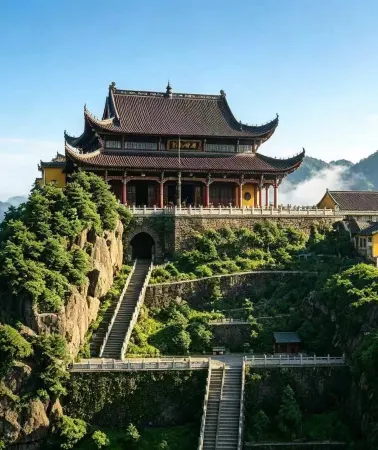
Baisui Palace stands majestically atop Chaxiao Peak (Mokong Ridge) in Jiuhua Mountain. Together with Zhiyuan Temple, Dongyachan Temple, and Ganlu Temple, it is known as one of the four major monasteries of Jiuhua Mountain, and is a temple famous for enshrining a physical body Bodhisattva. Its origin is linked to a legendary monk: during the Wanli reign of the Ming Dynasty, Chan Master Wuxia traveled from Wutai Mountain to Jiuhua Mountain, where he practiced asceticism in a mountain cave. Using his tongue blood as ink, he spent over 20 years copying the 81 volumes of the *Avatamsaka Sutra*. This "blood sutra" was later identified as a national first-class cultural relic. Legend has it that the master passed away at over 100 years old. His body was placed in a jar for preservation, and when opened 3 years later, his face appeared lifelike. The monks gilded his body for veneration, and he was bestowed the title "Yingshen Bodhisattva" during the Chongzhen reign at the end of the Ming Dynasty. The temple was originally named Zhexing Nunnery, but it is commonly known as Baisui Palace because the master lived to be over 100. The existing halls are built in the southern Anhui residential style known as "zoumatonglou" (corridor-connected buildings), with white walls and dark tiles climbing layer by layer along the cliff. The mountain gate, main hall, Roushen Temple, storerooms, and monks' quarters are seamlessly integrated, resembling an ancient castle embedded in the mountain ridge from a distance. Inside, giant rocks and boulders are embedded in the walls, making the architecture and the mountain almost indistinguishable. Hanging in front of the hall is a vertical plaque inscribed by Li Yuanhong during the Republic of China era, reading "Imperially Bestowed Baisui Palace for Protecting the Nation Baisui Palace." In the Roushen Temple, the gilded body of Chan Master Wuxia sits in a niche, draped in a vermilion kasaya. His head resembles that of a living person, while his body is shrunken. This gilded veneration has continued for approx. 400 years, making it one of the oldest existing physical bodies in Jiuhua Mountain and an important stop for pilgrims. You can take a cable car up the mountain or walk along the 1,000+ stone steps. The Five Hundred Luohan Hall next to the temple features 500 Luohan statues in various poses and is worth a visit while you are there. The area around Baisui Palace offers expansive views. On clear days, looking toward Huatai, the continuous peaks resemble a natural reclining Buddha, with its head resting on the Tiantai peaks and clearly defined facial features. It is a highly recognizable scenic spot in Jiuhua Mountain. Photography of Buddha statues is generally prohibited inside the temple halls; please remain quiet during your visit.

Qingyang · 18 km from downtown

Experiences you can't miss in Qingyang

Featured Culture & history in Qingyang

View all Culture & history
[Journey to Mount Jiuhua] Anhui Chizhou Private 1-Day Tour with Transfer & Tickets
󱌍
Duration: 4.2 hrs
English
Free cancellation
Instant confirmation
FromDKK 984.92
[Prayer Tour] Anhui Chizhou Mount Jiuhua Private 1-Day Tour
󱌍
Duration: 4 hrs
English
Free cancellation
Instant confirmation
FromDKK 1,423.05
[Tracing Jiuhua Mountain] Private Day Tour to Jiuhua Mountain from Chizhou, Anhui with Private Car & Tickets Included
󱌍
FromDKK 984.92
Private guided day tour to Jiuhua Mountain from Chizhou, Anhui
󱌍
Duration: 3.3 hrs
English
Free cancellation
Instant confirmation
FromDKK 1,423.05
[Premium Private Car] Private Day Tour to Jiuhua Mountain from Chizhou, Anhui
󱌍
Duration: 4 hrs
English
Free cancellation
Instant confirmation
FromDKK 1,026.7
Hongcun ancient village and Huizhou cultural experience (departing from Huangshan)
󱌍
Duration: 10.5 hrs
English
Free cancellation
Instant confirmation
9% off
Limited-time sale
FromDKK 387.18DKK 430.19
Yi CountyXidi+Hongcun Village1-day Tour
󱌍
Duration: 8 hrs
English
Free cancellation
Instant confirmation
FromDKK 1,014.76
Xidi & Ox-Shaped Hongcun Village, UNESCO World Heritage Huangshan Day Private Tour
󱌍
Duration: 7.6 hrs
English
Free cancellation
Instant confirmation
FromDKK 539.91

Featured Outdoor & sports in Qingyang

View all Outdoor & sports
Hongcun & Huangshan Express Day Trip, Optional Mtn Overnight
󱌍
Duration: 10 hrs
English
Free cancellation
Instant confirmation
FromDKK 882.96
Huangshan: Yellow Mountain Small-Group Day Tour & Transfers
󱌍
Duration: 7.8 hrs
English
Free cancellation
Instant confirmation
FromDKK 662.22
Huangshan: Yellow Mtn. Xidi & Hongcun 1+1Day Cultural Tour
󱌍
Duration: 13 hrs
English
Free cancellation
Instant confirmation
FromDKK 492.82
Private Day Tour of Huangshan Mountain Hiking with Xihai Grand Canyon
󱌍
3.0/5
· 1 review
Duration: 2 hrs
English
Free cancellation
Instant confirmation
FromDKK 853.59

More things to do

Private Tours in Qingyang

View More Private Tours in Qingyang
Qingyang Today's weatherClear 6-20℃
Qingyang weather for the next 2 days11/30: 9-24℃, 12/1: 11-24℃

Free things to do in Qingyang

What travelers say about Qingyang

user-avatar
Anonymous userNovember 28, 2026
5.0
Jiuhua Mountain truly lives up to its name as the Lotus Buddhist Kingdom! The mountains are verdant, shrouded in mist, with ancient temples nestled among the trees, exuding a profound sense of Zen. The scenic area is well-managed, with convenient shuttle bus transfers and clean, easy-to-walk trails. The mountain air is fresh, and every step reveals a new vista. The Tiantai and Huatai scenic areas offer expansive and healing views. Away from the hustle and bustle, it offers tranquility and comfort, combining stunning scenery with rich cultural heritage—definitely worth a visit!

Jiuhua Mountain

user-avatar
DhammikoSeptember 17, 2026
5.0
Dear Friend, please visit this scenic once in a lifetime at least, since it's free to enter the park and you can also enjoy the pilgrims trail from the front gate to the end of the park.. for my parents, we got this shuttle to shorten our route since it's close to climb to the foot of Ksitigarbha Bodhisattva on 16.50p.m.. please feel free to visit this Scenic once in a lifetime before it's too late to enjoy it.. I'm book ahead from Trip.com for easy access..

Dayuan Cultural Park

user-avatar
110***77October 9, 2026
5.0
Being able to bring a dog on the cable car is commendable. It was very crowded that day due to the National Day holiday; we queued for an hour, but it was manageable after getting a number and exploring a bit more. There was heavy fog that day, so the scenery wasn't visible.

Jiuziyan Scenic Area

user-avatar
瑜魚October 2, 2025
4.0
Jiuhua Mountain's Tiantai and Huatai areas are primarily natural attractions. Tiantai's highest peak houses the Ksitigarbha Sutra worship site. About 500 meters below Tiantai Peak, there's an ancient sutra worship site with the legendary giant footprints. Tiantai and Huatai are connected, and the main attractions are at the peaks. Climb to the summit to admire the magnificent peaks. Once you reach Tiantai or Huatai, there's no need to rush down. Follow the signposts and hike along the way to visit both. There are also Phoenix Pine trees 200 meters from the Tiantai cable car, which are also a must-see on the hike up Tiantai Mountain. However, the ascent is long, so it's not recommended for families. The hike takes about 2-3 hours for young and middle-aged people. I chose to take the cable car up and hike down.

Jiuhuashan Tiantai Scenic Area

user-avatar
德坚July 30, 2023
5.0
Jiuhua Street is where the main temples of Jiuhua Mountain are concentrated, including Qiyuan Zen Temple, Huacheng Temple, Sandalwood Zen Forest, Shang Zen Hall, Yueshen Hall, Dizang Zen Temple and many other temples and monasteries. If a detailed tour takes most of the day, you can have lunch at Jiuhua Street at noon. So, overall, it is still worth visiting.

Jiuhua Street

user-avatar
Raikkonen71November 26, 2026
4.0
More than two hundred old houses from the Yuan, Ming, and Qing dynasties are inhabited by locals. Aunts wash clothes and vegetables by the Xu River, while students quietly paint on easels set up at the bridgehead. The only sounds in the alleys are the sound of the stream and footsteps. There are no trendy shops or loudspeakers lining the streets; it's much quieter than Hongcun and Xidi, with a perfect balance of commercialization—there are amenities before entering the village, but once inside, only white walls, black tiles, and everyday life remain. The Yuan dynasty stone pillars of the Degong Hall and the wood carvings of the Erjia Ancestral Hall are worth taking your time to appreciate. In the evening, enjoy a hearty meal of braised pork with dried bamboo shoots by the stream for just a few dozen yuan per person. If you're looking for a truly slow-paced, undisturbed ancient village in southern Anhui, Chaji is the perfect choice.

Zhaji Village

user-avatar
非你不渴June 18, 2021
5.0
After entering from the north gate, the temple buildings rise in tiers, magnificent and beautiful. You need to climb steps, but they aren't very high, about the height of an 8-10 story building.

Roushen Temple

user-avatar
还不曾去过倒悬山!December 4, 2024
4.0
Huatai Scenic Area (main peak 1299 meters above sea level) is one of the main scenic areas of Jiuhua Mountain (Jiuhua Mountain is divided into five major scenic areas: Jiuhua Street, Min Garden, Tiantai, Huatai and Kecun Scenic Area). From a geographical point of view, Huatai is located in the center of the entire scenic area. The "natural sleeping Buddha" presented by Huatai makes the entire Jiuhua Mountain full of mystery and aura. The natural landscapes such as "Natural Sleeping Buddha", "God of Wealth Min Gong", and Ksitigarbha Bodhisattva "Borrowing Land for Robes" and other major Buddhist classic stories all come from Huatai. It is the birthplace of Jiuhua Mountain's Buddhist history and culture, and there is even a saying that "Buddha is in Huatai"  

Huatai Viewing Platform

user-avatar
瀚2021April 4, 2025
5.0
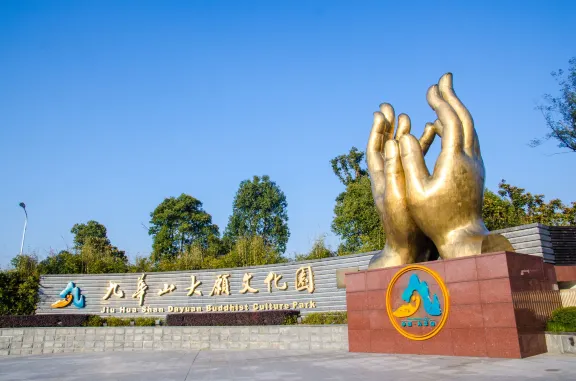
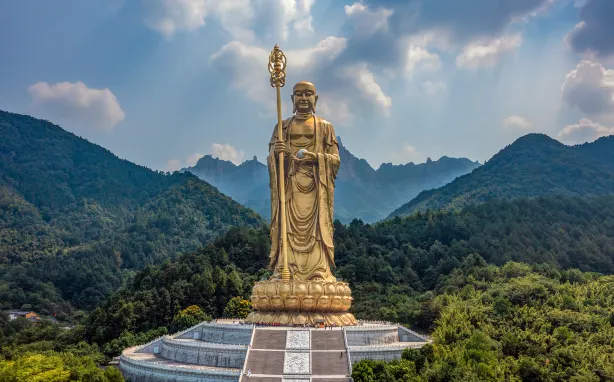
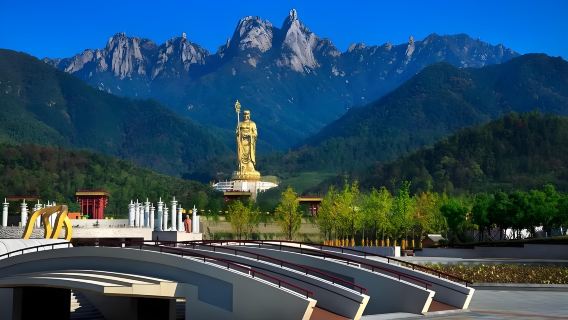
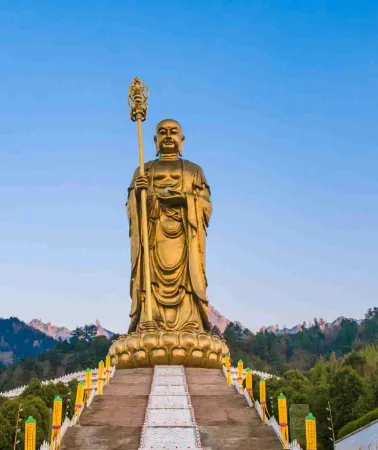
九华大佛,即99米的地藏菩萨露天铜像,其高度和庄严的造型本身就是地藏菩萨“地狱不空,誓不成佛”宏大愿力的象征。九十九米的高度在佛教文化中也具有特殊的意义,代表着至高的境界。佛像慈悲的面容、庄严的手势,无不传递着地藏菩萨普度众生、救苦救难的慈悲情怀。当你仰望这座巨大的佛像时,会感受到一种震撼心灵的力量,仿佛能体会到地藏菩萨的深宏誓愿。朝圣礼佛的中心:九华山作为地藏菩萨的道场,吸引着无数佛教信徒前来朝圣礼佛。而九华大佛的落成,更是将九华山推向了一个新的高度,成为了信徒们瞻仰和祈愿的中心。许多信徒不远万里而来,虔诚地在大佛前叩拜,祈求平安吉祥,表达对地藏菩萨的敬仰之情。对于他们而言,九华大佛不仅仅是一尊雕塑,更是一种信仰的寄托和精神的象征。更实用的游览建议:最佳游览时间: 春秋两季气候宜人,是前往九华山的最佳时间。避开节假日可以获得更好的游览体验。交通方式: 可以乘坐飞机或火车到达池州,再转乘前往九华山的旅游巴士。到达九华山景区后,可以选择乘坐景区内的交通车前往九华大佛景区。攀登准备: 前往九华大佛需要攀登一定的台阶,建议穿着舒适的鞋子,并根据自身情况量力而行。可以携带适量的水和食物。礼佛注意事项: 在大佛前礼佛时,应保持恭敬之心,注意言行举止。可以购买香火进行敬拜,但要注意安全。周边景点: 九华大佛景区内还有其他值得参观的景点,如大愿文化园等,可以一并游览。住宿建议: 九华山景区内有各种档次的酒店和宾馆可供选择,可以根据自己的预算和需求进行预订。总结:九华山风景区的九华大佛不仅是一座雄伟壮观的艺术品,更是地藏菩萨宏大愿力的象征,是佛教信徒朝圣礼佛的重要中心。它以其独特的宗教意义和震撼人心的力量,吸引着无数人前来瞻仰。如果你计划前往九华山,九华大佛是绝对不容错过的核心景点,它将给你带来一次深刻的文化和精神体验。

Jiu Hua Shan Dayuan Buddhist Culture Park - Jiuhua Buddha

user-avatar
E22***58July 3, 2023
4.0
Baisui Palace is a famous temple in Jiuhua Mountain Scenic Area. You can walk up the mountain on the mountain road next to the Jiuhua Mountain ticket gate, or take the Baisui Palace cable car a little further up. Both ways are acceptable. Baisui Palace is the highest point in Jiuhua Street, and you can overlook the entire Jiuhua Street. The environment is very good, and the temple enshrines a living Buddha.

Baisui Palace

Trip Moments in Qingyang
Popular cities near Qingyang

Frequently asked questions

What are the must-do things in Qingyang?

Don't miss these attractions in Qingyang: Jiuhua Mountain, Dayuan Cultural Park, and Jiuziyan Scenic Area. If you like Culture & history, try [Journey to Mount Jiuhua] Anhui Chizhou Private 1-Day Tour with Transfer & Tickets. If you enjoy Outdoor & sports, try Hongcun & Huangshan Express Day Trip, Optional Mtn Overnight.

Get help anytime, anywhere within 30 secondsContact customer support

Change and cancellation policies vary by attractions and tours. Please check the product details page for more information.

Ticket prices may vary between weekdays and weekends, as well as during peak and off-peak seasons. When booking with Trip.com, you can also use Trip Coins to get extra savings. For more tips on booking discounted tickets, please visit Trip.com for the latest information.