https://https://www.trip.com/toplist/tripbest/recommend/wuqiang/best-things-to-do/10072516900000/?locale=en-US


Best Things to Do

Top 50 Best Things to Do near Wuqiang [2025]

Show All Photos
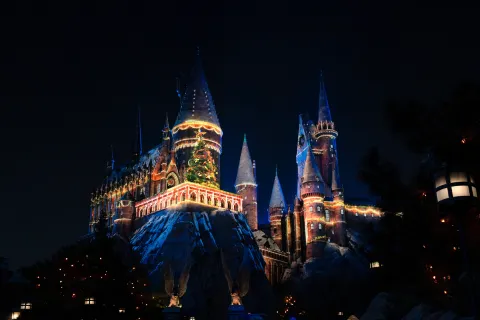
Universal Beijing Resort
4.6
/5
55819 reviews
10
From $49.02

Based on 70 reviews
Universal Beijing Resort and Sorrounding | >100 km from downtown
Phone +864000688688
Address: Universal Beijing Resort, Tongzhou District, Beijing
Recommended sightseeing time: 1–2 days
Highlights:
Summer Water Party
The world's fifth Universal Studios theme park

Saved by 14129 users50481 positive reviews
Verified user reviews



Universal Studios is a must-visit!
However, those with neck problems should be cautious about the two Harry Potter rides, as they may cause dizziness and nausea afterward. The Minions area is great for taking photos and checking in on social media.
We had a lot of fun, but Beijing winters are really not suitable; it's too cold at night in large amusement parks! The park is great for photos, and the tickets were a great deal the day we went. However, we didn't buy speed pass tickets, so the queues were a bit long, making the experience less than ideal. If your budget allows, you should definitely buy speed pass tickets; they save time and effort, and you'll have a much better time.

Show All Photos
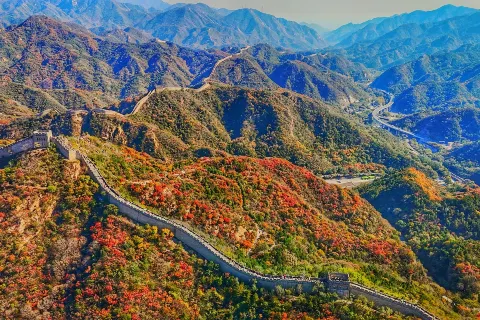
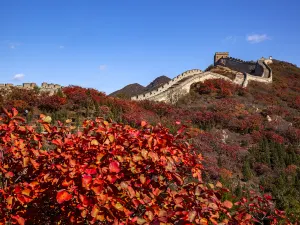
Badaling Great Wall
4.7
/5
55782 reviews
10
From $4.97

Based on 11,098 reviews
Badaling Great Wall/Badaling Wildlife Park | >100 km from downtown
Phone +864008180088
Address: Exit 58 of G6 Beijing-Lhasa Expressway, Yanqing District, Beijing
Recommended sightseeing time: 3–4 hours
Highlights:
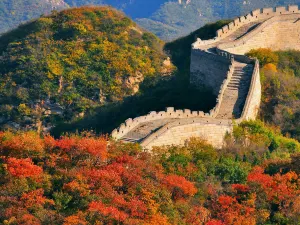
Take a cable car to enjoy the fall scenery of The Great Wall
World Heritage Site
Saved by 10130 users39581 positive reviews
Verified user reviews

"He who has not climbed the Great Wall is no true man." As a Chinese person, who wouldn't visit Beijing at least once? After all, it's the capital. And when you're in Beijing, who wouldn't go to the Great Wall? It's a must! The cable car takes you directly to North Seven, then you walk to the highest point, North Eight, and then take the cable car back down. You've checked off the Great Wall, and it's not tiring at all. It was a relaxing trip with my parents, very enjoyable.
We caught Beijing's first snowfall; the scenery was breathtaking, absolutely beautiful.
A word of caution: avoid the restaurant in the parking lot (Shancheng Yiguodun). They don't provide receipts, the portions are small, and the prices are high.

Show All Photos
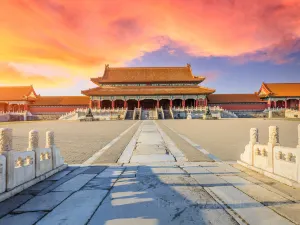
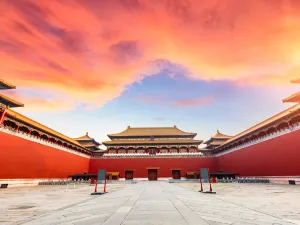
The Palace Museum
4.8
/5
187425 reviews
10
From $8.52
Based on 14,262 reviews
Tian'anmen Square and Wangfujing Area | >100 km from downtown
Phone +864009501925
Address: No. 4, Jingshanqian Street, Dongcheng District, Beijing
Recommended sightseeing time: 0.5–1 day
Highlights:
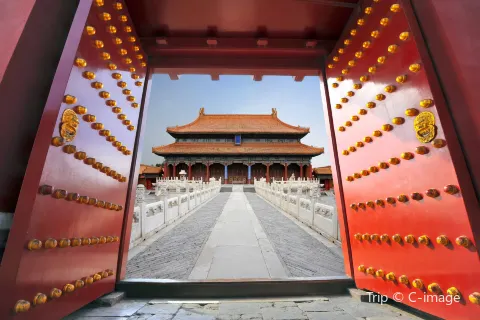
Admire the flowers and plants in the Imperial Garden in Forbidden City
World Heritage Site
Saved by 15782 users115439 positive reviews
Verified user reviews

Xiucai said that Su Su's explanation was thorough and rewarding, leading us to experience this palace sculpted by time and history, waiting for your exploration and discovery. The Forbidden City, a witness to a thousand years of imperial feasts, will take you to appreciate the treasures of Chinese civilization. In the halls of the Forbidden City, feel the pride and honor of the Chinese nation.
The scholar praised tour guide Li Donghua, saying he was diligent, humorous, and led us through many parts of the Forbidden City, giving us a deeper understanding of it.
No.
4
Show All Photos
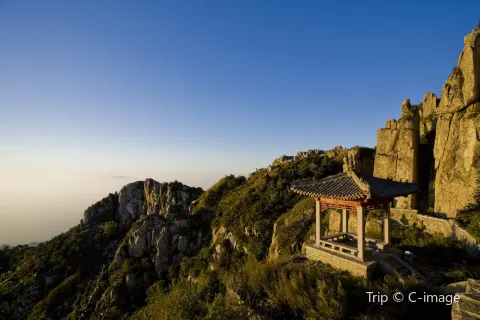
Mount Taishan
4.7
/5
38699 reviews
8.8
From $16.33
Based on 1,701 reviews
Jade Emperor Peak/Mount Tai Peak Area | >100 km from downtown
Phone +86053896008888
Address: Taishan District, Tai'an City
Recommended sightseeing time: 1–2 days
Highlights:
Admire the beautiful flowers and foliage of Mount Tai
Climb to the summit for the sea of clouds and sunrise
Saved by 372 users24289 positive reviews
Verified user reviews



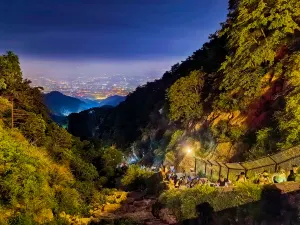
My trip to Mount Tai was a wonderful experience, a place steeped in history. The majestic peaks bear witness to the passage of time, the ancient buildings embody cultural heritage, and the entire climb was filled with a profound historical atmosphere.
It was very convenient. The two of us bought our tickets on-site around the end of August. There weren't many people. We happened to encounter heavy fog that day, but the ferry service wasn't canceled, which felt quite lucky. We smoothly made our way to Nantianmen.
No.
5
Show All Photos
Prince Kung's Palace Museum
4.7
/5
32086 reviews
8.8
From $5.68
Based on 430 reviews
Houhai Area | >100 km from downtown
Phone +8601083288149
Address: No.14, Liuyin Street, Xicheng District, Beijing
Recommended sightseeing time: 2–4 hours
Highlights:
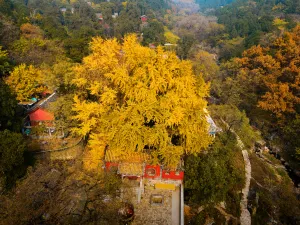
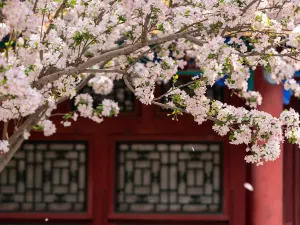
Ginkgo trees and ancient buildings create an autumn scene
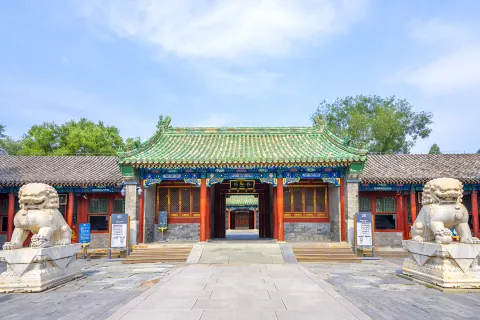
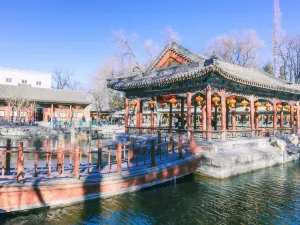
Over 30 different architectural complexes
Saved by 4429 users24163 positive reviews
Verified user reviews



Thank you to Director Li from Xiucaishuo for the insightful explanation of Prince Gong's Mansion. I learned a great deal, and I will share this experience with my family and friends when I get home, hoping they can also experience the charm of this ancient mansion. I was also fortunate to meet Director Jiang and unexpectedly encountered snow scenery, which made me very happy. I recommend Xiucaishuo for visiting attractions.
If you're visiting Beihai Park, you can also check out Prince Gong's Mansion. The entrance fee isn't expensive, and it's a great place to explore. The mansion is quite large, and you can rent an audio guide for a more comprehensive understanding. The back garden also makes for excellent photo opportunities.
No.
6
Show All Photos
Baotu Spring
4.6
/5
52010 reviews
8.6
From $5.68
Based on 889 reviews
Quancheng Plaza Commercial Area | >100 km from downtown
Phone +86053186920900
Address: No. 1 Baotu Spring South Road, Lixia District, Jinan City
Recommended sightseeing time: 1–2 hours
Highlights:
Showcasing the life of the Song Dynasty female poet, Li Qingzhao
Saved by 330 users40005 positive reviews
Verified user reviews


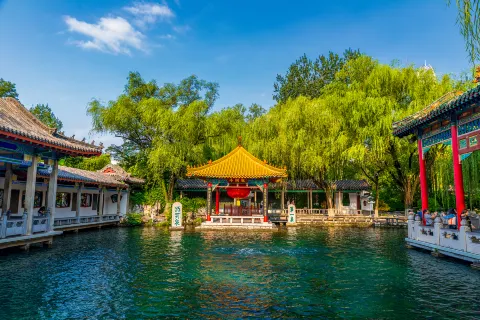
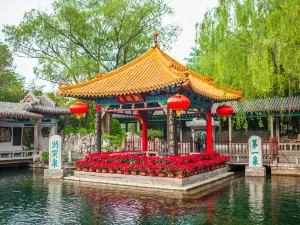
I went to Jinan in July for Xu Song's concert, and the Baotu Spring was absolutely stunning! I'm so envious of the kids in Jinan. It was the hottest time of summer, and I saw so many children playing in the water. It was so lovely! The water in Jinan is so clear and beautiful!
This is a place I visited during a layover on my way to a primary school textbook. Overall, it was alright; a large park with beautiful scenery. There are springs throughout the park, and the water is quite clean. Baotu Spring was pretty much as I imagined, with three springs bubbling upwards. Seeing it in person was quite nice. However, the ticket price of 40 yuan isn't very cost-effective.
No.
7
Show All Photos
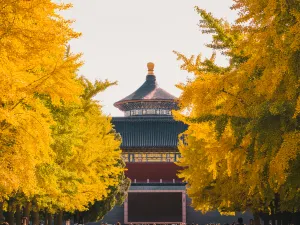
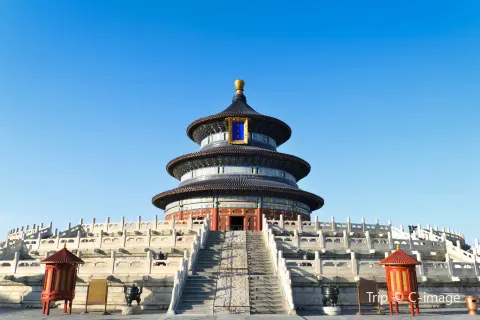
Temple of Heaven
4.7
/5
19561 reviews
8.5
From $8.24
Qianmen, The Temple Of Heaven and Chongwenmen | >100 km from downtown
Phone +8601067028866
Address: No.1, Tiantan Road, Dongcheng District, Beijing
Recommended sightseeing time: 2–4 hours
Highlights:
Stroll on Ginkgo Avenue's Golden Carpet
World Heritage Site
Saved by 10826 users13615 positive reviews
Verified user reviews


The booking was done seamlessly. However the QR code I wasn't able to view it in app.. only available to scan the QR code from the email confirmation. Fortunate to experience snow and a different scenery..
If you are thinking of coming to Temple of Heaven, please do not hesitate to book from Trip.com. Our guide Lisa Chen was friendly, knowledgeable and enthusiastic.
No.
8
Show All Photos
Summer Palace
4.7
/5
49048 reviews
8.4
From $9.09
Based on 15,117 reviews
Zhongguancun Area | >100 km from downtown
Address: No. 19, Gongmeng Road, Haidian District, Beijing
Recommended sightseeing time: 0.5–1 day
Highlights:
Overlook autumn scenery from the Tower of Buddhist Incense(Summer Palace)
World Cultural Heritage
Saved by 9816 users27651 positive reviews
Verified user reviews


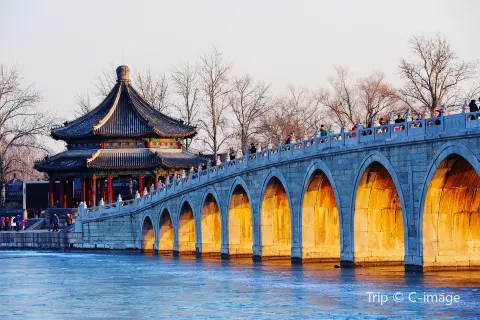
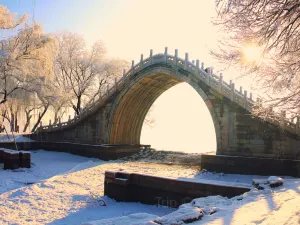
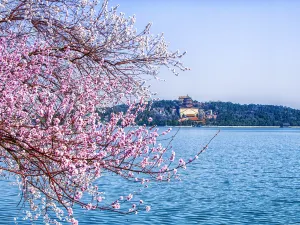
A Winter Wonder | The Peach Blossoms on the West Causeway of the Summer Palace are in Bloom! On a sunny December afternoon, I took a stroll through the Summer Palace. Entering through the South Ruyi Gate, I walked slowly along the West Causeway. The lake water on both sides of the causeway was frozen with a thin layer of ice. In this dry and chilly atmosphere, surprisingly, a peach tree was in bloom. The sparse buds on the branches looked delicate and small. The fully bloomed ones had withered due to the strong winds a few days ago. Finding a perfect photo would require careful searching…
Route: South Ruyi Gate ~ Xiuyi Bridge ~ West Causeway ~ Jingming Tower ~ Jade Belt Bridge ~ Exit through the North Ruyi Gate
On my first trip to Beijing, I made a reservation for the Forbidden City. I happened to meet Teacher Fan on Ctrip who was giving a guided tour of the Forbidden City. It was great! It's 30% sightseeing and 70% listening. Let Teacher Fan take you through the ancient palace that has been around for more than 600 years and give you an in-depth experience of China's history and culture!
No.
9
Show All Photos
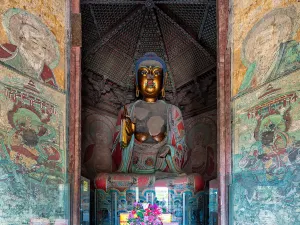
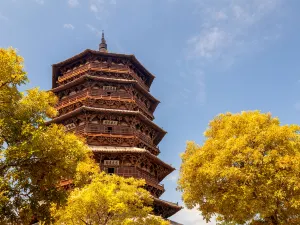
Yingxian Wooden Pagoda
4.8
/5
16471 reviews
8.4
From $6.82

Based on 182 reviews
>100 km from downtown
Phone +8603495088889
Address: Northwest corner of Yingxian city, Shuozhou city
Recommended sightseeing time: 1–2 hours
Highlights:
11-foot Buddha statue inside
Panoramic views of nature & history
Saved by 152 users15199 positive reviews
Verified user reviews


Inside, there's just a pagoda and a small temple. There's not much to see, and you'll finish quickly. If you don't know the history or hire a guide, you'll essentially only see a wooden pagoda. Therefore, it's recommended to learn about the relevant history beforehand or hire a guide.
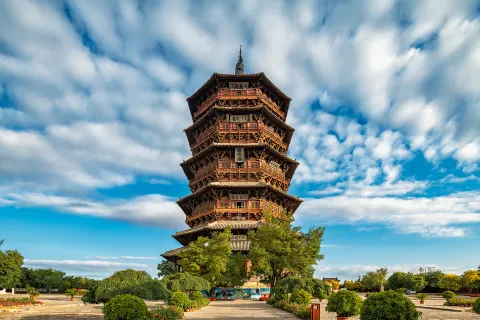
We booked discounted tickets for the children, and entry was quick and easy with just a scan-to-enter code. Seeing the Yingxian Wooden Pagoda was truly awe-inspiring; its mortise and tenon structure, standing for nearly a thousand years, is remarkably well-preserved. It's a testament to the wisdom and craftsmanship of the ancients.
No.
10
Show All Photos
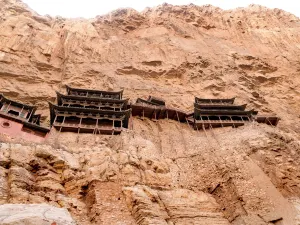
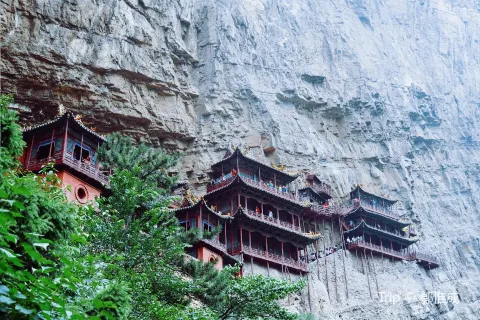
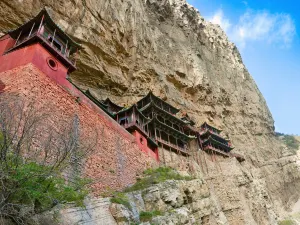
Xuankong Temple
4.7
/5
10052 reviews
8.4
From $4.12
Based on 793 reviews
>100 km from downtown
Phone +8603528333081
Address: At the foot of Hengshan Mountain in the southeastern suburb of Wuyuan County, Datong City
Recommended sightseeing time: 1–2 hours
Highlights:
Admire Exquisite Wood Carved Murals Along the Plank Road
Cliffside's breathtaking architecture
Saved by 797 users7569 positive reviews
Verified user reviews

The Hanging Temple of Hengshan Mountain in Datong, Shanxi Province, was first built in 491 AD (the 15th year of the Taihe reign of the Northern Wei Dynasty) by disciples of the Taoist master Kou Qianzhi, based on his dying wish to "reach the heavens above and sever all worldly clamor below." With a history of over 1500 years, it is the oldest existing high-altitude wooden cliff-side architectural complex in China. **Structural Features:** 27 hemlock beams are inserted into the rock face as an "aerial foundation." The wooden pillars at the bottom are merely for psychological comfort; the actual load-bearing structure relies on hidden crossbeams, achieving the "suspended" appearance.
**Reasons for its excellent preservation:** The canyon terrain reduces sunlight erosion, the mountain shelters it from floods, and the mortise and tenon structure provides strong earthquake resistance.
**Cultural significance:** One of the world's ten most dangerous architectural wonders, and the only temple where Buddhism, Taoism, and Confucianism coexist, reflecting the inclusiveness of diverse ancient beliefs.
**Admission is free for those over 60, but tickets are extremely difficult to obtain during peak season; remember to book your visit in advance.**
Reliable platform to book. Everything goes as planned. Highly recommended.
1
2
3
4
5



About
Payment methods
Our partners
Copyright © 2025 Trip.com Travel Singapore Pte. Ltd. All rights reserved
Site Operator: Trip.com Travel Singapore Pte. Ltd.
Site Operator: Trip.com Travel Singapore Pte. Ltd.