https://https://www.trip.com/toplist/tripbest/recommend/zhengning/best-things-to-do/10072809900000/?locale=en-US


Best Things to Do

Top 50 Best Things to Do near Zhengning [2025]

Show All Photos
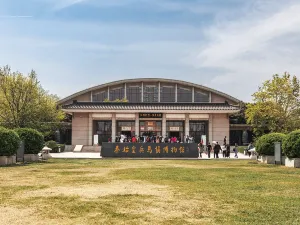
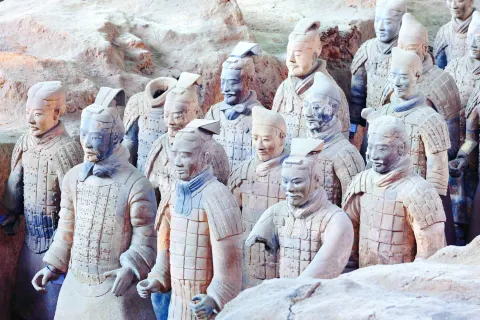
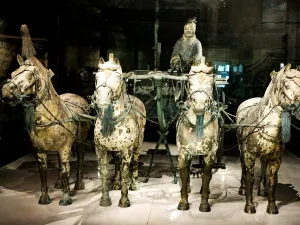
Emperor Qinshihuang's Mausoleum Site Museum
4.7
/5
130065 reviews
10
From €14.55

Based on 15,050 reviews
Terracotta Army/Hua Qing Palace | >100 km from downtown
Phone +8602981399127
Address: Lintong District, Xi'an, Shaanxi, China
Recommended sightseeing time: 4–5 hours
Highlights:
The highest point of the Mausoleum of the First Qin Emperor overlooking the Weihe
Qin's tomb viewpoint over Wei River

Saved by 8872 users83925 positive reviews
Verified user reviews



Awe-Inspiring Experience at the Terracotta ArmyVisiting the Terracotta Army was truly a once-in-a-lifetime experience and absolutely worth every minute. Standing in front of thousands of life-sized clay soldiers, all arranged in precise battle formations, is both overwhelming and fascinating. The scale of the site is far beyond what photos can capture.What impressed me the most is the level of detail — every warrior has a unique facial expression, hairstyle, and posture. You can really feel the power and ambition of China’s first emperor through this incredible masterpiece. Seeing the excavation pits alongside the restoration area also gives great insight into how carefully these artifacts are preserved and studied.The museum is well-organized, spacious, and informative, with clear explanations in English. It can get crowded, but the viewing platforms are well designed, making it easy to explore and take photos.
Our hired tour guide, Yao, was extremely professional! She was knowledgeable and erudite, and her attitude was very serious and patient. She diligently explained everything to the tourists throughout the entire trip, making us feel right at home. Thumbs up for Tour Guide Yao! 👍👍👍


Show All Photos

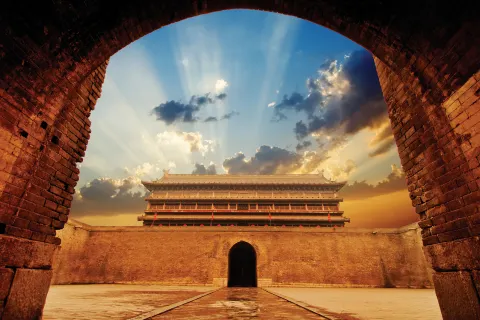
Xi'an City Wall
4.6
/5
56975 reviews
8.9
From €6.55
Based on 7,879 reviews
The bell tower The drum tower/The Xi’an Circumvallation | >100 km from downtown
Phone +8602987272792
Address: The city center of Xi'an, Shaanxi Province, is rectangular, with four gates: Dongchanglemen (Xi'an City Wall, Huancheng East Road, Xincheng District, Xi'an), Xi'an Dingmen (West Street and Xijuyuan Lane) Nearby Xi'an City Wall (Huancheng West Road), South Yongning Gate (No. 2 South Street, Beilin District, Xi'an), Bei'an Yuanmen (Intersection of North Street and Huancheng North Road, Xincheng District, Xi'an)
Recommended sightseeing time: 1–4 hours
Highlights:
Interactive Lantern Festival of Light and Shadow during the Lunar New Year
Interactive light show festival
Saved by 4004 users42367 positive reviews
Verified user reviews


A Relaxing Walk Through History at Xi’an City WallThe Xi’an City Wall is one of the best-preserved ancient city walls in China and a wonderful place to experience the city’s history at a slower pace. Walking or cycling along the wall offers stunning panoramic views of both the old city and the modern skyline, creating a unique contrast between past and present.The wall is wide, clean, and well maintained, making it very enjoyable even for first-time visitors. Sunset is especially beautiful, and the atmosphere feels peaceful despite being in the city center. Bike rental is easy and affordable, and it’s a fun way to explore the entire wall.
The Xi'an City Wall possesses a profound historical feel. It is flat and wide, with informational displays at each historical site, allowing visitors to enrich their historical knowledge. The surrounding environment is well-developed and does not detract from the atmosphere of the city wall. Purchasing tickets on Ctrip is convenient and quick, without queuing, and verification is smooth, requiring no physical ID card.



Show All Photos

Mount Hua
4.7
/5
50623 reviews
8.8
From €12.13
Based on 1,290 reviews
>100 km from downtown
Address: 1000 meters southeast of the intersection of Jiling Road and Huashan Road, Huashan Town, Huayin City, Weinan City, Shaanxi Province
Recommended sightseeing time: 1 day
Highlights:
Each of the Five Peaks has its own unique sunrise and legends
Thrilling Chang Kong cliffside path
Saved by 2060 users32371 positive reviews
Verified user reviews


Mount Hua is known for its precipitousness and beautiful scenery. On a sunny day, the feeling of riding the cable car through the cliffs is exhilarating. You can encounter all sorts of people and scenery along the way. I chose a relatively energy-saving method and spent most of the day hiking, stopping and looking around. It was a great experience. I would like to try hiking at night sometime.
Definitely must visit when in Xi’an. Must be fully aware that it quite challenging. Xi feng up and Xi Feng down is fully recommended. My route Xi Feng up, Bei Feng down took us almost 4 hours and that was when we skipped the three other Feng. 4 hours is the time spent on the mountain.
No.
4


Show All Photos
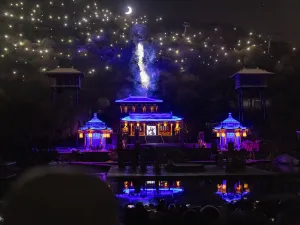
Song of Everlasting Sorrow
4.5
/5
22518 reviews
8.7
From €28.37
Based on 59 reviews
Terracotta Army/Hua Qing Palace | >100 km from downtown
Phone +864000299989
Address: No. 38 Huaqing Road, Lintong District, Xi'an City
Recommended sightseeing time: 1–1.5 hours
Highlights:
Dream Back to the Tang Dynasty
Tang Dynasty love story reenactment
Saved by 3383 users13258 positive reviews
Verified user reviews



Worth it🤩🤩. Amazing performance, traditional choreography, wonderful melody . A mix of Modern and classic . A must see show . #memories, #Broadway Chinese version
Definitely worth a visit! The spectacle is spectacular! The moment the entire mountain lit up, the entire audience erupted in cheers.
Sitting outdoors in winter can be quite cold, so remember to dress warmly.
But the performance is absolutely amazing and definitely worth seeing!
No.
5
Show All Photos
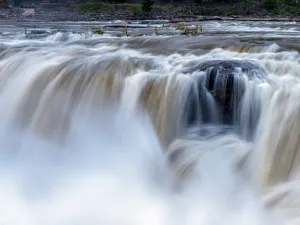
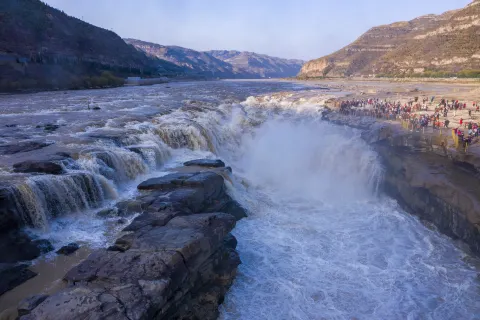
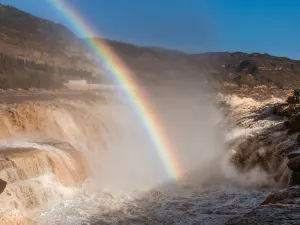
The Hukou Waterfall Scenic Area
4.7
/5
18153 reviews
8.6
From €10.91

Based on 213 reviews
Hukou Waterfall Scenic Area | >100 km from downtown
Phone +8603577955000
Address: Yanhu Road, Hukou Town, Jixian County, Linfen City, Shanxi Province
Recommended sightseeing time: 2–3 hours
Highlights:
Spring & fall thunderous waterfall
See the Thundering Falls in spring and fall
Saved by 158 users13376 positive reviews
Verified user reviews

Hukou Waterfall, the second largest waterfall in China and the world's largest yellow waterfall, is renowned for its magnificent spectacle, described as "the Yellow River flowing for a thousand miles, all contained in a single pot." A visit here is definitely worthwhile!
Hukou Waterfall, the second largest waterfall in China and the world's largest yellow waterfall, is renowned for its magnificent spectacle, described as "the Yellow River flowing for a thousand miles, all contained in a single pot." A visit here is definitely worthwhile!
No.
6


Show All Photos

Xi'an Bell Tower
4.5
/5
21322 reviews
8.4
From €3.64
Based on 2,341 reviews
The bell tower The drum tower/The Xi’an Circumvallation | >100 km from downtown
Phone +8602987276420
Address: Intersection of the East, West, and North Sizhi Streets in Beilin District, Xi'an
Recommended sightseeing time: 1–2 hours
Highlights:
Panoramic view of Xi'an from the top of the Bell Tower
Panoramic view of streets & Drum Tower
Saved by 2438 users15615 positive reviews
Verified user reviews


The hotel owner was very welcoming and helpful, giving me directions to various attractions. The hotel was nice, clean, and conveniently located inside the Xi'an city wall, right in the city center, very close to attractions like the Bell Tower. It offered excellent value for money. I stayed at this hotel again when I visited Xi'an.
Climbing the Bell Tower of Xi'an
Amidst the music and music, guests arrive and the scenery unfolds before my eyes.
The four directions still draw the imperial carriages, high pavilions vie for the sky.
Beyond Jieshi and Huashan, the setting sun shines on the Wei River.
The winter chill makes the return journey long, I stand for a long time as dusk rises.
No.
7


Show All Photos
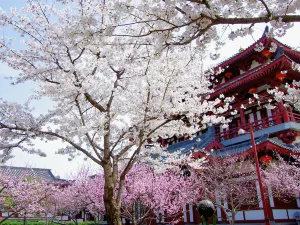
Tang Paradise
4.3
/5
25970 reviews
8.3
From €8.25
Based on 489 reviews
Dayan Pagoda/The Grand Tang Mall | >100 km from downtown
Phone +8602985511888
Address: No. 99, Furong West Road, Qujiang New District, Xi'an
Recommended sightseeing time: 2–3 hours
Highlights:
Boat tour of the royal garden on Furong Lake
Boat show: Tang Dynasty Dream
Saved by 2420 users13412 positive reviews
Verified user reviews


The daytime and nighttime views are both fantastic! 👍🏻 The park offers a variety of activities and is definitely worth a visit. We strolled around before dark and stayed until nightfall – the nighttime views were absolutely amazing! Next time, we'll definitely go with friends in a different season! ✌🏻
It was a very average experience. Without seeing the performances, the ticket price didn't seem worth it, but the performances cost extra, resulting in low attendance and a lack of vibrancy. The overall experience wasn't great, and they need to adjust their operational strategy. The only redeeming quality was that it was suitable for taking photos in traditional Chinese costumes because there were fewer people.
No.
8

Show All Photos
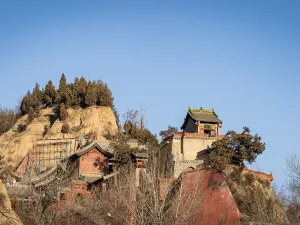
Little Western Paradise
4.8
/5
4357 reviews
8.2
From €4.25
>100 km from downtown
Phone +8603576733033
Address: Xiaoxitian, Xicheng Qu, Beijing Shi, China
Recommended sightseeing time: 2 hours
Highlights:
Check out Black Myth: Wukong
Ancient Zen temple from Ming
4034 positive reviews10K views in last month
Verified user reviews


We left Guangsheng Temple and drove to Xiaoxitian. What should have been a smooth two-hour drive turned into a road construction trip less than 20 minutes from our destination. After much detours, it took us nearly three hours to finally arrive at Xiaoxitian in Xi County. Xiaoxitian is like a magical treasure box, containing a vast world within a small room. In this mere 169.6 square meters, our eyes couldn't take it all in; we were completely immersed, reluctant to leave. We also followed wave after wave of tourists, listening to their explanations intermittently. From the very beginning, the hall was packed with people, and we stayed until evening when the crowds gradually dispersed before finally leaving. This wondrous journey to Xiaoxitian was truly unforgettable.
The main hall houses 1915 suspended Buddhist statues from the Ming Dynasty, the smallest being only the size of a fingernail. Using a combination of mineral pigments such as malachite from Wutai Mountain and cinnabar from Taihang Mountain, along with an egg white mixing technique, the colors remain vibrant even after nearly 400 years. The suspended sculptures, constructed using a wood-framed, clay-based technique, form 33 tiers of celestial palaces and pavilions, incorporating scenes of flying apsaras, musicians, auspicious clouds, and mythical beasts, creating a three-dimensional Buddhist world of varying heights. It is hailed as "the pinnacle of suspended sculpture in the history of Chinese sculpture art." Its artistic value is reflected in: 1 2
No.
9
Show All Photos

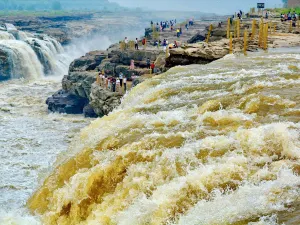
Hukou Waterfall tourist area of the Yellow River
4.6
/5
14084 reviews
8.2
Hukou Waterfall Scenic Area | >100 km from downtown
Phone +8609114838030
Address: Yanhu Road, Hukou Town, Yichuan County, Yan'an City
Recommended sightseeing time: 2–3 hours
Highlights:
Feel waterfall's power up close
Hukou Waterfall panoramic view
Saved by 244 users9353 positive reviews
Verified user reviews


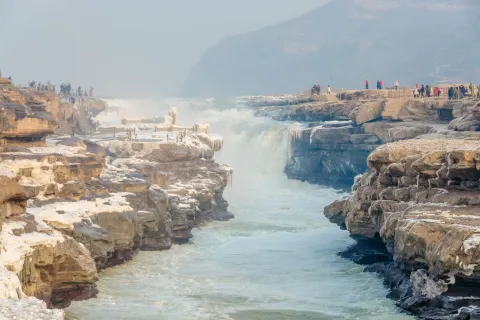
There were some icicles along the Hukou Waterfall in mid-December, which looked beautiful and the scenery was breathtaking. I highly recommend it. The apple and pear pastries I bought in the shopping street were very sweet and delicious. It was also the off-season, so there were very few tourists, and I could take my time to enjoy the scenery!
Generally speaking, the main waterfall is best viewed from the west side of Hukou Waterfall, offering a more direct and beautiful view. On the Shaanxi side, there are steps leading down from a height halfway down the waterfall, which also provides a good vantage point for photos. The shuttle bus takes 15 minutes one way, but departures are infrequent due to the off-season. When I visited in early December, there were fewer visitors and lower water levels, so the Yellow River wasn't yellow. Some sections of the riverbank were frozen.
No.
10


Show All Photos
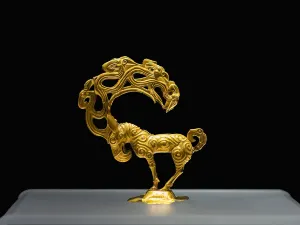
Shaanxi History Museum
4.7
/5
30861 reviews
8.1
Based on 1,632 reviews
Xiaozhai/Shaanxi History Museum | >100 km from downtown
Phone +8602985253806
Address: No. 91 Xiaozhai East Road, Yanta District, Xi'an (Northwest Side of Big Wild Goose Pagoda)
Recommended sightseeing time: 0.5–1 day
Highlights:
A million years of treasures
Interactive ancient life experience
Saved by 2323 users13811 positive reviews
Verified user reviews



Xi'an is a city rich in culture and history, and the Shaanxi History Museum was a place I had always longed to visit. The guided tour deepened my understanding of the historical and cultural background embodied in the artifacts, and I learned about the ancient capital's features, customs, and local products—it was fantastic!
Many interesting historical pieces. It's a pity that some of the halls were closed for renovation & maintenance.
1
2
3
4
5





About
Payment methods
Our partners
Copyright © 2025 Trip.com Travel Singapore Pte. Ltd. All rights reserved
Site Operator: Trip.com Travel Singapore Pte. Ltd.
Site Operator: Trip.com Travel Singapore Pte. Ltd.