Tianshan Tomur Grand Canyon
天山托木尔大峡谷 based on 8 reviews
 No. 18 of Best Things to Do in Xinjiang
Open Opening hours of Tianshan Tomur Grand Canyon
Tianshan Tomur Grand Canyon Highlights: Must-See Features and Attractions
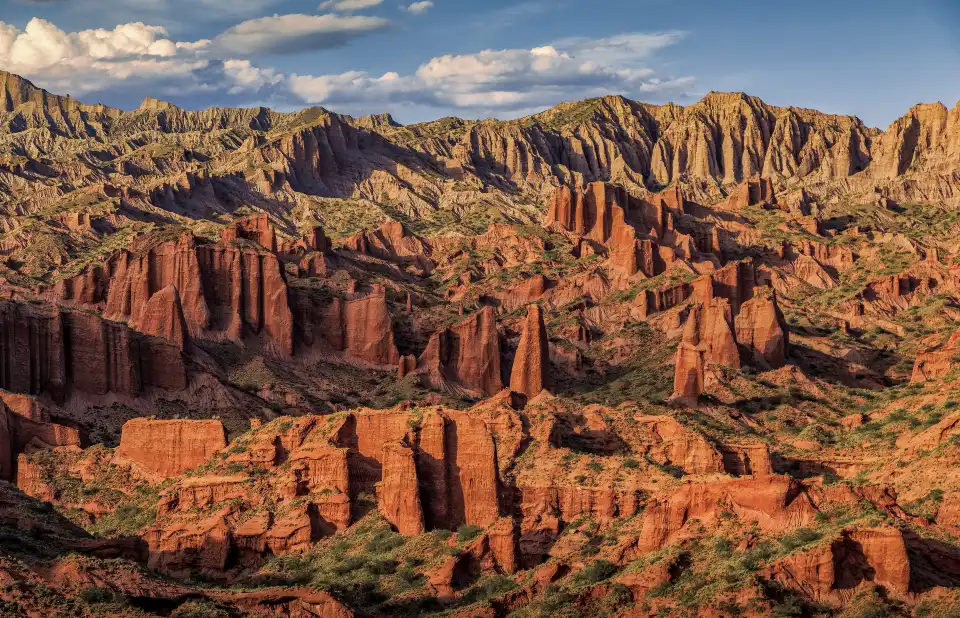
The Tianshan Tomur Scenic Area was once the essential passage of the ancient Muzart Post Road connecting the northern and southern Tianshan Mountains, locally known as "Xinjiang Tianshan Tomur Scenic Area Grand Canyon", meaning 'thrilling and mysterious' in Uyghur. Xinjiang Tianshan Tomur Scenic Area Grand Canyon is located in Wensu County, Aksu City, approximately 30 km from National Highway 314, covering a total area of 200 square kilometers.
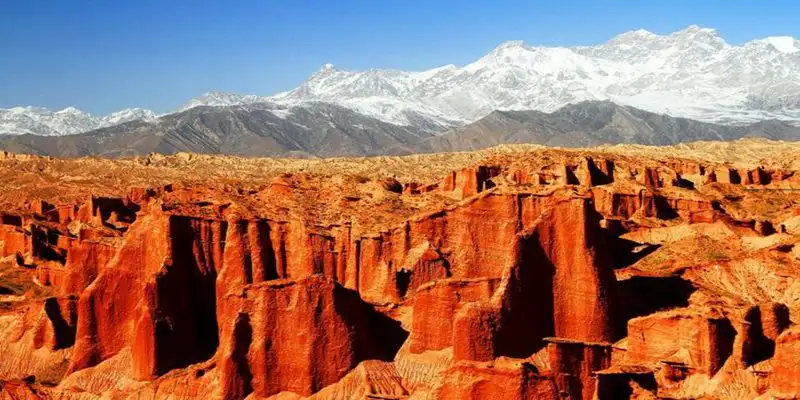
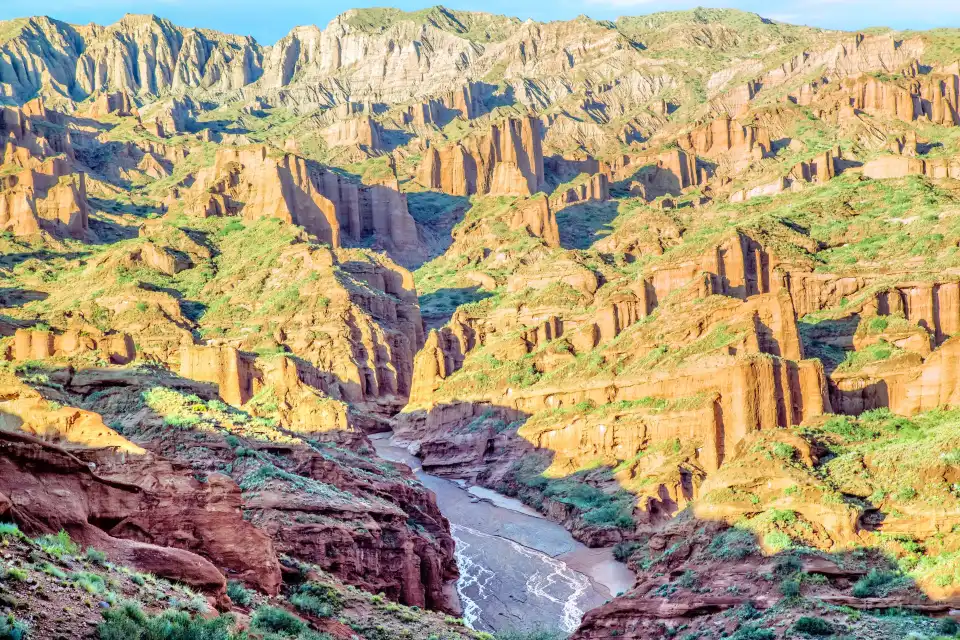
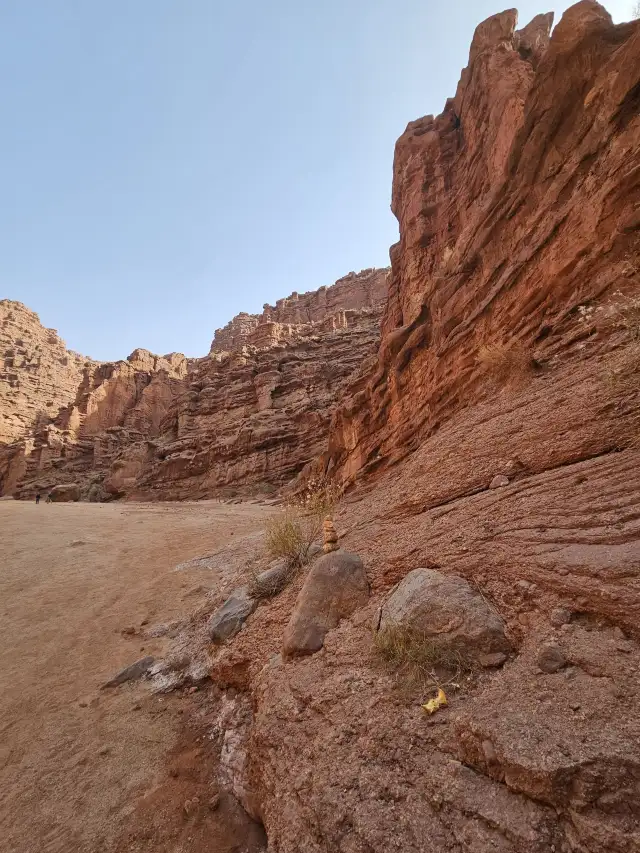
Tianshan Tomur Scenic Area is one of the most stunning Danxia geological wonders in western China and the largest rock salt karst landscape in the country. It features rare ancient rock salt formations, unique Yardang landforms, and China's only giant karst erosion geological marvel, earning its reputation as Xinjiang's "living museum of geological evolution." Entering the scenic area feels like stepping into a magnificent natural gallery. At Xinjiang Tianshan Tomur Scenic Area Grand Canyon, the clearly visible rock layers showcase dramatic folds formed by tectonic compression, with fractured rocks embedded between them. After billions of years of wind and water erosion, the canyon now displays towering cliffs, jagged peaks, and bizarre formations in vibrant colors—creating a spectacular array of peculiar and colorful views.
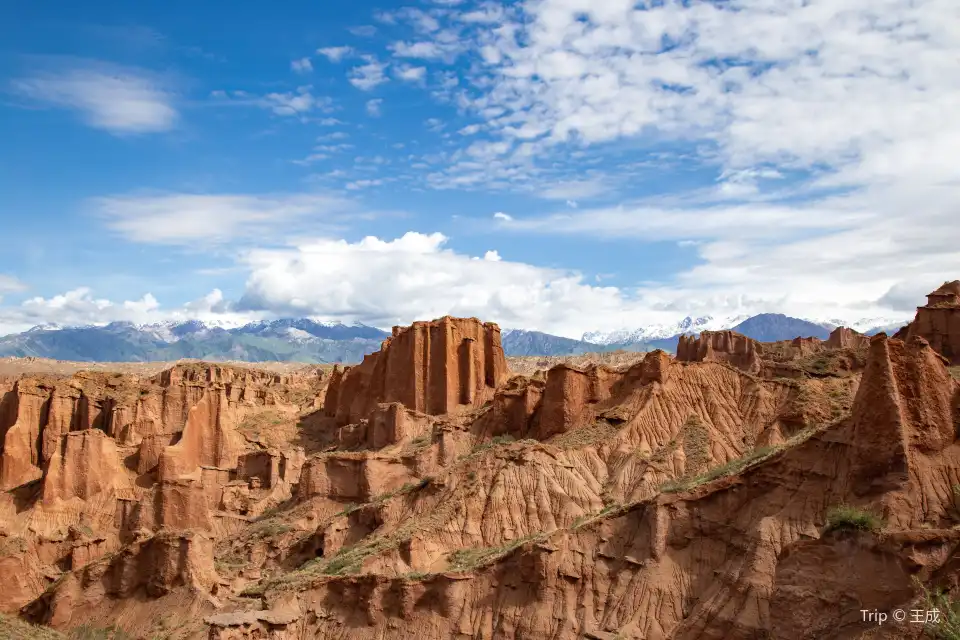
To the northwest of Xinjiang Tianshan Tomur Scenic Area Grand Canyon, you can see the famous snow-capped Tomur Peak. Heading west leads to Wensu Sacred Tree Garden, while the east neighbors the renowned Ancient Xia Route and Kucha Cultural Tourism Zone. To the south lies the vast Taklamakan Desert.
Tianshan Tomur Grand Canyon Reviews: Insider Insights and Visitor Experiences
Tianshan Tomur Grand Canyon Photos: Trip Moments
- 天山峽谷
- 新疆自然奇觀
- 溫宿徒步
- 攝影天堂
- 托木爾峰
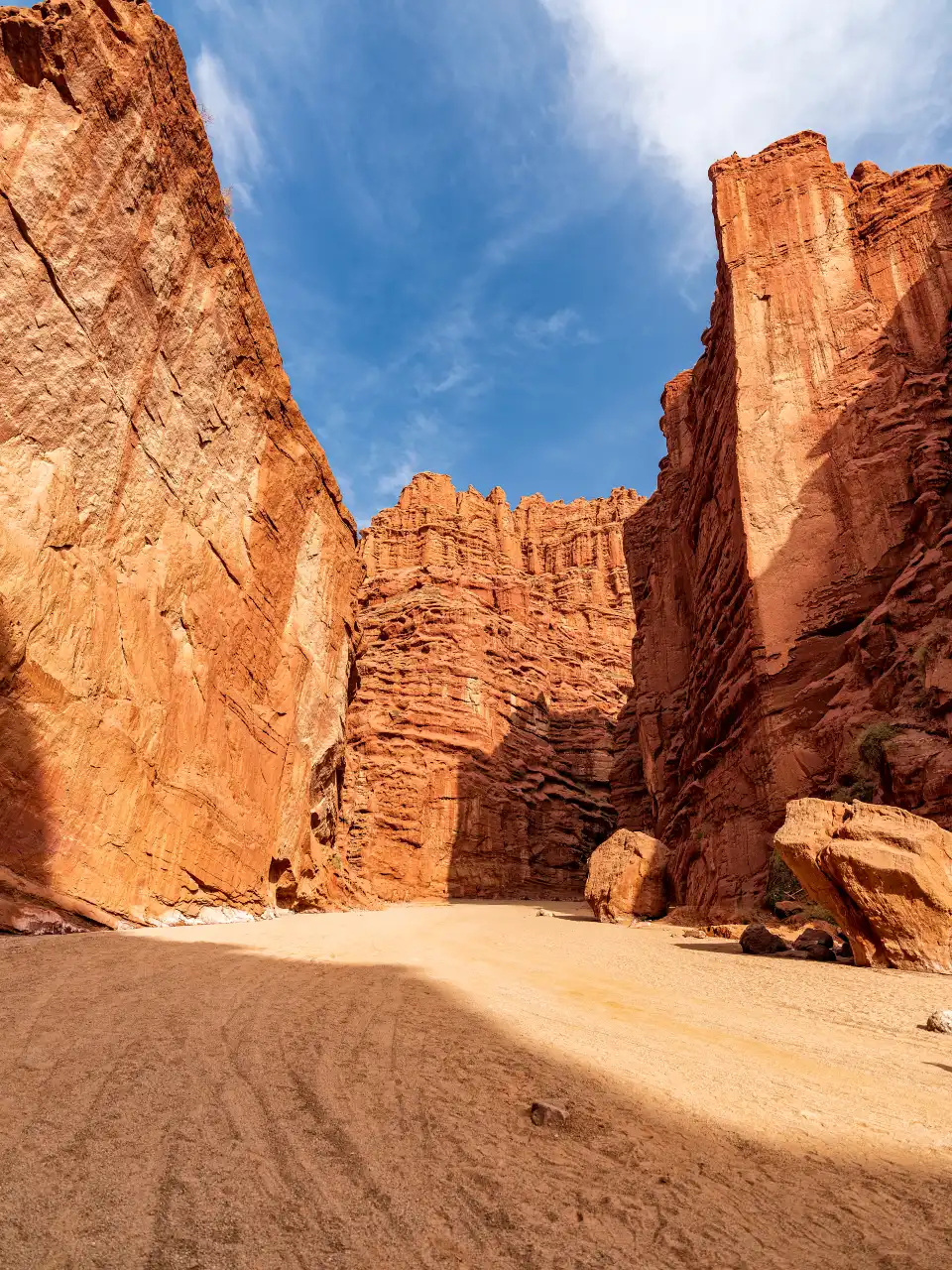
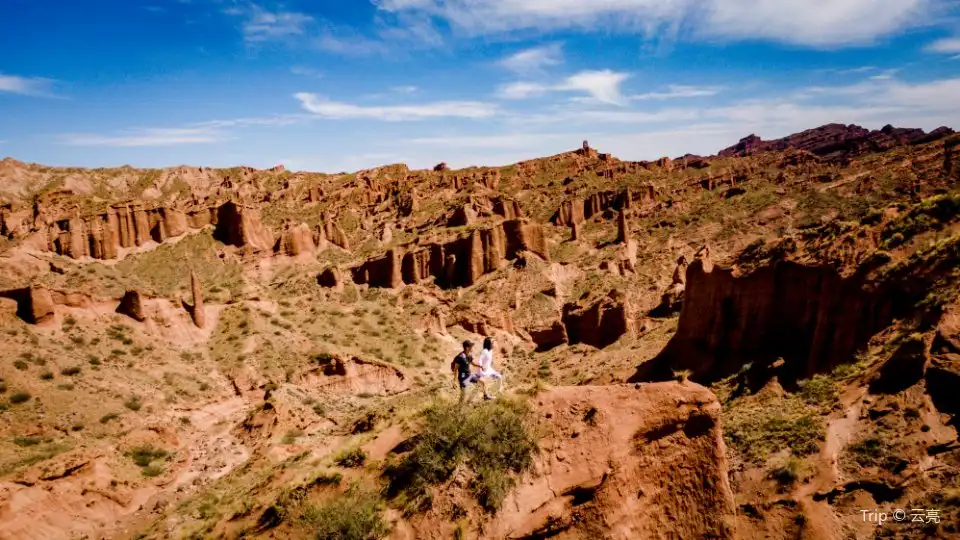
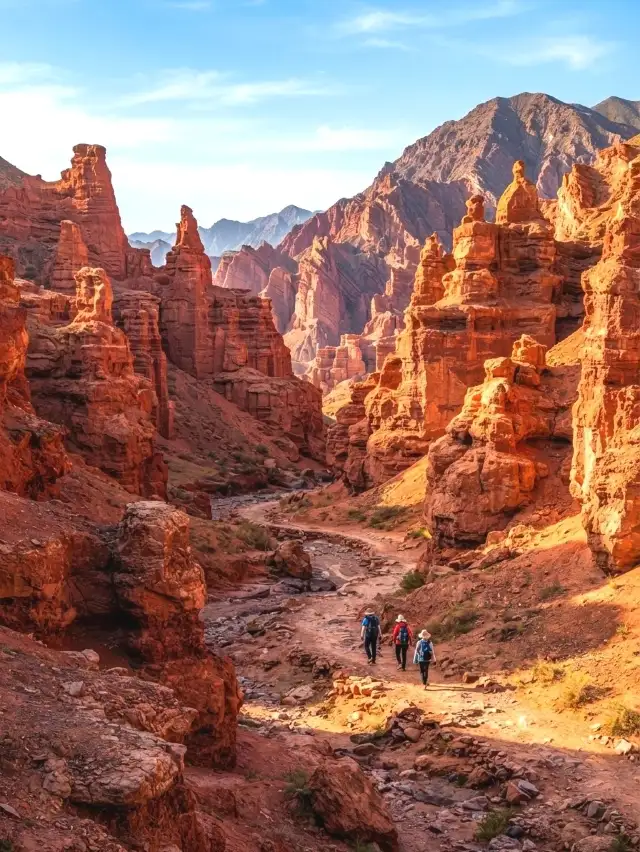
"The King of Canyons"The Tianshan Tomur Grand Canyon is located in Bozidun Kyrgyz Ethnic Township, Wensu County, Aksu, Xinjiang, nestled right against the Tianshan Mountains near County Road 306. This destination is a breathtaking fusion of natural splendor and geological wonders, widely hailed as "The King of Canyons." Carved by over 100 million years of wind and water erosion, its fiery red cliffs and surreal stone forests showcase the raw power of nature—an absolute paradise for outdoor adventurers and photography enthusiasts. Recommended Route After entering the Tianshan Tomur Grand Canyon, it is recommended to explore on foot along the main path to admire the uniquely shaped stone pillars, peaks, and natural sculptures. The most iconic landmarks include the "Great Gate," the "Castle," and the "Labyrinth," each offering a stunning visual experience. Plan to spend 2-3 hours for a thorough visit. For those seeking a deeper exploration, you can take some of the side trails to climb higher and enjoy a magnificent panoramic view of the entire canyon. Must-Do Activities 1. Canyon Trekking: Follow the designated hiking trails deep into the valley floor to witness the crimson cliffs and miraculous sandstone terrain up close. 2. Photography: The lighting at dawn and dusk is ideal for photos, as the colors of the rock walls become exceptionally vivid. I highly recommend taking panoramic shots at the "Labyrinth" section. 3. Climbing Experience: Certain sections offer light climbing opportunities. You can challenge yourself to reach higher ground for distant views of Tomur Peak and the Tianshan mountain range. Top Photo Spots · Canyon Entrance Gate: The most classic landmark where you can immediately feel the canyon's immense scale. · The "Castle" Rock Wall: A majestic rock formation resembling a fortress, providing a spectacular backdrop for group photos. · The "Labyrinth" Section: A maze of intricate and complex rock structures that makes for a truly impactful photo location. Travel Tips 1. It is best to visit between May and October when the weather is most favorable and the landscape is easiest to navigate. 2. The canyon area is quite vast; wear non-slip hiking boots and bring plenty of water. 3. The lighting is best in the early morning or late afternoon, with fewer crowds and better conditions for landscape photography. 4. Tickets are 36 RMB per adult. Please note the operating hours; ticket sales and entry stop at 6:30 PM. 5. The sun is very intense here, so it is advisable to bring a hat and sunglasses for sun protection. Important Notes Some sections of the canyon are quite narrow; please prioritize safety and avoid climbing excessively high rock walls. Temperatures can fluctuate significantly between day and night, so bringing a light jacket is recommended. There are few shops within the scenic area, so prepare your water and light snacks in advance.VisualStorytellingThroughPhotography2
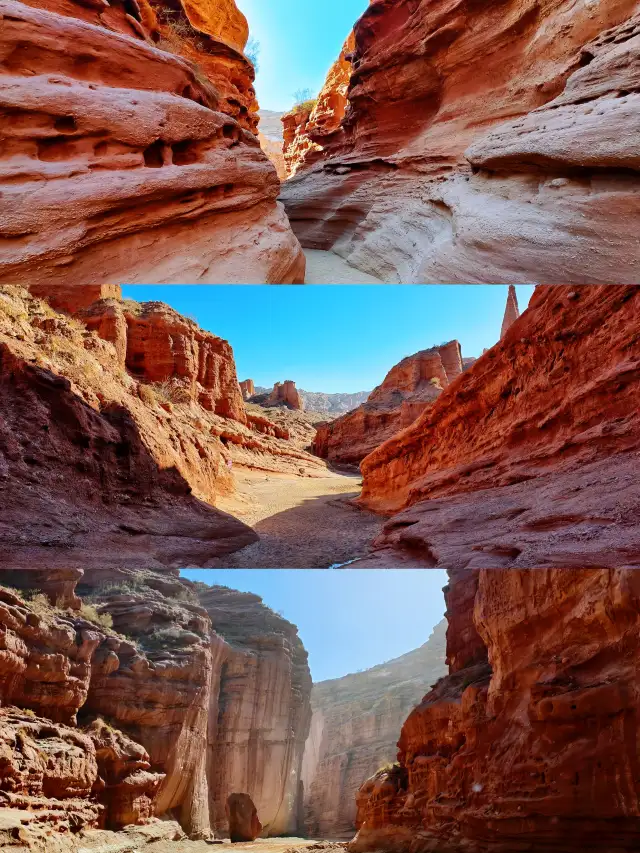 Wensu Grand Canyon Off-Roading GuideWensu Grand Canyon, also known as Tomur Grand Canyon—the joy of driving a hardcore off-road vehicle into the canyon is unmatched! 🏜️ 🎫 Money-saving tip Get coupons in advance on the "You Xinjiang Yimayou" mini-program. Get the 36 yuan admission ticket for 16 yuan, and the 100 yuan self-drive ticket for 20 yuan! Exchange for paper tickets at the visitor center, sign a safety agreement, and you can drive into the scenic area~ ⚠️ Important note Make sure to drive a 4WD vehicle! There is a section of unpaved, sandy road where 2WD vehicles easily get stuck. A tow costs 450 yuan, which is definitely not worth it 💸 🚏 Route Enter the scenic area and head straight to the innermost Valley No. 4, "Source of Life." Follow a clockwise route (start on the left boardwalk, return on the right), and visit Valley No. 4, Valley No. 3, and Valley No. 2 in order. The total distance is 3.5 km; 3 hours is a very leisurely pace 😌 On your way out, stop by Valley No. 6; it only takes half an hour. The total trip takes 4.5 hours—very chill~ ☀️ Red rock mountains set against a backdrop of snow-capped peaks—every photo you take during the day looks like a stunning shot 📸 The Danxia landforms are truly breathtaking on a sunny day!Riku - Sashimi

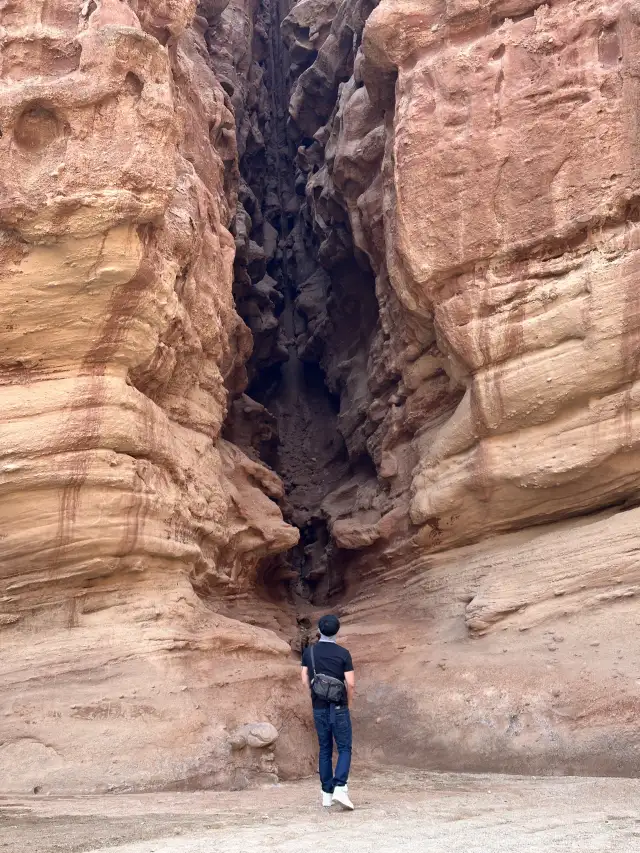 Tian Shan Canyon: The most beautiful wound on earthTian Shan Canyon seriously made us feel like we stepped into another planet. The wild landscapes are just unreal – it's almost like time-traveling back to when Earth first formed. The vibe? Total WOW moment. There are 6 visiting spots in the canyon, so you’ve got tons to explore! You can either hop on a tour bus for an easy ride or go full adventurer and self-drive. Pro tip: the Salt Valley is only open if you self-drive, so consider that if you want to level up your experience. Honestly, you could spend the whole day here and not get bored. We only managed to check out about half the area and it still took us around 3 hours – there’s just so much to see! Location basics: Tian Shan Grand Canyon is near Kuqa County, Xinjiang, China. Address: Tianshan Grand Canyon, Kuqa County, Xinjiang, China Opening hours: Usually 10:00–20:00 (double-check before you go!) Tip: Tickets and transport details are easiest to reserve through trip.com for extra convenience. If you’re looking for a must-see spot that feels out of this world, this is it. Highly recommend!Travelwith.et

- chinaitinerary
- roadtrip
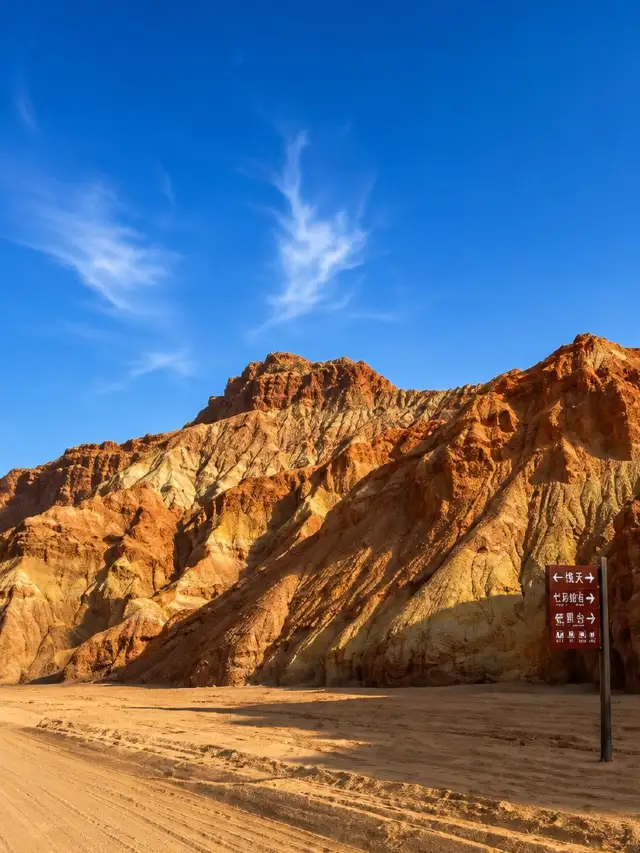
Forget Mars! This Xinjiang Road Trip Takes You Through Landscapes That Look Like Another Planet!One of my most unforgettable adventures in China happened at Tianshan Tomur Grand Canyon in Xinjiang. Before visiting, I’d seen photos of its dramatic red rock formations. But seeing the canyon in person? It felt like stepping onto another planet. 😱 And the adventure became even better when we experienced the canyon by 4WD! If you’re planning to explore this part of Southern Xinjiang, here’s a suggested 4-day Aksu-region itinerary. 📍 DAY 1 — Arrive in Aksu Arrive in Aksu and explore the city at a relaxed pace. Try local Xinjiang food and prepare for the next day’s adventure. 📍 DAY 2 — Tianshan Tomur Grand Canyon This is the main highlight! Explore the canyon’s dramatic red rock formations and incredible landscapes. Depending on available visitor activities, consider a guided 4WD experience. For me, the combination of the rocky terrain, enormous canyon walls and adventurous ride was absolutely unforgettable. The views were CRAZY! 🚙🔥 📍 DAY 3 — Explore the Aksu Region Keep this day flexible for other accessible attractions, local experiences or scenic stops. I’d rather have extra time than rush through this incredible region. 📍 DAY 4 — Return or Continue Your Xinjiang Journey Continue towards your next destination or depart from Aksu. Important tips for canyon adventures: 👟 Wear proper walking shoes. ☀️ Bring sunscreen, sunglasses and a hat. 💧 Carry enough drinking water. 📱 Secure your phone and camera during rough vehicle rides. 🌦️ Check weather conditions, especially after rainfall. 🚙 Use authorised visitor transport and follow local safety instructions. And one more thing: Don’t assume the distances are short just because places look close on a map. Xinjiang is HUGE! 😂 For me, this wasn’t just another scenic attraction. It was one of those places that made me realise how incredibly diverse China’s landscapes can be. Would you dare take a 4WD ride through a Mars-like canyon, or would you prefer admiring the view from somewhere safer? 😂 #chinaitineraryMvgicPassport
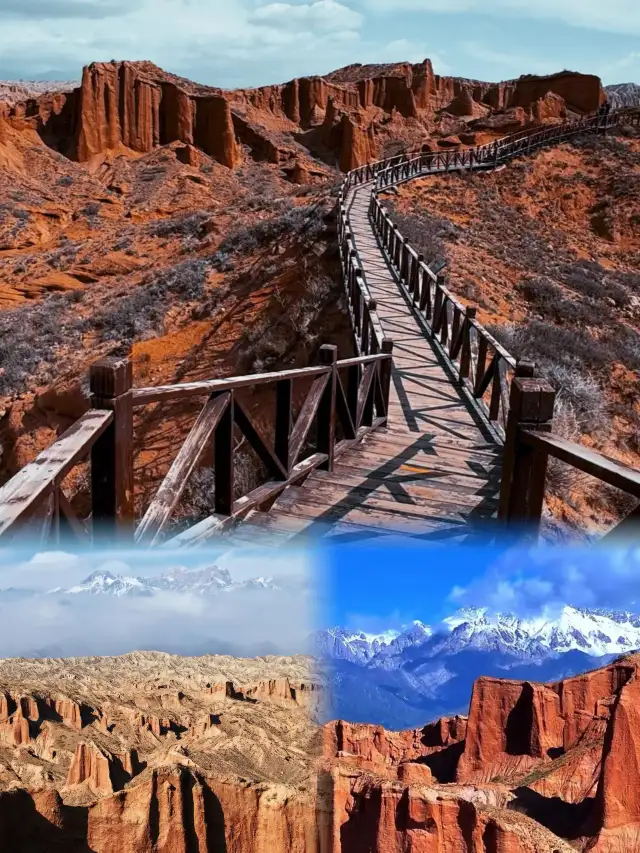 Xinjiang's natural masterpiece: Step into a magical red canyon worldWho hasn't been stunned by this mysterious red rock canyon in Xinjiang yet! 😭 Wensu Tuomuer Grand Canyon is so beautiful it's legendary! The Danxia landforms, carved by millions of years of geological activity, are as magical as the surface of Mars ✨ 📍Address: Aksu, Xinjiang | Tuomuer Grand Canyon (Wensu Grand Canyon) ⏰Best time: May–October! Photos at sunset are legendary 🌇 ⏳Recommended duration: Reserve at least 4–5 hours, otherwise you won't have enough time for photos! 🌟Must-visit spots🌟 ▫️Hero Valley No. 1 | Stunning red rocks 🪨 The layered, reddish-brown rock walls are spectacular. Standing beneath them, you feel as small as an ant. Every photo looks like a blockbuster shot from the end of the world 📸 ▫️Rainbow Valley | God's spilled palette 🌈 Layers of red, orange, yellow, and brown. When the sun hits, the saturation is maxed out. It's like stepping out of an oil painting! ▫️Twin Poplars | Miracle of life 🌳 Two thousand-year-old poplars growing stubbornly in the desert. A true testament to "living for a thousand years without dying." Such incredible vitality! ▫️Off-road adventure | A wild experience 🚙 Bumping through the red rock flats in an off-road vehicle feels just like a Western movie. So wild and free! ⚠️Essential tips for a smooth trip💡 1️⃣ You must take an off-road vehicle for the core scenic area (private cars cannot enter!) 2️⃣ Sun protection! Sun protection! Sun protection! Important things must be said three times 🌞 3️⃣ Non-slip hiking shoes are a must! Lots of gravel on the ground. 4️⃣ Entering the park after 3:00 PM is best for photos! The sunset is amazing. 5️⃣ Bring enough snacks and water; nothing is sold inside. 6️⃣ Don't come on rainy days! The park may close to prevent flash floods. 🚗Driving guide Search for "Tuomuer Grand Canyon" in your navigation. It's about a 1-hour drive from downtown Aksu~ The most stunning, heavenly spot in Southern Xinjiang! Come and experience this desolate yet breathtaking beauty ✨WorldExplorerDiaries_555

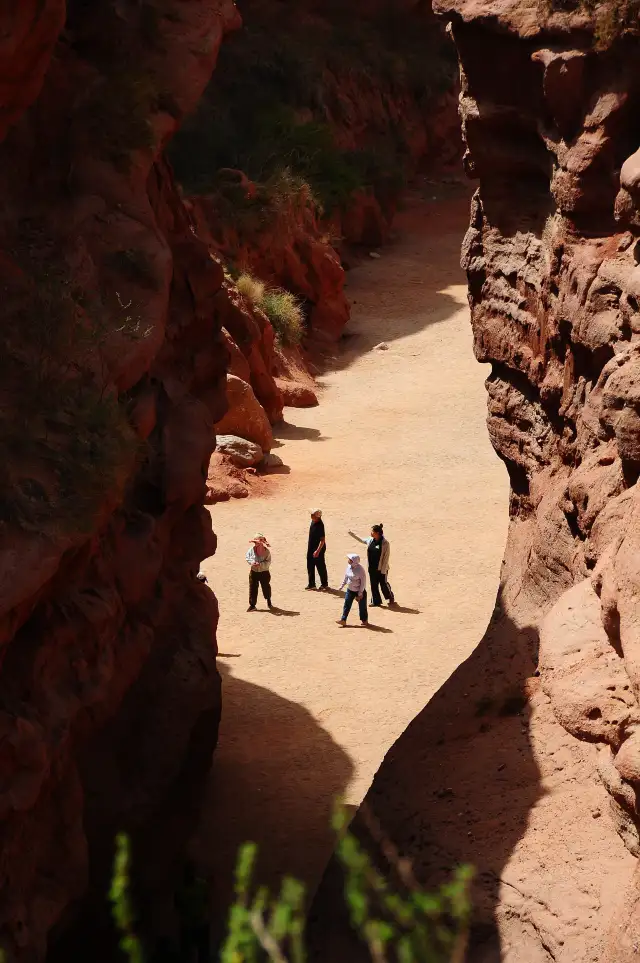 Xinjiang·Aksu·Tianshan Tomur Grand Canyon·Wensu Grand CanyonThe Tomur Grand Canyon is located in Wensu County, Aksu Prefecture, Xinjiang. It is famous for its unique red bed landforms and rock salt geology, and is known as "Xinjiang's living museum of geological evolution history." The geomorphological landscapes are rich: the canyon integrates five types of landforms—canyon, wind erosion, river, rock salt, and tectonic—allowing visitors to see rare red bed landforms and salt dome diapiric structures.Josh___ 21691

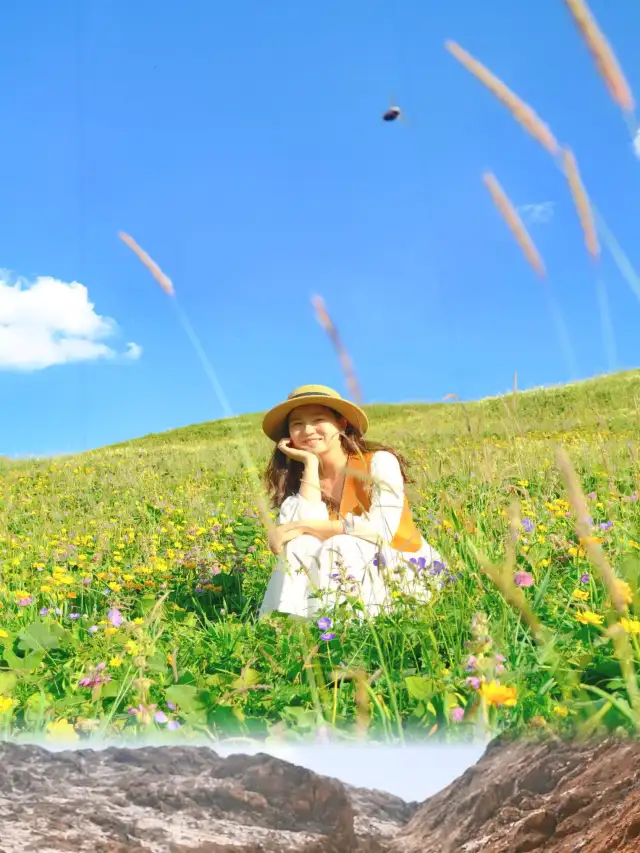 Aksu one-day tour | Wensu Grand Canyon + Ta Village are perfect for photos🌄Wensu Grand Canyon This is what they mean by nature’s masterpiece! The reddish-brown canyon landscape is stunning, and every shot looks like a blockbuster! Wearing bright colors is recommended—it really makes your photos pop~✨ 🏡Ta Village Feels like stepping into a fairy tale! Grasslands, cattle and sheep, snow-capped mountains... Xinjiang’s countryside scenery is so soothing 🥰 Best to visit in the evening when the light and shadows are beautiful~ 🚗Suggested itinerary: Depart for Wensu Grand Canyon at 9:00 AM Head to Ta Village by 3:00 PM Return to Aksu at dusk 🎒Essentials: Sunscreen (Xinjiang’s sun is no joke) Sunglasses Camera Comfortable sneakers Warm jacket (big temperature difference) 💡Tips: 1. Signal is unstable in the canyon area 2. Download offline maps in advance 3. Remember to bring snacks and water 📸Photo spots: · Cliff edge of Wensu Grand Canyon · Grassland pasture in Ta Village · Stone house clusters · Snow mountain backdrop at sunset No exaggeration—this day’s itinerary could supply my social feed for a whole month😍BenjaminThompson.281

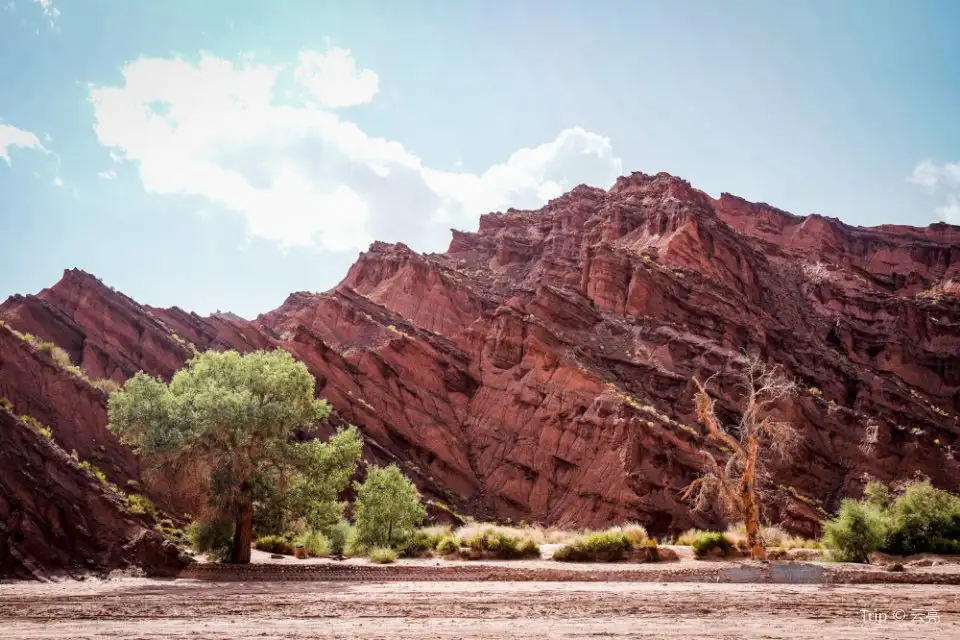
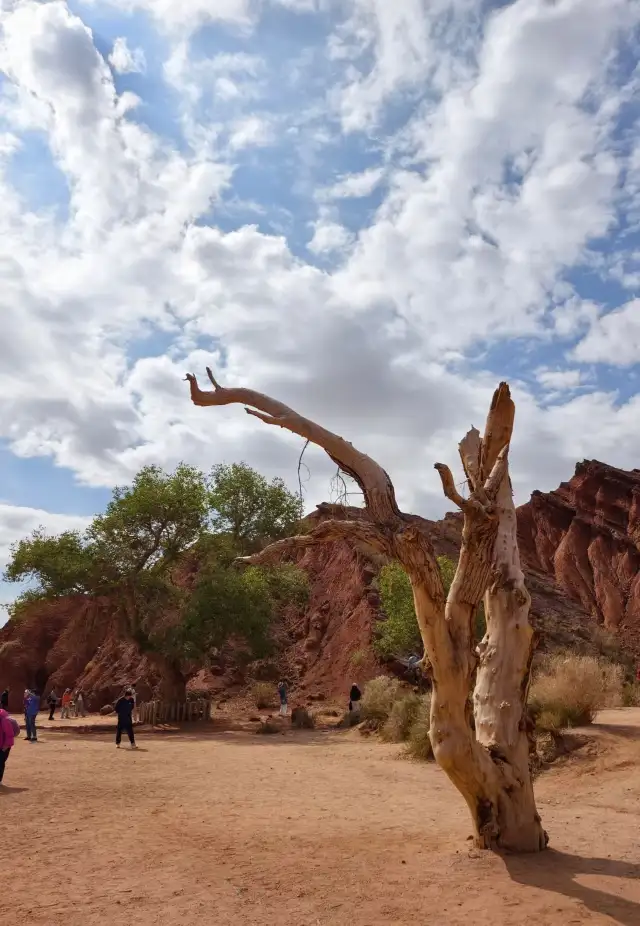 Must-visit for Southern Xinjiang road trips | Wensu Tuomuer Grand Canyon, venture into the red wilderness of the Western RegionsWhen road-tripping in Southern Xinjiang, after seeing the grasslands and lakes, you must set aside half a day for Wensu Tuomuer Grand Canyon. There is no over-commercialization here, only red rock walls carved by millions of years of wind and rain. Standing in the canyon, you can truly feel the raw, majestic power of the earth. Just inside the entrance, the first thing you will encounter is this pair of Populus euphratica trees, which locals call the "Twin Heroes of Populus." One dead tree stands strong and upright, its branches reaching toward the sky, while the other beside it remains lush and green. One withered, one thriving, they quietly guard the foot of the red mountain. In the vast desert, this vitality that transcends life and death is particularly moving, and it is the first photo spot for many who visit the Grand Canyon. Continue driving deeper into the canyon; the road is all gravel, with deep tire tracks stretching into the distance. Layer upon layer of red mountains on both sides rush toward you, and the horizontal folds on the rock walls are the textures left by geological time. Standing at the bottom of the empty valley and looking forward, the massive red cliffs enclose overhead, making people feel exceptionally small in front of such grand landforms. The further you go, the more surprising the scenery becomes. It is not just single-colored red rock; large areas of the mountains are mixed with white, gray, ochre, and orange, with colorful rock layers spreading out like an artist's palette overturned by nature. The canyon's temperament is completely different in different weather: on sunny days, the red rocks are passionate and heavy, while on cloudy days, it has a desolate and quiet atmosphere. Every snapshot is a wilderness blockbuster with its own story. 🚗 Practical Travel Guide 📍 Location: Wensu County, Aksu, Tianshan Tuomuer Grand Canyon (Wensu Grand Canyon) 🚙 Transportation: About a 1-hour drive from downtown Aksu. To drive into the heart of the canyon, you must have a 4WD off-road vehicle; 2WD cars cannot enter and are prone to getting stuck. If you do not have a 4WD vehicle, you can purchase a shuttle bus ticket and follow the scenic area vehicles to tour the core spots. ⏰ Duration: It is recommended to reserve 3–4 hours to walk, stop, stroll, and take photos at your own pace. 💡 Important Tips 1. There are no shops or food and drink supplies inside the canyon, so be sure to prepare enough drinking water and some snacks in advance. 2. The UV rays are extremely strong and it is very windy and sandy. Be sure to bring sunglasses, a hat, a windproof mask, and high-SPF sunscreen. The temperature difference between morning and evening is large, so bring a light jacket. 3. Entering the canyon is prohibited on rainy days due to the risk of flash floods. Be sure to check the weather forecast before you set off. 4. Mobile phone signal is very poor deep in the canyon. Download offline maps in advance and do not enter undeveloped valleys alone. There is a lot of scenery along the way in Southern Xinjiang, but the rough, primitive wilderness feel of Wensu Grand Canyon is hard to replace. If you like road trips and geological landforms, do not miss this place.82Winterbournelix943

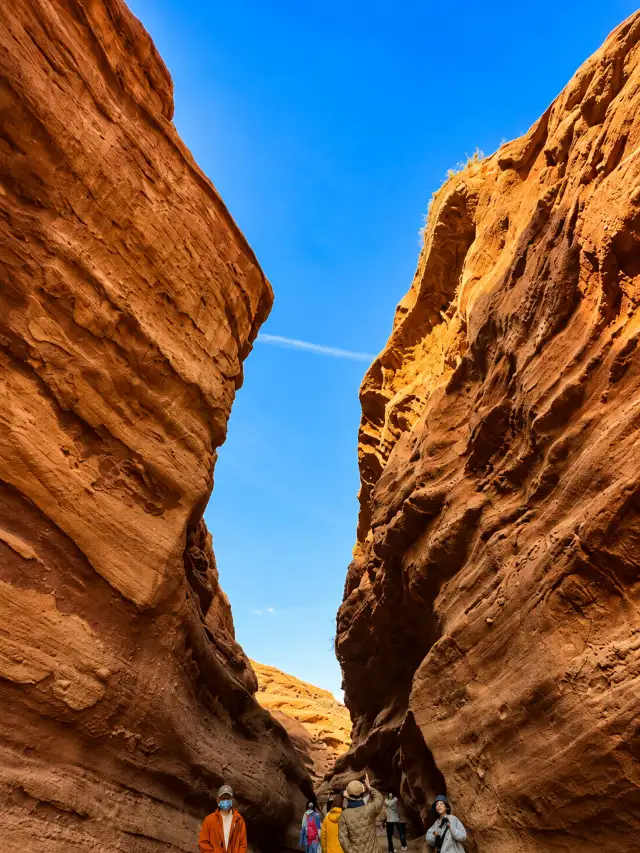
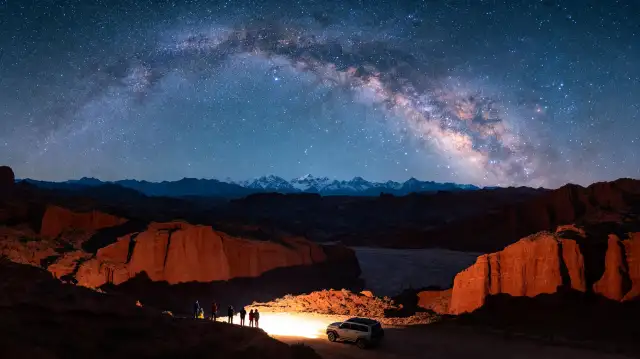 Niche Hidden Gems #5 | Wensu Grand Canyon, a red scar at the foot of the Tianshan Mountains, a unique, off-the-beaten-path tourWensu Grand Canyon, officially known as Tianshan Tuomuer Grand Canyon, is located in Wensu County, Aksu, Xinjiang. In the Uyghur language, it is called "Kuduluk," meaning thrilling and mysterious. Many tourists only take the shuttle bus to visit Wentian Valley and A Thread of Sky, taking a few quick photos of the red rocks before leaving. This 200-square-kilometer geological museum features Danxia, Yardang, and rock salt karst landforms. Backed by the snow-capped Tuomuer Peak, it hides a wealth of wild, secret spots that most ordinary tourists never get to see. 1. World of Salt Valley Secrets | The red and white collision of the Earth's salt waterfalls (4WD exclusive, not accessible by shuttle bus) Most tourists are unaware that a white salt valley is hidden deep within the canyon. Hundreds of millions of years ago, this was an ancient ocean. As the seawater receded, large deposits of rock salt precipitated from the rock layers. The crimson rock walls are inlaid with snow-white salt crusts, creating a powerful visual impact. ✅Niche experiences: 1. Salt Waterfall Spectacle: Saltwater seeps from cracks in the rock walls. As the water evaporates, it condenses into sheets of white salt crystals that flow down the cliff face, forming rare salt waterfalls. Under the sunlight, the salt layers shimmer with fine silver light. The red rocks supporting the white salt look as if the earth is shedding white tears. 2. Salt Flat Shallow Lakes: Shallow water collects in low-lying areas, reflecting the red and white rock walls. After rain, the water level rises, resembling a mini mirror salt lake within the canyon. The ground is covered in salt grains that crunch underfoot. 💡Tips: This area is only accessible by 4WD; the shuttle bus does not stop here. The rock salt is fragile; please do not step on or dig out the salt crystals to protect these geological relics. The salt crust on the road is slippery, so please walk with caution. 2. Valley No. 6 Mars Valley (City of Ten Thousand Mountains) | Alien wind-eroded castles, a photographer's secret Many people pass by the entrance of Valley No. 6 but do not hike deeper inside. Clusters of red rock pillars rise from the ground, stacked in layers like an abandoned stone city. Wind erosion has sculpted countless towers and high walls, making you feel as if you have landed on the surface of Mars. ✅Niche experiences: 1. Sunset Light and Shadow Maze: After 4:00 PM, low-angle sunlight sweeps across the rock pillars, constantly changing the shadows. The light and shadow on the same stone mountain change every 10 minutes. Wandering among the stone pillars, you can easily capture sci-fi style portraits in the wilderness. 2. Overlooking the Stone City from Above: Climb to a small high platform in the valley to take in the entire "City of Ten Thousand Mountains." The continuous red layers stretch into the distance, and you can faintly see the outline of the snow-capped Tuomuer Peak, with red rocks and snow-capped mountains in the same frame. ⏰Best time: 2 hours before sunset; midday light is harsh and lacks depth in photos. 3. Beyond the Wentian Valley Boardwalk | Earth's folds, touching billion-year-old rock layers Most tourists only walk the middle section of Wentian Valley to visit "A Thread of Sky," but the entire boardwalk hides many overlooked details. ✅Niche experiences: 1. Panoramic View from Zhongtiantai: Follow the boardwalk up to the Zhongtiantai viewing platform, the highest point in the main scenic area. Standing here, you can overlook the layered canyons and gullies. The earth has been compressed into curved folds, layer upon layer, like a massive history book of the earth. 2. Light Beams at "A Thread of Sky": In the narrowest part of the canyon, midday sunlight pours vertically through the gap at the top of the cliff. A beam of golden light falls on the crimson rock wall, creating flowing light and shadow—a unique photo spot in the canyon. The "Source of Life" rock formation in Valley No. 4 is also a highlight of the valley. Naturally sculpted by wind erosion, it showcases the texture of the earth, looking most vivid in the sunset light. 4. Hidden Branch Valley No. 12 | Twin Populus Euphratica + Snow Leopard Ring Gate, a deep exploration spot The shuttle bus does not go here at all. Only 4WD off-road enthusiasts visit this area, so there are very few tourists, and it is full of wild charm. ✅Niche experiences: 1. Twin Populus Euphratica: In the desert of the canyon, two thousand-year-old Populus euphratica trees stand side by side. Their withered trunks are vigorous, rooted in the red sandy soil. The combination of red rocks and withered poplars creates a sense of desolation. 2. Snow Leopard Ring Stone Gate: A natural circular rock arch. The outline of the rock wall resembles a snow leopard. Shooting from inside the arch looking out, the canyon acts as a natural frame, creating a highly narrative composition. ⚠️Tips: The journey is long and requires a 3 km hike. There is no mobile signal, so you must travel in groups. Bring plenty of drinking water. It is not recommended to venture deep alone. 5. Distant View of Tuomuer Peak + Starry Night Sky in the Canyon 1. Snow-capped Mountain in the Same Frame: On a clear morning, from the high point of Valley No. 4, you can look over the layers of red rocks to see the snow-capped Tuomuer Peak in the distance. On one side is the scorching red canyon, and on the other is the cold, snow-capped mountain. The fusion of ice and fire is a unique landscape of Wensu. 2. Starry Sky in the Canyon: Far from urban light pollution, stay in the canyon until evening. After nightfall, the Milky Way stretches across the sky above the red canyon, with the crimson rock walls as the foreground. The desert starry sky is vast and desolate. This is only suitable for 4WD self-driving tourists. The temperature in the canyon drops sharply at night, so be prepared to keep warm. 📌Two exclusive itineraries you can copy directly Route 1 | Light hiking for ordinary tourists via shuttle bus (no 4WD) Tourist Center → Valley No. 4 (Source of Life + Zhongtiantai) → Valley No. 3 Wentian Valley (A Thread of Sky) → Valley No. 6 Mars Valley, returning in the evening. Focus on rock folds and red rock light and shadow. The whole trip takes 3–4 hours. Route 2 | Deep wild route for 4WD self-driving (recommended for photography enthusiasts) Tourist Center → World of Salt Valley (Salt Waterfall) → Valley No. 12 Twin Populus Euphratica → Wentian Valley → Valley No. 4 → Valley No. 6 Mars Valley to wait for sunset. If you have enough time, you can stay to watch the starry sky. ⚠️Safety red lines in the mountains, please keep in mind 1. The canyon soil is soft, and the salt valley road is slippery; wear non-slip hiking shoes. The sun is strong all year round; hats, sunglasses, and plenty of drinking water are essential. There are almost no supplies in the canyon. 2. It is strictly forbidden to enter the canyon after rain. Flash floods are highly likely, and the gullies will quickly fill with water, posing a very high risk. 3. Rocks and salt crystals are precious geological resources. Do not carve, step on, or dig out the rock layers; protect these billion-year-old geological wonders. 4. If driving a 4WD deep into the branch valleys, check your vehicle condition in advance. Some remote branch valleys have no signal; travel in groups and do not leave the team alone.Caleb Donovan

 First-Time Journey to Xinjiang: Seamless Ticketing for Tianshan Tomur Grand CanyonFor our very first trip to Xinjiang, we decided to buy tickets to the Tianshan Tomur Scenic Area Grand Canyon using Trip.com—and the experience was wonderful. The app made it easy for us to secure our tickets, and the process was impressively straightforward. From purchase to entry, everything went smoothly without any hassle, which definitely helped keep our travel stress-free. We felt that the entire visit was well-organized, making it a pleasant experience from start to finish. If you’re planning your own adventure to the breathtaking Tianshan Tomur Grand Canyon, I’d highly recommend using Trip.com for ticket purchases. It truly added convenience to our journey! 😊 #realreview_TI***x4

- photovsrealitytravel
- hotdiscussions
- xinjiang
Photo vs Reality: I Thought It Looked Like Mars… In Person, It Was Even More UnrealSome destinations look incredible in photos, but when you finally arrive, the reality can be disappointing. Tianshan Tomur (Tuomu’er) Grand Canyon in Xinjiang was the complete opposite. The photos already looked dramatic, but standing there in person was another level. The enormous red-brown rock formations, deep canyons and rugged landscape made me feel like I had somehow landed on Mars. And the scale is something photos simply can’t capture. When you see a tiny car or person surrounded by these massive formations, you suddenly realise just how HUGE everything is. I kept looking around thinking, “How is this even real?” My verdict: 📸 PHOTO: Dramatic, Mars-like canyon. 👀 REALITY: Even bigger, wilder and more surreal. ❤️ EXPECTATION vs REALITY: Reality wins! This was one of those rare destinations where my camera couldn’t fully capture what my eyes were seeing. Sometimes you just have to put the phone down and stare. Which destination have you visited that was actually MORE impressive in real life than in photos? I want to know the places where reality wins! #photovsrealitytravel #hotdiscussions #xinjiangMvgicPassport263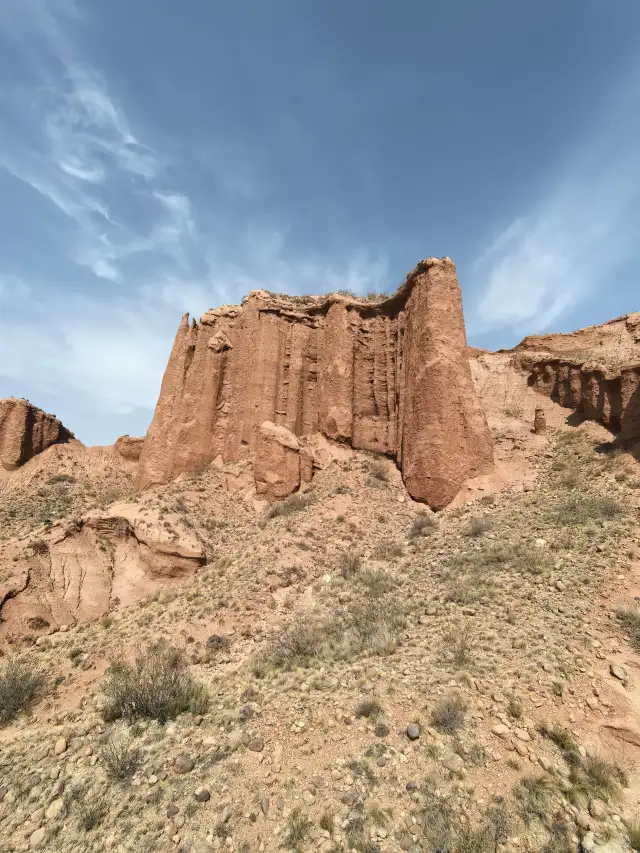 Tianshan Tomur Grand Canyon, Xinjiang | a magical geological wonder perfect for stunning photosWhat an incredible landform! Tianshan Tomur Grand Canyon fulfills all my imaginations of western landscapes ✨ A geological masterpiece where salt flats and Danxia landforms intertwine. Every shot looks like a National Geographic photo 📸 Drive or hike to explore: 🚗 Experienced drivers should choose to drive into the park (high clearance needed) to unlock secret spots with fewer crowds and beautiful views 🐎 For a wild adventure, pick camel riding or go-karting to race through the canyon for an exhilarating experience 👣 Hikers can take the classic loop trail, with a fresh visual surprise around every bend Handy tips: ☑️ The light is most magical after 3 PM. Remember to wear a western cowboy hat for portraits ☑️ Sunglasses and a windproof face mask are essential! The salt flats reflect harsh glare ☑️ Bargain for horse riding. The management enforces strict environmental protection The real impact here far exceeds the photos! Walking among the reddish ridges feels like exploring the surface of Mars 🪐 This is definitely Xinjiang’s hidden gem for travelers!ExcursionNomad


Other visitors' reviews of Tianshan Tomur Grand Canyon
Show More ReviewsEntering Tomur. The red cliffs surge like waves, the world vast and boundless, and humans are but fleeting visitors! Driving into the Tomur Grand Canyon, one truly understands the primordial power of the southern foothills of the Tianshan Mountains. This expansive red canyon, nestled among the Wensu Mountains, is not a single landform; Danxia, Yardang, and karst meet and blend here. Millions of years of wind and rain have sculpted it into a unique and magnificent spectacle, arguably the most breathtaking canyon I've ever seen on this trip. We drove into the scenic area and spent nearly four hours exploring. As the wheels rolled over the shallow dirt road, towering red cliffs loomed ahead on both sides. Layers of distinct rock faces were stacked, the ochre and yellowish-brown strata shifting in color under the sunlight. Looking up, the cliffs stood like high walls, their textures crisscrossing like an open history book of the earth, each ravine a mark etched by time. Valley 6, the City of Ten Thousand Mountains, is the highlight of the entire trip and the most beautiful corner in my heart. Countless crimson rock pillars rise abruptly from the ground, standing in a staggered array, like an ancient, abandoned stone city, vast and magnificent. We slowly walked up the wooden boardwalk in Valley 4, wandering between the rock walls, the wind whistling through the canyon, leaving only the silence of the wilderness in our ears. The scenery changed with every step; the strangely shaped rocks were varied and beautiful, some like lone swords piercing the sky, others like domes standing serenely, with the blue sky as a backdrop and the red rocks as a painting—every snapshot was a masterpiece. Deep in the canyon lies the popular Mars Cafe, a place to rest and relax beneath the ancient red rocks. The motto, "240 million years just for this one cup," perfectly captures the romance of time and space. This place is suitable for travelers who want to slow down; I highly recommend exploring it by car. We started our tour from Valley 4 via the boardwalk and finally drove out from Valley 3—a smooth route. Unlike the delicate beauty of other canyons, Tomur possesses a rugged and bold spirit characteristic of the Western Regions. Standing beneath the towering rocks, one feels insignificant, filled with awe for the wonders of nature. The grandeur of Southern Xinjiang is vividly displayed here. Red cliffs surge like waves, the world vast, and humans are but fleeting visitors! Ten thousand ravines and crimson cliffs reach the distant sky, wind-carved red peaks rise in layers. Who wielded the brush of nature, painting this autumn scene of Kunlun?