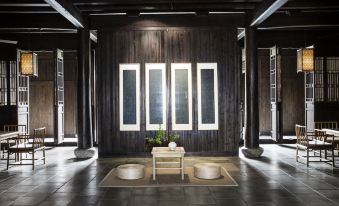
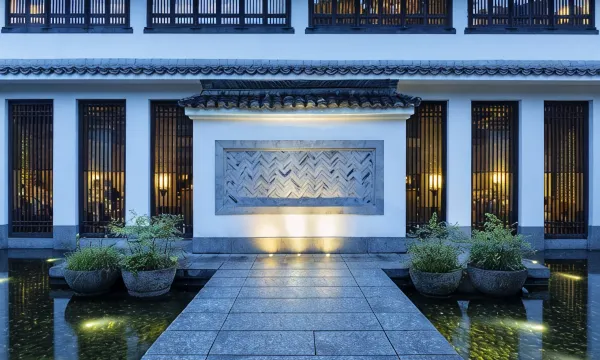
Following the departure of Aman Summer Palace from the brand, Aman Fayun is now the oldest Aman property in mainland China. Nestled in the original site of the ancient Fayun village, it is meticulously restored from 47 century-old dwellings. Today, Aman Fayun preserves designer Jaya's vision of a traditional Chinese ancient village. Surrounded by tea plantations, forests, and ancient temples, it can truly be described as a secluded sanctuary—serene, quiet, and a rare oasis of peace amidst the hustle and bustle.
Upon arrival via the hotel's private vehicle, the staff warmly greeted us, took our luggage to the room, and escorted us to a non-traditional reception area for check-in, offering welcome tea and warm, damp hand towels in turn. The check-in process was quite swift, with virtually no queues. However, a small hiccup occurred: although the room rate had been prepaid, the front desk informed us it was unpaid and requested payment again. A later check revealed it was a back-office error by the hotel. This is an area for improvement; such elementary mistakes should be avoided in the future.
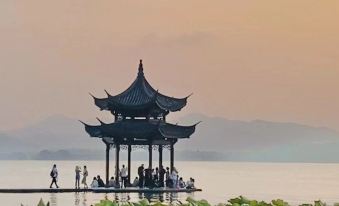
While the location is far from the core area of the West Lake scenic spot, its advantage lies in its proximity to Lingyin Temple and Peak Flaying (Feilai Feng), making it very convenient—just a few minutes' walk to Lingyin Temple. The internal layout of the hotel is not very clearly demarcated, allowing any visitors to wander through freely. Given the traditional locking mechanism of the guest rooms, security is something that warrants consideration.
Getting around is somewhat inconvenient, especially during the peak spring and autumn seasons. Traffic restrictions are enforced daily in the Lingyin area where the hotel is located, meaning ride-hailing cars cannot enter during the daytime. Guests must take the hotel's shuttle bus first and then hail a cab or walk to their destination. Traveling can be a bit roundabout and time-consuming.
All service staff were warm and attentive, genuinely listening to guests' needs, though the response time leaves room for improvement. This might be due to the sprawling property, the distance between rooms, and the peak osmanthus season. The turndown service was delightful, with a different little gift provided every evening. Overall, the service felt a bit overzealous; paying more attention to subtle details would make it even better.
Wear and tear on the facilities is quite noticeable. The complete set of Lefroy Brooks bathroom fixtures has lost its former luster. While trying to create an ancient village ambiance, the maintenance of amenities and facilities should not be neglected. In-room sutra-copying is provided instead of a television; while the intention is good, the rooms become very dim at night, making it hard to see and rather straining on the eyes. Walking alone outside late at night definitely has you looking over your shoulder every few steps.
The hotel is very compassionate, taking wonderful care of over 20 formerly stray cats that are now adorable and affectionate. Breakfast is a major highlight—delicious and exquisitely presented. Overall, if this is your first introduction to the Aman brand, I wouldn't recommend choosing this property, as it might give you a misleading impression of future Aman destinations. Aman Fayun has its own very specific target audience and cannot simply be defined by whether one likes it or not. If you are looking for an undisturbed, 'unplugged' getaway, don't have extremely high demands for hardware, and seek an exceptional Chinese aesthetic, then this Aman should be your top choice. However, if you come with high expectations for flawless service, comfort, and convenience, you will likely be disappointed at every turn—from the pull-cord toilets and dim street lamps to comparing it against other rooms costing 10,000 RMB a night. If you know exactly what you are paying for, it is worth an immersive experience; but if you are just curious, spending the same budget elsewhere will likely make you much happier.
Original TextTranslation provided by AI