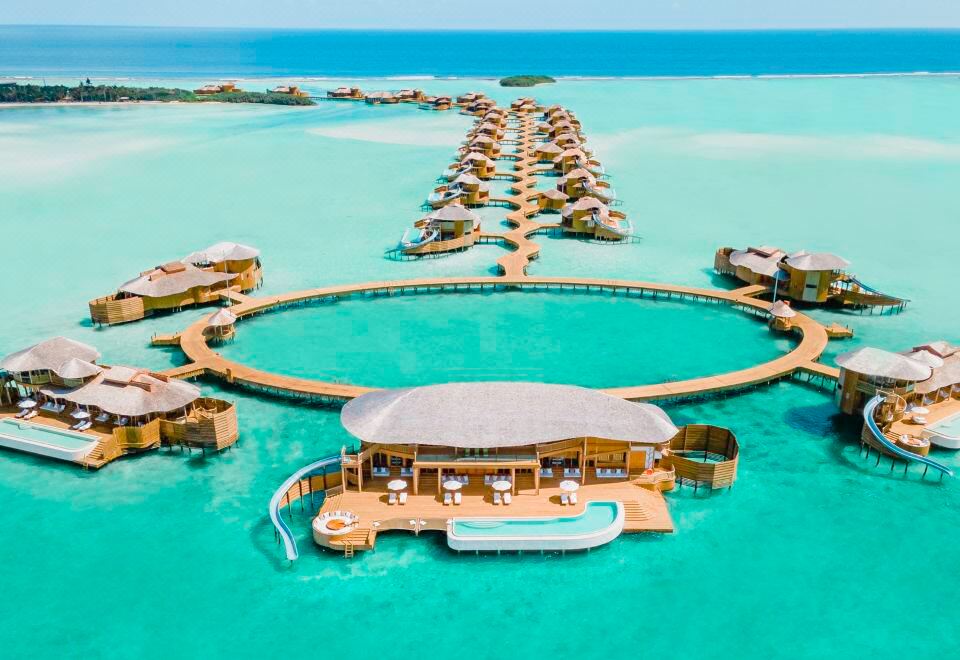
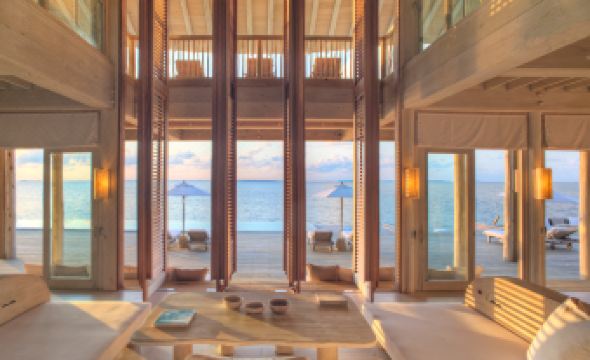
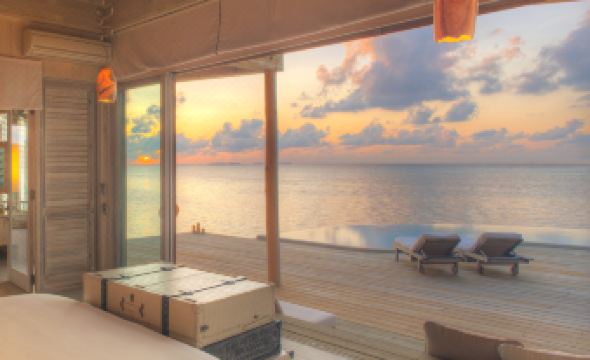
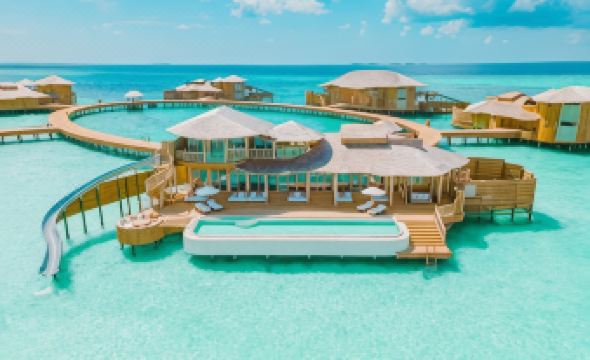
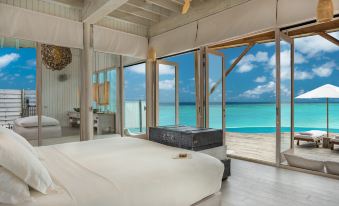
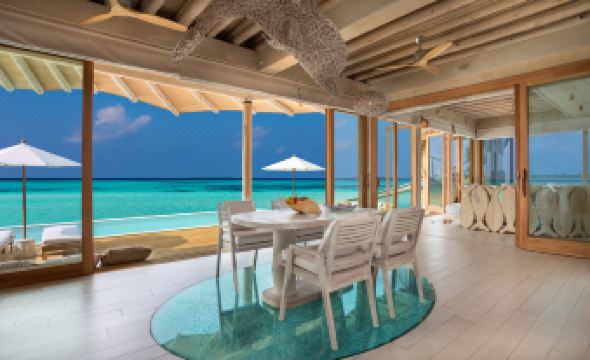
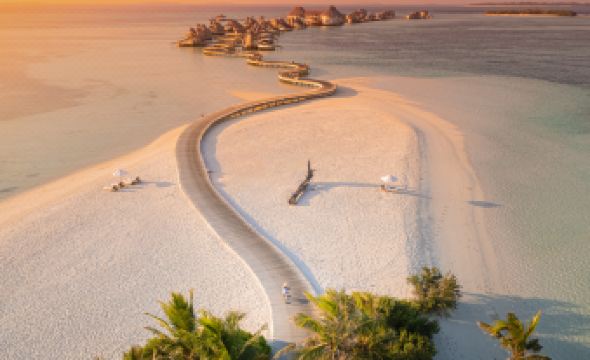
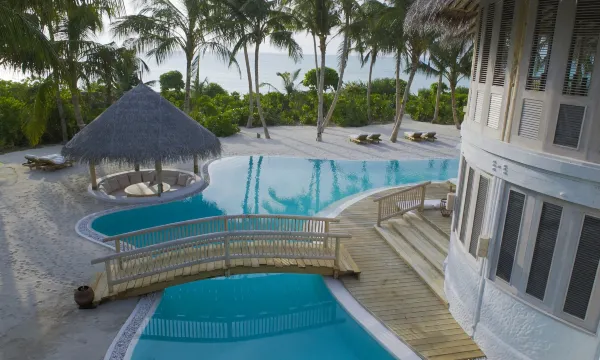
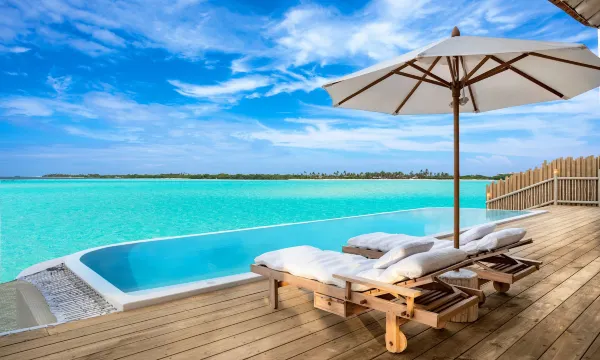
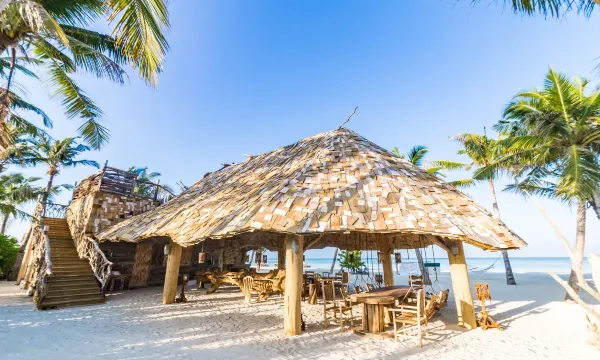
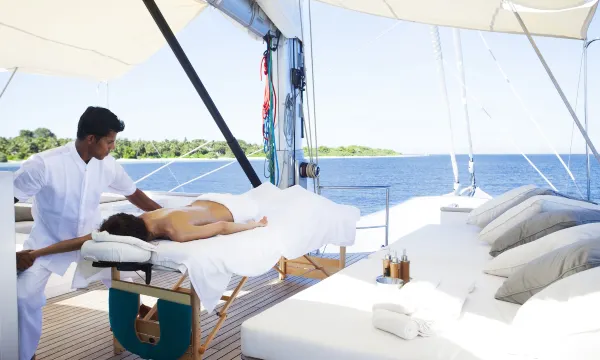
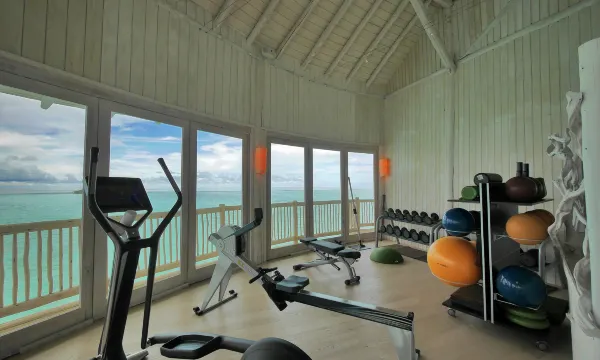
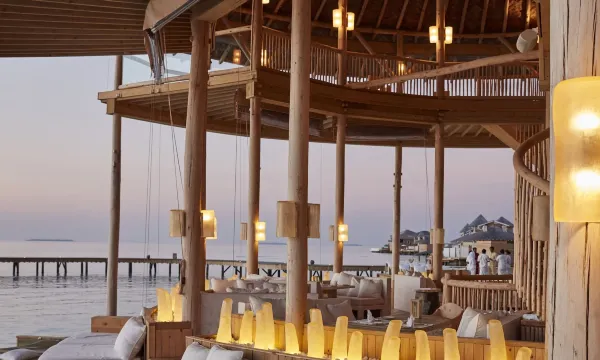
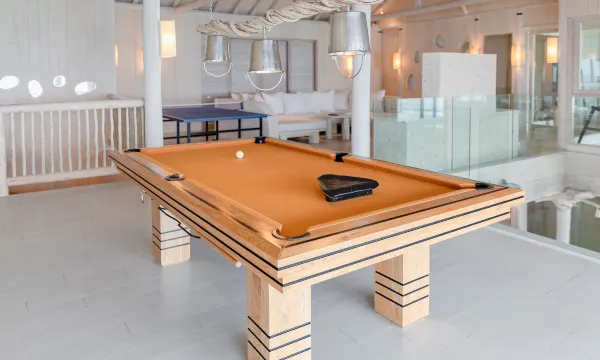
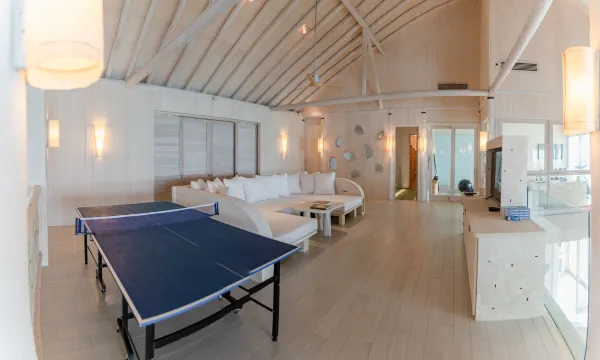
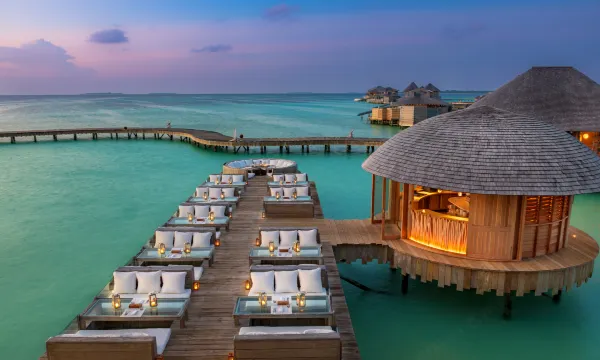
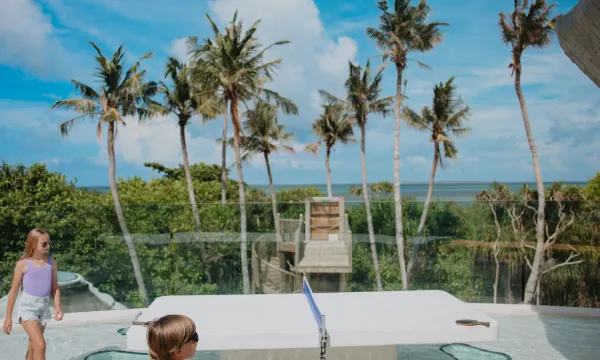
The Soneva Jani hotel, which cost 24,000 baht a night, proved to be worth the price; most hotels wouldn't go to such lengths.
The staff on the island are a bit hard of hearing. When the breakfast staff asked for our room number, I whispered "83," and he suddenly shouted back, "83?!" The whole restaurant turned around. Now everyone knows we're staying in room 83.
That evening, we discovered the 24,000 baht also included a hidden feature: an Indian Ocean insect extravaganza. Hundreds of flying ants, mosquitoes, and all sorts of unidentifiable insects suddenly appeared in our room, crawling on the walls, flying over the lights, and dozens even falling on our faces. We contacted our private butler, but she didn't show up.
Perhaps even private butlers need their own time.
The hotel said they'd send someone, and after 20 minutes, we'd almost killed off all the hundreds of insects. Finally, the pest control manager made a grand entrance with a household electric mosquito swatter and a bottle of 20-yuan supermarket insecticide spray.
Finally, it was time for our return seaplane flight. The captain told my wife and me to "sit tighter," which I thought was a special seaplane ceremony in the Maldives.
Later I realized we really had to squeeze in – because we needed to find other people to share the ride to another island.
The small plane was like a rural bus, packed with people and no air conditioning. My wife got airsick and threw up, drenched in sweat, while I was getting ready to share the ride.
The island where we were sharing the ride cost only a quarter of what we paid here, and the sea was even clearer than ours. Meanwhile, our island, which cost 24,000 yuan a night, was full of seaweed and insects.
After the stay, I finally understood: true luxury isn't about water villas, slides, and private butlers; it's about never knowing what's going to happen next.
Original TextTranslation provided by Google