
Things to do in Guanghan
Explore top experiences
Top 10 attractions in Guanghan


Sanxingdui Museum
The Sanxingdui Museum holds and displays over a thousand precious cultural relics in bronze, jade, gold, and ceramic, unearthed at the nearby Sanxingdui (“Three Stars Mound”) archaeological site. The Sanxingdui Archaeological Museum is quite large and comprises two independent exhibition areas. The first area is a general exhibition where you can see gold, copper, jade, stone, and ceramic cultural relics. The second area is the bronze exhibition, which houses all sorts of bronzeware that has been unearthed at the site.Guanghan · 6.7 km from downtown

Sanxingdui National Archaeological Site Park
Sanxingdui National Archaeological Site Park is a heritage park that integrates history, culture, and archaeological experiences, located in Guanghan City, Sichuan Province. As one of the important cradles of Chinese civilization, Sanxingdui attracts visitors and scholars from around the world with its mysterious and abundant relics of ancient Shu culture. The exhibition hall at Sanxingdui National Archaeological Site Park displays a vast collection of unearthed artifacts, including bronze ware, gold objects, jade pieces, and pottery. These relics, with their distinctive forms and exquisite craftsmanship, reveal the splendor and mystery of the ancient Shu civilization. Visitors can gain deeper insights into Sanxingdui's historical context and the significance of its archaeological discoveries through multimedia displays and interactive experiences. In addition to static exhibitions, the park offers a variety of interactive activities, such as archaeological experience programs where visitors can participate in simulated excavation and experience the fun and challenges of archaeological work. Regular cultural lectures and special exhibitions provide visitors with deeper learning and exchange opportunities. The park's natural environment is equally enchanting, with tree-lined paths and tranquil lakes providing visitors an ideal place to unwind. It serves not only as a window into ancient Shu culture but also as a cultural journey through time—exploring ancient civilizations and experiencing the charm of heritage.Guanghan · 6.7 km from downtown

Sanxingdui Site
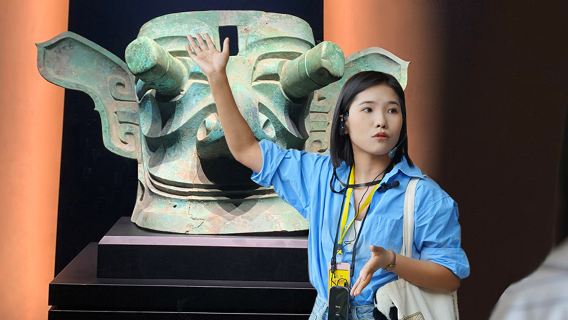
Sanxingdui Site is named after three undulating mounds of loess within its territory, once poetically known as "three stars accompanying the moon." As the core site of the ancient Shu civilization, it is widely considered by scholars to be the capital of the ancient Shu Kingdom. Spanning over 10 square kilometers, its cultural deposits date from the late Neolithic period to the Shang and Zhou dynasties, covering nearly 2,000 years. In 1986, brick factory workers accidentally unearthed jade artifacts while digging for soil, leading to the discovery of two large sacrificial pits. Subsequent discoveries of multiple sacrificial pits have yielded bronze ware, gold artifacts, jade, and a large quantity of ivory, gradually piecing together the true appearance of the sacrificial ceremonies held by the ancient Shu people over 3,000 years ago. People often describe this encounter across millennia with the phrase, "Sleeping for 3,000 years, one awakening shocks the world." Almost every artifact unearthed here is shrouded in mystery: the bronze standing figure wears a tall crown with hands exaggeratedly clasped in front of the chest, though what it originally held remains a subject of debate; the bronze sacred tree, with its three layers of spreading branches and birds perched upon them, is widely believed to be related to the mythical Fusang tree; the gold staff is engraved with patterns of fish, birds, and humans, with various theories regarding its purpose; and the bronze mask with protruding eyes features column-like eyes extending outward and wing-like ears, possessing a style quite distinct from the bronze ware of the Central Plains. It is precisely these uniquely shaped artifacts that make the site an important testament to the diverse yet unified pattern of Chinese civilization, offering a glimpse into the ancient Shu people's imagination of deities and the universe.Guanghan · 7.9 km from downtown

Manhua Sea of Flowers
Manhua Sea of Flowers is located in the south section of Xiaolong Avenue in Xindu District. It has a European style garden and is ideal for families' weekend trips. The varieties of flowers planted here are numerous. In the flowering season, it is rich in color. It is a visual feast no matter where you turn.Chengdu · 27.4 km from Guanghan

Fanghu Park
scription: "There are all things in the sky and people, and there is nothing in the human beings with the sky. The ghosts and gods are bright, and they think about themselves." Yuanxiang Ningcui Building, commonly known as "Red Building", has the first floor and the bottom. The south of the building is a tree-lined promenade, and the twelve ancient cypresses in the Ming Dynasty twisted in the sky, commonly known as "Twelve Phases". This is the bustling place of "La Baobao" in western Sichuan every year on the 16th of the first lunar month. The pavilions and pavilions in Fanghu Park are all antique buildings, while the playgrounds in the two gates are modern facilities, equipped with carousel, swings, earth turning instruments, animal swivel chairs, sea, land and air, small trains, and electric " "Flying Dragons Playing Balls" amusement machine, there are one golden dragon and one green dragon, and each dragon can take 12 people. Children can have fun here.Guanghan · 314m from downtown

Guanghanhai Lifang Haiyang Qinzi Amusement Park
Guanghan Haichang Ocean Exploration Museum includes a variety of parent-child experience projects such as mud workshops, creative arts and crafts, and creative kitchens. The park has a variety of interactive entertainment equipment such as indoor children's climbing, 5D cinemas, naughty castles, as well as interactive stages for turtles, sea lions, and seals, exciting human-shark dances, and dreamlike mermaid performances. It is a comprehensive interactive marine parent-child park that integrates marine life displays, popular science education, career experience, marine classrooms, and family parent-child interactions.Guanghan · 3.7 km from downtown

Chengdu Du Fu Thatched Cottage Museum
Du Fu Thatched Cottage is the former Chengdu residence of the famous Tang Dynasty poet Du Fu. Du Fu lived here for nearly four years. During his stay, he created hundreds of poems. This place is thus regarded as the “holy land” of Chinese literature. Today's Du Fu Thatched Cottage has survived multiple dynasties and been restored many times. The most important architecture of the place is his former residence, the thatched house. This former residence was built with the architectural characteristics of the western Sichuan civilian residences.Chengdu · 42.7 km from Guanghan

Luocheng Site
Luocheng is located in the area under the jurisdiction of Guanghan City, Sichuan Province, with a total area of 1.6 square kilometers and is now a national key point. Cultural relics protection unit.Guanghan · 405m from downtown

Chengdu Wuhou Shrine Museum
The Chengdu Wuhou Shrine Museum is a temple dedicated to honoring Shu Han heroes such as Liu Bei and Zhuge Liang. Its origins date back to 221 AD during the first year of the Zhangwu era under Emperor Zhaolie of Shu Han, when Liu Bei's Hui Ling Mausoleum was constructed. The Han Zhaolie Temple was also built during the same period. Approx. around 500 AD during the Northern and Southern Dynasties period, the Wuhou Shrine was relocated from Chengdu's "Shaocheng" to the vicinity of Hui Ling Mausoleum and Han Zhaolie Temple, maintaining this layout until the Ming Dynasty. In 1390 during the 23rd year of the Hongwu era, Zhu Chun, the Ming Prince of Shu, visited the Chengdu Wuhou Shrine Museum for worship. Citing that "monarch and subject should be united as one," he merged Hui Ling Mausoleum, Han Zhaolie Temple, and Wuhou Shrine into a single complex. As Zhuge Liang's influence among the common people surpassed that of Liu Bei, the site became colloquially known as "Wuhou Shrine." The cultural relics area of the Chengdu Wuhou Shrine Museum mainly consists of the Hui Ling Mausoleum, Han Zhaolie Temple, Wuhou Shrine, and the Chengdu Wuhou Shrine Museum - Sanyi Temple, with the main structure being the Wuhou Shrine. The shrine is divided into the main gate, second gate, Liu Bei Hall, passage hall, Chengdu Wuhou Shrine Museum - Zhuge Liang Hall, and Chengdu Wuhou Shrine Museum - Sanyi Temple, all aligned along a central axis from south to north. The shrine houses 50 statues of Shu Han heroes including Liu Bei and Zhuge Liang, along with numerous stone inscriptions and plaques related to Zhuge Liang and Three Kingdoms culture. The famous "red wall and bamboo shadows" of Chengdu are located within the attraction. Don't forget to take photos. The garden area of Chengdu Wuhou Shrine Museum, located on the west side of the shrine, features architectural structures such as the stone archway gate, three-arched gate, square pavilion, Jiexin Hall, and burial chamber. It is the only northern-style mausoleum complex in southwest China. The shrine is adjacent to Jinli Ancient Street (Jinli Folk Custom Area), making it convenient to visit both sites together.Chengdu · 43 km from Guanghan

WenShuFang
WenShuFang is an antique-style cultural block in Qingyang District, Chengdu, adjacent to Wenshu Monastery. Opened in 2006, the Wenshu Monastery area, where it is located, is one of Chengdu's three major historical and cultural conservation zones, alongside Kuanzhai Alley and Daci Temple. The block primarily features architecture in the traditional Sichuanese residential style, with teahouses, snack shops, intangible cultural heritage workshops, and Hanfu stores nestled among gray-tiled roofs, wooden doors, and courtyards. It is also a popular spot for locals to drink tea and chat. The main streets in the district each have their own distinctive features: Wuyuegong Street is dedicated to intangible cultural heritage, with workshops showcasing traditional crafts like Shu brocade, Shu embroidery, lacquerware, bamboo weaving, and silver filigree, where artisans can often be seen working on-site; Nanyue Lane is a hub for Hanfu culture, with a constant stream of people dressed in Hanfu taking photos against the backdrop of ancient-style gate towers and red walls, and the street also offers Hanfu rental and makeup services; Jinma Lane is the heart of old Chengdu flavors, where time-honored snacks like imperial walnut cakes and Zhang Liangfen from Dongzikou can be enjoyed from one end of the street to the other. When you need a break, you can stop at a teahouse for a bowl of covered-bowl tea. The district also hosts Sichuan opera performances, where you can enjoy face-changing, fire-spitting, and long-spout tea art while sipping tea, fully immersing yourself in Chengdu's unique blend of leisure and liveliness. When touring, you might as well combine this place with the nearby Wenshu Monastery into one route, visiting the ancient temple first and then exploring the alleys, which can be completed in half a day. Travelers planning to take Hanfu photos are advised to allocate more time for makeup, styling, and framing.Chengdu · 39.2 km from Guanghan
Experiences you can't miss in Guanghan
Featured Cultural experiences in Guanghan
View all Cultural experiences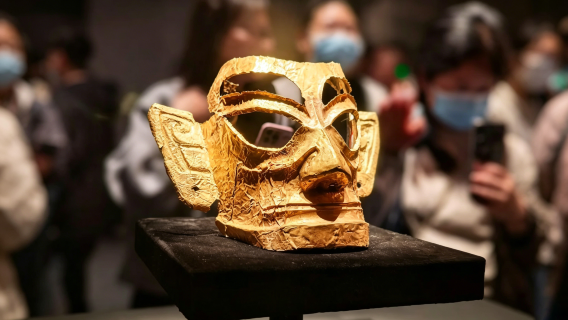
4.5/5
· 17 reviews· 872 bookedFree cancellation
Instant confirmation
Book now for today
60 travelers saved
FromRUB 1,167.52
![Chengdu Sanxingdui Museum + Optional Destinations: Private Car Transfer[Flexible Departure Time]](https://ak-d.tripcdn.com/images/0356t12000qyekl8v37E4_C_568_320.jpg?_fr=wc)
Free cancellation
Instant confirmation
Book now for tomorrow
Save RUB 92.69
FromRUB 9,175.55RUB 9,268.24
4.9/5
· 2.6k reviews· 9.1k bookedFree cancellation
46 consecutive positive reviews
FromRUB 13,934.02

Free cancellation
Instant confirmation
Book now for tomorrow
FromRUB 1,890.87
4.9/5
· 2k reviews· 3.6k bookedFree cancellation
Book now for tomorrow
99.3% of travelers recommend
FromRUB 3,654.83
![Chengdu Sanxingdui Museum Half-Day Tour: Uncover the Ancient Shu Civilization of Thousands of Years [Includes Admission Ticket with Private Car]](https://ak-d.tripcdn.com/images/0352a12000lu7hj5z7FAC_C_568_320.jpg?_fr=wc)
4.4/5
· 5 reviews· 272 bookedFree cancellation
Save RUB 35.18
FromRUB 3,483.52RUB 3,518.7

5.0/5
· 3 reviews· 135 bookedFree cancellation
Save RUB 32.73
FromRUB 3,240.81RUB 3,273.54

5.0/5
· 1 reviewFree cancellation
Book now for tomorrow
9% off
Limited-time sale
FromRUB 4,936.19RUB 5,484.65
Featured Food & drink in Guanghan
View all Food & drink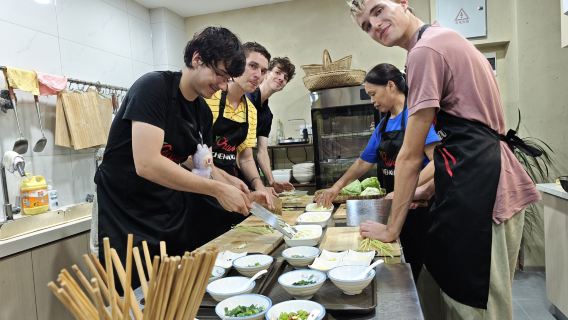

5.0/5
· 63 reviews· 441 bookedFree cancellation
Instant confirmation
Book now for today
63 consecutive positive reviews
FromRUB 6,069.68

4.8/5
· 26 reviews· 284 bookedFree cancellation
Instant confirmation
Book now for today
FromRUB 854.28
5.0/5
· 11 reviews· 222 bookedFree cancellation
Instant confirmation
Book now for tomorrow
FromRUB 1,242.17
![Chengdu Shu palace banquet • imperial feast [Chunxi Road branch]](https://ak-d.tripcdn.com/images/0356h12000sh1e73t49B5_C_568_320.jpg?_fr=wc)
4.2/5
· 6 reviews· 167 bookedFree cancellation
Instant confirmation
Book now for tomorrow
FromRUB 1,482.42
![Jinxiu restaurant show | Chengdu Bashu palace banquet [immersive elegant banquet experience + complimentary costume change]](https://ak-d.tripcdn.com/images/0356612000skvn6buABC1_C_568_320.jpg?_fr=wc)
5.0/5
· 1 review· 62 bookedFree cancellation
Book now for today
FromRUB 1,984.93

22 booked
Free cancellation
Book now for today
FromRUB 3,706.04

FromRUB 8,257.59
5.0/5
· 1 reviewFree cancellation
Instant confirmation
Save RUB 79.05
FromRUB 7,825.65RUB 7,904.7
Featured Outdoor experiences in Guanghan
View all Outdoor experiences
FromRUB 8,984.78

4.9/5
· 11.2k reviews· 44.2k bookedFree cancellation
Instant confirmation
Book now for tomorrow
98.9% of travelers recommend
FromRUB 11,408.63
4.8/5
· 4 reviews· 24 bookedFree cancellation
Instant confirmation
Book now for tomorrow
FromRUB 12,978.78
Free cancellation
Instant confirmation
Book now for tomorrow
Save RUB 86.52
FromRUB 8,566.00RUB 8,652.52
4.5/5
· 2 reviewsFree cancellation
Instant confirmation
Book now for tomorrow
9% off
Limited-time sale
FromRUB 5,893.41RUB 6,548.23
5.0/5
· 4 reviewsInstant confirmation
Book now for tomorrow
Save RUB 57.69
FromRUB 5,710.66RUB 5,768.35
4.7/5
· 47 reviews· 227 bookedFree cancellation
Instant confirmation
93.6% of travelers recommend
FromRUB 8,730.97

5.0/5
· 1 reviewFree cancellation
Instant confirmation
Book now for tomorrow
Save RUB 79.31
FromRUB 7,852.17RUB 7,931.48
Free things to do in Guanghan
Sanxingdui National Archaeological Site Park
Guanghan · 6.7 km from downtownFanghu Park
Guanghan · 314m from downtown
Sanxingdui Museum - Bronze Hall
Guanghan · 6.8 km from downtownLuocheng Site
Guanghan · 405m from downtownWenShuFang
Chengdu · 39.2 km from Guanghan
Phoenix Lake Scenic Area
Chengdu · 9.7 km from Guanghan
Chengdu Museum
Chengdu · 41.2 km from Guanghan
Wenshu Monastery
Chengdu · 39 km from Guanghan
Longju Temple
Guanghan · 6.6 km from downtown
Chunxi Road
Chengdu · 40.4 km from Guanghan
More ways to travel from Guanghan
Private Tours in Guanghan
View More Private Tours in Guanghan








Group Tours in Guanghan
View More Group Tours in Guanghan




What travelers say about Guanghan

ahren91October 8, 2026
5.0
Visited the museum with my wife and 5-year-old son after hearing from locals that we shouldnt miss this out. I would recommend getting a guide or otherwise you wouldnt understand the significance of the artefacts.
Sanxingdui Museum

不吃香菜的牛排骨May 28, 2025
5.0
The Sanxingdui Archaeological Site Park is mainly composed of three exhibition areas, namely "Western City Wall Relics", "Yan Family Courtyard·Moon Bay" and "Sanxingdui·Sacrificial Pit·Archaeological Work Station", and the Sanxingdui Museum, which basically displays the cultural features and development level of the ancient Shu culture. In 2010, the Sanxingdui Archaeological Site Park became one of the first "National Archaeological Site Parks".
Sanxingdui National Archaeological Site Park

难 得糊 涂November 9, 2025
5.0
Sanxingdui Site – The Origin of the Yangtze River Civilization, a Site That Shook the World.
Located on the south bank of the Yazi River in Guanghan City, Sichuan Province, the site covers an area of 12 km², with the core ancient city covering approximately 3.6 km². It is the largest, most complete, and longest-lasting ancient Shu capital site discovered in Southwest China to date.
Latest Archaeological Progress (to be released in 2025):
Precise Dating: Sacrificial pits 3, 4, 6, and 8 have a 95.4% probability of dating to 1201–1012 BC (Late Shang Dynasty). Artifacts from pits 1, 2, 3, 7, and 8 can be pieced together, confirming they were buried at the same time.
New Casting Techniques: The "core-strip core support" bronze casting method was discovered for the first time, filling a gap in Chinese Bronze Age technology.
Gold Usage: The total weight of unearthed gold artifacts exceeds 2 kg, the highest in China for the same period; gold masks and gold foil ornaments were refined using a gold-silver alloy and ash blowing method.
Silk Traces: Silk residue was detected in multiple sacrificial pits, proving that people wore gold and brocade 3,000 years ago. Key artifacts: A large bronze mask (131 cm wide, weighing 131 catties, the world's largest Shang Dynasty bronze mask); a gold-masked bronze human head (42.5 cm, made from gold-plated wood, with openwork eyes and eyebrows); and over 5,000 other artifacts including a bronze sacred tree, a bird-shaped bronze bell, ivory carvings, and jade cong, showcasing the unique cosmology of the ancient Shu Kingdom.
Sanxingdui buried the ancient Shu Kingdom's gold mask, bronze sacred tree, and silk sacrificial robes in late Shang Dynasty sacrificial pits. Their discovery today serves as the most dazzling evidence that the Yangtze and Yellow Rivers are both part of the mother river of Chinese civilization.
Sanxingdui Site

BirdyBirdySeptember 2, 2026
5.0
Great time during sakura & tulip blooming period. They manage landscape well and there’re many photo spots, food service, etc. It can be reach by metro from downtown Chengdu. Very convenient.
Manhua Sea of Flowers

美花狸尾豆December 27, 2022
5.0
A very exquisite small park, with pavilions, corridors, red walls, pagodas, artificial lakes, rockery, botanical gardens, rich content, and it can be seen that it is managed seriously. A small city with such an exquisite small park shows that it has some heritage. One side of the park is surrounded by the old city wall, and you can take a walk on the city wall. On the other side, it is close to the Confucian Temple of Guanghan, which is larger than the Confucian Temples in other small places and well protected. Confucius sat well inside. It closed very early and was sent out by the uncle at five o'clock. Go straight out of the back door of the park and turn right at the first intersection. There is a well-known pot cake shop. It is estimated that the meat is better to eat now. The brown sugar one is too hard to bite. If you don't turn right and go straight to the second intersection, there is a Sanxingdui theme post office. It's so annoying. I turned back ten meters away from here. The next time I saw this post office, I was sitting on a bus and whizzing past! By the way, that park may be more comfortable in summer, with large lotus flowers. If you spend most of the day in Sanxingdui, it would be a good idea to take bus No. 6 to this small park and the surrounding area for an hour or two, and then take another bus to the high-speed rail station!
Fanghu Park

M43***63November 17, 2022
4.0
I happened to see a discount, suitable for parents and children, friends, and families. There are mermaid and sea lion shows on the first floor, parrot shows on the second floor, and children's tickets can also experience four different courses, play with ocean balls and slides, play with sand, watch movies on the second floor, and have a second entry. Scan the parking discount code at the entrance to park for free for 5 hours. It's affordable!
Guanghanhai Lifang Haiyang Qinzi Amusement Park

叮咣五四October 9, 2026
5.0
Stepping through the thatched gate of Du Fu Thatched Cottage, the summer heat was instantly dispelled by the lush greenery of the courtyard—the dense shade of the camphor trees carpeted the ground, bamboo shadows swayed delicately against the blue-tiled walls, and even the breeze carrying the fragrance of lotus leaves wafted through the pond. It's hard to imagine that a thousand years ago, that humble cottage, nourished by the waters of the Huanhua Stream, would have grown into such a dense forest, a haven for poetic spirit.
Walking slowly along the bluestone path, past the thatched gate and the waterside pavilion, until finally reaching the restored cottage, with its low earthen walls, sparse bamboo fence, and a faded bamboo hat hanging under the eaves, it felt as if opening the door would reveal the old man in the blue cloth robe, pen in hand, frowning at the autumn rain pouring down his face. Standing before the cottage, I suddenly understood that "If only I had ten thousand mansions, I could shelter all the poor scholars of the world and make them smile" wasn't just a sentence printed in a book, but the tenderness of a person shivering under the leaky eaves of a thatched cottage, still thinking of all those suffering like him in the world. I went to the Poetry History Hall to see Du Fu's statue. He sat upright, his brows and eyes somber yet not sorrowful. The glass cabinet displayed different editions of Du Fu's poems from various eras, their yellowed pages filled with dense annotations. Those poignant and melancholic verses flowed from the An Lushan Rebellion of the Tang Dynasty to the banks of the Huanhua Stream in Chengdu, and now into the hearts of everyone who stands here today to read his poetry. Before leaving, I bought a leaf vein bookmark printed with Du Fu's poems at the entrance. Touching the fine lines on the leaf, I suddenly thought, Du Fu didn't need any magnificent shrine. The winds of the Huanhua Stream have blown here year after year; his poems have long been ingrained in every blade of grass and every tree. As long as someone is still willing to stop and read his poems, this thatched cottage will never be deserted.
Chengdu Du Fu Thatched Cottage Museum

X yoyoFebruary 19, 2021
4.0
I went to Deyang and visited the historical and cultural city, Luocheng, which is quite historic and meaningful. It has now been built into Fanghu Park. The park is not big, but there are still many people walking around. It is still possible to stroll in the park, drink tea by the lake, go boating, and visit the ancient city wall.
Luocheng Site

139***75October 9, 2026
5.0
Passing through Chengdu, I took advantage of a short afternoon to visit the Wuhou Temple. I hired guide number 100, whose explanations were well-paced and engaging, not just a rigid recitation of a text, but a captivating and detailed retelling of the Three Kingdoms stories. It was a truly enriching experience. Strolling through the ancient temple, with its red walls and verdant cypresses, I admired the Temple of Emperor Zhaolie of Han, carefully studied the inscription of the "Memorial on Dispatching the Troops" and the Three Perfections Stele. In every brick and tile, I felt the spirit of unity between the ruler and his ministers. After the tour, I stepped out into Jinli Ancient Street as dusk approached.
This guided tour was truly worthwhile. Thank you to the guide; you worked so hard!
Chengdu Wuhou Shrine Museum

衔春归玄燕May 1, 2026
5.0
Wenshu Fang, nestled against the ancient Wenshu Monastery, exudes the rustic charm of western Sichuan folk customs amidst its blue bricks and gray tiles. I strolled leisurely here with my dog, wandering through bamboo paths and red-walled, green corridors; even he couldn't resist frolicking on the stone slabs. There's none of the hustle and bustle of trendy shops, only the jasmine fragrance wafting from teahouses and the gentle sounds of artisans hammering bamboo – the atmosphere is simply divine!
Wenshu Fang is a hidden gem of a Chengdu food map! Just step outside and you can enjoy authentic "Dongzikou Zhang Lao Er" sweet water noodles, their sour, spicy, and savory flavors instantly awakening your taste buds. I squatted by the window and ordered a spicy hot pot for my dog, and he quietly devoured half the bowl! There's also freshly ground soy milk and ice jelly on the street corner; even my dog couldn't resist licking the soy pulp clean from the rim of the bowl!
Wenshu Fang is incredibly pet-friendly! I took photos with my dog in front of the "Wenshu Fang" cultural and creative shop; he posed on the bluestone slabs against the backdrop of the ancient buildings with their upturned eaves – every snapshot looked like a masterpiece of traditional Chinese style. The shop also thoughtfully provided a water station for pets, so you don't have to worry about your pet getting thirsty.
WenShuFang
Popular cities near Guanghan


Frequently asked questions
What are the must-do things in Guanghan?
Don't miss these attractions in Guanghan: Sanxingdui Museum, Sanxingdui National Archaeological Site Park, and Sanxingdui Site. If you like Cultural experiences, try Guanghan Sanxingdui museum admission ticket | enter with ID card | no ticket collection required | live guide optional. If you enjoy Food & drink, try Chengdu: Cooking Class with Fresh Market Experience.
What are the must-try foods and restaurants in Guanghan?
You can give Chengdu: Cooking Class with Fresh Market Experience and Chengdu Shu Palace Banquet: Enjoy food while watching performances, witness Sichuan opera face-changing, and explore an ancient Chinese market a try. Before you go, please check their opening hours and menus online. Reservations are recommended, especially during peak hours.
How can I contact Trip.com customer support?
Get help anytime, anywhere within 30 secondsContact customer support
Can I change or cancel my booking?
Change and cancellation policies vary by attractions and tours. Please check the product details page for more information.
How can I get discounted prices?
Ticket prices may vary between weekdays and weekends, as well as during peak and off-peak seasons. When booking with Trip.com, you can also use Trip Coins to get extra savings. For more tips on booking discounted tickets, please visit Trip.com for the latest information.
Trip.com picks
Popular cities in China
Popular Guanghan Tours
Best Guanghan Experiences
Recommended Car Rentals in China
Things to do in ShanghaiThings to do in GuangzhouThings to do in YulongThings to do in ChinaThings to do in ZhuhaiThings to do in ChengduThings to do in YangshuoThings to do in HarbinThings to do in SanyaThings to do in ShenzhenThings to do in ChongqingThings to do in SuzhouThings to do in TaipeiThings to do in HangzhouThings to do in Zhangjiajie
Chengdu Sanxingdui Museum Private Transfer Half-Day Tour Chengdu Sanxingdui Museum + HongDingYan Banquet Day Tour: Ticket + Private Car TransferOne-day tour of Sanxingdui Museum from Chengdu / English-speaking guide or pick-up and drop-off service availableDujiangyan + Sanxingdui Museum Chartered tour Chengdu Sanxingdui Museum + Shu Kingdom Palace Banquet Day Tour: Ticket + Private CarDeparture from Chengdu city center: Half-day private charter to Sanxingdui ancient Shu civilization Chengdu Dujiangyan+Sanxingdui Chinese Group Day TourChengdu Research Base of Giant Panda Breeding + Sanxingdui Day Tour: Tickets+Private Car1-day tour to Panda Base and SanxingduiDoor-to-door pick-up and drop-off service | Sanxingdui Museum guided tour + bronze craft workshop day trip / Upgrade to see the exhibition/performance availablePanda Base + Sanxingdui Day Trip - all tickets includedChengdu Iconic: One-Day English Mini-Group Tour to Panda Base and Sanxingdui MuseumHalf-day tour to Sanxingdui from Chengdu Sichuan Deyang Shenpugou Valley + Sanxingdui Museum Private Charter Day Tour with Chinese and English ServicesFrom Chengdu: Panda Base + Sanxingdui Site One‑Day Tour with Private Car & Tour GuideGuanghan Day ToursGuanghan ActivitiesGuanghan TransportationCar rentals in TaipeiCar rentals in BeijingCar rentals in Hong KongCar rentals in Shanghai