Santai

Things to do in Santai

Search attractions or local attractions & tours
Search

Explore top experiences

Top 10 attractions in Santai

View all Attractions
Chengdu Research Base of Giant Panda Breeding
2026 Global 100 - Best Things to Do

Chengdu Research Base of Giant Panda Breeding

9.4
4.6/5
114.4k reviews
The Chengdu Research Base of Giant Panda Breeding is home to many adorable giant pandas, and you can observe these charming national treasures up close. Located in the northern suburbs of Chengdu, the Chengdu Research Base of Giant Panda Breeding is approx. 10 km from the city center, and its construction fully simulates the wild living environment of giant pandas, with lakes, streams, bamboo forests, lawns, and more. The Chengdu Research Base of Giant Panda Breeding has many "panda villas", which are enclosed leisure areas for pandas. Each features an outdoor yard and an indoor rest room. When the weather is cool, the giant pandas play in the yard, and visitors can watch the adorable pandas through the railings; when the weather is hot, the giant pandas hide in the air-conditioned rest rooms, and visitors can only watch them through the glass. Can I also see pandas in the new area of the Chengdu Research Base of Giant Panda Breeding? Are there other things to do? You can also see pandas in the new area of the Chengdu Research Base of Giant Panda Breeding, and they are our hero pandas. The pandas' home is bigger, and their activity range is wider. Seeing pandas is the main draw, but there is plenty more to do and see. A must-visit is our landmark building — the internet-famous Panda Tower. As a new landmark of Chengdu, it stands at the highest point of the Chengdu Research Base of Giant Panda Breeding. The tower is 69.8 m tall with 11 floors. Its exterior resembles a giant bamboo shoot, while the interior is shaped like a blooming hibiscus flower. Inside, 81 platforms are distributed throughout, allowing visitors to enjoy the views of the Chengdu Research Base of Giant Panda Breeding from multiple angles. There is also the Art Museum (New Building) located in the dense forest area of the new district, which uses emerging exhibition methods such as multi-sensory interaction, lighting installations, interactive installations, and thermal sensing to create immersive exhibition scenes for visitors. The new area of the Chengdu Research Base of Giant Panda Breeding plans to set up science popularization display boards and interactive facilities with rich content and diverse forms in four major zones, so that visitors can learn about giant pandas while watching them and enhance their interactive experience. On festivals related to animal and environmental protection, themed science popularization activities will also be carried out for visitors of different age groups, such as interactive lectures, family-friendly science popularization, mystery exploration games, and other activities that combine education with entertainment. When you're tired from playing, you can also go enjoy a musical — "Panda": it vividly presents to the audience the scene of magical animals, with the giant panda as their representative, coexisting harmoniously, sharing nature, and loving life on the beautiful and fertile land of Chengdu, Sichuan. Through the form of a musical, it reflects the livable landscape of Chengdu, Sichuan, and the simple and leisurely life of the local people. In terms of total area, it has increased from the original 1,035 mu to 3,570 mu, expanding by 2.5 times. During the expansion, the original topography and landforms were fully followed and preserved, and the multi-level landscape belts of mountain valleys formed by mountain gullies and streams were utilized to create 11 giant panda venues, multiple science popularization venues, and visitor pedestrian streets and other sightseeing locations. After the expansion project is completed, it can accommodate no fewer than 180 giant pandas and companion animals such as red pandas and golden snub-nosed monkeys. As of now, multiple giant pandas and red pandas have moved into the "new homes" in the expansion area, and rare animals such as golden snub-nosed monkeys will also be waiting to welcome everyone in the future. Are the supporting facilities in the new area complete? In terms of design, the new area is equipped with ample visitor facilities in accordance with 5A attraction standards. It not only provides basic facilities such as sightseeing vehicles and tourist restrooms, but also equips the hill commercial street, the exit commercial street, and scattered commercial complexes in various zones with a large number of tourism service facilities. The planned business formats include dining, souvenir sales, postal services, cinemas, theaters, and experiential education, among others, and the quantity is sufficient to meet visitor demand. After nearly a year of operation, in response to the practical issues of the new area's large size and uneven distribution of supporting facilities, the Chengdu Research Base of Giant Panda Breeding has added multiple beverage vending machines, direct drinking water dispensers, and shared convenience facilities throughout the new area to improve the visitor experience. Next, the Chengdu Research Base of Giant Panda Breeding will further supplement and improve visitor rest facilities, inquiry service facilities, and guide and navigation facilities to meet visitor needs. The expanded Chengdu Research Base of Giant Panda Breeding will help Chengdu build a demonstration site of harmonious coexistence between humanity and nature, improve conditions for giant panda research and conservation, protect biodiversity, fully demonstrate the brand value, cultural value, and economic value of giant pandas, and build the cultural tourism brand of "Sanxingdui, Jiuzhaigou, and Giant Pandas: A Leisurely Journey Through Sichuan." New businesses and projects such as the Panda Art Museum, IMAX Theater, and Panda Theater are now open, meeting visitors' needs for dining, entertainment, sightseeing, shopping, and leisure while they watch giant pandas. First, it is more conducive to scientific research and protection of pandas. As a nationally protected animal, the giant panda is gentle in temperament, adorable in appearance, and amusing in movement, and is deeply loved by the people. However, as the number of giant pandas continues to grow, problems in the old area of the Chengdu Research Base of Giant Panda Breeding, such as high population density and the inability to fully improve animal welfare in giant panda feeding and management, have become increasingly evident. The completion and operation of the new area of the Chengdu Research Base of Giant Panda Breeding can effectively solve the above problems, comprehensively enhance the scientific research and protection level of giant pandas at the Chengdu Research Base of Giant Panda Breeding, and effectively safeguard the animal welfare of the park. Second, it is more conducive to enhancing the people's sense of happiness and fulfillment. As socialism with Chinese characteristics enters a new era, the principal contradiction in society has evolved into the contradiction between unbalanced and inadequate development and the people's ever-growing needs for a better life. At present, tourism has become a rigid demand for a better life among people in a moderately prosperous society and is widely favored by the public. Building the new area of the Chengdu Research Base of Giant Panda Breeding conforms to the new trend of tourism consumption transformation and upgrading among the people and will effectively meet the people's high-quality and diversified tourism consumption needs, enhancing their sense of happiness and fulfillment. Third, it is more conducive to building a distinctive panda IP and supporting the construction of the park city demonstration zone. Since its establishment in 1987, the old area of the Chengdu Research Base of Giant Panda Breeding has achieved internationally and domestically recognized results in giant panda scientific research and conservation, science popularization education, cultural tourism, and international exchanges. It has been recognized at home and abroad as a giant panda ex-situ conservation demonstration unit with strong scientific and technological capabilities in captive giant panda conservation, numerous scientific and technological achievements, and effective application and promotion results. It has been awarded the titles of "National Advanced Collective in Science Popularization Work," "National Youth Science and Technology Education Base," "National Science Popularization Education Base," "National Environmental Science Popularization Base," and "Cross-Strait Exchange and Cooperation Base," has twice undertaken "Key Cultural Exchange Projects of the Publicity Department of the CPC Central Committee," and has twice won the United Nations "Global 500" award. The construction of the new area of the Chengdu Research Base of Giant Panda Breeding will effectively enhance the image of China's tourism brand, build a panda-themed IP with international recognition, and help Chengdu accelerate the building of a world-renowned cultural city and a park city demonstration zone that practices the new development philosophy.Chengdu · 99.3 km from Santai
Sanxingdui Museum
2026 Asia 100 - Best Things to Do

Sanxingdui Museum

8.8
4.5/5
18.4k reviews
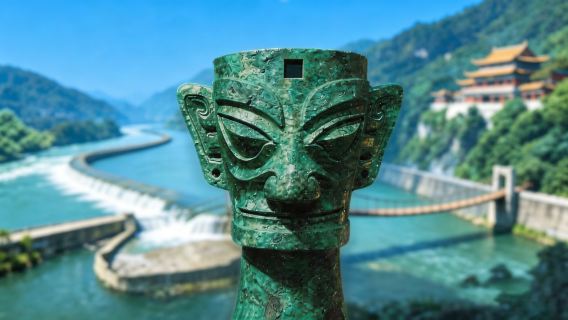
Sanxingdui Museum is a thematic site museum displaying cultural relics unearthed from the Sanxingdui site, with its grounds located at the northeast corner of the site. The Sanxingdui site is an important remnant of ancient Shu civilization, dating back approximately 3,000 to 5,000 years. Within the site, remains such as the eastern, western, and southern city walls and the inner city wall at Moon Bay still exist, and it is hailed as the "source of Yangtze River civilization." The museum's permanent exhibition is divided into three sections: "A Century of Dreams," "The Majestic Royal Capital," and "Heaven, Earth, Man, and Gods," systematically presenting the archaeological excavation process and research findings of Sanxingdui civilization. The museum displays a large number of precious artifacts unearthed from the site, among which the uniquely shaped bronze objects are particularly striking. The bronze standing figure measures over 2.5 m in total height and is a rare, massive early bronze human figure in China; the pose of its hands, held in a hollow ring grip, has prompted various scholarly interpretations. The bronze mask is over 1 m wide, with extremely exaggerated facial features and eyes that protrude in cylindrical form, creating a strong visual impact. The bronze sacred tree stands nearly 4 m tall, with sacred birds and dragon-shaped ornaments cast on its trunk, and is speculated to be related to ancient sun worship and the mythological "ladder to heaven." In addition, the gold objects represented by the gold staff and the jade and stone objects represented by the jade border zhang are likewise rare and important remains of ancient Shu civilization. When visiting, it is recommended to allow ample time. The three exhibition areas unfold along the threads of archaeological discoveries, the layout of the capital city, and spiritual beliefs, progressing layer by layer. The bronze sacred tree and the bronze standing figure are the museum's iconic exhibits and are well worth pausing to examine in detail. The museum also displays artifacts newly unearthed in recent years, presented to the public, and are worth noting for visitors interested in new archaeological findings.Guanghan · 84.1 km from Santai
Chengdu Du Fu Thatched Cottage Museum
2026 Asia 100 - Best Things to Do

Chengdu Du Fu Thatched Cottage Museum

8.9
4.7/5
47.7k reviews
Chengdu Du Fu Thatched Cottage is the former residence of Du Fu, the Sage of Poetry, during his exile in Chengdu. In the winter of 759 AD, Du Fu came to Chengdu with his family to escape the An Lushan Rebellion. In the spring of the following year, he built a "thatched cottage" by the Huanhua Stream and lived there. Du Fu resided here for three years and nine months in total, during which he composed more than 240 poems that have been passed down to this day. Chengdu Du Fu Thatched Cottage is hailed as "the holy land of Chinese literary history." In the late Tang Dynasty, the poet Wei Zhuang located the site of the thatched cottage and rebuilt the thatched hut. Thereafter, Du Fu Thatched Cottage underwent fourteen large-scale renovations and expansions from the Song, Yuan, Ming, and Qing Dynasties to the present day. After the founding of New China, in 1952, Du Fu Thatched Cottage was fully renovated and officially opened to the public. In 1955, the Du Fu Memorial Hall was established, and in 1985 it was renamed Chengdu Du Fu Thatched Cottage Museum. It is now one of the first batch of Major Historical and Cultural Sites Protected at the National Level, a National First-Class Museum, a National Key Protection Unit for Ancient Books, and a National 4A-Level Tourist Attraction. Its area has also grown from the "one mu of cleared thatch" when Du Fu built the cottage to nearly 800 mu today, including 300 mu of cultural relic area and 500 mu of Huanhua Garden area. Chengdu Du Fu Thatched Cottage Museum is a public welfare Class II institution, and is also additionally designated as the Du Fu Thatched Cottage Poetry, Calligraphy and Painting Academy Art Museum and the Chengdu Chinese Calligraphy Museum. It currently has an authorized staffing of 123 positions and 16 internal working bodies, with its main source of funding being admission ticket revenue. Chengdu Du Fu Thatched Cottage Museum is a museum of ancient architecture, a large-scale center for the collection and display of Du Fu research materials and Du Fu poetry calligraphy and painting in China, an important platform for inheriting and promoting excellent Chinese poetry culture, a representative base of classical gardens in western Sichuan, and a protection and exhibition center for ancient architecture in western Sichuan. Its ancient buildings feature wooden column-and-tie structures, with representative buildings including the Grand Hall, the Hall of Poetry History, the Ministry of Works Hall, the Thatched Hut, and the Sutra Library; its distinctive poetic garden views include the Bonsai Garden, the Orchid Garden, and the Plum Garden.China · Chengdu
Mount Qingcheng
No. 4 of Best Things to Do in Sichuan and Chongqing

Mount Qingcheng

8.9
4.6/5
34.5k reviews
Mount Qingcheng has long been praised as "Tranquil Paradise under Heaven," with its peaks encircling like city walls—hence the name. Legend says Zhang Daoling of the Eastern Han dynasty established Taoism here in a thatched hut, making it the ancestral home of Celestial Master Taoism, where temple incense still burns today. The mountain divides into front and back sections: the front features Taoist temples and cultural relics, commonly referred to as "Mount Qingcheng" by most travelers; the back excels in natural landscapes like pools, waterfalls, streams, and gorges, making it ideal for hiking and summer retreats. The highlights of Qianshan are concentrated. Starting from Jianfu Palace beside the mountain gate, follow the ancient stone steps upward past Natural Picture, Tianshi Cave, Chaoyang Cave, and Shangqing Palace, with the summit's Laojun Pavilion as the final vantage point. Tianshi Cave, also called Changdao Temple, is one of the mountain's largest Taoist complexes—its front courtyard holds a millennium-old ginkgo tree allegedly planted by Zhang Daoling, while the cliffside Ink-throwing Trough behind is said to be where the celestial master drew mountains with vermilion ink. Painting master Zhang Daqian once resided at Shangqing Palace, styling himself "Guest of Qingcheng." At the mountain's base, Yuecheng Lake's mirror-like waters add ethereal beauty to the lush greenery. The rear mountain entrance is the quaint Tai'an ancient town. From here, the trails connect Wulong gully and Feiquan gully into a loop, with views like Misty spring triple pools, Double spring water curtain cave, and Hundred-zhang long bridge accompanied by the sounds of water and shaded woods. The Longyin gorge walkway built along cliffs overlooks rushing streams below, making it a dedicated hiking route. The mountain stays pleasantly cool even in midsummer. The front mountain and back mountain entrances are not connected, usually requiring separate itineraries. Most 1-day tours choose one of the two. The front mountain's main temples can be visited in half a day, while the back mountain loop is longer and requires reserving most of a day. Travelers wishing to see the sunrise often ascend the mountain a day early, staying overnight at mountain temples for convenient morning viewing.China · Dujiangyan

Experiences you can't miss in Santai

Featured Culture & history in Santai

View all Culture & history
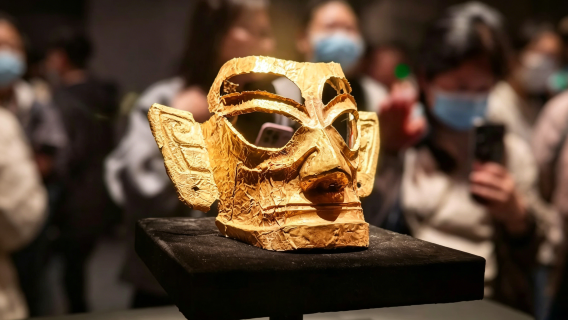
Guanghan Sanxingdui museum admission ticket | enter with ID card | no ticket collection required | live guide optional
󱌍
4.6/5
· 24 reviews· 1.3k booked
Duration: 2.5 hrs
English
Free cancellation
Instant confirmation
Book now for today
29 bookings in 7 days
FromUS$14.69
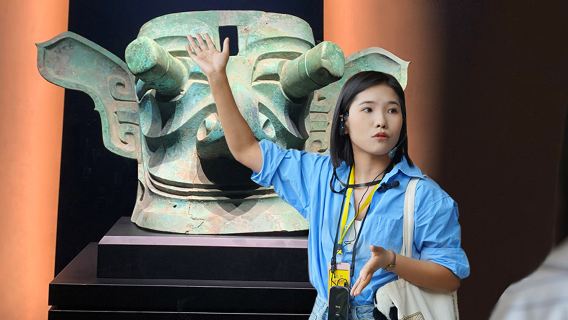
Sanxingdui Museum Day Trip | Admission + 3-hour guided tour + optional small car tour for up to 8 people
Trip.Select
󱌍
4.9/5
· 2.6k reviews· 9.4k booked
Duration: 4.5 hrs
English
Free cancellation
98.6% of travelers recommend
FromUS$164.56
From Chengdu: Chengdu Research Base of Giant Panda Breeding & Dujiangyan Scenic Area | Opera & Blue Tears
󱌍
4.9/5
· 2.7k reviews· 11.7k booked
Duration: 13.1 hrs
English
Free cancellation
Instant confirmation
Book now for tomorrow
66 consecutive positive reviews
FromUS$37.17

From Chengdu: Chengdu Research Base of Giant Panda Breeding & Sanxingdui Museum Day Tour | Tickets Included
󱌍
4.9/5
· 2k reviews· 3.7k booked
Duration: 8.8 hrs
English
Free cancellation
Book now for tomorrow
99.2% of travelers recommend
FromUS$37.17
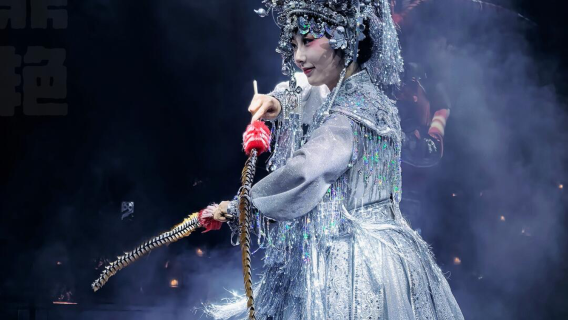
From Chengdu: Dujiangyan Scenic Area & Sanxingdui Museum Day Tour | Blue Tears & Tickets
󱌍
4.9/5
· 2k reviews· 15.9k booked
Duration: 13 hrs
English
Free cancellation
Book now for tomorrow
87 consecutive positive reviews
FromUS$44.67
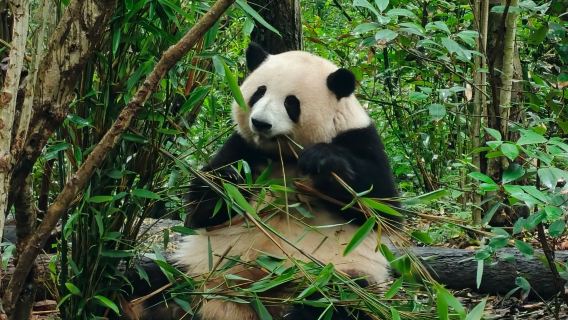
Chengdu Chartered Car Day Trip ● Sanxingdui Museum + Panda Base + Eastern Suburbs Memory ● Sichuan Private Tour
󱌍
Duration: 8 hrs
English
Free cancellation
Instant confirmation
Book now for tomorrow
FromUS$28.33

Featured Food & drink in Santai

View all Food & drink
Private All-Inclusive Chengdu Panda Base Tour with Foodie Lunch
󱌍
5.0/5
· 1 review
Duration: 6 hrs
English
Free cancellation
Instant confirmation
Book now for tomorrow
FromUS$204.55
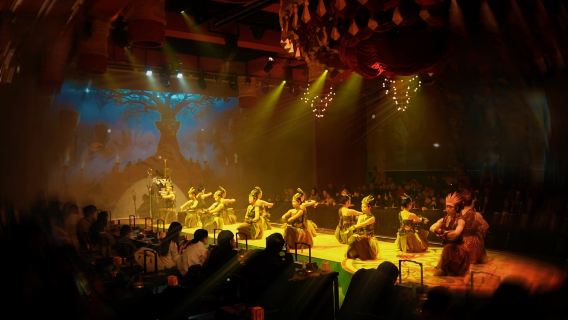
Chengdu Shu Kingdom Palace Banquet: Savor Ancient Ba-Shu Charm, Enjoy an Imperial Culinary Feast
󱌍
FromUS$42.61
Flexible private charter one-day tour with Chartered Car (Including Shuyanfu Dinner and Performance)
󱌍
10% off
Limited-time sale
FromUS$166.58US$185.09
Chengdu Shu Kingdom Palace Banquet: Imperial-Grade Cuisine Blends with Grandiose Stage Shows
󱌍
4.0/5
· 1 review
Duration: 1–2 hrs
English
Free cancellation
Instant confirmation
FromUS$42.61
Chengdu Shu Kingdom Feast: Ancient‑Shu Immersive Dinner Show & Sichuan Royal Banquet
󱌍
Duration: 1.6 hrs
English
Free cancellation
Instant confirmation
Book now for tomorrow
FromUS$77.49
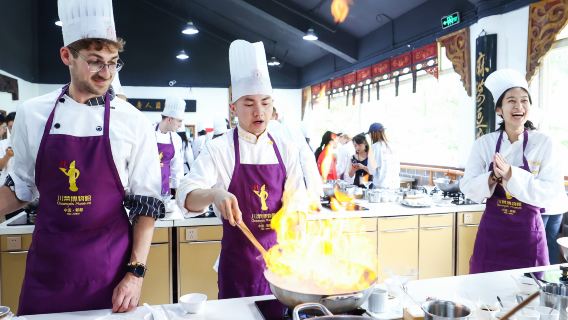
Santai Today's weatherClear 13-21℃
Santai weather for the next 2 days11/5: 14-20℃, 11/6: 14-21℃

Free things to do in Santai

What travelers say about Santai

user-avatar
M2u***0zSeptember 27, 2026
5.0
The animals are all incredibly cute, and there's a wide variety of them. The acrobatic performances are especially spectacular, featuring many difficult stunts.

kuang huan gu · mian yang ye sheng dong wu yuan

user-avatar
M77***00June 21, 2024
3.0
The scenery of Tongchuan Ancient City is indeed the best in Santai County, and it is the face of Santai. It is cost-effective and you can directly see the beautiful scenery without spending a penny. It is very interesting and very suitable for checking in and taking photos.

Tongchuan Ancient City

user-avatar
境无界November 20, 2022
5.0
Yuntai Taoist Temple was first built in the Southern Song Dynasty. During the Wanli period of the Ming Dynasty, the emperor ordered the renovation and expansion. Therefore, Yuntai Taoist Temple can be said to have been built by imperial order. The existing ancient buildings in the Taoist temple are mainly from the Ming and Qing Dynasties. Yuntai Taoist Temple is large in scale and is the second largest Taoist temple in Sichuan. The main halls are distributed along the central axis, and the steps rise step by step with the mountain. The main hall of Yuntai Taoist Temple, Xuantian Palace, is a Ming Dynasty hall located on a high platform. The hall is five rooms wide, with thick beams and pillars. There are suspended colored sculptures on the outer pillars of the hall door, and the carved railings and painted buildings are exquisite. The colored paintings on the patio inside the hall are also bright. According to legend, the gate of Xuantian Palace has a strange sound, and there is a strange sound when it is opened and closed.

Yuntai Taoist Temple

user-avatar
首席监理August 8, 2022
4.0
More than 40 kilometers south of Santai County, Mianyang City, Sichuan Province, is the ancient town of Qijiang, which enjoys the reputation of "China's Famous Historical and Cultural Town". The ancient town of Qijiang has a long history. According to historical records, the ancient town was the capital of the Kingdom of Qi in the Spring and Autumn Period. It was established as a county in the Qin Dynasty and a county in the Han Dynasty. Since the Yongzheng period of the Qing Dynasty, it has been incorporated into Santai County. Passing through the archway gate of the ancient town and stepping on the bluestone road to enter Qiwang Street, the Ming and Qing Dynasty buildings and swaying red lanterns on both sides of the street make people feel like traveling through time. The blue-tiled houses are crowded together, high and low, and the wooden facades extend in a row. Exquisite relief patterns can be seen everywhere on the dark porches and wooden pillars, which are antique. The houses on both sides of the street have spacious corridors supported by wooden pillars. The corridors are as long as the street. The corridor is an important life scene in the ancient town. Neighbors drink tea, smoke tobacco, chat, and weave bamboo baskets under the corridor... The corridor has become a popular market, attracting many tourists to linger and stop.

Qijiang Ancient Town

user-avatar
LilyhollyNovember 3, 2026
5.0
November in Jiuzhaigou marks the transition between autumn and winter. The mountainsides are ablaze with colorful forests, a tapestry of red and gold, while the crystal-clear lakes reflect the surrounding landscape. Occasionally, a first snowfall graces the scene, leaving white snow on the vibrant branches, the blue waters adorned with silver frost – a tranquil and healing spectacle. Without the peak season crowds, you can stroll leisurely along the boardwalks, listen to the gentle murmur of the flowing water, and watch the thin mist slowly dissipate across the lakes.

Jiuzhaigou National Park

user-avatar
Stefi Hooft van HuysduynenNovember 3, 2026
5.0
I went to the panda research base the moment the park opened and entered through the west gate. This meant most panda enclosures were super quiet (in terms of people) and the pandas themselves are most active in the morning. The more south we got, the busier it got and it became a lot less enjoyable. Unfortunately the nurseries in the north were empty and the one in the centre was super busy and we only saw young pandas in trees outside, but there was nothing to see inside.

Chengdu Research Base of Giant Panda Breeding

user-avatar
Anonymous userNovember 2, 2026
5.0
这是一个具有深厚历史文化底蕴的景点。都江堰充分展现了中国古代水利工程的卓越智慧,令人赞叹不已。很难想象这项伟大的水利工程至今仍然发挥着重要作用,造福当地数千年。这不仅是一次愉快的旅行,也是一趟充满知识与文化意义的体验,特别适合喜欢历史和文化的游客。

Dujiangyan Scenic Area

user-avatar
George L ZHOctober 29, 2026
5.0
We sincerely commend our guide during this visit to the Sanxingdui Museum. They were dedicated and responsible, their explanations were well-prepared, and their explanations of the historical background and archaeological knowledge of artifacts such as the bronze sacred tree and the mask with protruding eyes were professional and rigorous, not just rote recitation. Throughout the visit, they catered to the children's pace, patiently answered all our questions, and were incredibly attentive and considerate. It was this dedication and enthusiasm that allowed us to understand the charm of the ancient Shu civilization and learn so much. We are very grateful! We benefited immensely!

Sanxingdui Museum

user-avatar
JojoNovember 2, 2026
5.0
Du Fu Thatched Cottage is a poetic garden nestled amidst the bustling city of Chengdu. Deep bamboo groves, serene red walls, and pavilions by streams offer an immersive experience of Du Fu's poetic spirit and melancholy. The thatched cottage, inscriptions, and poetry hall connect the life of the poet-sage Du Fu, making it perfect for a leisurely stroll. It's also ideal for families with children studying classical Chinese poetry—a tranquil and healing experience. A guided tour is highly recommended; otherwise, you'll only see the garden scenery.

Chengdu Du Fu Thatched Cottage Museum

user-avatar
kailiong8November 3, 2026
5.0
Good to connect with yourself. I have a foggy hiking. Go upwards walking and downhill with cable car. Visit a lot of temples, very interesting place for taoism.

Mount Qingcheng

Trip Moments in Santai

Popular cities near Santai

Frequently asked questions

You can give Private All-Inclusive Chengdu Panda Base Tour with Foodie Lunch and Chengdu Shu Kingdom Palace Banquet: Savor Ancient Ba-Shu Charm, Enjoy an Imperial Culinary Feast a try. Before you go, please check their opening hours and menus online. Reservations are recommended, especially during peak hours.

Get help anytime, anywhere within 30 secondsContact customer support

Change and cancellation policies vary by attractions and tours. Please check the product details page for more information.

Ticket prices may vary between weekdays and weekends, as well as during peak and off-peak seasons. When booking with Trip.com, you can also use Trip Coins to get extra savings. For more tips on booking discounted tickets, please visit Trip.com for the latest information.