





 4.7/5
4.7/5 洪虹
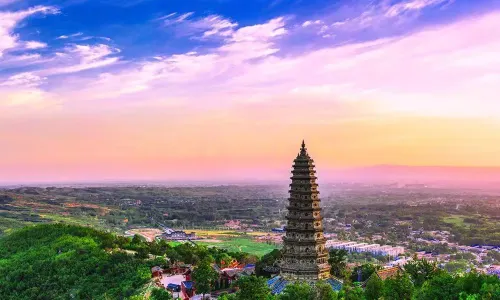
洪虹We took a sightseeing bus from the Lower Temple to the Upper Temple. The first thing that caught our eye upon disembarking was the shimmering glazed tiles of the Flying Rainbow Pagoda. The current pagoda was built in the sixth year of the Jiajing reign of the Ming Dynasty (1527), and glazed tiles were added to the pagoda in the second year of the Tianqi reign of the Ming Dynasty (1622). It is the "world's tallest multicolored glazed pagoda." With Ming Dynasty blue bricks as its base, the yellow, green, and blue glazed tiles, despite centuries of weathering, remain vibrant. The 13-story octagonal pagoda gradually narrows, and the glazed components on each level are different, each layer unique, so exquisitely crafted that it's impossible to look away.
 4.6/5
4.6/5 爱吃糖浆的小蘑菇
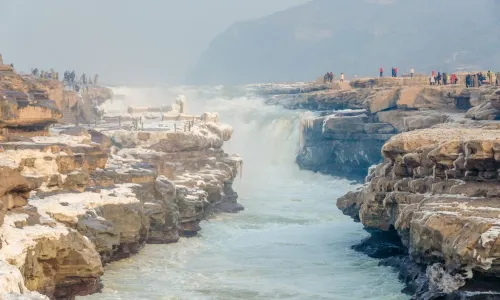
There were some icicles along the Hukou Waterfall in mid-December, which looked beautiful and the scenery was breathtaking. I highly recommend it. The apple and pear pastries I bought in the shopping street were very sweet and delicious. It was also the off-season, so there were very few tourists, and I could take my time to enjoy the scenery!
 4.7/5
4.7/5 Anonymous user
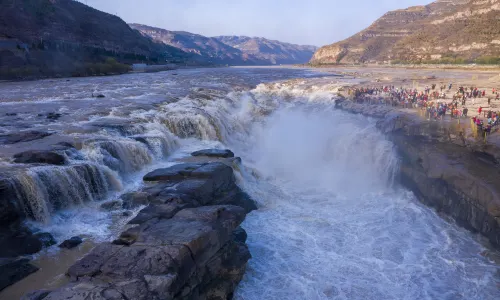
Hukou Waterfall, the second largest waterfall in China and the world's largest yellow waterfall, is renowned for its magnificent spectacle, described as "the Yellow River flowing for a thousand miles, all contained in a single pot." A visit here is definitely worthwhile!
 4.8/5洪虹
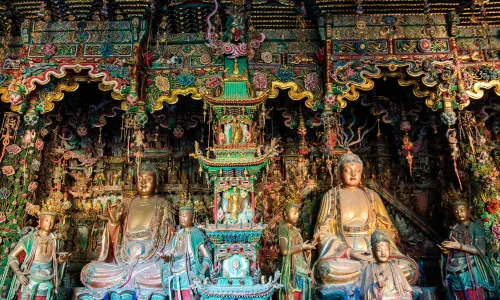
We left Guangsheng Temple and drove to Xiaoxitian. What should have been a smooth two-hour drive turned into a road construction trip less than 20 minutes from our destination. After much detours, it took us nearly three hours to finally arrive at Xiaoxitian in Xi County. Xiaoxitian is like a magical treasure box, containing a vast world within a small room. In this mere 169.6 square meters, our eyes couldn't take it all in; we were completely immersed, reluctant to leave. We also followed wave after wave of tourists, listening to their explanations intermittently. From the very beginning, the hall was packed with people, and we stayed until evening when the crowds gradually dispersed before finally leaving. This wondrous journey to Xiaoxitian was truly unforgettable.
 4.5/5
4.5/5 张小敏
张小敏🤝💓I could never leave you again, you got what you wanted🌊🍃There was no hiding, we were having a secret rendezvous🐺✊Everyone can lose, why can't it be you🌙💋A moment of passion is worth a thousand pieces of gold🍬🔪Knowing it's sugar wrapped in a knife, I still willingly sink deeper and deeper into your trap💕💞Because of you, we will definitely be of one heart
 4.3/5Anonymous user
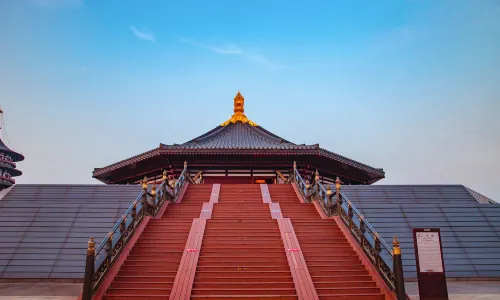
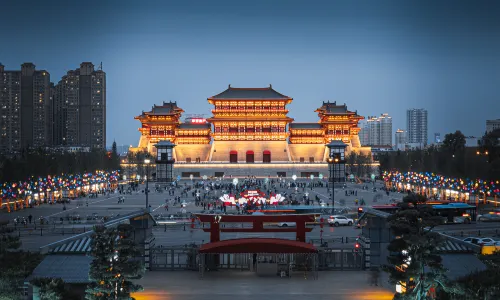
I came to Luoyang specifically to see the peonies, and also visited this attraction on the way. The Mingtang Hall was the imperial court during the reigns of Emperor Gaozong and Empress Wu Zetian of the Tang Dynasty. It's magnificent and echoes the Yingtian Gate. The Tiantang Hall is a nine-story Buddhist hall with an elevator, but its capacity is small, and it's often full when there are many tourists. Climbing the upper floors offers a panoramic view of Luoyang. The murals inside are lifelike and exquisite. It's also very popular for nighttime viewing. The downsides are that the entrance fee is a bit expensive, and the restroom signs within the scenic area are unclear, making them a little difficult to find.
 4.3/5
4.3/5 lin***ie
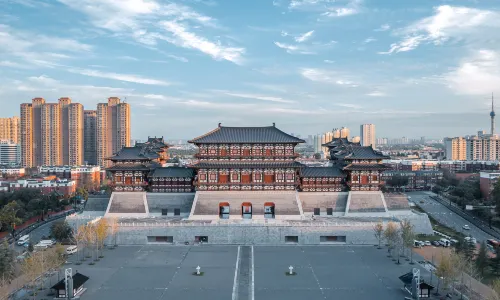
The park is very large and has a Han and Tang Dynasty style. The night views of Mingtang Paradise and Yingtian Gate are charming, and the Yingtian Gate light show is worth seeing. The martial arts field experience project at Jiuzhou Pond has a good design and is suitable for going at night. It is too hot during the day.
 4.4/5
4.4/5 冰糖炖二哈
冰糖炖二哈The interactive live-action performance in ancient costumes was a lot of fun, a real treat for history buffs. The theme was related to the rebellion of the Turkic prince Mochuo during the reign of Empress Wu Zetian, and even brought tears to the eyes of longtime fans of Detective Dee. I went without dinner, and the plates they gave us weren't enough; a plate of fried rice would have been fine too, as my stomach was growling.
 4.7/5Anonymous user
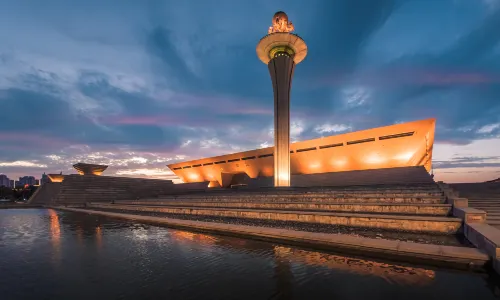
The Luoyang Museum is an absolute underrated treasure! As a concentrated essence of the ancient capital of thirteen dynasties, it tells the story of the "Divine Capital's" glory in the most direct way. The unearthed Northern Wei clay Buddha face, though incomplete, possesses a serene and compassionate beauty that touches the soul—a "Mona Lisa of the East." Be sure to allocate at least 3 hours; the exhibits are incredibly informative! If you are a history enthusiast, this is paradise; if you are just passing through, it is enough to plant a seed of wonder in your heart—that the pulse of Chinese civilization once beat so powerfully here.
 4.7/5Anonymous user
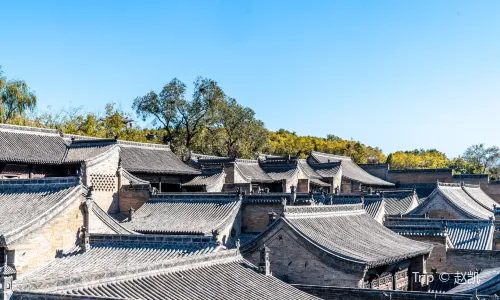
The Wang Family Compound is an outstanding example of Qing Dynasty residential architecture in China. Located in Jingsheng Town, Lingshi County, Jinzhong City, Shanxi Province, it was built by the Jingsheng Wang family, descendants of the Taiyuan Wang clan, over a period of approximately 300 years, from the Kangxi to the Jiaqing reigns. It is hailed as "China's First Residence of Folk Architecture," "China's Folk Palace," and "Shanxi's Forbidden City." Its grand scale covers an area of 250,000 square meters, encompassing five alleys, five forts, and five ancestral halls. Currently, it contains 231 courtyards and 2,078 rooms. The open area centers on the three major architectural complexes of Gaojiaya (Phoenix), Hongmenbao (Dragon), and Chongningbao (Tiger), showcasing the traditional "front hall, rear chamber" layout and the overall "王" (Wang) shaped design.

