





 4.8/5
4.8/5 北国之春一
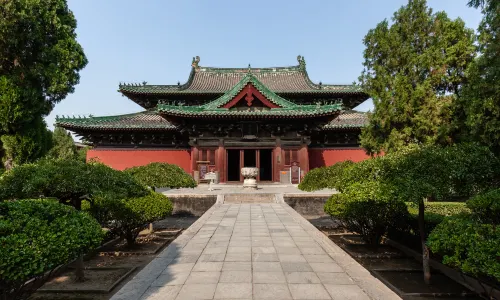
北国之春一Longxing Temple was originally named Longzang Temple, and its name was changed to Longxing Temple during the Tang Dynasty. In the fourth year of the Kaibao era of the Northern Song Dynasty (971 AD), a Thousand-Hand Guanyin statue was cast and the Great Compassion Pavilion was built by order of Emperor Taizu of Song, Zhao Kuangyin, forming the main architectural complex of the Song Dynasty. It was repaired during the Jin, Yuan, and Ming dynasties, and underwent large-scale reconstruction during the Kangxi and Qianlong eras of the Qing Dynasty, forming a three-section layout of east, central, and west. After falling into disrepair in modern times, it was restored to its original appearance through scientific preservation after the founding of the People's Republic of China. Longxing Temple is a typical example for studying the layout of Buddhist temple architecture, integrating Buddhist art with traditional Chinese culture. Emperors of past dynasties, such as Kangxi and Qianlong, once stayed there. We also visited Longxing Temple to experience the architectural styles of the Tang, Song, and Qing dynasties, to feel the Buddha's broad-mindedness, and to feel the traces of the past.
 4.4/5
4.4/5 亲爱的小仙
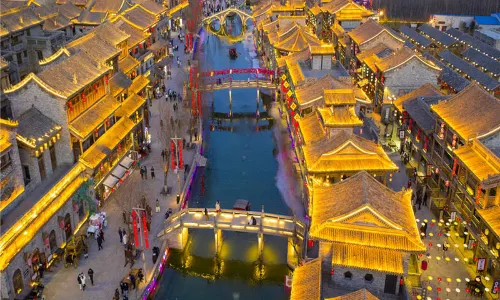
亲爱的小仙Perhaps because of the rain, there weren't many people. It's a small ancient town with almost no interactive activities. There were only a few shows, which weren't as good as the online reviews suggested. The food at the small shops was expensive and mediocre. More importantly, while it's a half-hour taxi ride there, it took ages to get back. I finally managed to get a shared ride, but they wouldn't even charge extra. Transportation is inconvenient. The 98 yuan entrance fee only covered the night view.
 4.7/5
4.7/5 Anonymous user
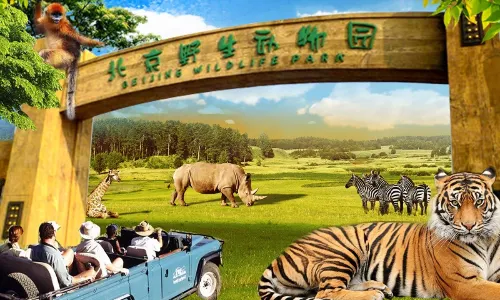
Visiting the wildlife park in winter was a bit chilly, and the animals and crowds weren't as lively as in summer, making it feel somewhat deserted. However, aside from that, the experience was still very good. Taking the bus, the mini-train, the animal cage vehicle, the electric cart, or the shuttle bus was all very convenient, with no queues. Interacting with the animals was also easy. I think it's definitely worth a visit.
 4.6/5
4.6/5 酷酷的哈士奇
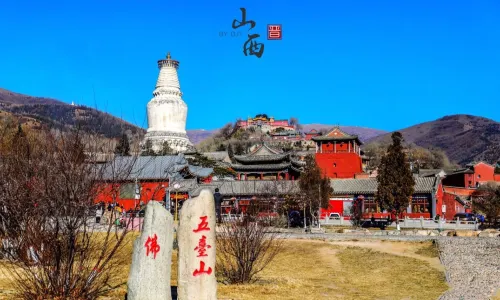
The scenery is nice and the bus is very convenient, good reviews! But the consumption level in the scenic area is a bit high, especially in some farmhouse restaurants, where two people can eat more than 100 yuan, while other places in the mountains only cost dozens of yuan.
 4.5/5北国之春一
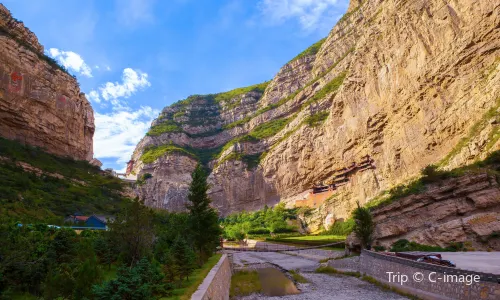
Mount Heng, located in Hunyuan County, Datong City, Shanxi Province, is one of the Five Sacred Mountains of China, renowned for its precipitous terrain, the Hanging Temple, and its profound Taoist culture. Core Attractions and Features Hanging Temple: A cliffside temple built during the Northern Wei Dynasty, integrating Buddhism, Taoism, and Confucianism. Advance booking of tickets (100 RMB) is required 3 days in advance. Arriving before 7:30 AM can avoid queues. Tianfengling: The main peak of Mount Heng (2016.1 meters above sea level). Climbing to the summit offers panoramic views of the sea of clouds and surrounding peaks. The round trip hike takes approximately 3-4 hours; a cable car (70 RMB one way) can save energy. Hengzong Hall: The main temple of Mount Heng, dedicated to the Emperor of the Northern Peak. The Kangxi Emperor's imperial plaque "Hua Chui You Jiu" (meaning "Eternal Transformation") is the hall's treasure. Natural Wonders: Features include the Hanging Pine Tree at Tiger Wind Pass, the Bitter-Sweet Well (one sweet, one bitter), and Jinlong Gorge, showcasing geological and ecological diversity.
 4.7/5北国之春一
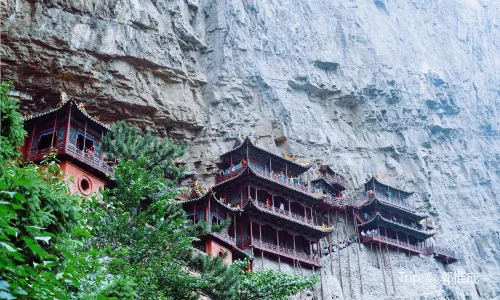
The Hanging Temple of Hengshan Mountain in Datong, Shanxi Province, was first built in 491 AD (the 15th year of the Taihe reign of the Northern Wei Dynasty) by disciples of the Taoist master Kou Qianzhi, based on his dying wish to "reach the heavens above and sever all worldly clamor below." With a history of over 1500 years, it is the oldest existing high-altitude wooden cliff-side architectural complex in China. **Structural Features:** 27 hemlock beams are inserted into the rock face as an "aerial foundation." The wooden pillars at the bottom are merely for psychological comfort; the actual load-bearing structure relies on hidden crossbeams, achieving the "suspended" appearance. **Reasons for its excellent preservation:** The canyon terrain reduces sunlight erosion, the mountain shelters it from floods, and the mortise and tenon structure provides strong earthquake resistance. **Cultural significance:** One of the world's ten most dangerous architectural wonders, and the only temple where Buddhism, Taoism, and Confucianism coexist, reflecting the inclusiveness of diverse ancient beliefs. **Admission is free for those over 60, but tickets are extremely difficult to obtain during peak season; remember to book your visit in advance.**
 4.7/5
4.7/5 卡皮巴拉游世界
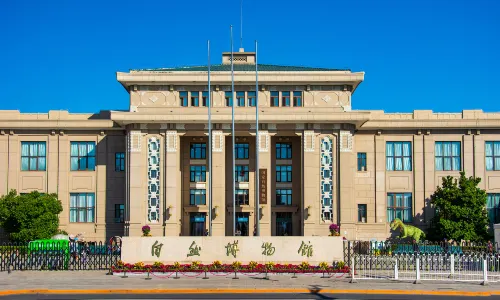
The museum isn't very large, but its collection is extensive and comprehensive, covering a long period of history. It's richly illustrated with text and images, and offers many interactive experiences. Children especially love the dinosaur specimens and models. It's a great place to bring kids on weekends to broaden their horizons.
 4.7/5
4.7/5 关裕年guanyunian
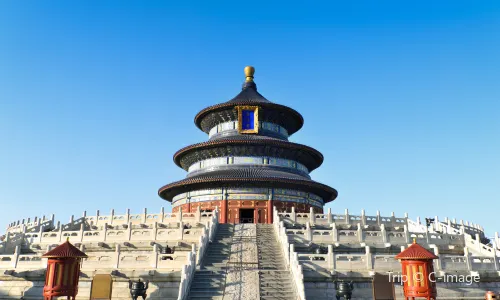
The Temple of Heaven's ticket does indeed bear the words "Ticket," and below it is a photo of the Temple of Heaven's three gates, thus making it a true ticket. The Temple of Heaven is arguably the largest park in southern Beijing. While some suburban parks are now large, I'm referring to historical parks. Because it was where emperors worshipped Heaven and prayed for favorable weather, this park is the most sacred and architecturally exquisite. Because Beijing's north-south division is based on Chang'an Avenue (east-west), and the former imperial palace was located north of Chang'an Avenue, many temples, parks, and memorial sites are scattered throughout northern Beijing. Therefore, compared to Beijing's layout, most visitors now focus on the north, often overlooking the Temple of Heaven in the south. There are many buses to the Temple of Heaven, making it easily accessible. In fact, the Temple of Heaven is not far from Qianmen Dashilan in Beijing; it's almost within walking distance.
 4.5/5Anonymous user
The zoo has some beautiful and interesting animals, including rare species that I had never seen before. Overall, it is a good place to visit and gives you the chance to see animals you might not find elsewhere.However, during my visit, some animals such as the giraffes and the bears were not available, and I’m not sure why. There were also many empty enclosures, which I believe were due to ongoing renovations. The construction and maintenance work was noticeable and may have been slightly disturbing for both visitors and the animals.The aquarium section did not feel very well maintained, and in general, the zoo seems a bit old. That said, it still serves its purpose well. One of the main highlights is the panda — pandas are very special and mainly found in China, so seeing them makes the visit worthwhile.Overall, the zoo is suitable for solo visitors, families, and children. It’s a decent experience and worth a visit, especially if you want to see pandas.
 4.8/5
4.8/5 糯米ninomi
There are rich introductions to minerals and gemstones, which is suitable for bringing children to science popularization. During the National Day, there were many people in the exhibition hall, which affected the viewing experience to a certain extent, but overall it is still a museum worth visiting

