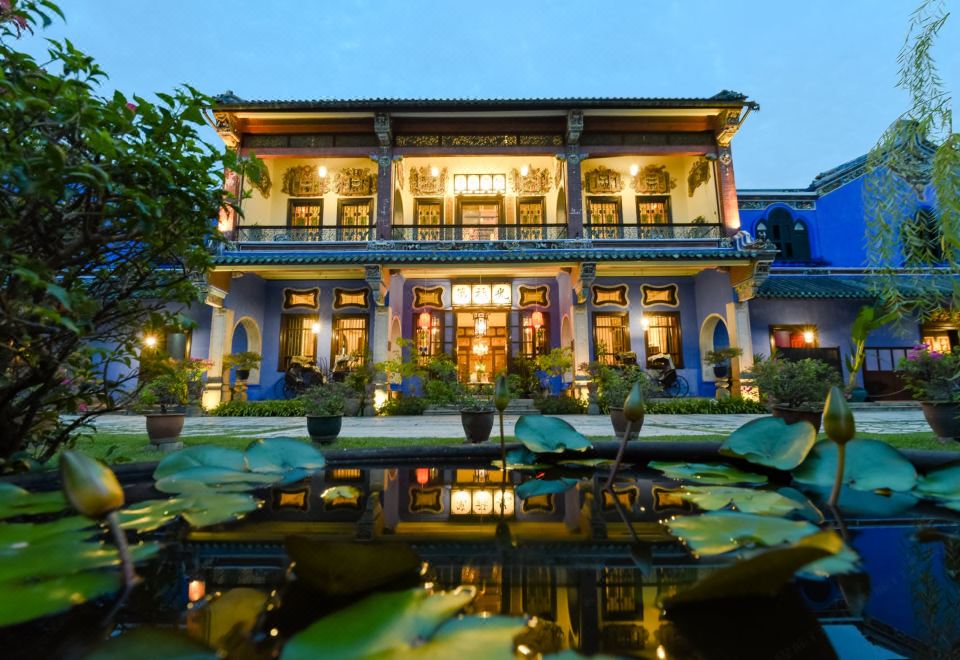
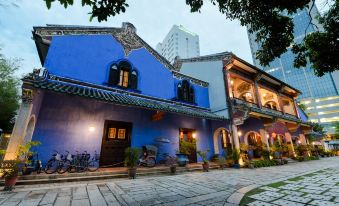
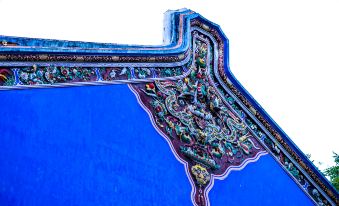
I recently had the pleasure of staying a few days at The Blue Mansion in Penang. Built in the late 19th century by Cheong Fatt Tze, known as the 'Rockefeller of the East,' this magnificent building is a blend of traditional Chinese courtyard design, European decorative elements, and Straits Chinese influences. It's famous for its iconic indigo blue exterior walls. After over a century, it has been meticulously restored, bringing back its former glory.
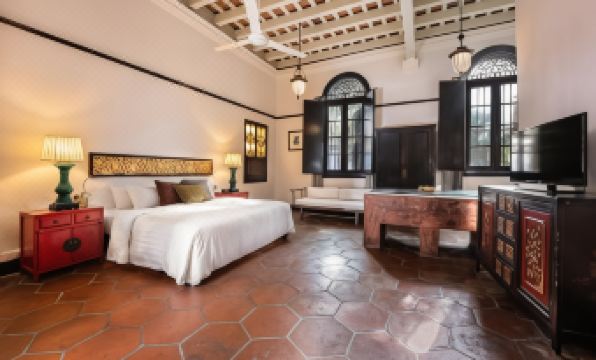
This unique residence, which doubles as both a museum and a boutique hotel, features several quiet courtyard spaces formed by traditional Chinese patios. Its more than ten guest rooms each boast a different layout and decor. Many original antique furnishings and ornaments have been preserved in the rooms, cleverly integrated with modern amenities.
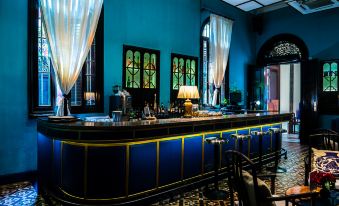
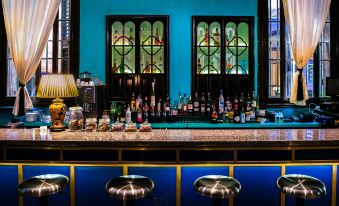
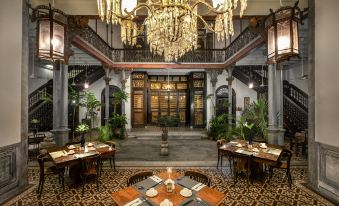
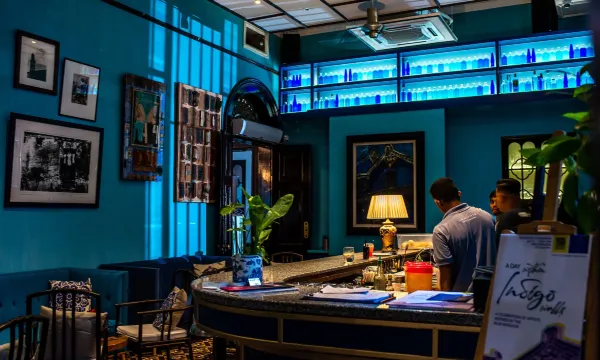
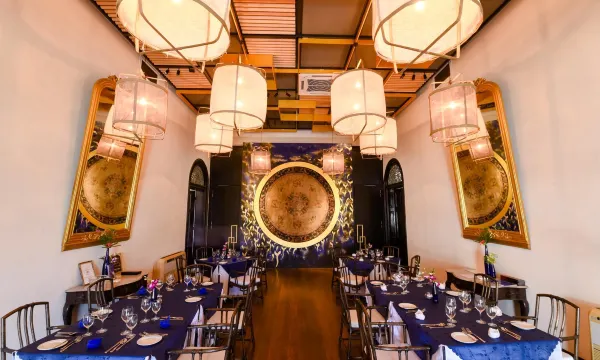
Sitting in the side courtyard (Image 3), watching the soft light caress the walls, felt like being transported back to a wealthy Straits Chinese merchant's mansion in the 19th century. Breakfast is served in the central courtyard (Image 5), there's live music in the evenings (Image 6), and a nostalgic bar for a casual drink (Image 7). The attention to detail from yesteryear is evident, even in the room keys and brass fittings on the doors (Image 8).
Image 9 showcases stained-glass panels set within dark wooden window frames, a typical Art Nouveau design. Smooth, elegant curves intertwine like vines, creating symmetrical patterns. The interplay of blue, green, golden yellow, and milky white glass emanates a rich, layered effect when illuminated by sunlight.
The Blue Mansion is located in the core zone of Penang's UNESCO World Heritage Site and is a cultural heritage site in its own right. The surrounding area is bustling with old streets, delicious food, and historical buildings.
Original TextTranslation provided by AI