Tengwang Pavilion Tourist Area
滕王阁旅游区 based on 400 reviews
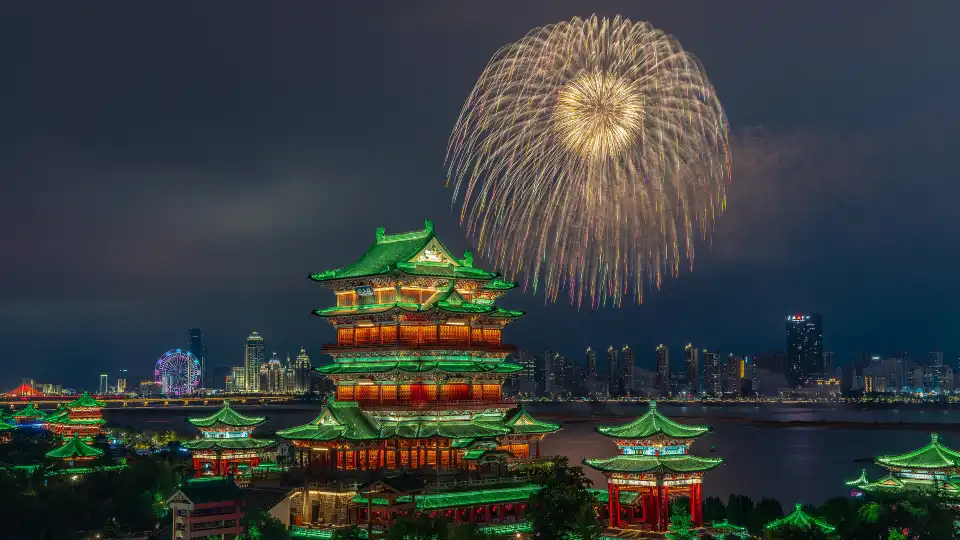
 2026 Global 100 - Night Attractions
Open Opening hours of Tengwang Pavilion Tourist Area
Tengwang Pavilion Tourist Area Highlights: Must-See Features and Attractions
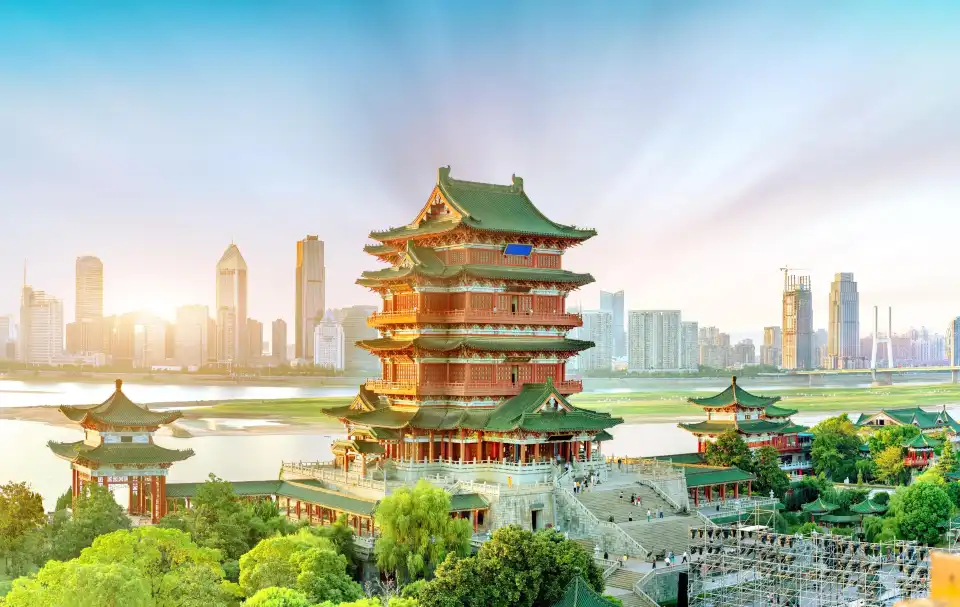
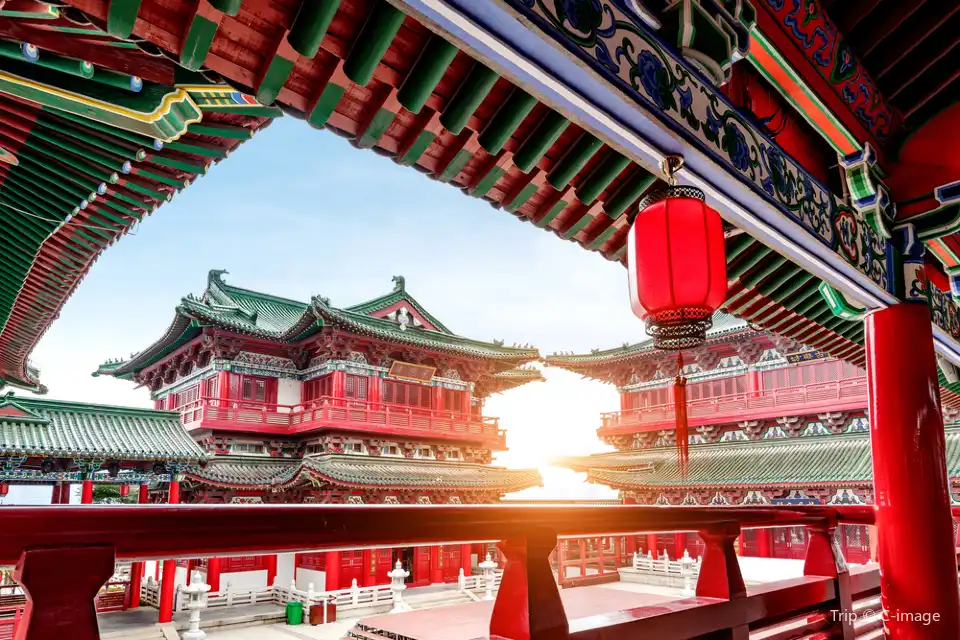
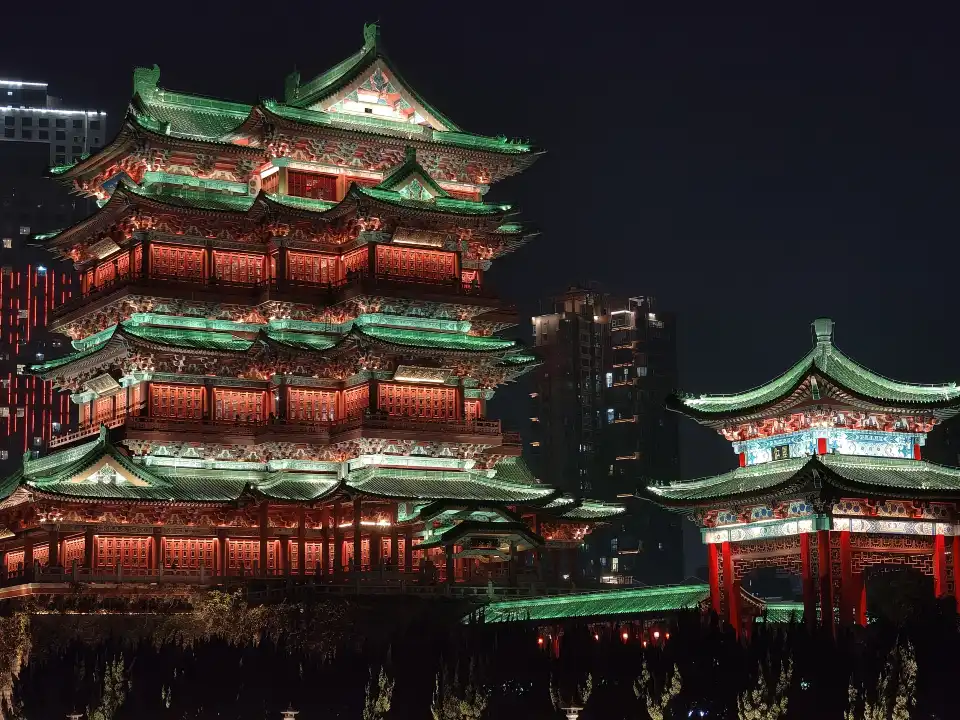
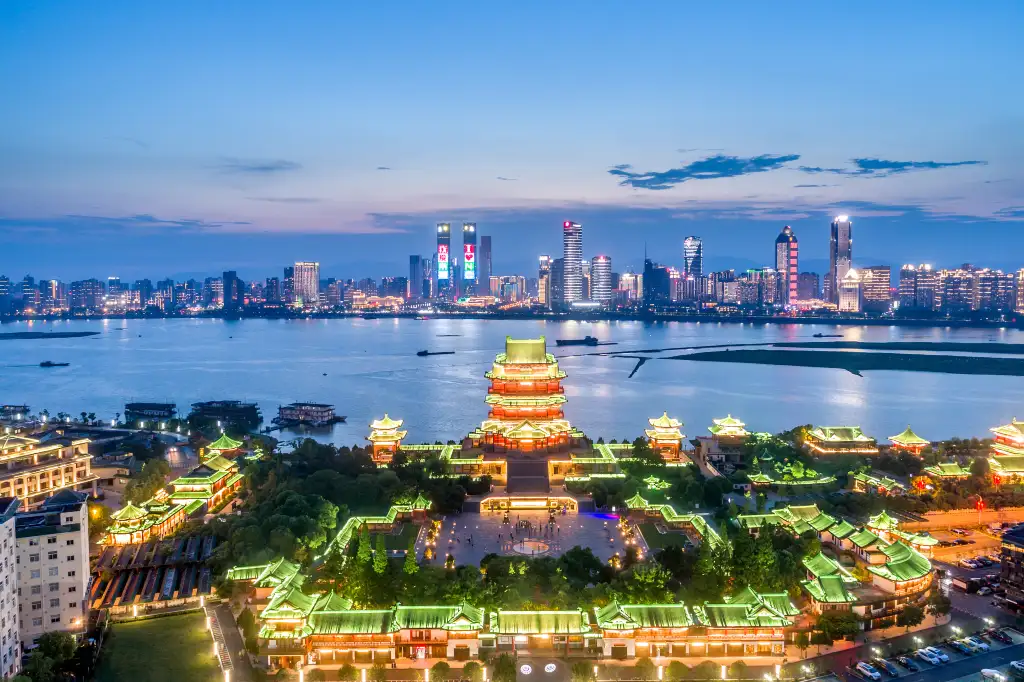
Tengwang Pavilion Tourist Area is located on the east bank of the Gan River in Nanchang, with the riverside Tengwang Pavilion as its centerpiece. Originally built in the fourth year of the Yonghui era of the Tang Dynasty by Li Yuanying, Prince of Teng and son of Emperor Gaozu of Tang, it gained eternal fame through Wang Bo's "Preface to Tengwang Pavilion." Alongside the Yellow Crane Tower and Yueyang Tower, it is hailed as one of the "Three Great Towers of Jiangnan." Historically destroyed and rebuilt nearly thirty times, the current structure is a Song-style replica completed in 1989, designed based on Liang Sicheng's reconstruction sketches. With its green tiles and layered eaves, it remains a landmark of Nanchang to this day.
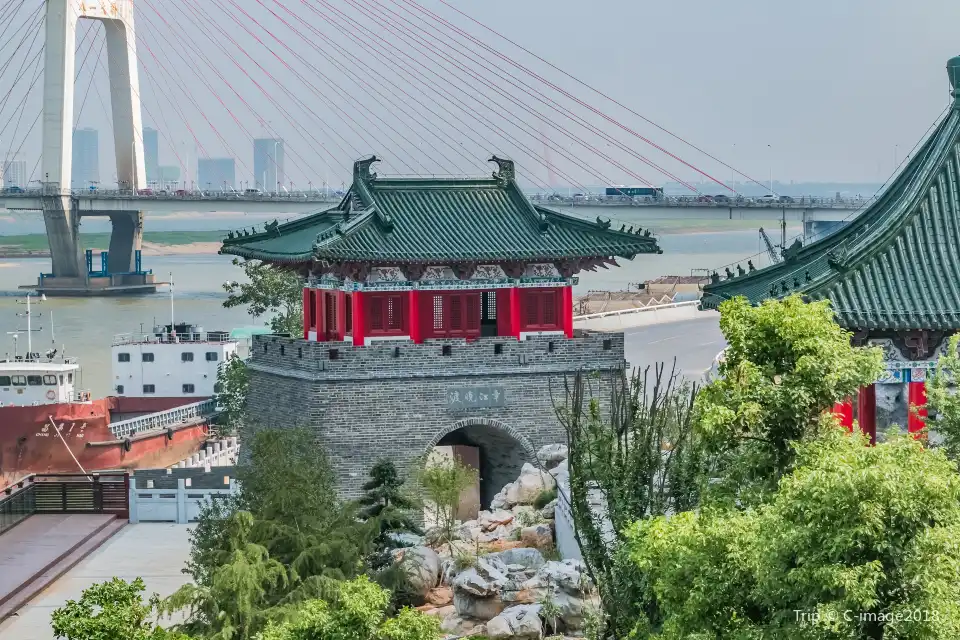
The main pavilion follows a "three visible, seven concealed" layout: appearing as a three-story structure with encircling corridors from the outside, while actually containing seven interior floors—nine levels including the two-tiered base symbolizing ancient city walls. Turquoise-roofed galleries extend north and south from the base's flanks, connecting at their ends to auxiliary pavilions named "River-taming" and "Greenery-embracing," forming a mountain-shaped silhouette with the main tower. Below, an artificial lake and the nine-bend wind-and-rain bridge add classical garden charm to the majestic architecture.
Each floor of the pavilion offers something remarkable. The white marble relief "A timely wind delivers Tengwang Pavilion" in the first-floor preface hall depicts the legend of Wang Bo riding the wind to compose his famous preface. The second-floor mezzanine features the long scroll painting "Gallery of eminent figures," gathering Jiangxi's historical luminaries like Tao Yuanming, Ouyang Xiu, Wang Anshi, and Tang Xianzu in one artwork. The third-floor mural "Linchuan dream" recreates Tang Xianzu's staging of "The peony pavilion" here. The fourth-floor "Land of wonders" painting compresses Jiangxi's iconic landscapes—Mount Lu, Sanqing Mountain, Dragon-Tiger Mountain, and Poyang Lake—into a single masterpiece. The fifth floor is the highlight for panoramic views: its central hall displays a bronze tablet inscribed with Su Dongpo's calligraphic version of "Preface to Tengwang Pavilion," while the east hall exhibits a scale model of the pavilion. Strolling the veranda offers sweeping views of the Gan River and modern skyline across the water. The top floor bears the plaque "Ninth heaven," with its west hall housing an antique-style theater flanked by replica ancient instruments like chime bells and stone chimes. Above, spiral-arranged bracket sets adorn the caisson ceiling, and between the double eaves hangs Su Dongpo's gilded "Tengwang Pavilion" plaque.
After descending from the main pavilion, take time to explore the garden area: the square in front of the pavilion, the grand Song-style archway, the antique street lined with calligraphy and antique shops, and the small Suzhou-style garden Fuchang Garden with its lake reflections and bridge views—perfect for slowing your pace. To experience the poetic scene of "a solitary wild duck flying with the sunset glow, while the autumn water blends with the vast sky," an evening ascent to the pavilion is ideal. The fifth-floor corridor offers an expansive view, making it a prime spot to admire the sunset over the Gan River.

Other visitors' reviews of Tengwang Pavilion Tourist Area
Show More ReviewsWhen it's not crowded, you can go upstairs to see the river view; it's a different experience, although the stairwells are indeed narrow. I didn't go inside the scenic area for the night view, but the photos I took outside were also very beautiful; the night view is truly stunning.