Basilica Cistern
Yerebatan Sarnıcı based on 32,848 reviews
 2026 Asia 100 - Best Things to Do
Open Opening hours of Basilica Cistern
Basilica Cistern Highlights: Must-See Features and Attractions
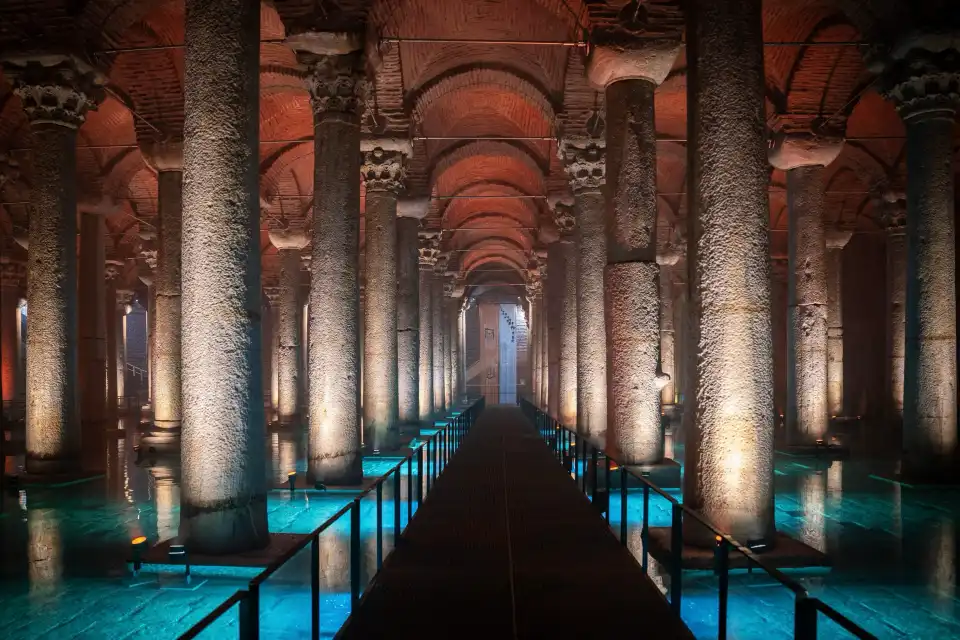
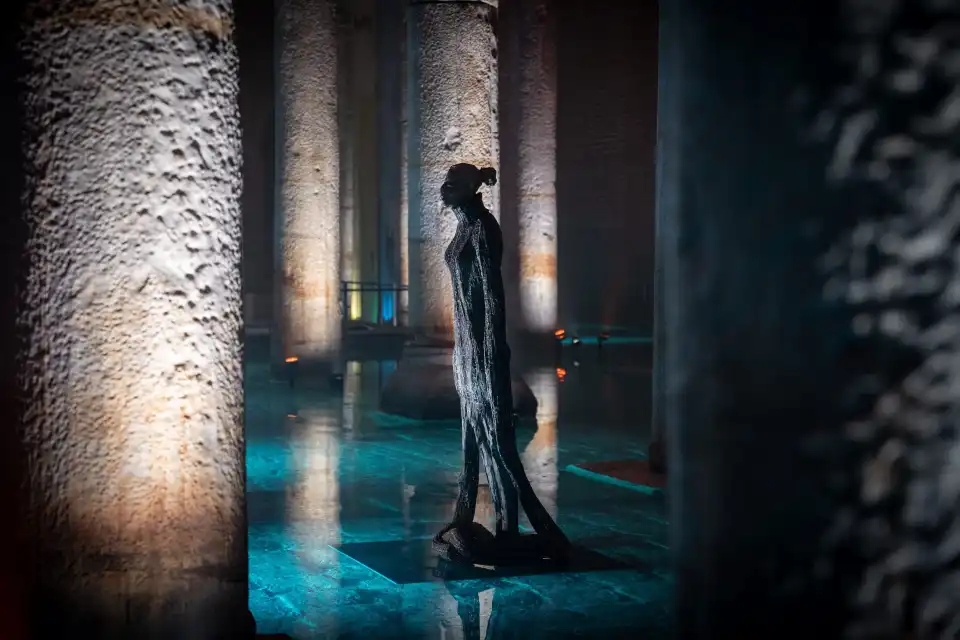
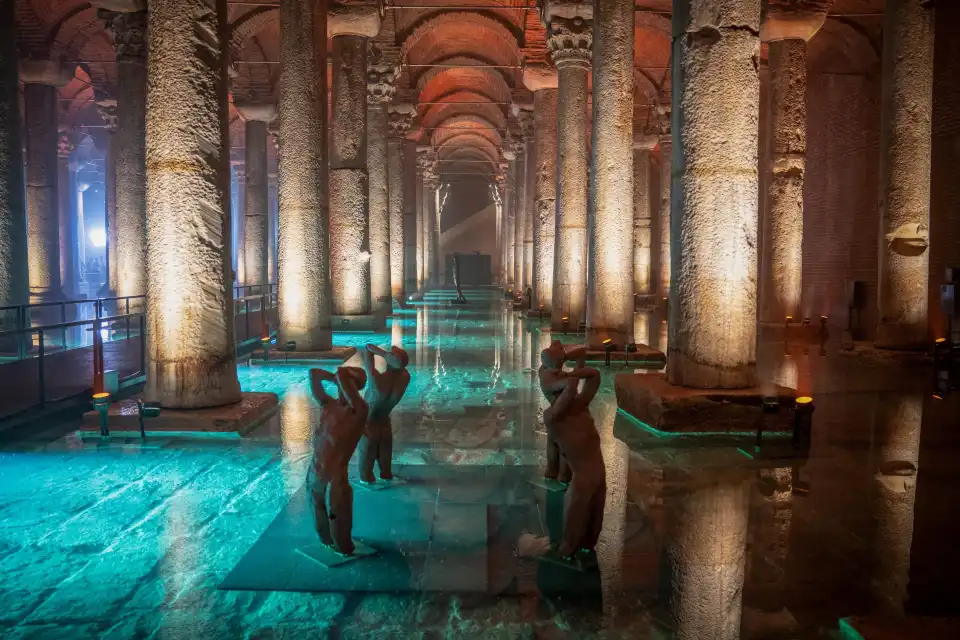
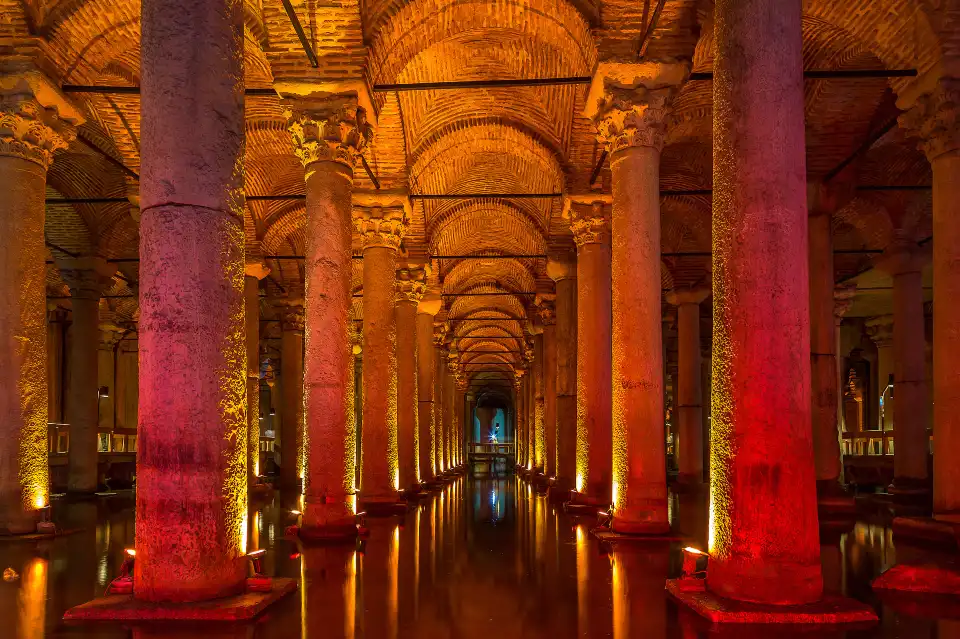
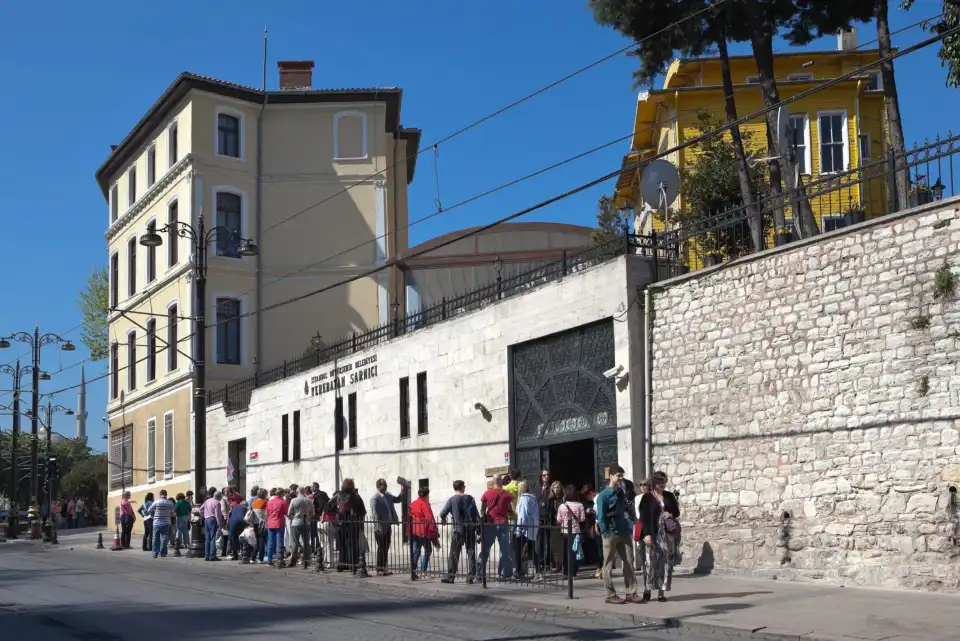
The Basilica Cistern is located next to the Hagia Sophia and served as an underground reservoir for the palace from the Byzantine to the Ottoman Empire. Today, it stands as one of Istanbul's most romantic and mysterious attractions. Stepping inside feels like entering another world of Istanbul, where the crisp sound of water droplets falling into the pool echoes around you, and carp occasionally swim by. Dim lampposts line the underground pathways, creating a serene, distant, and mysteriously hazy atmosphere. The cistern measures 140m in length and 70m in width—about the size of a football field—and is supported by 336 massive 9m-high Corinthian columns, each adorned with intricate and unique relief carvings. Its enigmatic aura has made it a filming location for Hollywood movies like "Skyfall" and Jackie Chan's "The Accidental Spy."
The Basilica Cistern has an enormous water storage capacity and remains in use by Istanbul residents to this day. Legend has it that when completely filled, the cistern could supply drinking water for the entire city's population for a month. The teardrop-shaped columns at the center of the cistern captivate numerous visitors, while the most astonishing feature is the two columns in the northwest section - each supported by an inverted Medusa head sculpture.
The history of the Basilica Cistern dates back to the 6th century AD, built by Byzantine Emperor Justinian as a water reservoir for the nearby palace and buildings. After being closed, it was rediscovered in the 16th century following the conquest of Constantinople. Fed by water sources from forests near the Black Sea, it not only ensured royal water supply but also served as a strategic underground fortress against enemy sieges—truly an imaginative subterranean palace.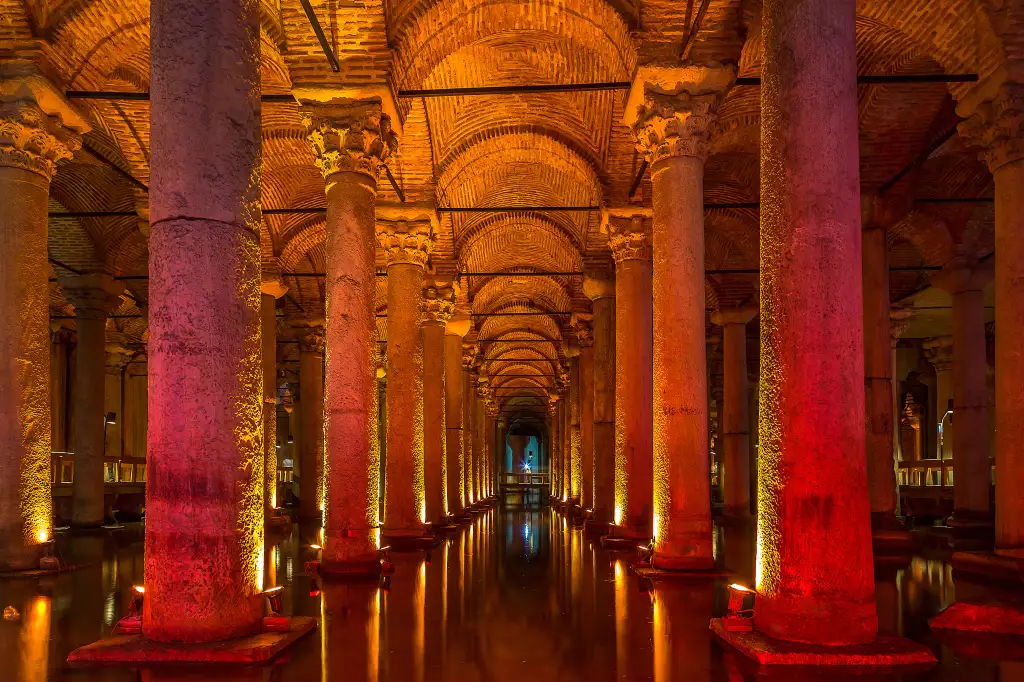
Other visitors' reviews of Basilica Cistern
Show More ReviewsThe Basilica Cistern, located across Hagia Sophia Street from the T1 tram line, is completely invisible from the surface, yet its underground structure is breathtaking and mysterious. Despite the dim lighting, it's incredibly photogenic. The cistern is 140 meters long and 70 meters wide, covering approximately 9,800 square meters. 336 marble columns, each about 9 meters high, are arranged in 12 rows and 28 columns, forming a spectacular forest of columns, many of which were recycled from earlier Roman architecture. Beneath two columns lies a toppled head of Medusa, serving as its base. Another statue of Medusa, imprisoned, is hidden in a dark corner. The Basilica Cistern was built between 527 and 565 AD by order of the Byzantine Emperor Justinian I as an underground reservoir to provide water for the Grand Palace and surrounding facilities during sieges. Forgotten during the Ottoman period, it was rediscovered by travelers and has now become one of Istanbul's most mysterious historical landmarks.