Mu Fu Mansion(Mu's Residence)
木府 based on 459 reviews
 Selected for Night Attractions in Yunnan
Opening hours of Mu Fu Mansion
Mu Fu Mansion Highlights: Must-See Features and Attractions
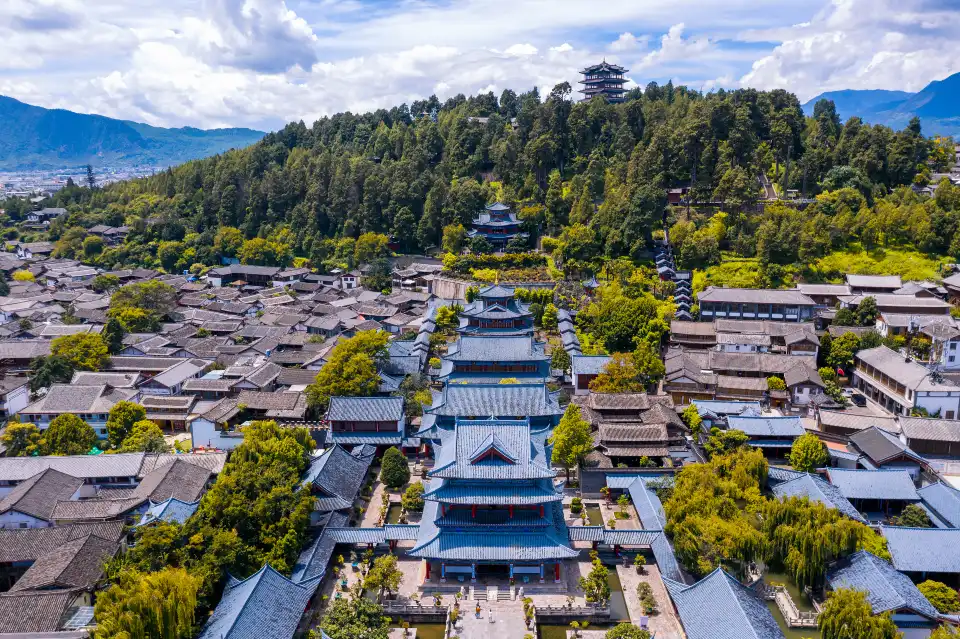
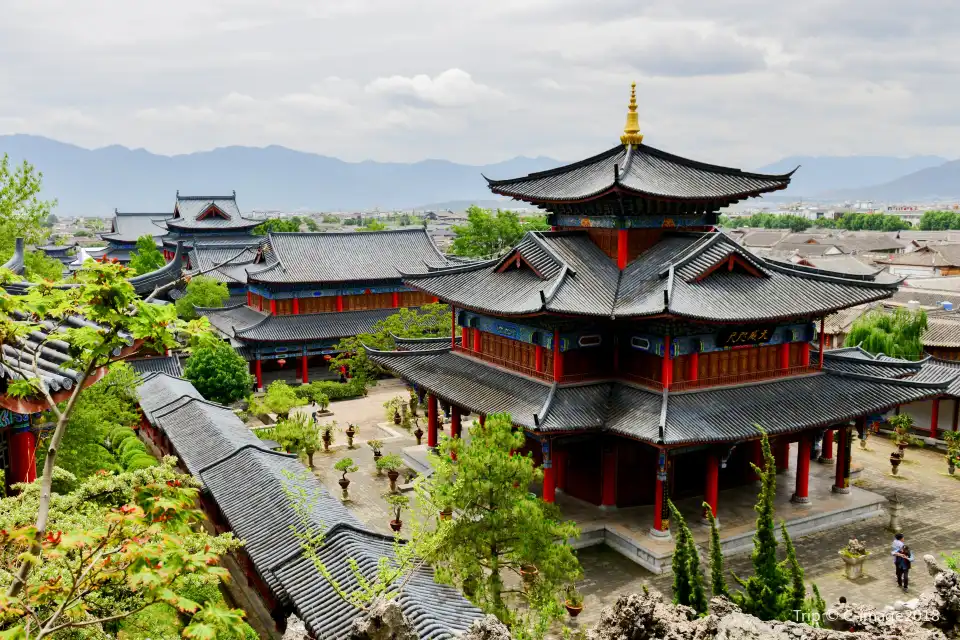
Mu Fu Mansion is located at the foot of Lion Mountain in the ancient town of Lijiang. It served as the residence of the Mu family chieftains for centuries since the Ming Dynasty. The architecture retains the central plains style of the Ming era while incorporating Bai and Naxi craftsmanship. When Xu Xiake visited Lijiang, he could only admire the grand complex from outside the gates, leaving behind the praise "The splendor of these palaces rivals that of imperial courts." These eight characters are now gilded on the entrance screen wall. Locals often say "As there is the Forbidden City in the north, so there is Mu Fu Mansion in the south," regarding it as Lijiang's version of the Forbidden City.
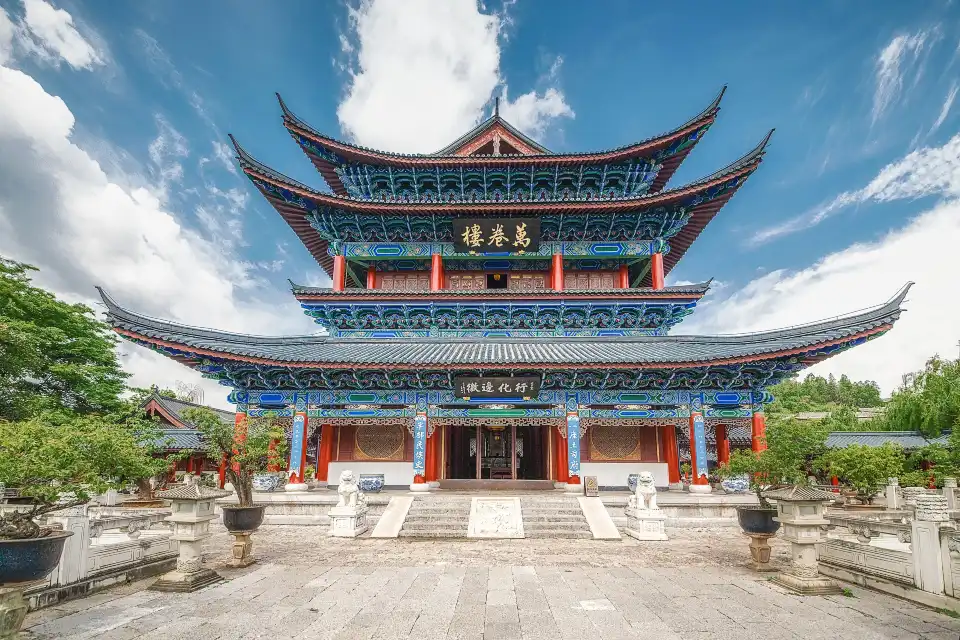
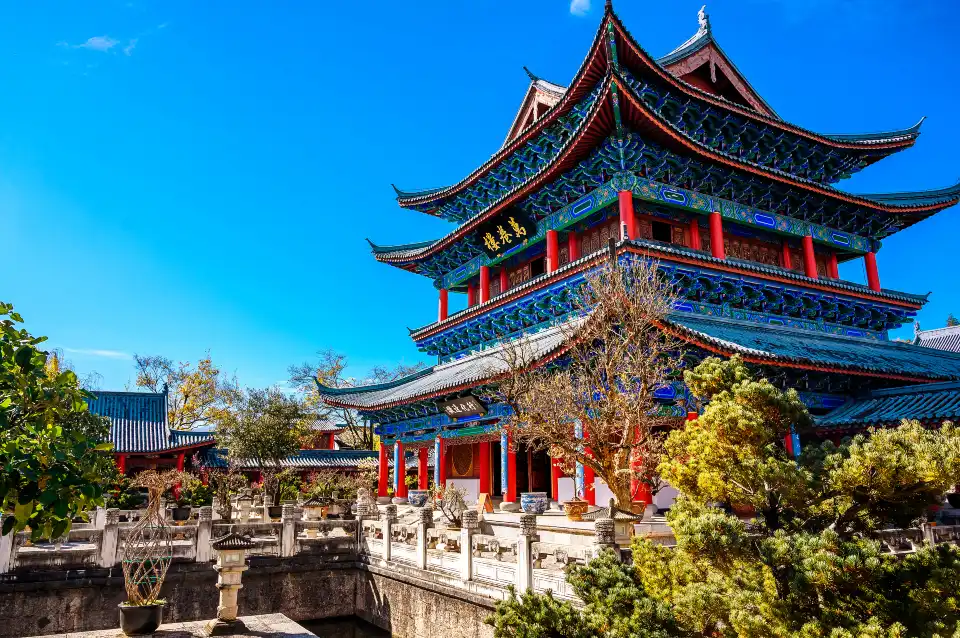
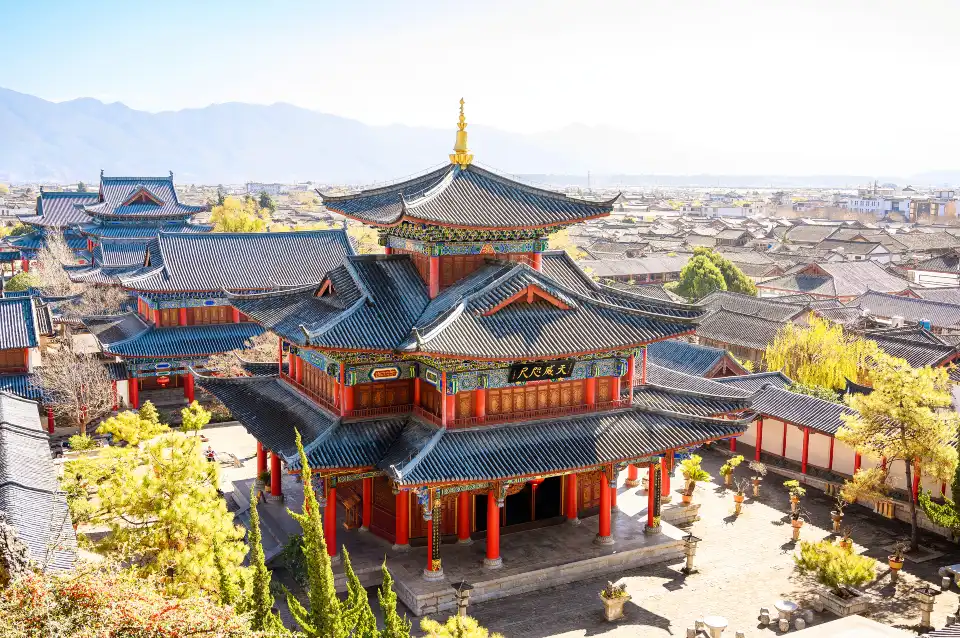
Visiting Mu Fu Mansion, you first pass through the wooden archway inscribed with "Tian Yu Liu Fang" – these four characters are a homophone for "Go study" in the Naxi language, reflecting the Mu chieftain family's tradition of valuing education – then through the exquisitely carved stone archway bearing the words "Loyalty and righteousness." In the past, locals praised it with the saying, "The Three Pagodas of Dali, the stone archways of Lijiang." Stepping through the vermilion gate, the central axis runs east to west, lined with the assembly hall, Wanjuan Tower (Ten-Thousand-Volume Library), guardian hall, Guangbi Tower, Yuyin Tower, and Sanqing Hall. The assembly hall was where the chieftain conducted political affairs, dignified and imposing. Wanjuan Tower once housed thousands of Dongba scriptures, hundreds of Buddhist sutras, poetry collections of six chieftains, and numerous calligraphy and paintings by renowned scholars, embodying the mansion's cultural heritage. The guardian hall, also called the rear assembly hall, was used for family discussions. Guangbi Tower, the gatehouse of the rear garden, has long been hailed as "the finest in western Yunnan." Yuyin Tower was where imperial edicts were received and banquets with music and dance were held. At the axis's end stands Sanqing Hall, situated high at the foot of Lion Mountain, offering a panoramic view of the entire mansion and the layered rooftops of the ancient town. Over a hundred auxiliary halls, pavilions, street-crossing buildings, and family courtyards flank the axis in staggered elevations, recreating the grandeur of the chieftain's residence.
Most structures of Mu Fu Mansion were destroyed in wars during the late Qing Dynasty. Its current layout was reconstructed after fundraising following the 1996 Lijiang earthquake and completed in 1999. TV series like "Mu Fu Feng Yun" and "Qian Wang" were filmed here. After the tour, the Zhongyi Memorial Archway outside the mansion, the "Tian Yu Liu Fang" archway, and the screen wall inscribed with Xu Xiake's praise are all photo-worthy spots.

Other visitors' reviews of Mu Fu Mansion
Show More ReviewsThis visit to the attraction was an excellent experience. It boasts a rich historical and cultural heritage, beautiful natural scenery, and excellent facilities, making for a smooth and comfortable overall tour. In conclusion, this attraction is of exceptional quality and highly worth visiting; it is strongly recommended to all tourists.