Quanzhou Kaiyuan Temple
泉州开元寺 based on 183 reviews
 No. 1 of Global Traveller-Picked Attractions in Quanzhou
Closed for the day Opening hours of Quanzhou Kaiyuan Temple
Quanzhou Kaiyuan Temple Highlights: Must-See Features and Attractions
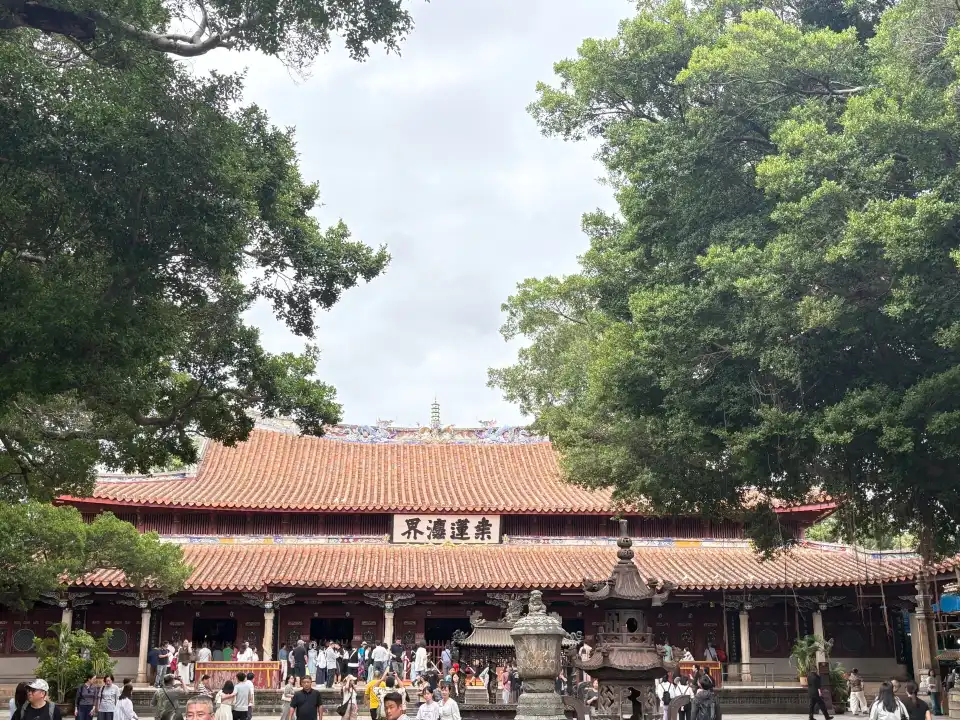
Kaiyuan Temple is located in QuanzhouWest Street, Licheng DistrictBuilt in the second year of the Chuigong era during the reign of Empress Wu Zetian of the Tang Dynasty, it has a history of over 1,300 years. It is an important cultural relic along the southeastern coast of China and one of the larger-scale Buddhist temples in Fujian Province.
The attractions of the monastery are arranged along the central axisWorship pavilion, the Baiting, the main hall of Kaiyuan Temple, the Sangpeng historic site, the Kaiyuan Temple's Sweet Dew Ordination Platform, the scripture depository, etc.Also,, as well as the stone pagodas on the east and west sides and the east and west corridors.
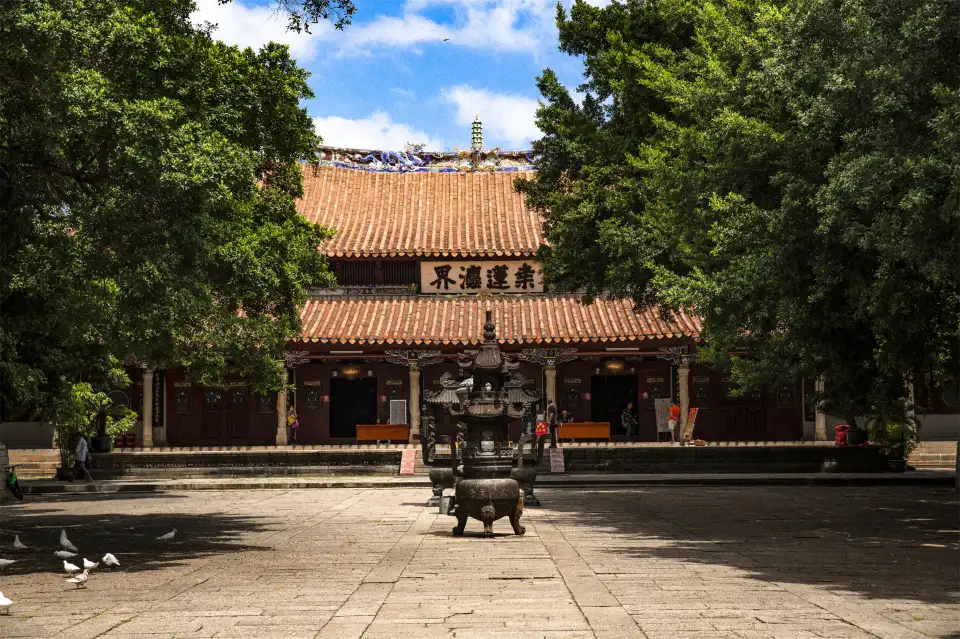
Quanzhou Kaiyuan Temple - The heavenly king hall, also the mountain gate of the temple, was built in 1925. The stone pillars are slightly thinner at the top and bottom, thicker in the middle, shaped like a shuttle, reflecting the Tang dynasty stone pillar style. A wooden couplet hangs on the stone pillars, reading "This place is called the land of Buddha, where every street is filled with saints." It was composed by Zhu Xi, a great Neo-Confucian scholar of the Southern Song dynasty, and written by the modern eminent monk Hongyi.
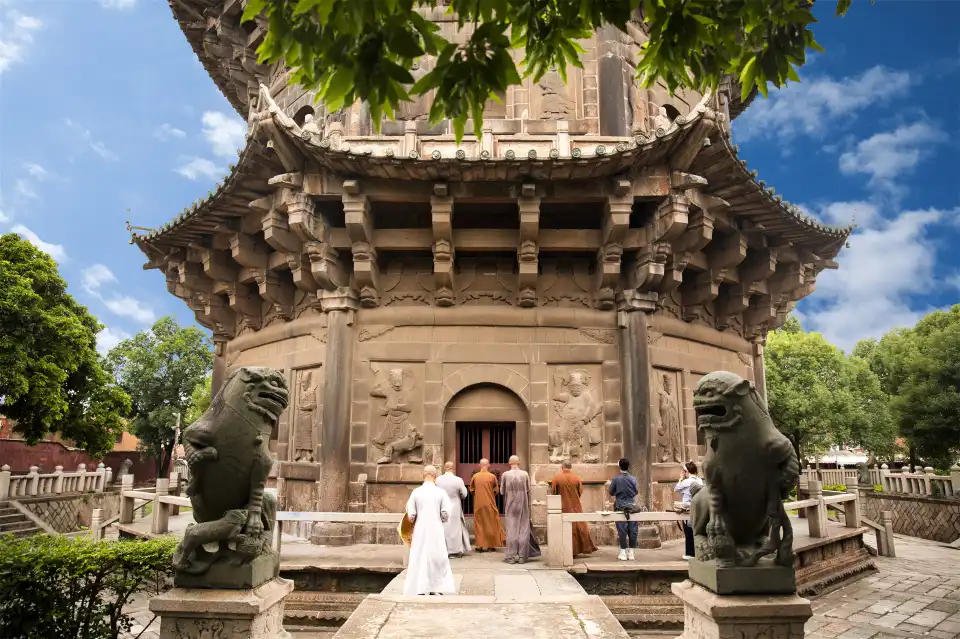
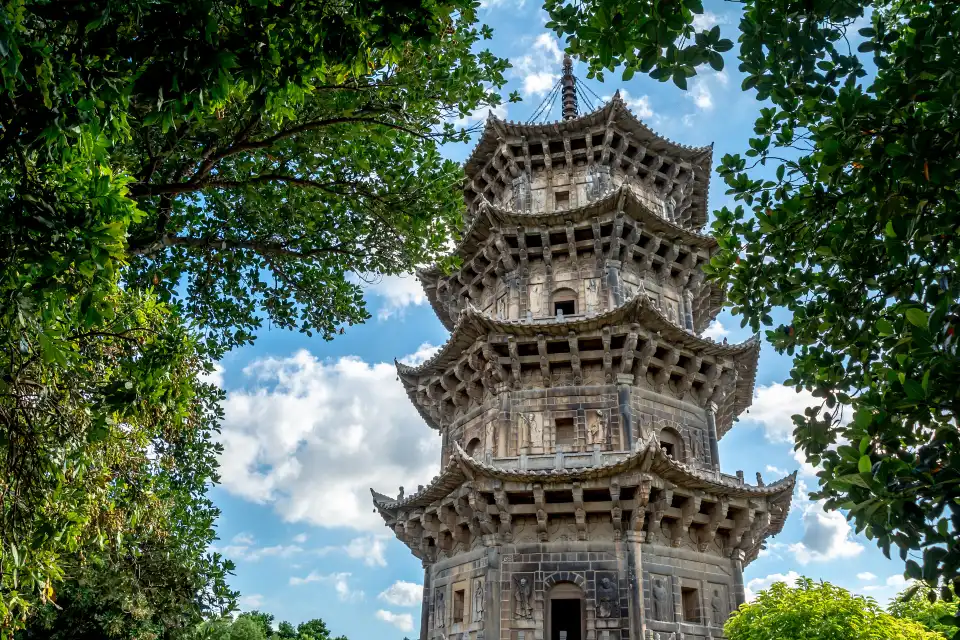
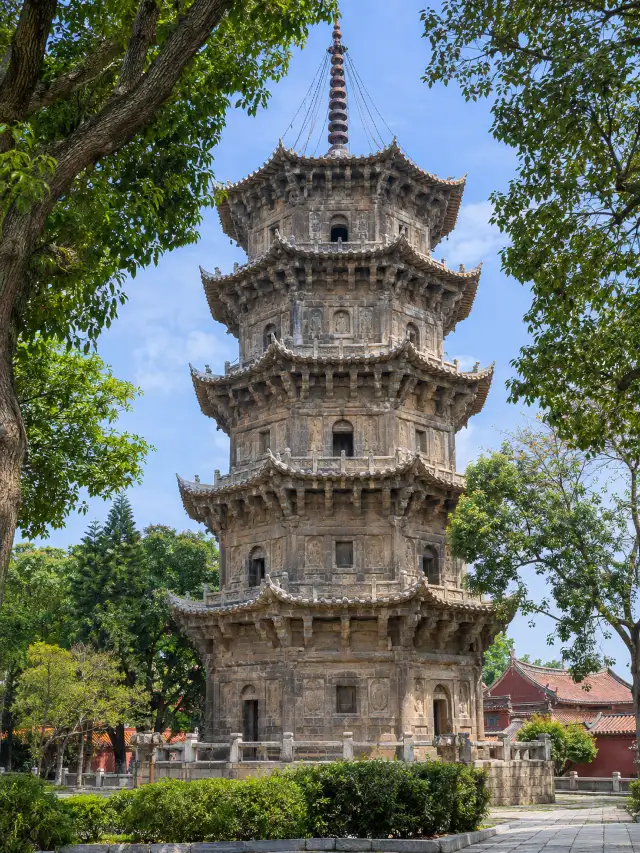
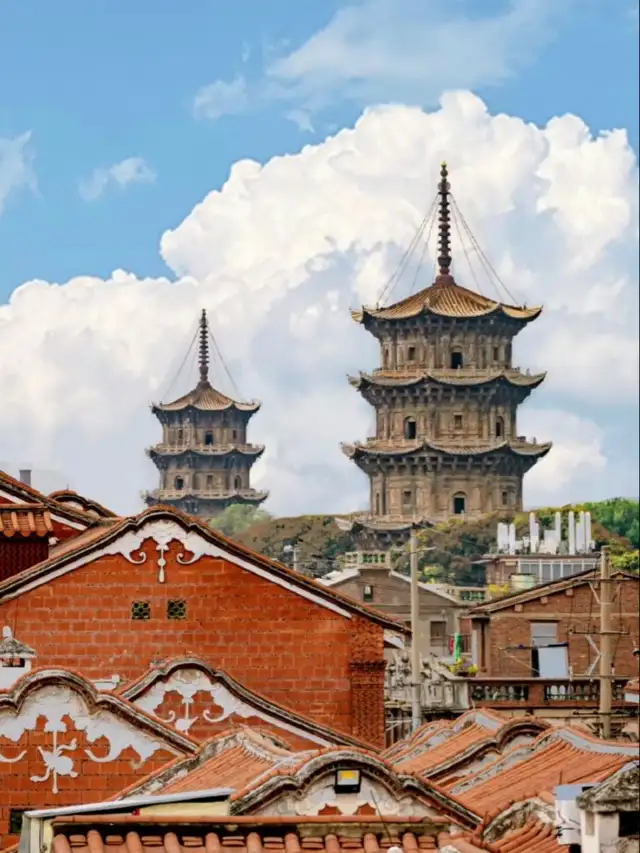
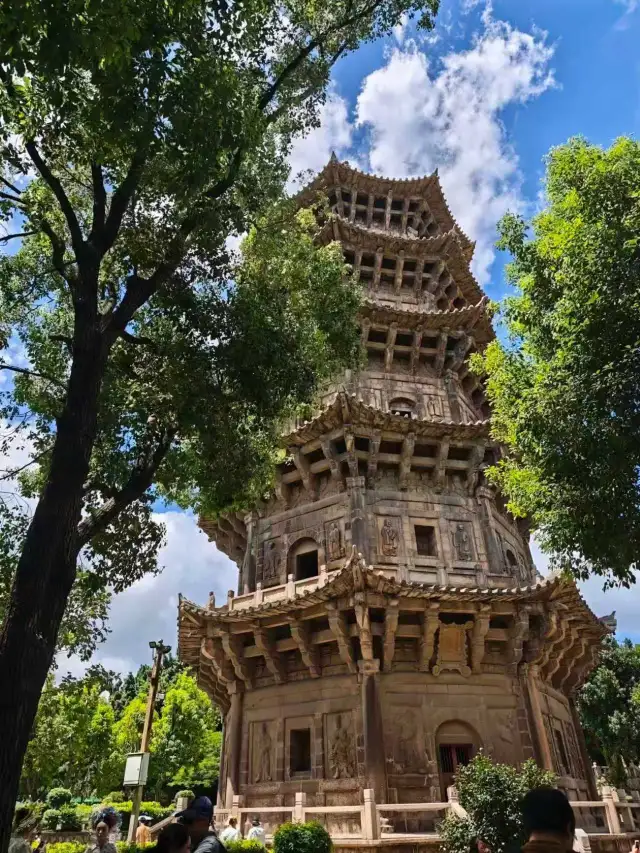
Crossing the mountain gate brings you toWorship pavilionStanding here, you can see the east and west pagodas rising from the ground and the spacious, bright east and west corridors symmetrically arranged on both sides. The east and west pagodas are among the more famous attractions in the area. The east pagoda is called "Zhenguo Pagoda (East Pagoda)," while the west pagoda is named "Renshou Pagoda." Standing over 40 m tall, they are one of the tallest pairs of stone pagodas in China and serve as landmarks and symbols of the ancient city of Quanzhou.
Worship pavilionIn front, there is a large stone courtyard where officials and commoners from ancient and modern times gather for activities, becoming particularly lively during events. On both sides of the stone courtyard stand eight large banyan trees, beneath which are arranged 11 ancient sutra pillars and small stupas from the Tang, Song, and Ming dynasties in various styles, as well as two stone tortoises.
Then there is the main structure, the Mahavira Hall of Kaiyuan Temple. The Mahavira Hall of Kaiyuan Temple also has an elegant name, "Hundred-Pillar Hall." Originally, the hall was planned to have one hundred pillars, but later, to accommodate the placement of Buddha statues and create space for Buddhist activities, the beams were extended, and the number of pillars was reduced, resulting in the "Hundred-Pillar Hall" with 86 pillars.
Quanzhou Kaiyuan Temple Reviews: Insider Insights and Visitor Experiences
Quanzhou Kaiyuan Temple Photos: Trip Moments
- ต้องไปแล้วป่ะ
- weregone
- เที่ยว1
- quanzhou
- china
- เฉวียนโจว
- เที่ยวจีน
- fujian
- weststreetquanzhou
- kaiyuantemple
- qingjingmosque
- maritimesilkroad
- mianxianhu
- minnanfood
- เที่ยวต่างประเทศ
Quanzhou, China | Exploring the Ancient Port City 🏙️Quanzhou: A journey from ancient stone pagodas to historic mosques, discovering the soul of the port city through its morning flavors. 🍜 Begin your Quanzhou adventure on West Street (Xi Jie) just as the shops are opening. As you walk past the low rows of houses, look for the stone pagodas rising above the rooftops. These peaks belong to the Kaiyuan Temple. Once inside, you'll realize they are a pair, and the intricate stone patterns—barely visible from the street—become clear. Later in the day, stand before the stone gates of the Qingjing Mosque. Both sites reside in the same city, serving as a testament to how Quanzhou’s maritime trade era fostered a harmonious blend of diverse communities and faiths. 🕌 What’s worth visiting? Start at Kaiyuan Temple and spend time walking between the East and West Pagodas. Take a moment to admire their silhouettes from a distance before getting close to inspect the carvings at the base. After exiting the temple, continue down West Street toward the Clock Tower. If you still have energy, turn into Zhongshan Road or its side alleys. Along the way, notice how the storefronts blend into the old brick houses. Some stretches of this route are better suited for snacking rather than just walking straight through. 🧱 Save another half-day for Tumen Street. Admire the stone arches of the Qingjing Mosque, then continue to the Guandi Temple and the Confucian Temple. If you want to delve deeper into the city's maritime past, dedicate some time to the Quanzhou Maritime Museum to connect what you see on the streets with the history of the Silk Road. Many of the city's landmarks are UNESCO World Heritage sites that tell the story of Quanzhou’s significance during the Song and Yuan dynasties. Splitting your trip into two days will give you enough time to appreciate the finer details of each location. 📜 What to eat? For breakfast, try Mianxianhu—a thick soup with vermicelli so fine they almost melt into the broth. Order some fried dough sticks (Youtiao) to dip piece by piece for a perfect mix of crunch and warmth. For more local flavors, try the local vinegar-seasoned fried pork or the braised ginger duck for your next meal. In the afternoon, stop for a bowl of sweet peanut soup before returning to your stroll through the old town. 🥨 When to go and for how long? Aim for November if you enjoy spending plenty of time outdoors. Give Quanzhou two days: Day one for Kaiyuan Temple, West Street, and Zhongshan Road; Day two for the Qingjing Mosque and the Tumen Street area, followed by a museum of your choice. If you only have one day, start at Kaiyuan in the morning, have lunch in the old town, and head to Tumen Street in the afternoon. This way, you’ll see both major districts without having to skip the local food! 🌤️ต้องไปแล้วป่ะ?1
 Quanzhou is beautiful, but I don't recommend visiting in Nov–Dec unless you're ready to "suffer"I honestly don't recommend visiting Quanzhou in late autumn! I'm afraid you'll fall in love with this coastal ancient city that's half-bustling, half-ethereal ✨ Quanzhou in Nov–Dec is so gentle! No scorching heat, the temperature is comfortable and pleasant Ancient temples with red walls, thousand-year-old twin pagodas, Minnan traditional houses, and autumn vibes in the mountains blend together The ancient city streets are full of healing, bustling life, and Qingyuan Mountain is painted with autumn colors You can explore world heritage sites and enjoy the quiet autumn mountains and sea The slow pace of this small Minnan city makes you never want to leave once you arrive 🍂 I've put together a foolproof one-day itinerary for Quanzhou, tested by locals Qingyuan Mountain + West Street + Kaiyuan Temple, all in one line, no backtracking. Beginners can just copy this ✅ 🌤 Nov–Dec travel conditions Late autumn in Quanzhou has comfortable temperatures (18–26°C) The sun is gentle, not glaring, and it's mostly sunny with little rain The ancient city has clear light and shadows, and the mountain forests have a crisp autumn feel Avoid the crowded autumn spots across the country; this place is quiet, healing, and full of atmosphere 🧥 Autumn outfit guide | Look great in photos without fail Southern late autumn has a slight day-night temperature difference, balancing comfort and style ☁ Daytime: Knits, simple trench coats, solid-colored dresses Off-white, caramel, and light apricot tones match the red walls of ancient buildings and mountain autumn colors Clean and gentle, perfect for atmospheric photos 🌙 Evenings in the mountains are slightly cool, so bring a thin jacket 👟 Lots of walking on stone paths, so comfortable flat shoes are a must 📸 Three core attractions | Precise photo spots ① Qingyuan Mountain | Urban mountain autumn scenery 📍Location: Quanshan Road, Fengze District, Quanzhou The only urban mountain in Quanzhou, a 5A-rated World Heritage site In late autumn, the mountain greenery is layered with deep and light shades, bringing a crisp autumn feel No need for high-intensity hiking; it's all about relaxing, getting fresh air, and clearing your mind ✅ Must-visit spots ▪️Laojun Rock: A giant Song Dynasty stone sculpture of Laozi, a thousand-year-old relic and Quanzhou's iconic calling card ▪️Hong Yi Master's Relic Pagoda: Quiet and serene, with a very strong atmosphere ▪️Nantai Rock: Climb up to overlook the entire ancient city of Quanzhou, with the full city panorama in view 💡 Visit tips Enter the mountain in the morning for comfortable temperatures and fewer crowds If you have average stamina, just visit the core area; you can take the sightseeing shuttle to save energy ② Kaiyuan Temple | Autumn charm of a thousand-year-old temple 📍Location: No. 176 West Street, Licheng District, Quanzhou Free admission! Quanzhou's landmark thousand-year-old temple The warm late autumn sun shines on the red walls and ancient buildings, gentle and healing The twin pagodas stand tall, and the ancient banyan trees are lush—this is the poetry unique to Citong City ✅ Must-visit photo spots ▪️Panoramic view of the East and West Pagodas: The ancient city's landmark architecture, a classic must-shoot spot ▪️Red walls of the Mahavira Hall: Clean background, perfect for atmospheric portraits ▪️Ancient banyan tree path in the courtyard: Quiet and serene, perfect for a slow stroll and casual shots ③ West Street Ancient City | Autumn colors of human life 📍Location: West Street, Licheng District, Quanzhou The thousand-year-old street with the most bustling, human atmosphere in Quanzhou It's not just about trendy snacks; the late autumn streets are gentle and healing Swallow-tail ridge houses, retro arcades—the old street atmosphere is fully realized ✅ Must-visit photo spots ▪️Xiaocheng photo wall ▪️Trendy rooftop spots (for shooting the sunset with the twin pagodas) ▪️Niche ancient alleys next to West Street (Jiuguanyi, Jinyu Lane), fewer people and great for photos 🗺 Perfect one-day Quanzhou itinerary (no backtracking) Morning: Get fresh air and enjoy autumn at Qingyuan Mountain → Overlook the full view of the ancient city Noon: Head down the mountain for authentic Minnan cuisine Afternoon: Visit the thousand-year-old Kaiyuan Temple and take great autumn photos Evening: Wander through West Street, explore the old streets, and watch the sunset at the twin pagodas The pace is relaxed throughout, no rushing, perfect for a short one-day trip 💡 Practical travel tips 📍Overall area: Licheng District + Fengze District, Quanzhou. Attractions are concentrated and travel is convenient 🎫Tickets: Kaiyuan Temple is free; West Street is free; buy tickets for Qingyuan Mountain as needed, entering in the evening is more cost-effective ⏰Best time to visit: Hike in the morning, visit the ancient temple in the afternoon, and stroll the old street in the evening for the best lighting 🚗Transportation guide ▪️You can take a taxi directly to each spot in the city, which is cost-effective ▪️Inside the ancient city, you can take the Xiaobai electric shuttle, which costs 2 yuan and stops whenever you hail it, making it super convenient for getting around ⚠️ Tips to avoid pitfalls 1. Snacks on the main street of West Street are overpriced; for authentic food, prioritize the side alleys 2. Prices on Qingyuan Mountain are on the higher side; it is recommended to bring your own mineral water 3. Keep quiet when visiting ancient temples, take photos civilly, and do not make noise or cause a scene 4. UV rays are still present in the afternoon in late autumn, so keep sun protection simple 🍜 Must-eat food in Quanzhou Ginger Duck, Minnan Salted Rice, Beef Soup, Mee Sua, Four-Fruit Soup, Sipunculid Worm Jelly Authentic Minnan flavors, you can eat all day without repeatingGlobal Grub1

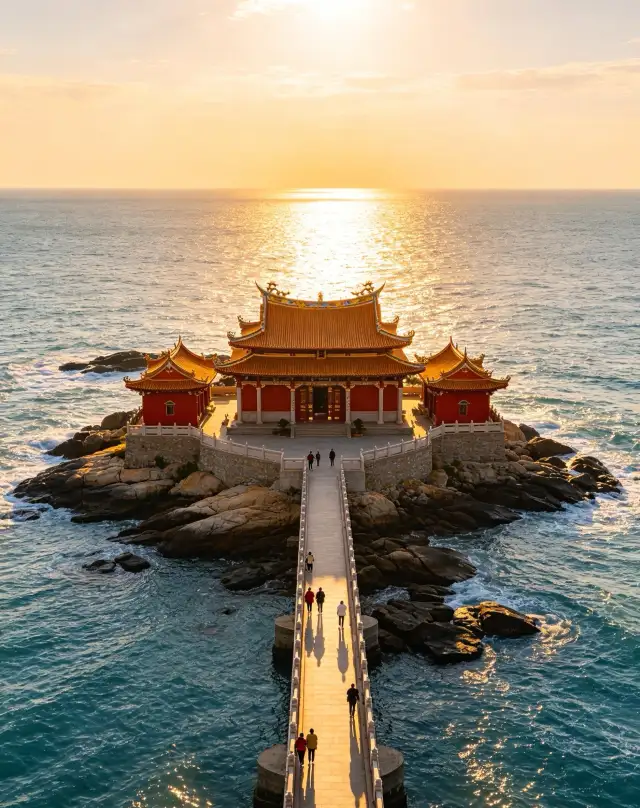 Quanzhou has truly become legendary, a city of earthly charm and celestial beauty. Absolutely stunning!During May Day 2026, Quanzhou welcomed over 5.23 million tourists, with its popularity soaring to the top of the cultural and tourism hot list. Boasting the dual titles of World Heritage Site and City of Gastronomy, it's low-key yet therapeutic, making it the top travel destination for young people! 🏮 Millennium World Heritage Ancient City (Mostly Free) Kaiyuan Temple Quanzhou's landmark. Check in at the East and West Pagodas, and capture stunning panoramic views in secluded alleys. This ancient temple is rich in heritage. Chengtian Temple A serene Zen temple, quiet with few people, and free to visit. Perfect for ancient-style photos. Luoyang Bridge A millennium-old Song Dynasty bridge with a stunning sunset ambiance. Free to stroll and enjoy the river views. Diverse Ancient Temple Cluster Guan Yue Temple, Qingjing Mosque, and Tianhou Palace are all gathered here, offering a one-stop experience of Minnan's unique religious culture. 💐 Must-Experience: Xunpu Flower Headdress This internet-famous "garden on your head" creates an incredible atmosphere. Take stunning photos by the sea or at Oyster Shell Houses. It's full of folk charm and a must-do in Quanzhou! 🌊 Coastal Healing Getaways Luojia Temple A floating temple on the sea, with red walls against the blue ocean. The scenery is absolutely beautiful and completely free. Yongning Ancient City, Zhangjiao Oil Painting Village Original ecological ancient villages, without excessive commercialization, quiet and peaceful, perfect for a slow visit. 🎡 Trendy and Fun Activities Min Chao sports events, trendy e-sports districts, immersive live-action dramas, and intangible cultural heritage mecha flash mobs – this ancient city also embraces new trendy ways to play. 🍜 Authentic Minnan Cuisine Mianxian paste, braised pork zongzi, ginger duck, satay noodles, four-fruit soup, sea worm jelly, and many other specialty snacks are affordable and delicious. You can easily eat your fill for a reasonable price per person. ✅ Travel Money-Saving Tips Students enjoy half-price admission to scenic spots and ticket discounts with valid ID. Holding event tickets can grant free entry to multiple scenic spots. In the ancient city, prioritize taking the convenient "Xiaobai" shuttle buses. Accommodation around the ancient city offers excellent value for money. Avoid the internet-famous shops on West Street's main thoroughfare; it's more cost-effective to explore the alleys for authentic old brands. Stroll through the ancient city, wear fresh flowers, and savor authentic local snacks. Come to Quanzhou and experience its unique blend of earthly charm and leisurely comfort!Walker Emily22Emily10

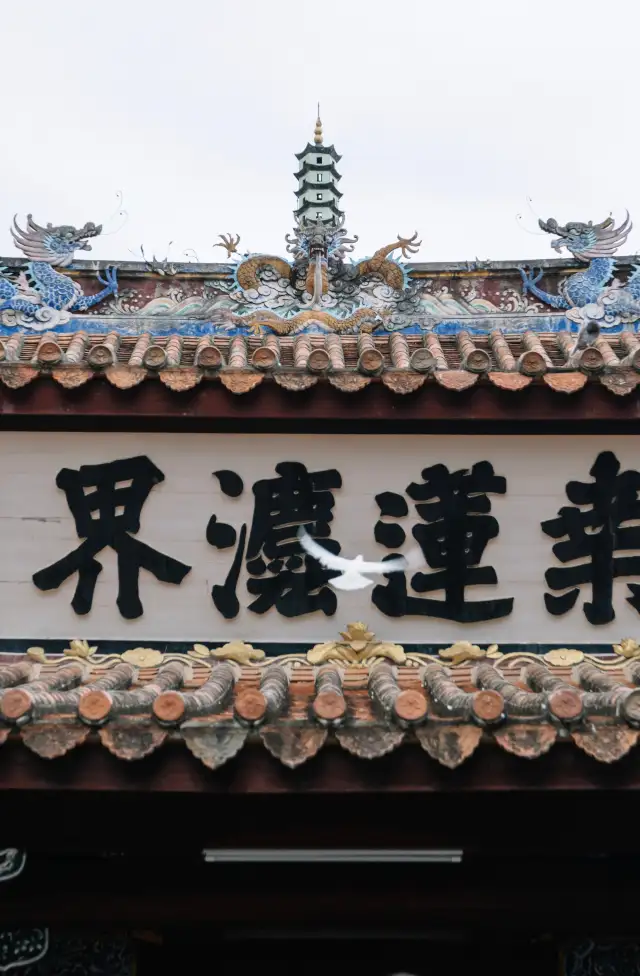 Quanzhou Kaiyuan Temple | Beneath the twin pagodas, understand "half city of worldly life, half city of divinity"If you only have time for one ancient temple in Quanzhou, I would save it for Kaiyuan Temple. It is free to enter and does not rush to push you toward a "must-see," but instead layers the time of the Tang, Song, Yuan, Ming, and Qing dynasties all in one place. Walk inside, and your heart will naturally slow down. A temple, starting from a mulberry garden Kaiyuan Temple was first built in the second year of the Chuigong era of the Tang Dynasty. Legend has it that Huang Shougong donated his mulberry garden to build the temple, which was initially named "Lotus Dojo." It was later renamed Kaiyuan Temple. The four characters "Sang Lian Fa Jie" (Mulberry Lotus Dharma Realm) inside the mountain gate tell the story of this origin. The couplet in the Hall of Heavenly Kings, "This place was anciently called a Buddhist kingdom, and the streets are full of saints," was written by Master Hong Yi and is particularly fitting for Quanzhou. East and West Pagodas: the Song Dynasty spirit written in stone The East Pagoda (Zhenguo Pagoda) and West Pagoda (Renshou Pagoda) are the tallest pair of Song Dynasty stone pagodas imitating wooden pavilion-style architecture in China. The pagoda bodies use stone to mimic wood, with dougong brackets, flying eaves, and figure reliefs unfolding layer by layer. They still stand opposite each other after a thousand years of wind, rain, and earthquakes. On the northeast side of the fourth floor of the West Pagoda, there is a relief of the "Monkey Pilgrim," wearing a golden headband and holding a sword. It predates the writing of *Journey to the West* by over 300 years and is often considered one of the origins of the Sun Wukong image. Standing beneath the pagodas and looking up, you will suddenly feel that time is not so distant. Mahavira Hall: look up and meet the flying Apsaras musicians Look up inside the hall, and you will see twenty-four flying Apsaras musicians with human heads and bird bodies among the dougong brackets, holding Nanyin musical instruments with lively postures. They carry the meaning of Buddhist Kalavinka while also blending with Chinese flying Apsaras and foreign angel motifs. The diversity and inclusiveness of Quanzhou are not just in slogans, but right here between these beams and arches. Red walls, ancient banyan trees, and the sounds of West Street Inside the temple, the red walls are quiet, ancient banyan trees provide shade, and the incense is understated. Coming out of the West Gate, you are immediately on West Street, where the aromas of vermicelli soup, meat zongzi, and runbing rush toward you. At that moment, you will understand that "half city of worldly life, half city of divinity" is not just a marketing slogan, but the daily life of Quanzhou. Tips Free admission, generally no reservation required; opening hours are approximately 6:30 AM–5:30 PM, with last entry at 5:00 PM. It is convenient to take a bus to "Kaiyuan Temple West Gate Station" or take the ancient city's "Xiaobai" electric cart.Travel and Table

 Quanzhou Autumn Getaway: A 2-Day, 1-Night Zen-Inspired Trip to the Ancient CityQuanzhou is a living ancient city, a place where people and deities coexist. Built during the prosperous Tang Dynasty, it has retained its rich historical heritage and well-preserved urban fabric for over a thousand years, with unique, vibrant charm hidden in every corner. The ancient city of Quanzhou is like the cup of tea that Minnan people love 🍵—fragrant, rich, and lingering, worth savoring slowly, day after day. Once you've been away for a while, you'll always find yourself wanting to return to taste this "cup of tea" again. This two-day trip to Quanzhou was a revisit for me, a journey through the ancient city filled with nature 🌱 and relaxation. 🍋 DAY 1: Depart from Zhangzhou — Tonghuai Guan Di Temple — Qingjing Mosque — Fuwen Temple — Chengtian Temple — Bell Tower — Enjoy the sunset and night views on West Street — Return to accommodation The light and shadows at Chengtian Temple around 4:00–5:00 PM are beautiful. The monks' chanting harmonizes with the rustling leaves in the temple, helping you find peace and forget your worries. After leaving Chengtian Temple, I took a "Xiaobai" (small white shuttle) to West Street, just in time to catch a gorgeous sunset. With the ancient city, temples, pagodas, and the red glow of the sky, beauty is within reach. By the way, you can access the rooftop of the West Street Tourist Service Center for free to enjoy the view. 🍊 DAY 2: West Lake Park — Yuanmiao Temple — Kaiyuan Temple — Quanzhou Museum — Return trip I've been to many West Lake Parks, but Quanzhou's has a unique beauty all its own. With its misty waters, gentle mountains, drifting fishing boats, and leisurely seagulls, West Lake Park is the perfect place to experience the moving natural beauty of the ancient city. It's best to visit in the early morning or around 4:00–5:00 PM. If you have the energy, I recommend walking around the lake to take it all in. Quanzhou has many museums, most of which I've already visited. The Quanzhou Museum and the Fujian-Taiwan Kinship Museum are both right next to West Lake Park, and this time I finally managed to visit the Quanzhou Museum, which I hadn't seen before. If you're visiting for the first time, I also recommend checking out the Quanzhou Intangible Cultural Heritage Museum and the Quanzhou Maritime Museum. A spontaneous and carefree trip. Quanzhou, see you next time! 🥰Starstruck7890

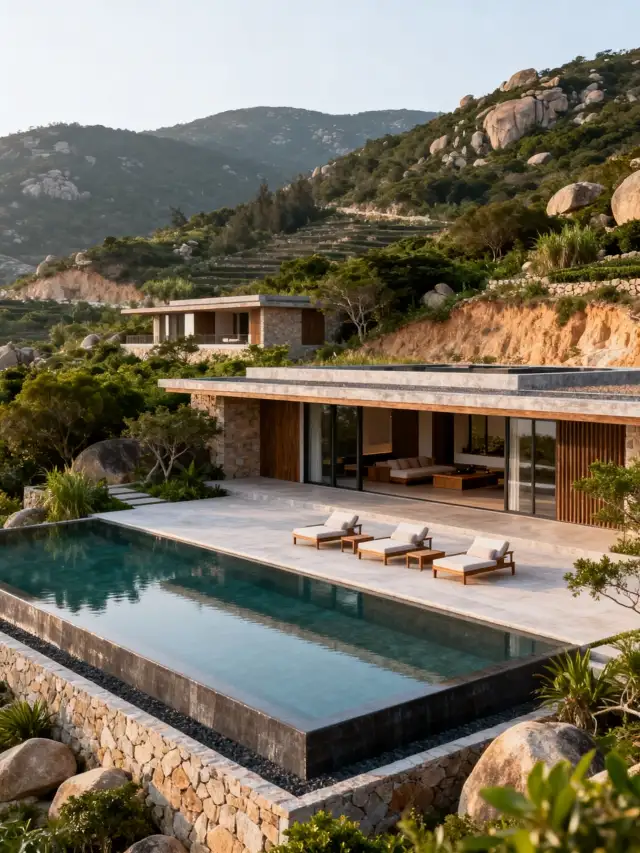 Staying at Life Hotel in Quanzhou was an unforgettable experience with lasting impactFlying all the way to Quanzhou just for these stunning photo spots was totally worth it❗️ ✅ One-day citywalk route on West Street Kaiyuan Temple → West Street → Xiangfeng Alley → Xiaoxicheng → Bell Tower → Zhongshan Middle Road → Chengtian Zen Temple → Qingjing Mosque → Tonghuai Guanyue Temple ✅ Highlights and photo spots Lika Coffee Rooftop: Best spot for capturing the twin towers of Kaiyuan Temple in one frame Quanzhou characters and twin towers in one frame: 8th floor rooftop of Home Inn & Suites Rui Bo Yun Hotel Panoramic view of Splendid Mountains and Rivers: Rooftop accessed via stairs next to Qiliao Bookstore Quanzhou-themed poster: Juruo on West Street Zen-inspired shots at Chengtian Zen Temple Meichao Feng rooftop perspective Baishuai Haoxi Art Space Xiaoxicheng: Bai Yansong’s Quanzhou inscription check-in spot Bawang Tea Ji rooftop: Kaiyuan twin towers and Quanzhou characters in one frame Kaiyuan Temple red wall ancient style photos Quanzhou Bell Tower landmark Guanyue Temple architectural aesthetics Xiangfeng Alley local life vibe ✅ Must-try foods in Quanzhou Mianxian porridge, ginger duck, earthworm jelly, roasted meat zongzi, stone flower jelly, four-fruit soup, runbing (spring roll), lu noodles, vinegar pork, taro paste Accommodation 🏨Garden | Retreat To Nature Designer Homestay (West Street Kaiyuan Temple Branch) No. 20-3 Gantang Alley, prime location on West Street, 5-minute walk to Kaiyuan Temple, excellent 4.8 rating, complete with pool, garden, and cinema 🏨Quanzhou・Ban Yin Shan Ye・MIST VALLEY Resort Stay (West Lake Park Qingyuan Mountain Scenic Area Branch) Located inside the 5A-level Qingyuan Mountain Scenic Area, next to Ouyang Academy, steeped in millennia of culture, perfectly blending reclusive philosophy with Minnan architectural aesthetics 🏨Thirty Plus Mountain Cottage (Qingyuan Mountain Quanzhou Station Branch) No. 338 Puze Road, at the foot of Qingyuan Mountain, 10 minutes from Quanzhou Station, excellent transport links, 13 boutique rooms 🏨Huazhu・Futong Homestay (Quanzhou Ancient City West Street Branch) Retro wabi-sabi aesthetics of Ancient City West Street, trendy fish-themed café, combining serene antiquity with modern comfort, hand-brewed coffee experienceBrooks_Zoe_561

 Quanzhou is beautiful, but I don't recommend going; it's just a nightmare!!!Quanzhou is beautiful, but I honestly don't recommend just going on a whim!! My honest, hard-learned review after just getting back 😭 To be honest! Quanzhou's beauty is real. It's half bustling city life and half ancient charm. Walking down the street, you'll see Tang and Song dynasty architecture and old Minnan alleys everywhere. It's gentle and healing. Every photo you take looks like a cinematic masterpiece, totally on par with the ancient towns of Jiangnan! But! I honestly don't recommend that everyone blindly rush in, go during peak season, or travel without a plan! I just finished a 4-day, 3-night trip to Quanzhou. While I was moved by the cultural depth of this ancient city, I was also driven to the brink of collapse by various hidden traps! The whole trip was exhausting and full of pitfalls. Many people don't do enough research, and if they come, they'll just "suffer"! Today, I'm laying out all my real experiences, the pitfalls to avoid, and the right way to play. If you're planning to go to Quanzhou, you must read this to save yourself from 800 detours! ❌ The 5 biggest hidden traps that will make you suffer (hard-learned summary) 1. Don't travel blindly during peak season/September–October Many people think autumn is comfortable in Quanzhou, but they are dead wrong! In September and October, Quanzhou is still in high-temperature, high-humidity mode. The daytime "feels like" temperature hits 40°C. It's suffocatingly muggy, and you'll be soaked in sweat after walking just a few steps—it's super uncomfortable! Plus, this is a small peak travel season. Kaiyuan Temple, West Street, and Xunpu Village are packed with people! You'll only get photos of crowds, not the ancient atmosphere. You might even risk heatstroke going out at noon. It's not the relaxing ancient city tour you imagined! ✅ Best time to travel: Late October–April of the following year The temperature is comfortable and cool, not muggy or sunny. There are fewer tourists, making it super comfortable to stroll through ancient streets and see ancient architecture! ✅ Travel tip: Absolutely do not walk outdoors between 12:00 PM and 3:00 PM. Hide in your homestay/cafe to rest, and go out to explore and eat in the evening! 2. Major traffic trap! Don't drive yourself or hail random taxis Quanzhou is really not suitable for driving!! The old town is full of narrow stone roads and one-way streets. The roadsides are full of tourists and stalls. Traffic jams are the norm. The key is that parking is super difficult. You'll spend half an hour looking for a spot and only ten minutes visiting the attraction—it's enough to make you break down! Also, there are tons of illegal taxi drivers at Quanzhou Station and attraction entrances who prey on out-of-town tourists! They overcharge for starting fares and intentionally take long routes. The price is more than double that of a ride-hailing app. Don't get in! Many people also mistakenly think they can take the bus the whole time, but that's not the case! Quanzhou bus stops are scattered, schedules are infrequent, and routes are indirect. The distance between attractions is not short, so relying on buses is a huge waste of time! ✅ Correct way to get around (save money and energy) 1. In the ancient city (West Street, Kaiyuan Temple, Zhongshan Road): Walk + take the "Little White" car! It's 2 yuan/person, hail it anywhere, stop anywhere, and perfectly avoid the exhaustion of walking on stone roads. 2. Between attractions (Xunpu Village, Luoyang Bridge): Take a legitimate ride-hailing car directly; it's affordable and worry-free. 3. Absolutely avoid illegal taxis at attractions and refuse to drive into the old town. 3. Food trap! Stop eating on the main West Street Who told you West Street is full of authentic Minnan snacks? Seriously, don't! The main West Street = tourist trap street! All the viral snack shops have inflated prices, small portions, and indifferent flavors. Peanut worm jelly, ginger duck, and four-fruit soup all taste mass-produced—expensive and not good. It's a total trap! Also, the free samples of flower tea and nougat on the street look free, but they will force you to buy them after you try them. Don't just taste them! ✅ Local secret for food If you want authentic Quanzhou flavor, don't visit the main street; go into the small alleys! Pei Lane, Shuimen Lane, and Jinyu Lane are full of old shops that have been open for over a decade. Locals have been eating there since they were kids. They are affordable, authentic, and not traps! Recommended must-eats: Grandma's handmade four-fruit soup, old shop ginger duck, runbing (popiah), peanut worm jelly, and noodle soup. You can eat until you're full for just over 10 yuan! 4. 90% of people fall into traps when taking photos in Xunpu Village The Xunpu flower hairpins made famous by Zhao Liying are full of atmosphere, but going blindly is a real trap! ❌ Pitfalls: 1. Don't choose mobile stalls on the roadside! No after-sales service, sloppy hairpins, old accessories, and they still charge 60–80 yuan. Extremely low value for money. 2. Crowded on holidays. Popular photo spots have lines, and you have to wait 1 hour to take a set of photos. 3. Many shops force you to buy retouched portraits; if you don't buy, their attitude is terrible. ✅ Correct photo guide 1. Choose a legitimate shop in the village! The standard price is about 40 yuan (including headwear + clothing). The styles are new, and the flower hairpins are exquisite. 2. Go in the morning! From 8:00 AM to 10:00 AM, there are the fewest tourists, the light is soft, and you can take great photos without waiting in line. 3. Refuse extra consumption! Just do the hairpins and change clothes. No need to pay extra for in-store portraits. Taking them yourself is more natural. 5. Hidden attraction traps! Don't run around and waste time Many attractions in Quanzhou that seem viral are actually useless—far away, nothing to see, and a pure waste of energy! ❌ Useless attractions you shouldn't visit: 1. Jade and silver jewelry halls in the ancient city: Pure shopping stores, full of forced sales, no sightseeing value. 2. Remote, niche mini-temples: Extremely small scale, can be replaced by ones everywhere in the city. Running there is just a hassle. 3. Paid light shows: The set design is crude, the effect is cheap, and the 50 yuan ticket price is not worth it at all. ❌ Details on avoiding traps at popular attractions: 1. Qingyuan Mountain: Don't buy tickets directly! It's free before 7:00 AM and after 5:30 PM. No need to spend extra money. If you have average stamina, you don't need to climb to the top; viewing from halfway up is enough. 2. Qingjing Mosque: There is a strict dress code! You cannot show your shoulders or legs. You must carry a thin jacket, or they won't let you in. 3. Maritime Silk Road Museum and Min-Tai Museum: You must book in advance! They don't accept walk-ins without tickets. You must avoid peak times on holidays. ✨ Truly reliable! The correct 3-day, 2-night Quanzhou itinerary (not tiring, no traps) Day 1: West Street ancient city line (slowly explore the core) Afternoon: Arrive in Quanzhou -> Check into a homestay near West Street (first choice is inside the ancient city, walk to all attractions) Evening: Kaiyuan Temple (evening light is super gentle, avoid the noon sun) -> Take photos of the East and West Pagodas -> Walk along the Zhongshan Road arcade Night: Explore West Street alley food, eat authentic Minnan late-night snacks, and feel the city's bustling life Day 2: Cultural and customs line (the ceiling of photo opportunities) Morning: Xunpu Village flower hairpin photos (avoid peak times, fewer people, great for photos) Afternoon: Luoyang Bridge (millennium-old bridge, niche and healing, the view of the river and sea meeting is super beautiful) Night: Confucian Temple night view -> Explore the old alley night market, experience the local nightlife Day 3: Relaxing and healing line Morning: Qingjing Mosque + Guandi Temple (Minnan-style ancient temples, full of atmosphere) Afternoon: Maritime Silk Road Museum to learn about Quanzhou's maritime silk road culture -> Return trip 📍 Final honest words Quanzhou is truly a city worth savoring, but not suitable for a whirlwind tour. It doesn't have the noisy commercialization of viral cities. The streets full of ancient buildings, the bustling life in the alleys, and the slow pace of life are gentle and healing, with deep cultural roots. But if you blindly rush in during peak season, don't do your research, and just blindly check in at viral spots, you'll really just be hot, tired, and fall into traps the whole time, wasting your vacation! Sisters planning to go to Quanzhou, save this anti-trap guide, refuse "suffering-style" tourism, and properly experience this gentle ancient city that is half bustling life and half immortal charm ✨Stella.Robinson^47

- chinaitinerary
Would You Visit China's Ancient Trading City Where Different Religions Share the Same Streets? 🇨🇳There's something fascinating about cities that have been connected to the rest of the world for hundreds of years. Quanzhou, in China's Fujian Province, is one of those places. During the Song and Yuan dynasties, it was one of the world's major maritime trading ports. Merchants arrived from different parts of Asia and beyond, bringing not only goods but also their cultures, religions and traditions. And you can still see traces of that history today. What I find particularly interesting is how different this city feels from the China most international tourists are familiar with. If I had three days here, this is how I'd explore it. 🏮 DAY 1 – Walk Through a City of Different Cultures Start at Kaiyuan Temple, famous for its impressive twin stone pagodas. Then explore West Street, one of the best areas to experience the atmosphere of the old city. Continue towards Qingjing Mosque, a historic mosque built in 1009, and visit the nearby Guanyue Temple. It's fascinating that Buddhist, Islamic and Taoist heritage can be found within such a relatively compact area. Don't rush this walk. The small streets, traditional architecture and local food shops are part of the experience. 🌊 DAY 2 – Discover the City's Maritime Past Visit Luoyang Bridge, an extraordinary stone bridge dating back to the Song Dynasty. One particularly interesting detail is its traditional construction technique: oyster cultivation was used to help strengthen the bridge's foundations. Later, head to Xunpu Fishing Village. This is one of the most distinctive places around Quanzhou, famous for its traditional oyster-shell houses and the elaborate floral headpieces worn by local women. The traditional flower arrangements are so distinctive that they've become one of the region's most recognisable cultural symbols. 🏔️ DAY 3 – Mountains, History and Local Traditions Spend the morning exploring Qingyuan Mountain and its famous Laojun Rock, an enormous stone sculpture of Laozi. In the afternoon, discover more of the region's maritime heritage through its historic bridges, old villages and traditional crafts. If you enjoy cultural experiences, look out for a Nanyin music or traditional puppet-theatre performance. Both are important parts of Quanzhou's cultural heritage. ❤️ WHY QUANZHOU DESERVES MORE ATTENTION What makes this destination special isn't just its ancient buildings. It's the story behind them. Quanzhou was once a meeting point for merchants and cultures from across the world. Its heritage includes Buddhist temples, mosques, Taoist temples, historic bridges and ancient trading sites. UNESCO recognised 22 component sites as the World Heritage property Quanzhou: Emporium of the World in Song-Yuan China in 2021. It's a reminder that China's history is much more internationally connected than many people realise. A question for fellow travellers: Would you rather spend three days exploring a futuristic Chinese megacity like Shenzhen, or discover a historic coastal city like Quanzhou? I'd be interested to hear which experience you'd choose. #chinaitinerary #chinaitineraryramezzz1
 After watching "Love Letter to Grandma," I flew to Quanzhou.Grandma says, Quanzhou has roots 🌿 I cried my eyes out in the theater, and as soon as I walked out, I booked a ticket to Quanzhou 🎫 The yellowed Qiaopi (overseas Chinese letters), the longing across the sea, and the grandma waiting a lifetime in "Letters to Grandma"—it all made me suddenly want to see what the real-life version of "Grandma's love letters" looks like. So, I went to Quanzhou. As a famous hometown of overseas Chinese, Quanzhou is known for having "nine out of ten households with overseas connections." It holds a massive collection of authentic Qiaopi—in the Minnan dialect, "letters" are called "Pi." These yellowed sheets of paper are the gentlest love letters the people of Quanzhou have written to time, their homeland, and their loved ones. At the Quanzhou Qiaopi Museum, I saw a letter written in 1934 by an overseas Chinese living in the Philippines to his wife: "I only hope you take care of your health and don't worry about me far away." Next to it was a family letter sent to a mother in 1950: "Living abroad, I cannot serve by your side, and I feel deeply sorry..." There were no flowery words, only reminders about daily life, the hardships of working in a foreign land, and guilt and concern for family. Standing before those handwritten words, the scenes from the movie suddenly felt real. Grandma says Quanzhou has roots. Walking along West Street, I finally understood. 🌿 The thousand-year-old Kaiyuan Temple—the East and West Pagodas stand tall, facing each other. Morning sunlight spills onto the Song Dynasty stone pagodas, and 1,300 years of history come rushing toward you. Just standing under the red walls and ancient banyan trees makes for a cinematic, vintage-style photo. Admission is free; I recommend going right when it opens at 6:30 AM for fewer crowds and better light. 🚶 West Street Citywalk—West Street is right outside Kaiyuan Temple, seamlessly switching from the quiet of the ancient temple to the hustle and bustle of daily life. The rooftop of the West Street Tourist Service Center is free and allows you to frame both pagodas and the entire West Street in your shot. Turn into alleys like Xiangfeng Lane or Jiuguanyi, where the flow of local life and the ancient pagodas share the frame, creating a natural cinematic feel. The famous wall featuring Bai Yansong's quote, "Quanzhou, this is a city you must visit at least once in your life," is located at Xiaoxicheng. 🍜 Authentic flavors you won't want to leave—Shuimen Guozi Mee Sua (vermicelli soup) with a pork bone and seafood broth + vinegar meat and pork intestine + chopped fried dough sticks; it's incredibly delicious. Sidan Ginger Duck is slow-cooked in a clay pot, with firm, fragrant duck meat and ginger slices as crispy as potato chips. There's also Sipunculus jelly, Yuanxiao (glutinous rice balls), agar jelly, and Mochi... You can eat from morning till night for an average of 150 yuan per person. Quanzhou people often say, "You have to strive to win." Perhaps it's because their roots are deep enough that they have the confidence to go far and still be able to return. 💡 Practical tips—In the old town, there are "Xiaobai" electric carts that you can hail; they cost 2 yuan to shuttle between attractions. The Quanzhou Qiaopi Museum is located at the former residence of Chen Guangchun, 345 Zhongshan Road, Licheng District, where you can see scenes from the movie and write postcards. 90% of the core scenic spots are free. I recommend staying near West Street to wake up to the sound of the bells at Kaiyuan Temple. Quanzhou isn't the kind of city that stuns you at first glance, but it's the kind of place you'll keep missing after you leave. Because you know that in every alley, every Qiaopi, and every bowl of Mee Sua, roots are hidden._TI***bt96

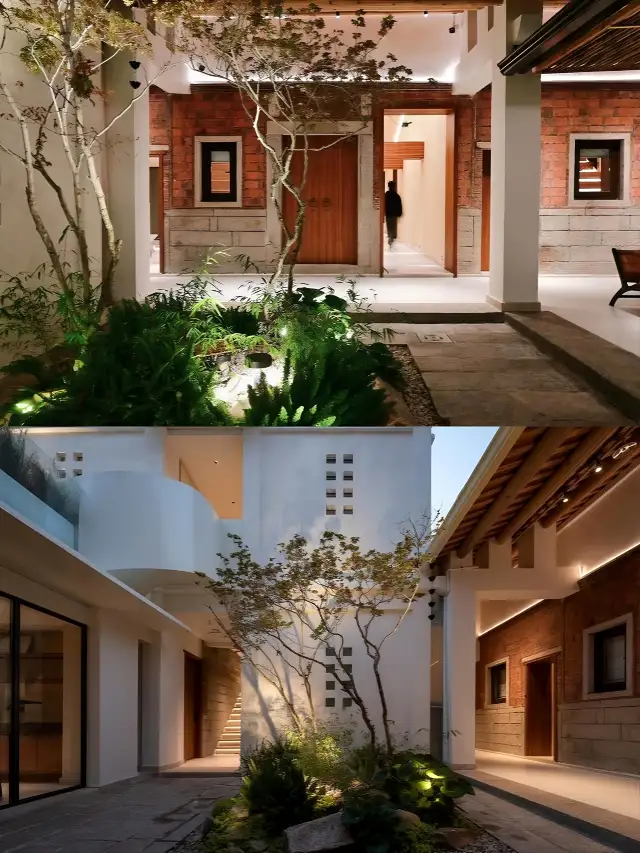 This new homestay near West Street in Quanzhou lets you embrace the ancient city's tranquility the moment you open your window.If you want to stay near West Street in Quanzhou but don't want to be disturbed by the noise of the main street, I recommend staying at the further end of West Street. SlowHouse (West Street Kaiyuan Temple Branch) is located in this area. It is not far from Kaiyuan Temple and West Street, but once you step inside, it feels like stepping out of the hustle and bustle—it is much quieter. The location is just right. The further end of West Street is less crowded. There are snacks and small bars at night, and it is convenient for visiting Kaiyuan Temple and walking through the old alleys during the day. It does not have that overwhelming feeling of "stepping out into a crowd," making it better for a leisurely stroll. The old house has a lot of character. It retains the wooden structure of the traditional house, paired with simple decor, without being overly styled. The two-story duplex layout is comfortable; the first floor has a small living room and bathroom, which is great for having a late-night snack or watching TV after returning at night. The second floor is the bedroom, with a soft bed and enough space to relax. The courtyard is a highlight. Sitting in the courtyard in the afternoon, making tea and feeling the breeze, you can clearly feel the slow pace of the ancient city. If you bring children or elders, you won't feel like you are constantly rushing. Who should stay here: - People who want to explore West Street and Kaiyuan Temple - People who like old architecture and the feel of courtyard houses - Families or friends traveling together who want a more spacious room Price reference: Approximately CNY 300–600 per night Stay tips: Many traditional house homestays are walk-ups. If you have large luggage, you can ask the host in advance if they can assist. There are small bars on the further end of West Street at night; if you are worried about noise, you can choose a room that does not face the street or is located in the inner courtyard._TI***gk

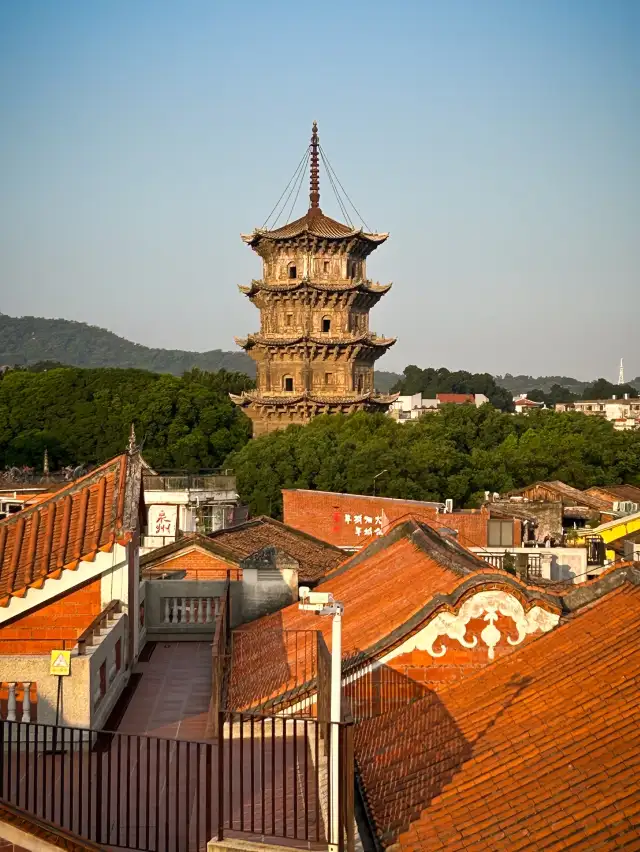
 Visiting Quanzhou for the first time? Don't turn back at the Kaiyuan Temple entrance.West Street is crowded from morning till night, but the best photo spots are actually in the side alleys and on free rooftops. You can take photos at these 8 spots for free. Follow this route without backtracking, and 2 days is just enough to truly experience the "half city of fireworks, half city of immortals." 📍Know Before You Go | Don't Get Lost · West Street ≠ Kaiyuan Temple. Kaiyuan Temple is at No. 176 West Street. The exit leads right to West Street, so don't turn back at the entrance. · Book high-speed trains to "Quanzhou Station"; it's about a 20-minute taxi ride to the Bell Tower. Quanzhou South Station and Jinjiang Station are far from the ancient city. · Quanzhou East Station is closer to Xunpu Village and Luoyang Bridge; only choose this if you're doing the coastal route. · Do not drive in the ancient city; the alleys are narrow, parking is scarce, and motor vehicles are restricted on the main street during the day. 🎫Tickets | Everything You Need to Know · Kaiyuan Temple: Free | 6:30 AM–5:00 PM, cleared at 5:40 PM. No reservation currently required. · West Street / Bell Tower / Zhongshan Road / Jinyu Lane / Pei Lane: Free | Open all day. · Qingjing Mosque: CNY 3 | The only World Heritage site in the city that charges admission. Wear long pants or skirts. · Guanyue Temple: Free | 8:00 AM–5:30 PM. It looks better in the evening when the lights are on. · Confucius Temple: Free | 9:00 AM–5:00 PM. · Qingyuan Mountain: CNY 70 | CNY 35 for students/seniors. 5A scenic area, see the Laozi Statue. · Entering Xunpu Village: Free | CNY 40 for a full "Zanhua" (flower hair accessory) package is the standard price. · Maritime Museum / Intangible Cultural Heritage Museum / Fujian-Taiwan Kinship Museum: Free | Closed Mondays. Bring your ID card to scan for entry. · "Xiaobai" (small white shuttle): CNY 2/person | Hail it anywhere. The most energy-saving way to get around the ancient city. 🗺️2-Day Itinerary (No Backtracking) Day 1 Ancient City Vibe: Kaiyuan Temple (arrive before 8:00 AM) ➡️ Xiangfeng Lane ➡️ West Street Main Street ➡️ Bell Tower ➡️ Zhongshan Road Arcade ➡️ Jinyu Lane ➡️ Tumen Street (Qingjing Mosque ➡️ Guanyue Temple ➡️ Confucius Temple) ➡️ West Street Night View. Day 2 Maritime Silk Road & Fishing Village: Maritime Museum ➡️ Xunpu Village (Zanhua) ➡️ Luoyang Bridge (check tides) ➡️ Qingyuan Mountain (skip if short on time). 📸8 Free Photo Spots | Just Follow These 1. Xiangfeng Lane: Turn right after exiting the west gate of Kaiyuan Temple. Old houses + bougainvillea frame the East Pagoda—the most authentic Quanzhou vibe. 2. West Street Tourist Service Center Rooftop: Free access. Overlook the panoramic view of West Street and the East/West Pagodas. 3. Kaiyuan Temple Ziyun Screen / Red Wall: Low-angle shots of the twin pagodas for great traditional-style photos. 4. Bell Tower Intersection: Intersection of North Zhongshan Road and West Street. Great atmosphere after sunset when the lights turn on. 5. Xiaoxicheng "Quanzhou" Wall: Free landmark photo. 6. Pei Lane / Taikui Lane / Jiuguanyi: Half the crowds of the main street. Red brick houses, old ancestral halls, ancient wells. 7. Zhongshan Middle Road "Carp Turning into Dragon" background wall + Hua Lane Catholic Church: Colorful walls are very photogenic. 8. Guanyue Temple Night View: Most vibrant when the lights are on and incense is burning; more impressive than during the day. 💡 Want close-up aerial shots of the twin pagodas? "Meichaofeng" or "Youli" rooftop require a minimum spend of CNY 20; not included in the free spots. 🍜Food | Avoid Main Street Markups · Mianxian Hu (noodle soup): CNY 15 (Shuimen Guozai, Tingting; add vinegar meat + fried dough sticks). · Meat Zongzi: CNY 10 (Hou Apo); Mochi: CNY 12/box (Wushi); Runbing (spring roll): CNY 10 (Yafo). · Ginger Duck (half): CNY 45–50 (Sidan); Four-fruit soup: CNY 15 (Bingzhengtang). · Tusun Dong (sipunculid worm jelly): CNY 15–20. Zhuang Auntie's Taro Cake goes on sale at 3:00 PM and sells out fast. · Avoid the trendy bamboo tube milk tea and gift boxes on the main street; turn into the small alleys for half the price. 💯Tips to Avoid Pitfalls 1. Kaiyuan Temple opens at 6:30 AM. Arrive before 9:00 AM to avoid lines. Cleared at 5:40 PM, don't cut it too close. 2. Dress appropriately for the temple (no spaghetti straps or short skirts). Don't take photos of Buddha statues, and don't blow out incense with your mouth. 3. For Xunpu Zanhua, ask if it's "all-inclusive" first. The CNY 20 "bait" at the village entrance often leads to extra charges for makeup/clothing/props later. 4. Check the tides before going to Luoyang Bridge. You can only walk on the mudflats to see the oyster-reinforced bridge piers at low tide. Wear non-slip flat shoes. 5. Museums are closed on Mondays; bring your ID. To understand the Song-Yuan era port, prioritize time at the Maritime Museum to see the Song Dynasty shipwreck. 6. Qingyuan Mountain is free after 6:00 PM at designated checkpoints, but you can only see the full Laozi Statue during the day. 7. In summer, avoid walking on stone roads between 10:00 AM and 4:00 PM. Carry an umbrella; afternoon showers are common. 8. If you only have 2 days, don't force Qingyuan Mountain and Jinjiang into your schedule. Rushing will ruin the relaxed vibe of Quanzhou. The most expensive thing in Quanzhou isn't the admission tickets; it's the half-hour you spend waiting in line on the main street. Turn into the alleys, look up at the East and West Pagodas, look down at the grandmas shucking oysters—this is the true "half city of fireworks, half city of immortals." Save this route, tag the person you want to go with, and get going!SolitudeWhisper456

- 泉州
- 泉州旅行
- 泉州古城
- 泉州西街
- 开元寺
- 泉州钟楼
- 中山路
- 福建旅行
- 古城漫步
- tripmoments
Strolling through Quanzhou Old Town | A Journey from the Bell Tower to Kaiyuan Temple for the City's Authentic Soul.On my first visit to Quanzhou’s old town, what captured my heart wasn't just a single landmark, but the vibrant urban details encountered along the way. Starting from the iconic Quanzhou Bell Tower, take a leisurely stroll down Zhongshan Road. The street is a beautiful tapestry of arcade-style buildings (Qilou), classic red brick architecture, and time-honored shops. It blends Nanyang colonial influences with the distinct, lived-in atmosphere of ancient Minnan culture. Turning onto West Street, the sun illuminates the striking red brick roofs of historic houses. As you wander through narrow alleys, stumbling upon old churches, traditional residences, and lantern-lined streets, you feel time itself begin to slow. Our walk ends at Kaiyuan Temple. The East and West Pagodas are the quintessential symbols of Quanzhou. From a rooftop vantage point, the red tiles, ancient towers, and distant hills merge into a seamless landscape. As the sun sets, the temple sheds its tourist bustle, revealing a serene side that is uniquely Quanzhou. Bell Tower — Zhongshan Road — West Street — Kaiyuan Temple: a perfect one-day walking route. The real charm of Quanzhou lies in this: history isn't just locked away in museums; it breathes through the streets, the buildings, and the daily lives of its people. 📍 Quanzhou, Fujian | Quanzhou Old Town 🚶 Recommended Route: Bell Tower → Zhongshan Road → West Street → Kaiyuan Temple 📷 Perfect for: City Walks | Architectural Photography | Cultural Travel | Urban Exploration Travel Old Town West Street Bell Tower杰克不赶路1


Other visitors' reviews of Quanzhou Kaiyuan Temple
Show More ReviewsMy visit to Kaiyuan Temple in Quanzhou was incredibly fortunate, and I was fortunate to receive a meticulous tour guide's explanation. The guide was extremely thorough, covering the temple's origins as an ancient temple dating back to the Xiao and Liang dynasties, detailing every single aspect with care. The guide's enthusiasm and engaging style brought the ancient buildings and artifacts to life. Their patience and composure throughout allowed me to deeply appreciate the profound heritage of this thousand-year-old temple. I am very grateful for this invaluable guided tour! It was definitely the best decision I made during my trip to Quanzhou.