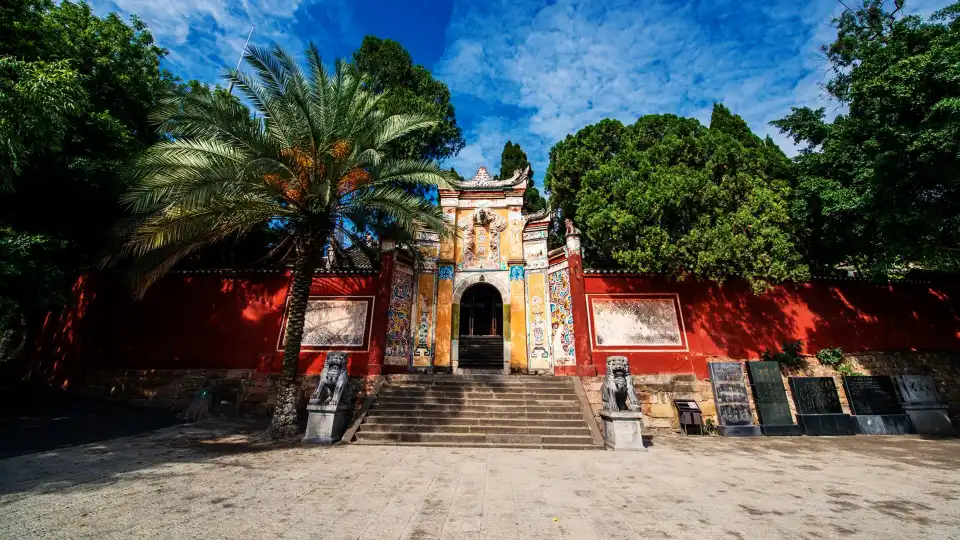
White Emperor City Qutang Gorge Scenic Spot(Ziyangcheng)
白帝城·瞿塘峡景区 based on 54 reviews
 No. 5 of Fall Viewing Attractions in Chongqing
Open Opening hours of White Emperor City Qutang Gorge Scenic Spot
White Emperor City Qutang Gorge Scenic Spot Highlights: Must-See Features and Attractions
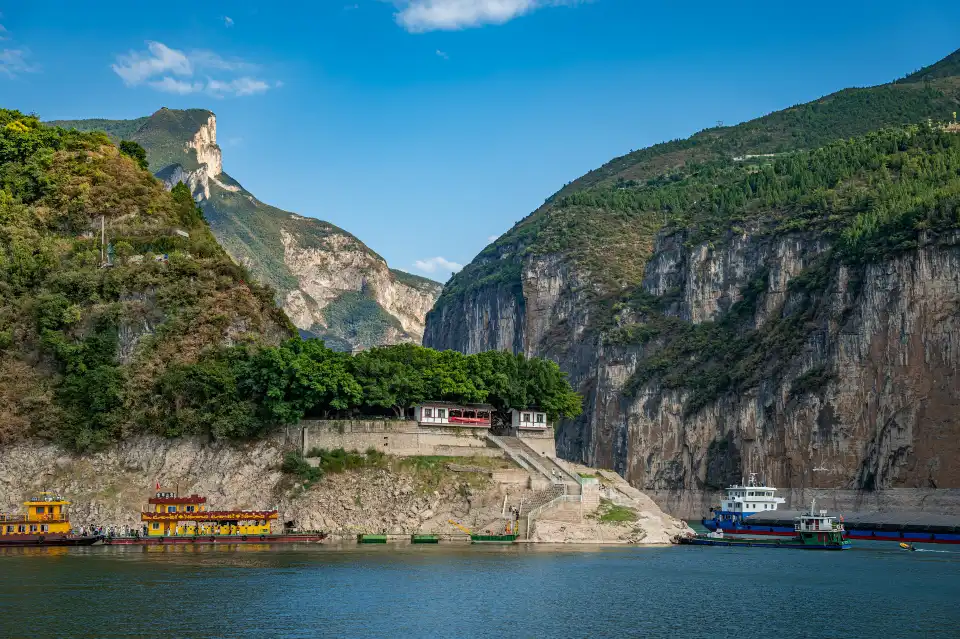
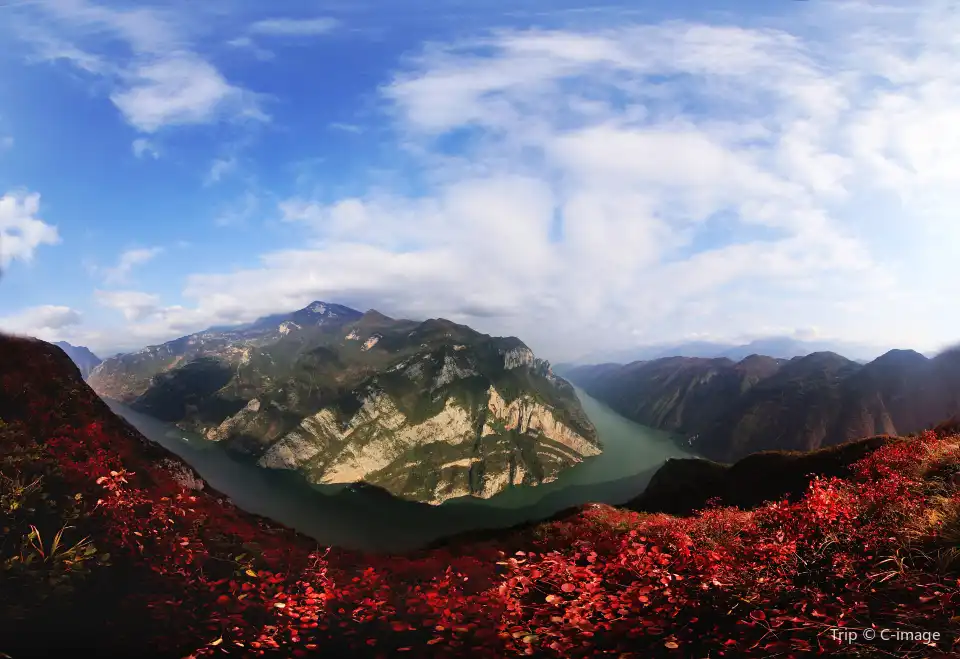
White Emperor City Qutang Gorge Scenic Spot is located by the river in Fengjie County, Chongqing, at the western entrance of the Yangtze River's Three Gorges. It consists of two parts: White Emperor City and Qutang Gorge. A historic island city surrounded by water meets a majestic and precipitous gorge gateway, where natural landscapes, Three Kingdoms relics, and millennia of poetry converge. When cruising through the Three Gorges, the gorge's panoramic scroll often begins unfolding here.
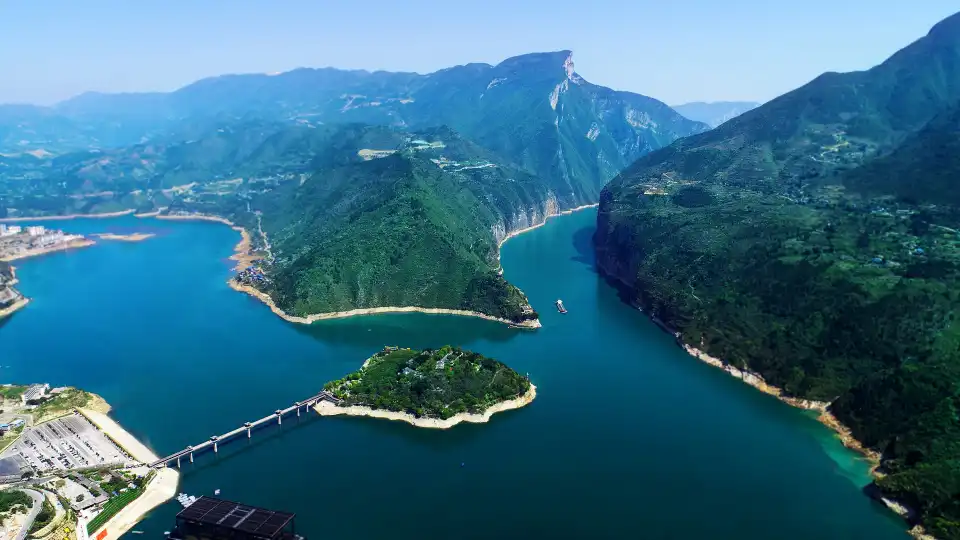
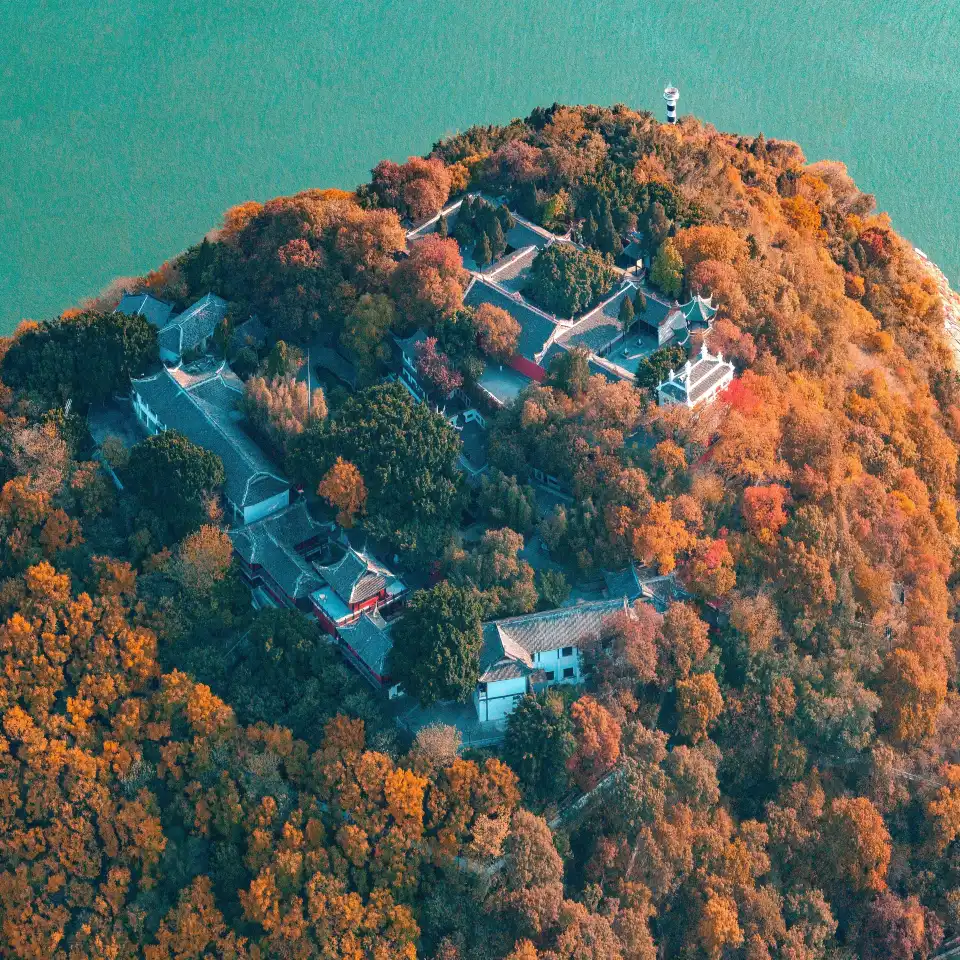
White Emperor City, originally named White Emperor City Qutang Gorge Scenic Spot, was built by Gongsun Shu in the late Western Han Dynasty as a fortified city, where he proclaimed himself the "White Emperor," a name that has endured to this day. During the Three Kingdoms period, Liu Bei retreated here after his failed eastern campaign and entrusted his son to Zhuge Liang on his deathbed. The colorful sculptures in the Entrusting the Orphan Hall at the White Emperor Temple recreate this historical episode. Interestingly, while the temple's name remains unchanged, it now enshrines Liu Bei and Zhuge Liang, who were honored during the Ming Dynasty. The Mingliang Hall, Wuhou Shrine, and Star-Gazing Pavilion are built along the mountainside, while the eastern and western stele forests display inscriptions from various dynasties, worth a slow-paced appreciation. The site is also renowned as the "City of Poetry": Li Bai, pardoned and returning east, penned the timeless line "Leaving at dawn the White Emperor crowned with cloud"; Du Fu, residing in Kuizhou for nearly two years, left behind over 400 poems; and Liu Yuxi composed "Bamboo Branch Songs" while serving as the governor of Kuizhou. After the Three Gorges Reservoir was filled, the rising river level turned White Emperor Mountain into an isolated island in the high gorge's flat lake, accessible only via a long covered bridge.
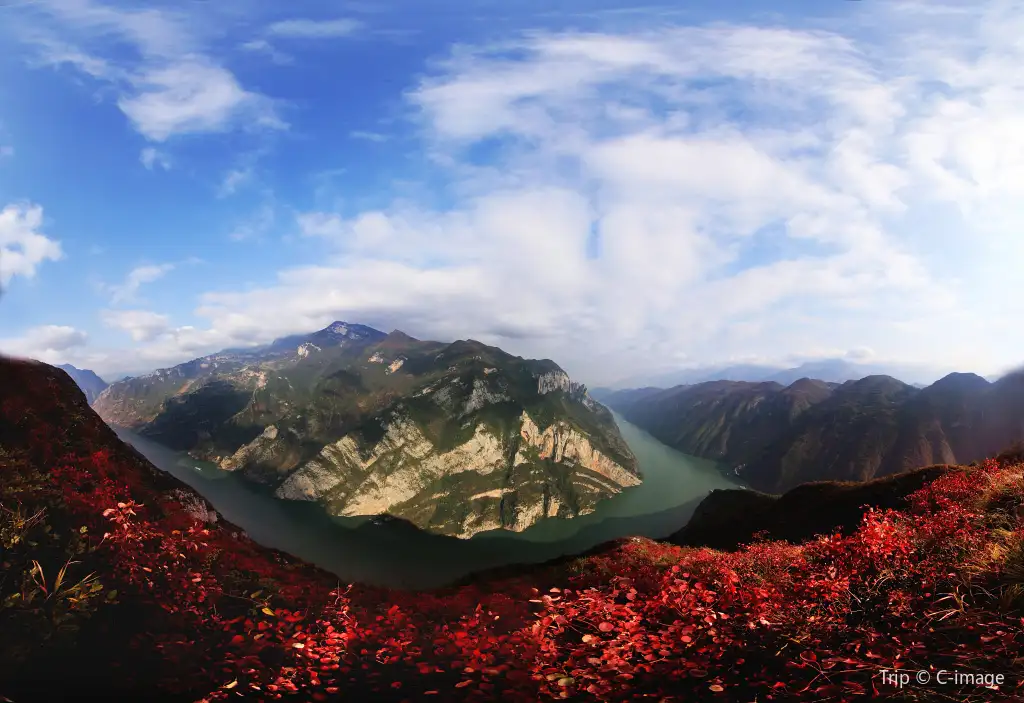
The Qutang Gorge stretches approx. 8 km in total. Though not the longest among the Three Gorges, it is renowned for its majestic and precipitous scenery. The gorge entrance, called Kuimen or Qutang Pass, features the sheer cliffs of Chijia Mountain and Baiyan Mountain standing opposite each other, abruptly narrowing the river. Here, the Yangtze forces its way through the pass, which has served as the vital waterway to and from Sichuan since ancient times. It also appears on the back of the fifth series CNY 10 banknote. While sailing through the gorge, visitors can spot the hanging coffins at Wind Box Gorge high on the cliffs, the orderly arranged Meng Liang's Ladder holes on Baiyan Mountain's precipice, and numerous cliff inscriptions.
When visiting, consider first walking across the covered bridge to the island to explore the Tuogu Hall, stele forest, and Star Observation Pavilion, then head to the Kuimen viewing platform behind Baidi Temple—directly facing Kuimen, it offers the same perspective as depicted on the back of the CNY 10 banknote. Matching a bill with the actual view for photos has become a classic activity. To truly experience the canyon's narrowness and the river's rush, take a boat through Qutang Gorge—looking back at the cliffs from the water is far more awe-inspiring than viewing from the shore.

Other visitors' reviews of White Emperor City Qutang Gorge Scenic Spot
Show More ReviewsIt's great in every way. The only starting point for the Three Gorges Summit hike is Baidi City, and the scenery is beautiful. Food and drinks on the mountain cost 10 yuan per serving. There are many steep uphill sections, and the hike is about 10 kilometers and takes about 6 hours. After the hike, there are local private cars available for 30 yuan per person to take you down the mountain from the high-speed rail station or other places.