





 4.8/5
4.8/5 M2f***ro
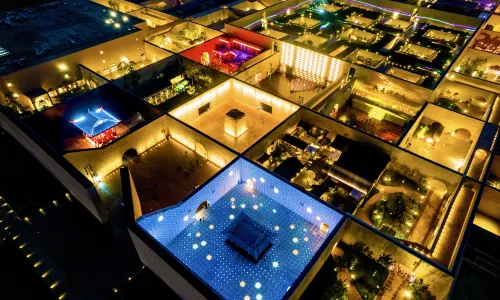
Today's visit to "Only Henan: A City of Theatrical Fantasy" deeply moved me. In the grand narrative of *The Railway Station Theater*, I witnessed a poignant and intense brotherly bond—Li Shiyi, the elder brother of Li Shiba, harboring an almost tragic tolerance and boundless love for his brother. The horrors of the 1942 Henan famine were reenacted on stage, the desperate scene of starving people scrambling for food was suffocating. When Li Shiyi, desperately seeking some life-saving seeds from his brother, the stationmaster, learned that the price would be his brother's life, his world crumbled instantly. Ultimately, Li Shiba opened the granary to distribute the grain, sacrificing himself in the process. Li Shiyi's madness and breakdown upon learning all this vividly portrayed the struggle of humanity under extreme circumstances. The smaller theater production *Wheat, Oh Wheat* depicts the resilient landscape of the people of Henan, who have depended on the land for thousands of years. Those simple and hardworking farmers, dedicating their lives to the wheat fields, saw wheat not only as food but also as their roots and soul. With the southward advance of the Jin army at the end of the Northern Song Dynasty, Henan was forever cut off from the dynastic capital, a historical turning point tinged with desolation and regret. Another short play, "Su Shi's Henan," succinctly portrays the tumultuous life of the literary giant Su Shi in just thirty minutes. From his initial fame through the imperial examinations, to his repeated demotions and fluctuating fortunes, until his eventual pardon but failure to return to the capital Bianjing, where he died and was buried in Henan, his poetry is filled with a magnanimous outlook on life and an optimistic view of hardship. Yet, isn't this also a kind of spiritual transcendence under the pressure of reality? Behind that "forced magnanimity" lies a profound undercurrent of unfulfilled ambition throughout his life. This trip was not merely a theatrical experience, but a profound dialogue with the land, history, and the depths of human nature.
 4.4/5
4.4/5 彤彤公主的大保镖
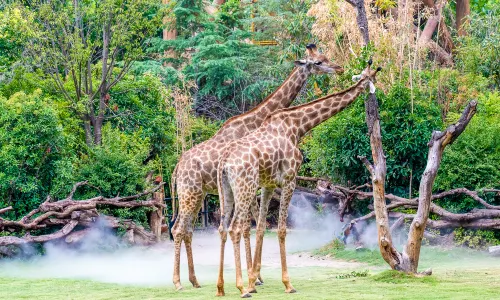
It's really good, one of the better ones in the province. It's like a zoo and amusement park complex. There weren't many people on the weekdays, so there was no need to queue. However, there aren't many animals at the moment, and the rides seem a bit noisy. I wonder if they'll disturb the animals?
 4.8/5
4.8/5 M52***87
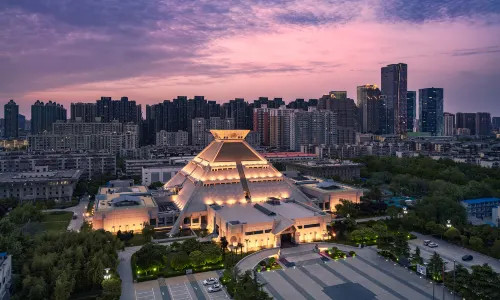
A poem by Emperor Xuanzong of Tang, included in the "Three Hundred Tang Poems," is a testament to his virtue and wisdom. "What was the Master like? He toiled for generations. The land is still the town of Zou, his residence the palace of the King of Lu. He lamented the phoenix's fate, grieved the unicorn's decline, and lamented the impoverished path of the Way. Now, seeing the offerings at the two pillars, it feels just like the dream I had." This poem by Emperor Xuanzong is quite good (he also annotated the *Classic of Filial Piety*, was not only a talented singer and dancer and the founder of the Pear Garden, but also truly multi-talented...). The special exhibition on Confucius's "Journey of Promoting the Way" at the Henan Museum features a plaque reconstructed from the Confucius Temple and Confucian Mansion, giving one the feeling of being among the "Three Confucian Sites," immediately bringing to mind Emperor Xuanzong's poem... The famous "Ten Offerings of the Shang and Zhou Dynasties" are also here, a gift from Emperor Qianlong, a treasure of the Confucius Mansion. They look very new, with exquisite patterns; it's hard to believe they date back to the Shang and Zhou periods... And there are also many unearthed bamboo slips! At least the Henan Museum itself has almost no exhibits like these… (Perhaps the south is better suited for the preservation of bamboo slips?) There are also many bronze and jade artifacts related to Confucius and the various states, showcasing Confucius's vision of a land of rites and music. There are chime bells (Confucius heard the Shao music in Qi and forgot the taste of meat for three months), jade pendants (a gentleman compares his virtue to jade), and many bronze artifacts from various states with inscriptions (several of which were exhibited in "Six Hundred Years of the State of Cai"). I also saw the small jade deer and the jade ring and cicada next to it, and the bronze pot on top, which I had seen in Zhumadian before, and now I see them again…
 44.8/5
 Anonymous user
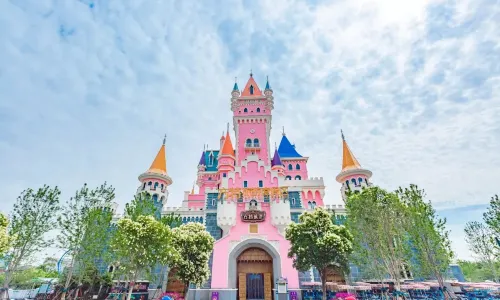
I had a great experience at Zhengzhou Fantawild Adventure. The park was at a low peak period, so there were very few people — which made the visit even more enjoyable with almost no queues. The weather was perfect, and all the rides were fun and worth trying. It was also very easy to get to the park. We bought our tickets from Trip.com, which was easy, breezy, and cheaper than purchasing on-site. Overall, it was a smooth, enjoyable, and hassle-free visit!
 54.7/5
 河洛一粟
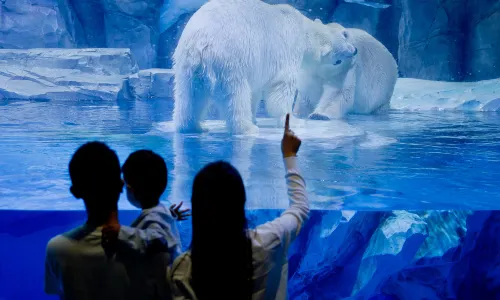
河洛一粟It's a lot of fun, great value for money, and there are shows. It gets quite crowded on weekends. The security check at the entrance isn't like what you see online, where you can't bring this or that. It's just a normal security check, very simple.
 64.4/5
 M52***13
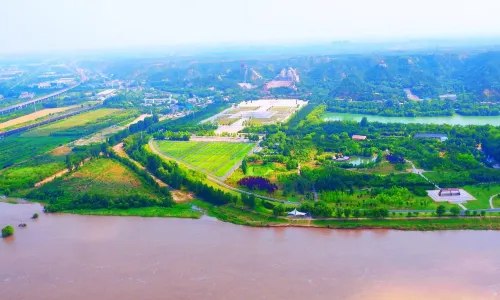
Zhengzhou's cultural park is well worth a visit, fully showcasing Henan's long history. The statues of the Yellow Emperor and the Yan Emperor are truly awe-inspiring, and the geological museum inside is incredibly educational.
 74.5/5M75***22
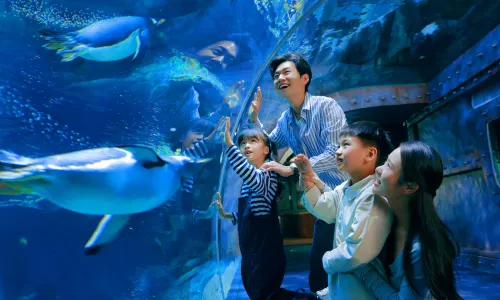
I just don't understand why the music is so loud that it almost breaks my eardrums. As soon as the child goes in, he starts clamoring to get out. I coaxed him to watch a few shows, but he covered his ears the whole time.
 84.6/5Anonymous user
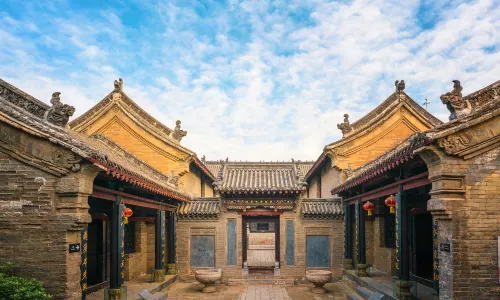
The name "Kang Baiwan" (meaning "Kang the Millionaire") originated from a jest by Empress Dowager Cixi about the Kang family, who were known as the "Living Gods of Wealth in Central China," but the name spread far and wide. The Kang Baiwan Manor, a nationally renowned manor of the wealthy, is now open to the public as a tourist attraction, showcasing a Ming and Qing dynasty manor complex. Facing the Luo River and backed by Mount Mang, the manor's feng shui is undoubtedly auspicious, and the decades-long inheritance of wealth is truly a remarkable story. The manor is not only vast but also incredibly complex. Courtyards connect to courtyards, main roads to side paths, winding and twisting, even revealing secret passages leading up the mountain and hidden treasure vaults—a truly eye-opening experience. There are also performances every day at 11 am, offering a deeper understanding of the history of the Republic of China era, which is quite moving.
 94.6/5
 hucuifang
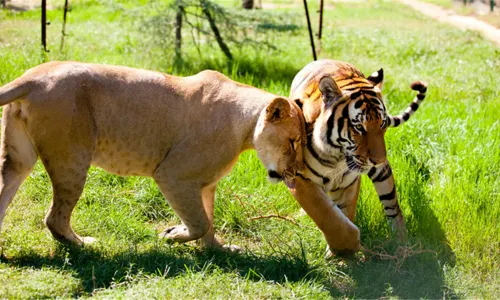
Construction was underway everywhere, with green corrugated iron sheets surrounding the area, making the experience less pleasant than usual. However, it was still worthwhile as a place to take a walk and see the animals along the way. I strongly recommend going after 2 PM; I went around 12 PM, and the animals were all taking their afternoon nap.
 Featured in 2026 China 100 - Night Attractions
