Japan Shinkansen guide: routes and tickets
Detailed line, hub and train type, from Hokkaido to Kagoshima

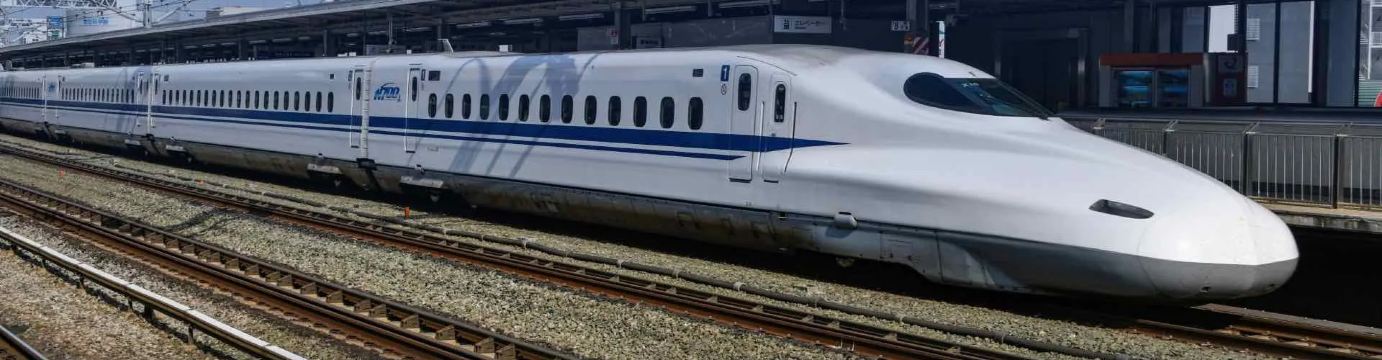
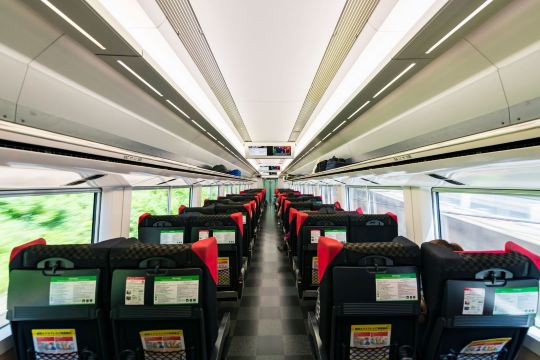
Understanding the Japan Shinkansen network and route map
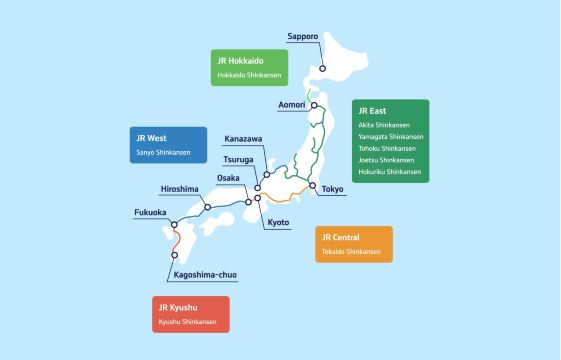
Japan's Shinkansen network is easier to understand if you think of it as one main north-south backbone with several regional branches. The busiest corridor runs from Tokyo through Kyoto and Osaka to western Japan and Kyushu, while other lines extend north from Tokyo toward Tohoku and Hokkaido or branch toward the Japanese Alps and Sea of Japan coast. Every line is standard gauge, fully grade-separated and runs to the minute. The table below shows the popular routes, key hubs and express services on each line, so you can match a line to your itinerary at a glance.
Shinkansen Line | Popular routes | Key hubs | Key express trains |
|---|---|---|---|
Tokaido Shinkansen | • Tokyo → Kyoto • Tokyo → Shin-Osaka • Nagoya → Kyoto | • Tokyo • Nagoya • Kyoto • Shin-Osaka | • Nozomi • Hikari • Kodama |
Sanyo Shinkansen | • Shin-Osaka → Hiroshima • Shin-Osaka → Hakata • Hiroshima → Hakata | • Shin-Osaka • Hiroshima • Hakata | • Nozomi • Mizuho • Sakura • Kodama |
Tohoku Shinkansen | • Tokyo → Sendai • Tokyo → Morioka • Tokyo → Shin-Aomori | • Tokyo • Sendai • Morioka | • Hayabusa • Yamabiko • Nasuno |
Hokuriku Shinkansen | • Tokyo → Nagano • Tokyo → Kanazawa • Tokyo → Tsuruga | • Nagano • Toyama • Kanazawa / Tsuruga | • Kagayaki • Hakutaka • Asama |
Kyushu Shinkansen | • Hakata → Kumamoto • Hakata → Kagoshima-Chuo • Kumamoto → Kagoshima-Chuo | • Hakata • Kumamoto • Kagoshima-Chuo | • Mizuho • Sakura • Tsubame |
Hokkaido Shinkansen | • Shin-Aomori → Shin-Hakodate-Hokuto • Tokyo → Shin-Hakodate-Hokuto | • Shin-Aomori • Shin-Hakodate-Hokuto | • Hayabusa • Hayate |
Joetsu Shinkansen | • Tokyo → Echigo-Yuzawa • Tokyo → Niigata | • Echigo-Yuzawa • Gala-Yuzawa (winter) • Niigata | • Toki • Tanigawa |
Yamagata Shinkansen (Mini) | • Tokyo → Yamagata • Tokyo → Shinjo | • Fukushima • Yamagata • Shinjo | • Tsubasa |
Akita Shinkansen (Mini) | • Tokyo → Kakunodate • Tokyo → Akita | • Morioka • Kakunodate • Akita | • Komachi |
The high-speed trunk lines: Tokaido, Sanyo, Kyushu, and Tohoku
Regional connectors and mini-Shinkansen extensions
Several other lines make the Shinkansen useful far beyond Japan's Golden Route.
Major Shinkansen station hubs: Navigating Tokyo, Kyoto, and Osaka
Knowing the line is only half the job. In large cities, the Shinkansen train station may not be the station name you expect, and choosing the right hub can save time on local transfers.
Tokyo Shinkansen station hubs: Tokyo Station vs. Shinagawa
For most visitors, Tokyo Station is the city's main Shinkansen hub. From here, trains run west toward Nagoya, Kyoto, and Shin-Osaka and north toward destinations including Sendai, Niigata, Nagano, Kanazawa, Akita, and Hokkaido. JR East's current timetable lists Tokaido-Sanyo, Tohoku-Hokkaido, Akita, Yamagata, Joetsu, and Hokuriku Shinkansen services at Tokyo Station.
Kansai Shinkansen gateways: Kyoto and Shin-Osaka stations
Inside the station, follow the clearly marked signs for the Shinkansen Central Gate or other Shinkansen transfer gates. If you are transferring from a local JR service, you may be able to move directly into the Shinkansen area rather than exiting the entire station.
If your hotel is around Umeda, you will usually need to continue from Shin-Osaka to Osaka Station by a conventional JR train. The ride itself is short, but factor the transfer into your itinerary.
Choosing the right bullet train and booking strategy
A Shinkansen line can have several train categories using the same tracks. The difference is mainly how many stations they stop at, which affects journey time and sometimes ticket or rail-pass eligibility.
Express vs. local train categories: Speed, stops, and frequency
There are also two practical rules worth knowing before you travel:
During designated peak periods around Golden Week, Obon, and New Year, Nozomi operates with reserved seating only, so booking ahead is recommended if you want to travel at a specific time.
On the Tokaido, Sanyo, Kyushu, and Nishi-Kyushu Shinkansen, luggage with total dimensions between 161 cm and 250 cm requires a reservation for a seat with an oversized baggage area. The reservation itself does not carry an additional baggage fee, but these seats are limited.
Individual tickets vs. regional passes for network travel
A rail pass is not automatically cheaper simply because you are visiting Japan.
For a standard first-time itinerary such as Tokyo → Kyoto → Osaka, individual Shinkansen tickets are often the simplest option because you can book the exact train and seat you want without paying for travel you will not use.
Regional passes become more attractive when your itinerary concentrates several rail journeys within one part of Japan. For example, travelers exploring Tohoku, Kyushu, Kansai, or the Hokuriku region may find a regional JR pass better suited to their route than a nationwide pass.
Before purchasing any pass, check its validity area, travel period, eligible train types, and reservation rules against your actual itinerary. The best option depends on where you are going, not simply how many days you are in Japan.
Reserve your Japan Shinkansen tickets on Trip.com
Seat preferences can also make a difference on longer journeys. Depending on the train and availability, you can request window or aisle seats, adjacent seats, Mt. Fuji-view seats, or seats near oversized luggage storage. For Tokyo-to-Osaka journeys, Trip.com recommends the right side of the train for Mt. Fuji views, subject to the specific service and direction.
For popular travel periods, booking ahead is particularly useful if you want a specific departure, seats together, or special luggage seating.






- Choosing the right bullet train and booking strategy
- Reserve your Japan Shinkansen tickets on Trip.com
Related travel guide
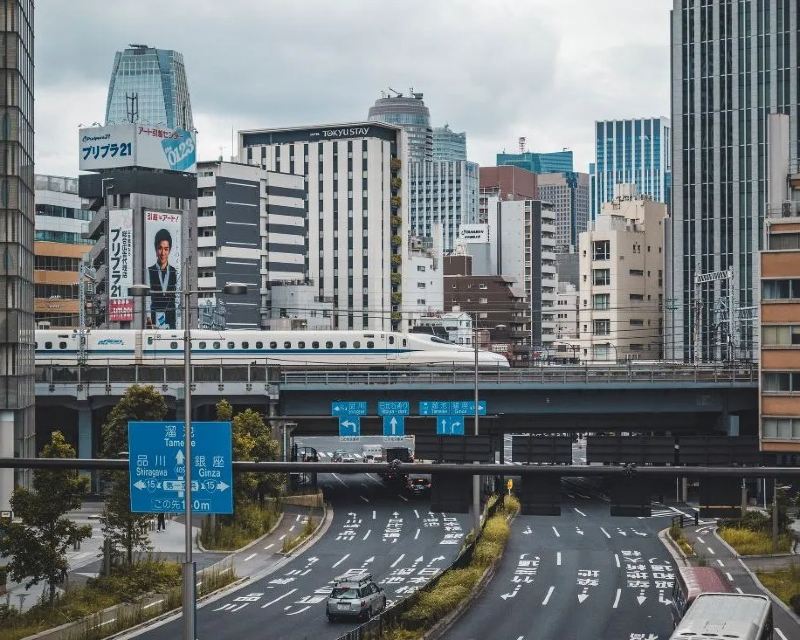 Updated: September 23, 2026
Shinkansen onboard experience guide
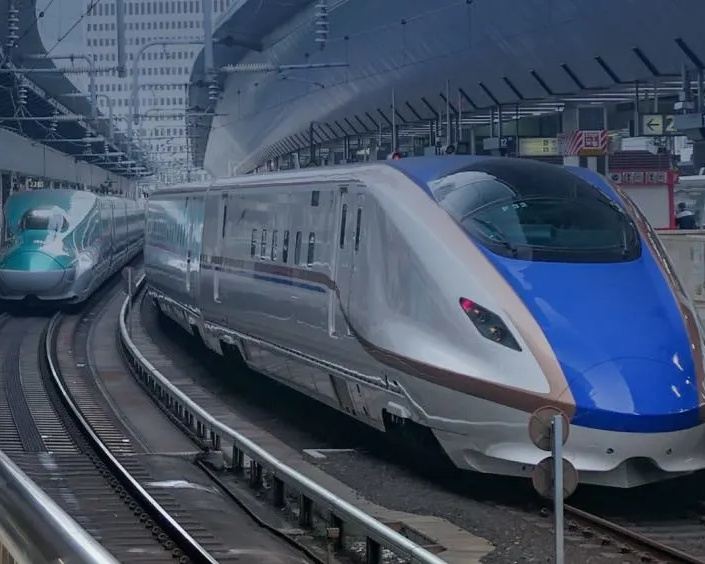 Updated: September 23, 2026
Tokyo to Kyoto and Osaka by Shinkansen
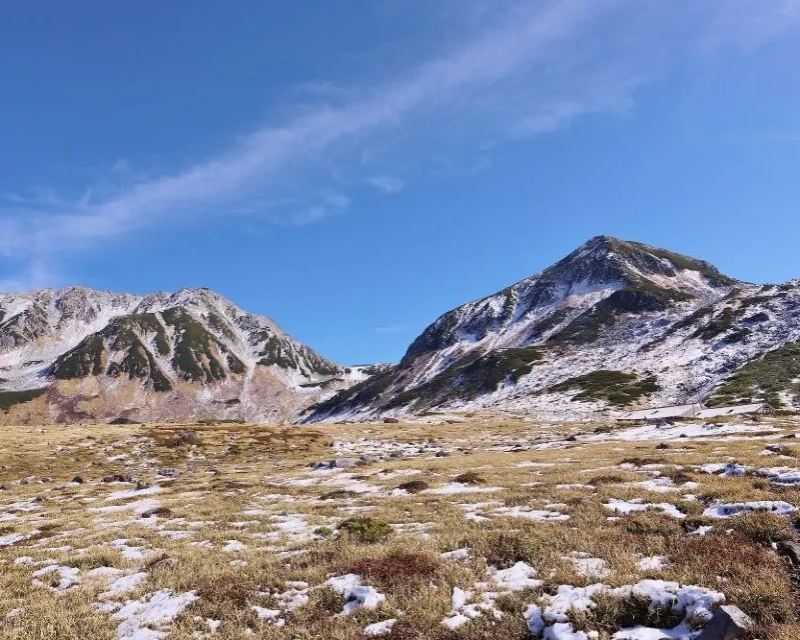 Updated: September 23, 2026
Hokuriku Shinkansen route and travel guide
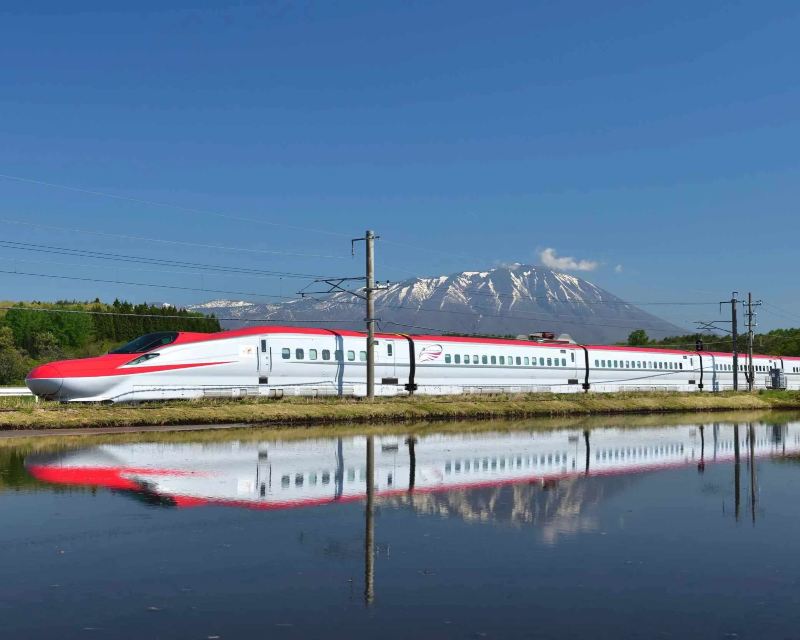 Updated: September 23, 2026
JR Pass vs. Shinkansen tickets
 Updated: September 15, 2026
JR Kyushu Pass Guide: Explore the Island
 Updated: September 2, 2026
Hokuriku Pass: Beyond The Golden Route
 Updated: September 2, 2026
JR West Pass Guide: Discover Western Japan
 Updated: September 2, 2026
JR Tokyo Wide Pass: Escape Beyond Tokyo


- China visa-free travel guideUpdated: September 30, 2026
- Shanghai to Hangzhou high-speed bullet train guideUpdated: September 30, 2026
- Shanghai visa-free rail itinerariesUpdated: September 30, 2026
- China visa-free travel guideUpdated: September 30, 2026
- Yunnan rail guide: From Kunming to Dali and Shangri-LaUpdated: September 30, 2026
- Hong Kong to Mainland China transit guideUpdated: September 30, 2026
- Chongqing to Zhangjiajie high-speed train guideUpdated: September 30, 2026
- Beijing to Shanghai high-speed bullet train guideUpdated: September 30, 2026
- Shinkansen onboard experience guideUpdated: September 23, 2026
- Tokyo to Kyoto and Osaka by ShinkansenUpdated: September 23, 2026
- Hokuriku Shinkansen route and travel guideUpdated: September 23, 2026
- JR Pass vs. Shinkansen ticketsUpdated: September 23, 2026