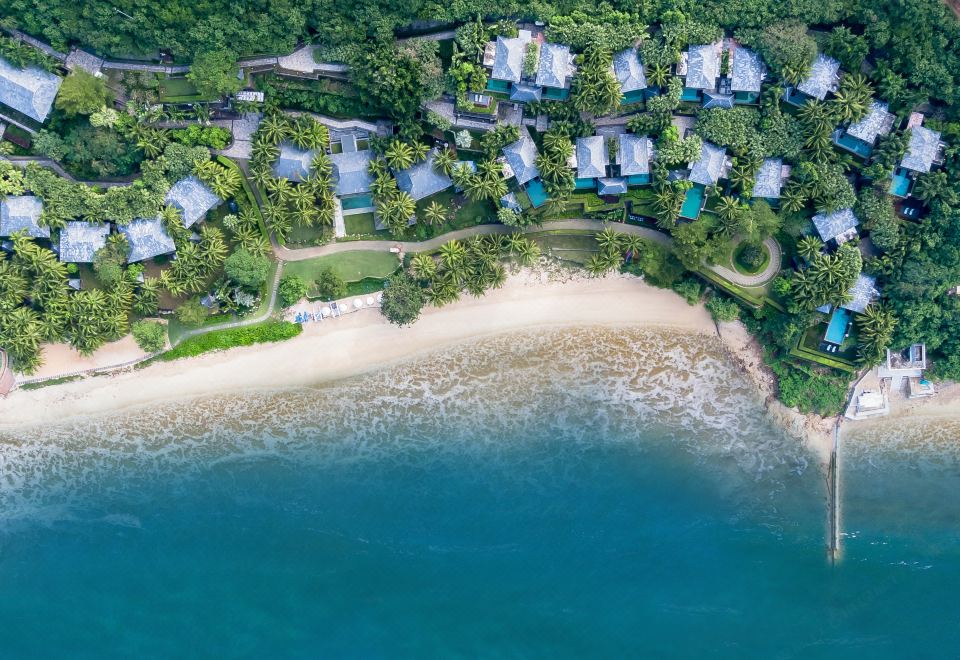
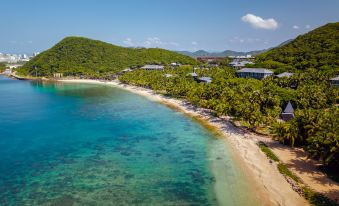
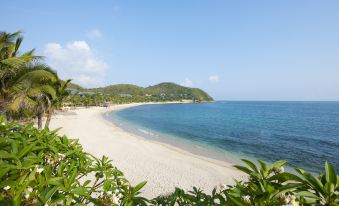
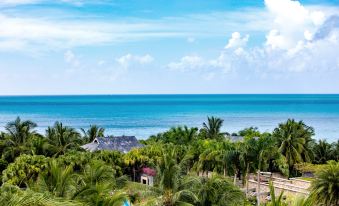
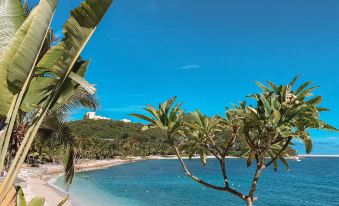
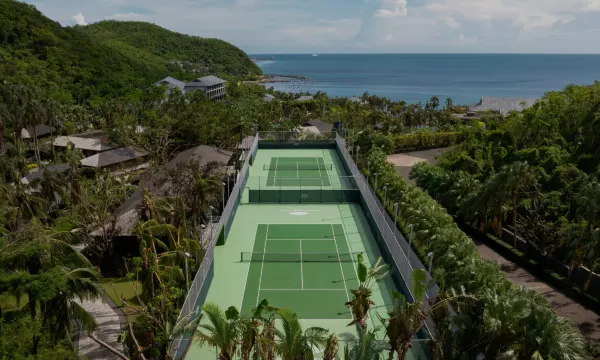
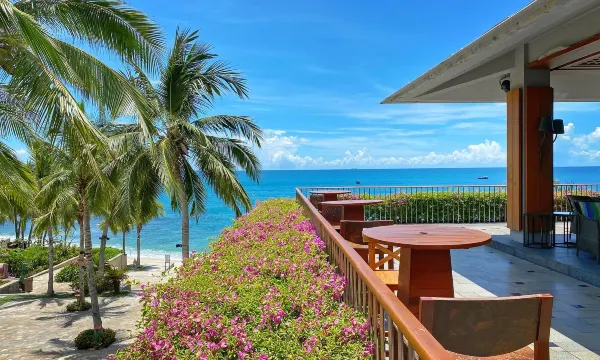
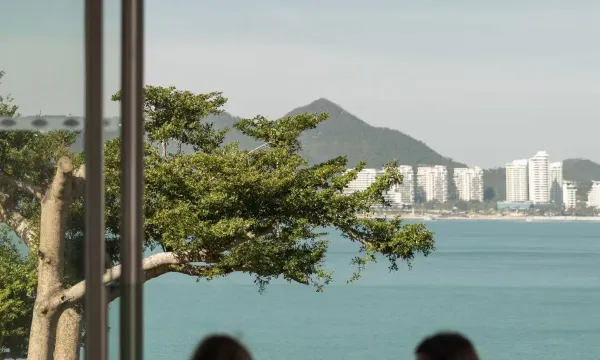
1. The hotel is nestled in Sanya's Dadonghai Coral Bay, boasting an exclusive 1.2-kilometer private coastline – a rare 'one bay, one hotel' layout in Sanya. Reaching it requires traversing a 1-kilometer coastal road. This 'hidden bay' setting ensures privacy but means fewer commercial amenities compared to Yalong Bay or Haitang Bay.
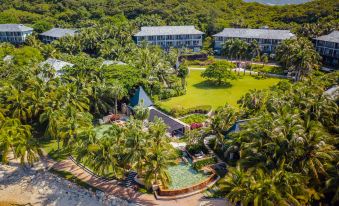
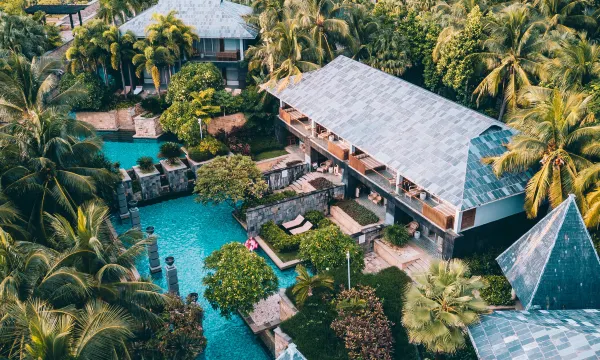
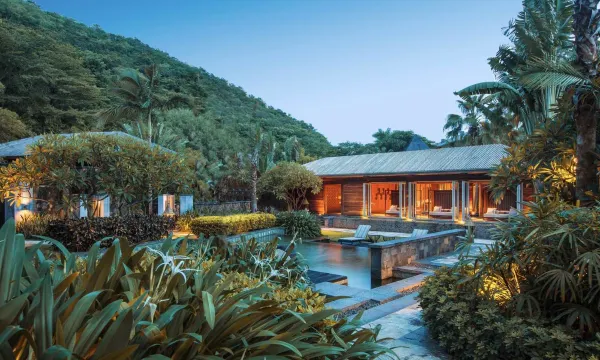
2. Designed collaboratively by Bill Bensley and LTW, the hotel opened in 2009 and was renovated in 2018. Its standout feature is the classic Indonesian-style roof combined with a Southeast Asian design aesthetic, subtly infused with Chinese elements. The overall architecture is low-rise, courtyard-style, with a low room density and high vegetation coverage. The hotel has an elongated layout, so rooms closest to the beach are probably no more than 50 meters away, and even the furthest should be within 200 meters. This configuration is unique among Sanya's resort hotels.
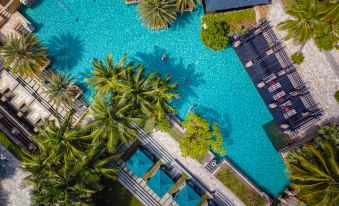
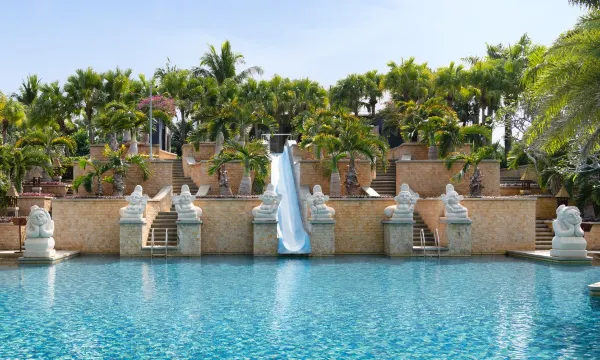
3. Unlike The Edition or Capella with their grand, expansive lobbies, or Park Hyatt's art and elegance, and certainly without the strong family focus of the Renaissance Crown, the first impression of the Mandarin Oriental Sanya is its distinct island resort vibe. Strolling along the palm-lined path, mere tens of meters from the beach, the pools, the ocean, the low-slung, sloping rooms, and the stone sculptures and landscaping all blend seamlessly, sometimes creating the illusion of being in Bali. This public area design, leveraging the hotel's prime location, remains incredibly impressive even today, 17 years later.
4. Before booking, I had heard that the rooms were quite dated, so my expectations were initially low. That's why I only booked a basic room (though I received an upgrade). My personal experience was much better than anticipated; the room came standard with a Dyson hairdryer, five or six types of complimentary beverages refreshed daily, and glass bottled Evian water – considered top-tier in Sanya.
5. The room's hardware maintenance was also acceptable; apart from a few loose power outlets, other signs of wear were not very obvious. Of course, the extensive use of wood in the Southeast Asian-style decor, coupled with its nearly decade-old age, might not appeal to many younger travelers.
6. During breakfast, there was a wait for tables, and it only lasted until 11 am. The restaurant space is small, and waiting outside with little shade in Sanya's summer heat was agonizing. On a positive note, the ratio of Chinese to Western food was about 6:4 (many hotels, to cut costs and speed up preparation, offer more Western options), but the overall variety was limited. The quality was stable but not exceptional, and the so-called 'lobster wontons' had hardly any visible lobster.
7. I would give a negative review for all the hotel's main meals and afternoon tea. The biggest issue is that the quality doesn't match the price, nor does it reflect culinary skill or understanding. Many ingredients for nearly 1,000 RMB per person were still chilled or frozen, and the preparation was crude. I'm baffled as to why a few lobsters, oysters, scallops, and abalone, simply boiled and grilled, can sell for 1884 RMB on review sites and receive so many positive comments. The afternoon tea was even more ridiculous.
8. The Mandarin Oriental brand's ethos and positioning are about delivering legendary service, anticipating guest needs before they speak, rather than standardized, formulaic procedures. It emphasizes the warmth of human connection and service over the cold efficiency of technology, empowering staff to create 'surprise moments' for guests.
However, I believe this Mandarin Oriental fell short. Our Tesla, due to passing through a military zone, wasn't allowed direct hotel access, requiring us to wait in the sun for over ten minutes for a shuttle. No one proactively contacted us or informed us, and there was no birthday surprise (although the hotel manager later offered a satisfactory compensation plan). While some staff members greeted us routinely, hardly anyone smiled or showed genuine warmth. In truth, Sanya's overall service quality isn't particularly high (regardless of how much you spend). In an era where 'butler service' is a trend in Sanya, it consistently misses the core of true service. Compared to internationally renowned resort islands, there's much to learn. Ultimately, a hotel experience often hinges on how long its 'shortcomings' are.
9. The Mandarin Oriental Sanya is not perfect; there's significant room for improvement in service and dining. However, it remains a worthwhile hotel that offers many unique experiences. I gave it a 5-star rating this time due to the compensation plan and the hotel manager's efforts to address the issues.
Original TextTranslation provided by AI