Booking Information
Mount Hua(Taihua Mountain)
华山 based on 1,299 review
 2026 Asia 100 - Best Things to Do
Opening hours of Mount Hua
Mount Hua Highlights: Must-See Features and Attractions
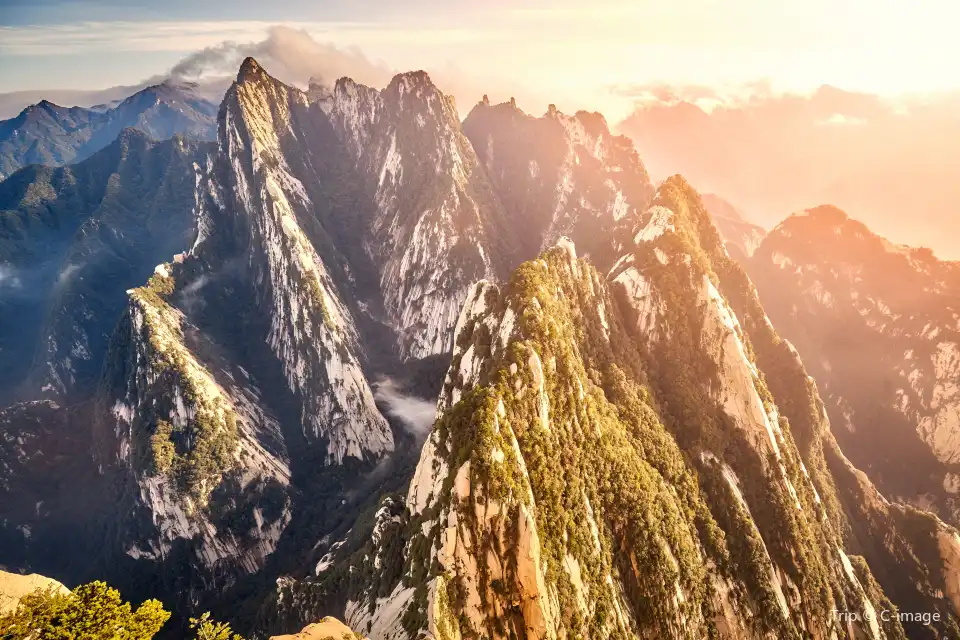
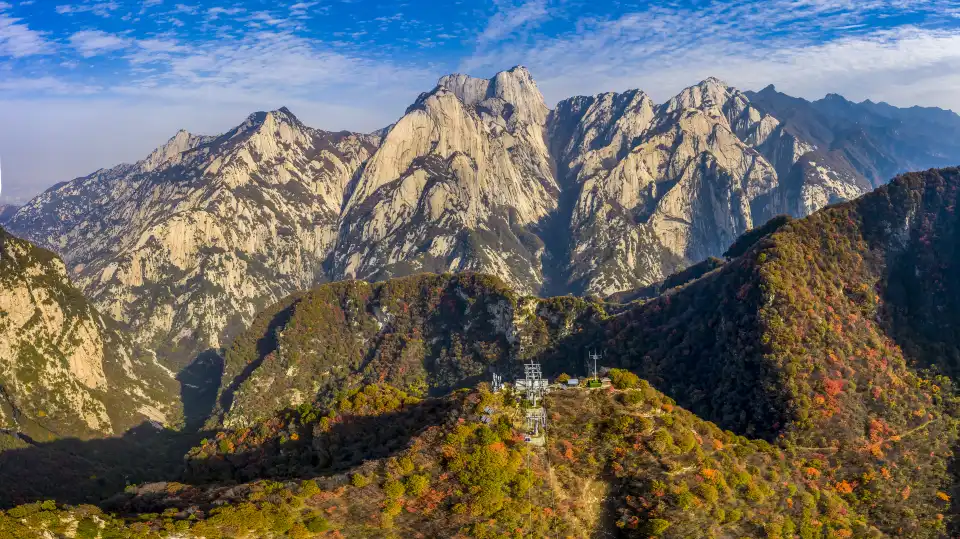
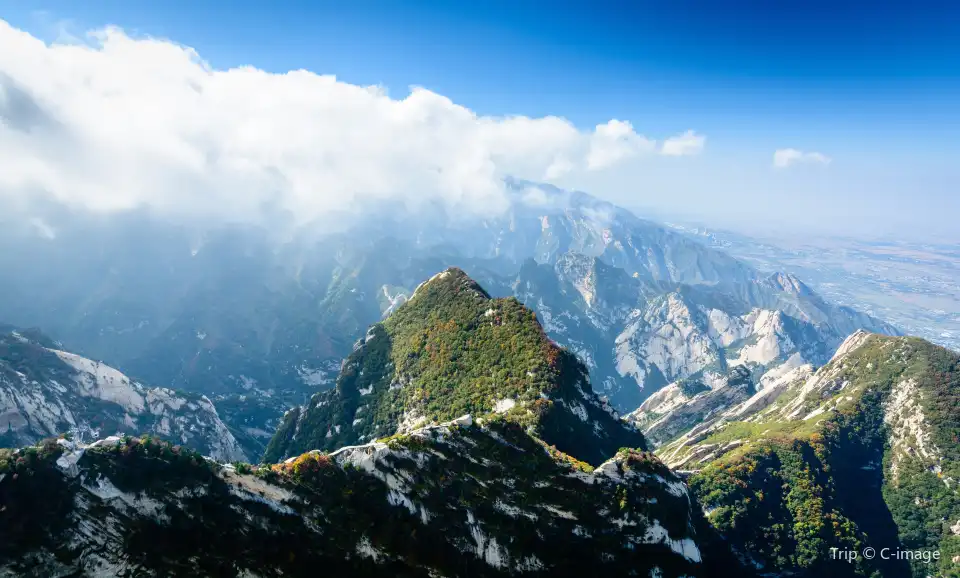
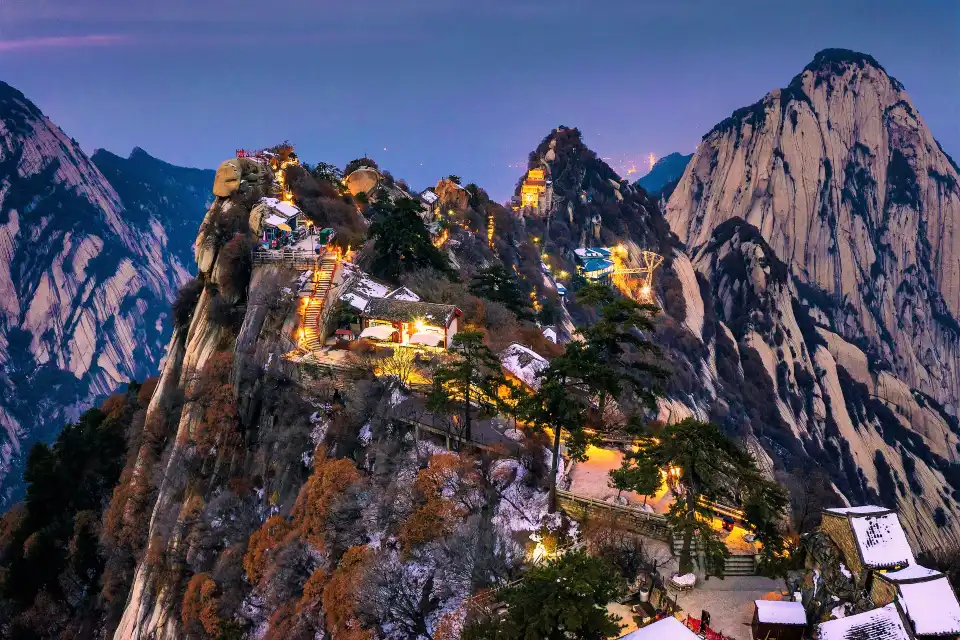
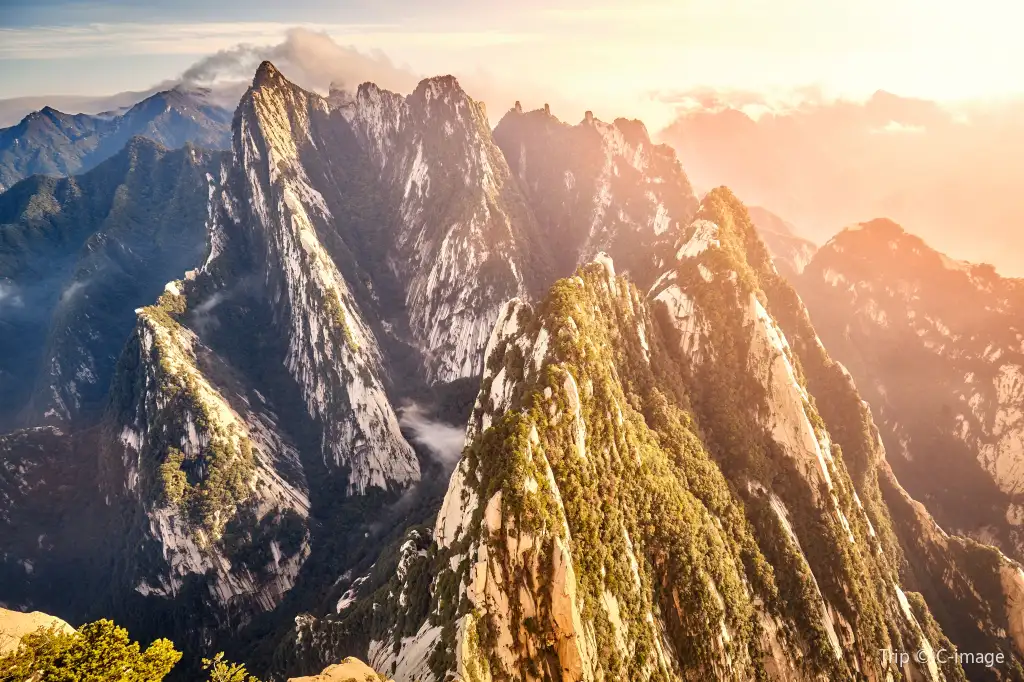
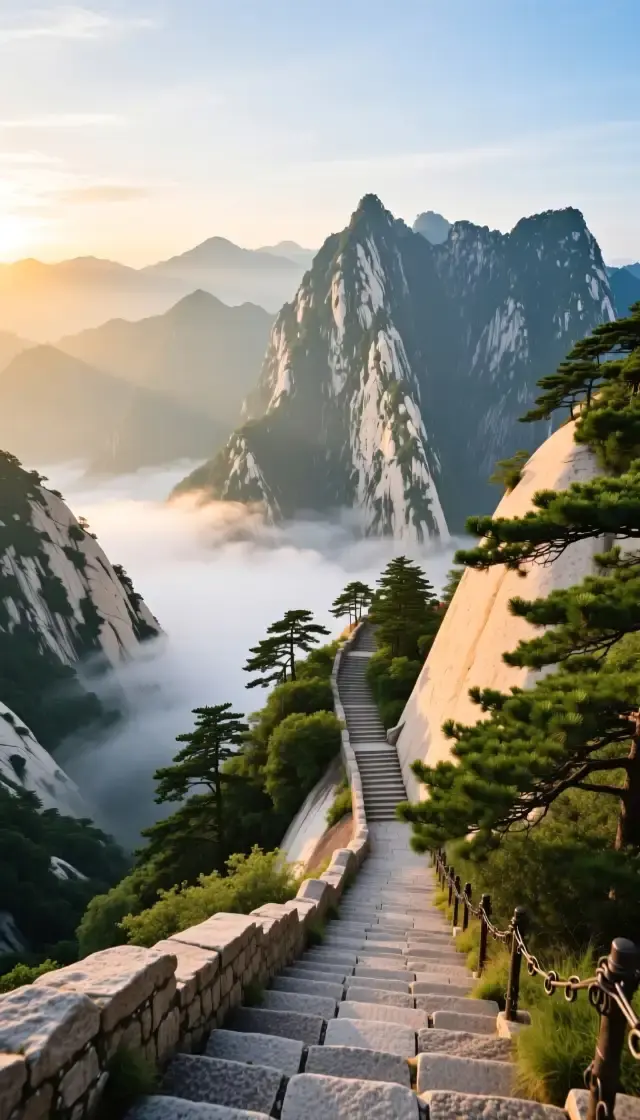
Mount Hua, known as the "Western Great Mountain" in ancient times, is one of China's Five Great Mountains. Located in Huayin, Shaanxi Province, it is also elegantly called "Taihua Mountain." The "Hua" in both "Zhonghua" and "Huaxia" originates from this mountain. "Steep and perilous" are the essence of Mount Hua's scenery, and the saying "there has always been only one path up Mount Hua" precisely describes its steepness—the Plank Road in the Sky, the Sparrowhawk Turn, the Thousand-Foot Precipice, the Hundred-Foot Gorge, the Laojun Plow Ditch, and other perilous sights leave every visitor awestruck. The Mount Hua attraction covers a vast area, including the main peak attraction, the Western Great Mountain Temple attraction, and the Xianyu attraction, among which the main peak attraction is the core, encompassing the five main peaks—east, south, west, north, and center—as well as the classic "Mount Hua Valley" climbing trail.
The five main peaks each have their own distinctive features. The East Peak, at an elevation of approx. 2,100 m, has the open and expansive Chaoyang Terrace at its summit, making it an excellent spot for watching the sunrise, and is therefore also known as Chaoyang Peak; the natural stone patterns on the cliff face along the side of the peak resemble a giant palm print—this is the Huayue Immortal Palm, listed since ancient times as one of the Eight Views of Guanzhong. The West Peak, at an elevation of approx. 2,080 m, is named Lotus Peak because the giant rock at its summit resembles a lotus flower; the Cuiyun Palace, the Axe-Split Rock, and the Self-Sacrifice Cliff are scattered across it, and the myth of Chenxiang splitting the mountain to save his mother is said to have originated here. The South Peak, at an elevation of over 2,150 m, was called the "head of Mount Hua" by the ancients; it consists of two summits—Songgui Peak and Luoyan Peak—with a sheer cliff dropping straight down on one side. The North Peak, at an elevation of approx. 1,600 m, is also known as Yuntai Peak; it stands isolated and towering with precipitous drops on all four sides, and the story of "Taking Mount Hua by Strategy" took place here; the peak features views such as the Zhenwu Hall and the Jiaogong Stone Chamber. The Central Peak lies at the center of the East, West, and South Peaks, with serene and lush vegetation; on the peak is the Jade Maiden Shrine, said to be the place where Nongyu, daughter of Duke Mu of Qin during the Spring and Autumn period, cultivated herself, hence it is also known as Jade Maiden Peak.
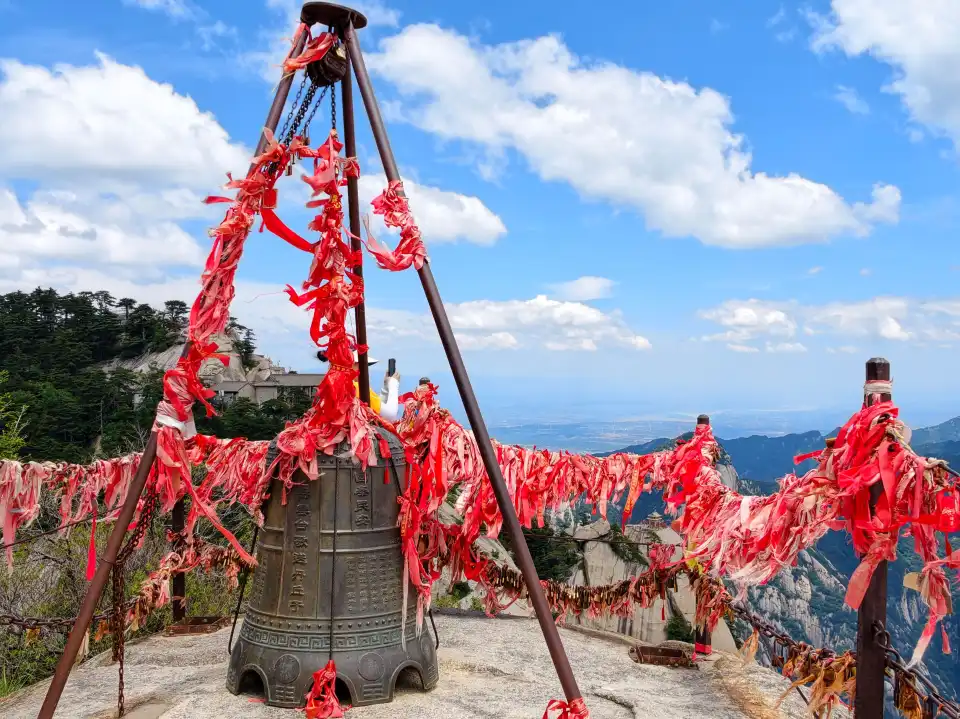
The Plank Road in the Sky is located on the mountainside east of the South Peak. It was built by the Yuan Dynasty Taoist He Zhizhen, who embedded stone stakes into the cliff face and laid wooden planks. At the end of the plank road, visitors can see Hezu Cave, where he cultivated himself. Visitors must press close to the cliff, hold the iron chains, and step on the wooden planks while moving sideways slowly—an extremely thrilling experience. The ridge of Canglong Ridge is as narrow as a blade, flanked by bottomless chasms, and walking on it makes one's heart race and vision blur. Golden Lock Pass is the vital gateway to the East, West, South, and Central peaks. Taoists believe that passing through this pass marks entry into a fairyland, and there is a folk saying: "Once past Golden Lock Pass, you enter another realm."
Mount Hua Reviews: Insider Insights and Visitor Experiences
Mount Hua Photos: Trip Moments
- 해외여행
- 시안여행
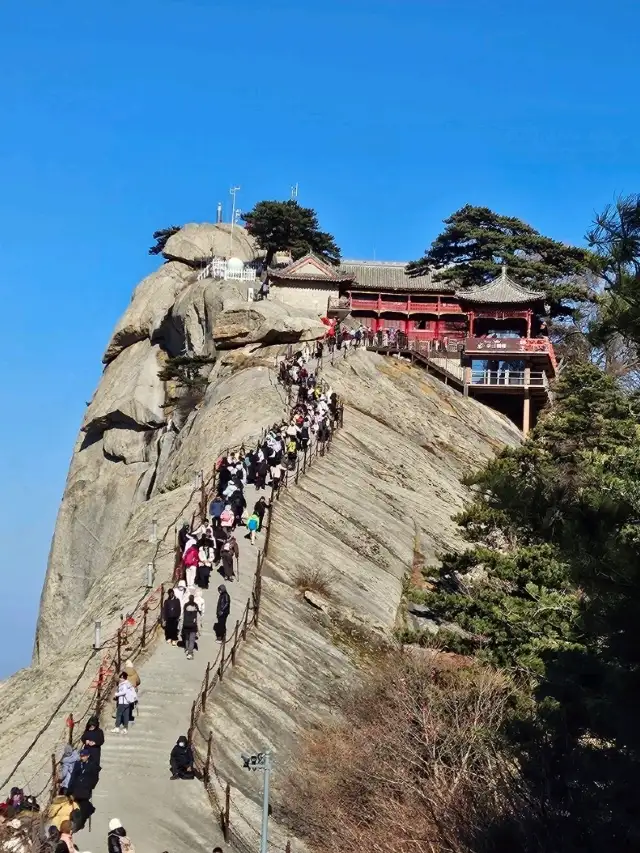
How to Easily Visit Mount Hua, One of China's Five Great MountainsI recently visited Mount Hua, one of China's Five Great Mountains. Most Korean visitors seem to travel there through package tours, but I’ve compiled this guide for those who prefer independent travel like me! How to Get to Mount Hua⛰️ 1️⃣ Xi'an North Station -> Mount Hua North Station (Photo 5) by train 🚅 (30 minutes) You can book tickets on Trip.com, and the cost is around 10,000 KRW. 2️⃣ Mount Hua North Station -> Mount Hua Scenic Area 🚌 by bus or 🚕 by taxi When you exit the station, head left to find blue buses. Although they are said to be free, the actual cost is 5 RMB per person. Alternatively, there are many taxi drivers outside the station offering rides for 10 RMB for two people. Choose whichever option is more convenient for you. 3️⃣ Shuttle bus to the West Peak Cable Car 🚌 (40 minutes) After getting off the bus, walk straight ahead until you see the ticket office (Tourist Information Center) on the right (Photo 6). Purchase your tickets there instead of from street vendors to ensure safety. Let them know whether you’re heading to the West Peak or North Peak, and you can buy both the entrance ticket and shuttle bus ticket (💰 140 RMB per person: off-season entrance fee 100 RMB, shuttle bus 40 RMB). 4️⃣ West Peak Cable Car 🚠 (Photo 7) Follow the signs after getting off the shuttle bus to find the ticket office. Purchase a one-way ticket and take the cable car. (120 RMB per person) You can buy the return ticket when you’re ready to descend. ⚠️ To reach the cable car from the shuttle bus stop, you’ll need to climb quite a few stairs. It takes about 10–15 minutes on foot, but if it’s too tiring, you can take a luge for 30 RMB per person (payable via WeChat Pay). I took the luge and reached the top in about 5 minutes. After getting off the West Peak Cable Car, it’s about a 15–20 minute walk to the West Peak. I also visited the South Peak, which is about a 30-minute walk from the West Peak. If you have time, I recommend visiting the South Peak as well! West Peak Cable Car -> West Peak -> South Peak -> West Peak Cable Car for descent I departed Xi'an North Station at 7:46 AM and returned to Xi'an North Station around 3:20 PM. I visited early in the morning and avoided waiting for the cable car. ✔️ If you visit later in the day, there may be long queues, so I recommend visiting early or planning a flexible schedule. I visited on an off-season Sunday, but keep in mind that it can be very crowded during peak season. ✅️ Be cautious as the rocky terrain can be slippery. ✅️ Gloves are essential as you’ll often need to hold onto chains while climbing. ✅️ I recommend starting your trip early in the morning when there are fewer people. I hope this guide helps you plan your visit to Mount Hua, and I highly recommend experiencing it for yourself!mimimimimimimin79
- mustknow
- chinatravelcircle
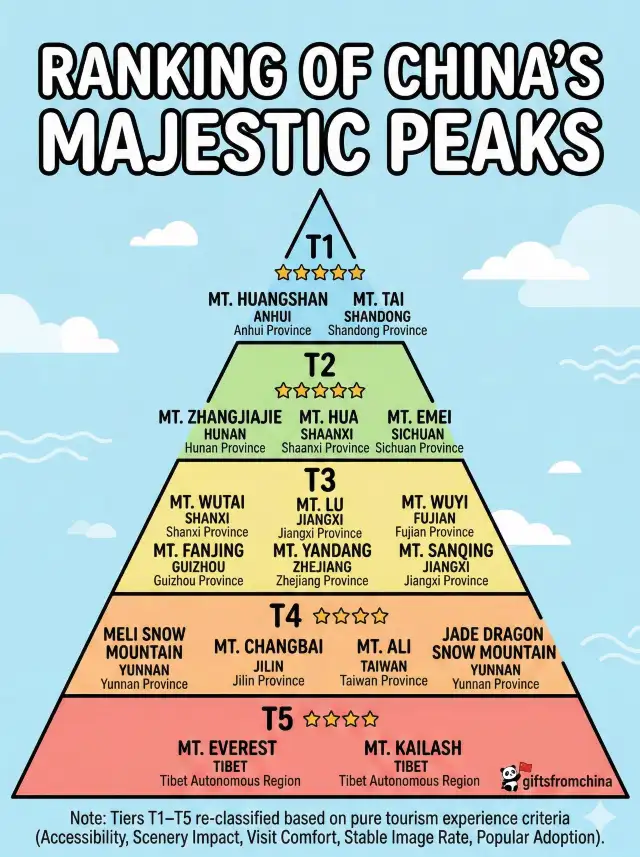
China Mountain Travel Tier List🌄China’s mountains aren’t just views — they’re full experiences Love sea of clouds and dramatic granite peaks? Head to Want a powerful sunrise hike with epic steps? Try Tarzan Dreaming of surreal stone pillars? Zhangjiajie National Forest Park feels like another planet Craving cliffside thrills? Huashan is pure adrenaline Peaceful rivers and tea mountains? Wuyi Mountain is calm and poetic Every peak, a different story. Which one matches your vibe?SinoTraveler95
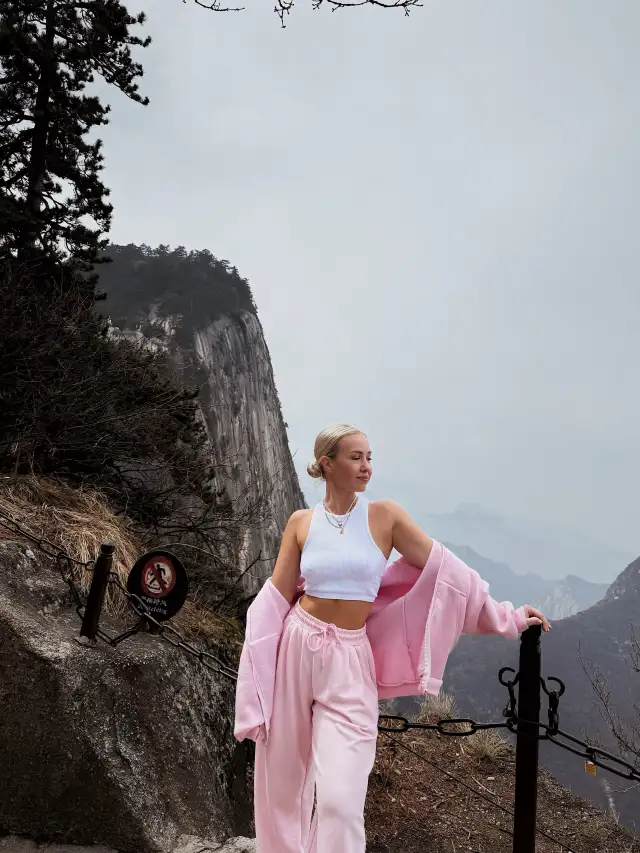 Our Trip to Mount Huashan:We booked our tour through Trip.com. The shuttle picked us up directly from our hotel, then we were taken to the buses and assigned to groups. Once there, the guide explained the key points, gave us some free time, and led us to the entrance. The guide spoke only Chinese, but we communicated perfectly using a translation app. If you're afraid of heights, the West Peak Cable Car might be a bit intimidating. It's a long ride with a steep incline, but the experience is absolutely incredible. It's chilly on the mountain itself, so it's best to bring warm clothing. You should also be prepared for a physical workout. There are so many climbs and descents that even fit people found it hard to walk the next day. Overall, the route from the West Peak to the North Peak is the best choice. The West Peak is the most scenic and impressive, and the descent to the North Peak follows a path that is just as beautiful. If you get motion sickness, you should take some medication beforehand, as the bus ride to the cable car follows a winding mountain road.Vlada.a1

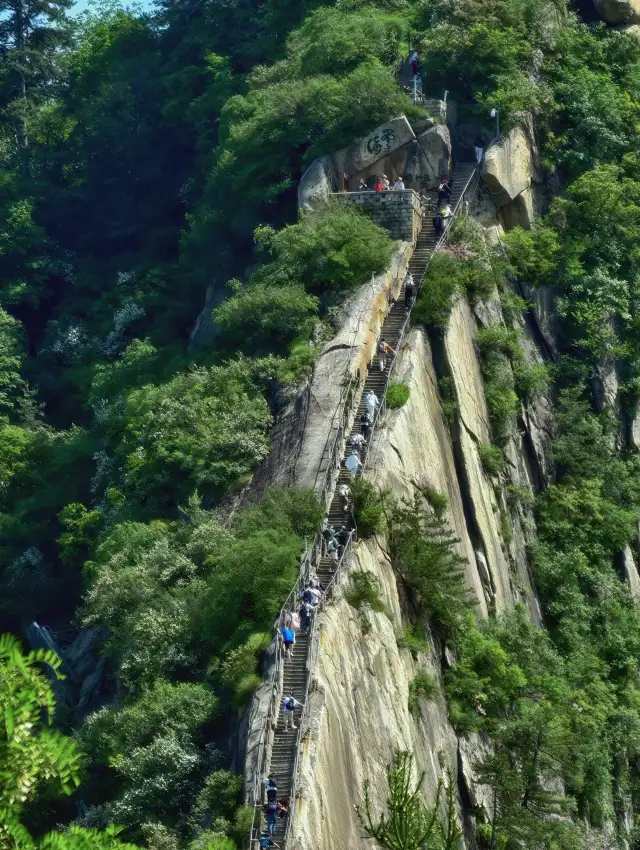 Lazy Way to Climb Mount Hua | Mount Hua North Peak Cableway, Perfect for Wealth and BlessingsTake my advice, don’t try to be a “special forces soldier” on your first Mount Hua climb. Even as a lazy person, I easily conquered Mount Hua 🤏 For my first climb, I chose the North Peak. But! It’s definitely worth it! Easy to handle 🤏 and full of good meaning~ ⛰️ Super friendly for lazy climbers 💯: ✅ The North Peak 🚠 cableway is amazing. Take a shuttle bus from the visitor center for 20 minutes to the cableway station. The cable car takes 8 minutes straight up to the North Peak. No need to hike 4 hours until you question your life. The slope is gentle, so even those afraid of heights can easily manage 🤏. Along the way, the continuous mountain forests and magnificent rivers and mountains come into view step by step. ✅ Visiting North Peak = a place to gather 💰 wealth and blessings. The North Peak viewing platform 👀 offers views of the East, South, and West Peaks. It’s like a natural giant gold ingot! Climbing the North Peak symbolizes gathering wealth and attracting fortune, full of auspicious meaning 💯. ✅ The whole trip takes 3 hours, easy and stress-free. Perfect for first-timers, those with elderly 👴 or children 👶, people with average fitness, and anyone wanting to pray for wealth and blessings while enjoying Mount Hua’s grandeur! 📷 Must-take classic photo spots: ✅ The same check-in spot as Marshal Zhang (North Peak summit) Marshal Zhang climbed Mount Hua with Chiang Kai-shek and took a commemorative photo here. Martial arts + history double buff, making it more meaningful than ordinary photo spots. ✅ Wealth Book 📕 Golden Ingot Mountain View → Maximize fortune The panoramic view is legendary, capturing the entire magnificent scenery of Mount Hua in the shape of a golden ingot. Photos holding the golden ingot are a must, full of auspicious meaning 💯! ✅ Double Fish Mouth Rock → Surplus every year Many people line up to touch the rock for blessings, symbolizing abundance every year 🐟. Even casual photos 📷 are very meaningful! ✅ Mount Hua Sword Discussion Stele → Absorb the heroic spirit How can you visit Mount Hua without taking a ⚔️ sword discussion photo? Martial arts DNA instantly awakens, and any pose 📸 feels full of martial arts atmosphere! This Mount Hua Sword Discussion Stele is the only original stone stele personally inscribed by Mr. Jin Yong! ✅ North Peak Altitude Stele → One stele to mark the mighty peak The 1614.9-meter marker makes the summit ceremony feel complete 💯. North Peak check-in success! ✅ Statue of the Eight Warriors’ Clever Capture of Mount Hua → One statue to commemorate the heroic feat Standing at the lower station of the North Peak cableway, a landmark of red tourism. ⚠️ Tips: ✅ Bring your ID card! ✅ Prepare for sun protection! ✅ Wear comfortable, non-slip clothes! ✅ Don’t look at the scenery while walking, and don’t walk while looking at the scenery! You really don’t have to force yourself to climb the entire peak of Mount Hua. The North Peak route is comfortable, beautiful, and full of good meaning. First Mount Hua climb, perfectly done ✌️~GRAYSON MCLAUGHLIN2

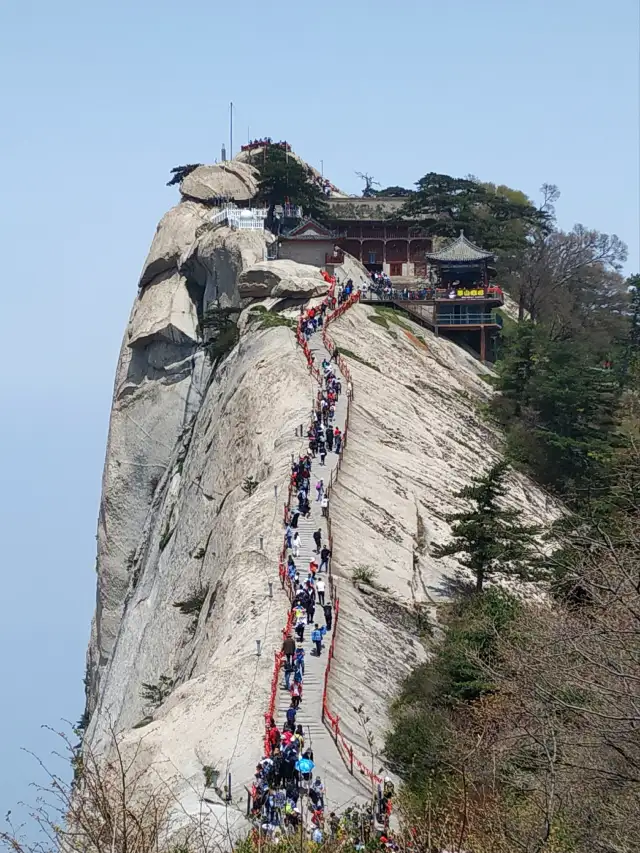 Mount Hua, the Most Dangerous Mountain in the WorldMount Hua is famous as the "Most Dangerous Mountain in the World." Not only is it the "Western Peak" among the Five Great Mountains of China, but its perilous terrain, known as "Since Ancient Times, Mount Hua Has Only One Path," has captivated countless climbers. 🏔️ Overview · Status and Honors: Mount Hua is located in Huayin City, Weinan, Shaanxi Province. It is composed of a single massive granite formation and is a world-class geopark as well as a national 5A-level tourist attraction. · Five Peaks Layout: The core scenic area includes five main peaks: East, West, South, North, and Central, with the South Peak being the highest at 2,154.9 meters. · Ticket Information: · Peak Season (March 1 - November 30): 160 RMB per person · Off Season (December 1 - end of February): 100 RMB per person · Opening Hours: · Cable Car Operation: Peak season 07:00-19:00, off season 08:00-18:00 · Hiking: Open 24 hours a day ✨ Highlights · The Five Peaks Compete in Beauty: · South Peak (Luoyan Peak): The summit of Mount Hua, where you can experience the "Number One Danger of Mount Hua" — the Plank Walk in the Sky. · East Peak (Chaoyang Peak): The best spot to watch the sunrise. · West Peak (Lianhua Peak): The most beautiful mountain shape, famous for the legend of "Splitting the Mountain to Save Mother." · Central Peak (Yunu Peak): Said to be the place where the daughter of Duke Mu of Qin, Nongyu, cultivated herself, full of romantic charm. · North Peak (Yuntai Peak): A solitary and steep peak, serving as the gateway to the other peaks. · Core Attractions: · Challenge the Dangerous Paths: The Plank Walk in the Sky and the Hawk’s Flip require an additional 30 RMB insurance fee for safety harnesses. · Stunning Moments: Besides the sunrise at East Peak and sunset at West Peak, Mount Hua’s ever-changing weather often brings vast seas of clouds and dazzling starry skies. · Cultural Landmark: The "Mount Hua Sword Discussion" inscription by Jin Yong on the North Peak summit is a must-visit for martial arts fans. · Intangible Cultural Heritage Experience: Enjoy the powerful and passionate "Huayin Laoqiang" folk singing performance in the North Peak area. 📝 Quick Guide · Best Time to Visit: The climate is mild from April to October. Especially in spring (April-May) when the mountain flowers bloom, and autumn (September-October) when the sky is clear and the scenery is at its best. · Itinerary Plan: The core plan is "up from the West, down from the North," taking the cable car up from West Peak and down from North Peak. The whole trip takes about 4-6 hours, ideal for a one-day tour. · 🚗 Transportation: · High-Speed Rail (Recommended): Take the high-speed train from Xi’an North Station to Huashan North Station, about 30 minutes. After exiting, you can take a free shuttle bus directly to the Visitor Center or a taxi to the hiking start point, Yuquan Courtyard (about 15 RMB). · Self-Driving: Navigate to "Mount Hua Visitor Center Parking Lot." It takes about 1.5-2 hours from downtown Xi’an. Parking fee is about 30 RMB per day. · Accommodation Suggestions: · At the Foot of the Mountain: Prices range from a hundred to several hundred RMB, with many options, suitable for early morning climbs the next day. · On the Mountain: More expensive and relatively basic conditions. If you plan to stay overnight, be sure to book in advance. · Practical Tips: · Advance Booking: Peak season tickets must be booked 1-7 days in advance through the official "Mount Hua Tourism Service Platform." · Essential Gear: A pair of non-slip hiking shoes and non-slip gloves (for gripping chains) are must-haves. · Temperature Differences: There is a big temperature difference between the summit and the foot. Even in summer, if you climb at night or stay overnight on the mountain, bring a windproof and warm jacket.Serendipitous Butterfly26

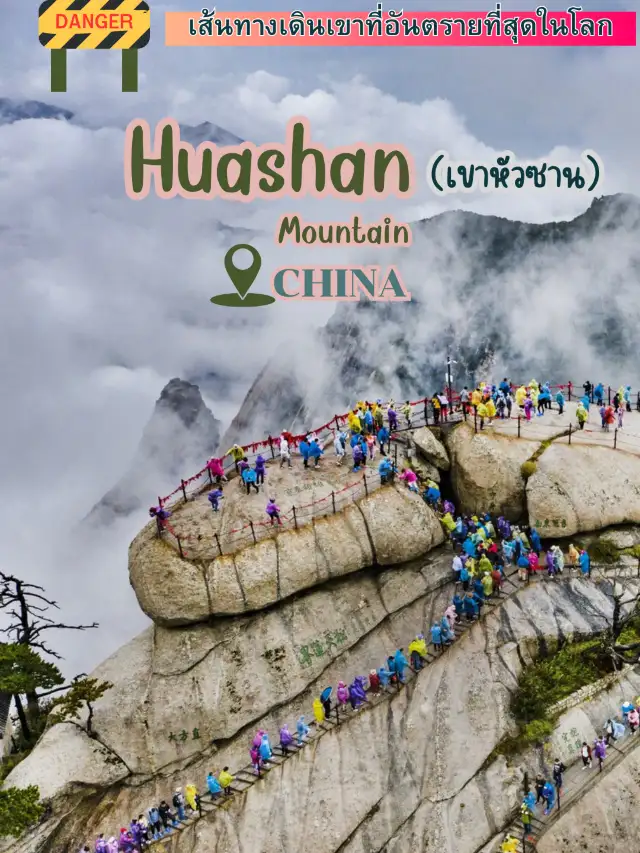
- รับส่วนลดไม่พึ่งดวง
- sacredhuashan
- taoisttrail
- templeonthepeak
- mysticchina
- huashanspiritualjourney
- ancientpathways
- taovibes
- legendarymountain
- huashanlore
- soulonthesummit
The Most Dangerous Hiking Trail in the World⛰️ Huashan Mountain, located in Huayin City, Shaanxi Province, China, about 120 kilometers from Xi'an, is one of China's five sacred mountains and is renowned as the most dangerous hiking trail in the world! 📍 Location · Huayin City, Shaanxi Province · East of Xi'an · Easily accessible from Xi'an by train or bus, taking approximately 1–2 hours 🌟 Highlights of Huashan · 🏞️ The Five Peaks Each peak has its own charm: · East Peak: Sunrise viewpoint · West Peak: Steep cliffs with breathtaking views · South Peak: The highest point · North Peak: Starting point of the hiking trail · Central Peak: Associated with a legend of a Taoist maiden · 🧗♂️ Plank Walk in the Sky A narrow wooden path along the cliff, perfect for adventure seekers looking to test their courage · 🛕 Taoist Temples and Shrines Such as Yuquan Temple and Xiyue Temple, sacred sites with a long history · 🪨 Stone Tablets & Martial Arts Duel Spot (华山论剑) Features inscribed stone tablets and is symbolic of legendary martial arts duels in Chinese folkloreTippy.24
- travelersvoice
- chinatravelcircle
- hikingtrips
Epic Adventures at Hua Shan: Routes, Views, and Pro Tips!Just hit up Hua Shan and WOW, it totally lives up to the hype! 🏞️ There are a ton of hiking routes, so you can find the perfect challenge for your vibe and stamina. If you’re not about that hardcore workout life, no worries—just grab the cable car up to the top and hike down. It’s by far the easiest way to experience those mind-blowing views without turning into a puddle. 🚠 Feeling brave? The toughest route here takes over 7 hours—yep, that’s both hiking up AND down. Only for the real hiking legends! 😅 Don’t forget: you’ll need to buy your entrance ticket in advance. Head over to trip.com to secure your spot and skip the stress! Entrance for the Hua Shan Scenic Area is located at Yuquanyuan, Huayin City, Weinan, Shaanxi, China. Pro tip: There are chill stalls along the way selling snacks and drinks, so you won’t go hungry (or thirsty) while you soak in those cool mountain vibes. The weather is super fresh and cool—perfect for a climb—and OMG, the scenery is seriously stunning. #travelersvoice #chinatravelcircleLim5672
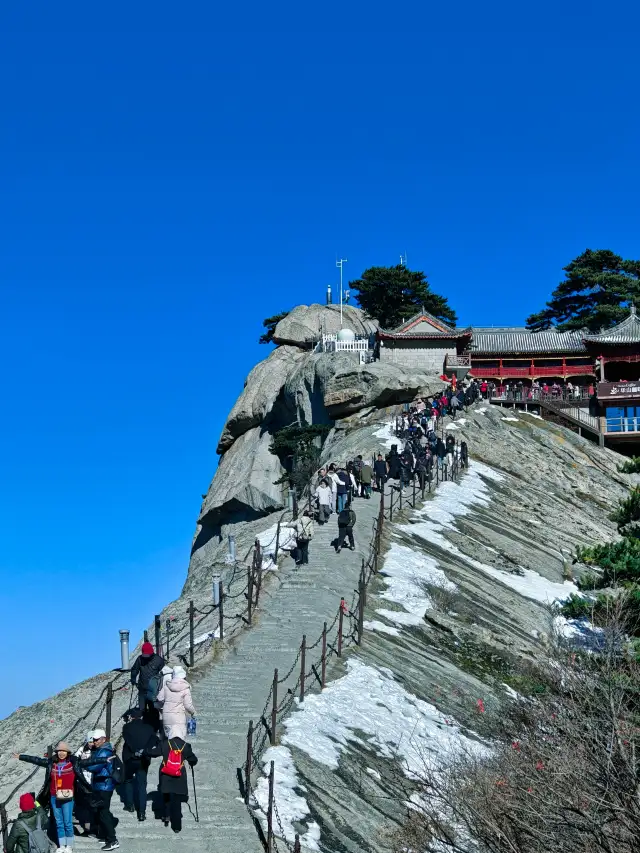 One-day trip to Mount Hua.🌈Highlights: You can't appreciate the wonders of nature without visiting Mount Hua. The Xifeng cable car is a must-try, it's amazing! 🕐️Opening hours: 1. Visitor Center: 8:00–16:00 2. Huashan Gate (hiking): 24 hours 3. Cable car: 8:00–18:00 🏝️Recommended route: The Xifeng cable car up and Beifeng cable car down is the easiest route, with more downhill sections. It's suitable for seniors, children, and those who don't like exercise. The main route is Xifeng → Nanfeng → Dongfeng → Zhongfeng → Beifeng → cable car down. 💗Other tips: You can buy tickets on the official WeChat account or other apps. Some groups are eligible for discounts, check the official WeChat account for details. There are 7 Huashan Lunjian on the mountain. The one on Nanfeng has the best view, and the milestone is also on Nanfeng. Keep warm and bring some snacks and water. Snacks and water on the mountain are very expensive. There are many restrooms on the mountain, so don't worry.EnigmaQueen22

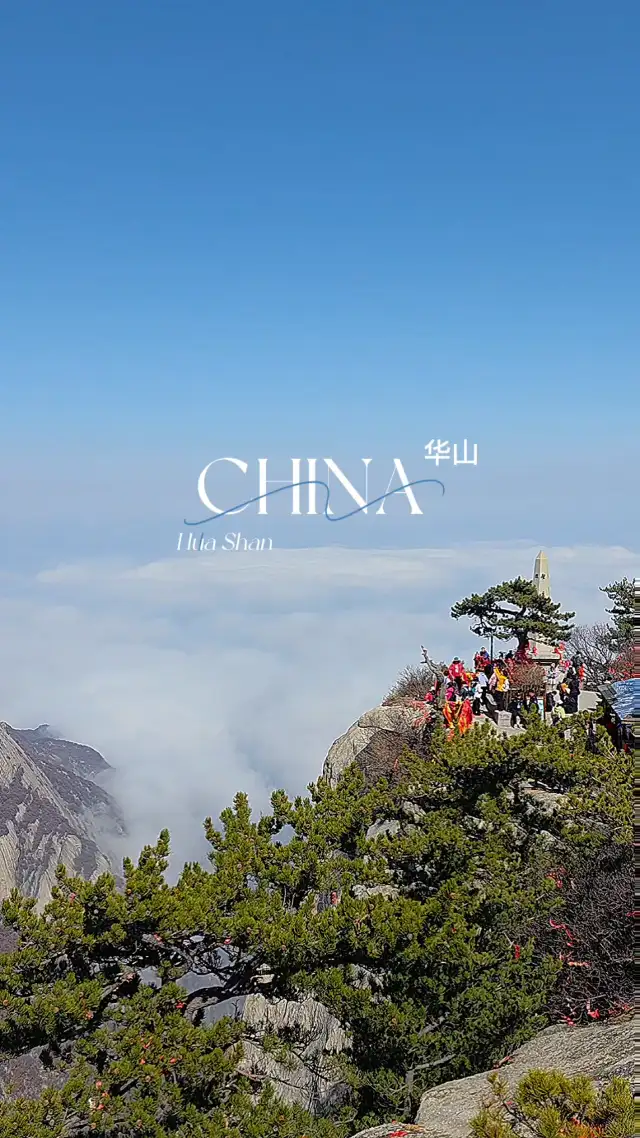 Huashan Day Trip from Xi’an – Epic Hike with Cable CarIf you’re visiting Mount Hua, this is one of the most thrilling day hikes in China. Easily reachable from Xi'an, you can take a high-speed train from Xi’an North Station to Huashan North Station (about 30–40 minutes), then a short shuttle or taxi to the scenic area. You can also book a convenient day tour directly on Trip.com, which includes transport and tickets. For a balanced adventure, go North Peak up by cable car and West Peak down by cable car. This route lets you experience the best views without exhausting yourself. Expect around 4–5 hours of hiking, depending on your pace. The trail connects dramatic granite peaks, narrow paths, and stunning cliffside views. Highlights include the iconic ridgelines and panoramic viewpoints across the mountain range. The paths are well-maintained but can be steep, so wear good shoes and bring water. This route is perfect if you want a mix of comfort and adventure—saving energy on the ascent while still enjoying a rewarding hike across the peaks. Tip: Start early to avoid crowds and give yourself enough time to explore before descending. #MountHua #Huashan #XiAn #ChinaTravel #TripCom #DayTrip #HikingAdventure #CableCarViews #TravelChina #ExploreChina #MountainViews #CliffWalk #AdventureTravel #HikingLife #Wanderlust #NatureLovers #TravelGoals #BucketList #InstaTravel #TravelAsia #HikeMore #ScenicViews #TravelDiaries #SoloTravel #TravelTipsJordon4986

- tripbest
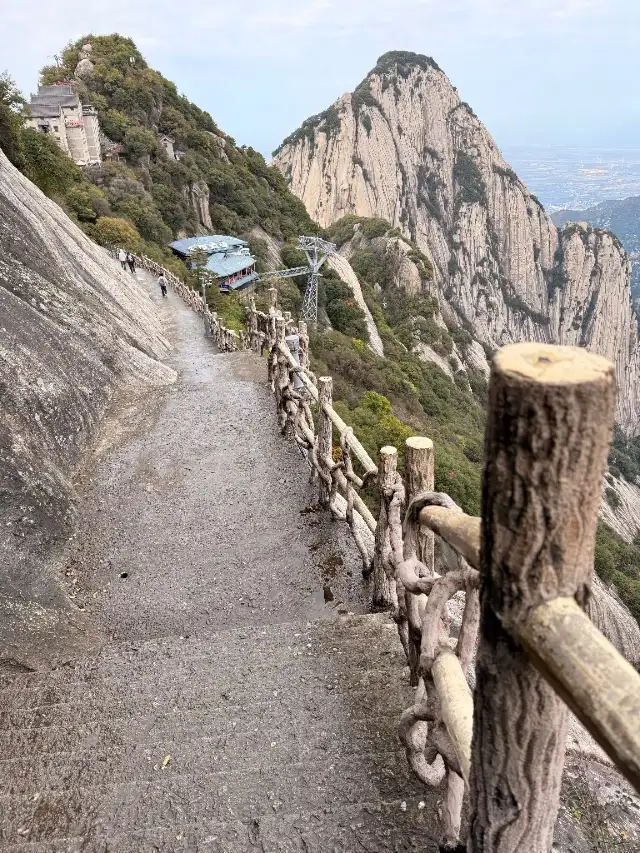
Unforgettable Views and Adventure at Mount Hua: My Must-Visit Shaanxi ExperienceMount Hua absolutely deserves its spot among the Top 50 Best Things to Do in Shaanxi! I rated it a solid 5 for must-visit places, night attractions, and fall viewing—this mountain truly checks every box for an iconic adventure. The service and management at Mount Hua are top-notch, with a comprehensive guide system and excellent multilingual support that make your visit worry-free. Every core experience is authentic, and the stunning natural views left me speechless 🌄. No matter the season or the time of day, the environment is always comfortable, with crowds well-managed so you can truly enjoy your visit. One of my most memorable moments? The cable car! It’s simply unforgettable. Exploring among the four peaks is convenient, with various path options tailored to your abilities—so everyone from casual explorers to hiking enthusiasts will find their perfect route. Roaming the mountain at night or in the crisp fall air makes for a magical experience, particularly with the breathtaking views and atmosphere. Practical tips for your adventure: If it's your first time, joining a tour group will make the visit smoother. The weather can shift rapidly between the base and the peaks, so bring layers of clothing. Don’t forget to pack water and handy gloves! If you’re short on supplies, the tourist center shop has you covered. I even managed to snap my favorite travel photo from the west peak on the way to the middle park—definitely a spot worth seeking out for those picture-perfect moments 📸. Whatever time you choose to visit, you’ll find Mount Hua’s beauty and adventure waiting for you. Highly recommended for anyone looking for an iconic, memorable experience in Shaanxi! #tripbest #tripbest _reviewerPatrick NT Li1

- huashan
- mounthua
- huashanmountain
- travel2026
- chinatravel
- chinatrip
- thingstodo
- hiking
- naturalwonders
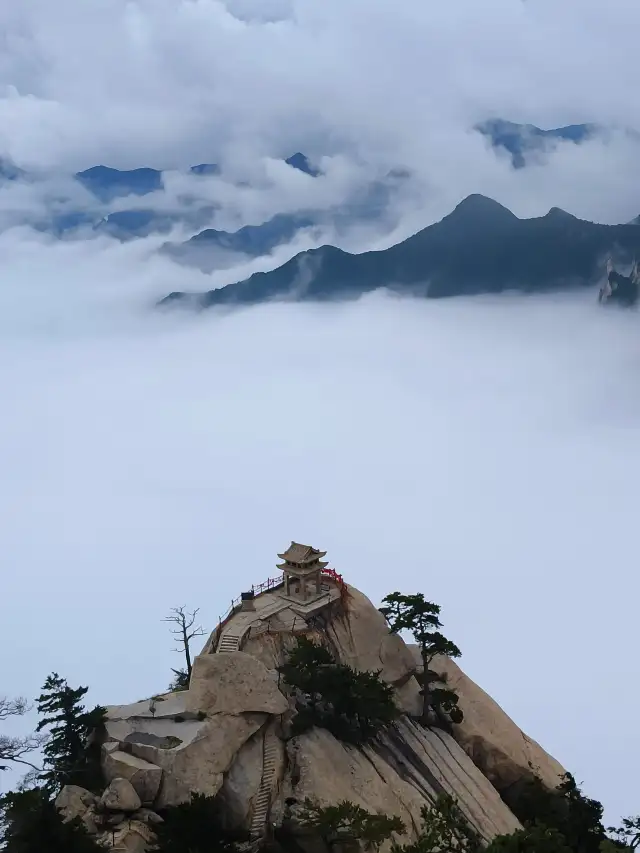
⛰️ The Ultimate Thrill-Seeker’s Guide to Mount Hua (Huashan) 🏔️Located just outside Xi'an, Mount Hua is legendary for being one of China's Five Sacred Mountains and famously holds the title for the most precipitous and thrilling hike in the country. With its sheer granite cliffs, deep gorges, and ancient Taoist temples clinging to the rock face, it’s an absolute bucket-list destination for anyone visiting Shaanxi. The Highlights You Can't Miss: · The Plank Road in the Sky (Changkong Zhandao): The world-famous cliffside walk where you strap into a harness and shuffle along narrow wooden planks bolted directly into a vertical cliff face. It’s an absolute adrenaline rush! · The Five Peaks: Each peak (North, Sun, East, South, and West) has its own unique character. South Peak is the highest point (2,1549\text{m}), West Peak features the most stunning sheer cliff aesthetics, and East Peak is the ultimate spot for sunrise lovers. · The Chess Pavilion: A tiny, isolated pavilion perched on a lonely crag below the East Peak. Watching the mist roll around it looks like a scene straight out of a mythical painting. 📌 Practical Tips & Local Tricks: · Getting There (Super Fast): Take a high-speed train from Xi'an North Railway Station to Huashan North Station (only takes about 30 to 40 minutes). From Huashan North, there are free green tourist buses that take you directly to the Mount Hua tourist center. · The Smart Travel Strategy (Save Your Knees): Unless you want to climb thousands of near-vertical stone steps for 6+ hours, take the cable cars. The most popular and panoramic route is the West Peak Cable Car Up and North Peak Cable Car Down. The West Peak line is an architectural marvel that flies right through the cliffs, and this route lets you experience the best scenery mostly walking downhill. · The Plank Road Survival Trick: The Sky Plank Road is an optional side-attraction on the South Peak and requires a separate small safety harness fee. It operates on a strict first-come, first-served basis and queues can get massive (2+ hours). If you want to do it, head straight to the South Peak first thing in the morning. · Packing Essentials: Bring a pair of sturdy gloves with good grip (you will be gripping cold iron chains tightly while climbing steep sections). Even in summer, the wind on the peaks can be freezing, so a windproof jacket is mandatory. 📍 Summary: Mount Hua is a breathtaking combination of raw natural drama, ancient spiritualism, and sheer adventure. Whether you take the cable cars or hike the ridge lines, the views are unforgettable. #huashan #mounthua #huashanmountain #travel2026 #chinatravel #chinatrip #thingstodo #hiking #naturalwondersBrunky4
 "Huashan Strategy Revealed: The Secret Weapon to Conquer the Dangerous Peak!"Imagine standing at the foot of Huashan, your heart pounding: "Can I make it to the top this time? Are there any hidden tricks?" Don’t worry! Today, I’ll help you conquer this "Most Dangerous Mountain Under Heaven" in the most practical and funniest way possible. I promise the content is so useful you’ll think, "Wow, this is really thoughtful!" And I guarantee there’s no fluff here—just solid tips you can use right away and show off wherever you go. Huashan isn’t just a place to climb; it’s like a "spiritual cleansing." Standing on the steep mountain paths, breathing in the fresh air, your mood instantly lifts! Every step feels like a challenge to yourself, every stretch like a race against yourself. Don’t think only warriors can reach the summit—if you’re well-prepared and keep a calm mindset, anyone can become a "Peak Hero." 🌟 Speaking of preparation, getting there is actually very convenient. You can take a high-speed train or bus straight from the city to the mountain’s base, hardly any hassle. As for gear, remember to wear a pair of "cloud shoes"—that is, comfortable hiking shoes—bring some snacks and water, don’t forget an umbrella (you know how unpredictable the weather can be), and of course, bring your phone and camera to capture photos that will "wow your friends on social media!" 📸 For routes, I recommend the "century-old classic" hiking path—the South Peak route of Huashan. It’s thrilling, offers stunning views, and you can even enjoy some local mountain snacks along the way, making the climb even more fun. Every climb is a journey for your soul, every challenge a chance to surpass yourself. Huashan is calling you—grab your friends and take on the "dangerous peak" challenge together! 💪 Which Huashan attraction are you most excited about? The thrill of the "Thousand-Foot Plank," the romance of "Golden Lock Pass," or the historic vibe of the "Huashan Sword Debate"? Tell me in the comments! You can also share your "hiking gear photos," and I’ll pick some to give "special rewards"! Like and share so more people can know this "Huashan strategy" and join the climb! 🙌 Trust me, this guide is not only practical and funny but will also ignite your adventurous spirit. Ready to conquer Huashan this spring or autumn with your friends? Tell me your plans! Don’t forget to like, comment, and save this so we can spread this "hiking secret" and let more people experience the "thrill of the summit"! 🚀✨leo_iu5


Other visitors' reviews of Mount Hua
Show More ReviewsHaving climbed many mountains, I can say that Mount Hua is a must-see. No other mountain has its style and grandeur. The scenic area now has excellent shuttle buses, cable cars, and other facilities, and the prices are reasonable. If I were to go again, I think I wouldn't need to carry a backpack at all; water and food are available at each peak, so there's no need to bring your own. It's only slightly more expensive than at the foot of the mountain.