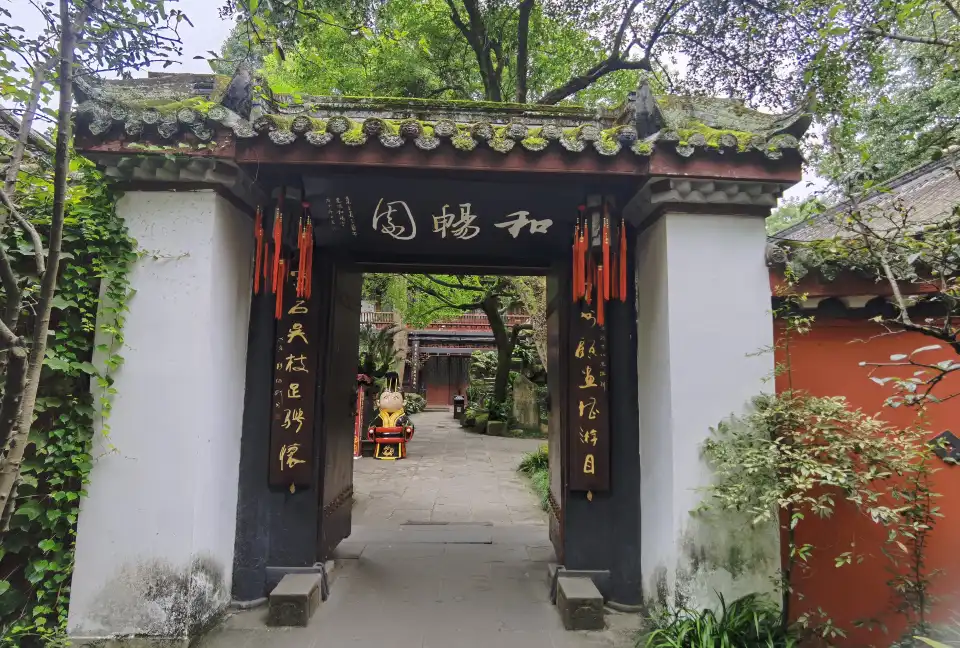
Chengdu Wuhou Shrine Museum(Wuhou Shrine)
武侯祠 based on 835 reviews
 No. 8 of Best Things to Do in Sichuan and Chongqing
Open Opening hours of Chengdu Wuhou Shrine Museum
Chengdu Wuhou Shrine Museum Highlights: Must-See Features and Attractions
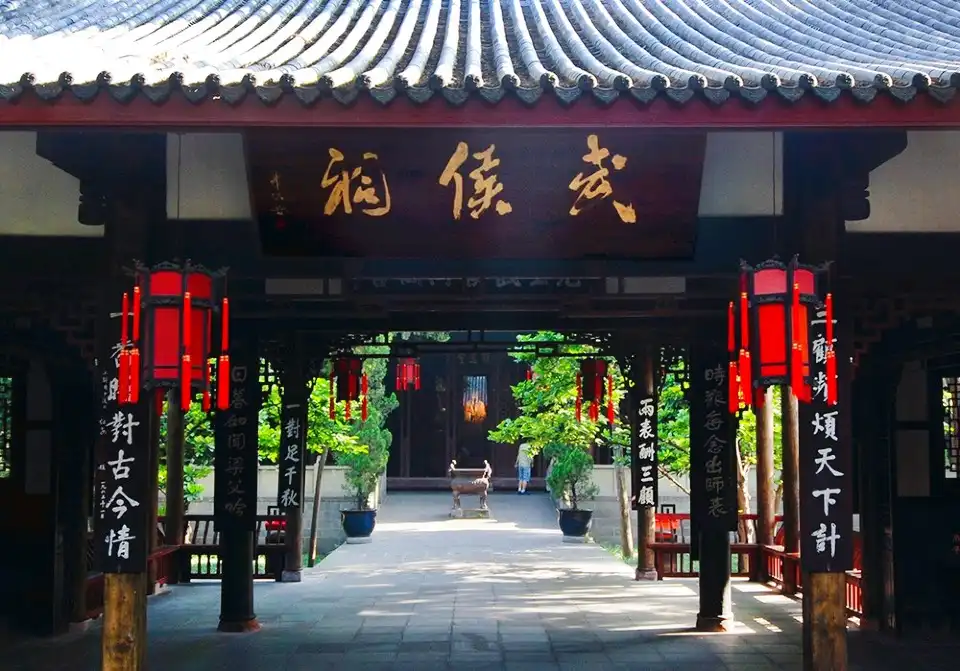
Chengdu Wuhou Shrine Museum is a shrine and temple complex commemorating Liu Bei, Zhuge Liang, and other heroes of Shu Han. It consists of Hui Ling Mausoleum, Han Zhaolie Temple, Wuhou Shrine, and Sanyi Temple, and is one of the few shrines in China where a ruler and his ministers are worshipped together. Hui Ling Mausoleum was first built in 223 AD, the third year of the Zhangwu era of Shu Han, when Liu Bei was buried. Over subsequent dynasties, additional sacrificial structures were gradually built around the mausoleum.
The special shrine commemorating Zhuge Liang was approximately built during the Southern and Northern Dynasties period, located beside Hui Ling. In the 24th year of the Hongwu era of the Ming Dynasty (1391), Zhu Chun, Prince Xian of Shu, under the rationale that "sovereign and minister should be integrated as one," merged Hui Ling, the Han Zhaolie Temple, and the Wuhou Shrine into a single entity. Because Zhuge Liang had a profound influence among the common people, they customarily referred to the entire area collectively as the "Wuhou Shrine." The main structures of the existing shrine were rebuilt during the Kangxi era of the Qing Dynasty.

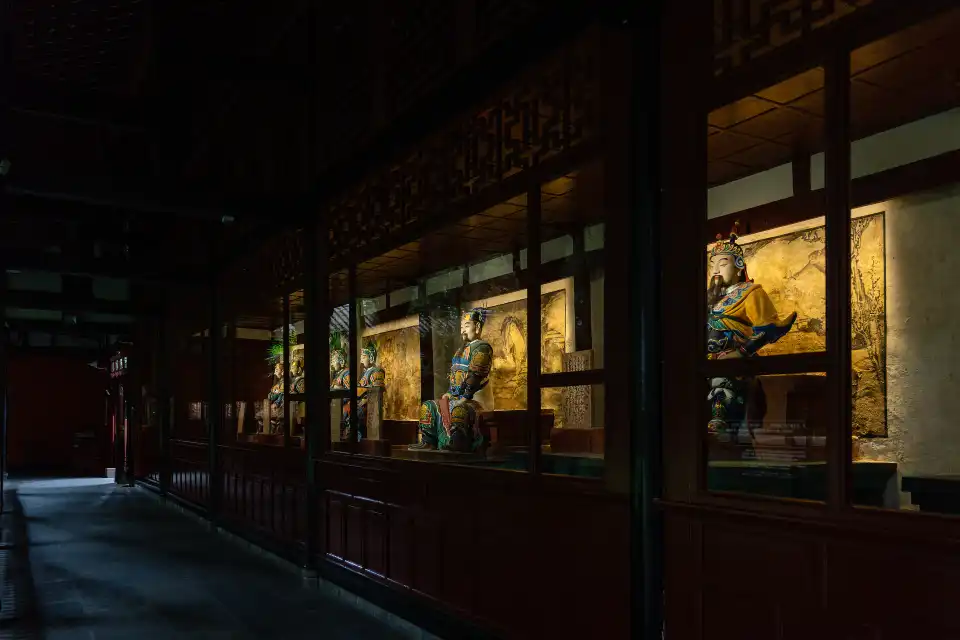
The buildings within the shrine are arranged along the central axis from south to north, passing in sequence through the main gate, the second gate, Liu Bei Hall, the transitional hall, and on to Zhuge Liang Hall and Sanyi Temple. Liu Bei Hall enshrines a statue of Liu Bei, with the side halls on either side housing statues of Guan Yu and Zhang Fei respectively, while the east and west corridors contain dozens of statues of Shu Han civil officials and military generals. A large number of Three Kingdoms cultural steles and inscribed plaques and couplets are preserved inside and outside the halls, among which the Tang dynasty "Three Excellences Stele"—with text by Pei Du, calligraphy by Liu Gongchuo, and engraving by Lu Jian—and the "Attacking the Heart Couplet" inscribed by Zhao Fan of the Qing dynasty are particularly well known.

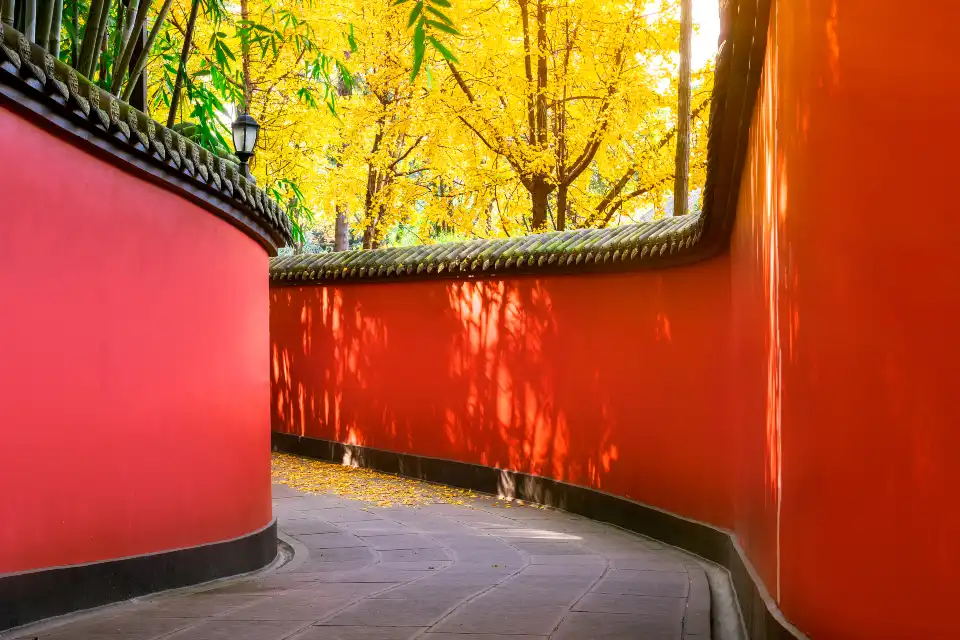
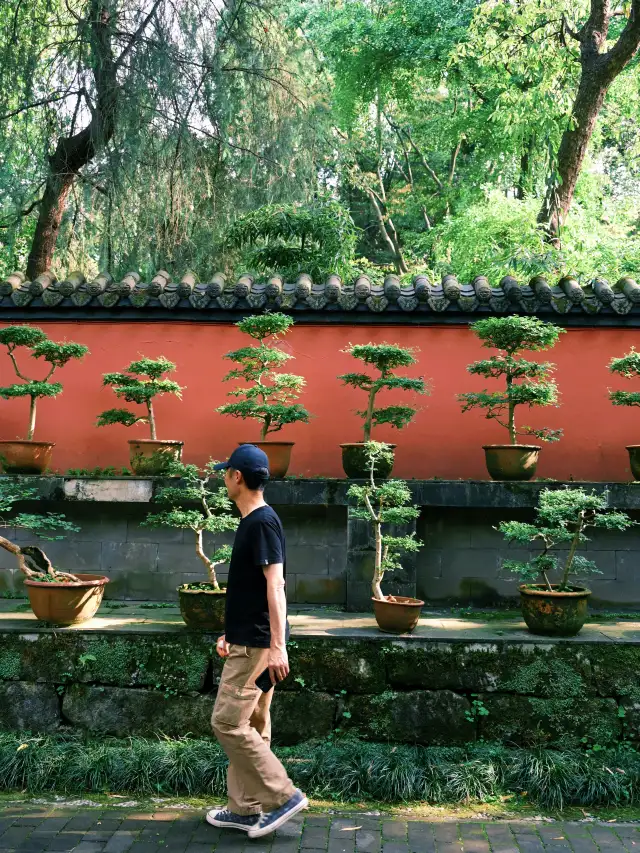
The "red walls and bamboo shadows" within the attraction is a representative photo spot in Chengdu, featuring red walls lining the path and lush green bamboo casting shade, with outstanding light and shadow effects.
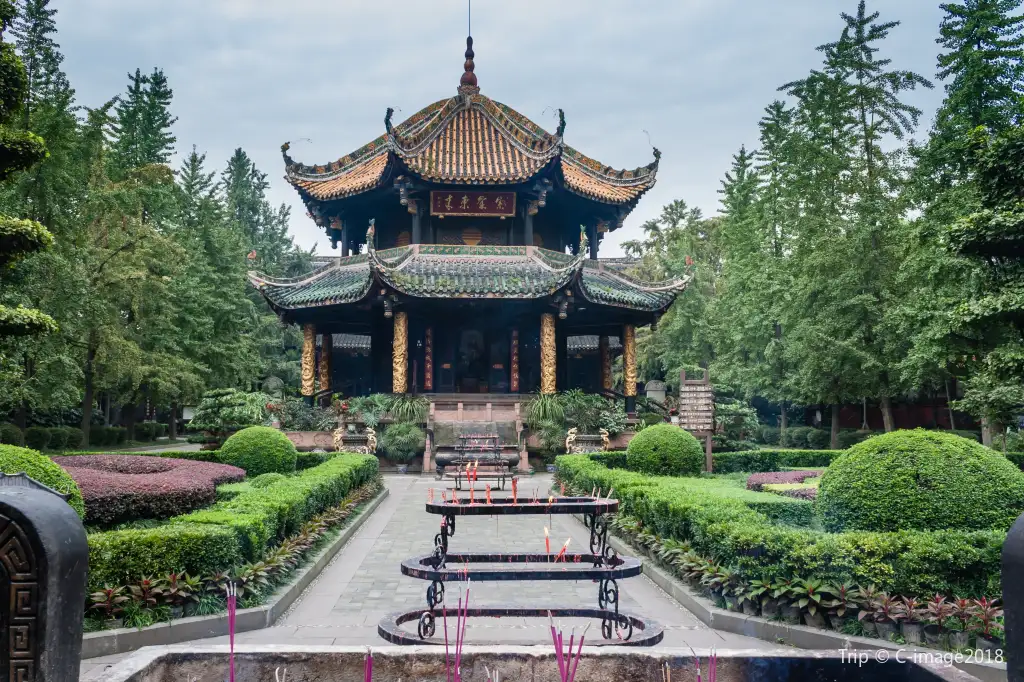
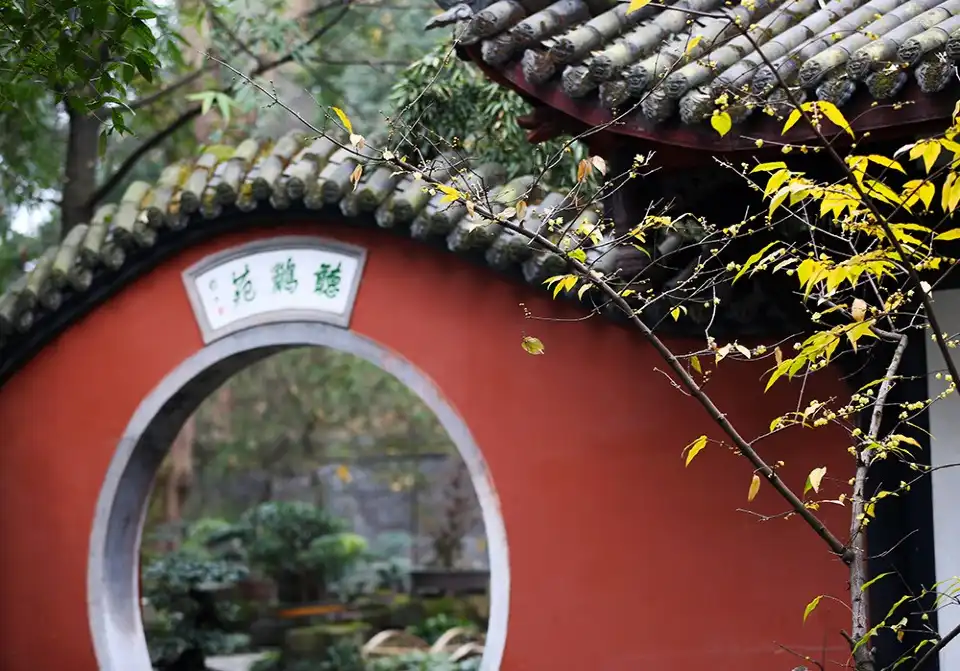
The garden area on the west side of Chengdu Wuhou Shrine Museum was originally the cemetery of Liu Xiang, a general of the Sichuan army. It contains structures such as a stone memorial archway gate, a three-arch gate, a square pavilion, and Jianxin Hall, featuring the architectural style of northern cemeteries, which is relatively rare in the southwestern region. Chengdu Wuhou Shrine Museum is adjacent to Jinli Ancient Street, so visitors can easily visit both during the same trip.
Chengdu Wuhou Shrine Museum Reviews: Insider Insights and Visitor Experiences
Chengdu Wuhou Shrine Museum Photos: Trip Moments
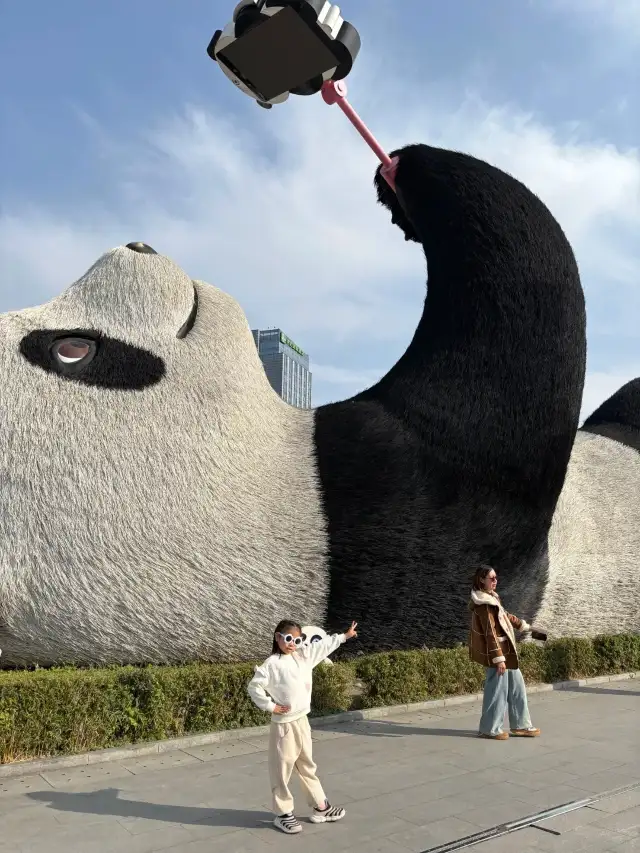 Honestly, taking kids to Chengdu during the off-season is totally worth itWhen traveling with kids in Chengdu, listen to me: visiting Chengdu for a family trip from March to May is way more comfortable than during the winter break! There are far fewer people, and hotels and flights are cheaper. Don’t believe those online tips about just going on a whim and rushing through three or four attractions in one day—no rhythm, no lunch break, no snacks? That’s just forcing it with kids. In spring, Chengdu has big temperature differences between morning and evening, so you can’t forget a jacket, water bottle, or snacks. Traveling with kids isn’t about packing light, it’s about planning smart. . Let’s talk about seeing pandas first. Many parents insist on entering the park at the latest time, but then the pandas are all curled up sleeping, and you can only see their backs from afar. Actually, it’s best to enter the park before 9 a.m. in spring when the temperature is comfortable and the pandas are active—you can see them eating bamboo, climbing trees, and rolling around. Go early, then return to the city for a lunch break, and plan easy activities for the afternoon. . ⚠️ A quick reminder: many popular attractions in Chengdu require advance reservations. Places like the Panda Base and Sanxingdui are basically impossible to book last minute. Especially on weekends and short holidays, make sure to plan ahead. If you don’t want to figure out routes and transportation yourself, joining a reliable family-friendly small group tour is worth it—one family per group, with a flexible pace. . Here’s a relaxed itinerary for parents visiting Chengdu with kids for the first time: 𝐷𝑎𝑦1️⃣ | Slow pace at Chunxi Road Arrive in Chengdu in the afternoon, casually stroll around Chunxi Road and Taikoo Li, and try some mild snacks. . 𝐷𝑎𝑦2️⃣ | Panda Base + Sichuan Opera Experience ✅ Morning visit to the Chengdu Research Base of Giant Panda Breeding. Enter early and focus on the juvenile panda activity area. The spring temperature is moderate, pandas are lively, and kids will feel engaged. ✅ Afternoon Sichuan Opera face-changing experience or costume dress-up, letting kids get close to traditional culture. . 𝐷𝑎𝑦3️⃣ | Dujiangyan Water Conservancy Wisdom + Qingcheng Mountain Nature Class ✅ Explore the Dujiangyan Scenic Area, listen to stories while seeing the real water conservancy project. ✅ If time allows, take a walk on the front mountain of Qingcheng Mountain. The hills are lush green in spring, the air is especially fresh, and it’s much better than the scorching summer heat. . 𝐷𝑎𝑦4️⃣ | Leshan Giant Buddha On-site Visit ✅ Spend a day visiting the Leshan Giant Buddha, take a boat to view the entire Buddha statue from afar, and let kids see the 70+ meter tall stone Buddha carving. ✅ Try some local Leshan snacks along the way. . 𝐷𝑎𝑦5️⃣ | Sanxingdui Ancient Shu Civilization + People's Park Wrap-up ✅ Visit the Sanxingdui Museum to see bronze and gold masks in person—much more than in textbooks. It’s recommended to book a guided tour in advance so kids can better understand. ✅ Return to the city for a city walk. Have a cup of gaiwan tea at People’s Park or stroll around Wuhou Shrine. . Visiting Chengdu with kids from March to May means comfortable weather—not too cold or hot—with flowers blooming all over the city, and attractions haven’t yet hit the summer peak. As long as you don’t pack your schedule too tightly, limit yourself to one or two main spots per day, and leave plenty of time for lunch breaks, Chengdu will really make you feel that traveling with kids can be both easy and high-quality.PathfindingPleasures55

- chengdu
- chinatravel
- sichuan
- visitchengdu
- chengdutravel
- chinatourism
- travelchina
- giantpanda
- jinliancientstreet
- wuhoushrine
- kuanzhaialley
- tripcom
- travelbucketlist
- explorechina
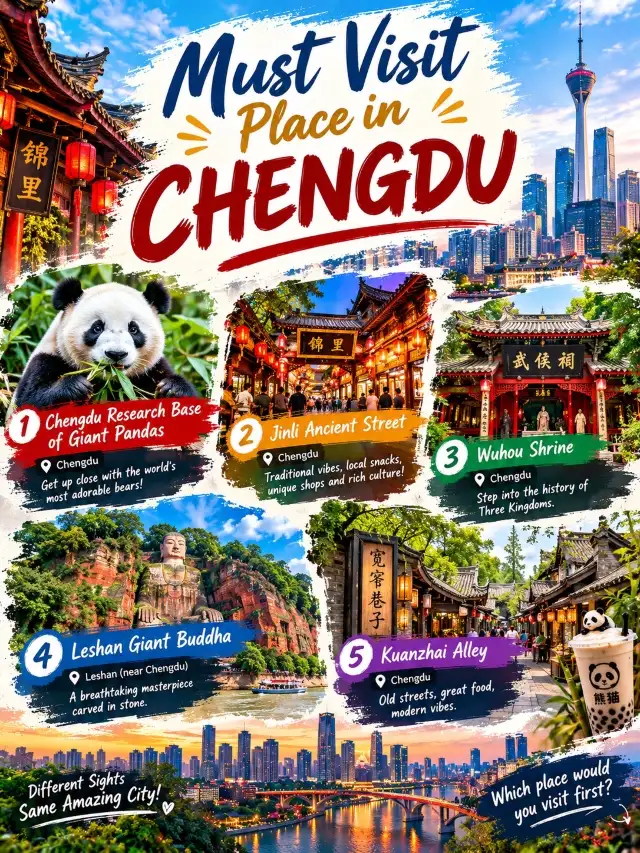
5 Must Visit Places in Chengdu 🇨🇳Chengdu is one of those destinations where ancient Chinese history, incredible food, beautiful streets, peaceful temples, and unforgettable wildlife experiences come together in one amazing city. From meeting the world-famous giant pandas to exploring centuries-old streets and standing before one of the world’s largest stone Buddha statues, Chengdu offers something special around almost every corner. If you’re planning a trip to Sichuan, here are 5 must-visit places in and around Chengdu that deserve a spot on your itinerary: 🐼 1. Chengdu Research Base of Giant Panda Breeding No trip to Chengdu would feel complete without seeing the city’s most famous residents—the giant pandas! 🐼❤️ The Chengdu Research Base of Giant Panda Breeding is one of the best places to experience these incredible animals in a natural-looking environment. Walking through the lush surroundings, you can watch pandas eating bamboo, climbing, playing, and relaxing—although their favorite activity sometimes seems to be doing absolutely nothing! 😂 The early morning is especially magical, when the pandas are generally more active. It’s also a fantastic place for photography and for learning more about panda conservation and research. 🏮 2. Jinli Ancient Street Step into the atmosphere of old Chengdu at Jinli Ancient Street, where traditional architecture, lanterns, local food, handicrafts, tea houses, and lively streets create an unforgettable experience. The beautifully decorated buildings and colorful lanterns make Jinli especially attractive in the evening. Take your time walking through the narrow streets, discovering traditional Sichuan snacks, souvenirs, and local crafts. And of course, come hungry! 😋 Chengdu is famous for its food, and Jinli is a great place to try local flavors while enjoying the traditional atmosphere. 🏯 3. Wuhou Shrine For history lovers, Wuhou Shrine is a fascinating stop. This historic site is closely connected with the Three Kingdoms period and is dedicated to important historical figures associated with Shu Han, including Zhuge Liang and Liu Bei. The peaceful gardens, traditional Chinese architecture, stone inscriptions, and ancient atmosphere make it very different from the busy modern side of Chengdu. Walking through the complex feels like stepping back into another chapter of Chinese history, making it a must-visit for anyone interested in culture, architecture, and the stories that shaped China. 🗿 4. Leshan Giant Buddha One of the most spectacular day trips from Chengdu is to the Leshan Giant Buddha. Carved directly into the red sandstone cliffs, this enormous statue overlooks the meeting point of three rivers and is an incredible example of ancient Chinese engineering and Buddhist art. Seeing the Buddha from the river gives you a completely different perspective and allows you to appreciate its enormous scale. The surrounding mountains, waterways, and historic scenery make the entire experience unforgettable. 🌄 If you have extra time during your Chengdu trip, this is definitely an experience worth adding to your itinerary. 🏮 5. Kuanzhai Alley Finish your Chengdu adventure with a visit to Kuanzhai Alley, one of the city’s most charming historic neighborhoods. The area is made up of beautifully preserved traditional alleys filled with old-style architecture, restaurants, cafés, tea houses, shops, and cultural experiences. It’s a wonderful place to simply walk around and enjoy the atmosphere. You can stop for Sichuan tea, taste local dishes, explore small shops, and take plenty of photos along the way. 📸 ✨ Chengdu is more than just pandas. It’s a city where ancient history meets modern life, where peaceful temples sit alongside lively streets, and where every meal can become part of the adventure. From adorable pandas 🐼 to ancient streets 🏮, legendary history 🏯, incredible Buddhist heritage 🗿, and delicious Sichuan cuisine 🌶️—Chengdu has plenty of reasons to add it to your travel bucket list. Which of these 5 places would you visit first? 🐼🏮 And if you’ve already been to Chengdu, what place would you add to this list? #chengdu #chinatravel #sichuan #visitchengdu #chengdutravel #chinatourism #travelchina #giantpanda #jinliancientstreet #wuhoushrine #kuanzhaialley #tripcom #travelbucketlist #explorechinaMahmud omer8
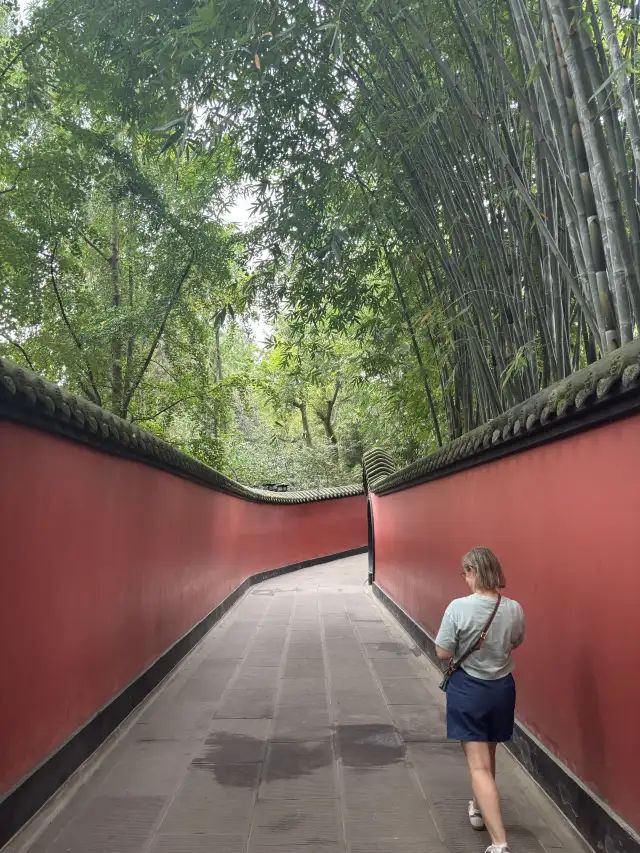 Tranquil Beauty at Chengdu Wuhou Shrine MuseumBought tickets to Chengdu Wuhou Shrine Museum on Trip.com, and it was a rewarding experience! This attraction truly stands out as a beautiful Chinese garden and shrine, offering a peaceful escape from the bustle of the city. The combination of lush greenery and traditional architecture creates a serene atmosphere that's perfect for a leisurely stroll or quiet reflection. If you're a fan of Chinese history or just love exploring scenic spots, this place is definitely worth a visit. Practical tip: Be sure to bring your camera to capture the picturesque landscapes and intricate details of the shrine. The ticketing process through Trip.com was smooth and convenient, making it easy to access this cultural gem. #realreviewMr. Whitehouse Wonders4

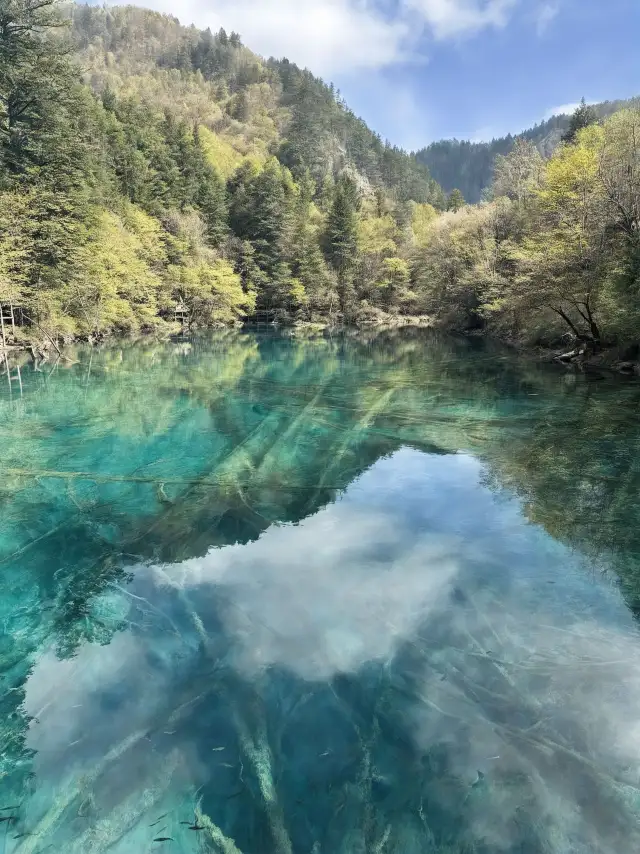 Chengdu 1-Day Private Car Tour - This Guide Has It AllFeel the lingering spirit of the Three Kingdoms at Wuhou Shrine 🏯; encounter the poetic charm of everyday life at Kuanzhai Alley 🍵; get lost in the thousand-year-old ambiance under the lantern lights of Jinli Ancient Street 🏮; let the adorable pandas at the Panda Base heal every inch of your heart 🐼... -------------------- No matter what kind of trip you want, Trip.com's local guide Deng Xiaodong can customize it for you ✅! We hope our sincere service brings you a satisfied smile -------------------- 👫👭 Couples/Small Families Traveling Light, Recommended 👉 Economy 5-seater, accommodates 4 people + 2 pieces of luggage 🧳, offers cars like the Volkswagen Tiguan or similar, low fuel consumption and agile handling, perfect for short city trips or 2-3 day light travels 🌆🚗 👨👩👧👦 Family Outings/Comfortable Small Groups, Recommended 👉 Comfortable 5-seater, accommodates 4 people + 2 pieces of luggage 🧳, offers cars like the BYD Han or similar, spacious with comfortable seats, equipped with smart systems, making long drives easier 🛣️💺 👨💼👩💼 Business Reception/6-Person Small Groups, Recommended 👉 Business 7-seater, accommodates 6 people + 4 pieces of luggage 🧳🧳, offers cars like the Buick GL8 or similar, with independent seats and a quiet space, perfect for business meetings or family gatherings 🤝🎉 -------------------- 🚗 Our solemn promise All drivers are native to Chengdu with extensive fleet experience, ensuring your itinerary runs on time ⏱️ Carefully selected nine popular attractions, offering dozens of itinerary combinations, tailor-made to create your exclusive special trip Exclusive guides provide 24/7 attentive service, ready to answer your questions anytime, making your journey worry-free 👔chuanxichuanzangdingzhiyou

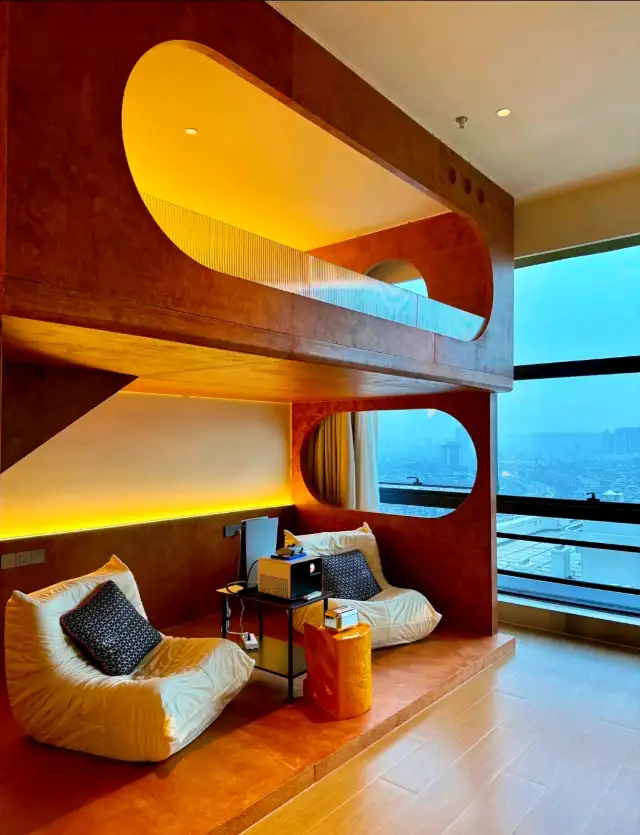 Chengdu!! The best hotel I've stayed at recently!!!Su Guang·TRACE Esports Hotel (Chengdu Du Fu Thatched Cottage Southwest University of Finance and Economics Metro Station Branch) is located at No. 1 Qingjiang Middle Road, Qingyang District, just a 190-meter walk from Exit A of Southwest University of Finance and Economics Metro Station, making travel very convenient. Here is a travel and accommodation guide prepared for you: 🎮 Hotel Features The hotel opened in 2024 and is equipped with high-end esports gear such as 2K 300Hz monitors and RTX 5070 graphics cards in the rooms, as well as a full smart home system and fresh air system. There are various room types, including double suites and triple suites, and some rooms even have mahjong tables. The hotel offers 24-hour butler service and free luggage storage. 🏞️ Nearby Attractions - Kuanzhai Alley: Composed of Wide Alley, Narrow Alley, and Well Alley, it is a relatively large-scale Qing Dynasty ancient street preserved in Chengdu. Here you can find antique-style buildings, specialty shops, and various foods, allowing you to experience the leisure and prosperity of Chengdu. It takes about 20 minutes by Metro Line 4 from the hotel. - Sichuan Museum: Located at No. 251 Huanhua South Road, Qingyang District, it is the largest comprehensive museum in Southwest China, with a rich collection including many calligraphy, paintings, ceramics, and bronze artifacts, letting you appreciate Sichuan’s long history and splendid culture. It is accessible by walking or bus from the hotel. - Huanhua Creek Park: A city park focused on natural scenery, with flowing streams, shaded trees, and many poetry sculptures. The environment is beautiful and suitable for walking and leisure. It is close to the hotel and reachable on foot. - Jinli Ancient Street: This ancient street is adjacent to Wuhou Shrine, featuring winding Western Sichuan residential-style buildings filled with various specialty snacks, handicraft shops, and bars. It is brightly lit and lively at night. You can get there by taking Metro Line 4 and transferring to Line 3. 🚇 Transportation - Metro: The hotel is only 190 meters from Exit A of Southwest University of Finance and Economics Metro Station on Line 4, about a 3-minute walk. You can easily reach commercial areas like Chunxi Road and Taikoo Li, as well as attractions like Kuanzhai Alley and Jinli by metro. - Bus: There are multiple bus stops nearby with rich routes covering various parts of Chengdu city. - Taxi: If you choose to take a taxi, the hotel’s location makes it easy to hail a ride, and travel times to major city attractions and commercial areas are within an acceptable range. 🍜 Food Recommendations - University of Finance and Economics Snack Street: Located near Southwest University of Finance and Economics, it is a food hub. Here you can find Qiu Ji Guokui, whose preserved vegetable and pork Guokui is crispy and flaky; also Leshan Xianzhiwei Bobo Chicken, with fresh ingredients and a spicy, fragrant red oil flavor. - Chiyan Shuo Barbecue Shop (Southwest University of Finance and Economics Branch): Near the university, the Ecuadorian white shrimp here is large and sweet, the original cut Matsusaka pork has clear texture and a crispy, tender taste, and the thick-cut pork belly has evenly distributed fat, grilled to a crispy edge, wrapped with lettuce and garlic slices—very delicious. - Lahu Niu·Stinky Tofu Boiled Fish·Daytime Barbecue: Located in the alley directly opposite the north gate of Guanghua Campus of Southwest University of Finance and Economics, this is a Dai ethnic cuisine restaurant. Their grilled fish is tender with a unique Yunnan spicy flavor, and the cold hawthorn salad offers a sweet and salty mix with a distinctive taste. - Zhuyuan Inside Zhuang: Near Exit A of Southwest University of Finance and Economics Metro Station, their fresh chili beef noodles are mildly spicy and tasty, with good noodle texture that doesn’t clump, loved by diners.WorldWanderer76

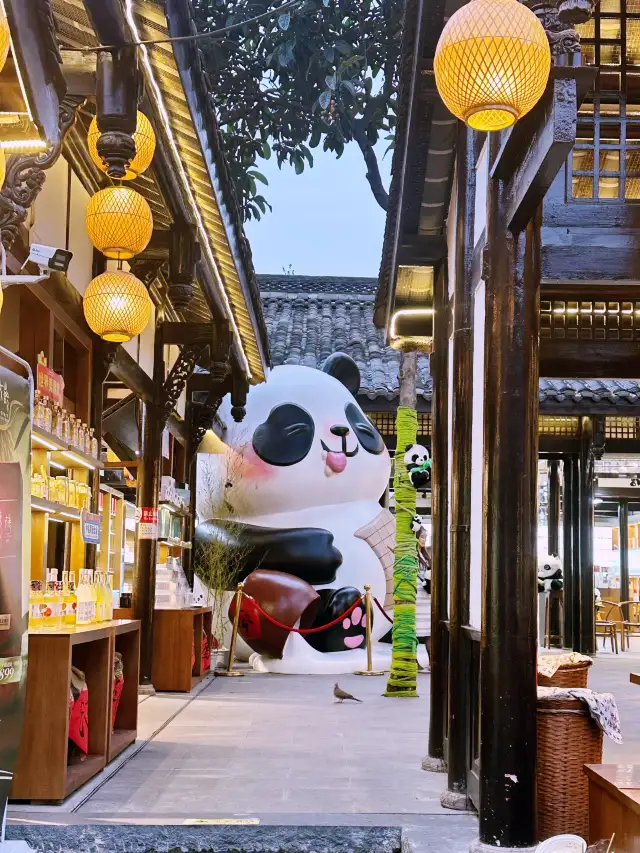 Chengdu Travel Guide|Stroll through Kuanzhai Alleys, Unlock the Slow Life of Rongcheng🏮【Must-Do Highlights|In-Depth City Exploration】 ▫️Kuanzhai Alleys (Free|Must-Visit) 3 alleys, 3 flavors of Chengdu, no superficial sightseeing ▪️Kuan Alley|Old Chengdu Leisure Life Blue-tiled courtyard houses|Bamboo chairs chatting|Old house tea fragrance Beautiful light and shadow at 4 PM, perfect for storytelling photos at old doorways ▪️Zhai Alley|Artistic Slow Life Trumpet vine walls|Vintage gray brick walls|Creative coffee shops A clash of old and new, atmosphere fully charged ▪️Jing Alley|Niche New Life 400-meter old brick cultural wall|Old window frames|Old kerosene lamps Quiet with few people, perfect for artistic close-ups 📸Top Photo Spots in Kuanzhai Alleys (Must-Lock) ✔️Old doorways in Kuan Alley|Afternoon slanting sunlight: wooden doors or carved door lintels, sunlight hitting the wall, stunning light and shadow, people naturally walking by or posing sideways. ✔️Trumpet vine wall in Zhai Alley|Spring and summer exclusive flower sea, wear plain-colored dresses, every shot looks like a masterpiece. ✔️Close-ups of old items in Jing Alley|Focus on old window frames and kerosene lamps embedded in the wall, paired with a meaningful caption, full artistic vibe. ✔️Capture moments of local life|Ear cleaning, sugar painting, tea house steam—these scenes are the soul of Chengdu. ▫️Other Must-Visit City Spots ▪️Giant Panda Base|Arrive before 7:30 AM! Pandas are most active in the morning; arriving late means only seeing sleeping pandas. ▪️People’s Park|Drink tea at Heming Teahouse, experience ear cleaning, and enjoy Chengdu’s slow life ▪️Jinli + Wuhou Shrine|Red lantern night scenes are legendary at dusk ▪️Chunxi Road & Taikoo Li|Check in with the climbing panda statue ▪️Wenshu Monastery|Quiet ancient temple, perfect for a peaceful stroll 📅【Lazy 3-Day Itinerary|No Backtracking】 Day 1 Slow City Life Deep exploration and photos at Kuanzhai Alleys → Eat at Kuixinglou Street → Tea at People’s Park → Night view at Jinli Day 2 Cute Pets & Culture Giant Panda Base → Wenshu Monastery → Chunxi Road & Taikoo Li Day 3 Surrounding Highlights Day trip to Dujiangyan + Qingcheng Mountain / Sanxingdui 🍜【Food Tips|Local Classics】 ❌Don’t eat trendy snacks on Kuanzhai main street, expensive and disappointing! Go deeper to Kuixinglou Street, where you can eat well for about 50 RMB per person. ▪️Authentic snacks: Tang You Guozi (fried sugar balls)|San Da Pao (sticky rice balls)|Spicy cold noodles|Egg cake ▪️Must-try citywide: Beef tallow hotpot|Bobo chicken|Foot-soaking beef|Rabbit head|Ice jelly 🏨【Where to Stay】 ▪️Top choice: Kuanzhai Alleys / Kuixinglou Street|Lots of food, strong old city vibe ▪️Shopper’s pick: Chunxi Road / Taikoo Li|Convenient transport, bustling commercial area ▪️Best value: Wenshu Monastery|Easy travel, affordable prices 💡【Practical Tips】 ▪️Best time to visit: March-May / September-November, comfortable climate ▪️Kuanzhai Alleys: Visit on weekday afternoons/evenings to avoid tour groups, night scenes are stunning ▪️Transport: Metro Line 4 goes directly to Kuanzhai Alleys, driving not recommended due to difficult and expensive parking ▪️Travel: Use Tianfu Tong app to scan QR code for metro rides, valid citywideW.ll.@m Th0m@s15

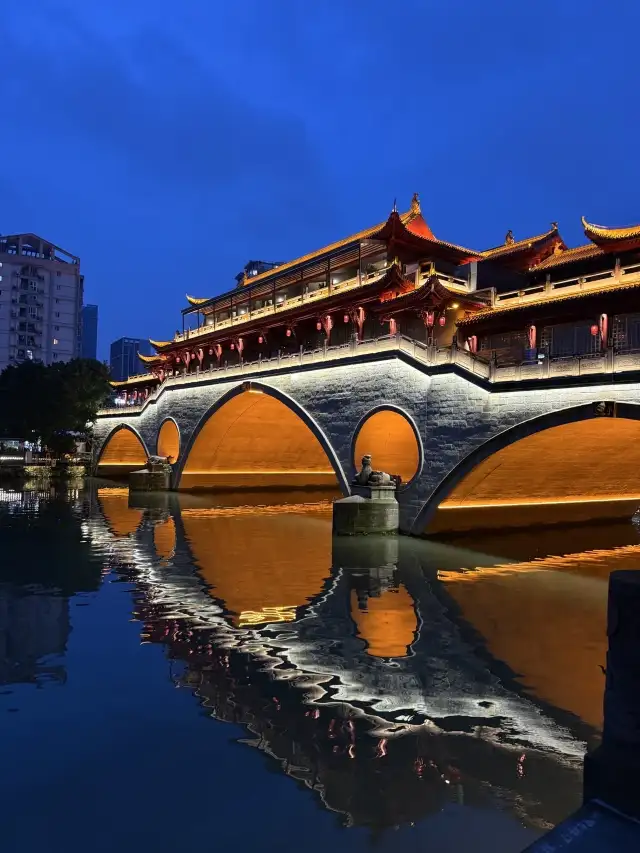
- chinaitinerary
- traveldiaries
Bamboo Mist and Simmering Chili Fire in Chengdu 🇨🇳🐼Everyone told me to be at the Chengdu Research Base of Giant Panda Breeding by the time the gates opened, then hurry to the next sight, and I almost did exactly that. But a drizzle blurred the morning, and I let the schedule go. I wandered toward the bamboo groves instead, where the air smelled of wet leaves and fresh stalks, and the only sounds were the soft crunch of chewing and the patter of rain on broad leaves. A panda sat in the green half-light, holding a bamboo shoot with surprising delicacy, utterly unbothered by the people gathered at the rail. Later, in a teahouse, steam curled from a lidded cup while old men shuffled mahjong tiles. I realized I had come to Chengdu to see things, and was staying because I had finally learned to sit still. Travel, I think, is the art of arriving slowly. 🐼🍵 . 📅 Moments Along the Way * Pandas at feeding time: Mornings at the Research Base were the liveliest, with pandas ambling toward their bamboo and the whole hillside going quiet to listen to them crunch. * Tea in People's Park: I sank into a bamboo chair with a cup of jasmine tea while the park hummed with conversation, clicking tiles and the slow rhythm of an afternoon with nowhere to be. * Kuanzhai Alley and Wuhou Shrine: I wandered the grey-brick lanes of Kuanzhai Alley at dusk, then walked beneath the cypress trees of Wuhou Shrine, where incense drifted through stories of the Three Kingdoms. . 🏨 Where I Slept * I stayed in a quiet corner of the city, and mornings began with soft light through the curtains, distant bicycle bells and the faint scent of tea from somewhere below, a gentle start before the city woke fully. ☀️ . 🍴 Local Cravings * Sichuan hotpot arrived as a bubbling red cauldron of chili and numbing peppercorn, and I cooled each bite with sips of something sweet; the mapo tofu that followed, silky and fiery over steaming rice, was the dish I kept thinking about on the flight home. 🌶️🍚 . 📌 Notes for Wanderers * Best time to visit: Spring and autumn bring mild, comfortable weather, and summers can be hot and humid, so plan outdoor stops accordingly. * Pandas: Go early, since the pandas tend to be most active around feeding time, and the crowds build as the day goes on. * Getting around: The metro is an easy way to reach areas like Kuanzhai Alley and Wuhou Shrine, and the Research Base is a trip outside the center, so check current transport options before you go. * What to bring: A light rain jacket, comfortable shoes and curiosity about spice; ask for a milder hotpot broth if you are not used to chili heat. 🧥🌿 #chinaitineraryEddyG
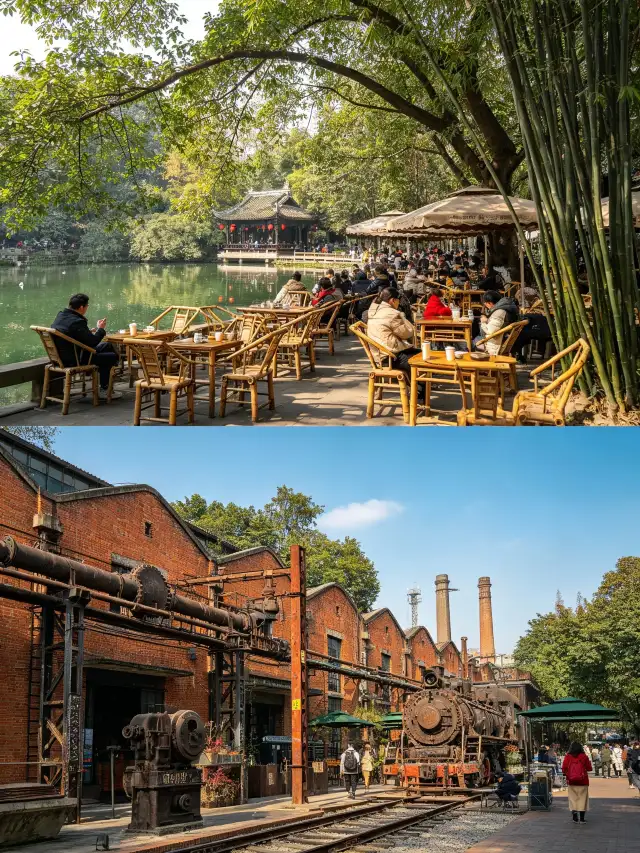 Only after arriving in Chengdu did I realize how silly my clothing choices were🚫 Don't bring these: ❌ Long sleeves, sweatshirts: The city is muggy during the day, so you won't really wear them. Museums and malls have strong AC, so a thin cardigan is enough. Thick clothes just take up luggage space. ❌ Hard-soled leather shoes, thin-soled flip-flops: Kuanzhai Alley and Jinli are full of uneven stone roads. Your feet will ache after walking all day. Flip-flops are inconvenient for sightseeing. ❌ Oversized long-handled umbrellas: Snack streets are crowded, and opening one is a hassle. Carry a small folding umbrella; it's great for both sun and rain. 🗺️ Chengdu one-day itinerary ⏰ 8:00 AM: Head to the Panda Base. Arrive early, as pandas are more active in the morning. ⏰ 8:30 AM–9:30 AM: Stroll along the park paths, watch the pandas eat bamboo and play. No need to rush. ⏰ 9:40 AM–11:40 AM: Head to Wuhou Shrine. Walk along the red walls and soak in the atmosphere of the Three Kingdoms-era architecture. ⏰ 11:50 AM–1:00 PM: Have lunch near Jinli. Try local snacks like dan dan noodles and wontons. ⏰ 1:10 PM–3:00 PM: Explore Jinli Ancient Street. See the old buildings and small shops. Avoid the crowds on the main street and head to the quiet alleys for photos. ⏰ 3:10 PM–4:40 PM: Go to People's Park. Sit down at Heming Teahouse, try gaiwan tea, and experience the local slow-paced life. ⏰ 4:50 PM–6:00 PM: Head to Kuanzhai Alley in the evening to see the old Chengdu courtyards. Wait for the lights to come on before ending your trip. 📸 Photo spots ✔️ Panda Base: Lush green bamboo forests paired with round pandas. Photos look soothing in natural light. ✔️ Wuhou Shrine red walls and bamboo shadows: Red walls paired with green bamboo. The afternoon light is beautiful, perfect for atmospheric photos. ✔️ Jinli ancient alleys: Old street eaves and red lanterns. The evening light is soft, perfect for a traditional vibe. ✔️ People's Park teahouse: Old teahouse tables, chairs, and bamboo forests. Great for capturing relaxed, everyday life photos. ‼️ Tips: 👗 Wear breathable short sleeves and thin long pants. Carry a thin cardigan, as museum AC can be cold. Soft-soled sneakers are a must for all the walking on stone roads. 👗 Bring sunglasses, a hat, and sunscreen. It's sunny outdoors in the parks, and UV rays are strong even on cloudy days. 👗 It occasionally rains in the city, so carry an umbrella. The ground can be slippery when wet, so watch your step. 👗 Local food spice levels are adjustable. If you can't handle spice, tell the restaurant in advance. Don't order too many snacks at once. 👗 For street vendors selling tours or souvenirs at scenic spots, choose based on your needs. No need to rush into a purchase.OliviaMcPheey3

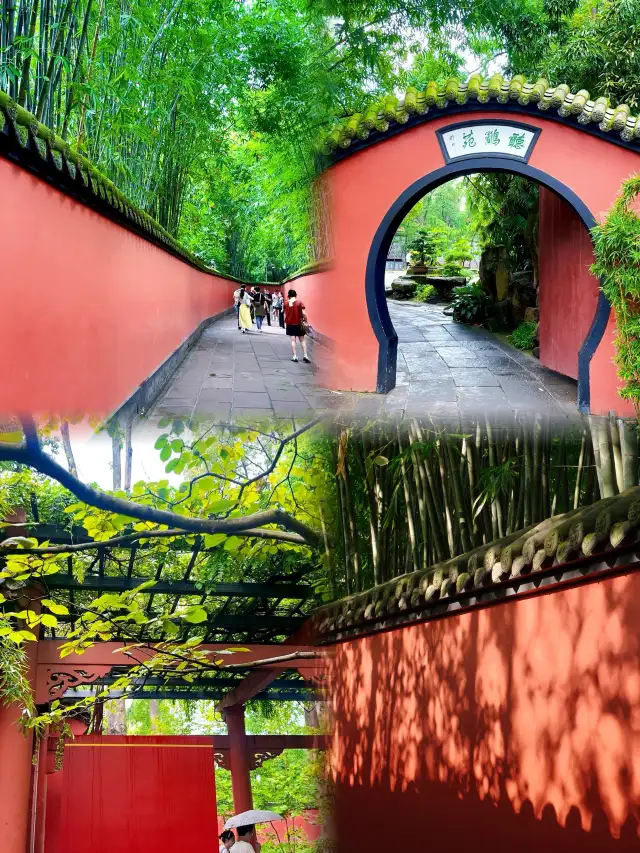 Must-visit in Chengdu | Red walls and green bamboo, a Three Kingdoms museum hidden in the bustling city📍Location: Wuhouci Street, Wuhou District, Chengdu 🎫Admission: Adult 50, student half-price; free for eligible groups with valid ID. Real-name reservation required via the official WeChat account; enter with your ID card ⏰Hours: 8:30 AM–6:00 PM, last entry at 5:00 PM | Recommended duration: 2 hours 🚇Transport: Metro Line 3/5 Gaoshengqiao Station Exit D, about an 8-minute walk; Metro Line 10 Wuhouci Station, 3-minute walk 🌟Highlight route Main entrance → Three Wonders Stele → Gallery of Civil and Military Officials → Liu Bei Hall → Zhuge Liang Hall → Sanyi Temple → Huiling Mausoleum → Viral red wall and bamboo shadowsBella Sweet Cuddle

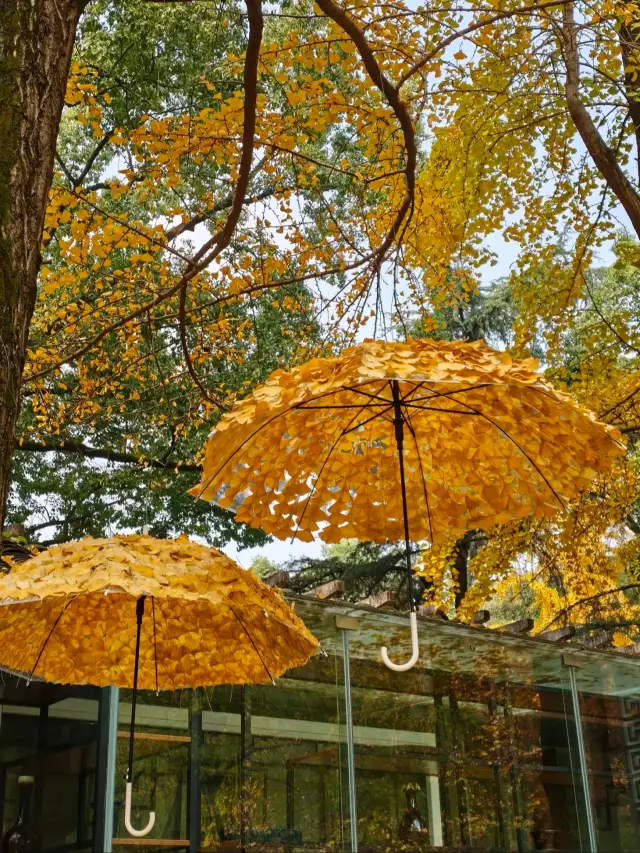 4 Top-Rated Hidden Gems for Autumn in Chengdu (Nov–Dec): Weaving Ginkgo Gold into Everyday LifeLate autumn in Chengdu is when warm sunshine hits the ginkgo trees, weaving the city's golden hues into the bustle of daily life🍂. No need to travel to the far suburbs; the city center hides 4 secret spots for autumn viewing loved by locals. They reach their peak beauty from mid-November–early December—uncrowded, photogenic, and highly rated. Head out this weekend! 🏮 Wenshu Monastery | Red walls and upturned eaves, experience a ginkgo rain 📍 Address: 66 Wenshuyuan Street, Qingyang District | ⏰ 8:00 AM–5:00 PM | 🚇 Metro Line 1, Wenshuyuan Station 🌟 Best viewing: Mid-November–early December Vermilion ancient walls paired with dark tile upturned eaves; century-old ginkgo trees in the courtyard are laden with branches. As the autumn breeze sweeps by, golden leaves rustle and fall, covering the ground in shattered gold—a romantic ginkgo rain begins. The arched side gate of Wenshu Pavilion is the prime photo spot. Using the ancient architecture as a frame, the red walls and yellow leaves appear together, creating a classic-style blockbuster without filters. Afternoon sunlight filters through the branches, casting mottled light and shadows on the walls, maximizing the atmosphere. After touring the monastery, head out and turn to the street-side pastry shop. Grab a bag of warm crispy cakes, nibble on snacks in the warm sun, and let the autumn scenery of the ancient temple collide with the bustle of human life. 💡 Tips: It gets crowded on weekends. Try to visit on a weekday morning for a quieter photo experience. Please keep quiet inside the monastery and do not make noise. 🚲 Baihua Lane | A golden time tunnel in the old city 📍 Address: Baihua Lane, Qingyang District | 🌟 Best viewing: Late November–early December A treasure of a small alley hidden in the old residential area, avoiding the crowds of tourist spots. Ginkgo branches on both sides of the road interweave, creating a long golden tunnel. Spend 2 yuan to ride a bike slowly through it, and yellow leaves will gently fall into your bike basket and on your shoulders. The stone bridge at the entrance of the alley is an excellent spot for overhead shots, with old residential buildings set against the sky full of golden leaves, bringing the atmosphere of daily life to your face. The old teahouse by the alley is full of locals drinking tea, playing chess, and chatting. Capturing this moment is the most vivid picture of autumn in Chengdu. 💡 Tips: This is a residential area. Please lower your voice when taking photos and playing, and do not disturb the daily lives of residents. 🍂 Jinxiu Lane | Alleyway dome, daily life amidst the ginkgo 📍 Address: Jinxiu Street, Wuhou District | 🚇 Metro Line 3, Moziqiao Station (10-minute walk) | 🌟 Best viewing: Early December A free ginkgo viewing spot kept secret by locals, free from commercial noise. Two rows of tall ginkgo trees meet in the air, supporting a hundred-meter golden dome. Fallen leaves rustle underfoot, and the sweet scent of roasted sweet potatoes and sugar-oil fruit wafts from street stalls. Look up to see golden leaves everywhere; look down to see the daily life of the old street. The soft light of the evening is perfect for portraits, with warm light and shadows wrapping around the entire alley. Every shot is full of story. After strolling through the alley, you can also check out the food around Sichuan University nearby. 🍵 Baihuatan Park | Ancient ginkgo by the lake, slowly enjoy the leisure of late autumn 📍 Address: Section 1, West First Ring Road, Qingyang District | 🚇 Metro Line 5, Qingyang Palace Station (5-minute walk) | 🌟 Best viewing: Late November–early December If you want to find a quiet place to clear your mind, come to Baihuatan. A thousand-year-old ginkgo tree stands in the park, its golden leaves particularly stunning. The ginkgo, lake, pavilions, and waterside structures complement each other, with yellow leaves floating on the lake surface, maximizing the poetic autumn atmosphere. The park is quiet and uncrowded. Take a slow walk along the lakeside path, soak up the winter sun, and watch the fallen leaves drift with the water. If you get tired, find a stone bench to sit on, do nothing, and quietly feel the relaxation of late autumn in Chengdu. ✨ Travel Summary ▪️ Overall viewing period: Mid-November–early December; sunny days are best for photos ▪️ Most spots are free, prioritize public transport ▪️ Play civilly; do not shake trees or step on plants; please do not make loud noises in residential areas This autumn and winter, pick up a ginkgo leaf and cherish the golden bustle of Chengdu.Chloe@Campbell361

 Wuhou Shrine in Chengdu|Here, I truly understood the real Zhuge LiangOriginally built to bury Liu Bei, it is the Han Zhaolie Temple Zhuge Liang personally selected this feng shui treasure land for Liu Bei🌿 By the Southern and Northern Dynasties period, it had formed the unique "shrine, temple, and tomb combined" layout 🏛️ Architectural Evolution: - Ming Hongwu Era: Zhuge Liang officially settled in! The front hall worships Liu Bei, the rear hall enshrines Zhuge Liang - Qing Kangxi Reconstruction: The order of the halls was adjusted again✨ - What you see today: The largest Wuhou Shrine complex in China The most special feature here is the unique "joint worship of lord and minister" design It reflects the ritual order of lord's superiority and minister's inferiority🪔 While also fulfilling the people's wish to worship both lord and minister simultaneously💫 🌳 Garden Highlights: - Ancient cypresses: Most are several hundred years old - Golden ginkgo trees: Witness to countless historical changes - Ming and Qing stone tablets: Well-preserved cultural treasures In my student days, I only memorized the "Chu Shi Biao" as a text Zhuge Liang in films and TV dramas is always the brilliant strategist💡 Until standing beneath the ancient cypresses of Wuhou Shrine Gazing at those weathered but resolute inscriptions I finally understood the man behind the myth: He was just an ordinary person burdened with the heavy responsibility of guardianship Doing his utmost in a chaotic era💭 "Devoting oneself to the utmost" has never been a slogan But a sincere commitment to keep promises despite knowing the hardships ahead🔥Titan Turner2


- chinaitinerary
- chengdu
- china
Chengdu in 4 Days: Pandas, Food & Ancient Streets 🇨🇳Chengdu was one of those cities that made me want to slow down and enjoy every moment. Unlike the fast paced atmosphere of Beijing or Shanghai, life here felt more relaxed, although the food scene was anything but quiet! Day 1: Meeting the Pandas 🐼 My first stop was the Chengdu Research Base of Giant Panda Breeding. Watching pandas lazily munch bamboo was easily one of my favorite experiences. Arriving early is definitely worth it! Day 2: Exploring Old Chengdu I spent the morning at Wuhou Shrine, learning about the Three Kingdoms era, before wandering through Jinli Ancient Street. The traditional architecture, lanterns, and street snacks made it a great place to explore. Day 3: Local Life & Food At People's Park, I enjoyed watching locals play mahjong and drink tea. Later, Kuanzhai Alley offered plenty of charming cafés and souvenir shops. Of course, I couldn't leave without trying authentic Sichuan hotpot. Spicy, flavorful, and seriously addictive! Day 4: Beyond the City I took a day trip to the Dujiangyan Irrigation System, an impressive ancient engineering masterpiece, followed by a visit to Mount Qingcheng, known for its peaceful Taoist temples and lush greenery. Four days weren't enough, but Chengdu definitely left me wanting more! #chinaitinerary #chengdu #chinaRendy Mamahit83

Other visitors' reviews of Chengdu Wuhou Shrine Museum
Show More ReviewsThe fan of sanguo must visit place. The whole environment inside is very calm and well maintained. A lot of history story are displayed. Inside also got food stall and souvenir shop.