
November free admission policy
Xidi(Xidi Village)
西递 No. 3 of Night Attractions in Anhui
Opening hours of Xidi
Xidi Highlights: Must-See Features and Attractions
Xidi is a typical Huizhou-style ancient village in Yi County, and together with Hongcun it is known as one of the two great ancient villages of southern Anhui. If Hongcun is known for its waterscape, Xidi focuses more on the architecture itself—the village preserves a well-laid-out complex of Ming and Qing dynasty buildings, with exquisite craftsmanship in the "three Huizhou-style carvings" of brick, stone, and wood. The patterns and branches are so finely detailed that they are a highlight worth savoring throughout the ancient village.
Most residents of the village share the last name Hu. Legend has it that they are descendants of Li Ye, Emperor Zhaozong of Tang, who changed their surname to Hu to escape the chaos of war and have lived here for generations ever since. The ancient village was first built during the Huangyou era of the Northern Song dynasty. During the Ming and Qing dynasties, as Huizhou merchants rose to prominence, extensive construction took place, and a large number of Hu merchants returned home to build residences, once giving Xidi hundreds of courtyard houses. The ancient village was laid out in the shape of a boat, spanning three streams. In the south, the Qianbian Stream and Houbian Stream converge at Huiyuan Bridge inside the village to form the Xi Stream, which then joins the Shewu Stream to the north at the village entrance. All the streams flow from east to west, and this is how Xidi, meaning "westward flow," got its name.
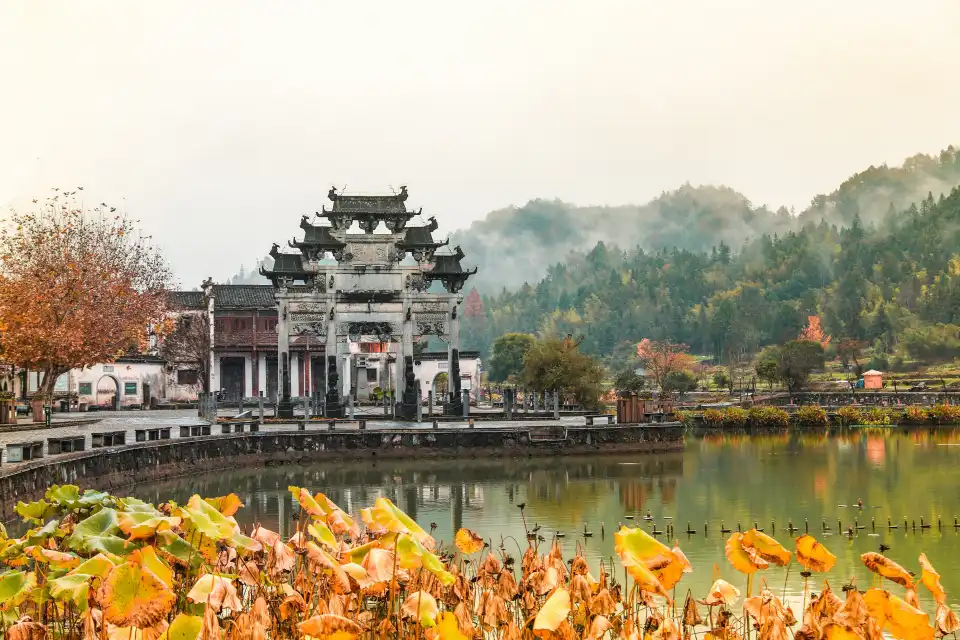
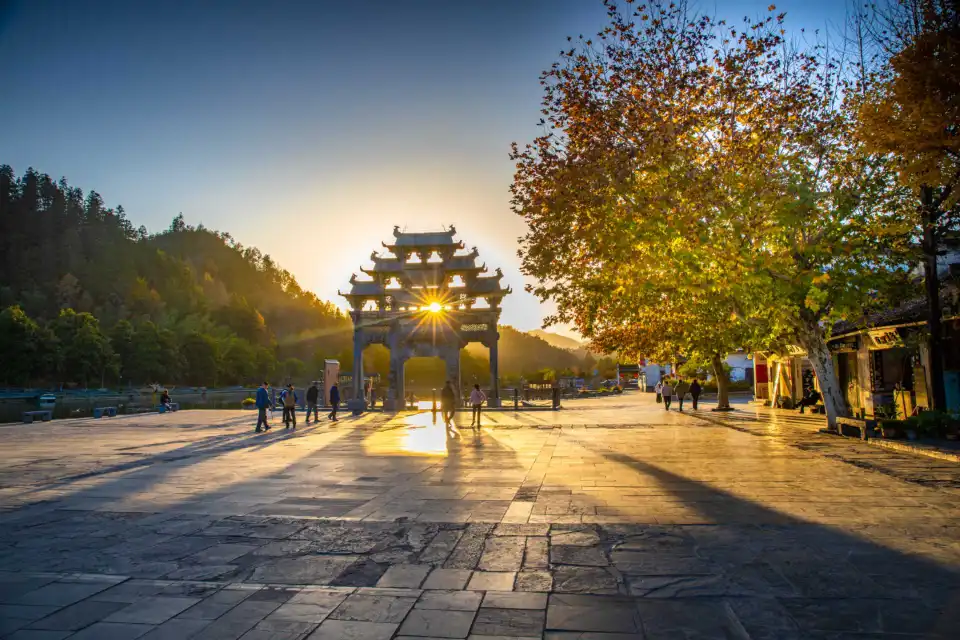
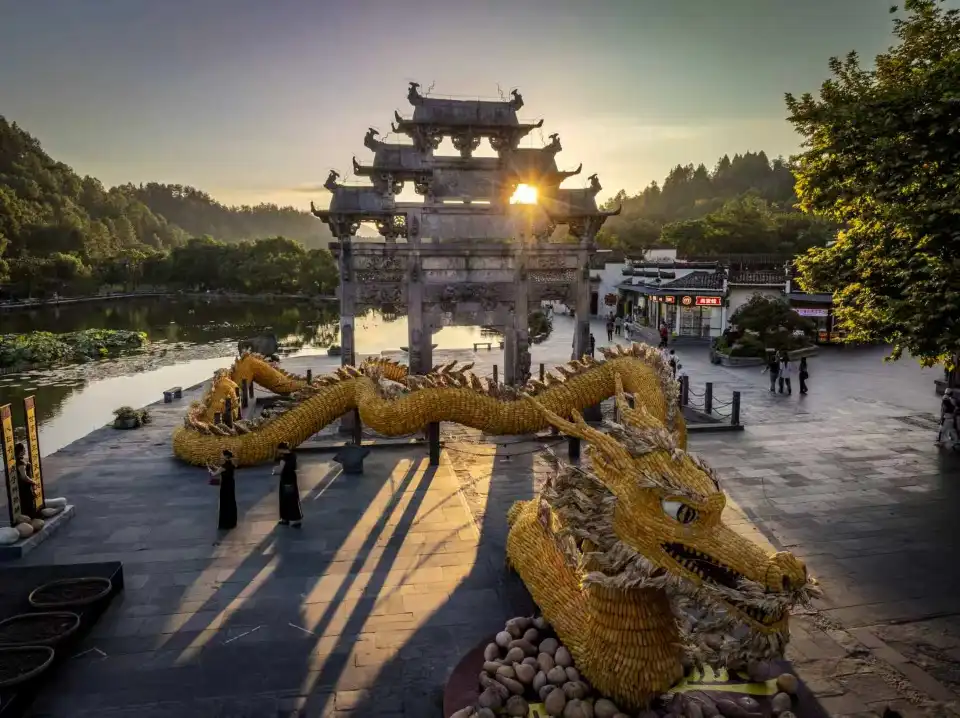
The main entrance is in the southwest corner, and the first thing that meets the eye is the Hu Wenguang Memorial Archway, built in the sixth year of the Wanli reign of the Ming Dynasty. It is entirely carved and built from local "Yi County bluestone" marble, with five tiers of stone carvings stacked layer upon layer, grand and imposing. Beside the archway, the broad surface of Mingjing Lake is a good spot for photographing the reflections of Hui-style buildings. Entering the village, Ruiyu Ting at the Henglu Street intersection is a typical Huizhou merchant residence. The couplets in the hall are quite meaningful, such as "Happiness is earned through hard work; good bargains often come from being willing to take a loss," which discusses business principles and also contains a philosophy of life. Heading east along the Front Stream, Jing'ai Hall is one of the larger surviving ancestral halls in the village. The "filial piety" character hanging in the center is ingeniously designed—the right half resembles a person bowing with hands clasped, while the left half resembles a monkey, meaning that only those who observe filial piety are truly human, and those who are unfilial are like macaques. Shangde Hall upstream is one of the oldest surviving Ming Dynasty buildings in the village. In addition, Taoli Yuan, which pairs a residence with a study hall; the Hui-style courtyards West Garden and East Garden; Dunren Hall, the late-life residence of the Qing Dynasty Huizhou merchant Hu Guansan; as well as Zouma Lou, Xiulou, and Zhuimu Hall, each have their own features and are worth visiting one by one. Art academy students often come here to sketch, and the young people setting up easels among the white walls and black tiles have also become a scene of the ancient village.


Other visitors' reviews of Xidi
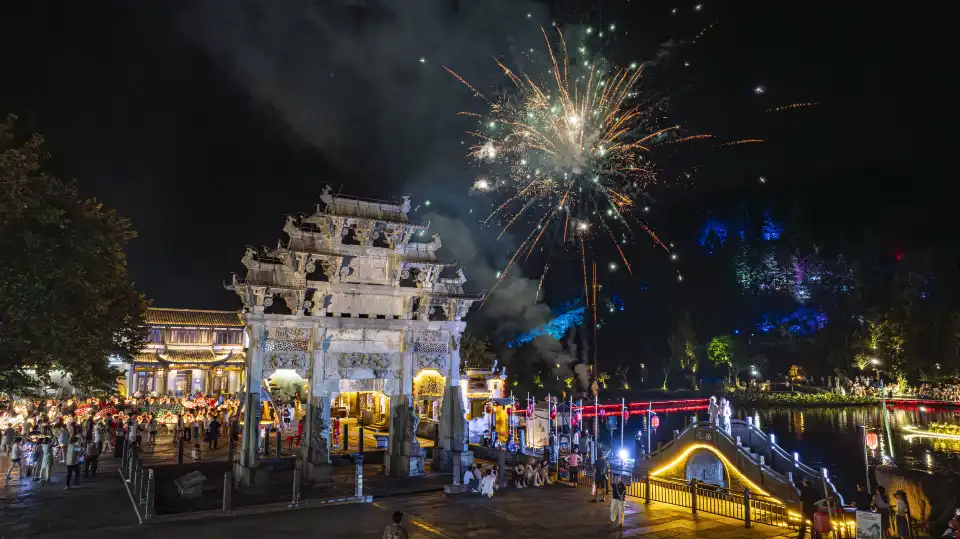
Show More ReviewsXidi is nice; it's not overly commercialized, and you can see the villagers' lives. It's rustic and steeped in history. The village is well-preserved, perfect for a leisurely experience. However, wandering around on the off-main roads after dark can be a little scary. There are folk performances in the square at night, which are very lively, and at 11 pm, they even play gongs and drums to signal the night watch. Hongcun is heavily commercialized, with assembly-line-like shops selling cultural and creative products, Hanfu (traditional Han clothing), silver jewelry, and even grilled sausages—it's pretty much the same everywhere in China. But the morning and night views of Moon Pond and South Lake are worth seeing.