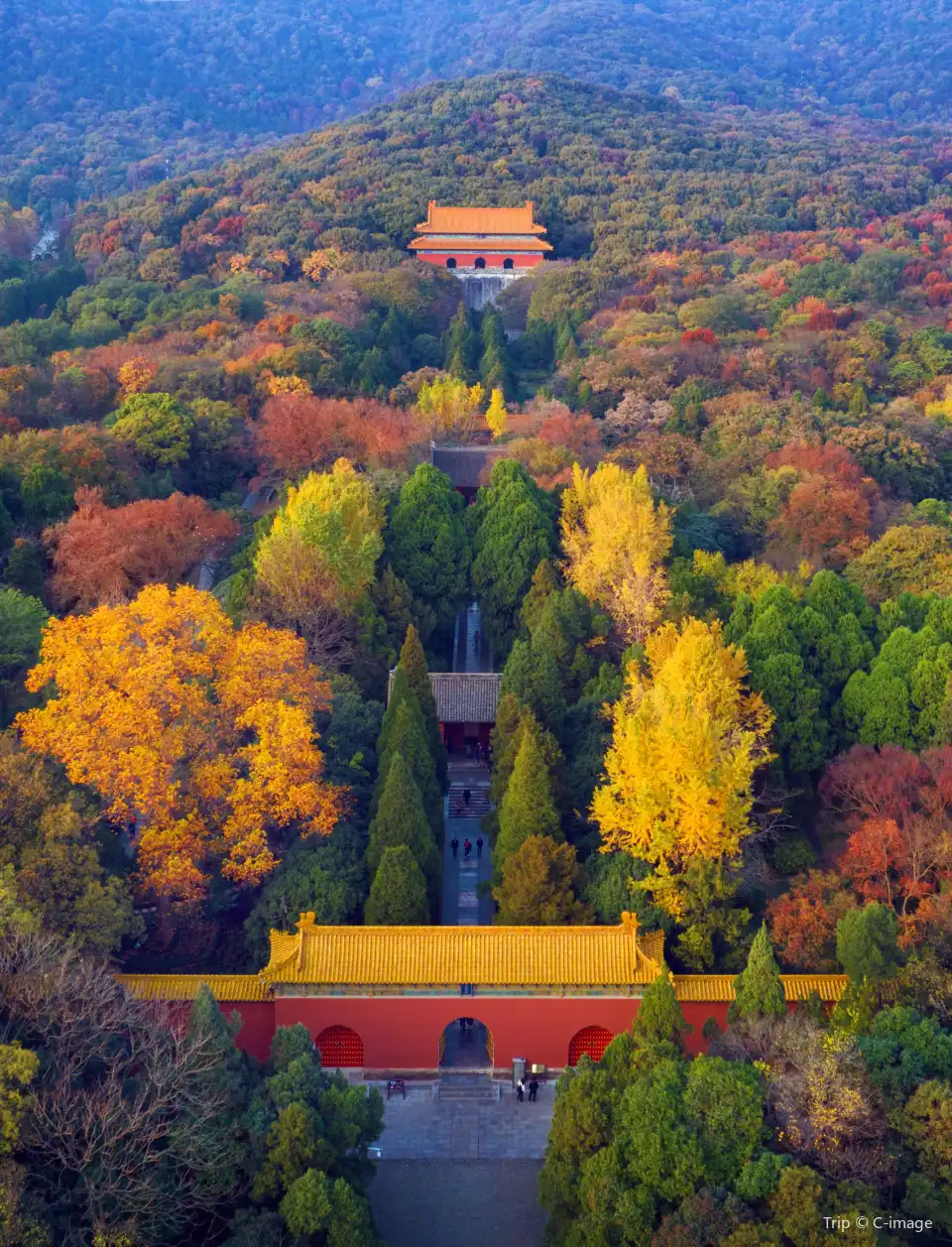
Ming Xiaoling Mausoleum(Ming Xiaoling Scenic Area, Ming Tomb Scenic Area)
明孝陵 based on 491 reviews
 No. 2 of Fall Viewing Attractions in Jiangsu
Closed for the day Opening hours of Ming Xiaoling Mausoleum
Ming Xiaoling Mausoleum Highlights: Must-See Features and Attractions
The Ming Xiaoling Mausoleum is located in the scenic area of Zhongshan Mountain. It is the tomb of Emperor Taizu Zhu Yuanzhang and Empress Ma, featuring magnificent architecture that represents the architectural and stone carving achievements of the early Ming Dynasty. It also directly influenced the design of imperial mausoleums in both the Ming and Qing dynasties.
Cemetery area distribution
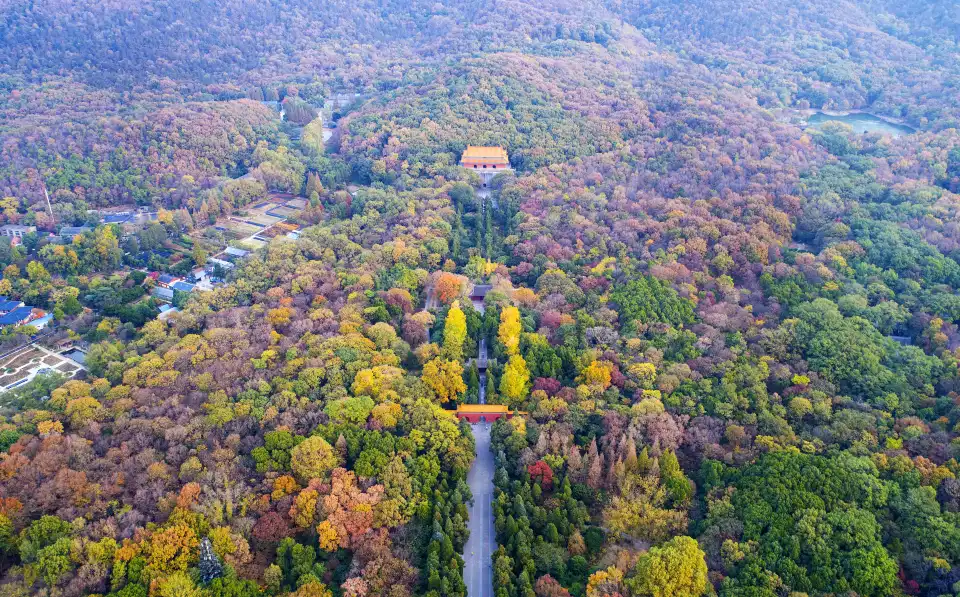
The overall layout of the mausoleum area is divided into two parts: the winding sacred path of the tomb and the main structures of the mausoleum, which is the burial site of Zhu Yuanzhang. The main structures of the Ming Xiaoling Mausoleum include the Civil and Military Gate (the main entrance), the Xiang Hall, the Square City, the Ming Tower, and the burial mound (also known as the Chong Mound), all arranged along the traditional central axis and enclosed by walls. The layout design of the Ming Xiaoling Mausoleum, featuring "court in the front and living quarters at the back, square in the front and round at the back," along with architectural forms such as the Square City, Ming Tower, and the burial mound, pioneered the construction regulations of imperial mausoleums in the Ming and Qing dynasties. It is hailed as a milestone in the development history of Chinese imperial tombs.
Shinto
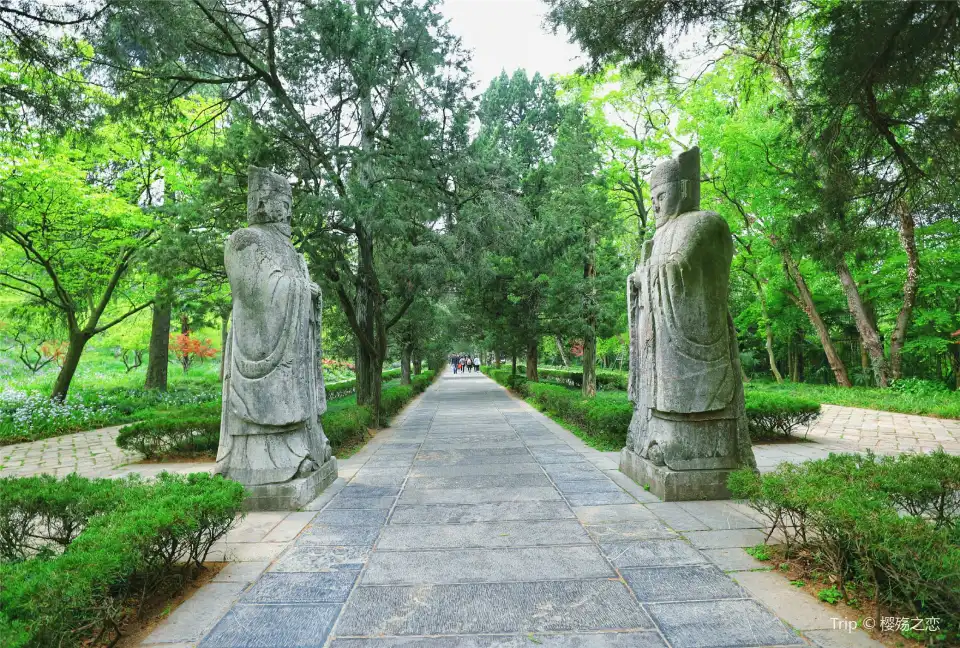
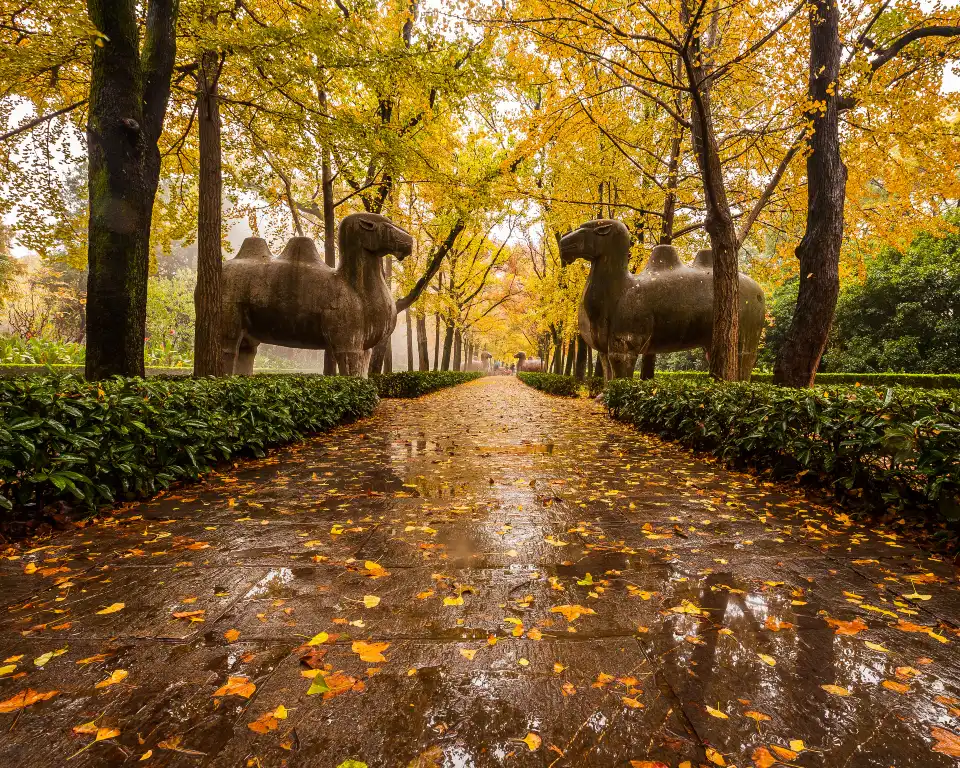
The sacred way stretches from the dismounting arch to the main gate of Ming Xiaoling Mausoleum, spanning 2400 m. With its winding and secluded path, it breaks away from the traditional straight layout of Chinese imperial mausoleums. The sacred way is divided into two sections: the stone elephant road and the Wengzhong road. The stone sculptures on both sides are a major highlight, featuring 12 pairs of towering stone animals and two pairs each of civil officials and military officers. These sculptures are carved from single blocks of stone, showcasing simple designs, clear patterns, and exquisite craftsmanship. Every fall, the ginkgo trees and red maples here create a picturesque scene, attracting numerous photography-loving travelers.
Enjoyment Hall
The sacrificial hall, also called the Ming Xiaoling Mausoleum hall, was originally the place to enshrine the memorial tablets of Zhu Yuanzhang and Empress Ma. The original hall has been destroyed, but the three-layer Sumeru pedestal base and six large carved stone steps with cloud, dragon, and landscape reliefs remain. This site now serves as a historical exhibition room.
Fangcheng
The square city is a massive structure in front of the Ming Xiaoling Mausoleum's treasure dome, built with large stone slabs and featuring a sumeru base at the bottom. The Ming Tower stands atop the square city, with its original yellow-glazed roof destroyed and later restored. You can ascend to the Ming Tower via the walkways on either side of the square city.
Ming Xiaoling Mausoleum - Treasure dome
North of the square city lies the Ming Xiaoling Mausoleum's burial mound, also known as the treasure dome, with a diameter of approx. 400 m. This is the burial site of Zhu Yuanzhang and Empress Ma. Entering through the central arched gate in front of the square city leads to a vaulted tunnel. After climbing 54 steps and exiting the tunnel, you'll reach the southern wall of the burial mound, inscribed by later generations with "This mountain is the tomb of Emperor Taizu of Ming." Beyond this point, visitors cannot proceed further. Beneath the burial mound lies the underground palace of Zhu Yuanzhang's tomb, which has not been excavated.
Plum garden and cherry garden
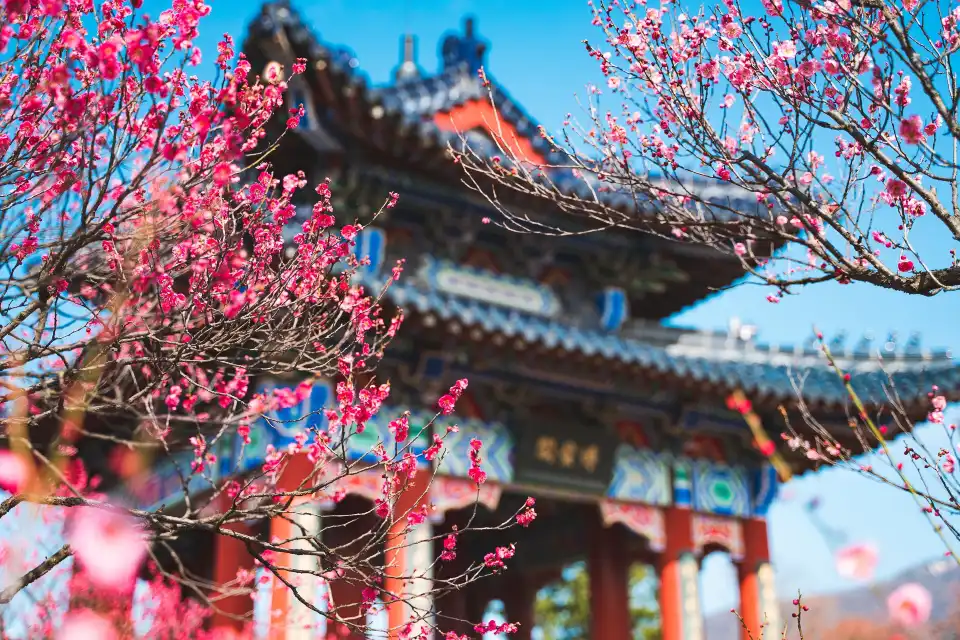
Plum blossom hill is located directly south of the Ming Xiaoling Mausoleum, covered with plum blossoms. At the foot of the hill lies the plum blossom valley, home to over 13,000 plum trees. The wintersweet garden of the Ming Xiaoling Mausoleum is distributed on both sides of the central axis from the Golden Water Bridge to the Soul Tower, covering more than 80 acres with over 3,000 wintersweet plants. It encompasses 3 major variety groups and more than 60 varieties. The wintersweet viewing period lasts from December each year to late February of the following year.
On Plum blossom hill, you can also see the tomb of Sun Quan. Near the stone elephant path of the sacred way lies a cherry blossom garden, where travelers flock to admire the blossoms from late March to early April. Honglou art garden is a landscape that embodies the culture of Dream of the Red Chamber and the rich Jiangnan style. To the north, Zixia lake serves as an ideal summer retreat.

Other visitors' reviews of Ming Xiaoling Mausoleum
Show More ReviewsMing Xiaoling Mausoleum is so worth to visit as well as surrounding attractions. The area is very beautiful and very looked after. We spent the whole day exploring and had an amazing time. It was quite busy on the Saturday but we were able to go everywhere and didn’t need to wait in queues. The area gives you a great combination of nature and history. It’s easy to walk everywhere, but distances between some of the attractions on the mountain can be long, and walking everywhere is not possible in one day so will need to take a tourist shuttle which costs 10 yuan per person per trip or 30 for the whole day, can be bought as you board the vehicle. No one speaks English really as expected but it’s mostly intuitive. We finished at Linggu temple and struggled to get a taxi from there (but it’s possible, note that not from all parts it’s possible) so we took a public bus that takes you to a metro station.