Qixia Mountain Scenic Area
栖霞山 based on 74 reviews
 2027 Global 50 - Fall Viewing Attractions
Open Opening hours of Qixia Mountain Scenic Area
Qixia Mountain Scenic Area Highlights: Must-See Features and Attractions
Qixia Mountain Scenic Area, also known as Sheshan, got its name because the Southern Dynasties hermit Ming Sengshao built a hut here called "Qixia Jingshe." It is a famous maple-viewing destination in Nanjing and, together with Fragrant Hills in Beijing, Tianping Mountain in Suzhou, and Yuelu Mountain in Changsha, is known as one of China's four great maple-viewing destinations. The mountain has three peaks; the main peak, Sanmao Peak, is approx. 286 m above sea level. To its northeast is Longshan, to its northwest is Hushan, to its north lies the Yangtze River, and to its south is Zhongshan. There has long been a folk saying: "Spring at Niushou, fall at Qixia."
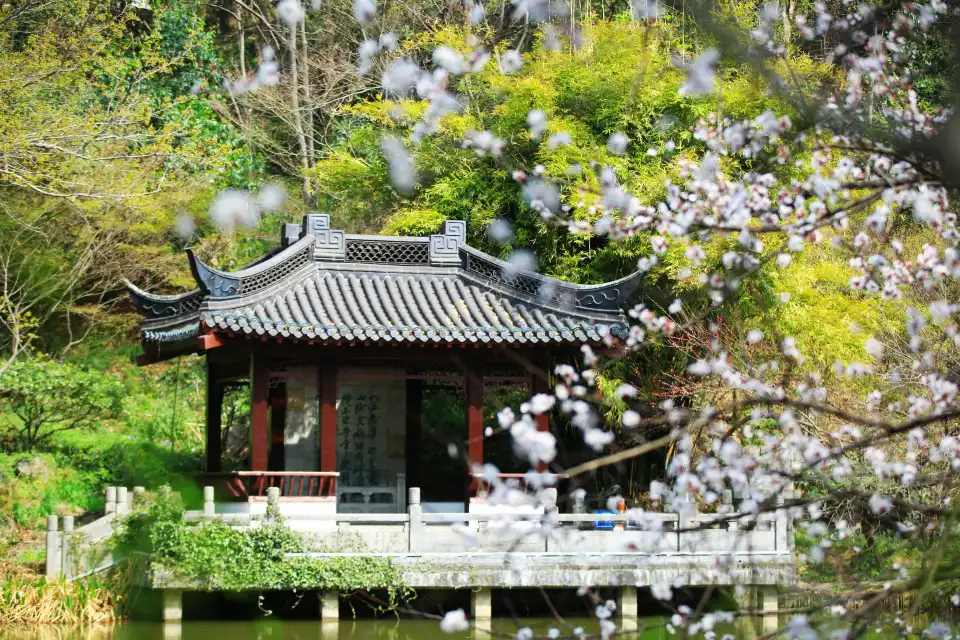
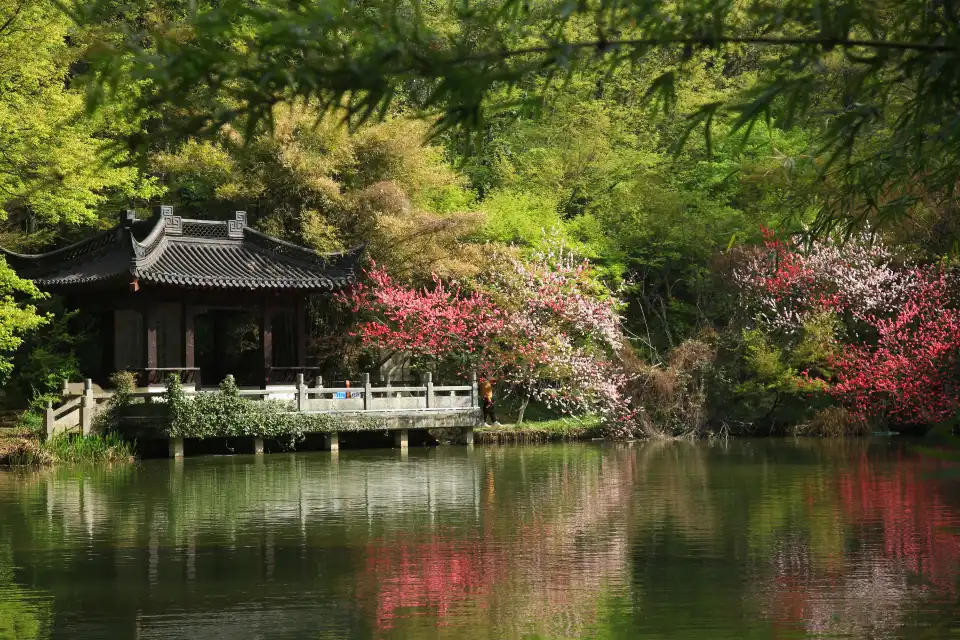
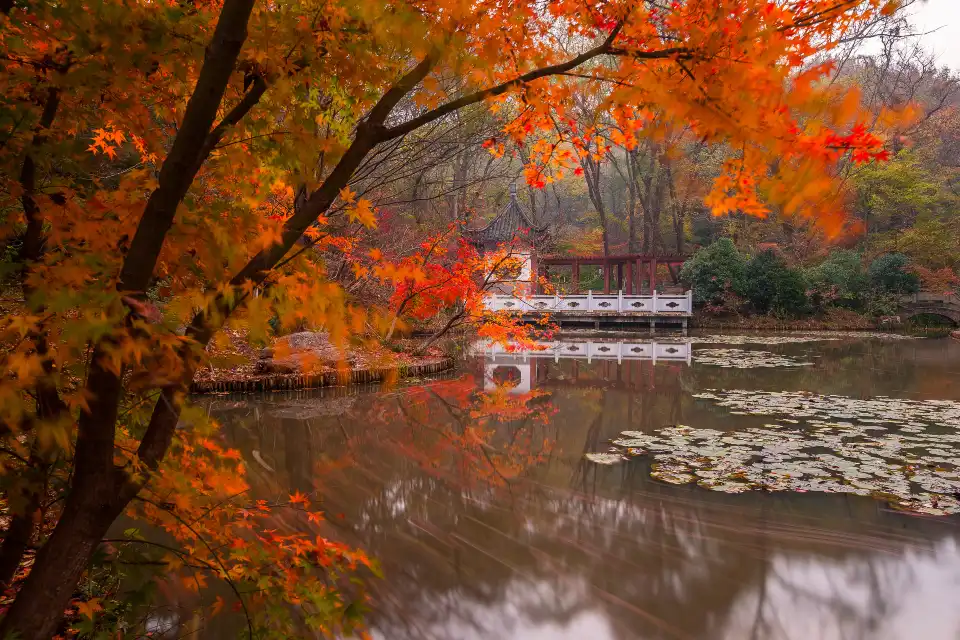
Upon entering the mountain, the first sight is Mingjing Lake, with a pavilion in the center connected to the shore by a winding bridge, small and exquisite. To the east is Qixia Mountain Scenic Area, originally built during the Southern Qi dynasty and the ancestral temple of the Three Treatise School of Buddhism. East of the temple stands the Relic Pagoda, an octagonal five-story dense-eave stone pagoda, with relief carvings on its body depicting the Eight Phases of Shakyamuni's life and flying apsaras, elegant and refined. Beside the Relic Pagoda is the Thousand Buddha Cliff Grottoes, first carved during the Southern Qi dynasty and added to over successive dynasties, preserving hundreds of Buddha statues. Among them, the discovered flying apsara murals are well preserved and are a rare surviving mural within the Thousand Buddha Cliff, worthy of attention.
The mountain also contains natural wonders such as the Green Blade Sword, Tiankai Rock, and One-Line Sky. Climbing to the Biyun Pavilion on the summit of Tiger Mountain in the northwest, visitors can gaze into the distance at the Yangtze River. On the southern slope of Pingshan Hill there is a wavy blue-gray rock formation known as "Stacked Wave Rock," which has a unique appearance. It is said that Emperor Qianlong, on his six tours to the south of the Yangtze, stayed at Qixia five times; although the temporary palace was destroyed in wartime, traces of it can still be found. In late fall, maple leaves across the mountain turn red as cinnabar, and the layered forest is fully dyed in color—a classic experience when visiting Qixia Mountain Scenic Area.
Qixia Mountain Scenic Area Reviews: Insider Insights and Visitor Experiences
Qixia Mountain Scenic Area Photos: Trip Moments
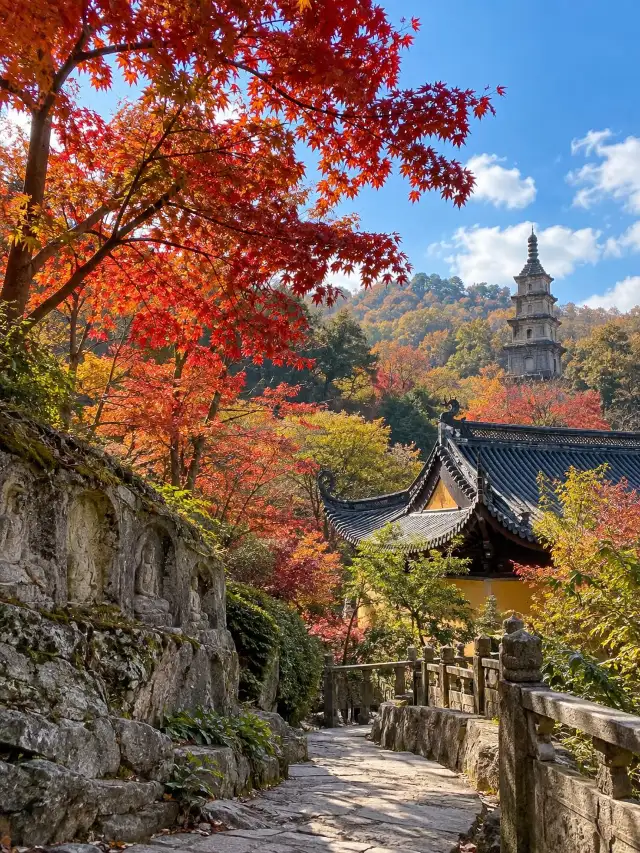 Qixia Mountain Half-Day Trip🌅 [The benefits of arriving early] A half-day at Qixia Mountain is best started at Mingjing Lake. Enter the mountain around 8:00 AM when there are fewer crowds and the light is soft. The lake surface is calm, and the reflections of the red leaves and the pagoda remain undisturbed by the wind. Take a walk around the lake first to capture the morning reflections, then head toward the temple. The benches by the lake face the pagoda, so feel free to sit for a while without rushing. 🏯 [The rhythm of the temple] There is no need to rush through Qixia Temple. Take your time admiring the yellow walls, blue-tiled roofs, and red leaves, and be sure to pause by the old maple tree in front of the Sarira Pagoda. After seeing the Thousand Buddha Rock, take the path on the side of the temple up the mountain for a bit. From the hillside, you can see the entire expanse of red leaves, which looks even more spectacular than when viewed from beneath the trees. The square in front of the temple is often filled with people sketching. The combination of the red maple leaves and the yellow walls is the most classic scene at Qixia Mountain. 🍜 [What to eat after descending] You will likely be coming down just in time for lunch. There are plenty of snacks and casual dining options around the scenic area, so stop for a break before heading back. The half-day trip doesn't involve too much walking, and the pace is relaxed enough for seniors and children to keep up. If you get tired, just sit by the lake. The scenery is just as beautiful. If you still have time, you can take a stroll through the ancient town and old streets at the foot of the mountain to extend the experience of your half-day trip. 📌 [Practical tips] The color of the red leaves depends on the weather, so check the latest updates from the scenic area before you set off. Opening hours and ticket policies are subject to the latest announcements from the scenic area. It is cool in the mornings and evenings during late autumn, so dress in layers. The stone steps can be slippery after rain, so wear non-slip shoes. The maple leaves are at their reddest around the time of Frost Descent. If you go too early, the leaves won't be fully colored, and if you go too late, they will fall with the wind.SereneCelest91

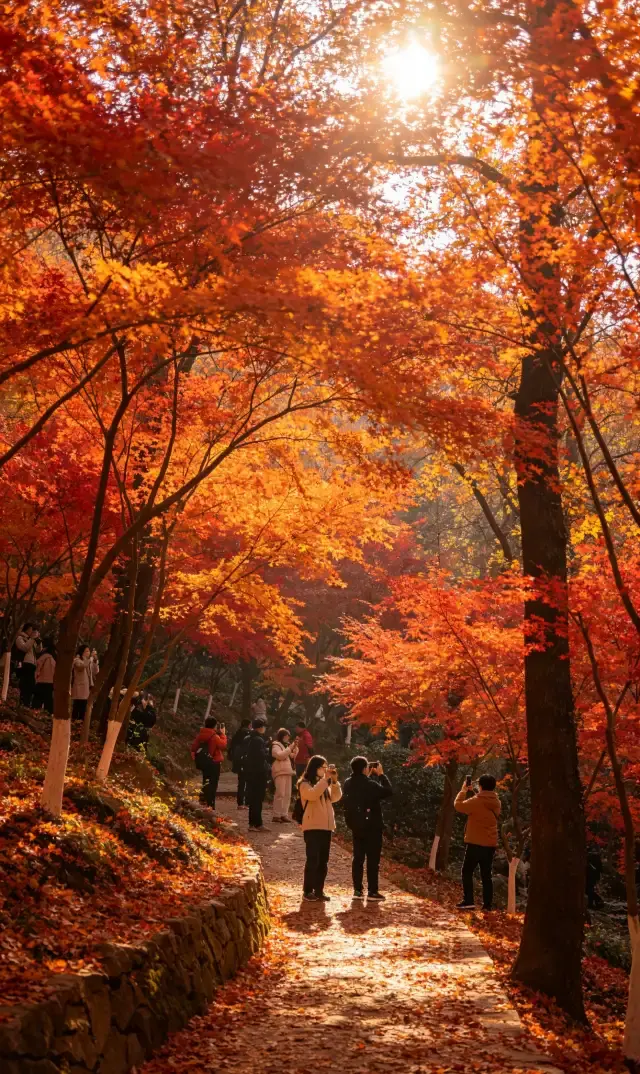 Nanjing's Qixia Mountain is beautiful, but I won't be going back, because it's just...To be honest, the red maples at Qixia Mountain are truly beautiful, but the experience during the foliage season is hard to put into words! Every November is its peak, with red maples covering the mountains and the sound of bells from the ancient temple—the atmosphere is incredible. That said, after walking through it, I have to say the scenery is worth it, but I won't be coming back to deal with the crowds again 😭 ✅ Highlights worth mentioning Qixia Ancient Temple is nestled in the forest, with red walls against red leaves, creating a serene, Zen atmosphere. Climbing Fengxiang Peak to overlook the entire forest, you'll see layers of red, orange, and yellow intertwined. With the river view and red leaves in the same frame, any photo you take looks like a cinematic autumn shot. There's also the Thousand Buddha Rock, where the grottoes and stone carvings are rustic and profound. You can soak in the history while sightseeing—the scenery itself is absolutely flawless. ⚠️ Things to know before you go during the foliage season First, it's incredibly crowded! During the peak foliage season, the visitor volume is explosive. The mountain trails are packed, photos are full of people's heads, and it's very hard to get a clean shot. Second, transportation is a nightmare. During peak season, driving yourself often leads to long traffic jams, parking is limited, and if you take public transport, you still have a long walk after getting off. Third, the foliage window is very short. The best viewing period is only about ten days and is heavily influenced by the weather. If you go too early, the leaves haven't turned red; if you go too late, the wind has blown them off. It's easy to make a wasted trip. Fourth, the hike is quite strenuous. There are many stairs, which can be tough for seniors and children, and the whole route is exhausting. 🗺 Practical tips 📍 Address: Qixia Mountain, Nanjing ⏰ Best time to visit: Early to mid-November. Try to enter the park before 8:00 AM to avoid the crowds. 🚗 Prioritize leaving early or choose public transport to avoid the afternoon peak. 💡 Tips to avoid pitfalls: Wear comfortable, non-slip shoes. If you want to enjoy the scenery in peace, don't come on a weekend during the peak of the foliage. The scenery is undeniably stunning, but the crowds, traffic, and short viewing window mean I'm satisfied having seen it once. It's not that the place isn't good; it's just that the cost of visiting during peak season is too high. 💬 Question for you: Are you willing to endure traffic and crowds for the sake of autumn foliage? Let me know in the comments! Qixia MountainFQ. AIM1

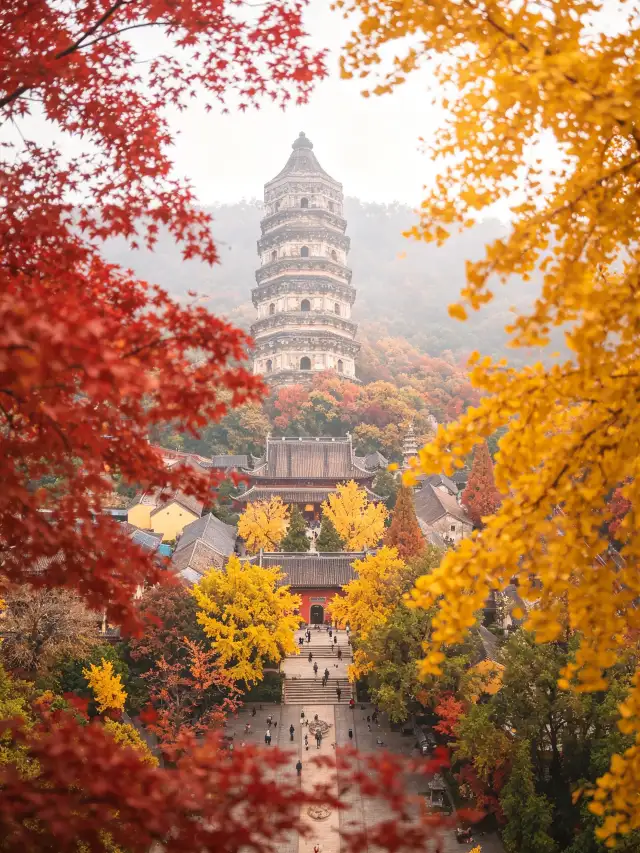 I thought autumn was wrapping up, until Qixia Mountain set Jinling ablaze with a crimson bell chimeWho gets it! The moment the mountain gate opened in the morning, mist was still clinging to the maple branches. Layers of red, orange, and gold press down, with the red walls of Qixia Temple half-hidden among the leaves. When the bell tolls, the whole mountain falls silent. I climbed the stone steps slowly by myself, the fallen leaves rustling underfoot. No rushing to the summit, no fighting for photo spots. I found a rock to sit on in Red Maple Valley, watching the sunlight warm the ancient pagoda. Mid-November is its most intense ten days—if you don't come now, one gust of wind, and Nanjing's autumn will be gone. 📍Nanjing · Qixia Mountain (Qixia Temple/Red Maple Valley/Mingjing Lake) 🚇 Take the subway + bus to the South Gate of Qixia Mountain 📅 The peak of the red maples is in early to mid-November; the light is softest before 8:00 AM 🧥 A thin sweatshirt + windbreaker, as it's chilly on the mountainStella Bubbly Sniff

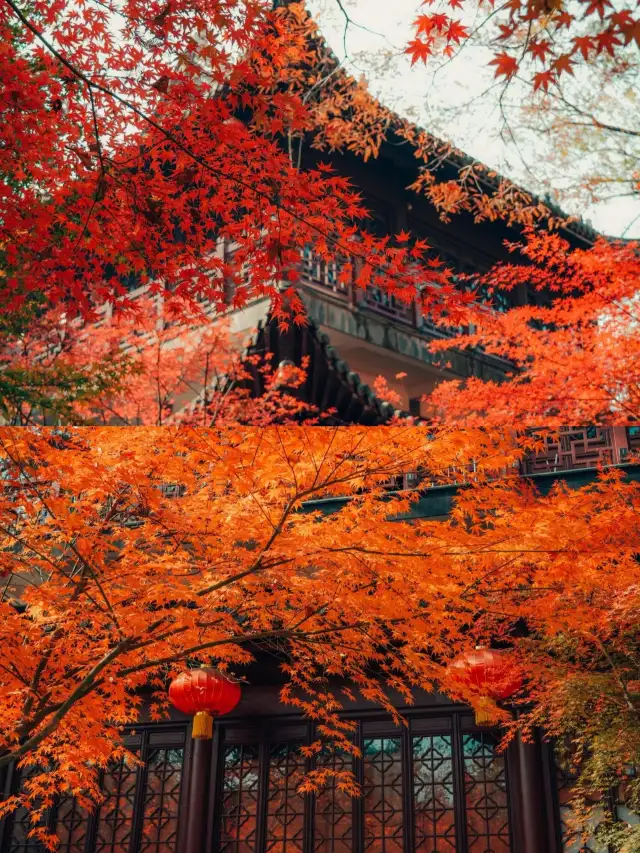 Qixia Mountain | Deep Autumn in Jinling, a Trip to Red Maples and Ancient Temples📍Nanjing, one of China's top 4 maple-viewing destinations. Featuring mountains of red maples, a thousand-year-old temple, Six Dynasties grottoes, and views of the Yangtze River. Known as the place where "half of Jinling's history lies in Qixia Mountain" ⏰Best time for maple viewing: Mid-to-late Nov – early Dec 🎫Admission is ¥40 during peak maple season. Free entry before 7:00 AM. Discounts available for students and seniors with valid ID. Last entry at 4:30 PM, park closes at 5:00 PM 🚗Driving: West Gate (concentrated historical sites) / South Gate (closer to red leaves). Parking is ¥10–15. Expect heavy traffic on weekends during the maple season. Accessible via bus 206/D21. Take the subway to Qixia Mountain Station and walk to the South Gate 🚌In the park: Sightseeing shuttle is ¥20 one way. No cable car; walking is the primary way to get around ✅Must-see Mingjing Lake (reflections of red leaves), Qixia Ancient Temple (red walls and red leaves, vegetarian noodles), Sarira Pagoda, Qianfo Cliff Grottoes (Six Dynasties stone carvings in Jiangnan), Red Maple Valley, Shuanghong Garden, Taixu Pavilion, and the Emperor's Yangtze River Overlook (panoramic view of the Yangtze) 🗺Routes ▪Leisure & Culture (3h | seniors & families): West Gate > Mingjing Lake > Qixia Ancient Temple > Qianfo Cliff. Take the shuttle up the mountain for an easier, less strenuous climb ▪Maple Viewing Hike (4–5h): West Gate > Mingjing Lake > Qixia Ancient Temple > Qianfo Cliff > Red Maple Valley > Taixu Pavilion > Emperor's Yangtze River Overlook > Descend ⚠Tips 1. Wear comfortable, non-slip sneakers. Bring a light jacket as autumn temperatures can be low 2. It gets extremely crowded on weekends during the maple season. Try to arrive early or visit on a weekday. Check the real-time maple leaf forecast before you go to avoid disappointment 3. Qixia Ancient Temple stops admitting visitors at 4:00 PM. Do not touch the grotto artifacts 4. Wear light-colored or "New Chinese Style" clothing for great photos with the red maples. Stay on marked paths; open flames are prohibited in the forest 🍜Food: Home-style Nanjing dishes in Qixia Ancient Town; vegetarian noodles at Qixia Temple; duck blood vermicelli soup and soup dumplings at the foot of the mountainZyleriaSerenity890`

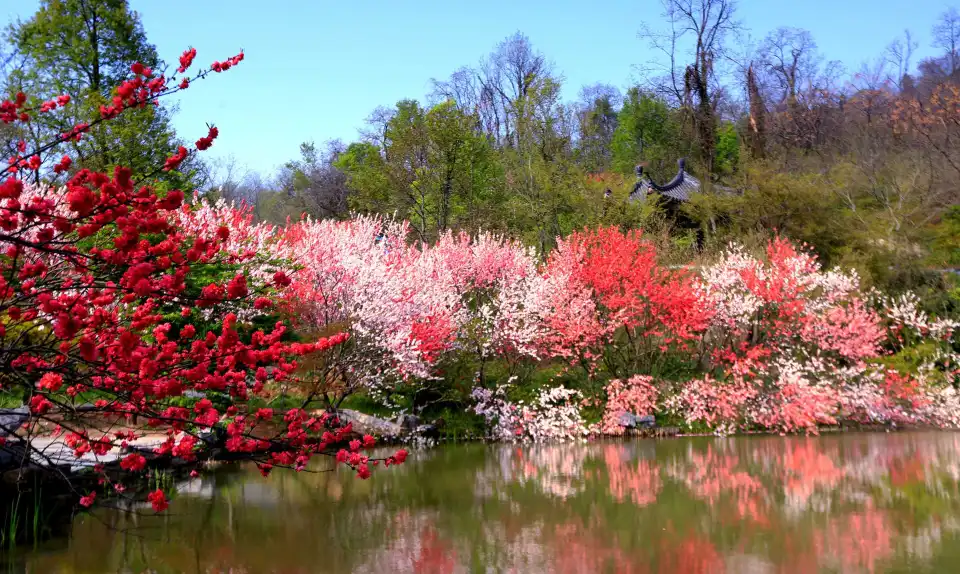
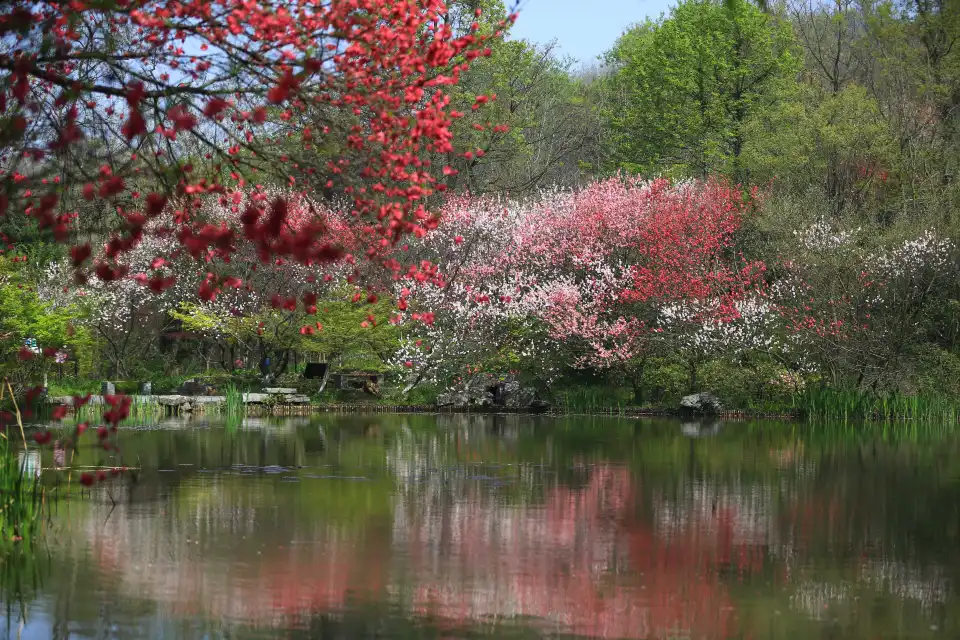
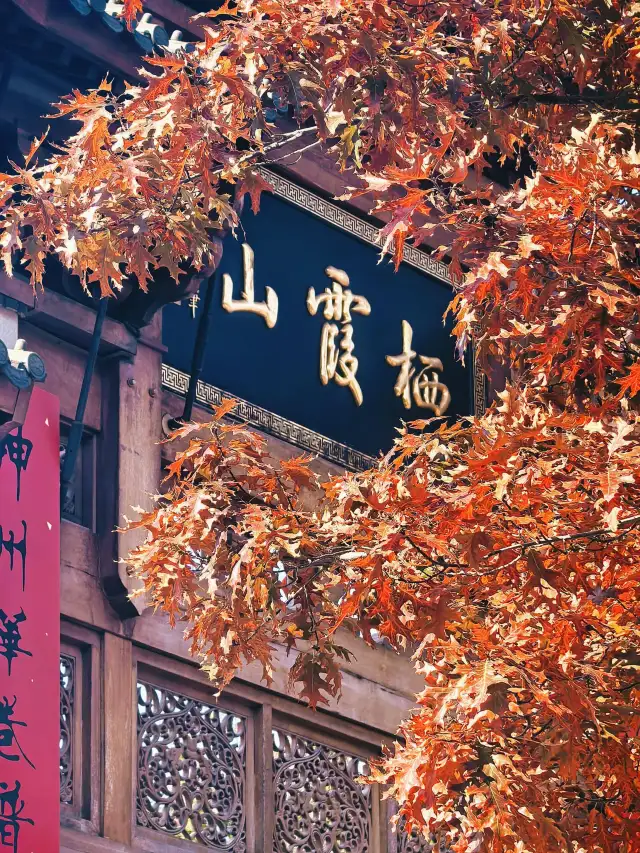 Nanjing Must-Visit Qixia Mountain Red Maple Walking Map: Ancient Temple Meets Colorful Autumn HillsQixia's Top Spot! Encounter the Ancient Southern Dynasties Temple and Nanjing’s Most Beautiful Maple Scenery🔥 Who says Nanjing only has phoenix trees? This low-key "No.1 Scenic Mountain of Jinling" hides the wildest autumn colors in Jiangnan! This year, the maple leaves turned red earlier than usual, with ginkgo trees and ancient temple eaves intertwined on the mountain—every snapshot is wallpaper-worthy~ 🚌 Transportation Tips 📍 Address: No. 88 Qixia Street, Qixia District 🚇 Take Metro Line 2 to Jingtian Road Station, then transfer to Bus 326 direct 🚗 Drive and navigate to West Gate Parking Lot (parking is limited, early arrival recommended) 🎯 Walking Route 1️⃣ Qixia Temple → Thousand Buddha Cliff The top temple among the 480 temples of the Southern Dynasties! Walk up the ginkgo-covered steps, the red walls and golden tiles framed with maple leaves are stunning 📸 Photo spots: Ancient ginkgo tree at the temple square, upward shot of the Thousand Buddha Cliff grotto (avoid crowds) 2️⃣ Red Leaf Valley → Emperor Qin’s Riverside Viewing Spot The highlight is here! Rush along the stone path into the sea of maple trees; the viewing platform at Emperor Qin’s Riverside spot offers shots of the Yangtze River and red maples together 🍁 Live update: Peak red leaves reached on 11.20, hurry up! 3️⃣ Peach Blossom Lake → Maple Ridge A hidden gem! The lake reflects the colorful forest, with the gentlest sunlight at 3 PM 🔥 Pitfall Prevention Guide • Mineral water at the foot of the mountain costs 5 RMB/bottle, better bring your own • Drones require prior registration; some areas are no-fly zones • Scenic area electric carts only go halfway up the mountain; hiking is more rewarding 💡 Hidden Activities • Collect a souvenir stamp: free pass booklet available at the visitor center • Night Maple Special: Even more stunning after lights turn on in early December (last entry at 17:30)Parker Kimberly Kim

 Nanjing Xianlin | Atour Hotel Xianlin Lake: A Great Value for Business & Leisure TravelSeriously, if you're visiting Xianlin for business, shopping at Wanda Mall, or heading to Baohua Mountain, this Atour is the perfect choice! 📍Atour Hotel (Nanjing Xianlin Avenue, Xianlin Lake Metro Station) is located on Xianlin Avenue East Road. It’s not far from Xianlin Lake Station on Line 4—just a 10-minute drive away. There’s also free parking, which is great for those traveling by car. As soon as you walk in, you'll see Atour's signature Zhuju Library, full of cultural ambiance. The minimalist wood decor and warm lighting make you feel instantly relaxed after a long journey. The front desk is efficient, the service is gentle, and they respond quickly to requests. Robots can deliver items to your room, which is a nice touch. The room is clean and tidy with great natural light, so it doesn't feel cramped. The Plant beddings are Atour's classic signature; the mattress and pillows have just the right firmness, ensuring a good night's sleep even when you're away. Toiletries are the familiar Afu brand. The bathroom has a separate wet and dry area, stable hot water, and complete amenities. The Jimu room type even has a small fridge, which is convenient for storing drinks. The facilities are perfect for long-term stays: the Xiangzhao breakfast restaurant offers a wide variety of options; the Youhanchu gym is great for a quick workout in your free time; and the Chuchen self-service laundry room includes dryers, so you don't have to worry about clothes during long business trips or travels. It's near the Wanda Mall business district, making dining and shopping convenient. It's also a great base for visiting Baohua Mountain and Qixia Mountain. Without overly flashy decorations, it maintains Atour's consistent quiet and comfortable style. It's peaceful, and the soundproofing is solid. Whether you're a student taking exams, on a business trip, or here for a short trip around Nanjing Xianlin, if you're looking for a stable, reliable, and clean hotel, this one is a great option. The overall stay is reassuring and restorative.Grace64 Cook~

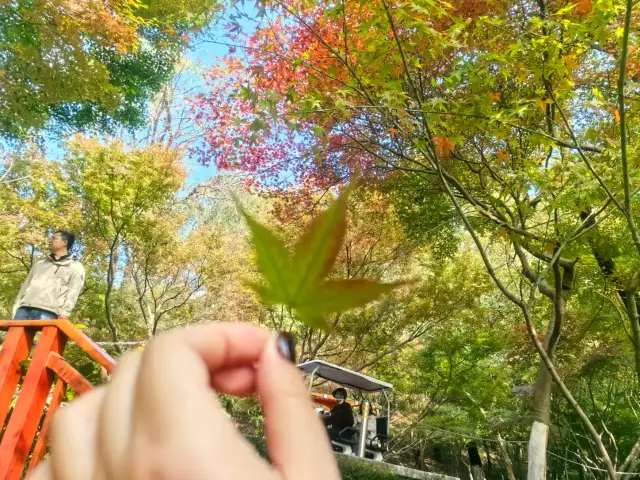 Nanjing Qixia Mountain | The premier scenic mountain in Jinling, a must-visit for autumn maple viewing📍Location: Nanjing Qixia Mountain ⏰Best viewing period: Early November – early December ✅They say "Spring Niu Shou, Autumn Qixia." The soul of Nanjing's autumn is surely hidden in the maple leaves covering Qixia Mountain✨ Stepping into the forest, I was stunned by the layers of colors! The maple leaves are in a gradient stage, slowly blending from bright green and gentle yellow into passionate red. The colorful hues intertwine like a palette mixed by nature itself🍂. Sunlight filters through the gaps in the branches, with light and shadow dancing between the leaves. Simply holding a maple leaf up to the camera creates an incredibly atmospheric shot. Walking slowly along the mountain path, maple trees grow scattered across the hills, with clusters of fiery red dotting the lush green forest. Every step offers a new view, constantly changing the scenery. There are also sightseeing shuttles available in the mountains, so those who don't want to hike can easily get up the mountain to check in. Walking while breathing in the fresh mountain air is so relaxing. 📸Photography tips ✅Hold a maple leaf in the foreground for a storytelling close-up ✅Shoot upwards at the maple trees; the sunlight through the leaves creates beautiful light and shadow effects ✅Snap candid shots while walking along the mountain trails to easily capture natural-looking photos 💡Travel tips 🔸It gets very crowded on weekends, so it's recommended to start early and arrive off-peak 🔸The temperature on the mountain is lower than in the city, so remember to bring a jacket 🔸Wear comfortable shoes; there are many steps on the mountain paths, so be prepared for hiking 🔸You can check the real-time status of the maple leaves in advance to choose the best time to visitGraceBeaumontf

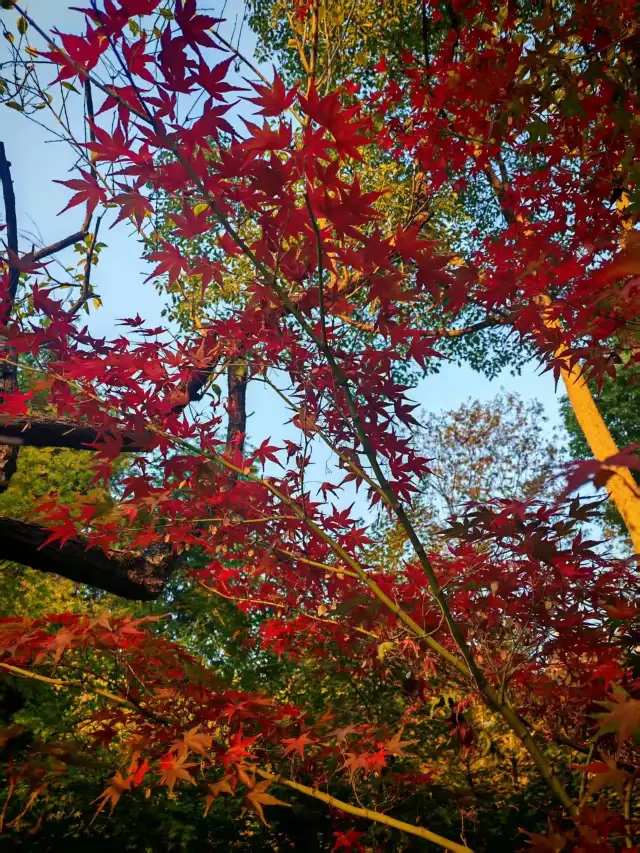 Nanjing Qixia Mountain Live Update | Nov 4 Photos! Maple leaves are turning red, waiting for the forest to be fully ablaze with colorTook a weekday off to visit Qixia Mountain and bring you a live update. If you're planning a maple-viewing trip, this might be helpful! 🍂Current Scenery As of today, November 4, the maple leaves at Qixia Mountain have quietly started to change color. Many red maples are the first to show off their vibrant hues, scattered among the vast green forest. The mix of red and green is slowly building that autumn vibe. The mountain isn't fully ablaze with red yet, but fortunately, there aren't many visitors on a weekday. The mountain trails are quiet, making a walk through the forest exceptionally pleasant. As I walked, I couldn't help but imagine how it will look when the entire forest is painted in autumn colors—I'm really looking forward to it. According to the park staff, the best viewing period is expected to be at the end of November, which is when Qixia Mountain is at its most beautiful. Besides the red leaves, the incense burner at Qixia Temple, Mingjing Lake, and the quaint Qixia Archway are all worth taking your time to explore. The ancient temple, tucked away in the forest, is serene and healing. 🚇Travel Tips 📍Location: Nanjing Qixia Mountain ✅Public Transport: Take Metro Line 6 to Qixia Mountain Station and walk about 800 meters to reach the entrance. It's a hassle-free trip. ⚠️Driving Reminder: Parking at the scenic area is very limited and difficult to find, so we highly recommend using public transport. Visiting on a weekday to avoid the crowds and enjoying this slowly building autumn atmosphere is a great experience. I'm planning to come back for a second visit at the end of November when the red leaves are at their peak!AM. Jess 21

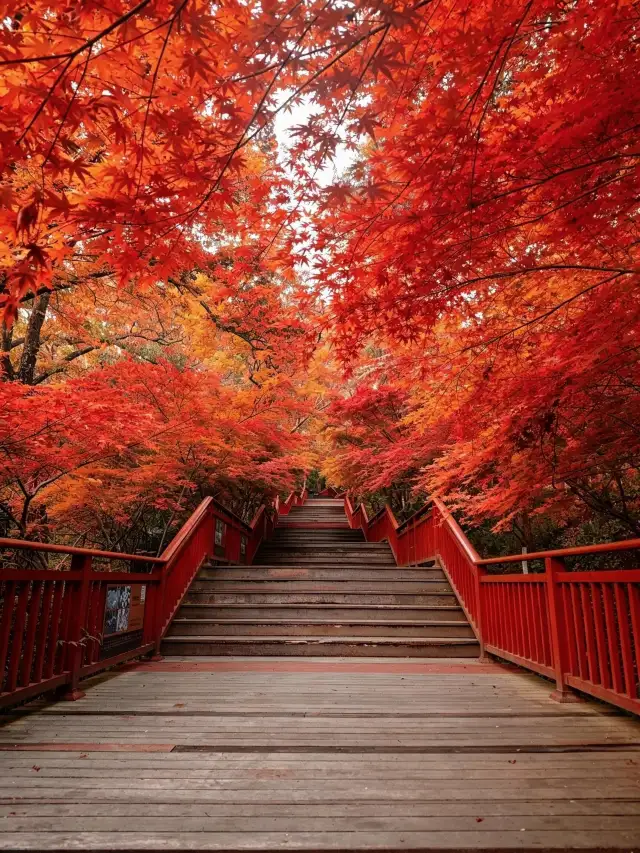 Who gets it! Nanjing Qixia Mountain is my absolute favorite for autumn charmStep into this thousand-year-old mountain and be instantly enveloped by vibrant, fiery red maples. Ancient maples blanket the mountainside, with sunlight filtering through the branches to cast dappled, soft shadows. The crisp, fresh air carries the scent of red leaves and ancient temples, offering a wave of pure healing. With only the mountain breeze and faint birdsong in my ears, I'm far from the hustle and bustle of the city. 📍Nanjing · Qixia MountainDanceFloorKing%2

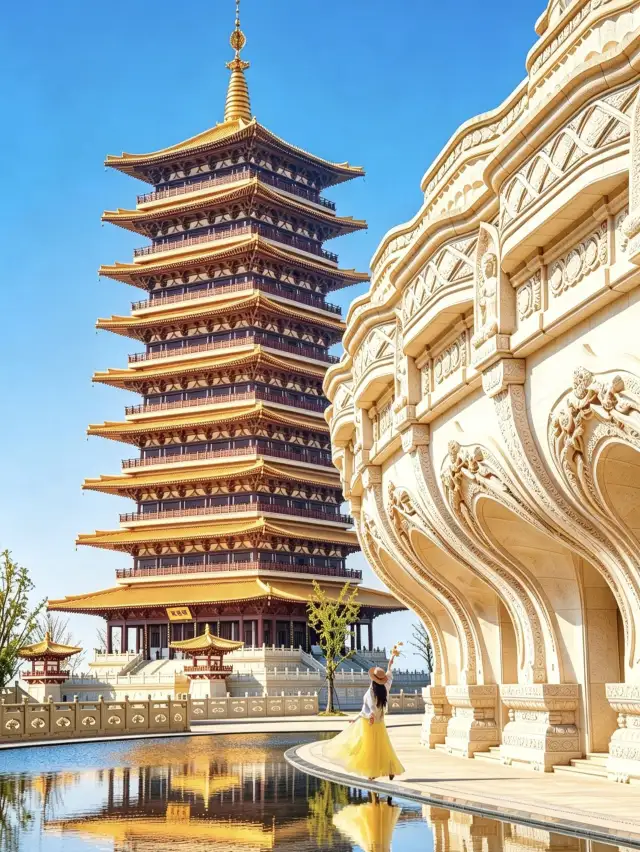 Must-visit autumn spots in Nanjing! Includes a travel guide and tips to avoid tourist traps🍁 When autumn arrives, Nanjing becomes as beautiful as Jinling I'm Youyouzi~ Nanjing was recently ranked the second most popular maple-viewing destination in the country. With the ginkgo trees on Shixiang Road turning yellow and the maples on Qixia Mountain turning red, the city is steeped in autumn vibes. From late October to early December, Chinese tallow trees, ginkgo, bald cypress, and red maples take turns showing off their colors, making the whole city look like it has a caramel filter applied. This guide covers 10 spots and how to connect them. Qixia Mountain | The highlight of autumn in Jinling One of China's four major maple-viewing destinations. Locals say, "Spring at Niushou, autumn at Qixia." Sweetgum, Japanese maple, and trident maple blanket the mountains. Paired with the 1,500-year-old Qixia Temple and the Thousand Buddha Cliff rock carvings, the red leaves and ancient temple create a stunning scene. · Best time: Mid-November to early December · Red Maple Festival ticket: approx. 80 yuan (slightly lower online) · Opens around 7:00 AM; arrive before 9:00 AM on weekdays to avoid crowds · Route: Enter through the South Gate and exit through the West Gate for a gentler, less tiring walk. The area from Taohua Stream to Taixu Pavilion has the richest colors. Allow 4–5 hours 🚇 Big news this year: Metro Line 6 opened in late September. It takes about 40 minutes to get from Nanjing South Railway Station directly to Qixia Mountain Station. After all these years of the Red Maple Festival, this is the first time the subway reaches the mountain gate, and the station hall itself is maple-themed. 🌲 Ming Xiaoling Shixiang Road | The most beautiful 600 meters of autumn in Nanjing Golden ginkgo, orange-red sweetgum, and deep purple Chinese tallow trees layer the path, while stone beasts have stood among the fallen leaves for over 600 years. The morning mist creates the most classic scene. Colors are most vibrant in mid-to-late November. Visit between 6:30 AM and 8:30 AM for the fewest crowds and best light. Don't miss the nearby Changsheng Deer Park. Deer wandering through ginkgo leaves under the red-walled archway make for perfect photos. 🚶 Three routes, choose based on your schedule [Zhongshan One-Day Route · Classic] Morning: Shixiang Road → Changsheng Deer Park → Meiling Palace → Lingyuan Road Plane Tree Avenue → Linggu Temple (climb the tower for views of the colorful forest stretching to the horizon). The Sun Yat-sen Mausoleum is free, but remember to book a few days in advance. A joint ticket for the four Zhongshan attractions costs about 100 yuan and is valid for 2 days, which is much more cost-effective than buying individual tickets. [City Half-Day Route · Mostly Free] Yihe Road → Chaotian Palace → Pilu Temple → Qingliang Mountain. Easily accessible by subway and walking. Yihe Road features golden plane trees paired with historic Republic of China-era architecture—one road tells half the history of that era. Qingliang Mountain, with over 300 ginkgo trees covering the hillside, is free, less crowded, and a favorite autumn spot for locals. [Liuhe One-Day Route · Best for Driving] Zhimaling Metasequoia → Qixia Mountain Red Maple. See two autumn landscapes in one day. The metasequoia trees at Zhimaling stand straight in the lake, earning it the nickname "Nanjing's Little Jiuzhaigou." Admission is free. 💐 Bonus spots along the way The bald cypress trees at the Crescent Moon Embankment of Qianhu Lake in the Zhongshan Botanical Garden turn red in late November and are less crowded than the main scenic area. The Xuanwu Lake Chrysanthemum Exhibition is currently on display in Liangzhou, featuring over 400 varieties and more than 1,000 pots, including famous ones like "Shuaiqi" and "Green Peony." Gaochun Gucheng Lake crabs are at their peak, and Liuhe Longpao crab roe soup dumplings are a must-try in autumn. ⚠️ Tips to avoid tourist traps 1. The Qixia Mountain Red Maple Festival sees over 50,000 daily visitors on weekends. Either go on a weekday or arrive by the 7:00 AM opening time; avoid arriving after 10:00 AM 2. Parking at the Zhongshan Scenic Area requires a reservation. If driving, book one day in advance via the official WeChat account. There is a monthly limit on the number of reservations per vehicle 3. The best time to photograph Shixiang Road is during the first two hours of the morning. You must wake up early if you want to capture empty shots 4. Some viewing platforms indicated by signs at Qixia Mountain have average views. The best photo spots are actually along the trail from Taohua Stream to Taixu Pavilion 5. Nanjing has large temperature differences between day and night in autumn. Dress in layers, wear non-slip hiking shoes, and be careful as stone paths are very slippery after rain 6. The Sun Yat-sen Mausoleum is free, but you must book 3–7 days in advance. Don't wait until you arrive to book 🍜 Seasonal autumn flavors Osmanthus-scented taro, red bean glutinous rice balls, plum blossom cake, duck blood vermicelli soup, and beef potstickers—take a stroll through Laomendong and the Confucius Temple, and you'll find the essence of autumn in every bowl.blackwood_vivienne_evelyn

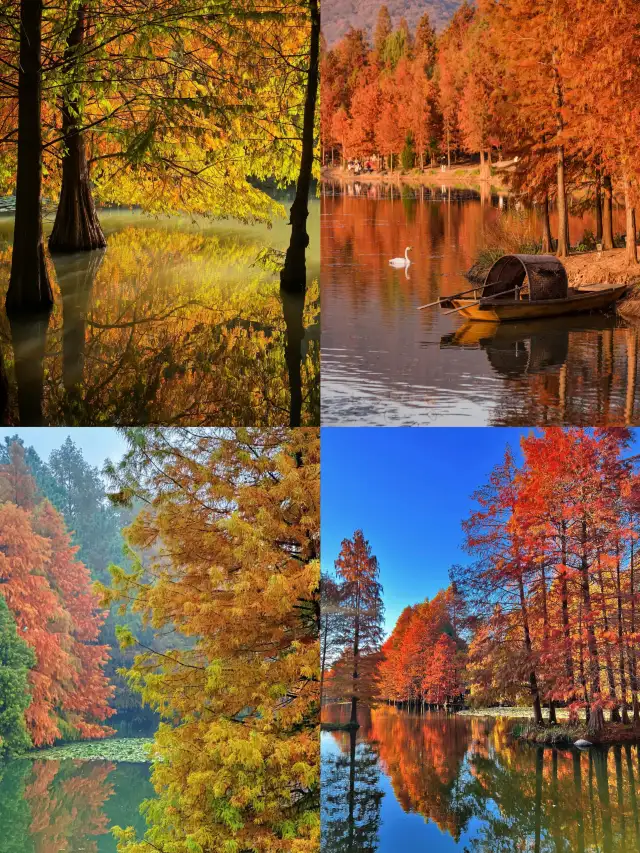 Nanjing autumn foliage without the crowds | A foliage-viewing route to avoid the rushTired of the crowds at Shixiang Road and Qixia Mountain? Nanjing's autumn is hidden in many lesser-known corners🍂 I've put together this foliage-viewing route that balances great scenery with photo opportunities. It's a local favorite with a relaxed pace, perfect for those who want to quietly experience autumn in Jinling! 📌 [4 hidden gem foliage spots] ✅ Yanque Lake | Bald cypress secret spot (Xuanwu District · Zhongshan Scenic Area) A hidden gem of a lake at the foot of Zhongshan Mountain. Rows of bald cypress trees stand by the water, turning a caramel red-brown in autumn. The reflections on the water are stunning. Admission: Free Tips: Come in the morning when the lake is calm for clearer reflections. It's much quieter than Shixiang Road ✅ Zhimaling Forest Park | A forest painting (Liuhe District, outer suburbs) Known as Nanjing's "Little Kanas," it features an interweaving of metasequoia, red maple, and hackberry trees with rich, layered colors. Perfect for those who love a wild, natural atmosphere. Admission: Free Tips: It's far from the city center, so driving is recommended. Be sure to arrive early—it looks best when the sunlight filters through the trees. There are few places to buy supplies along the way, so remember to bring water and snacks ✅ Pilu Temple | Ancient temple ginkgo (Xuanwu District) Red walls paired with golden ginkgo trees create a perfect traditional atmosphere. It's much less crowded than Qingliangshan and perfect for taking Zen-inspired photos. Admission: 20 yuan Tips: The temple is quiet, so please keep your voice down while taking photos. The ginkgo trees are at their peak in mid-November ✅ Laomendong | Street sycamores + red maples (Qinhuai District) Unlike Yihe Road, the autumn colors in Laomendong are hidden within the blue-brick alleys. Sycamores and red maples complement the historic houses, blending local life with autumn scenery. Admission: Free Tips: Visit in the evening when the lanterns light up. The fallen leaves against the ancient alleys create a wonderful atmosphere ✅ Chaotian Palace | Red walls and golden ginkgo (Qinhuai District) Red walls and upturned eaves paired with trees full of golden ginkgo create a classic, historic vibe. It's a hidden gem of a photo spot in the middle of the bustling city. Admission: 25 yuan Tips: The afternoon light is soft, making it perfect for taking stunning traditional-style photos 🗓️ Best time to visit ▪️Late Oct–early Nov: Bald cypress, Chinese tallow ▪️Mid-Nov: Ginkgo (Pilu Temple, Chaotian Palace) ▪️Late Nov–early Dec: Red maple, metasequoia (peak colors) 📸 Photography tips ▫️Outfit: Caramel, brown, and dark green go well with the autumn scenery. Avoid large areas of white, as it can easily blend into the background ▫️Composition ideas: Shoot lake reflections, close-ups of red walls and ginkgo, and paths with fallen leaves in the alleys ▫️Transportation: Yanque Lake, Pilu Temple, Laomendong, and Chaotian Palace are all in the city center and accessible by subway. Zhimaling is in Liuhe, so driving is recommended ⚠️ Tips to avoid pitfalls 1. Zhimaling is far away, so allow at least half a day 2. Leaf color changes depend on the temperature. Check real-time updates before you go to avoid disappointment 3. To get clear shots, try to avoid the weekend afternoon rush Autumn in Jinling is fleeting. Try a lesser-known route and take your time to soak in the season🌿19Rivera-~Elizabeth

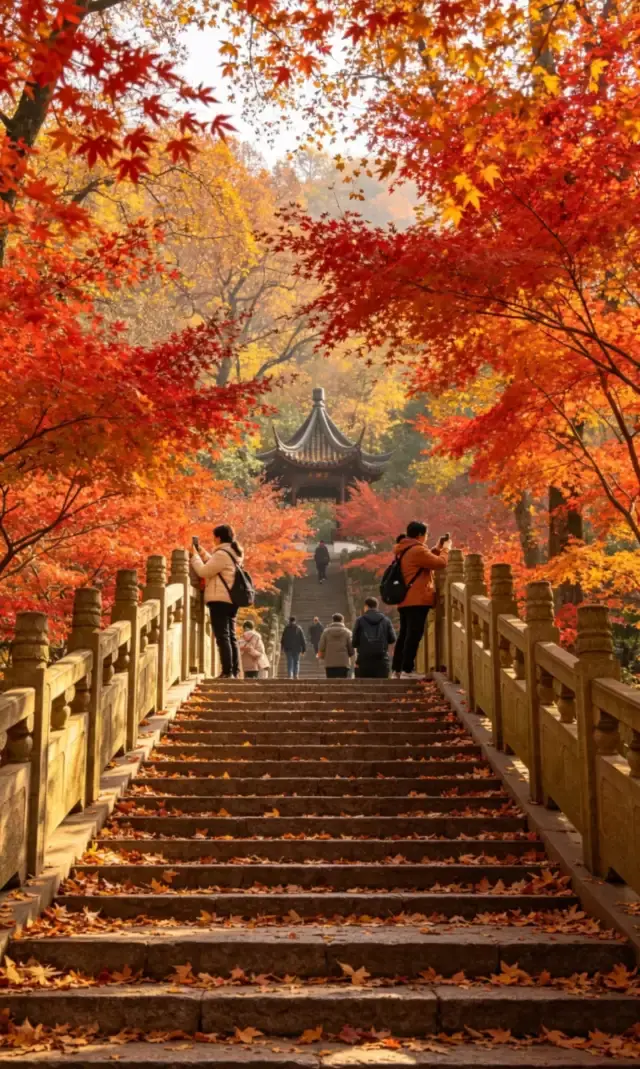 Qixia Mountain has turned red, and all of Nanjing is here! I went to find some peace and quietQixia Mountain has turned red, and all of Nanjing is here🔥 At the foot of Qixia Mountain, at Shijian Coffee, I'm back again. The mountain is outside the door, but my heart is here at Shijian. Once the maple leaves turn red, Qixia Mountain is no longer Qixia Mountain; it's Qixia Market🤣 Waves of people headed up the mountain. I got stepped on the heel twice and didn't even dare to look back. By the time I squeezed to the middle of the mountain, I finally understood: today isn't about seeing the maples, it's about seeing the charm on the backpack of the person in front of me. A wise person knows when to retreat, so I turned around and headed down the mountain, diving straight into Shijian🏃 The shop was full, too. The owner had a bright, booming voice: "Time to share tables! The pots are all hot." An older gentleman sat next to me, just down from the mountain, his face flushed and ten times more energetic than me. The vegetarian hot pot was served, bubbling away🍲 The owner came over to refill the soup and asked in passing: "Are there many people on the mountain?" I said, so many that I almost considered switching to carrying people up the mountain for a dollar a step💰 She laughed so hard she couldn't straighten up: "Crowds are a good thing—the mountain only turns red once a year, who would want to miss it? The leaves don't mind the crowds, so you shouldn't either." The older gentleman snorted, and his soup almost spilled. The pot was boiling, and the mountain outside the window was truly, vividly red. The sounds of people, the bubbling pot, and the wind through the leaves all mixed into a lively stew. I buried my head in my food until I broke a sweat, and the bit of temper I'd lost in the morning crowds sweated right out of me💦 People coming down the mountain passed by the window, one or two peering inside. I kept my head down, sipping soup, feeling quite smug: What's the rush? I've got a seat right here. When you go to Qixia Mountain, are you in the "squeeze into the crowd" camp, or the "sit down and watch the crowd" camp?🍁 📍Inside Qixia Mountain Scenic Area · Northeast corner of Qixia Temple (Shijian Coffee) ☕ Coffee | Mushroom vegetarian noodles CNY 20 | Vegetarian hot pot CNY 68/person | Yuhua tea 🍁 The maple-viewing crowds have arrived, grab a seat on your way downScarlettWalker2


Other visitors' reviews of Qixia Mountain Scenic Area
Show More ReviewsAutumn at Qixia Mountain is the most vibrant stroke of autumn in Nanjing. Layer upon layer of red maple leaves blanket the mountain, a tapestry of fiery red, orange-yellow, and pale green, like nature spilling its palette. Sunlight filters through the leaves, casting beams of light across the red leaves and illuminating the red bridge, creating an atmosphere of unparalleled beauty. Hidden among the trees are stone tables and benches; sitting quietly beneath the fallen leaves, listening to the wind and watching the leaves drift by, all the hustle and bustle is shut out. Every step reveals a new scene, possessing both the rustic charm of the mountains and the ancient elegance of the past. Truly deserving of its title as "Number One Beautiful Mountain in Nanjing," a visit here during the autumn foliage season is the only way to truly experience autumn in Nanjing. 🍁