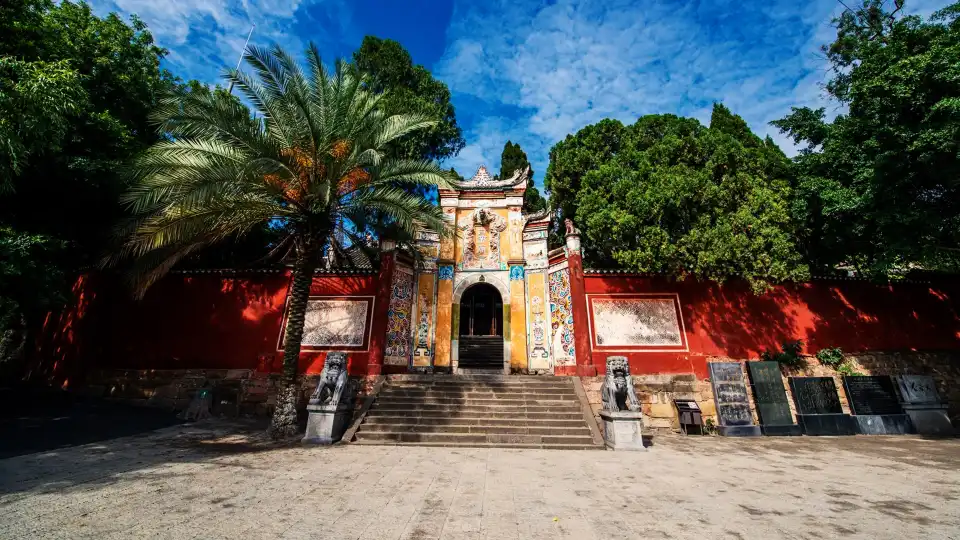
White Emperor City Qutang Gorge Scenic Spot(Ziyangcheng)
白帝城·瞿塘峡景区 based on 54 reviews
 No. 4 of Fall Viewing Attractions in Chongqing
Open Opening hours of White Emperor City Qutang Gorge Scenic Spot
White Emperor City Qutang Gorge Scenic Spot Highlights: Must-See Features and Attractions
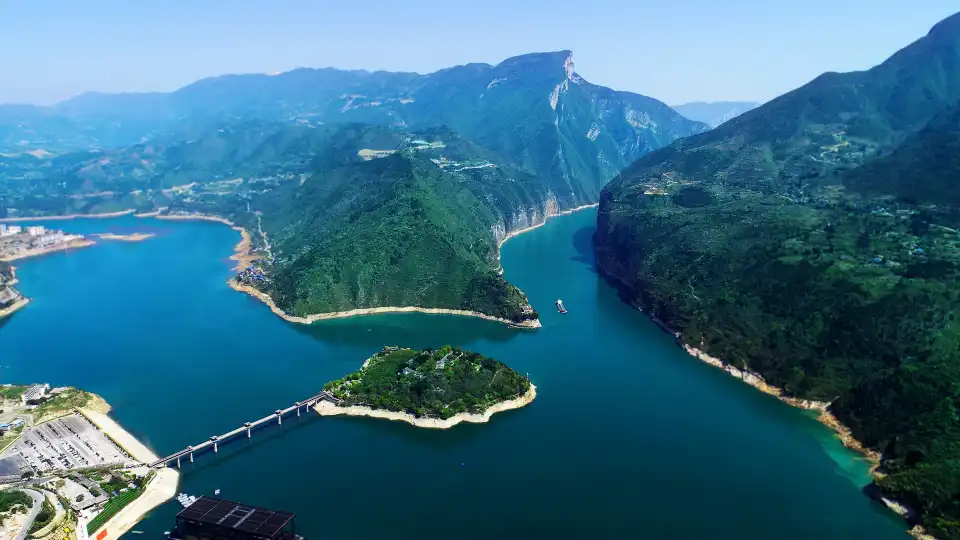
The White Emperor City Qutang Gorge Scenic Spot is located on Baidi Mountain along the northern bank of the Yangtze River at the entrance of Qutang Gorge in Fengjie County, Chongqing. Situated at the western entrance of the Three Gorges, it faces Kuimen to the east, Baiyan Mountain across the river to the south, Fengjie County to the west, and Jigong Mountain to the north, approximately 10 km east of Fengjie County. Covering an area of 6 km², the attraction primarily consists of two major sections—White Emperor City and Qutang Gorge—featuring numerous historical sites that blend nature with culture, poetry with wartime legacy, serving as the starting point to experience the grandeur of the Three Gorges. Officially opened to the public in 1978, it was among China's first batch of nationally opened attractions.
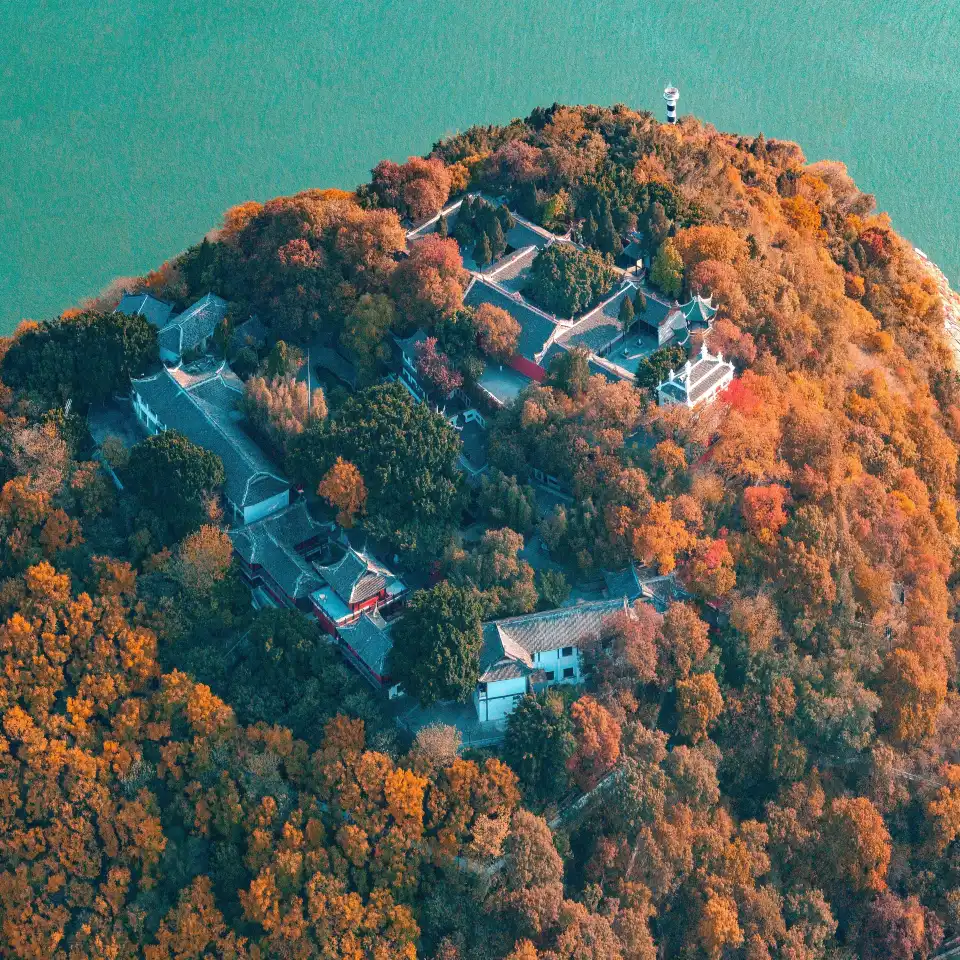
The attraction was originally named White Emperor City Qutang Gorge Scenic Spot. During the late Western Han Dynasty, Gongsun Shu built a fortified city in this strategic location. In 25 AD, he proclaimed himself the White Emperor and renamed the city White Emperor City. In 36 AD, the White Emperor Temple was constructed on White Emperor Mountain to worship Gongsun Shu. During the 12th year of Emperor Jiajing's reign in the Ming Dynasty (1533 AD), the temple began honoring Liu Bei and Zhuge Liang instead. Throughout the Tang and Song dynasties, renowned poets such as Li Bai, Du Fu, Bai Juyi, and Liu Yuxi visited, resided, or served as officials here, leaving behind numerous immortal poems, earning it the reputation as the "City of Poetry." After the Three Gorges Dam project raised the water level to 175 m, the White Emperor City, now surrounded by water on all sides, has become a "green island" in the "high gorge flat lake."
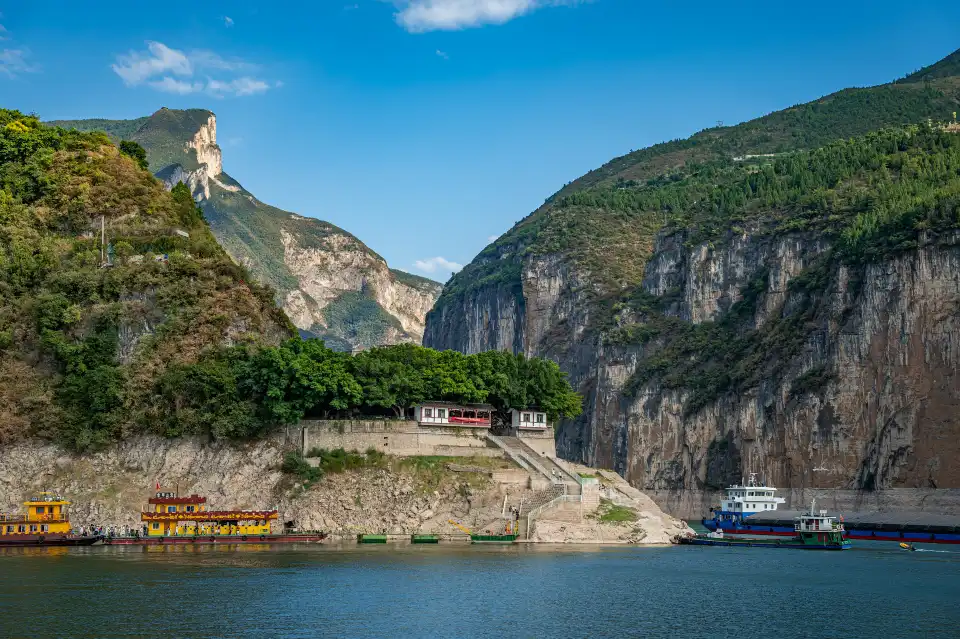
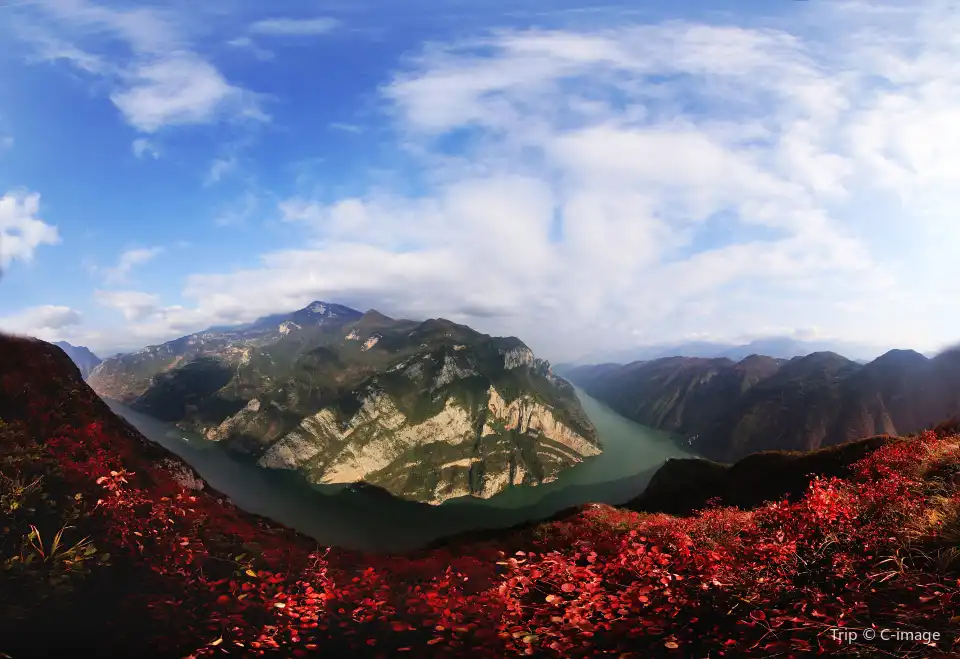
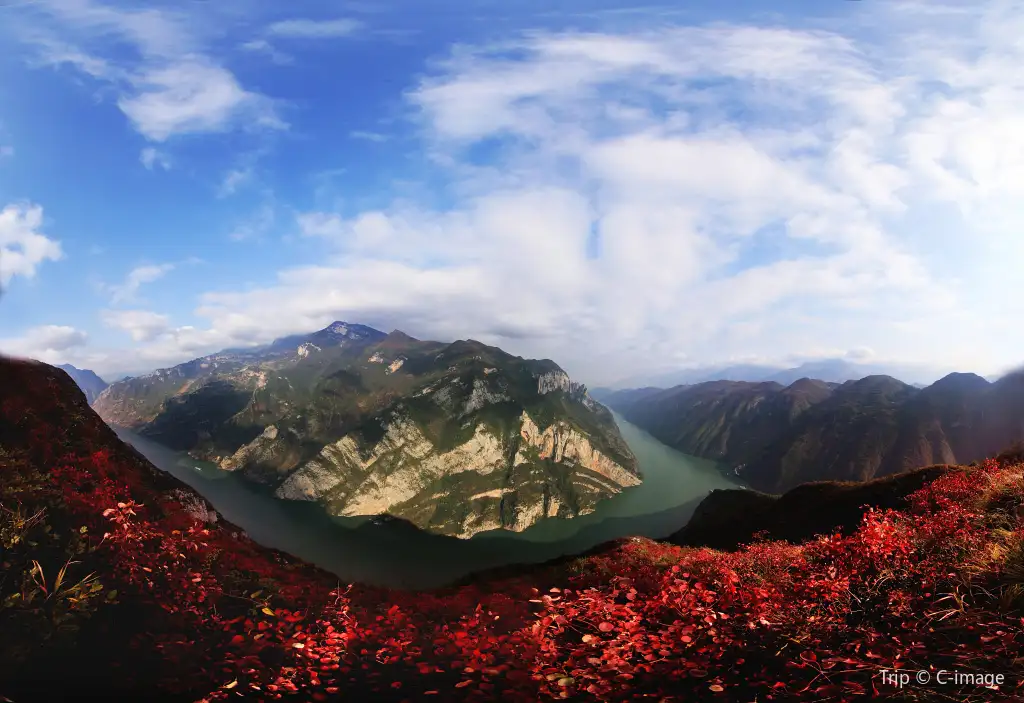
Qutang Gorge, adjacent to Baidi City, spans 8 km and combines grandeur, wonder, danger, and steepness as the shortest, narrowest, and most perilous section of the Three Gorges. On its northern bank at Chijia Mountain, visitors can explore three cultural sites—Laoguanmiao, Daxi, and Wushan Ape Man—along with attractions like the Laoguanmiao signal tower, Chijia Tower, ancient cannon platforms, cliffside plank roads, and hanging coffins in Fengxiang Gorge. The southern Baiyan Mountain features remnants of Mengliang Ladder's ancient path, cliff carvings, Rhinoceros Gazing at the Moon Peak, and Ape Man Peak—showcasing 2 million years of China's human development history.
Kuimen, also known as Qutang Pass, is a spectacular sight within the Qutang Gorge, renowned as "the most majestic under heaven." Located at the western entrance of Qutang Gorge, it has historically been a strategic military stronghold, guarding the passage between Bashu in the west and Jingchu in the east. The towering cliffs on both banks rise steeply like axes and knives, standing upright with the mighty Yangtze River flowing through the middle. The narrow gorge forms a natural gate, locking the river within its embrace—this is Kuimen. Celebrated for its grandeur, Kuimen was praised in ancient times as "the most majestic gate under heaven" and is now honored as "China's gateway of landscapes." It is featured on the background of the CNY 10 note in the fifth series of RMB.
Other visitors' reviews of White Emperor City Qutang Gorge Scenic Spot
Show More ReviewsDeparting from Baidi City amidst colorful clouds at dawn, I returned to Jiangling, a thousand miles away, in a single day. Liu Bei entrusted his son to the Hall of Entrustment, a city steeped in poetry and literature, with a long history, it's well worth a visit. The entire route isn't particularly long on foot, allowing for leisurely stops along the way. The Qutang Gorge is also magnificent and worth exploring, learning about its history, and getting to know this beautiful city.