
November free admission policy
Hongcun Village
宏村景区 based on 605 reviews
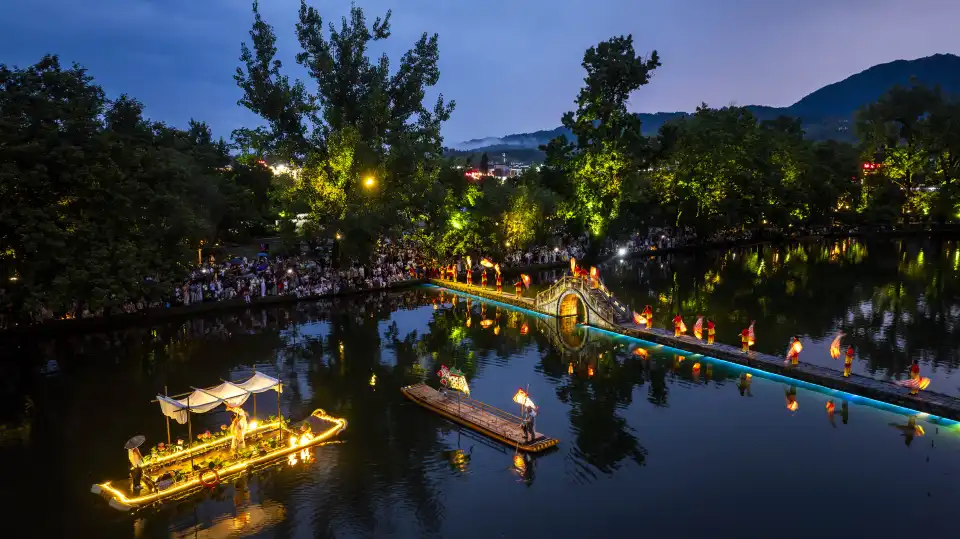
 No. 1 of Night Attractions in Anhui
Opening hours of Hongcun Village
Hongcun Village Highlights: Must-See Features and Attractions
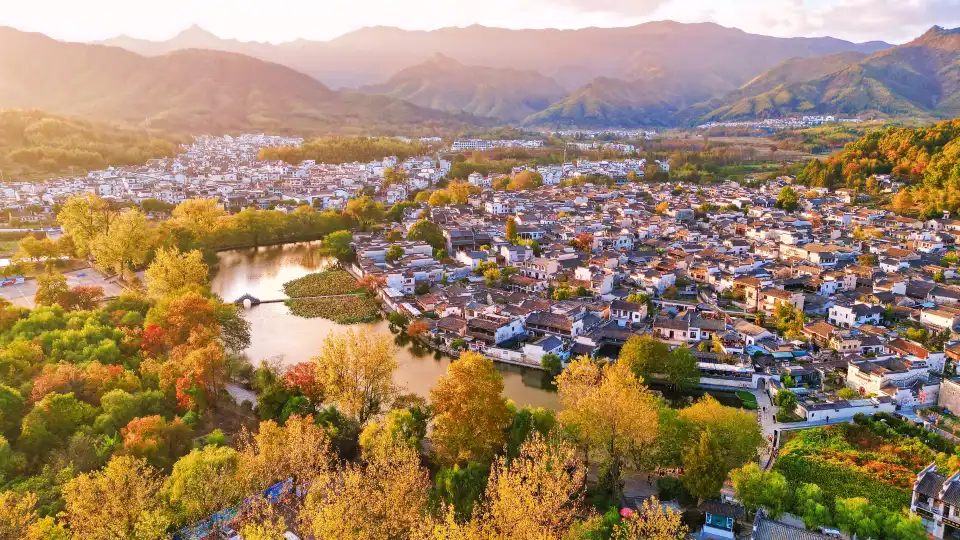
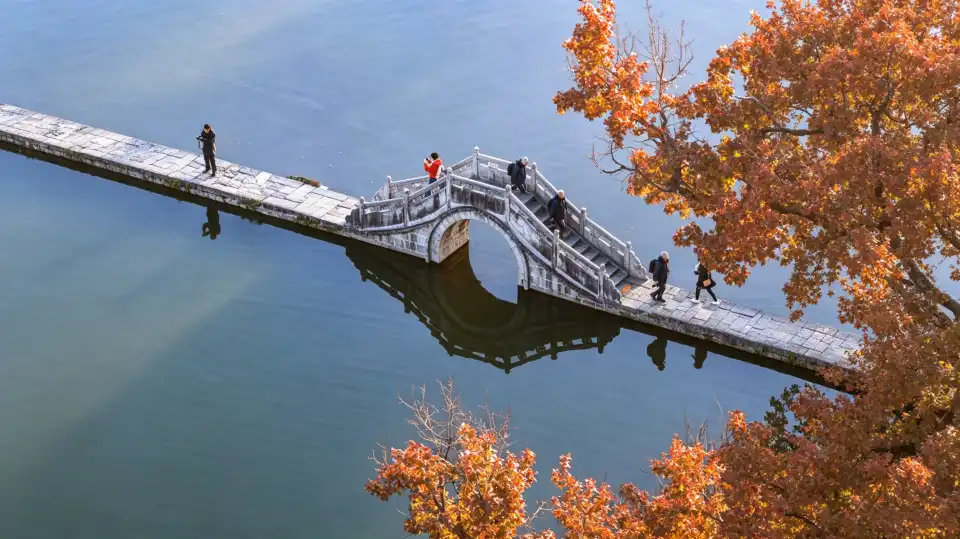
Hongcun Village is a classic Huizhou-style ancient village, renowned as a "village in a Chinese painting." A visit here offers two unmissable experiences: first, the water landscapes shaped by its irrigation system, with Nanhu Lake and Yuezhao Pond as the crown jewels; second, the exquisite "three carvings" of Huizhou architecture—brick, stone, and wood carvings—intricate enough to rival paper-cut art. Here, cultural heritage and natural beauty blend seamlessly into a harmonious whole. The ancient village was first built during the Shaoxing era of the Southern Song dynasty and gradually developed from the Yongle era of the Ming dynasty into a unique "ox-shaped village" layout. The two ancient trees at the village entrance form the "ox horns," the densely packed Ming and Qing Huizhou-style buildings in the village form the "ox body," the four bridges over the stream west of the village form the "ox feet," Yuezhao Pond is the "ox stomach," Nanhu Lake is the "ox belly," and the water channels flowing past every household are the "ox intestines." Sightseeing can begin at Nanhu Lake in the south of the village. Nanhu Lake is a bow-shaped artificial lake dug during the Wanli era of the Ming dynasty, with a broad expanse of water; the Huabridge crossing the lake is where Li Mubai led his horse in the film Crouching Tiger, Hidden Dragon. On the north bank of the lake, Nanhu Academy was formed by merging six original private schools by the lakeside, and its layout is exceptionally spacious. Heading north along the lake's north bank, visitors can also stop by ancient residences such as Jingde Hall and Wang Daxie's Former Residence (Zhenqi Hall). Continuing north leads to Yuezhao Pond at the village center, a half-moon-shaped pond dug during the Yongle era of the Ming dynasty, surrounded by Huizhou-style buildings reflected in its waters—one of the best spots for photography in the ancient village. However, visitors crowd around Yuezhao Pond year-round, so patience is needed to capture an empty shot. At the center of Yuezhao Pond's north bank stands Lexu Hall, also known as the Wang Clan Ancestral Hall, a surviving Ming dynasty building in the village with a simpler style than Qing dynasty architecture. On the western end of Yuezhao Pond's north side is Jingxiu Hall, built during the Qing dynasty. Further north, visitors can tour Chengzhi Hall, the residence of late Qing salt merchant Wang Dinggui. The residence is fully equipped with a study, kitchen, stable, bodyguard room, and servants' quarters, and even includes a "Paishan Pavilion" for playing mahjong; the house has its own pond and well, so water is available without leaving the premises. The exquisite Huizhou three carvings are worth examining closely—some wood carvings are even coated with gold powder, lavish and magnificent. Other ancient buildings in the village worth seeing include Deyi Hall, Shuren Hall, and Taoyuan Residence.

Other visitors' reviews of Hongcun Village
Show More ReviewsHongcun is indeed a beautiful village, rich in cultural heritage. We saw many beautiful sights and Hui-style architecture, and the local snacks were delicious. We even visited a century-old shop.