Temple of the Six Banyan Trees
六榕寺 based on 382 reviews
 Selected for Global Traveller-Picked Attractions in Guangzhou
Open Opening hours of Temple of the Six Banyan Trees
Temple of the Six Banyan Trees Highlights: Must-See Features and Attractions
Temple of the Six Banyan Trees was first built in the 3rd year of the Datong era of the Liang Dynasty (537 AD). Originally named Baozhuangyan Temple, it has a history of over 1,400 years. It was destroyed by fire in the early Northern Song Dynasty and rebuilt in the 2nd year of the Duan'gong era of the Song Dynasty (989 AD), when it was renamed Jinghui Temple. In the 3rd year of the Yuanfu era (1100 AD), the writer and calligrapher Su Dongpo visited the temple. Seeing six old banyan trees inside, he happily inscribed the two characters "Liu Rong" (Six Banyan Trees), and it has been known as the Temple of the Six Banyan Trees ever since.
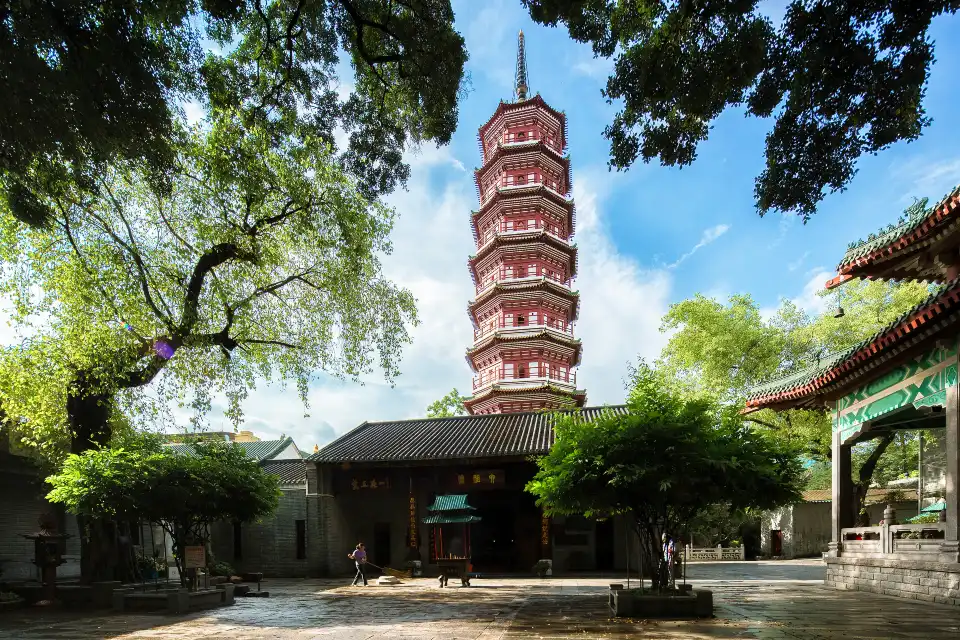
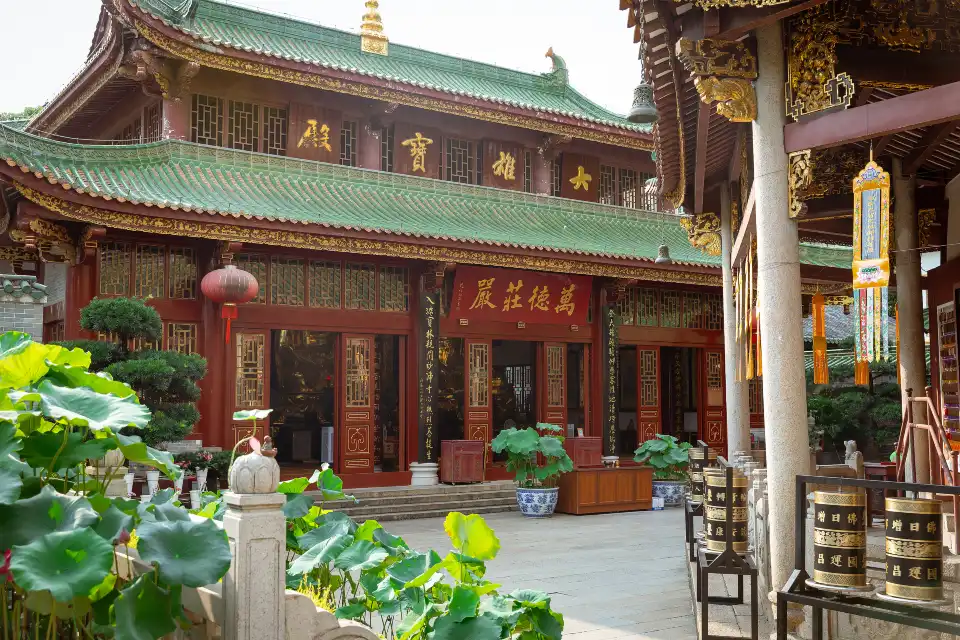
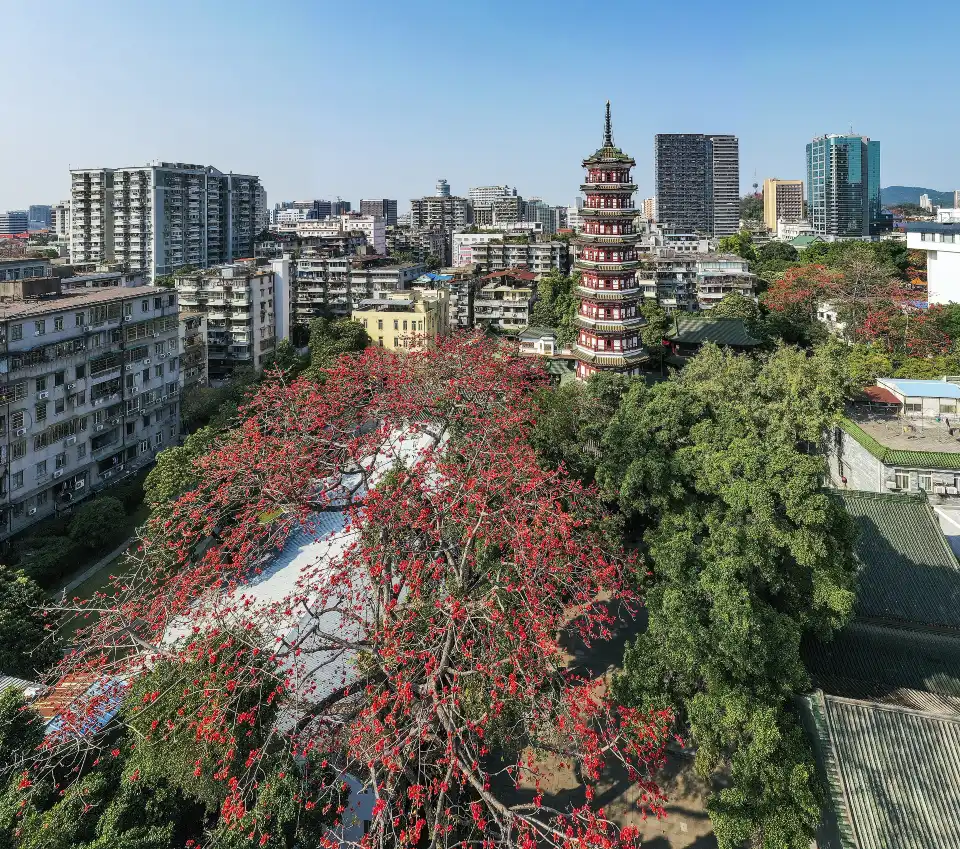
The temple features the towering Thousand Buddha Pagoda, a famous ancient high-rise building in Guangzhou. To the east of the pagoda are the Mountain Gate, Maitreya Hall, and Skanda Hall. To the west of the pagoda is the Mahavira Hall, which enshrines three large bronze Buddha statues cast in the 2nd year of the Kangxi era of the Qing Dynasty (1663 AD). These statues are among the largest surviving ancient bronze statues in Guangdong Province. Inside the temple's Rongyin Garden is the Sixth Patriarch Hall, which enshrines a bronze statue of Huineng, the sixth patriarch of the Chan school of Buddhism. The Sixth Patriarch was an outstanding high monk of the Tang Dynasty who founded the Southern School. His bronze statue was cast in the 2nd year of the Duan'gong era of the Northern Song Dynasty (989 AD) and is solemn and lifelike.