

Embark on a 2-day spiritual and historical journey in Yongji, where the blend of natural beauty and cultural heritage awaits. Day 1 is dedicated to the majestic Mount Hua, a place that promises an entire day of exploration and awe. Standing southeast of Jiling and Huashan Road intersection, this mountain offers not just panoramic views but also a deep dive into the natural splendor of Shaanxi Province. On Day 2, the journey takes a tranquil turn to Pujiu Temple, a serene temple nestled in Xixiang Village, offering a peaceful retreat for two hours of reflection and exploration. The trip culminates with a visit to the Yongle Palace, a historic Taoist temple located just north of Ruicheng County. This one-hour visit to one of the most significant cultural relics in the region provides a glimpse into the rich tapestry of China's vast history. This itinerary through Yongji is not just a trip but an enlightening experience that combines the thrill of adventure with the calmness of sacred sites.



2 Days in Yongji Itinerary: Day 1
Mount Hua

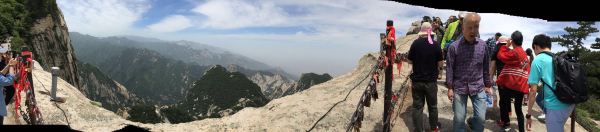
Embark on your Yongji adventure with a day-long journey to the breathtaking Mount Hua, a treasure trove of natural beauty and ancient history. Nestled just southeast of Jiling and Huashan Roads, this towering peak offers more than just a climb; it's an experience that encapsulates the spirit of adventure. As you ascend the trails, each step reveals panoramic vistas and cultural relics that have withstood the test of time. Whether you're seeking the thrill of the infamous plank walk or a moment of tranquility at one of the mountain's serene temples, Mount Hua promises an unforgettable start to your two-day itinerary.
Attraction info
- 1000 meters southeast of the intersection of Jiling Road and Huashan Road, Huashan Town, Huayin City, Weinan City, Shaanxi Province
- Suggested tour duration: 1 day
- Open 24 hours,The operation hours of Huashan West Peak Cableway and North Peak Cableway are: 08:00-16:00 from December 1st to February 28th in the off-season; 07:00-19:00 in the peak season from March 1st to November 30th; 24 hours a day for hiking and climbing Open hours
Recommended nearby restaurants




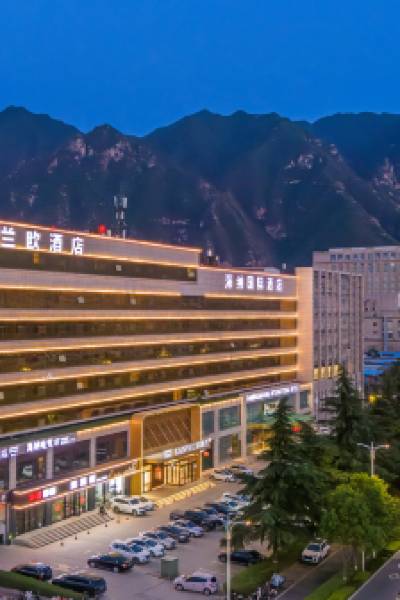
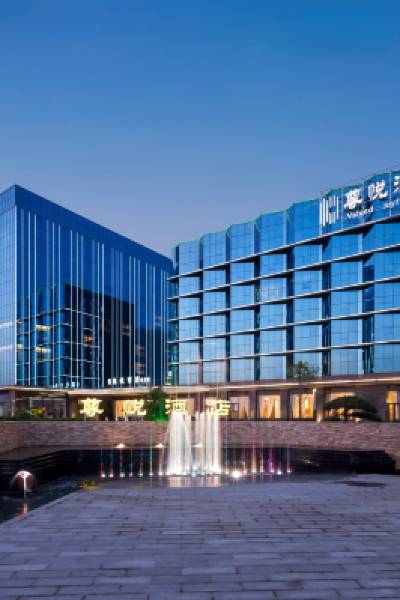
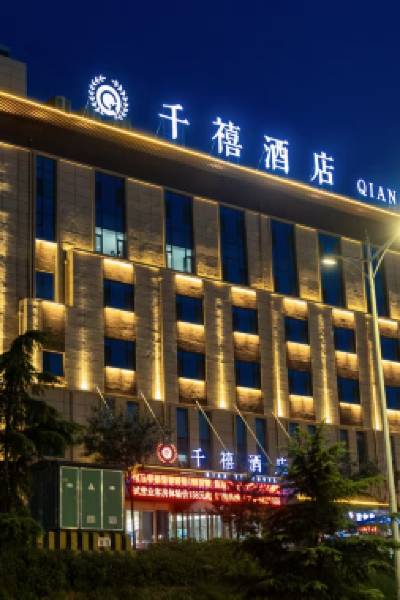
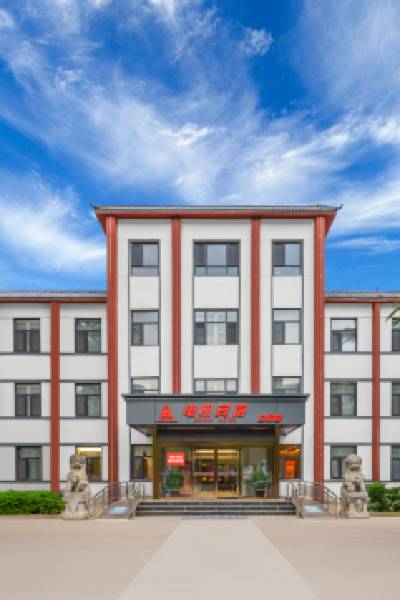
Where to Stay Tonight
2 Days in Yongji Itinerary: Day 2
Pujiu Temple
Begin your second day with a serene visit to Pujiu Temple, a place of tranquility nestled in the heart of Yingshang, Xixiang Village. As the morning sun casts its first golden rays, spend a couple of hours exploring this sacred temple, where the whispers of history and spirituality echo through its ancient halls. Surrounded by the natural beauty of Puzhou Town, Pujiu Temple offers a peaceful retreat to reflect and rejuvenate amidst your travels.
Attraction info
- Yingshang, Xixiang Village, Puzhou Town, Yongji City
- Suggested tour duration: 2-3 hour
- Open from 04/01-10/31,8:30am-6:00pm;Open from 11/01-03/31,9:00am-5:00pm
Recommended nearby restaurants


Yongle Palace
Continue your journey through time at the Yongle Palace, a mere stone's throw away from Ruicheng County. This historic Taoist temple, with its intricate murals and architectural grandeur, tells tales of China's rich past over the course of an hour's visit. As you wander through the halls, let the stories of dynasties and deities unfold before you, providing a profound insight into the spiritual heritage that has shaped Yongji City.
Attraction info
- About 2 kilometers north of Ruicheng County, Yuncheng City
- Suggested tour duration: 1-2 hour
- Open from 04/01-10/31,8:00am-6:00pm;Open from 11/01-03/31,9:00am-5:00pm;Open from 9:00am-5:00pm during New Year's Day,Spring Festival;Open from 8:00am-6:00pm during Ching Ming Festival,Labour Day,Dragon Boat Festival,Mid-Autumn Festival,China's national day
Recommended nearby restaurants




Where to Stay Tonight
Top things to do in Yongji-2025
 Based on 7 review
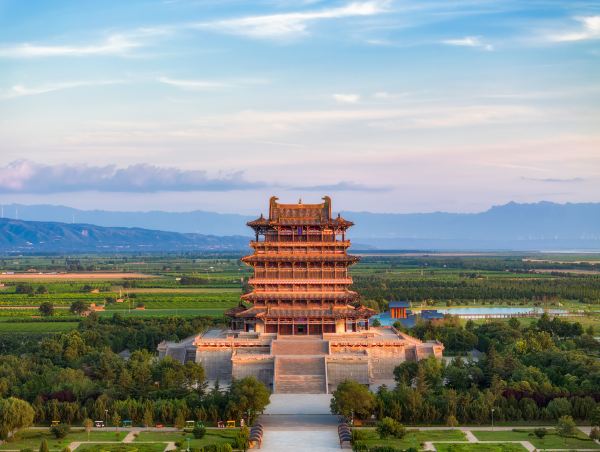
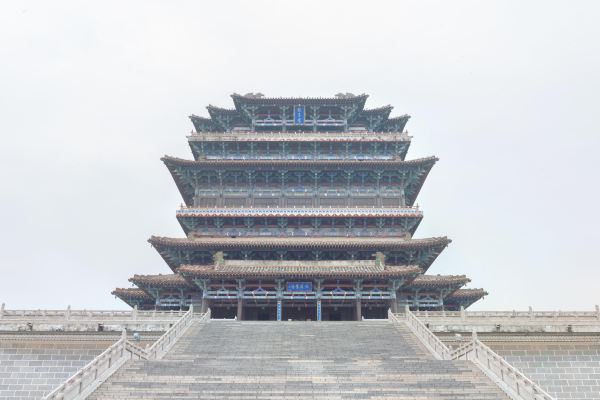
A national AAAA-level tourist attraction and one of the top ten attractions in Shanxi Province, Guanque Tower is located on the eastern bank of the Yellow River west of Puzhou Ancient City in Yongji, Shanxi. Alongside the Yellow Crane Tower in Wuhan, Hubei; Yueyang Tower in Yueyang, Hunan; and Tengwang Pavilion in Nanchang, Jiangxi, it is renowned as one of China's four great historical and cultural towers. Originally built during the Northern Zhou Dynasty (557–571 AD) by military commander Yuwen Hu as a defensive watchtower, the tower earned its name from the storks that frequently perched on its structure. The Tang Dynasty poet Wang Zhihuan's celebrated poem "On the Stork Tower" ("The sun along the mountain bows; The Yellow River seawards flows. You will enjoy a grander sight; If you climb to a greater height.") has become an enduring masterpiece, widely known both domestically and internationally. After standing for over 700 years through the Tang and Song dynasties, the tower was destroyed during warfare in the early Yuan Dynasty (1222 AD). The reconstructed Guanque Tower follows Tang-style architecture, featuring four eaves externally with three visible tiers, while internally comprising six floors. With a total height of 73.9m, it epitomizes the grandeur of the Tang era. Ascending Guanque Tower not only offers breathtaking panoramic views but also immerses visitors in the brilliance of China's 5,000-year civilization.
 Based on 16 review
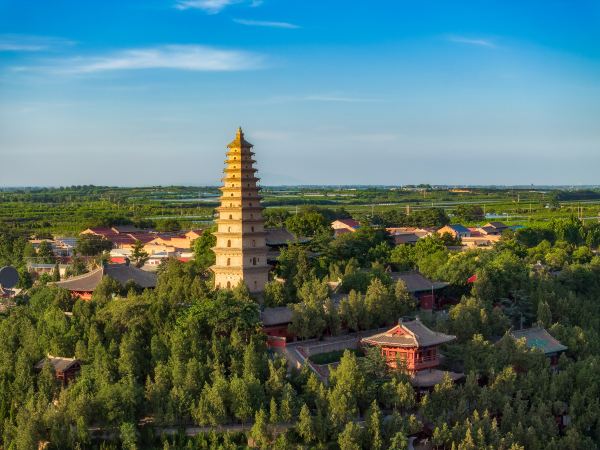
Pujiu Temple, located 12 km southwest of Yongji City in Shanxi Province on the Emei Plateau, was built during the Northern and Southern Dynasties and is a thousand-year-old ancient temple. It is a national AAAA-level tourist attraction, one of Shanxi's "Top Ten" tourist attractions, and one of the Eight Scenic Spots of Hedong. The temple gained fame worldwide thanks to the Yuan Dynasty playwright Wang Shifu's "The Romance of the Western Chamber." The story of Zhang Sheng and Yingying breaking free from feudal constraints, with the matchmaker Hongniang facilitating their love under the moonlight through letters, has become a timeless tale. For centuries, Pujiu Temple has been regarded as a sacred destination for couples seeking love, drawing visitors from far and wide. The annual Qixi Festival's Love Culture Celebration further elevates the eternal theme of love with its enchanting beauty.
The temple was born from the drama, and the drama gave the temple its fame. The stupa within the temple was thus beautifully named the "Yingying Pagoda," and its remarkable frog-croaking echo effect is celebrated as one of China's four great echo architectures. Due to its unique acoustic structure, Yingying Pagoda is ranked alongside Italy's Leaning Tower of Pisa and France's Eiffel Tower as one of the "Six Wonder Pagodas of the World," truly a marvel of architectural acoustics.
"While temples worldwide shun romance, only Pujiu Temple in Shanxi embraces love." May Pujiu Temple bless all lovers to unite in marriage!
 Based on 14 review
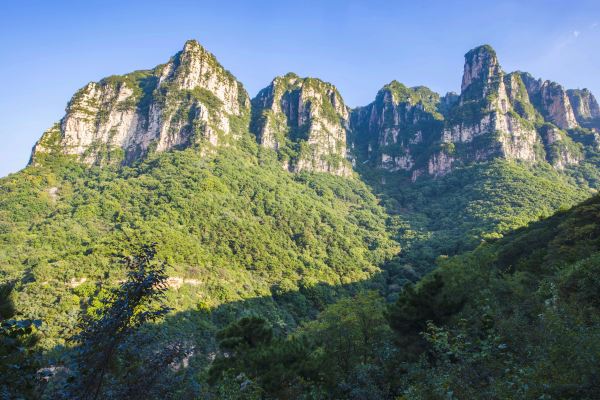
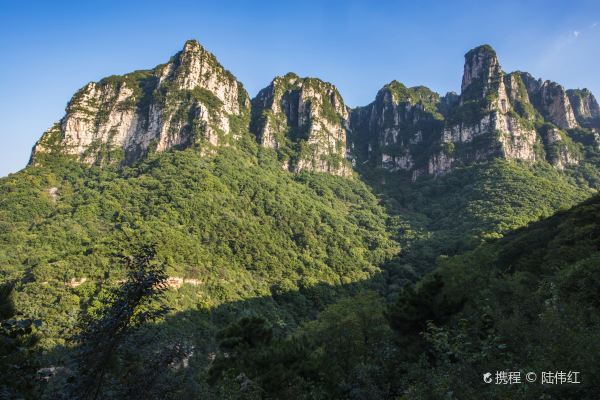
Wulao Peak, located 13 km southeast of Yongji city in Shanxi Province, stands at the intersection of Shanxi, Shaanxi, and Henan provinces within the Golden Triangle of the Yellow River. This national AAAA-level tourist attraction and national forest park is one of the Eight Scenic Wonders of Hedong. Recognized as the 52nd Taoist Blessed Land, it forms a famous north-south pairing with the Buddhist sacred site Mount Wutai in northern Shanxi. Facing the Western Sacred Mountain Huashan from afar, it has historically earned the beautiful title "Eastern Huashan."
Wulao Peak, originally named Wulao Mountain, earned its name from the legend that five ancient immortal sages bestowed the "Hetu" and "Luoshu" texts upon an emperor here. Before the completion of the "Book of Changes," this site served as a sacred center for the early spread of He-Luo culture and became one of the birthplaces of the Quanzhen School of Taoism in northern China.
Wulao Peak consists of Yuzhu Peak, East Jinping Peak, West Jinping Peak, Qipan Mountain, and Taiyi Peak, with the highest elevation reaching 1,809.3 meters. The main peak, Yuzhu Peak, also known as Cloud Peak or Spirit Peak, resembles a towering jade pillar piercing the sky. The other four peaks surround it like four dignified seniors sitting in a hall engaged in earnest conversation, hence the name "Wulao Peak."
 Based on 3 review
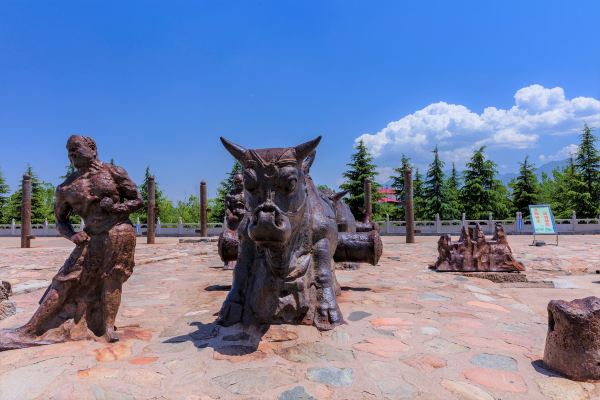
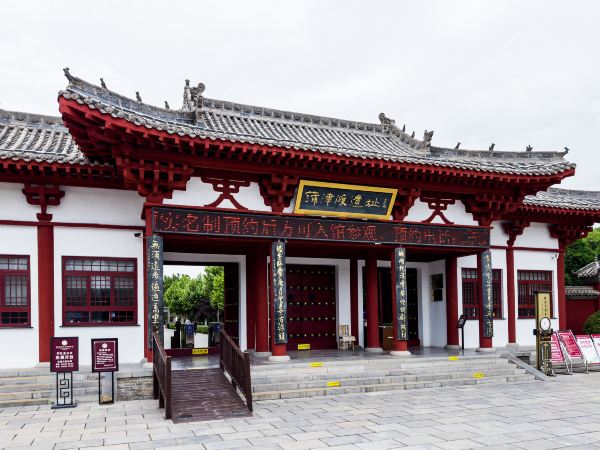
The Puzhindu Ruins are located outside the west gate of the ancient city of Puzhou, 18 kilometers west of Yongji City, Shanxi Province, on the east bank of the Yellow River. It is adjacent to the Puji Temple, where the story of "Romance of the West Chamber" took place, in the east, and faces the Guanque Tower, the first of the four famous towers in the country, in the west. It is located on the golden tourism line.
The Pujindu site was excavated in 1989. In 1991, the joint archaeological excavation team conducted a comprehensive and scientific cleaning and excavation of the site, unearthing four iron bulls, four iron men, two iron mountains, four iron upsetting pillars, a group of seven-star iron pillars, more than 70 meters of Ming Dynasty revetment stone embankments, and a record tablet from the 16th year of Ming Zhengde (1521).
* All user reviews in this article have been translated by machine.
* The information above is subject to change at any time. For the latest information, please check the websites of hotels and attractions.