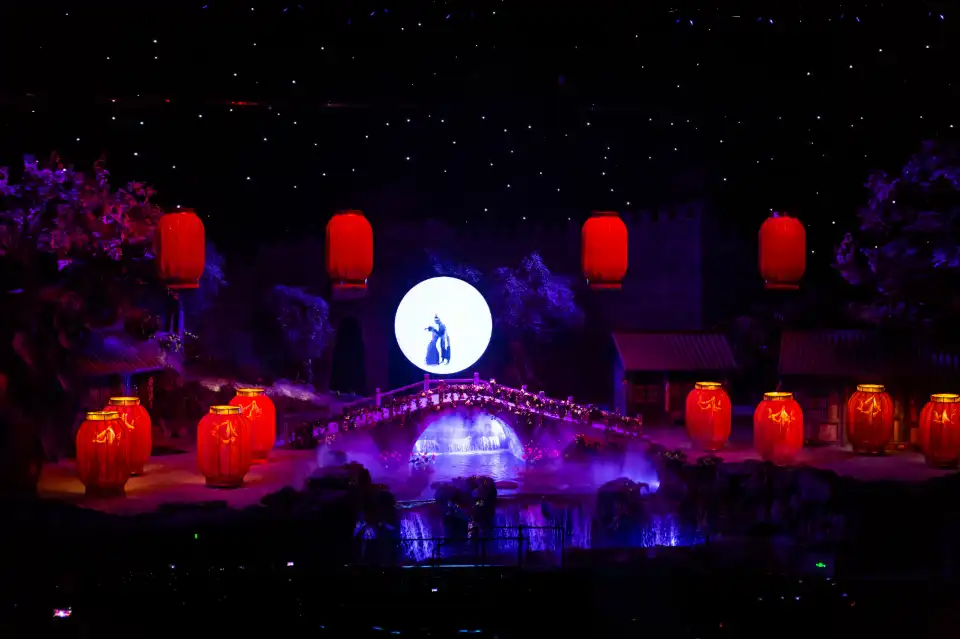
"Legend of the Camel Bell" show
《驼铃传奇》秀 No. 16 of Global Traveller-Picked Attractions in Xi'an
Opening hours of "Legend of the Camel Bell" show
"Legend of the Camel Bell" show Highlights: Must-See Features and Attractions
The mobile live-action performance "Legend of the Camel Bell" show, featuring the world's first rotating walking auditorium, blends modern high-tech with the legendary historical and cultural classics of the camel route Silk Road. It delivers an extraordinary visual experience and soul-stirring impact to the audience, spreading the cultural legends of Xi'an's glorious historical period with positive energy.
The Huaxia Cultural Tourism Grand Theater in Xi'an, as the landmark building of the Huaxia Tourist Xi'an Resort project, is designed as a large ellipsoid structure measuring 142 m long, 128 m wide, and approx. 50 m high, with a capacity to accommodate 3,000 people for simultaneous performances. The ingeniously designed movable auditorium at the center of the theater breaks the world's single-stage performance model, transporting the audience to viewing positions via a rotating and mobile grandstand, delivering a brand-new audiovisual experience.
The "Legend of the Camel Bell" show has become an outstanding representative of China under the world's performance spotlight, serving as a brilliant hallmark of high standards in art and science within the global entertainment industry.
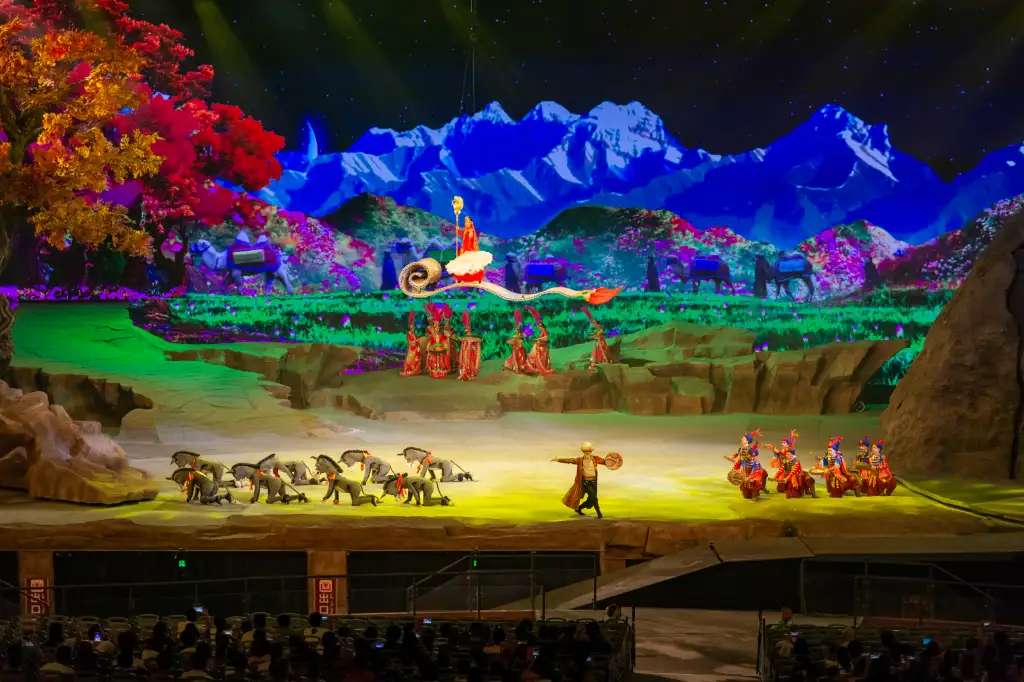
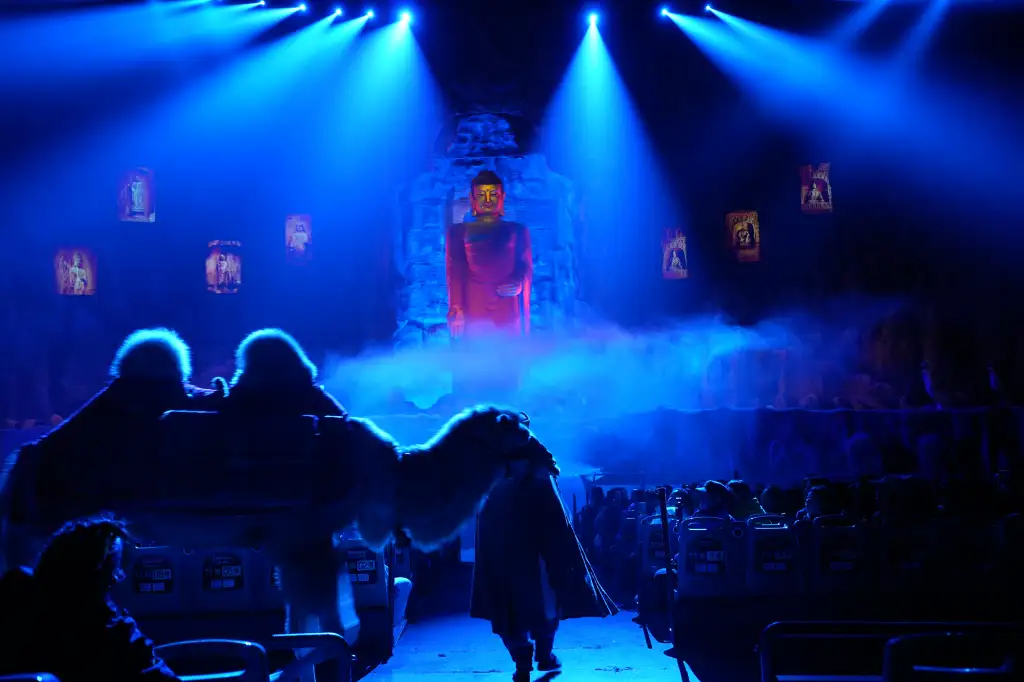
The mobile live-action performance "Legend of the Camel Bell" show was masterminded by Xia Chunting, chairman of Huaxia Cultural Tourism Group, who also served as the chief planner, scriptwriter, and director. During its creation, the performance centered on the "Belt and Road" as its core theme, deeply exploring the traditional culture of the Tang Dynasty and tracing the footsteps of camel caravans along the Silk Road, using positive energy to showcase Xi'an's glorious historical and cultural heritage. The entire performance is divided into chapters: "Farewell for a thousand miles," "Peril on the wolf's path," "Exotic customs," "Cleansing rain," "Welcoming the return," and "Golden age of Huaxia." Adhering to the principle of being "visually stunning, musically captivating, and entertaining," it aims to create a performance that appeals to the general public, combining refined and popular tastes, and delivering a satisfying experience for all. The storyline begins with a newlywed couple's reluctant parting, depicting a westward-bound camel caravan surviving volcanoes, avalanches, sandstorms, deserts, and wolf attacks against all odds. Later, they return laden with goods, encountering divine rain and safely arriving back in Chang'an amidst their families' anticipation. The performance interweaves exotic customs throughout, offering audiences a thrilling, beautiful, and joyous audiovisual experience with 47 patented technologies, featuring daring performances by 20 camels and 30 wolves. The "Legend of the Camel Bell" show transports you through the vast desert, lets you hear the mystical camel bells along the Silk Road, savor foreign cultures, witness the glorious Tang Dynasty, and listen to the millennium-old echoes of Huaxia.
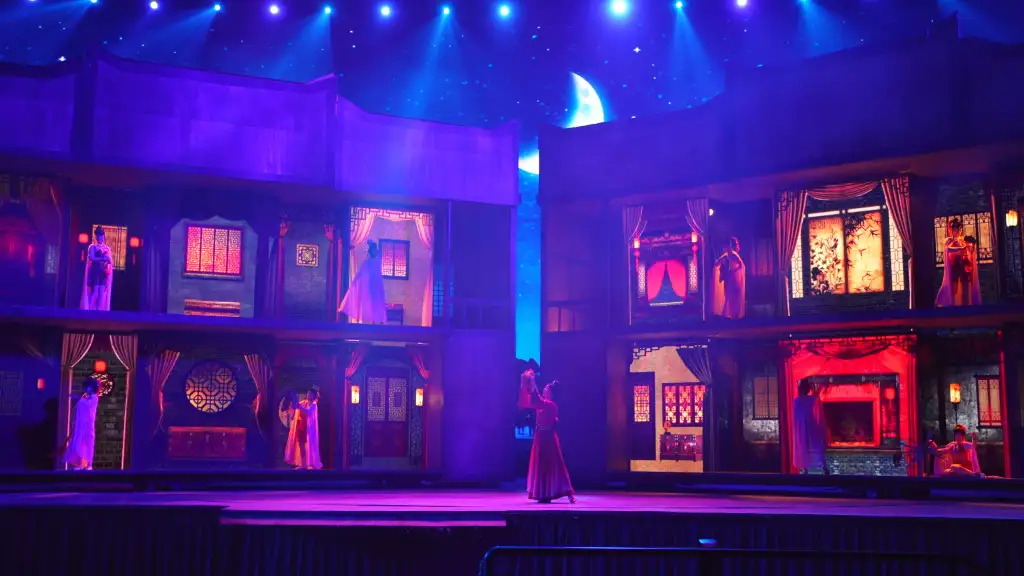
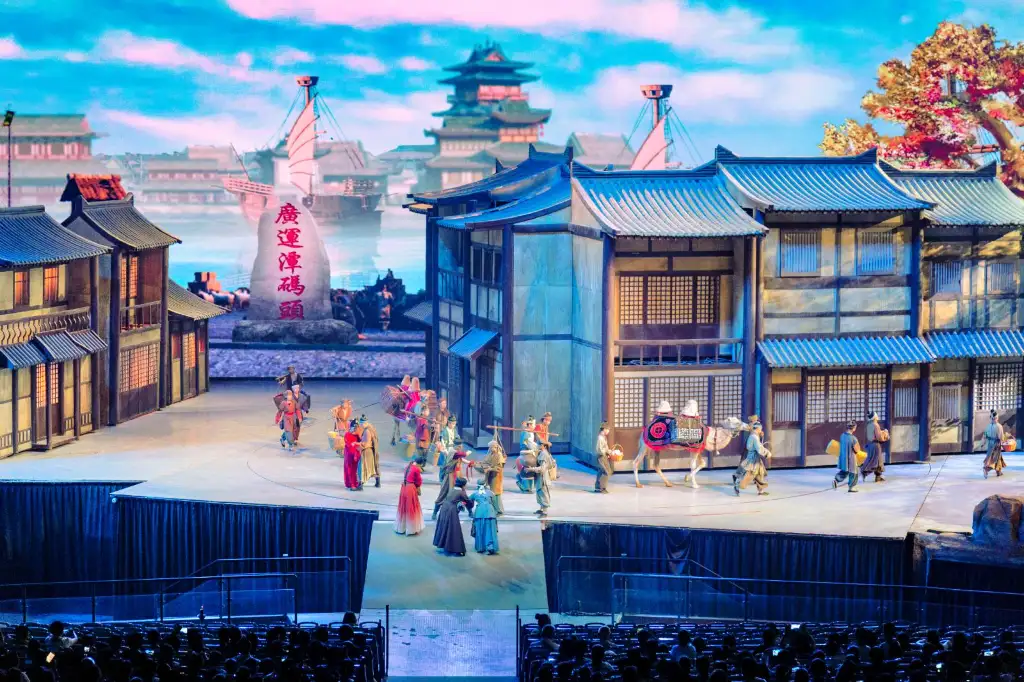
Act one: seeing you off
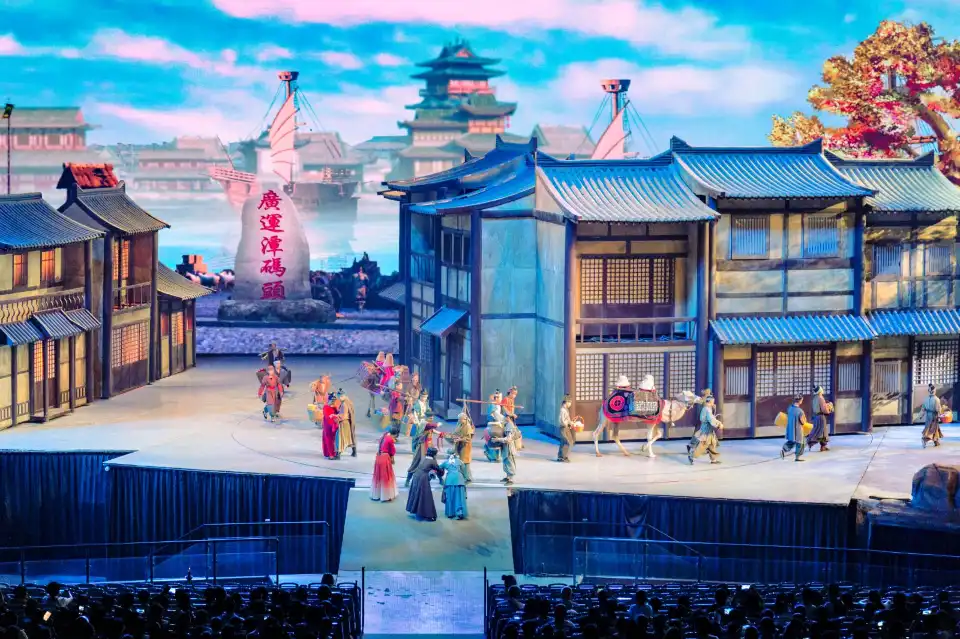
The old wharf of Guangyuntan, connecting Rome to the west and Sanjiang to the east, is an indelible microcosm of the prosperous Tang Dynasty. Embarking on the Silk Road from here became a fervent pursuit for the courageous men of Tang. Despite the hardships endured by camel drivers along the way, they pressed forward with unwavering determination. Fortune and misfortune walked hand in hand—countless dreamers amassed wealth along the Silk Road, while many others left their bones forever on this ancient path, all in exchange for the prosperity of their homeland and the flourishing of the Tang Dynasty. The road was long, hearts were bound, parting tears soaked their robes, and though farewells stretched for miles, they inevitably came. The poignant farewells of Tang are all encapsulated here.
Act two: Peril on wolf path
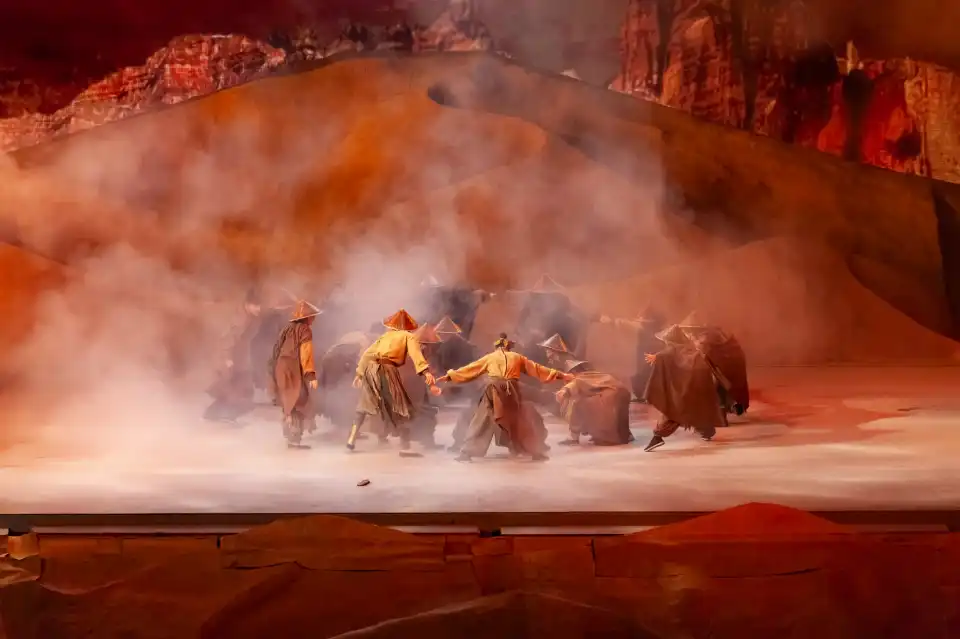
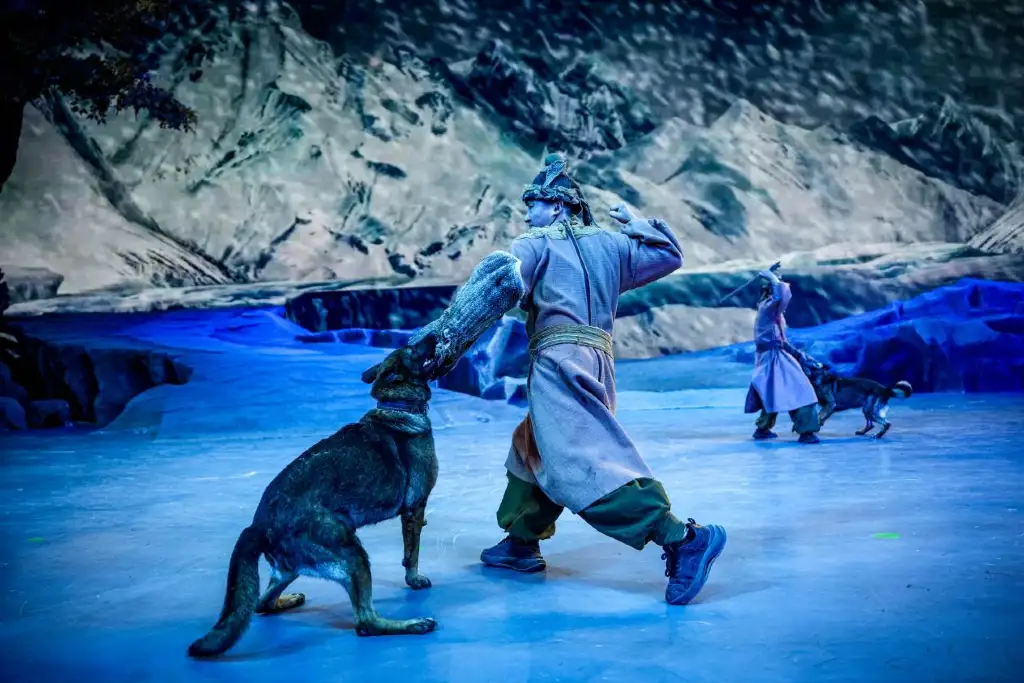
The western regions boast a myriad of captivating landscapes, with the Silk Road offering endless wonders along the way. As a vital passage of the Silk Road, the western territories are imbued with mystery by the witty tales of Afanti, yet the wolf-infested paths remain an unavoidable trial for camel caravans. Undaunted by danger, the camel drivers pressed forward against all odds, battling wolves for passage and defying fate itself—a struggle so poignant it would move even monkeys to tears. The caravan faced relentless challenges, from volcanic eruptions and avalanches to bandits and deadly deserts, leaving behind an indomitable legacy of perseverance for future generations.
Act three: Exotic charm
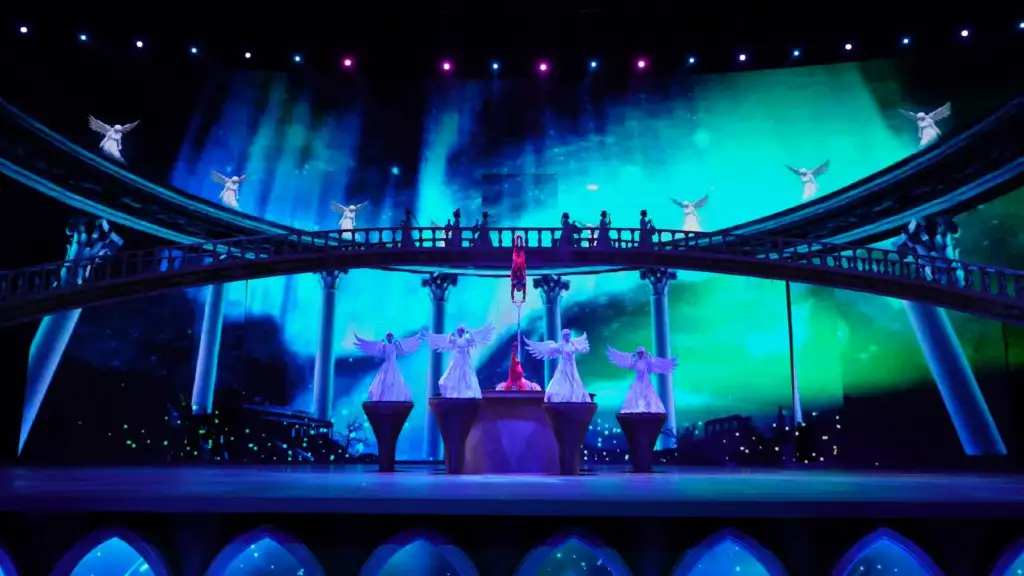
After enduring numerous hardships, the camel caravan finally arrived in the prosperous ancient Rome. Many fellow caravans had already gathered in the streets, where the bustling market was filled with an array of goods like silk and porcelain. Dressed in splendid attire, Roman maidens captivated the camel drivers with their graceful dances, drawing them to an open-air stage. There, the drivers showcased their exceptional Chinese martial arts and acrobatics alongside the remarkable skills of blue-eyed gladiators, creating a splendid fusion of Eastern and Western cultures. This extraordinary display presented a unique charm of Chinese heritage in a foreign land.
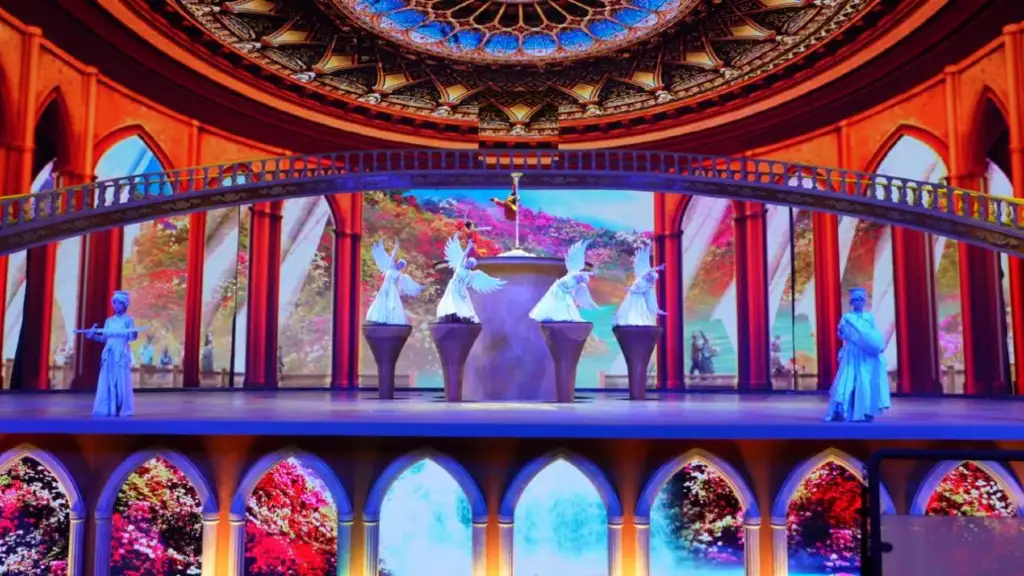
Act four: Cleansing rain
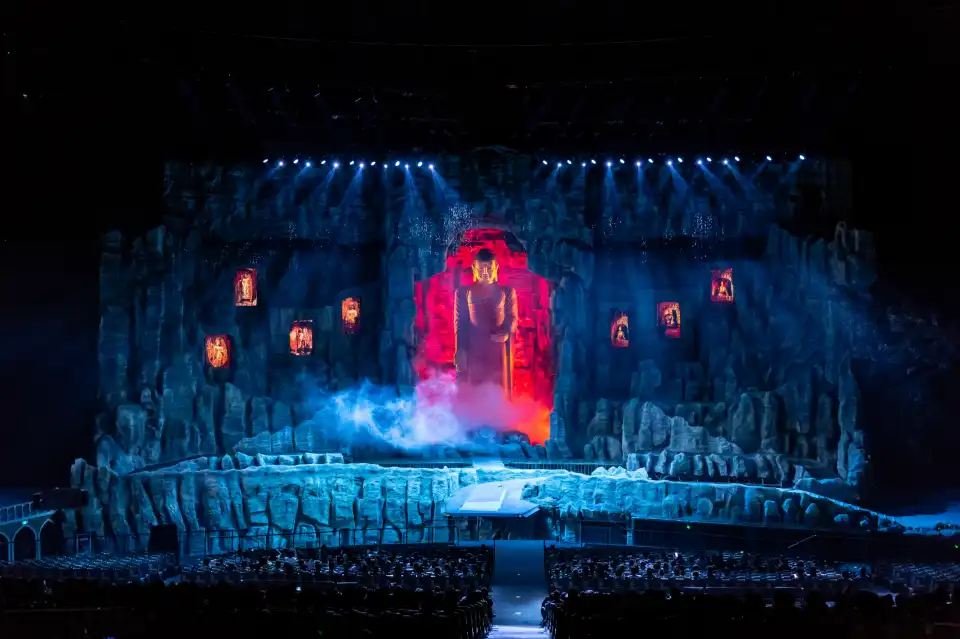
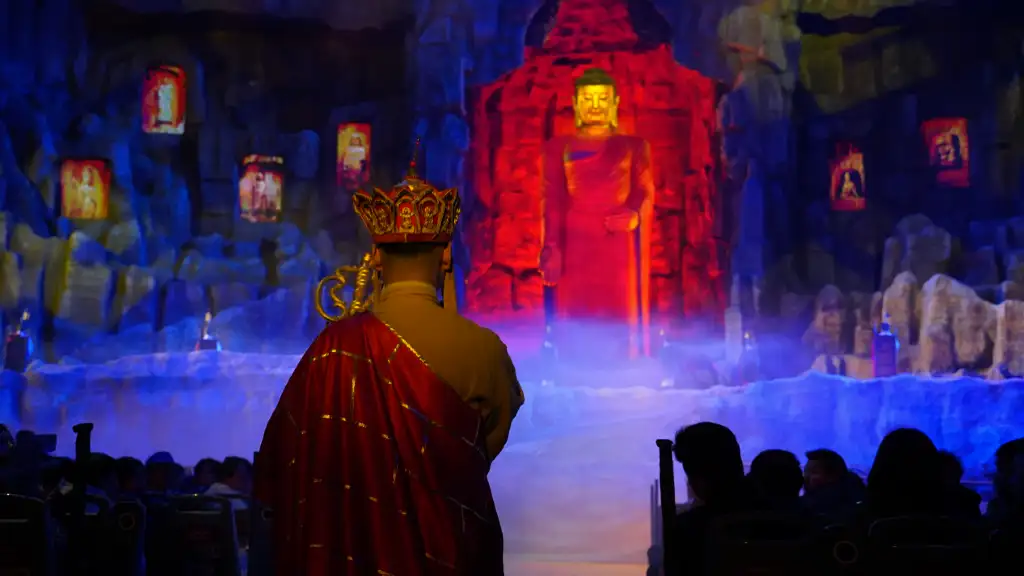
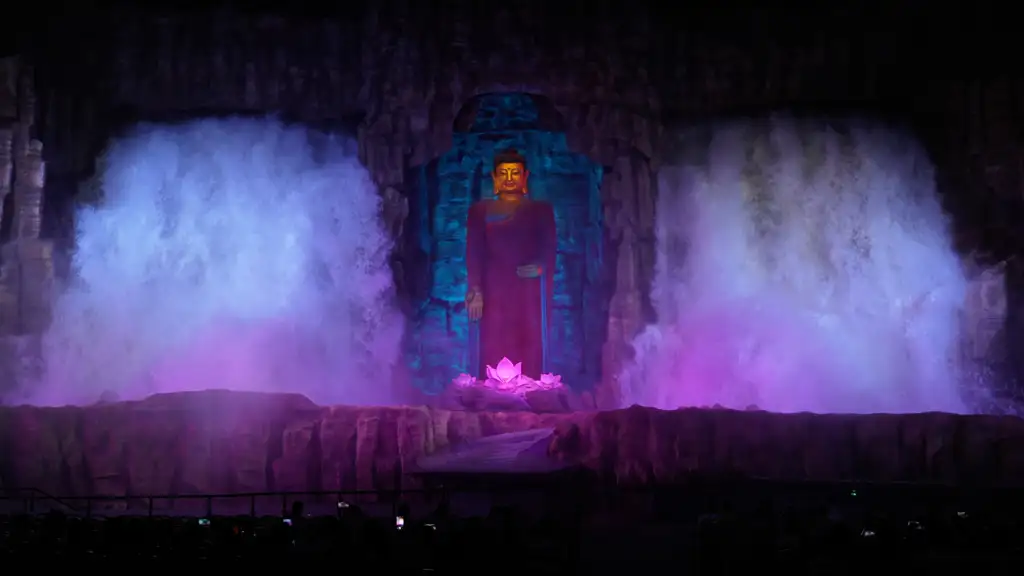
The camel caravan, laden with return goods and the joy of homecoming, made its way to the kingdom of Bamiyan, where they were fortunate to encounter the Tang Dynasty monk Xuanzang and his team on their westward journey to obtain Buddhist scriptures. The two groups traveled together in great delight. The camel drivers also took the opportunity to visit the Bamiyan Caves, where they made wishes before the Buddha for the caravan's safe journey and prayed for an early reunion with their families. By a stroke of luck, a blessed rain washed away the dust from their bodies, bringing good fortune for the homeward journey. With renewed confidence, the caravan set off joyfully.
Act five: Welcoming the groom's return
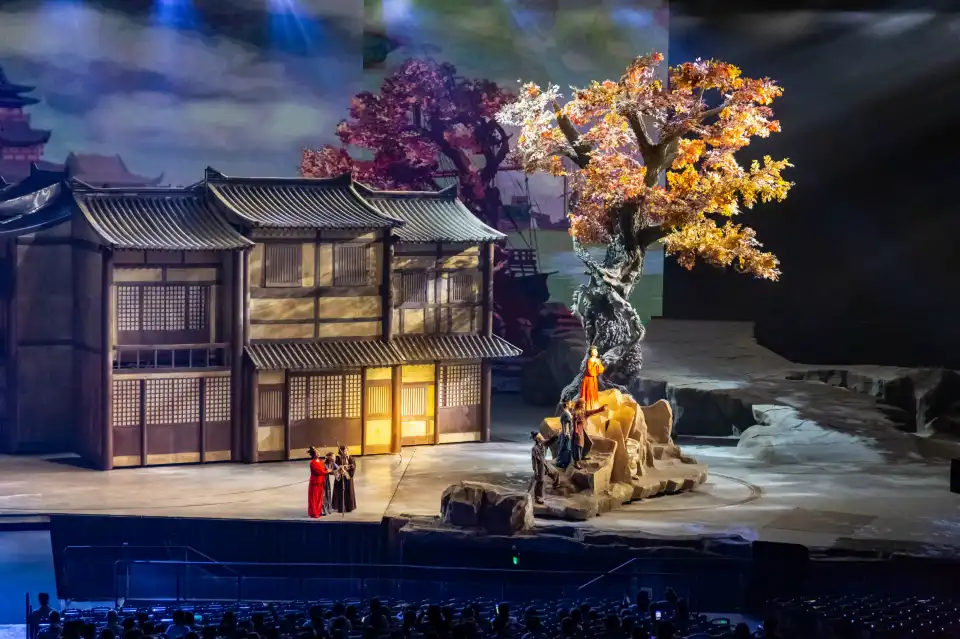
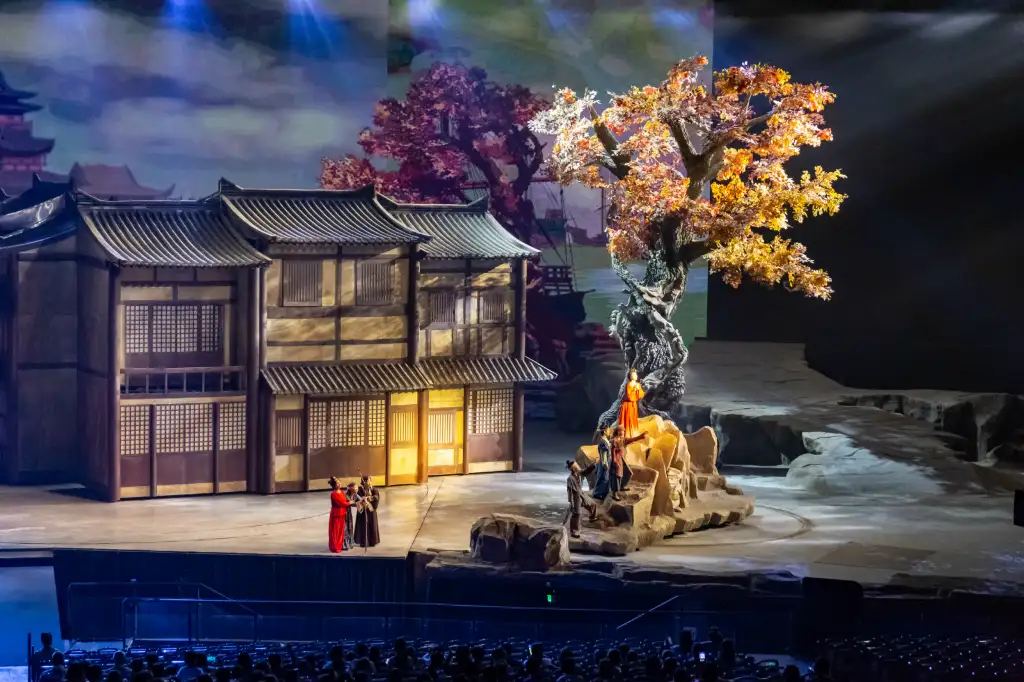
The camel route was the silk road connecting the great prosperity of Eurasia, and the camel caravan was the wooden shuttle weaving friendship along this path. Generation after generation of camel drivers risked their lives to tread this route smooth, while their homeland remained the sweet dream that guided their hearts homeward. Laden with harvest and hope, joy and longing made the homebound camel bells ring especially clear. Xiu'er and her sisters waited year after year, day after day under the ancient tree at Baqiao, longing for their men's return—until one day, look, they came back...
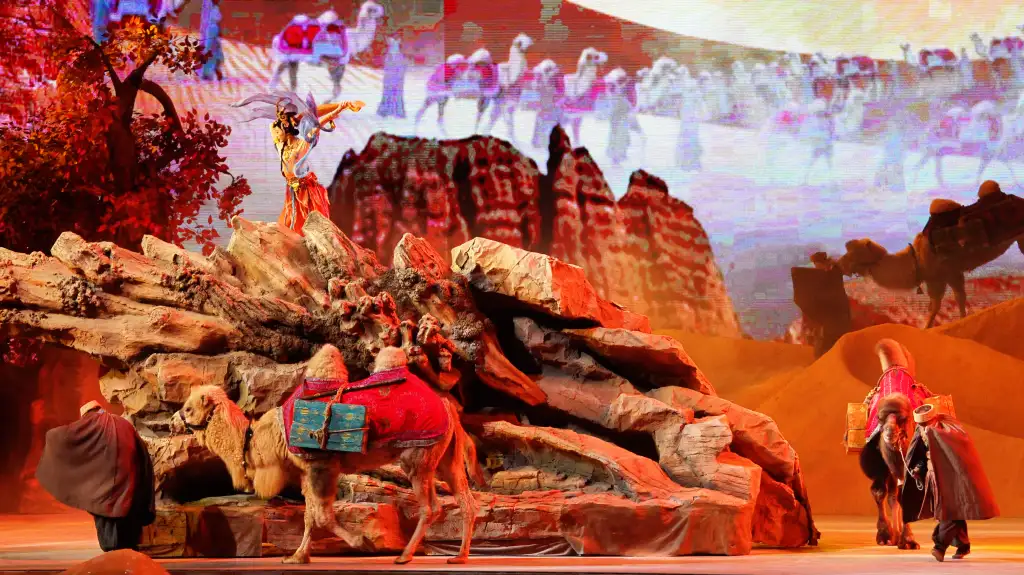
Act six: golden age of China
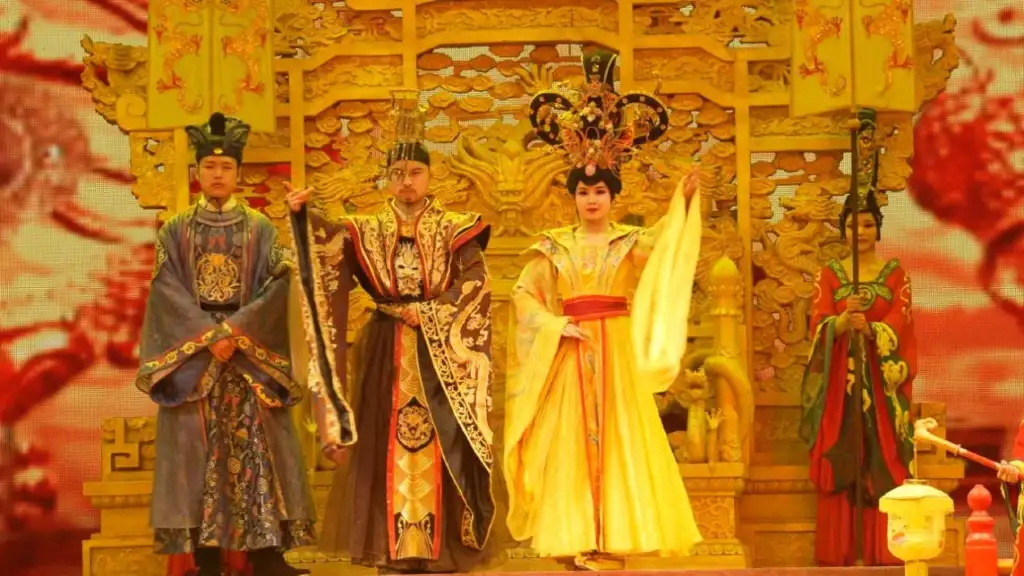
Camel caravans and horse caravans served as friendly envoys connecting Eurasian nations. The Silk Road fostered exchanges between countries, boosted Eurasian economies and national strength, deepened friendships and relations among nations, and ushered in the prosperity and flourishing of the Tang Dynasty's golden age. Envoys from myriad states gathered in joyous celebration of friendship, with the Tang emperor extending wishes for the Silk Road's prosperity and China's enduring greatness.

Other visitors' reviews of "Legend of the Camel Bell" show
Show More ReviewsVery entertaining and exciting, there is a real camel and wolf in the show.