

Embark on a 2-day Bijie escapade that promises an eclectic mix of natural wonders and cultural heritage. Begin your journey with the awe-inspiring Zhijin Cave, where you'll spend 2 hours marveling at its vast chambers and intricate stalactite formations. Next, immerse yourself in the vibrant colors of the Baili Dujuan Scenic Area, a paradise of rhododendrons that offers a full day's exploration amidst blooming splendor. On your second day, rise with the sun to visit the Baicao Fields, where 2 hours will be spent in the embrace of lush greenery and pastoral landscapes. Follow this with a tranquil 2-hour visit to Caohai Lake, a serene haven for birdwatchers and nature lovers. Conclude your Bijie experience with a 3-hour stroll through Shimenkan, an ancient town that whispers tales of the past with every step along its cobblestone paths. This itinerary is designed to create a tapestry of memories, weaving together the natural beauty and cultural richness of Bijie.


2 Days in Bijie Itinerary: Day 1
Zhijin Cave

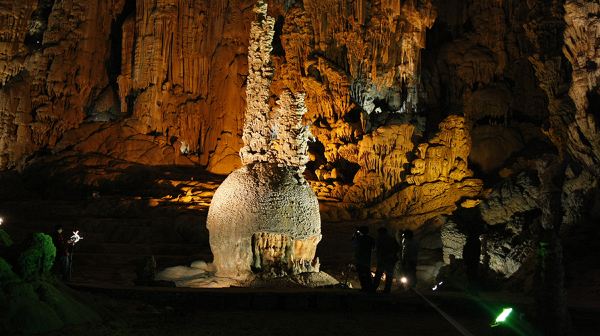
Kickstart your Bijie adventure with a journey into the depths of the Earth at Zhijin Cave. As the first stop of the day, this underground wonder will take you on a two-hour exploration through one of China's most magnificent karst caves. Located in Zhijin, Bijie, Guizhou, the cave is a natural museum of geological wonders with its vast array of stalactites, stalagmites, and other spectacular formations. The cave's cool, mysterious chambers are a perfect escape from the outside world, offering a serene start to your Bijie itinerary.
Attraction info
- Zhijin, Bijie, Guizhou, China
- Suggested tour duration: 2-4 hour
- Open from 03/01-10/31,8:30am-5:00pm;Open from 11/01-12/31,9:00am-4:30pm;Open from 01/01-02/29,9:00am-4:30pm
Recommended nearby restaurants





Baili Dujuan (“Hundred Miles of Rhododendrons”) Scenic Area
After emerging from the subterranean realms of Zhijin Cave, the rest of your day will be spent amidst the vibrant colors of the Baili Dujuan Scenic Area. This 'Hundred Miles of Rhododendrons' is a natural tapestry that stretches across the hills and valleys of Dahuang Village, Pudi Township. Spend your day wandering through this floral paradise, where the blooming rhododendrons create a breathtaking landscape. The scenic area is not just a feast for the eyes but also a haven for photography enthusiasts and nature lovers alike, promising an entire day of beauty and tranquility.
Attraction info
- Baili Rhododendron Scenic Spot, Dahuang Village, Pudi Township, Dafang County, Bijie City, Guizhou Province
- Suggested tour duration: 0.5-1 day
- Open on Mon-Thu,7:30am-7:00pm;Open on Fri-Sun,7:00am-7:30pm
Recommended nearby restaurants



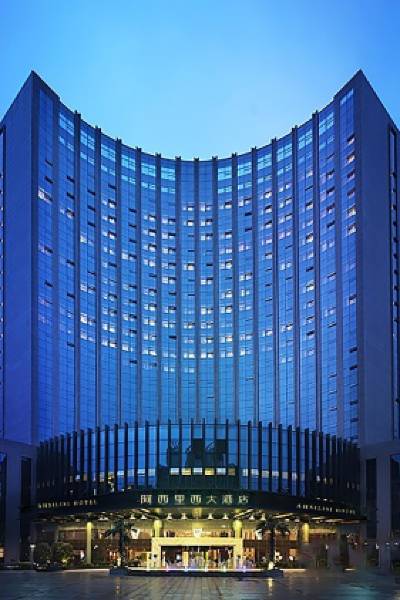
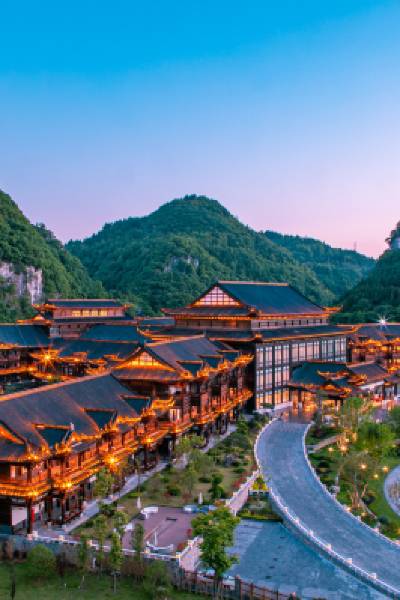
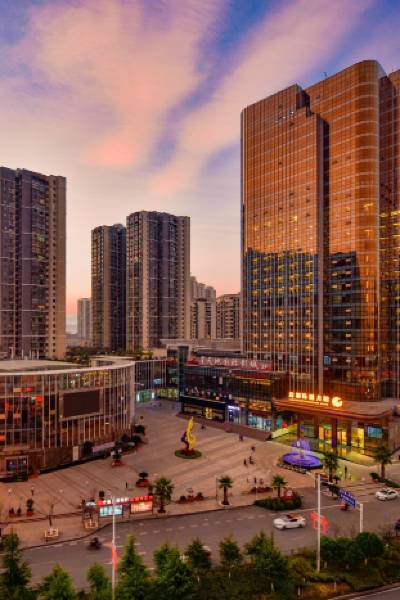
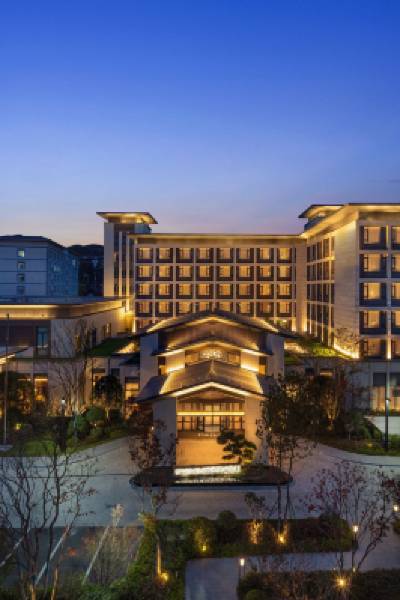
Where to Stay Tonight
2 Days in Bijie Itinerary: Day 2
Baicao Fields
Begin your second day in Bijie with a serene morning at Baicao Fields, where the symphony of nature's hues awaits. Nestled in Baicaoping, Zhaoyang, this verdant expanse offers a two-hour escape among a tapestry of wildflowers and herbs. The fields are a living palette, with each season painting a new masterpiece. It's a perfect spot for those who seek tranquility and a moment to reconnect with the earth's simple pleasures.
Attraction info
- Baicaoping, Zhaoyang, Zhaotong, Yunnan, China
- Suggested tour duration: 2 hour
- Open 24 hours
Caohai Lake
Next, let the tranquil waters of Caohai Lake soothe your soul. Just a short journey from Baicao Fields, this natural haven located on Caohai Road is an ideal continuation of your day's exploration. Spend two hours encircled by the lake's calm, which serves as a sanctuary for a myriad of bird species. The lake's mirror-like surface reflects the sky above, offering a picturesque setting for leisurely strolls and photography enthusiasts.
Attraction info
- Caohai Road, Weining Yi, Hui and Miao Autonomous County, Bijie City
- Suggested tour duration: 2-3 hour
Recommended nearby restaurants




Shimenkan
Conclude your Bijie journey with a step back in time at Shimenkan, an ancient town steeped in history. After a scenic drive from Caohai Lake, immerse yourself for three hours in the town's storied past. Shimenkan's rustic charm and cultural significance are palpable as you wander through its streets. The town is a testament to the region's rich ethnic tapestry, offering visitors a unique glimpse into the traditions and lifestyles that have shaped this enchanting corner of China.
Attraction info
- Weining Yi and Hui and Miao Autonomous County of Bijie City
- Suggested tour duration: 3 hour
- Open 24 hours
Where to Stay Tonight
Top things to do in Bijie-2025
 Based on 53 review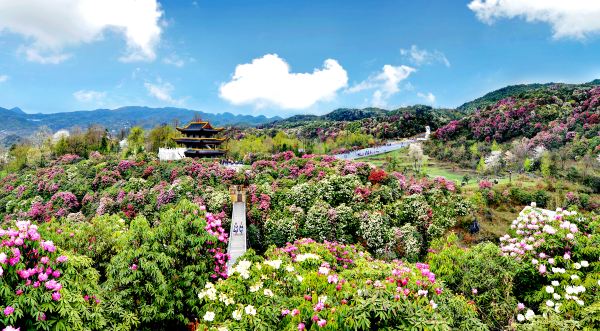
Many different colors and varieties of rhododendron grow at the Baili Dujuan Scenic Area, which straddles Qianxi and Dafang counties: brilliant red, pink, purple, and more. Here you can catch the rare sight of different colors of flower growing on the same tree. It is said that during the annual blooming season, female divinities sneak down from the heavens to the mortal realm to enjoy the flowers and sing and dance together with the young women among the flowers. That is why this is the ideal location for the flower festivals of the Yi and Miao peoples.

The Asilisi Prairie is located at the junction of Xingfa Township, Weishe Township and Guda Township in Hezhang County, Guizhou Province. The prairie has a total area of more than 40 square kilometers, with an average altitude of more than 2,400 meters. It stretches for dozens of miles and covers an area of one million acres. It is magnificent, with gentle slopes, lush grass, and wild flowers everywhere. It is like a place full of golden flowers.
The main Attraction of Asilisi Grassland include Ertaipo Grassland, Wanfenglin, Heitang Charm, Yingshui Village Dazhai Landscape Painting, Shibanhe Creek Waterfall Group and other landscapes. Ertaipo, one of the core Attraction of the grassland, means the slope on the slope in the local area; here, the mountains are winding, the peaks are overlapping, the skylarks are flying, the cattle and sheep are in groups, and the pastoral songs are bursts. The overall style is similar to the grassland landscape in northern China. Here, the unique herds of cattle and sheep rolling in the wind, the graceful green trees and bamboos, and the gurgling clear mountain springs on the grassland add to its smart beauty; here, the blue sky and the earth, the Cangshan and the ginger grass, the hardness and the gentleness, the hands of nature and the magical creation, draw a magical and perfect picture, stretching out a magnificent and colorful painting of Wumeng.
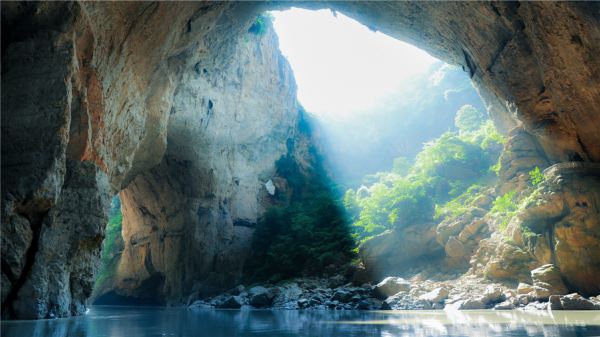
Jiudongtian is located on the Liuzhong River at the junction of Dafang and Nayong counties. It is a national key scenic spot with a total length of about 6 kilometers and is divided into two sections. The underground river in the cave expands to form many lakes in the cave, and the water flow is stable.
"Yidongtian" is a dry cave, which is spacious inside and is the entrance hall. It covers an area of more than 3,000 square meters and has an average height of 80 meters. The stalactites on the cave walls and ceilings are bizarre and magnificent.
The "Second Cavern" is now used as a power generation cavern, which uses gates to control the water flow from a height of 11 meters to generate electricity. It is a rare natural cave power station without a plant in China, and is extremely economical.
The "Three Caves" are tall, wide, winding and quiet. The stone wall on the left bank is extremely smooth, as if it was cut by a knife or an axe, and colorful stalactites are hanging on the wall on the right bank.
"Four Caves" is a natural Attraction composed of multiple caves. The stalactites in the caves are like towers or palaces, crystal clear and lifelike.
"Wudongtian" is a dark lake in the shape of a gourd, which is naturally formed by contracting at the top and expanding at the bottom.
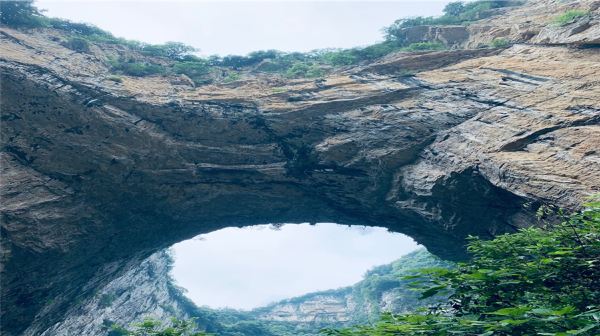
The "Six Caves" are connected natural bridge windows, the top of which is about 100 meters above the horizontal plane and is very dangerous.
"Qidongtian" is a large dry cave with thousands of windows and holes, which are interconnected and can accommodate thousands of people.
The entrance of the "Eight Caves" is only two or three meters wide, but tens of meters high, like a narrow alley in a tall building. The sunlight refracts into it, and the light and color of the water surface change endlessly.
The caves in the "Nine Caves" are divided into three layers. The strange-shaped water caves and dark lakes in the lower layer are connected to the Eight Caves, and are connected in all directions. In the middle layer, there is a huge natural bridge 90 meters long and 120 meters wide, which is shaped like a "gate". Looking down at the water cave from the square under the bridge, it is mysterious. Looking up, the sky is drawn as two huge arcs, like the magpie bridge when the Cowherd and the Weaver Girl meet. The upper layer is a cave hall parallel to the natural bridge arch, with an area of about tens of thousands of square meters. Countless cave entrances are connected to each other, forming a three-dimensional maze, which is rare in the world.
* All user reviews in this article have been translated by machine.
* The information above is subject to change at any time. For the latest information, please check the websites of hotels and attractions.