
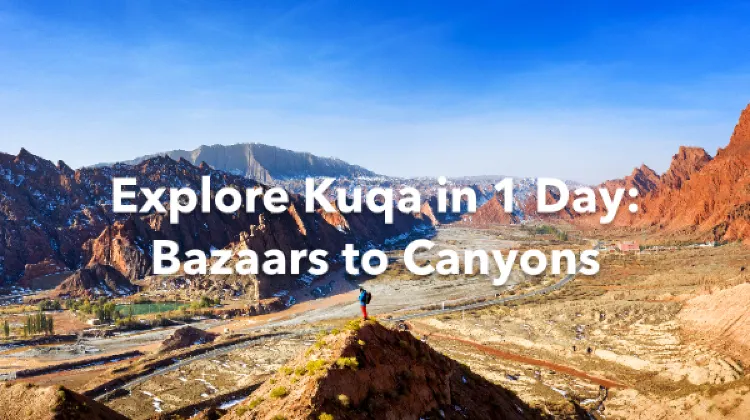
Embark on a whirlwind adventure through Kuqa, a cultural crossroad on the ancient Silk Road, with our compact one-day itinerary. Start your exploration at the bustling Kuqa Bazaar, where characteristic neighborhoods and markets offer a glimpse into local life and traditions. Spend an hour soaking in the vibrant atmosphere before heading to the Kuche Dasi, a mosque that stands as a testament to the region's rich Islamic heritage. After another hour, delve into the history of royalty at the Kuche Royal Palace, an exhibition hall and monument that demands a good two hours to fully appreciate its grandeur. Conclude your day with a two-hour visit to the Mysterious Grand Canyon of Tianshan Mountains, a natural wonder that promises awe-inspiring views and a serene escape from the buzz of the city. This itinerary is designed to showcase the best of Kuqa, ensuring that your day is filled with unforgettable experiences and sights.





1 Day in Kuqa Itinerary: Day 1
Kuqa Bazaar

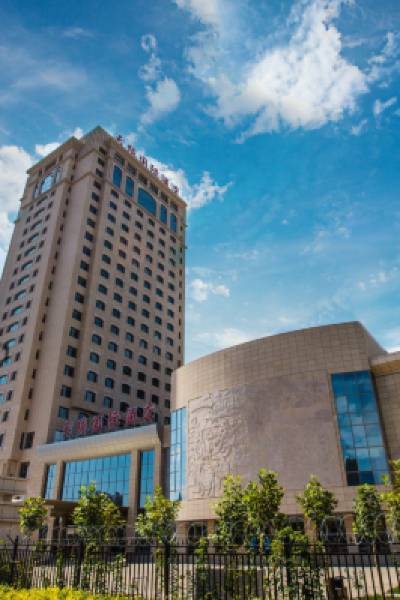
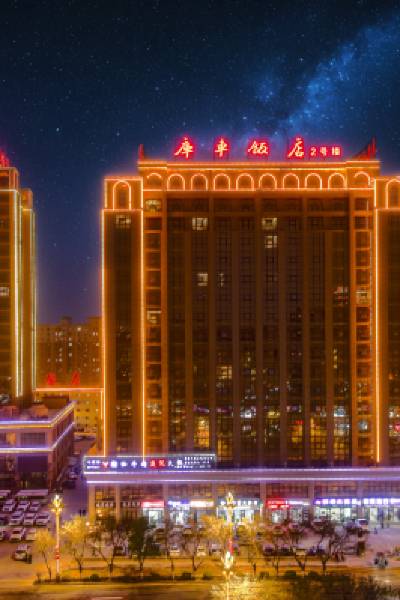
Begin your Kuqa adventure at the vibrant Kuqa Bazaar, a bustling hub where the city's heartbeat is palpable. As the first stop of the day, immerse yourself in the characteristic neighborhoods and markets that offer a colorful tapestry of local life. Spend an hour navigating through the myriad of stalls near Tuanjiexinqiao, where the scent of spices fills the air and the sound of haggling is music to the ears.
Attraction info
- Near Tuanjiexinqiao, Kuqa County
- Suggested tour duration: 1-2 hour
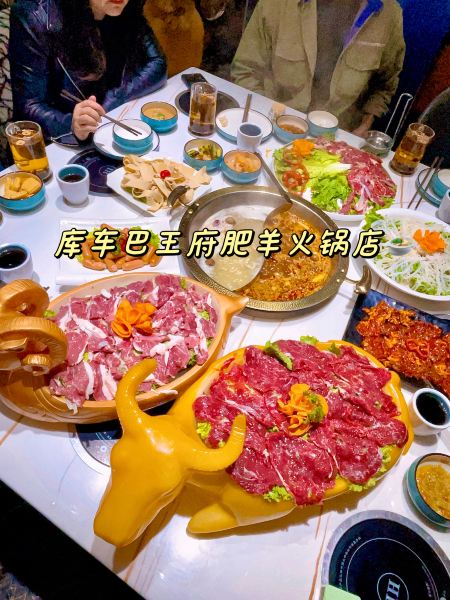
Recommended nearby restaurants


Kuche Dasi
Next, a short stroll leads you to the serene Kuche Dasi, a mosque that stands as a testament to the region's rich cultural tapestry. Allocate an hour to appreciate the architectural beauty and spiritual ambiance of this sacred space. Located on Pahatabazza Road, the mosque is not just a place of worship but a symbol of the historical confluence of faiths in Kuqa County.
Attraction info
- Pahatabazza Road, Kuqa County, Aksu Region
- Suggested tour duration: 1-2 hour
- Open from 10:30am-6:30pm
Kuche Royal Palace
Continuing the cultural journey, the Kuche Royal Palace awaits. As the third destination of the day, this exhibition hall and monument offers a deeper dive into the history and grandeur of the region. Spend two hours exploring the royal residence that once housed kings, now standing proudly in Kuqa as a beacon of the past. Here, history is told through the silent whispers of its walls and exhibits.
Attraction info
- Kuqa, Aksu, Xinjiang, China, 842000
- Suggested tour duration: 2 hour
- Open from 05/01-09/30,9:30am-8:00pm;Open from 10/01-04/30,10:00am-7:30pm
The Mysterious Grand Canyon of Tianshan Mountains
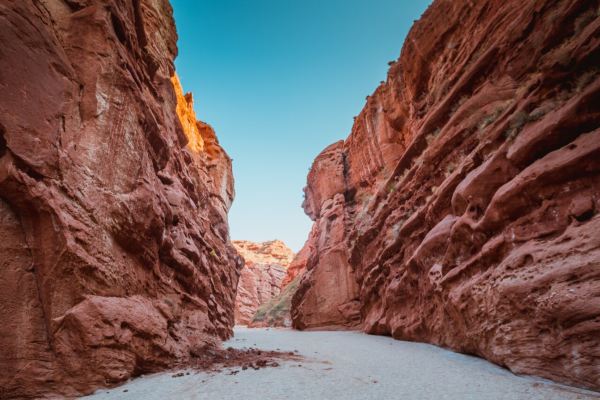
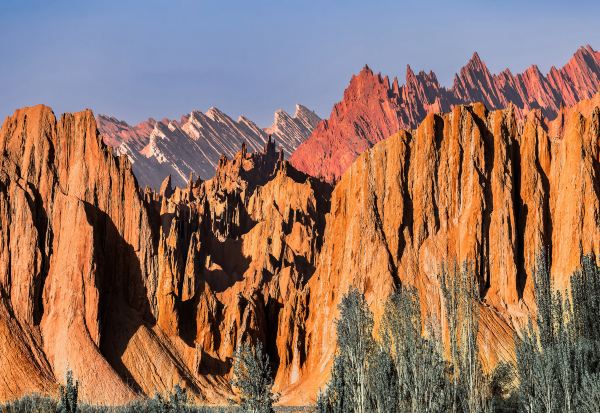
Conclude your day with the awe-inspiring Mysterious Grand Canyon of Tianshan Mountains. Just a journey away from the heart of Kuqa County, this natural wonder is the perfect finale to your day's exploration. Dedicate two hours to wander through the dramatic landscapes and marvel at the sheer cliffs and winding rivers that define this majestic canyon. Located north of No. 1025 on the 217 National Road, it's a place where nature's artistry is on grand display.
Attraction info
- Mountainous area north of No. 1025, 217 National Road, Kuqa County, Aksu, 64 kilometers north of Kuqa County
- Suggested tour duration: 2-3 hour
- Open from 10:00am-7:30pm
Top things to do in Kuqa-2025
 Based on 13 review
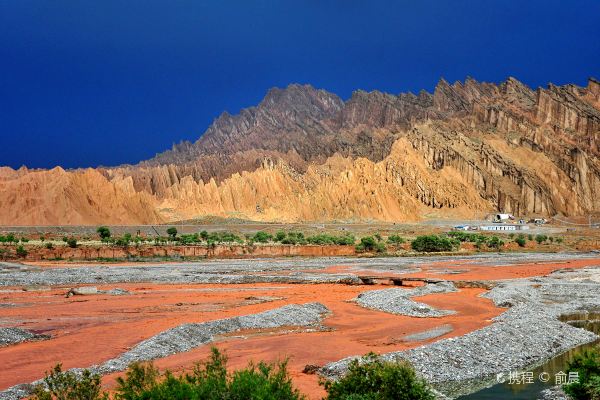
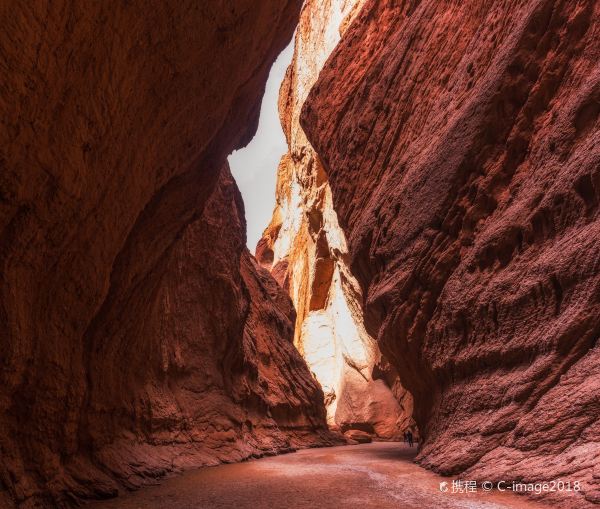
Tianshan Mysterious Grand Canyon is also calledTianshan Mysterious Grand CanyonLocated in the northern part of Kuqa County, Aksu Prefecture, Xinjiang, the Tianshan Mysterious Grand Canyon is known as "Kizilia" in Uyghur, meaning "red cliffs," due to its massive red-brown mountain formations. The towering red-brown peaks of the canyon pierce the sky, glowing like clusters of burning flames under the sunlight.
Entering the valley and walking among the reddish-brown mountains feels like stepping into a tranquil and refreshing world. The valley entrance is wide open, but as you venture deeper, the path twists and turns, alternating between broad and narrow passages—some spots are so tight you can only squeeze through sideways. The valley floor remains relatively flat, allowing for leisurely strolls most of the time, flanked by towering rock walls underfoot with fine sand and shallow water covering many sections, topped with a thin layer of ice. Look up, and against the blue sky, countless bizarre peaks and rocks take on endless forms—each vividly shaped like the Guardian Dog Valley, Spinning Ancient Fort, Apparition Cave, Jade Maiden Spring, and Sleeping Camel Peak.
The mysterious A'ai Grottoes in the canyon are less than 2 km from the valley entrance, perched high on a sheer cliff face. Originally accessible only by climbing a 30m suspended ladder, stone steps have now been added alongside. Research indicates the grottoes were built during the mid-Tang Dynasty's golden age. The small grotto measures under 5m deep and stands about human height with an arched ceiling. Remarkably, remnants of murals on all three walls feature rare Chinese characters - a striking contrast to hundreds of other ancient grottoes in the Western Regions, clearly demonstrating Han cultural influences.
 Based on 11 review
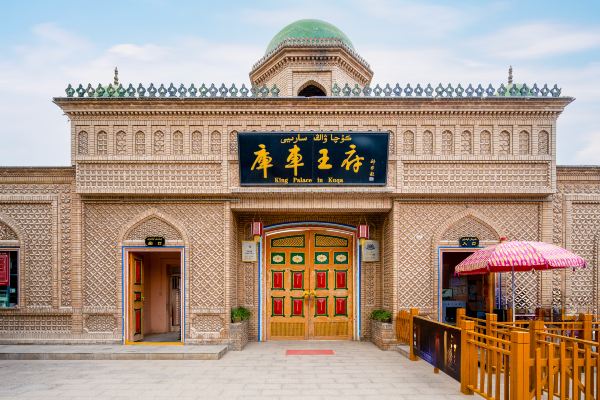
King Palace In Kuqa is located in the old town of Kuqa County, Aksu Prefecture, Xinjiang. It served as the residence for generations of Kuqa's local Uyghur princes since 1759. The original palace was reduced to ruins, and the current structure was meticulously reconstructed on its original site based on the memories of the last Kuqa prince, Dawut Mahsut. Covering a vast area of approximately 200–300 meters in length and width, the palace complex features multiple Uyghur-style buildings with vibrant interior designs, offering excellent photo opportunities throughout. The grounds include beautifully landscaped gardens and green spaces, creating a pleasant environment. The palace tour is divided into three main sections: the Kucha cultural exhibition area, the palace visiting area, and the ancient city wall. Visitors can explore the site on foot, with a recommended visiting time of around 2 hours.
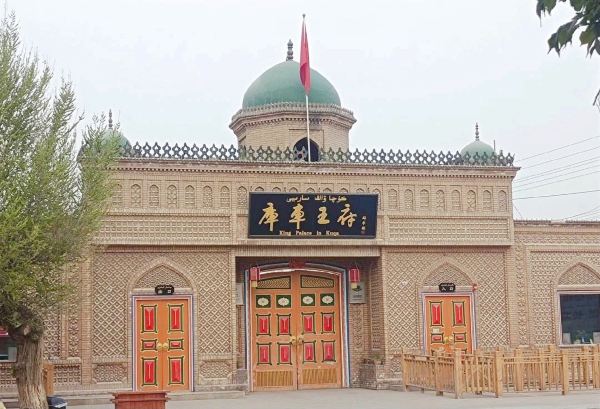
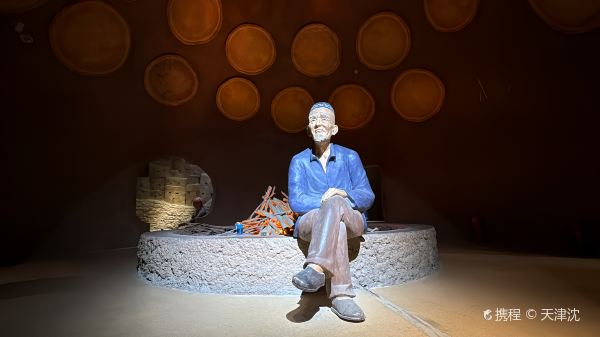
The Qiuci Culture Exhibition Area showcases the cultural customs of the ancient Qiuci Kingdom in Xinjiang's history, featuring numerous textual and pictorial descriptions, precious artifacts of Qiuci Buddhism, as well as exhibits of production tools, coins, and folk crafts from the ancient Qiuci Kingdom. The old city wall is an ancient structure within the princely residence and can be briefly viewed. The key visiting area is the princely residence section, which is displayed in its original form, including items once used by successive Kuqa kings. Wax figures recreate the daily life scenes of the princely family, allowing visitors to explore and experience the atmosphere of the Kuqa kings' lives. It's important to note that Dawut Mahsut, the last Kuqa king (also the last prince officially recognized by China's central government) who once resided in the princely residence, passed away on July 30, 2014. Visitors today can no longer meet him but can only tour the princely residence.
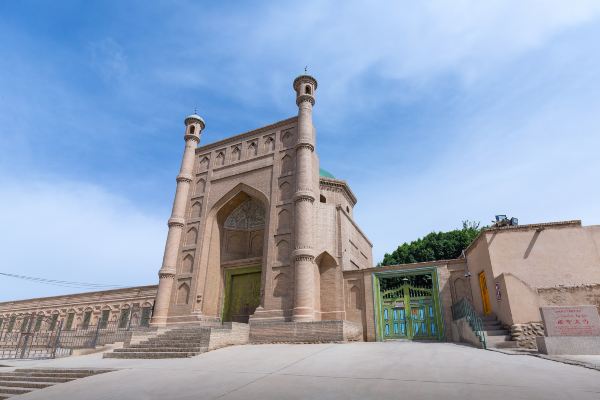
Kuche Temple is the second largest in Xinjiang.Id Kah MosqueThe second largest temple, located 4 km from Kuqa New Town. Among the numerous earthen buildings in Kuqa's old quarter, the green glazed dome of Kuche Temple shines brilliantly under the sunlight. The temple's gateway tower stands 18.3 meters tall, entirely built with blue bricks, with its towering minaret exuding solemn grandeur. The pillars are carved with Islamic-style patterns, and the domed roof resembles the celestial sphere. The prayer hall inside covers 1,500 square meters, accommodating up to 3,000 worshippers. Sixty-four hexagonal pillars arranged in eight rows, adorned with colorful carvings and paintings, support a magnificent ceiling composed of 102 grid-patterned panels, creating a splendid and awe-inspiring sight.
Kuche Temple is said to have been built during the 16th century by Ishak Wali, leader of the Black Mountain faction of Islam in Xinjiang, while he stayed in Kuqa to preach after traveling from Kashgar. Originally constructed as an earthen mosque, it was rebuilt with wooden structures in the 17th century. After being destroyed by fire in 1923, the current temple was completed in 1931. Notably, north of the small prayer hall stands a historically significant "religious court"—a relic of theocratic governance and one of the few remaining Islamic judicial sites preserved in Xinjiang.
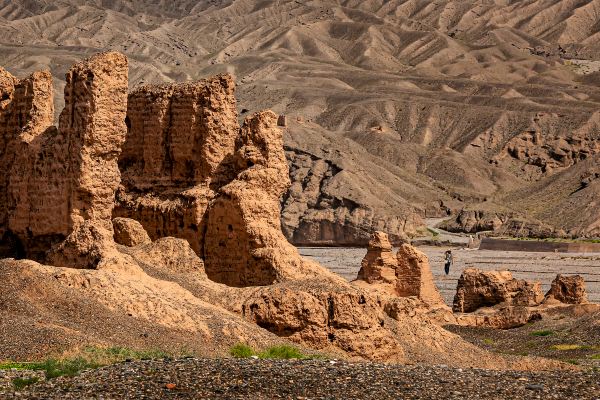
The Subash Buddhist Ruins, originally named "Subash Buddhist Temple" and also known as "Zhaohuli Grand Temple," are bisected by the roaring Kuqa River. Legend has it this river is the downstream section of the "Mother-Child River" from Journey to the West. These ancient ruins were first built during the Eastern Han Dynasty (1st century AD) and reached their zenith during the Sui and Tang Dynasties (6th–8th centuries AD).
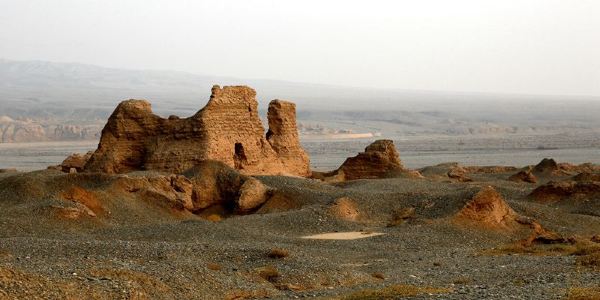
The renowned monk Xuanzang stopped here on his westward journey to India to obtain Buddhist scriptures. Seeing the temple filled with monks and bustling with incense offerings, he stayed for over two months to preach and spread Buddhist teachings. By the mid-7th century, after the Tang Dynasty's Anxi Protectorate relocated to Kucha, eminent monks from central China gathered here, with daily rituals flourishing amid morning bells and evening drums. However, the temple was burned down during warfare in the 9th century, leading to its gradual decline until its complete abandonment in the early 14th century.
The East Subashi Temple faces the West Subashi Temple across the river. The East Temple has a slightly smaller architectural scale. The current ruins include a Buddhist hall with niches remaining on its damaged walls, and a pagoda standing outside the hall. The pagoda's base is square, with a three-tiered structure and a cylindrical upper section, now standing at a remaining height of approx. 8m. Surrounding the area are monastic quarters, meditation rooms, and other Buddhist architectural complexes.
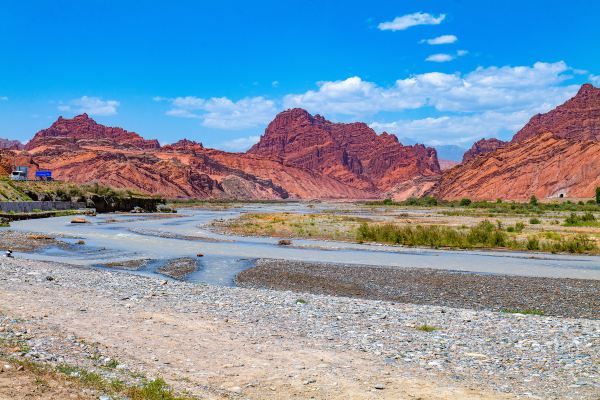
Kizilya Scenic Spot is an ideal destination combining natural wonders with cultural heritage. It is hailed as the "Tianshan Mysterious Grand CanyonThe Danxia landforms and canyon terrain complement each other, showcasing unique natural beauty. The canyon stretches over 5,000 meters in length with a natural elevation drop exceeding 200 meters from end to entrance. Inside, jagged peaks twist and turn, springs murmur melodically, and birds sing cheerfully—creating a living landscape painting. Notably, 1,400 meters deep from the canyon entrance lies the Thousand Buddha Cave ruins dating back to the Tang Dynasty. Its exquisite murals hold immense artistic value as a precious Buddhist cultural heritage of ancient Western Regions. Strolling through Kizilya Scenic Spot, visitors not only witness nature's masterful craftsmanship but also immerse themselves in rich historical culture, making it an extraordinary travel destination.
* All user reviews in this article have been translated by machine.
* The information above is subject to change at any time. For the latest information, please check the websites of hotels and attractions.