How to Get Train Seats Together in China: Families and Groups

In order to secure preferred train seats in China, book for all members in the same sequence, on the same train, and in the same seat class. This will give the system the best opportunity to place your group together.
The seat preference option is provided for C, D and G train series. However, a reservation and consecutive seats are not assured in any way. There is no such provision for a seat change online.
In case your group is split, you can approach the train conductor and also ask other travelers to swap seats.
Why seating together on a China train is not automatic
You choose the train, pay for the booking, and you have four seat numbers that are three rows away from each other. This occurs very frequently in China.
The seating arrangement in the trains of China is done in a centralized way. The system rather fills the train as a whole. Friends who are traveling together may end up seated in different coaches regardless of having booked all tickets at once.
But you still have much more control than you realize! This guide covers many aspects. From how to prepare for booking, decoding the seat letters, how group size affects your strategy, to what you need to do when you get split by the system.
All of this pertains to high-speed trains (G, D, and C series). If you are looking for basic information on how to book tickets, visit the China rail booking guide.
Does booking in one order keep our seats together?
Though it's not a guarantee, making a booking together will increase your chances of getting seats together.
If you make all bookings at once, then all travelers will be in a group request. If you make separate bookings, then all bookings will be considered strangers to each other.
The five actions you can control
Actions | Why you should do it | What it does not guarantee |
Do the group booking in one go | The system considers the group as a single request | Adjacent seats |
Book the same train for everyone | Seating together is practically possible for the same train | A shared coach |
Choose one seat type for all passengers | The pool of seats for each class is different | A shared row |
Use the seat-selection process when enabled | It informs your preferred seating to the booking system | That the preference will be respected |
Plan ahead and travel during off-season | More unoccupied seats will create more opportunities for adjacent seats | Anything on a holiday weekend |
The last step is what everyone misses. Last-minute reservations will only leave behind odd spots, and preferences, if offered, cannot fix that.
Check your seat numbers right after payment
Check your booking once it has been processed. Double-check the train coach numbers and lettered seats per passenger.
In case of separation, you have a limited time to take action. It’s easier to make changes when you have ample time before traveling.
See all attractions
 2090487 booked




Can you choose your seats on a China train?
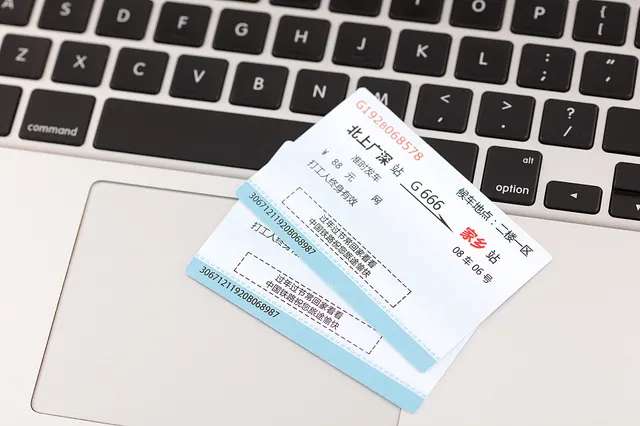
You won’t be able to choose your own seat number, but you are allowed to choose your seat preferences.
Which trains support seat selection
Railway seating instructions state that the seat selection feature works only for the C, D, and G train series. The traditional trains (Z, T, and K train series) do not have this feature.
Trip.com states that all the options you provide are mere requests and that China Railway will try to place you as close as possible to the options you have provided. In case there is no inventory left to fulfill your requests, the system assigns your seats automatically according to the available inventory.
What the seat letters mean in each class
Letter seats are positions in an arrangement. This indicates that the letter represents the position in the row in which the seat is placed.
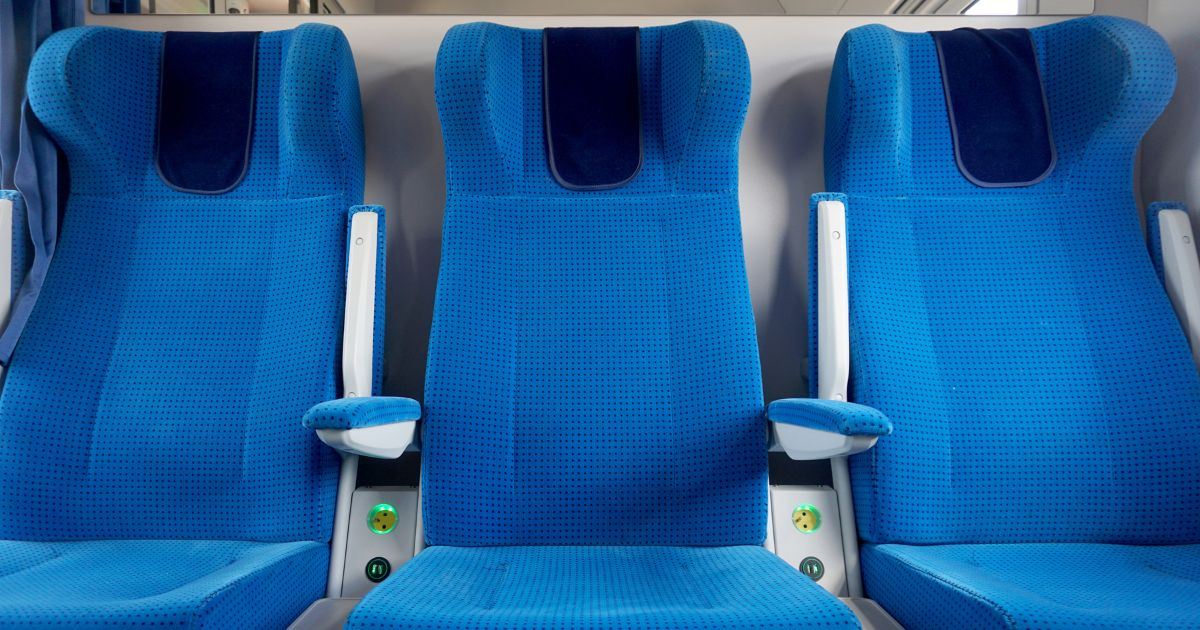
In a high-speed train, seats A and F are window seats. Seats C and D are aisle seats. Seat B is the middle seat of a group of three. Seat E does not exist, so there is consistency in the arrangement of the seating.
Class | Row layout | Seat letters | Window | Aisle | Middle |
Second class | 3+2 (five seats) | A, B, C | D, F | A, F | C, D | B |
First class | 2+2 (four seats) | A, C | D, F | A, F | C, D | None |
Business class | 2+1 or 1+1, depending on the model | Varies | Varies | Varies | Varies |
This is the standard Fuxing-style arrangement of seats. Train models vary, and you should go with what the seat map shows on your own screen while booking the tickets.
Which positions suit which travelers
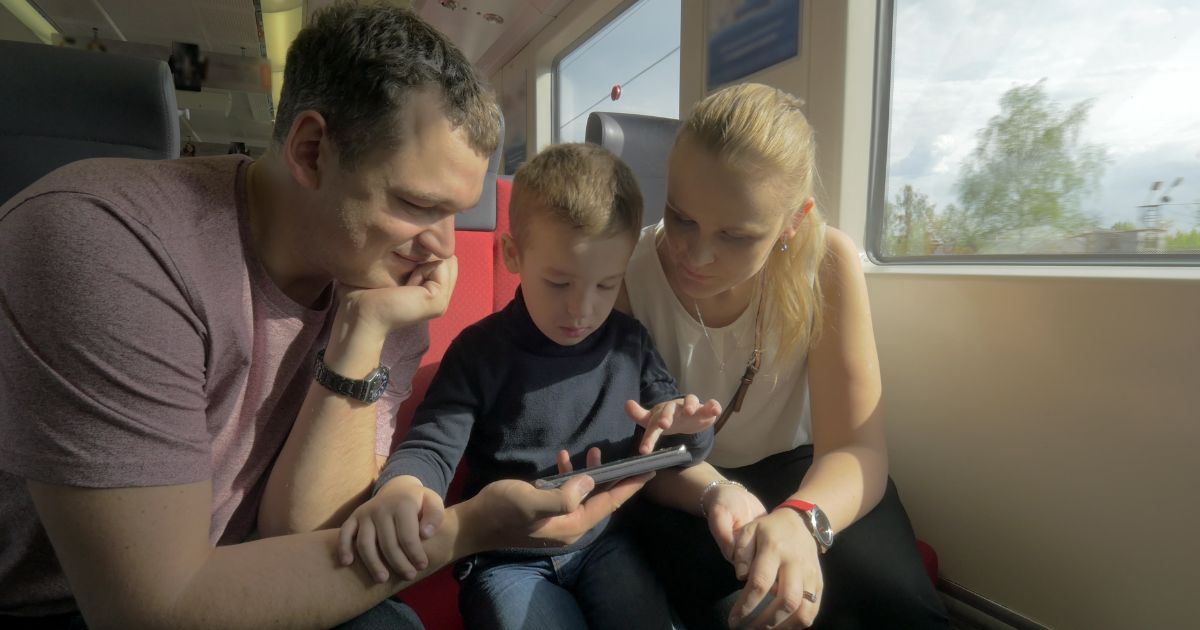
- A family of three in second class: Try to get A, B, and C together. The child can get seated in the middle or take the window seat, while a parent can be seated next to him.
- A Parent with a toddler: The middle and window seats can keep him/her away from the aisle.
- Elderly passengers: C or D (aisle) allows for easy exit and no need to climb over others.
- A group of four: First class allows for two pairs sitting in one row, while second class allows for three seats together, with the fourth sitting across the aisle.
Why your choice may not be honored
Seat allocation operates on the remaining available seats. In case the train is almost full, it may not have any three adjacent seats for you if required.
Timing is another reason for this. Since the seating plan is dynamic, you can end up in another row/seat once payment is completed.
Treat the seat preference as a request, not a promise. Check the seat numbers on your ticket once payment is done, and plan for the possibility that they are not adjacent.
Hotels in Shanghai
China eSIMs
See All Hotels


How many people can book together?
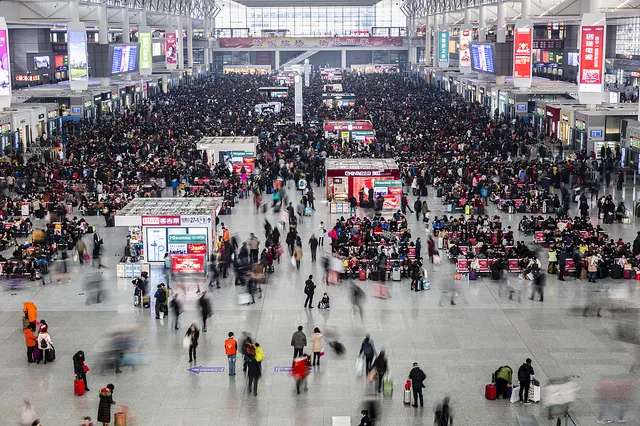
Five passengers is the practical limit for one row in second class, since a second-class row has five seats and an aisle in between them. Any number more than five will definitely be split into at least two rows, regardless of how your booking is.
The rail system itself permits large orders. 12306 ticket purchasing guidance mentions a maximum of 9 tickets in one order. However, a larger order does not guarantee better seats. The operator mentions that even the passengers in one sequence can be allocated to different coaches (Source: 12306 passenger ticket notice, checked 8 October 2026).
Group-size booking rule table
Group size | Booking recommendation | Is one order enough? | Expectation | Failure point | Fix |
2 travelers | One order, same class | Yes | Usually adjacent seats | Late booking can allot different seats | Book early |
3 travelers | One order, first class or second class | Yes | A, B, C if a block is free and available | The system splits one from two | Choose seat selection, check the seat numbers |
4 travelers | One order, first class or second class | Yes | Two pairs or a block plus one | Seats split across the aisle or rows | Accept an aisle gap, keep children with parents |
5 travelers | One order, second class | Yes | A full row only if one is free | Hard to find five open seats in one row | Expect a row of three plus a pair |
6 travelers | Two orders of three, same train and class | Often needs a split | Two separate groups of three | The split lands in different coaches | Split by family unit, ask about adjacent rows |
7 or more | Two or more orders, same train and class | Needs a split | Several clusters | Children separated from parents | Keep every child in the same order as a responsible adult |
Where to split a larger group
Separate passengers according to family, not convenience. Each child remains with his/her own parent.
Six passengers can be two groups of three people each. Make bookings for each group individually, but ensure that both bookings are on the same train and in the same class. Wherever possible, try to book the orders consecutively so that the seating arrangements are similar.
Once completed, verify the seat numbers for both families. If they are sitting in the same coach, talk to the conductor about switching seats. If they are in different coaches, decide whether you need each other or can travel separately.
Booking seats in different classes has its own drawbacks. If one of the two orders is first class and the other is second class, you are guaranteed to travel in different coaches.
Can you change your seat after booking?
No. China Railways does not allow you to change the seats once booked.
The only possible way out for you is a ticket change. The ticket change facility will ensure that you get to travel on another train, date or seat class.
What a ticket change involves
Each ticket is allowed one alteration. They can be made to the date, train, seat class, and even the destination station, provided there is sufficient notice. The change in arrival station can be made 48 hours before the commencement of the trip. No other changes are permitted once such a change has been made to the ticket.
There are no additional charges when changing a reservation within 48 hours to a train departure on or before the day of the reservation, and after travel to another train on the same day. Changing 24-48 hours before travel to a later date incurs a charge of 5% of the lower fare, whereas under 24 hours will incur a charge of 15%. After travel, there is a charge of 40% (12306 passenger ticket notice, checked 8 October 2026).
Do not pay for a "seat change" from a third party
Some sellers advertise "seat change online." Do not fall for the trap, as it is allowed free of charge if done 48 hours before the scheduled departure.
If your seats are uncomfortable and you haven’t already changed the ticket, then your one chance of changing is precious. Use it to upgrade your train journey and not to pay for changing the seats.
Looking for the best stay during your journey?


What if you are split up anyway?
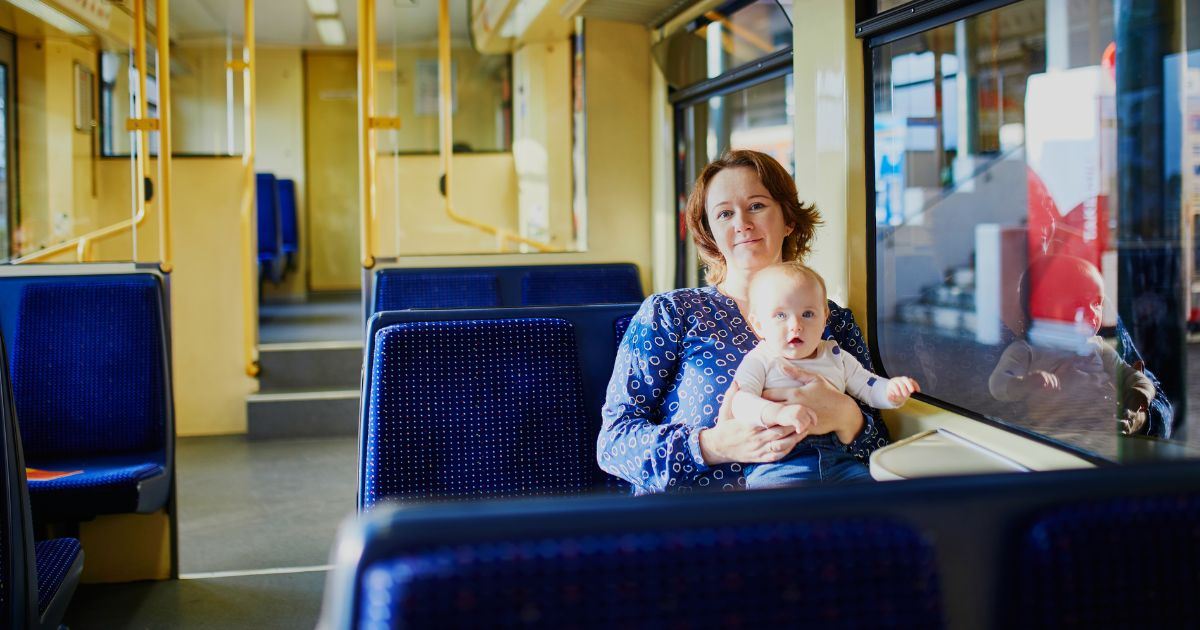
There are always alternative ways. Below is how you can act when you are inside the coach:
The recovery sequence
- If you are split in the booking, you should think about using the single ticket modification opportunity before traveling.
- Board, keep your baggage, and locate your seat first.
- Request the train attendant politely, explaining the situation to them.
- Request the nearby passengers to swap if possible.
- Settle the child to be seated near an adult first, then arrange everything else.
- A split of a group of two is a workable outcome.
In a packed train, there may be no room left for the attendant to do anything about it. Swapping seats is a possibility, but it is not a guarantee.
Recovery table for separated seats
Situation | First act | Who to ask | What to say | Realistic outcome |
Split across rows | Show the ticket to the nearest passenger | The passenger sitting in your desired seat | "Can we exchange places so my family members sit together?" | Often agreed, especially with children |
Split across coaches | Locate the attendant near your coach | Train attendant | "Our group is in different coaches. Can you please help?" | Depends on empty seats |
Child seated far from the parent | Act immediately | The closest passengers and the attendant | "My child is traveling alone in this seat. Can we please swap?" | Usually resolved quickly |
Older passengers separated | Request an aisle seat or a seat nearby | Attendant, then neighbours | "My parent needs an aisle seat. Could we please swap?" | Often resolved |
Train changed or cancelled | Check your booking for new seat numbers | Station staff or the booking platform | Show your ticket | Seats are reassigned, which may split you |
It is good to have a translation app because the attendant might not understand if you speak English. Write a short line on your phone and point to your ticket.
If the train is packed and no one wants to change seats, then you have to sit separately. It may not be too big a problem when traveling for one or two hours.
Traveling with children and older parents
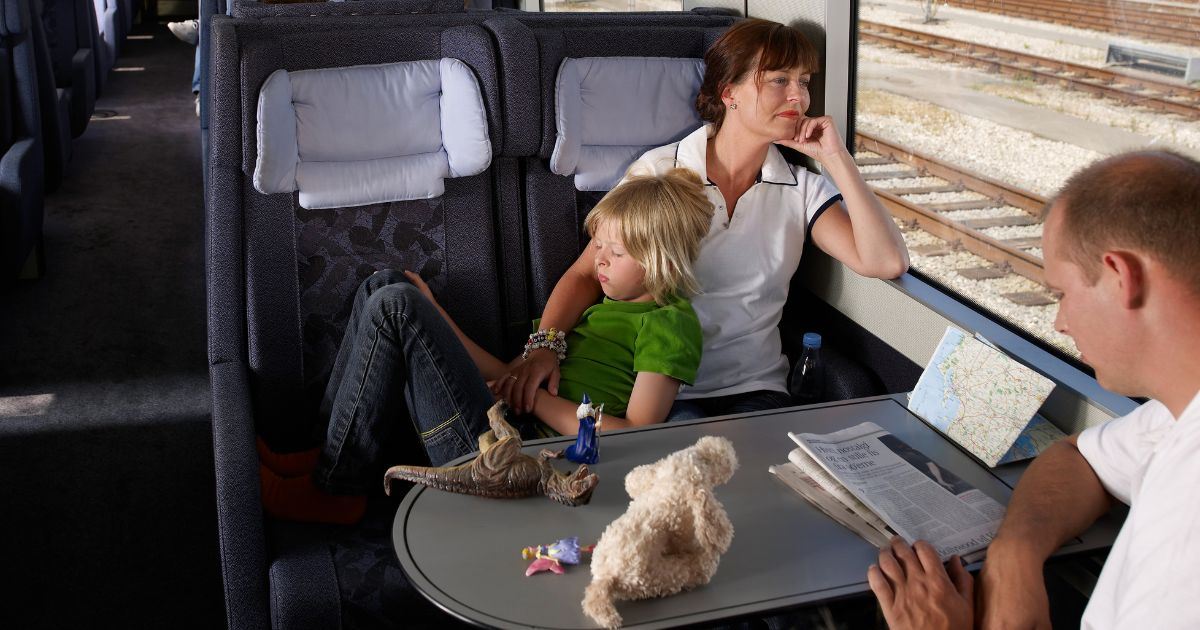
Your concerns shift when you have kids and elderly passengers on board. Your plans must prioritize their safety and then optimize everything else.
Child tickets inside the same order
Insert the booking or travel details of the children according to the ticket of the parent or guardian in order to keep them in the same seat. Children between the ages of 6 and 14 require a child ticket, and those above the age of 14 pay the full fare.
The child ticket should be of the same class as that of the adult and should not exceed his/her destination. In a high-speed train, the discount will be 50% of the fare in second and first class, 80% in business class, and 70% in sleeper berths.
An adult, with a ticket purchased, is allowed to travel with one child below the age of 6 without paying for him/her and giving him/her a seat. If he travels with another child below the age of 6, then he has to buy another child ticket. The child, if travelling free and using the seat, requires a child ticket. You can read the complete guidelines on China Train Tickets for Children.
Two adults with a free child require just two seats, whereas two adults with one child with a separate ticket require three seats, and in this situation, a row of ABC is perfect.
Practical seating priorities for families
- Keeping the youngest child next to a parent should be your priority
- Sit the little one in the window seat so they are distracted and away from the aisle
- Make sure older passengers sit in the aisles so that they can get off easily
- Board early because the overhead racks for luggage fill quickly
- Carry passports at all times because they will be needed for checking
The stations provide a formal service of assistance to seniors and people with limited mobility. Child care rooms or priority waiting areas at the stations may also have similar facilities. Check with the station staff for such facilities.
Common mistakes and failure cases
Most seating issues result from a list of easily preventable mistakes.
Issue | Reason | The recovery |
Separate tickets booked | Each person books on different platforms | If both are on the same train, use one of them to swap |
Different seat class | A traveler selects another class option | Rebook through a ticket change, or travel separately |
Assuming the seat selection was granted | The preference procedure seemed to work | Check your ticket once booked |
Paying for a "seat change" | 3rd party seller promised a fix | Do not opt for it |
Splitting a group in which the child is isolated | The group was split due to price or order | Rebook to ensure that children remain with adults |
Booking the last departure train | There was no other train with seats. | Plan for a fallback option |
Learning about the group split on the platform | Nobody checked the tickets earlier | Check right after booking next time |
Used ticket change already | This ticket has been altered before. | Swap your ticket or purchase a new one |
Waiting too long is the biggest mistake. A group split that you see a week before could still be solved.
When there really is no way the group could afford to separate, then try taking a flight where you get to choose your seats. Look at the door-to-door cost on the trip.com flights page.
Car Rentals
Car Rental Promo Code - 8% Off
New User Enjoy up to 8% Off
TRIPCAR8
FAQs about getting China train seats together
-
Will we sit together if we book in one order?
-
Can I choose a window seat on a China train?
-
How many passengers can be in one booking?
-
Can I change my seat after booking?
-
What should I do if my family is seated apart?
-
Which train class is best for a family of three?
-
Do children need their own ticket and seat?
-
Is it easier to sit together on a plane?
Disclaimer: This article has been provided by an individual contributor or third party platform. If there is any discrepancy regarding the copyright, please contact us directly and we will delete the content immediately.
Trending Searches
-
More about China Trains
- China High Speed Train Seat Map
- 1st class vs 2nd class on China high speed trains
- China Train Luggage
- How to Take a Train in China
- Shenzhen to Hong Kong
- China Train Types
- China Train App
- China Sleeper Train
- China Train Tickets Change Refund Cancellation
- China Train Seats Together
- Zhangjiajie West Railway Station
- How to Enter Your Name on China Train Tickets with a Foreign Passport
- Cheap Train Tickets China
- San Sebastián-Donostia to Tudela De Navarra trains
- Ourense to O Carballiño trains
- cheap hotels in baguio
- The best boutique and shophouse hotels in Shanghai
- Vaccinated Travel Lane
- Trains to Rochdale
- Rome to Florence trains