Beihai Park
北海公园 based on 2,381 reviews
 No. 11 of Night Attractions in Beijing
Open Opening hours of Beihai Park
Beihai Park Highlights: Must-See Features and Attractions
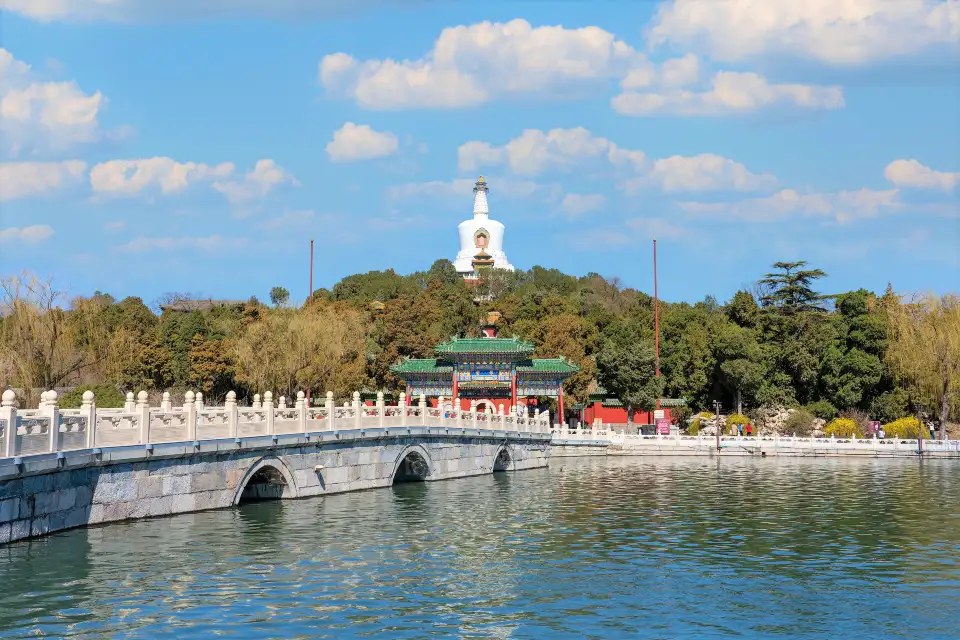
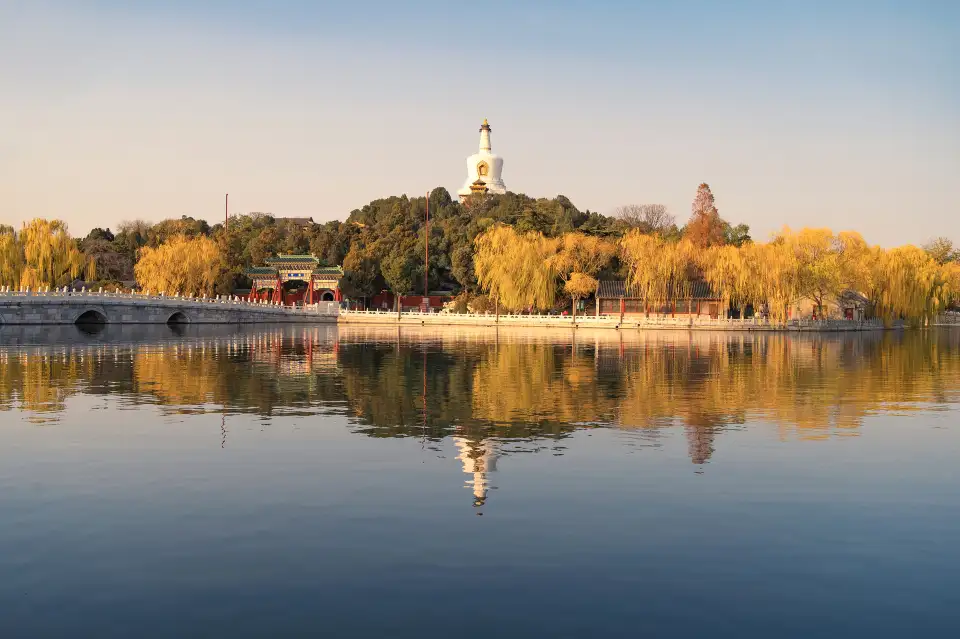
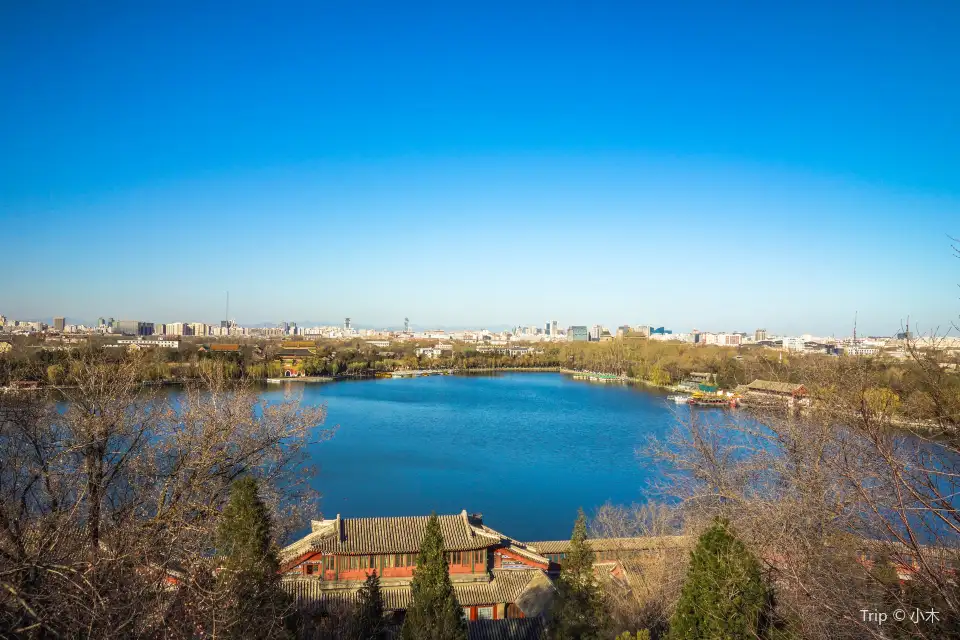
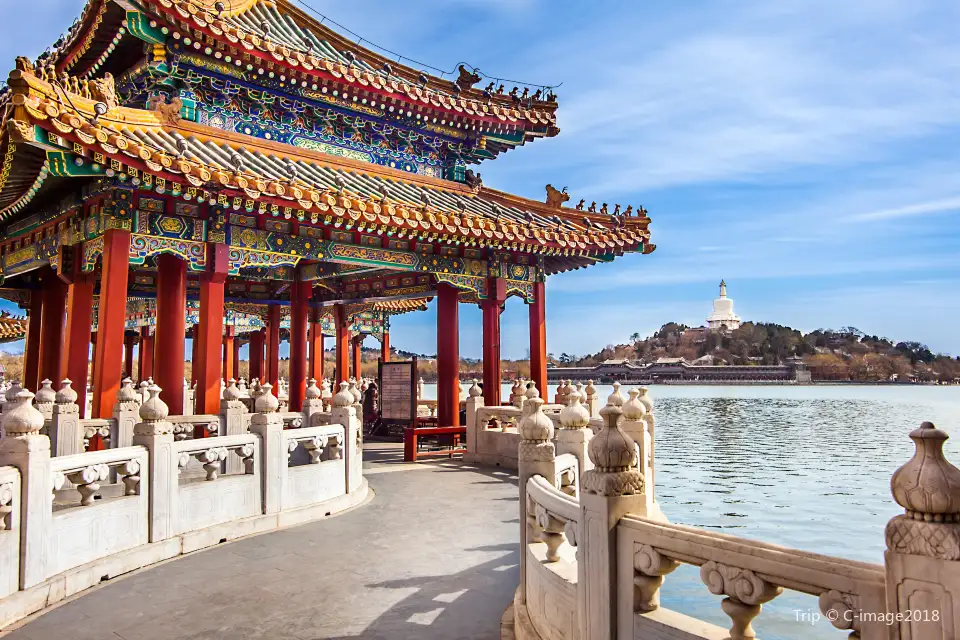
"Let's row our oars, as our little boat pushes through the waves..." This familiar song perfectly describes Beihai Park. Located northwest of the Palace Museum, Beihai forms the "Three Lakes" scenic area along with Zhonghai and Nanhai. Once an imperial garden, the park features exquisite pavilions nestled among lush lakeside greenery, offering breathtaking scenery.
Beihai Park boasts a long-standing tradition of cultivating lotus flowers, with over 100 varieties currently maintained. Each year, the park nurtures more than 1,200 pots of lotus and other aquatic plants. From June to August, early, mid, and late-blooming varieties flourish in succession, creating a vibrant display.
Highlights
This park at the foot of the imperial city wall embodies the authentic charm of old Beijing. Mornings see seniors practicing tai chi and walking their birds, while afternoons and evenings are perfect for boating. At Beihai Park, you can admire exquisite imperial architecture, sit by the lakeside chatting with local elders about Beijing's royal folklore and long-buried stories, or join groups playing jianzi and diabolo. Perhaps this is the ultimate way to immerse yourself in traditional Beijing life.
Area overview
Beihai Park is centered around its namesake lake and divided into four main areas: the North Shore Attraction, East Shore Attraction, Qiongdao Island Attraction, and Tuancheng Attraction.
The North Shore area, located in the northwest corner of Beihai Park, primarily consists of a series of religious structures including the Kuai Xue Hall, Five Dragon Pavilions, Little Western Heaven, Jingxin Studio, Chanfu Temple, and Western Heaven Buddhist Complex. This area is also home to the renowned Nine-Dragon Wall.
The eastern shore area is located in the northeast corner of the park, primarily consisting of the Altar of Silkworms, Beihai Park's Painted Boat Studio, and Beihai Park's Hao Pu Retreat. The Qiongdao attraction is situated in the southern part of Beihai Park, centered around Yong'an Temple, with surrounding structures including the Long Corridor, Beihai Park's Yi Lan Hall, Yuexin Hall, and Qionghua Island's Ancient Books Tower.
The iconic White Pagoda, standing at the highest point of Qiongdao Island, dominates the entire landscape of Beihai Park. Located at the southern end of the park, the Round City features Cheng Guang Hall as its main structure, housing a magnificent 1.5m-tall jade Buddha adorned with gemstones—a must-see attraction during your visit.
Main attractions
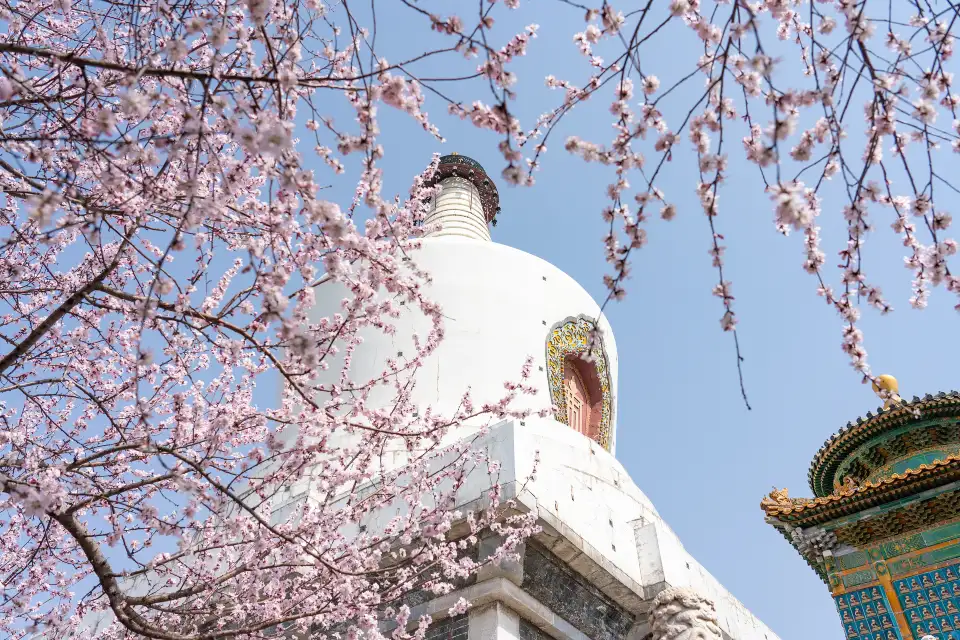
White PagodaPerched atop Qionghua Island in Beihai Park, this 36m Tibetan Buddhist pagoda features a circular top and square base in the Sumeru throne style. Its crown is adorned with a canopy, finial, and motifs of the sun, moon, and flames, symbolizing Buddhist teachings radiating eternal light like celestial bodies. The majestic white pagoda stands prominently amid lush greenery, serving as Beihai Park's iconic landmark.
Nine-Dragon Wall,China has three Nine-Dragon Walls, with the most distinctive one located in Beihai Park. This wall is entirely constructed with glazed colored bricks, measuring nearly 26m in length and 6.65m in height, featuring a five-ridged hipped roof. Both sides are adorned with nine coiling dragons each, totaling 32 dragons including those on the roof and sides. The vividly crafted dragons play with pearls amid waves and clouds, showcasing brilliant colors and exquisite craftsmanship, making it a masterpiece of Chinese glazed architecture. Visitors flock from across the country just to witness its magnificence!
Other visitors' reviews of Beihai Park
Show More ReviewsQionghua Island is a worthwhile scenic spot in Beijing. The park features mountains, water, and historical sites, offering a pleasant and expansive experience. However, the boat tour is a bit pricey; the three-minute boat ride to Qionghua Island costs 20 yuan per person. The Tuancheng (Round City) at the South Gate is also worth seeing; a combined ticket is recommended.