Hard Sleeper vs Soft Sleeper on China Trains: Which Should You Book?

by Robin
June 24, 2026

Planning on spending the night on a train in China? This side by side comparison guide will help you to find the best type of seats for you from berth layout, privacy, prices, and comfort.
Hard Sleeper vs Soft Sleeper on China Trains: Which Should You Book?
For most foreign travellers taking overnight trains in China, the soft sleeper is generally worth the upgrade compared to the hard sleeper. The two options differ significantly in comfort, privacy, and price.
Soft sleeper is especially recommended for:
- First-time visitors to China
- Light sleepers who need a quieter environment
- Families travelling with children
- Travellers carrying valuables
- Anyone on a single long overnight journey where rest is important
Hard sleeper remains a good option for:
- Budget-conscious travellers
- Backpackers looking to save money
- Those who enjoy a more local and social travel experience
- Regular users of China’s rail network who are used to the setup
Hard Sleeper vs Soft Sleeper on China Trains: Key Differences at a Glance
Sleeper berths on Chinese trains are found mainly on T (Tekuai), K (Kuaisu), and Z (Zhida) trains, which are slower overnight services rather than high speed rail. A small number of overnight D trains also offer soft sleeper berths. Sleeper classes are:
- Hard sleeper (硬卧). Open compartment with six berths in three tiers (upper, middle, lower). No door. Standard for budget overnight travel.
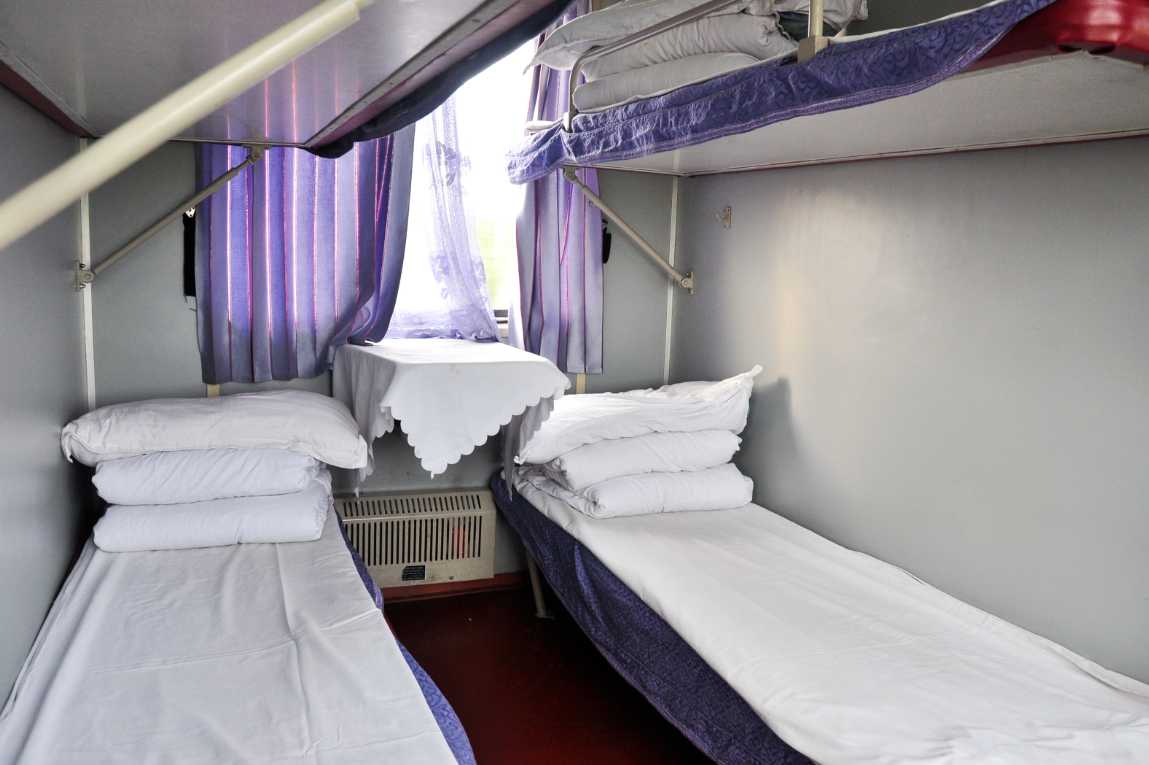
source: China Train Booking
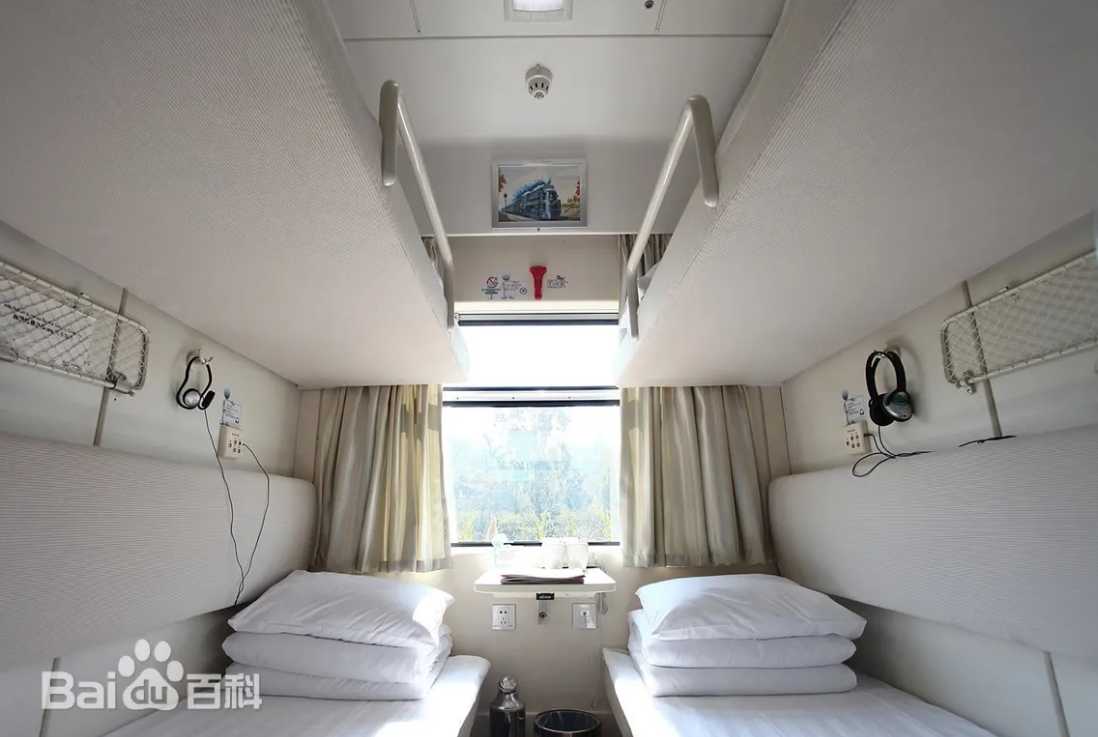
- Soft sleeper (软卧). Enclosed compartment with four berths in two tiers (upper, lower). Sliding door that locks from inside.
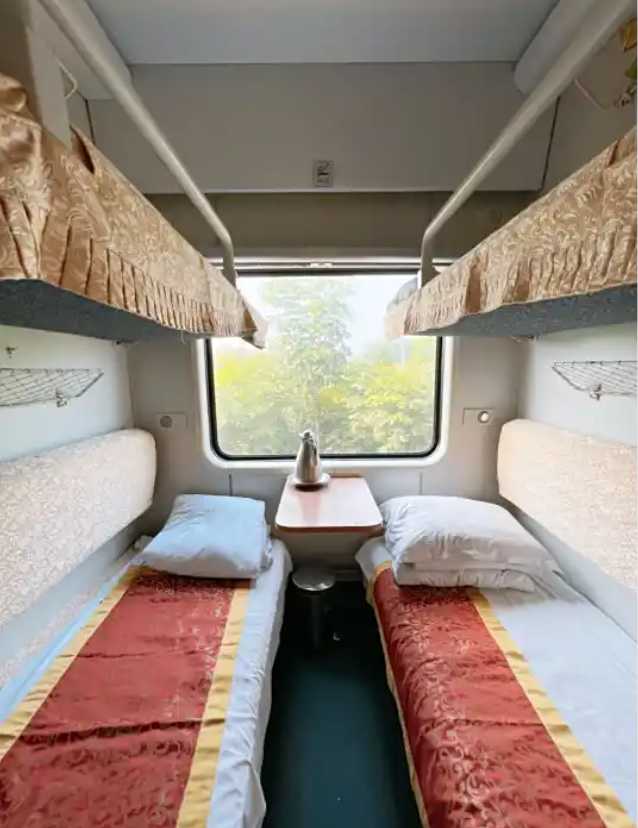
source: Baidu
- Deluxe soft sleeper (高级软卧). Two berth private compartment with attached or shared washroom. Available on a small number of premium routes including Beijing to Shanghai and the Tibet train.
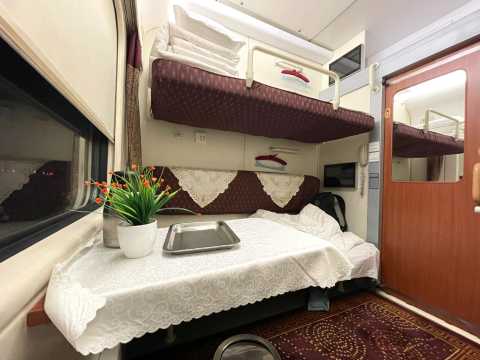
source: Baidu
Despite the name, hard sleeper berths are not actually hard. Both classes include a mattress, pillow, sheet, and blanket. The terms refer to the historic standard of the carriages rather than the current bedding quality.
Quick comparison:
Hard Sleeper | Soft Sleeper | |
|---|---|---|
Berths per compartment | 6 (open) | 4 (enclosed) |
Tiers | Upper, middle, lower | Upper, lower |
Door | No | Yes, lockable |
Berth width | About 60 cm | About 70 cm |
Berth length | About 180 cm | About 190 cm |
Bedding | Included | Included, better quality |
Power outlets | 1 to 2 per compartment, shared | 1 to 2 per compartment, shared |
Price (vs hard sleeper) | 1x | 1.5 to 1.8x |
Hard Sleeper and Soft Sleeper Berths: Layout, Privacy, and Onboard Comfort
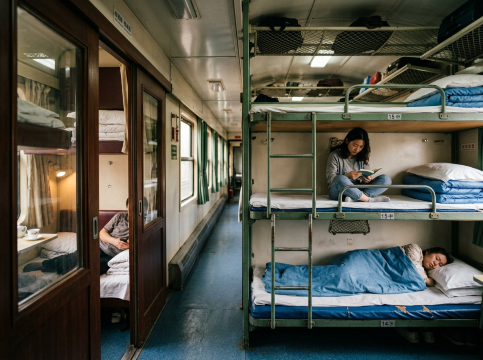
Feature | Hard Sleeper | Soft Sleeper |
|---|---|---|
Layout | Long open corridor on one side, ~11 compartments per carriage, each with 6 berths (3-tier) | Enclosed compartments with sliding lockable doors, 4 berths per compartment (2-tier) |
Berth Arrangement | 6 berths per compartment (3 upper, 2 middle, 1 lower) | 4 berths per compartment (2 upper, 2 lower) |
Daytime Setup | Fold-down seats along corridor side for sitting | No public seating inside compartments; doors remain closed |
Privacy | Open to corridor; passengers can see inside | Fully enclosed; significantly higher privacy |
Berth Comfort | Lower berth: easiest access, most comfortable for sitting; Middle: limited headroom; Upper: cheapest but least space | Wider berths, thicker mattresses, better bedding quality |
Night Environment | Lights dim around 22:00, back on around 06:00; less private | Quieter, more private due to enclosed door and fewer passengers |
Price | Cheapest option | 50–80% more expensive than hard sleeper |
Best For | Budget travellers, backpackers, social travel experience | Light sleepers, families, comfort-focused travellers |
Other practical points:
- Mixed gender compartments are standard. Hard sleeper and soft sleeper berths are not separated by gender. Solo female travellers should be aware of this when booking. To share a compartment with known travel companions, book all four berths in the same soft sleeper compartment together.
- Hot water is available at the end of each carriage, usually 24 hours, used for instant noodles and tea.
- Toilets are mostly squat style on older T and K trains, with some western style toilets on Z and overnight D trains. Toilet cleanliness drops as the journey progresses.
- Luggage storage is under the lower berth and on a rack above the corridor entrance. Larger suitcases fit under the lower berth.
- Power outlets are usually limited to one or two per compartment. A multi port USB charger and a long cable are useful.
- Dining car is available on most overnight trains. Cart service moves through the carriages selling boxed meals, snacks, and drinks several times during the journey.
[10% OFF] China Hotel Recommendations
Book 10% Off on Hotels for your next trip!
Search Top 10 China Hotels
See All Hotels
 NO.1
NO.1



China Sleeper Train Price Comparison: Hard Sleeper vs Soft Sleeper
Source: Baidu
The following are typical fares for reference. Prices vary by date, train number, and berth position, so check live availability before booking.
Route | Duration | Hard Sleeper | Soft Sleeper | Multiplier |
|---|---|---|---|---|
Beijing to Shanghai (Z train) | ~12h | ¥327 to ¥373 | ¥499 to ¥523 | ~1.4x |
Beijing to Xi'an (Z train) | ~11h | ¥263 to ¥274 | ¥409 to ¥445 | ~1.6x |
Shanghai to Chengdu (Z train) | ~30h | ¥453 to ¥520 | ¥712 to ¥811 | ~1.6x |
Beijing to Lhasa (Z21) | ~40h | ¥720 to ¥763 | ¥1,144 to ¥1,186 | ~1.6x |
Guangzhou to Chongqing (Z train) | ~24h | ¥390 to ¥410 | ¥620 to ¥650 | ~1.6x |
Within each class, the berth position affects the price. The lower berth costs the most, the middle berth (hard sleeper only) sits in between, and the upper berth is the cheapest. The difference between berth positions on the same train is usually small, typically ¥20 to ¥50.
For travellers comparing options, the soft sleeper multiplier of around 1.5 to 1.8 times the hard sleeper price is more modest than the business class to second class multiplier on high speed trains (around 2.5 to 3.5 times). This makes the soft sleeper upgrade easier to justify for many travellers, particularly on journeys over 10 hours.
Is Soft Sleeper Worth It Over Hard Sleeper on Chinese Overnight Trains?
A simple way to decide is by journey length and traveller profile:
- Under 10 hours. Either option works. Hard sleeper is sufficient and the price gap is small in absolute terms.
- 10 to 24 hours. Soft sleeper becomes meaningfully more comfortable. Light sleepers, families with children, and anyone who values privacy will benefit.
- Over 24 hours. Soft sleeper is worth strong consideration. On routes like Shanghai to Chengdu, Beijing to Lhasa, or Guangzhou to Kunming, the door, wider berth, and quieter compartment significantly affect rest quality over two or three nights.
Factors that favour soft sleeper:
- Light sleepers and those sensitive to noise
- Solo travellers carrying valuables (the locking door adds security)
- Families travelling with children, where booking all four berths in one compartment provides a private family space
- Travellers who want to work or read during the day with a door closed
- Longer journeys of two nights or more
Factors that favour hard sleeper:
- Budget travellers
- Travellers wanting a more social experience and exposure to local life
- Shorter overnight trips of 10 hours or less
- Travellers who sleep easily in any environment
A useful way to weigh the choice: the upgrade from hard sleeper to soft sleeper is one of the better value upgrades on the Chinese rail network. On most routes, the additional cost is the equivalent of one or two restaurant meals, while the difference in rest quality on a long journey can be significant.
Get Your eSIM Instantly – Stay Connected in China
See all attractions





Common Mistakes Foreign Travellers Make When Booking Sleeper Trains
A few mistakes come up repeatedly for first time foreign travellers booking Chinese sleeper trains.
- Assuming compartments are gender separated. They are not. Mixed gender compartments are standard for both hard sleeper and soft sleeper. Solo travellers concerned about this should book a soft sleeper and consider booking adjacent berths with a known travel companion.
- Booking the wrong berth tier. The upper berth in hard sleeper has very limited headroom, which makes it difficult for taller travellers to sit up in bed. The lower berth in hard sleeper sees the most foot traffic from compartment mates sitting on the edge during the day. Middle berth offers the best balance of privacy and headroom on hard sleeper for short and medium routes.
- Underestimating the journey length. Trip durations on sleeper routes are long, often 12 to 30 hours or more. Pack food, water, entertainment, and any medications in carry on luggage, not in stored luggage that becomes difficult to access mid journey.
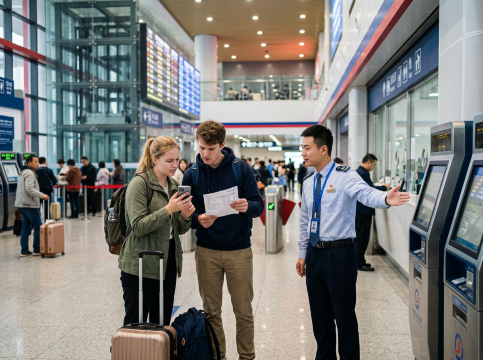
- Passport name does not match the booking. As with high speed rail, the passport name on the ticket must match the document exactly. Middle names belong in the given name field. Mismatches result in gate refusal, with no on the spot correction available.
- Missing the train type. Sleeper berths are mainly on T, K, and Z trains, which are slower than G high speed trains. A journey that takes four hours on a G train may take 12 hours on a Z train. The trade off is overnight travel that saves a daytime journey and a hotel night.
How to Book Hard Sleeper and Soft Sleeper Tickets as a Foreign Traveller
Practical points for booking Chinese sleeper trains as a foreign traveller:
- Use a platform with English support and international card acceptance. Trip.com displays the train type, journey duration, berth options, and refund terms in English, and accepts international cards.
- Book early on popular sleeper routes. Routes including Beijing to Lhasa, Shanghai to Lhasa, and the overnight Z trains between Beijing and Shanghai sell out quickly during peak periods. Tickets release approximately 15 days before departure.
- Choose your berth tier deliberately. Lower berth costs more but is the most accessible. Upper berth is cheaper but has limited headroom. For soft sleeper, lower berth is generally worth the small premium.
- Enter passport name exactly. Middle names go in the given name field.
- Bring your passport to the station. Most major stations have self service gates that read foreign passports directly. Where the gate cannot read the passport, a staffed manual lane is available.
- For refund and change rules, 12306 is the official source of truth. Trip.com displays the applicable terms before checkout.
Choosing Between Hard Sleeper and Soft Sleeper on Your China Train Journey
For short overnight trips and budget travel, hard sleeper offers good value and a more social atmosphere. For long journeys, light sleepers, families, and travellers carrying valuables, soft sleeper provides a meaningful upgrade in privacy, space, and rest quality. On most routes the additional cost is modest, which makes soft sleeper one of the better value upgrades on the Chinese rail network.
Sleeper Train FAQs
-
What is the difference between hard sleeper and soft sleeper on China trains?
-
Is hard sleeper safe on Chinese trains?
-
Are sleeper compartments gender separated on Chinese trains?
-
Is bedding included in hard sleeper and soft sleeper?
-
What is the best way for foreigners to book hard sleeper and soft sleeper tickets?
Disclaimer: This article has been provided by an individual contributor or third party platform. If there is any discrepancy regarding the copyright, please contact us directly and we will delete the content immediately.
Trending Searches
-
More about China Trains
- China High Speed Train Seat Map
- China Train Luggage
- How to Take a Train in China
- 1st class vs 2nd class on China high speed trains
- China Train App
- What To Do If China Train Tickets Are Sold Out
- China Sleeper Train
- Shenzhen to Hong Kong
- China Train Types
- China Train Tickets Change Refund Cancellation
- Cheap Train Tickets China
- Chongqing Train Stations
- How to Enter Your Name on China Train Tickets with a Foreign Passport
- China Train Classes
- Munich to Innsbruck trains
- Beijing to Harbin trains
- Trains to Shrewsbury
- China High Speed Rail Beijing to Shanghai
- Travel to Taiwan
- Trains to Verona