Partial area construction extended丨Temporary closure of Dingling exhibition hall
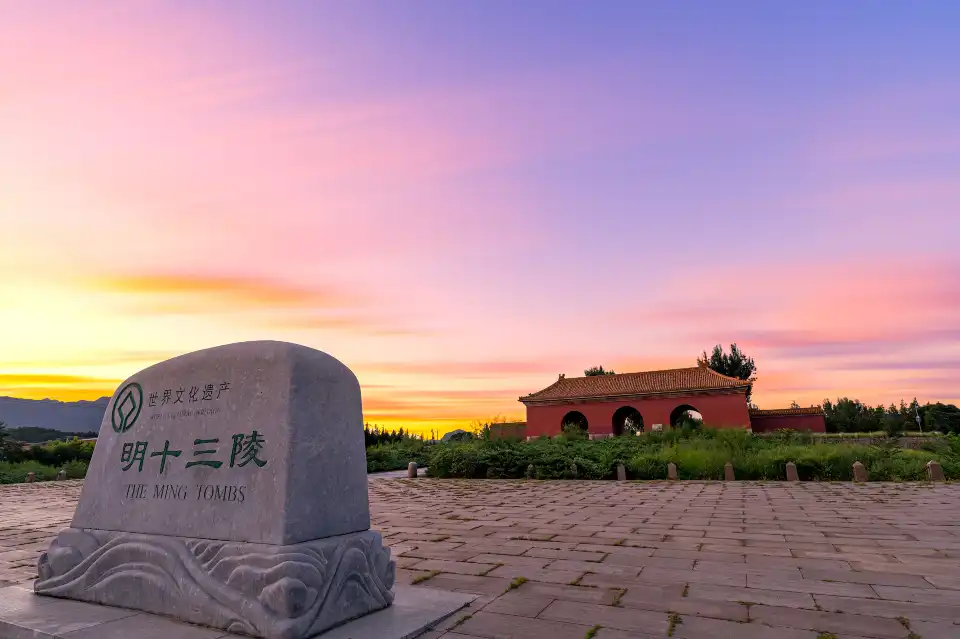
The Ming Tombs
明十三陵 No. 13 of Global Traveller-Picked Attractions in Beijing
Closed for the day Opening hours of The Ming Tombs
The Ming Tombs Highlights: Must-See Features and Attractions
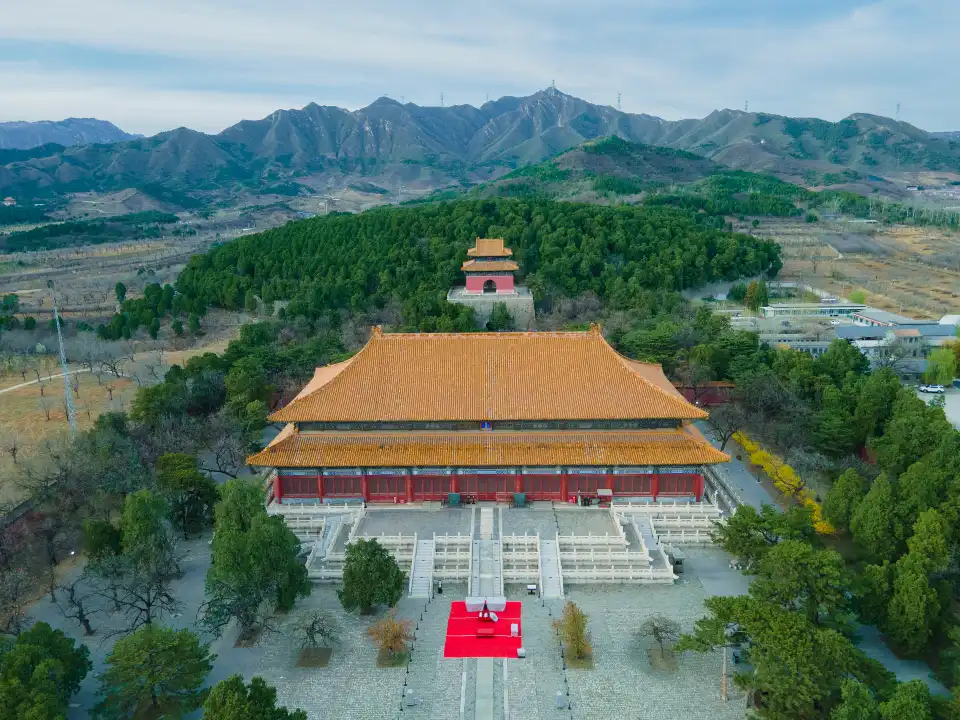
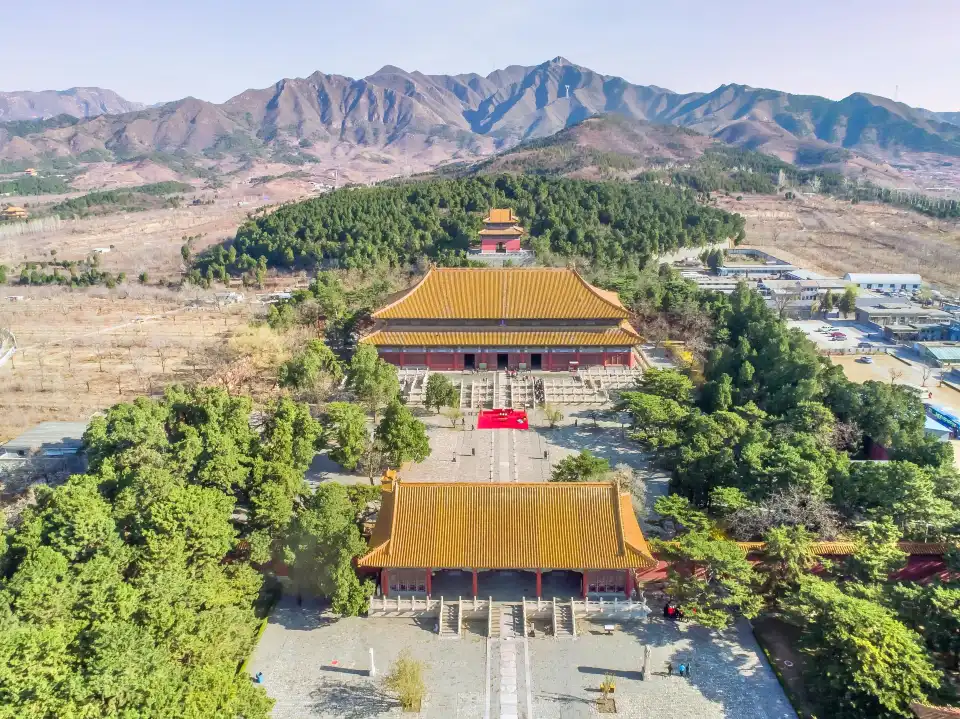
The Ming Tombs are the burial sites of thirteen emperors after the Ming Dynasty moved its capital to Beijing. Located at the foot of Tianshou Mountain in Changping, the construction of the tombs began with the Changling Tomb during the Yongle era and spanned over two hundred years. Surrounded by mountains on three sides, each tomb is built along the mountains and arranged around the Changling Tomb, with a central sacred path connecting them. It is a complete example of the overall layout of imperial tombs from the Ming Dynasty.
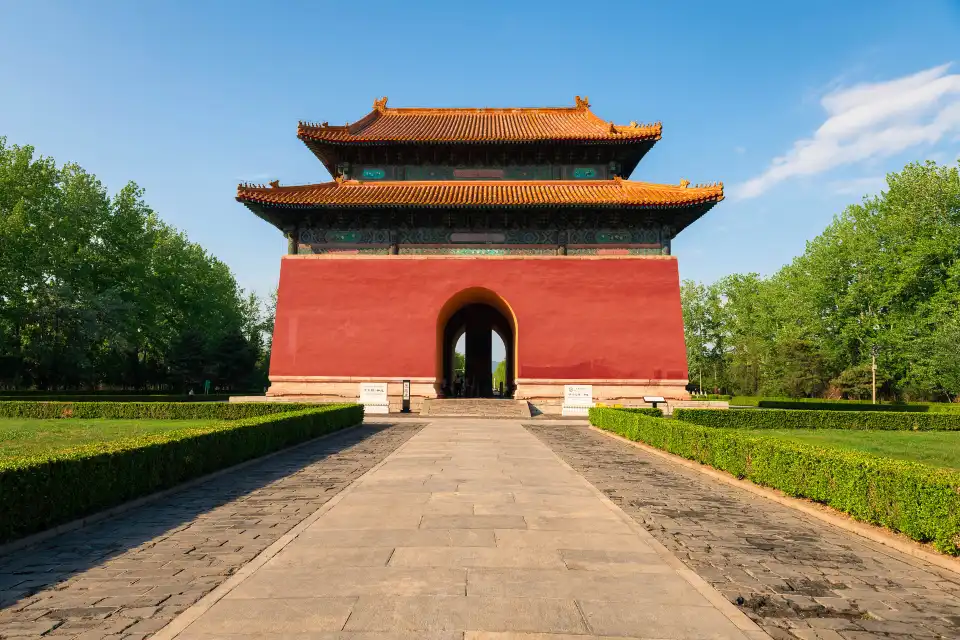
The sacred way, Changling, Dingling, and Zhaoling are the regularly open attractions within the mausoleum area. The sacred way starts from the stone memorial arch at the southern end, passes through the great red gate and the stele pavilion, and extends to the dragon and phoenix gate, spanning approx. seven km. The five-bay, six-pillar, eleven-eave white marble memorial arch is one of the earliest large-scale stone arches preserved in China. Stone statues of lions, xiezhi (mythical creatures), camels, elephants, qilin, horses, as well as civil officials, military officers, and meritorious officials are arranged in pairs along the path, featuring vivid shapes and exquisite carvings, making them representative examples of Ming Dynasty mausoleum stone sculptures.
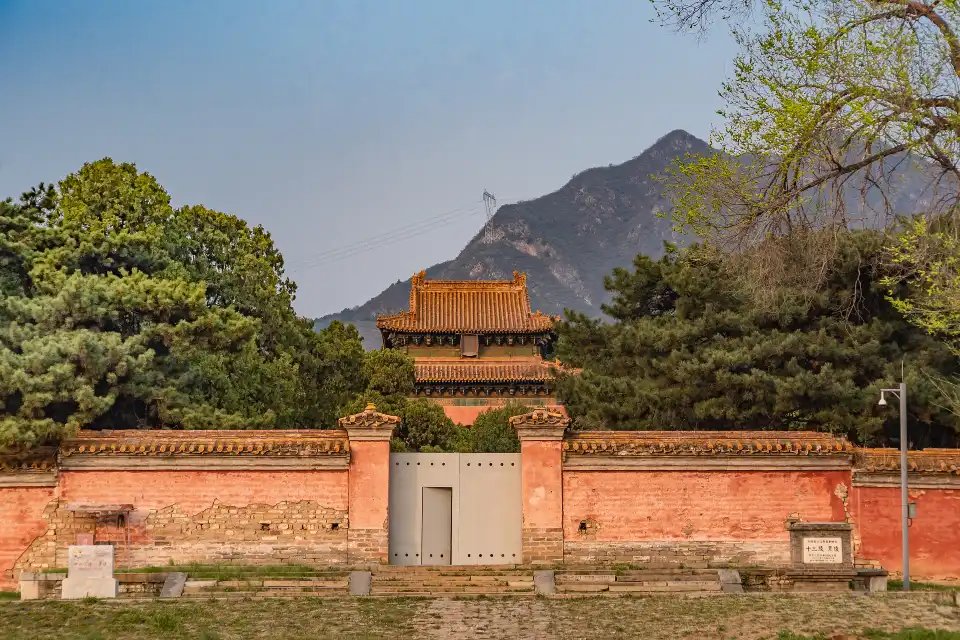
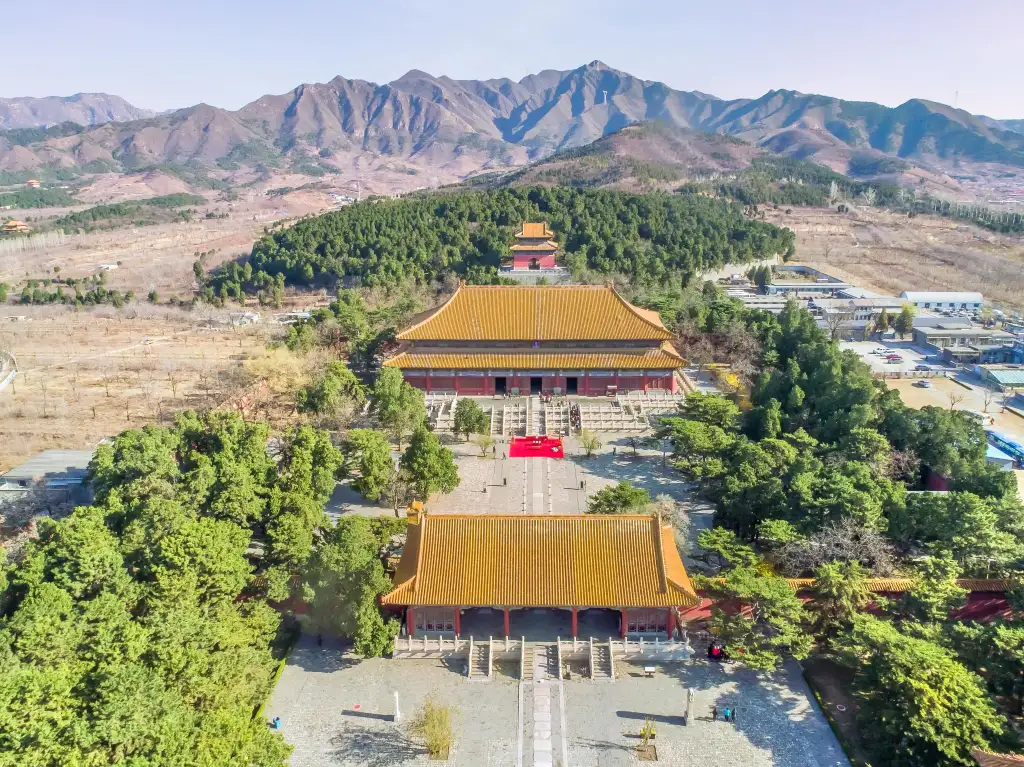
The Changling Tomb is the joint burial site of Emperor Chengzu Zhu Di and Empress Xu, serving as the main tomb of the entire mausoleum complex. Its Ling'en Hall features dozens of massive golden nanmu pillars supporting a double-eaved hip roof, modeled after the grand halls of the Forbidden City. It is a rare surviving original nanmu hall structure. The Dingling Tomb houses Emperor Wanli Zhu Yijun and his two empresses. After archaeological excavation, its underground palace was opened to the public, allowing visitors to descend over 20 m underground and walk through five interconnected chambers, offering a direct experience of Ming imperial burial architecture. The Zhaoling Tomb contains Emperor Longqing Zhu Zaihou and his three empresses. After comprehensive restoration, its layout—including the Ling'en Gate, Ling'en Hall, Ming Tower, and burial mound—remains intact and clearly visible.
In addition, imperial mausoleums such as Kangling, Yongling, Siling, and Jingling have gradually opened to the public in recent years, mostly requiring advance reservations for visits. The mausoleum area is vast, with varying distances between tombs. Before your trip, it's advisable to check the opening hours and reservation arrangements, then plan according to your interests: visit Changling for architecture, explore Dingling for its underground palace, admire stone carvings along the Sacred Way. By following this route, you can roughly trace the evolution of Ming Dynasty imperial mausoleum regulations.
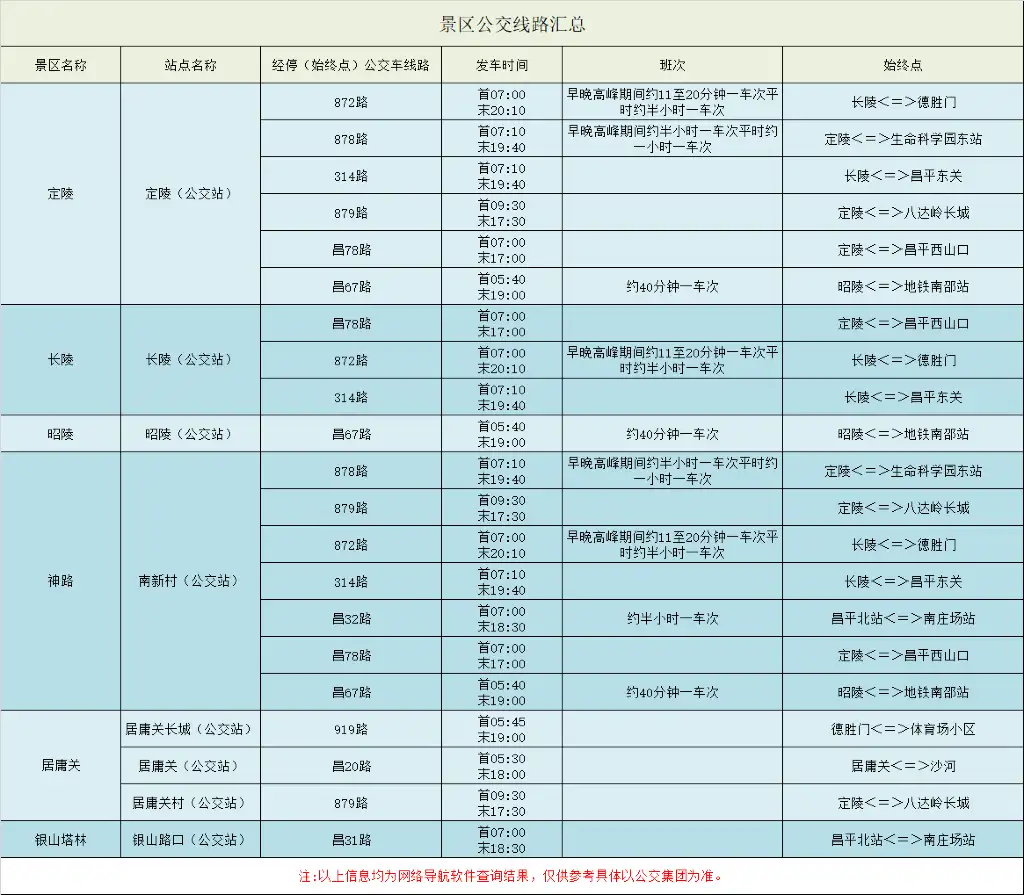
Attraction bus routes summary

Other visitors' reviews of The Ming Tombs
Show More ReviewsIt's a bit far from downtown Beijing, over an hour's drive, so it's best to drive yourself. Walking between the tombs is too far; driving is more convenient. Taking a taxi would be time-consuming. It's still a worthwhile trip to see the tombs and learn about history.