Partial area construction extended丨Temporary closure of Dingling exhibition hall
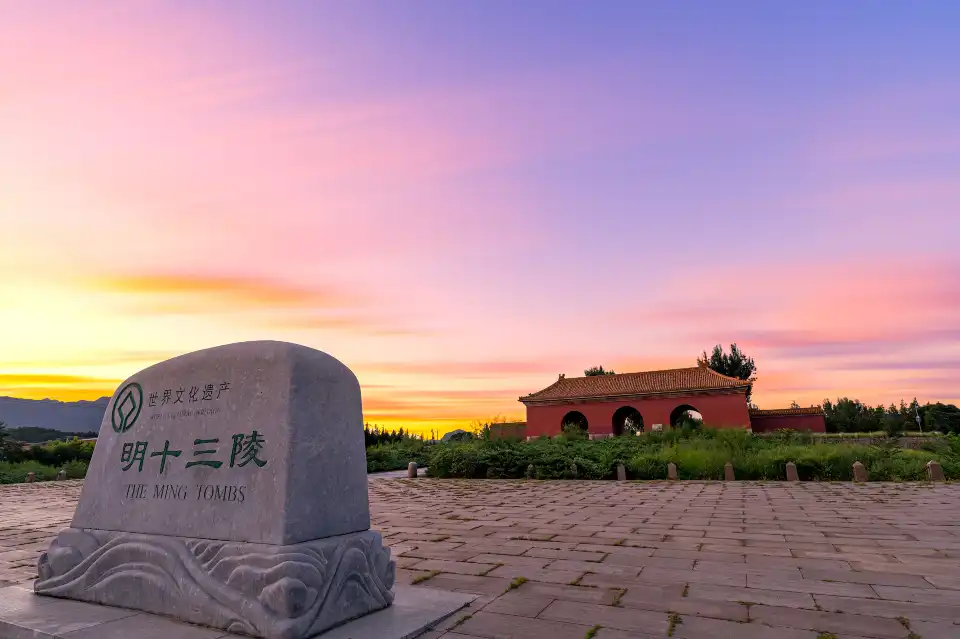
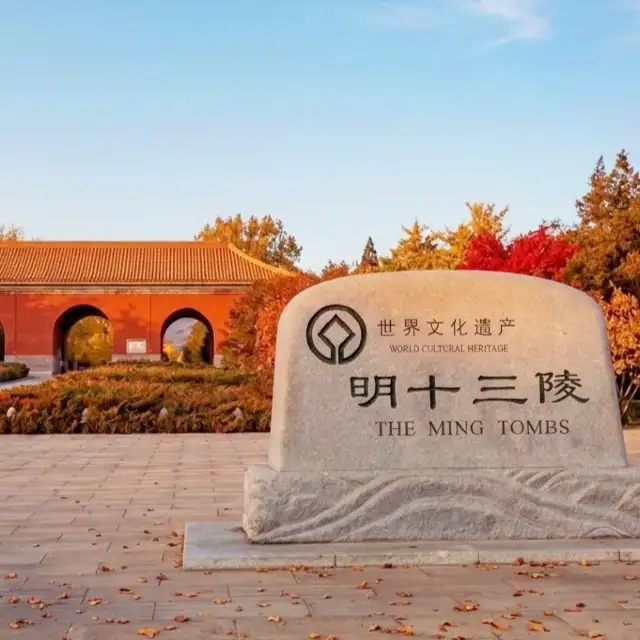
The Ming Tombs
明十三陵 No. 13 of Global Traveller-Picked Attractions in Beijing
Closed for the day Opening hours of The Ming Tombs
The Ming Tombs Highlights: Must-See Features and Attractions
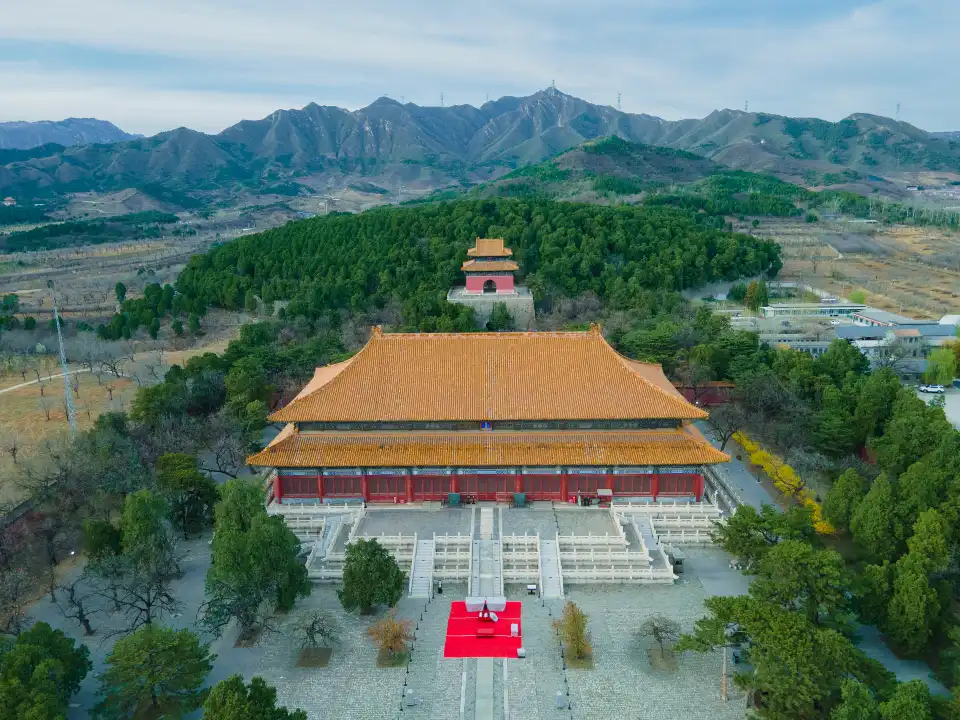
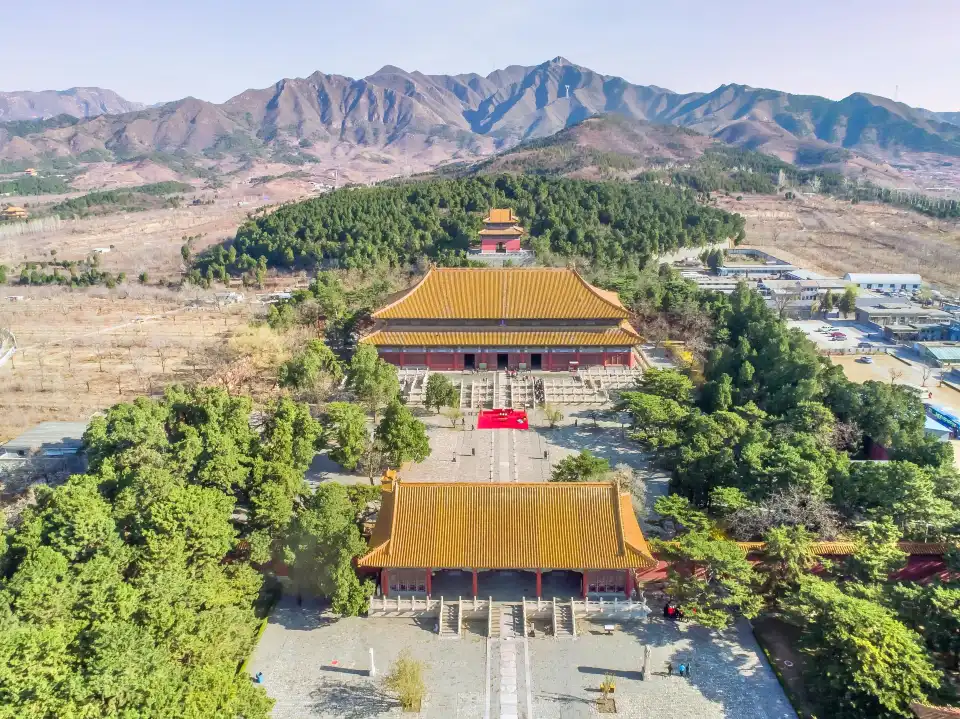
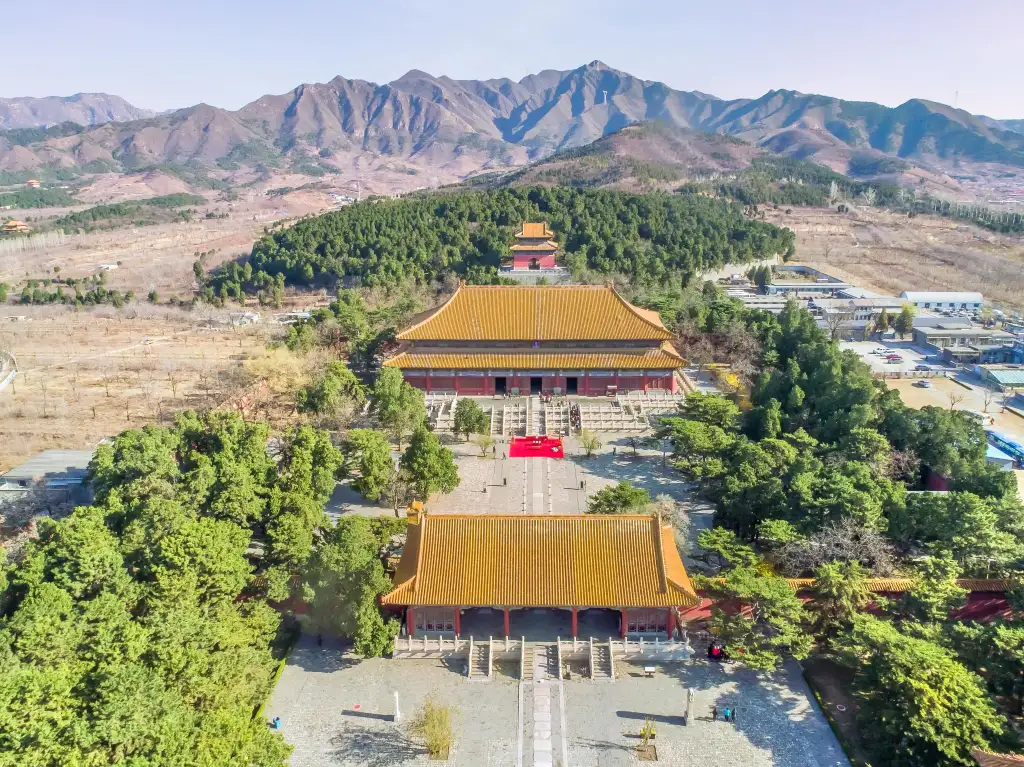
The Ming Tombs are the burial sites of thirteen emperors after the Ming Dynasty moved its capital to Beijing. Located at the foot of Tianshou Mountain in Changping, the construction of the tombs began with the Changling Tomb during the Yongle era and spanned over two hundred years. Surrounded by mountains on three sides, each tomb is built along the mountains and arranged around the Changling Tomb, with a central sacred path connecting them. It is a complete example of the overall layout of imperial tombs from the Ming Dynasty.
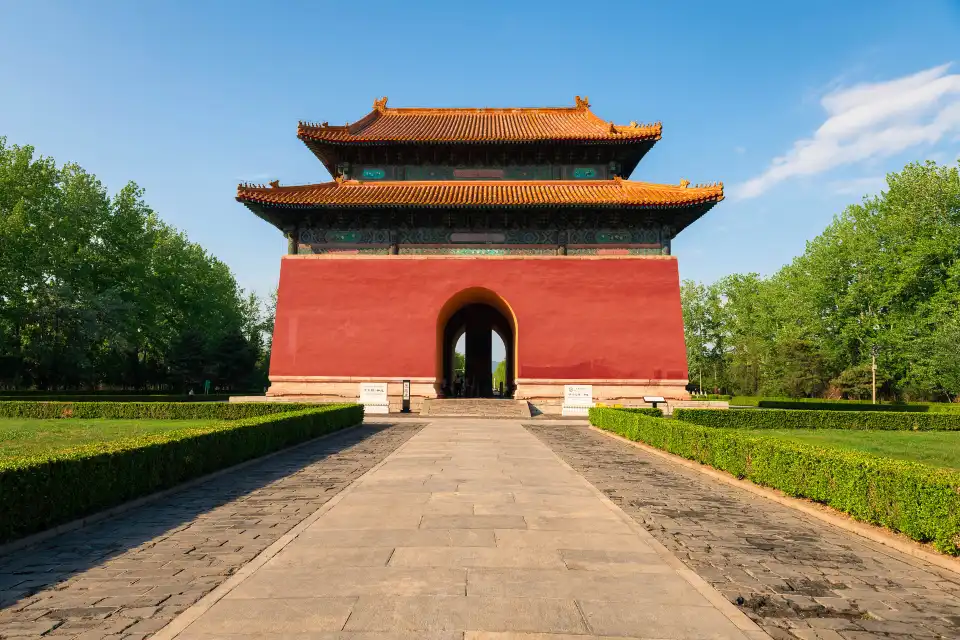
The sacred way, Changling, Dingling, and Zhaoling are the regularly open attractions within the mausoleum area. The sacred way starts from the stone memorial arch at the southern end, passes through the great red gate and the stele pavilion, and extends to the dragon and phoenix gate, spanning approx. seven km. The five-bay, six-pillar, eleven-eave white marble memorial arch is one of the earliest large-scale stone arches preserved in China. Stone statues of lions, xiezhi (mythical creatures), camels, elephants, qilin, horses, as well as civil officials, military officers, and meritorious officials are arranged in pairs along the path, featuring vivid shapes and exquisite carvings, making them representative examples of Ming Dynasty mausoleum stone sculptures.
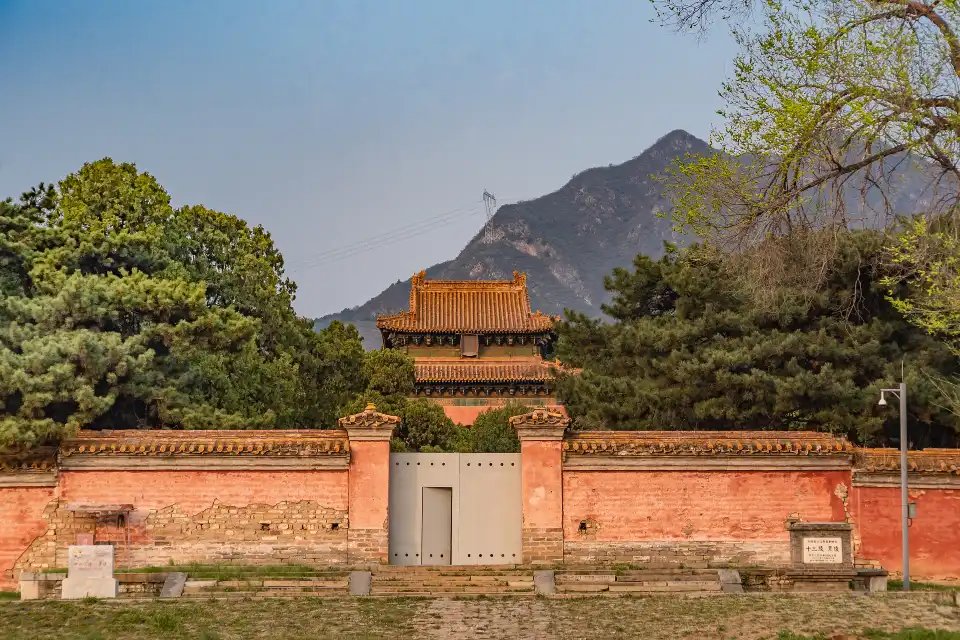
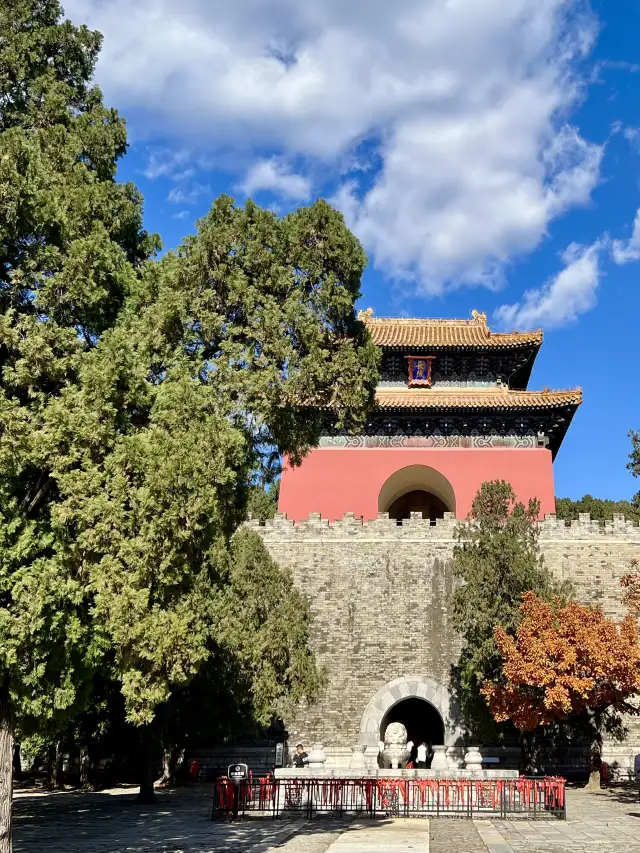
The Changling Tomb is the joint burial site of Emperor Chengzu Zhu Di and Empress Xu, serving as the main tomb of the entire mausoleum complex. Its Ling'en Hall features dozens of massive golden nanmu pillars supporting a double-eaved hip roof, modeled after the grand halls of the Forbidden City. It is a rare surviving original nanmu hall structure. The Dingling Tomb houses Emperor Wanli Zhu Yijun and his two empresses. After archaeological excavation, its underground palace was opened to the public, allowing visitors to descend over 20 m underground and walk through five interconnected chambers, offering a direct experience of Ming imperial burial architecture. The Zhaoling Tomb contains Emperor Longqing Zhu Zaihou and his three empresses. After comprehensive restoration, its layout—including the Ling'en Gate, Ling'en Hall, Ming Tower, and burial mound—remains intact and clearly visible.
In addition, imperial mausoleums such as Kangling, Yongling, Siling, and Jingling have gradually opened to the public in recent years, mostly requiring advance reservations for visits. The mausoleum area is vast, with varying distances between tombs. Before your trip, it's advisable to check the opening hours and reservation arrangements, then plan according to your interests: visit Changling for architecture, explore Dingling for its underground palace, admire stone carvings along the Sacred Way. By following this route, you can roughly trace the evolution of Ming Dynasty imperial mausoleum regulations.
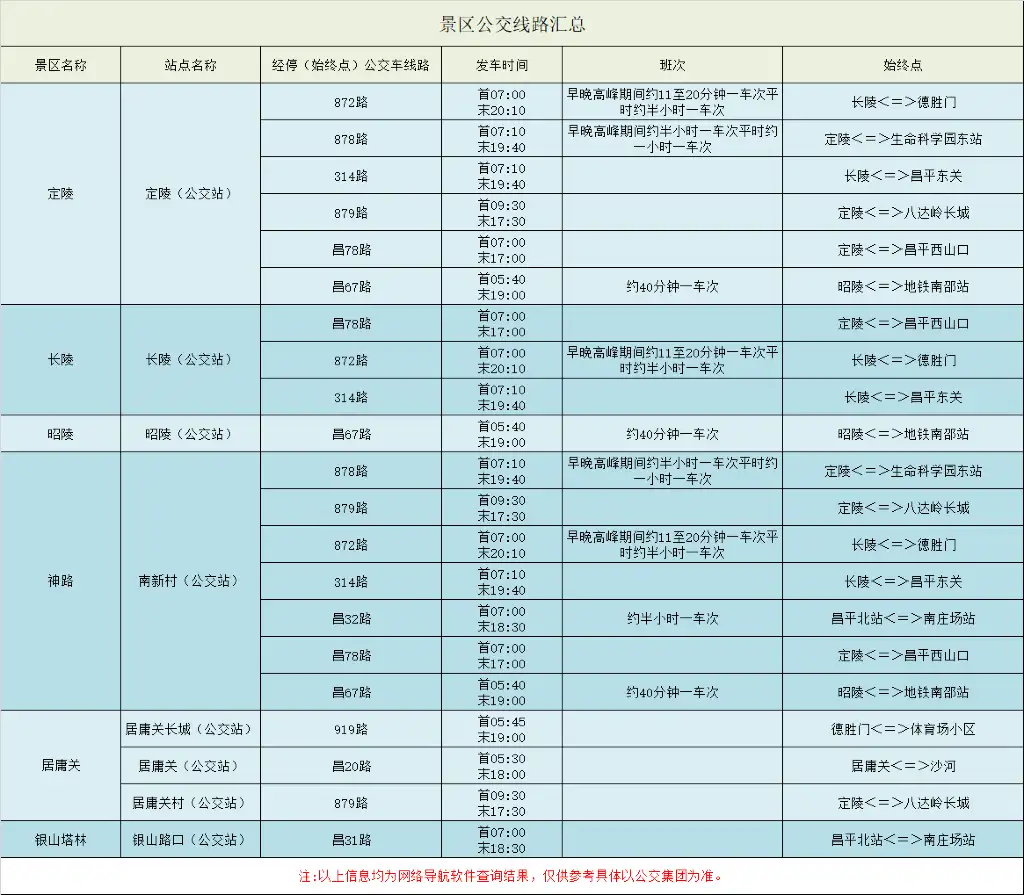
Attraction bus routes summary
The Ming Tombs Reviews: Insider Insights and Visitor Experiences
The Ming Tombs Photos: Trip Moments
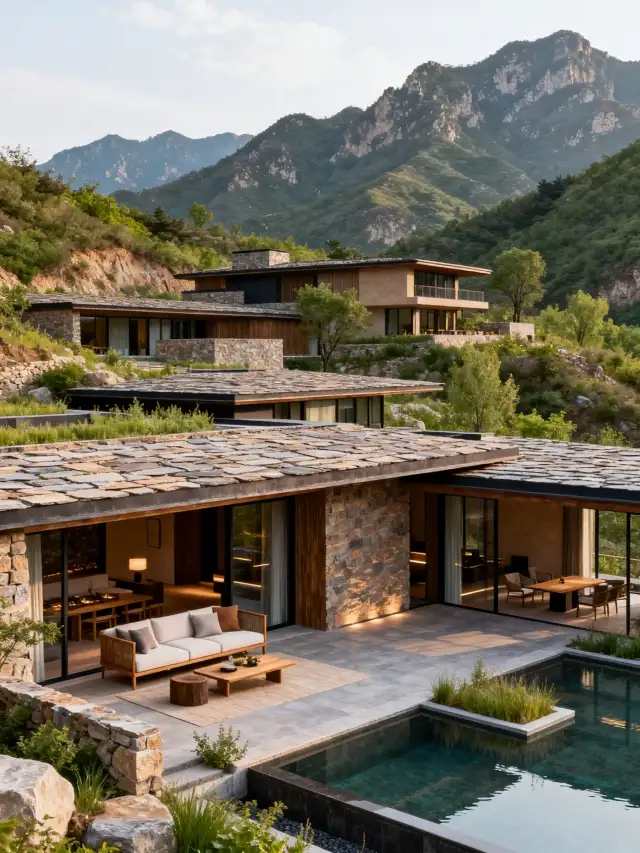
 Beijing Hot Spring Homestay Check-inIn Beijing, there is a private hot spring homestay that not only boasts a beautiful environment, attentive service, and complete facilities but also features a unique private hot spring pool. This is Yun Suli Private Hot Spring Homestay! 🏡 Environment and Location Yun Suli Private Hot Spring Homestay is located opposite Shansi Space in Heishanzhai Village, Yanshou Town, surrounded by natural scenery such as mountains, streams, and greenery. Some rooms come with private courtyards, private hot spring pools, and Japanese-style garden designs, creating a tranquil and stylish atmosphere. 🛁 Private Hot Spring One of the highlights of Yun Suli Private Hot Spring Homestay is its private hot spring! Some rooms have independent private hot spring pools with suitable water temperature and clear water quality, making it an excellent place to relax and unwind. Soaking in the steaming hot spring while enjoying the view outside the window and feeling the breath of nature is truly a delight! 🏠 Accommodation Facilities The rooms are fully equipped with modern amenities including smart toilets, disposable toiletries, constant temperature private hot spring pools, air conditioning, and projectors. Some rooms feature private kitchens and open terraces. The hygiene standards are highly praised, with rooms and public areas kept spotless. 🍽 Dining Services Some rooms offer shuttle services, and the staff are friendly, paying attention to privacy and details. The check-in process is smooth. Some rooms provide barbecue equipment, kitchen facilities, and projectors to enhance the living experience. 🌟 Special Services The homestay staff are very warm and attentive, able to provide personalized assistance such as recommending nearby attractions, helping with parking, and preparing breakfast. Some rooms are equipped with barbecue equipment, kitchen facilities, and projectors to improve the stay. The staff are friendly and respect privacy and details. 🎫 Booking Method Reservations can be made through OTA platforms such as Trip.com. 💰 Price Information Prices vary depending on the room type and time period. 📍 Location Information The homestay is located opposite Shansi Space in Heishanzhai Village, Yanshou Town. Some rooms are adjacent to scenic spots such as Yinshan Pagoda Forest and the Ming Tombs, as well as unique dining venues. It is very suitable for self-driving tours or short leisure trips. 🚗 Transportation Self-driving is more convenient and faster. There are parking lots nearby offering parking services. Some rooms provide shuttle services. 📅 Best Time to Stay Summer and autumn are the best times to stay, with comfortable temperatures perfect for enjoying the refreshing hot springs. Spring and autumn are among the most beautiful seasons in Beijing. In spring, you can admire peach blossoms and cherry blossoms covering the hills; in autumn, you can enjoy colorful leaves and golden wheat fields. In winter, you can go skiing at nearby ski resorts; in summer, you can visit nearby farmhouses to enjoy local cuisine and fruit picking. It is recommended to book rooms in advance to avoid full occupancy.Evelyn Turner Evelyn182

 Stay at a Great Wall homestay in the Beijing suburbs and unlock a secret mountain wilderness with your kids on a self-driving tripWho would have thought! This family-friendly self-driving route around Beijing is truly legendary, with stunning scenery all the way that makes you not want to leave. No need to squeeze into crowded tourist spots, full of wild charm, and even novice drivers can easily handle it. Take your kids for a spontaneous weekend getaway! 💡 Full family-friendly self-driving route City → Ming Tombs Changling → Changchi Road Mountain Road → Xiangtun Village, Yanqing (Wild Great Wall) → Xinzhuang Market → Longruisen Gas Station (creeks and flower seas along the way) → Return trip 🚙 Super detailed family self-driving guide 1. Navigate directly to Ming Tombs Changling. You will pass by various scenic spots of the Ming Tombs along the way. If you have enough time, it’s perfect to stop by and explore. Take your time driving and stopping to let your kids enjoy the mountain scenery and tell them little historical stories. 2. After Changling, turn left and navigate to Xiangtun Village, Yanqing (up Changchi Road). This stretch of road is breathtakingly beautiful! It’s all winding mountain roads, with layered mountain paths extending along the terrain, offering incredible views. There are many temporary parking spots along the way, so you can stop anytime to enjoy the scenery with your kids. 3. There’s also a popular mobile coffee truck on the road. Be sure to stop for a break, grab a cup of coffee for yourself and a warm drink for your kids, feel the mountain breeze, and take some atmospheric family photos. 4. Must-visit hidden scenic spot! There’s a little-known high point where you can overlook the entire mountain valley and see the winding mountain roads in full view. No entrance fee required, and every photo you take looks like a highway masterpiece. It’s great for broadening your kids’ horizons. 5. At the border of Changping and Yanqing, there’s a wooden mountain trail. A short climb will take you to the summit, where you can overlook the continuous mountain range. It’s easy for hiking beginners and young kids, making it perfect for a light family hike. 🌸 Return trip without retracing your steps On the way back, navigate to Longruisen Gas Station. Unexpectedly, you’ll discover hidden scenic treasures on the way! There are babbling creeks and wildflowers and colorful wild grasses blooming by the roadside. Let your kids splash in the water and pick wildflowers for a fully healing experience. After refueling, the return route is completely different from the way there, with brand-new scenery all the way. No detours, full of surprises, and your kids will be excited the whole time. ✨ Family travel tips ▪️ Mountain roads have many curves, so drive slowly and prioritize safety. Always make sure your kids wear seat belts. ▪️ When climbing the Wild Great Wall and doing light hikes, make sure your kids wear comfortable sports shoes and watch their step to avoid bumps. ▪️ Stop whenever you see the coffee truck or viewing platforms. They’re hard to find again if you miss them. Walking and stopping often makes traveling with kids easier. ▪️ There’s a big temperature difference between morning and evening in the mountains. Bring a light jacket for your kids to avoid catching a cold. Prepare snacks, drinking water, and mosquito repellent in advance. ▪️ Take all trash with you to protect the mountain wilderness together with your kids and cultivate good habits. Accommodation 🏨Commune at the Foot of the Great Wall, Yanqing, Beijing A high-end wild luxury hotel under Hyatt, adjacent to the Shuikou Great Wall, surrounded by mountain views. Family rooms are fully available, with a children’s playground, immersing you in a stay right at the foot of the Great Wall. 🏨Hidden World Winter Olympic Town Homestay, Yanqing, Beijing A trendy homestay near Xiangtun Village, Yanqing, with family courtyards, private hot springs, and children’s play areas. Customizable barbecue and family craft activities make it super convenient for taking care of kids. 🏨Yun Jingli Homestay, Ming Tombs, Beijing A light luxury homestay near the Ming Tombs in Changping, adjacent to the Changchi Road self-driving route. Family rooms and a large courtyard are available, with family activities like farming and fruit picking. 🏨Wuheyouxiang Homestay, Yanqing, Beijing A wild luxury homestay in the mountains of Yanqing, adjacent to the Wild Great Wall in Xiangtun Village. Mountain views are visible right from the window, with private hot springs and family leisure areas, offering a full vacation vibe.Thunderstorm!423

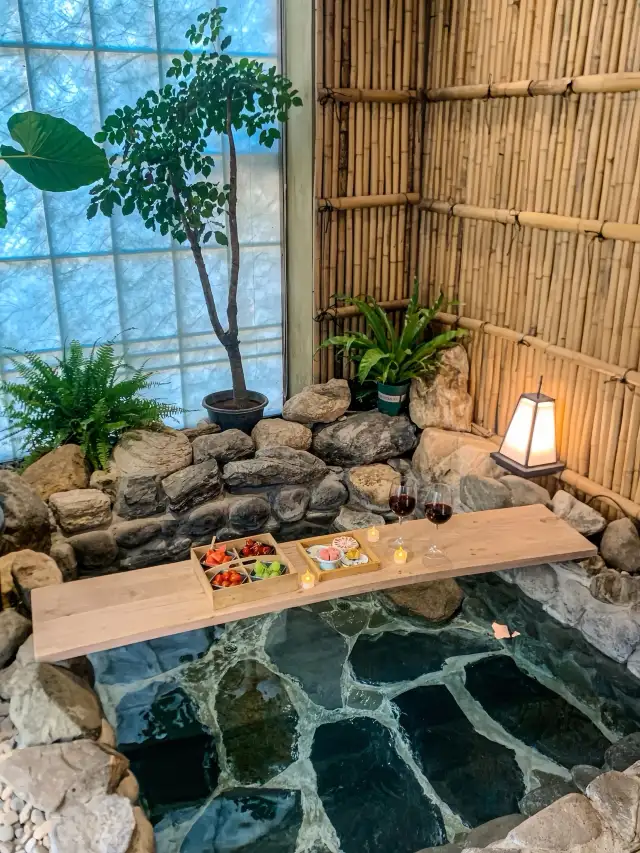 Beijing 1h Direct|Mountain View Private Hot Spring for a Healing WeekendJust got back from soaking in a private hot spring in the mountains and can't wait to share this hidden gem of a guesthouse in the Beijing suburbs! Only 1 hour from Beijing, the mountain view private hot spring room is truly worth crying over😭 ✨Highlights at a glance: · Located at the foot of the mountain in Yanshou Town🌿 Open the window and breathe in the fresh grass-scented air, with excellent privacy · Within walking distance to Yanshou Temple and the Water Great Wall, easily avoiding crowds to enjoy off-the-beaten-path spots · Original wood courtyard + floor-to-ceiling window design, you can lie down and watch the mountain scenery and sea of clouds, plus the resident cat "Manman" is always on duty 🏡 Space experience: Having afternoon tea under the bamboo sunshade in the courtyard is super cozy! The mountain view private hot spring room we booked comes with a constant temperature hot spring pool♨️ At night, you can soak while watching projections (currently binge-watching "Cang Hai Chuan"), and during the day, the terrace offers panoramic shots of the surrounding mountains. The bedding is as soft as sleeping on clouds☁️ Details like the smart toilet and Dyson hairdryer add extra points~ 🍴 Foodie guide: · The courtyard has a fully equipped tea brewing set · You can book barbecue or hot pot for dinner (highly recommend the whole roasted lamb!) · A 10-minute walk to a super authentic farmhouse fish restaurant 💡 Practical tips: 1. Private hot spring rooms are recommended to be booked 2 weeks in advance, especially the ones with projection 2. Spring and autumn are the most beautiful seasons; remember to bring moisturizer if soaking in winter 3. Pet-friendly! You can bring your furry friends along for the vacation 🚗 Transportation guide: Navigate to "Beijing Yun Suli Private Hot Spring Guesthouse," about 1 hour drive from downtown, with free parking available. It’s recommended to combine with a day trip to the Ming Tombs or Yingshan Pagoda Forest~ Here you can truly experience the healing feeling of "building a hut among people, yet without the noise of carriages and horses." Perfect for couples or family trips! I've already promised my boyfriend we'll come here to unwind once a month✨Simmons_Daisy_597

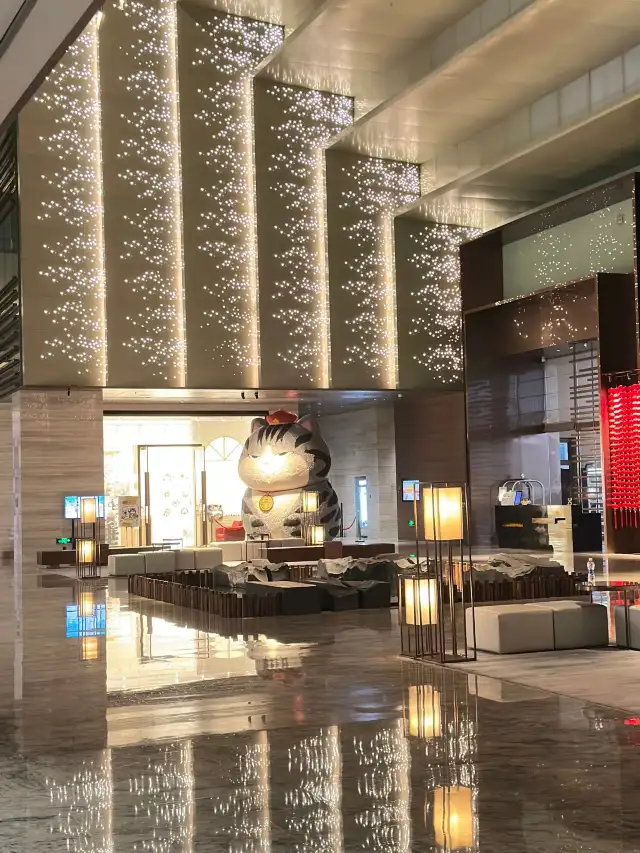 Beijing Family-Friendly Hotel|Kids Won't Want to Go Home!Beijing Marriott Hotel Le Duogang is located next to Le Duogang Holiday Plaza in Changping District, Beijing. It offers convenient transportation, close to the Jingzang and Jingxin expressways, and near Le Duogang Fantasy Park and Wanda Plaza, making travel, sightseeing, and dining very convenient! It is also relatively close to attractions such as Juyongguan Great Wall and Ming Tombs. The hotel cleverly combines modern design with natural elements. Upon entering the hotel lobby, the iconic 4-meter-tall giant Wu Huang Cat plush immediately catches the eye, accompanied by the Bazahei plush and a starry sky ceiling decorated with auspicious cloud patterns. The garden landscape is beautiful and lush, featuring lawns, trees, and a small lake. After rain, the courtyard is surrounded by greenery, with red umbrella dining tables complementing the slogan "Among the Mountains and Wilderness," balancing urban convenience with natural charm. The gym is fully equipped, and the indoor heated swimming pool has clear water. The hot spring area offers ginger tea replenishment and natural fluorine-rich hot springs. There are 21 indoor and outdoor soaking pools covering wellness and family-friendly types, with various indoor and outdoor options. The outdoor hot spring pools feature a unique blue stone platform design, and neon lights illuminate the pools at night. The family facilities are comprehensive, including a children's club, kids' play castle, and children's hot spring park, making it perfect for family trips! The rooms are comfortably and warmly decorated, with some featuring scenic balconies overlooking the Yanshan Mountains or garden views. The "Wu Huang Cat" family rooms are designed with IP elements and playful touches, fully equipped with various children's toiletries. Breakfast offers a wide variety of options. The Chinese restaurant specializes in Cantonese and local dishes and also provides specialty meals such as the Zhenchu Wu Huang-themed children's set and barbecue-themed buffet, with rich and tasty dishes! Overall, the service is attentive, and the environment is pleasant. It is a comprehensive high-end hotel integrating hot spring vacations, family entertainment, and nearby sightseeing, ideal for family trips or weekend getaways.MathiasMortensen34

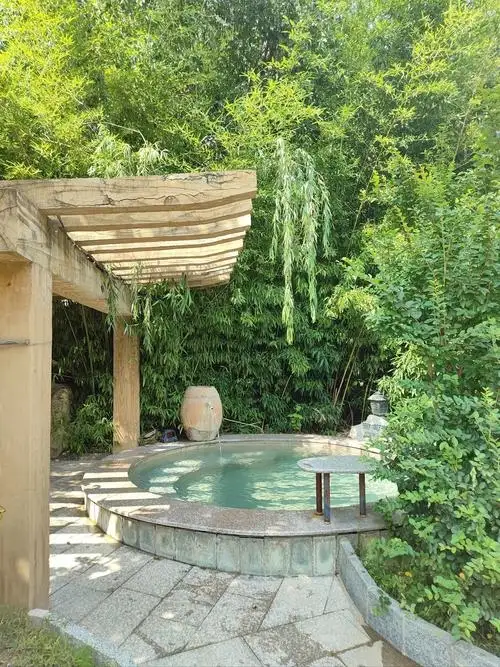 A hidden mountain-view hot spring 1-hour from Beijing🏔️ A hot spring sanctuary hidden among green mountains and clear waters✨ Located in Changping, Fengshan Hot Spring Resort is backed by Fengshan Mountain and Mangshan National Forest Park🌲, with the Ming Tombs Reservoir💧 to the west, making it a natural forest oxygen bar near Beijing. As a 5A-rated hot spring resort, its water comes from the Jurassic dolomite layer 3,800 meters underground, rich in calcium, magnesium, iron, and other trace elements. It leaves your skin smooth and hydrated, leading many regular guests to call it "the best quality hot spring water in Beijing"🥇. It is just a 1-hour drive from the city center🚗, right next to the Jingzang Expressway, with free parking for guests🅿️, making it very convenient to reach. ♨️ 68+ hot spring pools to unlock endless soaking fun🛁 The 21,000-square-meter hot spring park is divided into 4 major themed areas to meet the needs of different guests: · The must-visit outdoor mountain-view hot springs are scattered among the mountains and forests⛰️, with water temperatures ranging from 35°C to 43°C. In spring, you can soak while admiring the peach blossoms covering the mountains🌸; in autumn and winter, you can look up at the crisp blue sky☁️. Every photo you take will look like a cinematic masterpiece📸. · The two-story indoor tropical rainforest area is lush with greenery, making you feel like you have stepped into Xishuangbanna🌴. The Eight Immortals Cave medicinal bath, hidden in a karst cave, is infused with 8 traditional Chinese medicines like angelica and mugwort🌿 to help clear meridians and improve circulation. There is also the "Heart Soup" carbonated spring, where dense bubbles envelop your body, leaving you feeling completely relaxed after a soak💆. · Families with children can head straight to the children's splash pool💦, where the water temperature is constant and safe. At the foot of the mountain, there is also a 1,000-square-meter free non-motorized playground🎠, complete with slides, climbing frames, and popular roller coasters, keeping kids entertained for half a day. · If you get tired from soaking, head to the second floor to lie down on the heated stone beds🛌, which will instantly warm your back. The rest area also offers unlimited free fruit🍉, drinks🥤, and cookies, so you can recharge at any time. 🛏️ One-stop destination for dining, staying, and playing😋 The resort has over 300 different room types🏡. For more privacy, choose a private hot spring room with its own independent pool in the courtyard, where you can soak and watch the stars at night✨ for the ultimate atmosphere. You do not have to go far for food either; the hot spring restaurant offers à la carte options on weekdays🍜 and a buffet on weekends. The dishes are home-style and offer great value. It is also perfect for team building and meetings. The resort has 24 meeting rooms of various sizes🎤, with a maximum capacity of 650 people. There are also entertainment facilities like a tennis court🎾, KTV🎙️, and an archery range🏹 to meet the needs of all kinds of groups. 🚶 Mix and match your surrounding trips🗺️ From the resort, you can reach the top of the Fengshan observation deck in 20 minutes to overlook the blue waters and sky of the Ming Tombs Reservoir🌊, offering an incredibly expansive view. Within a 30-minute drive, you can also reach attractions like the Ming Tombs🏯 and Juyongguan Great Wall. Whether you want a quiet, relaxing soak or a trip to nearby attractions, you can plan the perfect itinerary. Whether it is a date for couples💑, a family trip with kids👨👩👧, or a small gathering with friends👭, you can find the most comfortable vacation rhythm at Fengshan Hot Spring. Take a weekend to escape the city hustle and bustle and enjoy a warm, relaxing getaway🥰.EricFoster567_1

- autumnfoliage
Beijing Changping Ming Tombs Sacred Way Autumn Stone-Beast Lane#TravelersVoice #ChinaTravelCircle Walking With the Guardians of the Ming Emperors: Sacred Way Changping's Ming Tombs Sacred Way is lined with stone beasts and officials — and in autumn, the ancient lane glows with golden calm. How to Get There Take the subway to Nanshao Station, then bus or taxi to the Ming Tombs (about 30 minutes). Entry is ¥30 for the Sacred Way. The Lane Walk the long, tree-lined lane past 18 pairs of massive stone animals and officials. In fall, the ginkgo and maple trees turn gold and red, and the fallen leaves crunch underfoot. It's quiet, historic, and deeply atmospheric. Stay & Eat Return to Beijing or stay in Changping (¥200–500). Try Beijing duck and classic local dumplings. Your Turn Have you walked a path guarded by ancient stone beasts? Share your experience!yytt660
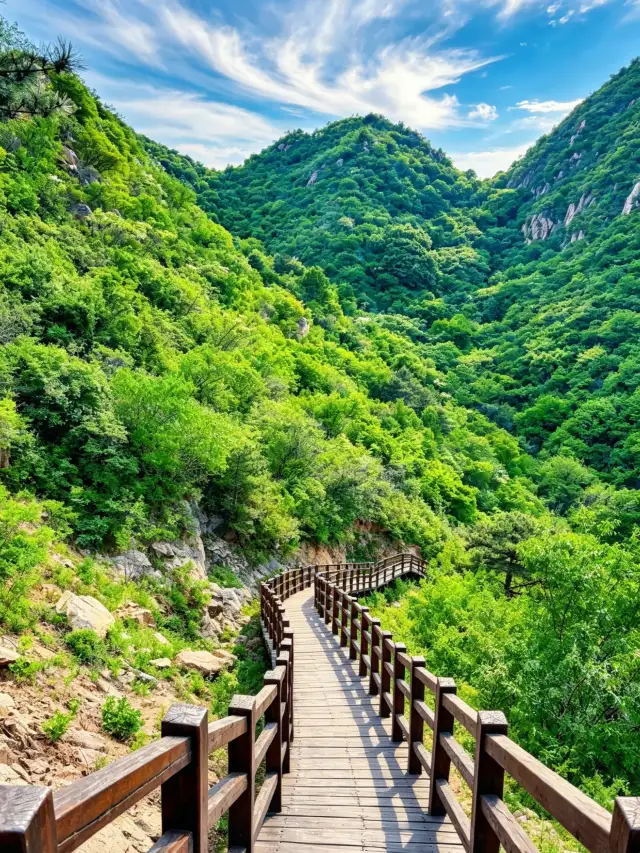 Changping’s free wilderness hides the most healing wooden boardwalk in the early summer suburbs of Beijing!Don’t want to squeeze into crowded tourist spots this weekend? I’ve discovered a real gem in Changping—the Dahei Mountain Hiking Trail. Free parking, free admission, fully renovated wooden boardwalks and stone steps, and so few people you can hear your own footsteps. Standing alone on the mountaintop, feeling the breeze and zoning out, all your worries are blown away by the mountain wind. I’m sharing this guide with you—find a weekend to go breathe some fresh air! 🌲 Basic Information · Address: Yanshou Town, Changping District, Beijing (Northeast side of the Ming Tombs) · Navigation: Safest choice is “Yanshou Temple Parking Lot”; for a quieter spot, choose “Xiaoqiao Liushui Farmhouse (Beizhuang Road)” and park after crossing the bridge · Admission: Free, no reservation needed · Parking: Park properly on the roadside or at Yanshou Temple Parking Lot, both free · Trail length: Loop about 5.8-6.5 km · Elevation gain: About 400-500 meters · Duration: 3-5 hours (depending on route) · Trail condition: Mainly renovated stone steps + mountain loop wooden boardwalk, with a few natural dirt and stone connecting sections, no dangerous wild paths 🗺️ Two Tested Routes (Choose according to your preference) Route 1: Leisure Loop (Suitable for most people) · Duration: About 3-4 hours with breaks · Route: Parking lot → Main hiking entrance → Gentle stone steps uphill → Turn right onto wooden boardwalk → Mountain God Blessing Viewing Platform → Summit platform → Descend along wooden boardwalk → Turn left at pine forest fork → Stone steps downhill → Turn right along riverside road → Return to parking lot · Suitable for: Beginner hikers, families with children (6+ years old who can manage steps), pets (must be leashed) · Features: Comfortable pace, the first half on the wooden boardwalk is atmospheric, the second half is refreshing stone steps downhill through the forest Route 2: Advanced Exploration (For outdoor enthusiasts) · Duration: About 5+ hours · Route: After reaching the summit on the leisure route, don’t rush down. Take a gentle loop around the mountaintop trail to enjoy more natural pine forest scenery, then return to the main boardwalk to descend · Suitable for: Those with good stamina who want to explore more of the wilderness · Features: More diverse scenery, but be sure to stay on clearly marked paths and avoid blindly venturing off-trail 🚗 Transportation Guide · Driving (preferred): About 1-1.5 hours from the city, enter the mountain via G345/Huaichang Road. The last mountain road has many curves but is smooth and manageable for sedans · Public transport: No direct bus service available, self-driving or carpooling recommended 💡 Practical Tips (Key to a great experience) 1. Gear: Must wear non-slip sports shoes or hiking boots! Wooden boardwalks and stone steps get slippery after rain; sandals or flip-flops are not recommended 2. Supplies: No shops or trash bins on the mountain! Bring at least 1L of water per person + snacks + trash bags, carry all trash back down 3. Clothing: It’s windy at the summit, so even on sunny days bring a light jacket 4. Protection: Sunscreen + hat + insect repellent are essential; there’s plenty of UV and bugs in the forest 5. Knee warning: Overall difficulty is moderate but involves continuous stair climbing. If you don’t exercise regularly or have sensitive knees, turning back at the viewing platform is perfectly fine—no need to push to the summit 6. Best time: Suitable in spring, summer, and autumn. Early morning or after 3 PM offers the softest light for photos Why do I recommend this mountain? It’s not a breathtaking spectacle, but once you step onto the wooden boardwalk and into the forest, the city’s noise is completely shut out. No need to book, no need to fight for tickets, no need to find a spot in a crowd—when you look back at the endless greenery halfway up, you’ll feel like this trip isn’t about conquering a mountain, but about clearing the heaviness in your heart. Save this guide and find a weekend to quietly spend some time with yourself. Where to go in Beijing on weekendsbriannalikesadenovirus

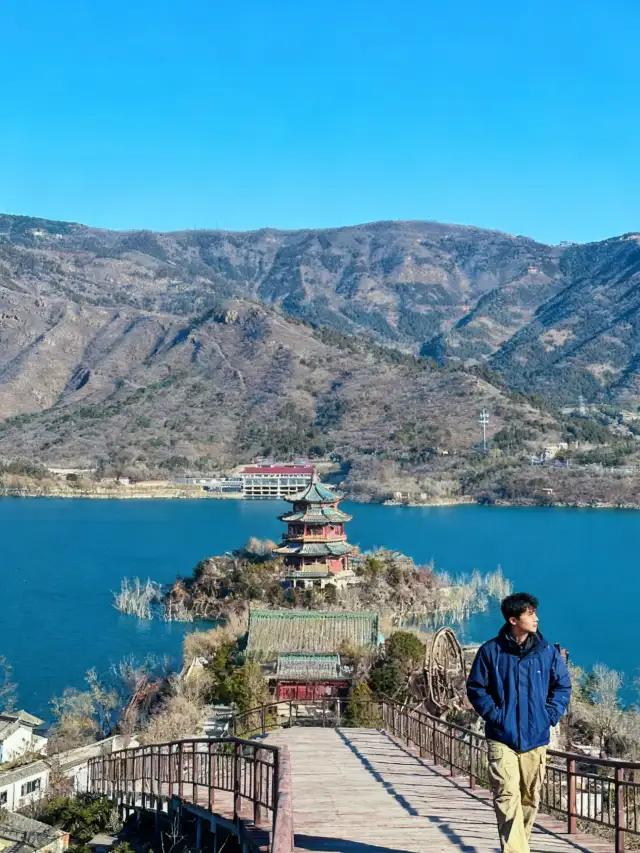 Beijing Hidden Gem for Hiking with Kids: Changping, 0.5h Direct Access, No Ticket to See "Mountains and Sea"Beijing Hidden Gem for Hiking with Kids ✨ Changping, 0.5h Direct Access, No Ticket to See "Mountains and Sea" Don't run around aimlessly for early winter hikes in Beijing! Changping hides a treasure spot, only half an hour's drive away. Hike for 20 minutes to reach the summit, where you can overlook the Ming Tombs Reservoir like a jade green ribbon. It's uncrowded, has no entrance fee, and is suitable for seniors, kids, and pets. Your photos on WeChat Moments will be flooded with questions~ 📍Location: Wolongtang, Changping (navigate directly, you can park at the village entrance, no parking fee) 🚗Transportation: 30-minute drive from the city center. Take bus Special 105 to Chaofeng'an Village Station, then walk a short distance to enter the mountain. Driving is recommended for convenience. 💡Key Highlights: No entrance fee, free parking, uncrowded and peaceful, 20-minute easy hike to the summit, panoramic views of the reservoir are super photogenic, pet-friendly, suitable for all ages, relaxing, not tiring, and therapeutic. 👉 About this place: Practical tips from personal experience · Super low difficulty: No steep paths throughout. The first half is a gentle boardwalk, and the second half, the mountain ridge dirt path, is not slippery. Kids can walk the whole way by themselves, and seniors won't tire their legs. · Pet freedom: You can bring small dogs into the mountain. The open space at the summit allows furry friends to run wild, no need to stay cooped up at home. · Beautiful scenery, not crowded: A niche hidden gem with no crowds of tourists. The view from the summit is amazing, with the jade green reservoir nestled among the mountains. Casual shots turn into therapeutic blockbusters. · Excellent value: Enjoy the mountain scenery for free. You can also visit Mangshan and the Ming Tombs nearby, making it easy to combine multiple attractions if you want to explore more. 📝 Practical Travel Tips 1. What to wear: There's a large temperature difference between morning and evening, so bring a windproof jacket for the outer layer and wear lightweight, quick-drying clothes underneath so you can take them off if you get hot while hiking. For the dirt path, sports shoes are recommended for grip and to avoid getting muddy. 2. Bring your own supplies: There are no shops on the mountain. A little fruit, energy bars, and mineral water are enough; no need to carry too much. Remember to take your trash with you down the mountain. 3. Route for kids/seniors: You don't need to walk the entire route. Reaching the second viewing pavilion is enough to enjoy the core beautiful scenery, and it takes about 1 hour round trip, preventing fatigue for seniors and kids. 4. Photo spots: The viewing platform on the reservoir side at the summit offers the best panoramic shots. At the boardwalk's turn, you can capture the depth of the mountain scenery. The light is soft between 3-4 PM, avoiding backlighting in your photos. 5. Recommended time: Go on a sunny morning when the wind is light and it's not too cold, and the visibility is clear without fog. It gets a bit more crowded in the afternoon, so going early is more relaxed. 6. Important notes: The dirt path can be slippery after rain, so avoid rainy days. There's no signal in the mountains, so don't stray far from your companions, and inform your family of your itinerary in advance. If you want to escape the city and enjoy a light hike and fresh air this weekend, this place is definitely a must-go. No need to rush or exert yourself, whether you're with kids, seniors, or friends, you'll have a comfortable and enjoyable time~OonaKuosmanen

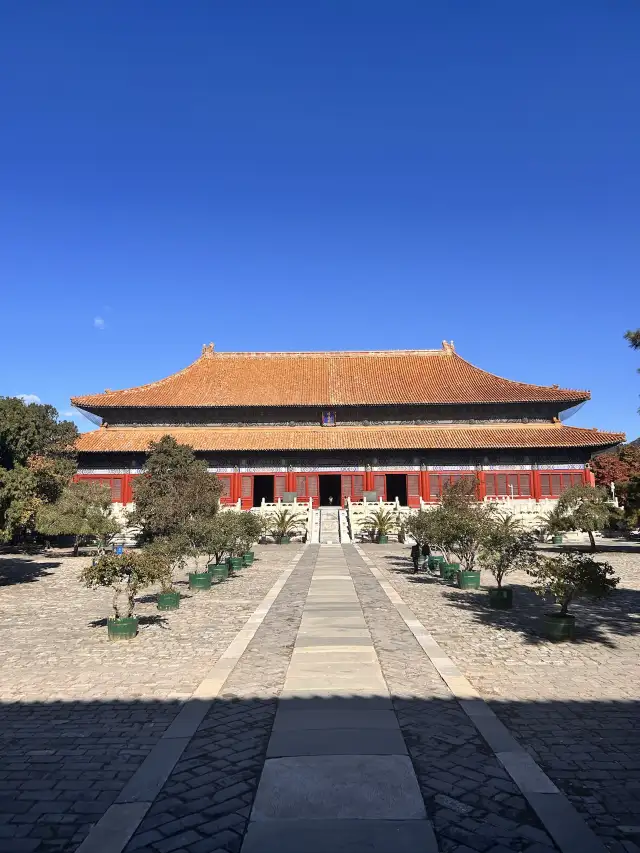 The Ming Tombs: Magnificent Artistic HeritageThe Ming Tombs (Ming Tombs / Ming Shisanling) are located north of Beijing and are one of China’s most important historical and cultural heritage sites. History This site is the burial place of 13 emperors of the Ming dynasty, along with some of their empresses. Construction began in the 15th century, following the principles of feng shui and ancient Chinese landscape architecture, and it eventually became a symbol of imperial grandeur and elegance. Architecture and Landscape · Spirit Way (神道): A ceremonial path lined with statues of animals and officials, arranged in accordance with sacred positioning. · Gates and Halls: Large gates and halls with intricate carvings that reflect the artistry and order of the imperial court. · Landscape: The tombs are set in a valley surrounded by mountains, creating a peaceful and shaded atmosphere that highlights their majesty and sacred character. Highlights and Tourist Activities · Admire ancient architecture: Visitors can explore historic temples, halls, and stone sculptures. · Learn about history: Every part of the tomb complex reflects the life and beliefs of the Ming dynasty. · Surrounding nature: Encircled by mountains and forests, the area is beautiful in both summer and winter. Getting There · Located about 50 kilometers from central Beijing, the site can be reached by car or as part of a day tour. · Admission fees and guided tour services vary depending on the area you visit. ⸻ In summary, the Ming Tombs are a destination that perfectly brings together historical grandeur, architectural artistry, and natural beauty. They are an important place to visit for anyone interested in Chinese history and imperial culture.Miss.keeper1

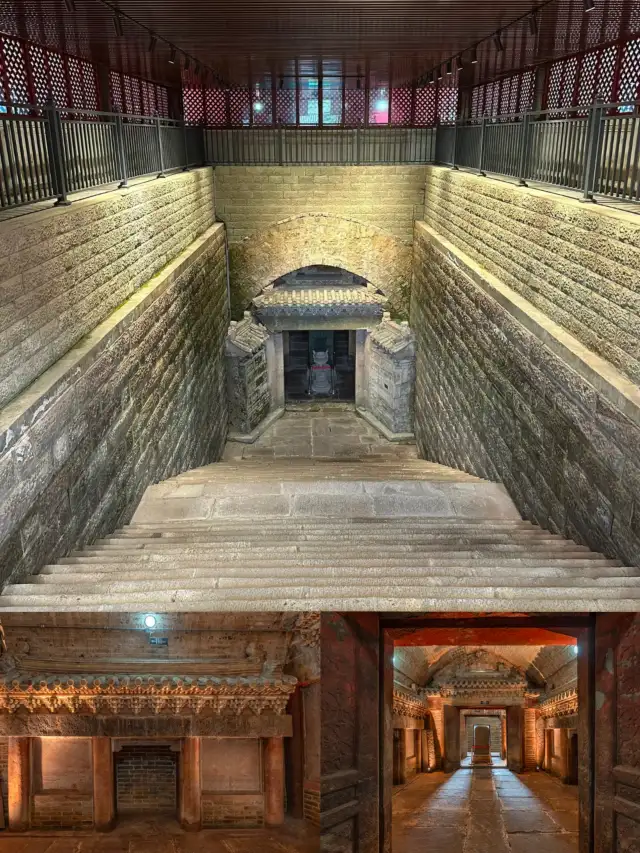 Comparable to Beijing's Ming Tombs!! The underground stone palace from the Ming Dynasty is absolutely stunning....A super hidden treasure ancient site in Chengdu✨ The nearly 600-year-old Ming Dynasty underground palace, accessible directly by subway, with affordable tickets—history and culture enthusiasts must not miss it! 📍Location: Ming Shu Wang Mausoleum (Ming Shu Wang Mausoleum Museum) This place is famously said to be "In the north, there are the Thirteen Ming Tombs; in the south, there is the Shu Wang Mausoleum." The entire underground palace is made of bluestone, with no wood used at all, yet it perfectly replicates the wooden architecture of the royal residence. The dougong brackets, door and window carvings are exquisitely detailed, regarded as the pinnacle of Ming Dynasty stone carving. The underground palace is about 9 meters deep, with a neatly arranged three-courtyard layout. The 81 door nails and five-clawed dragon patterned epitaphs everywhere showcase royal etiquette, delivering a powerful visual impact. 📖 Interesting Highlights Besides the core Xi Wang Mausoleum underground palace, the museum also has an exhibition hall displaying over a hundred unearthed artifacts, including vividly lifelike sancai glazed pottery figurines. The Zhao Wang Mausoleum within the scenic area is also worth a visit, featuring distinctive dragon and phoenix reliefs. There's also an intriguing story: ancient tomb raiders' remains were found inside the underground palace, with internal conflicts adding a mysterious aura. 🚇 Transportation Guide Take Metro Line 4 to Ming Shu Wang Mausoleum Station; the site is just a short walk from the exit. Public transportation is very convenient. There is also ample parking for self-driving visitors. ⏰ & 💰 Practical Information Opening Hours: 8:00 AM - 5:00 PM, closed every Monday, plan your visit accordingly Tickets: Only 10 RMB, excellent value for money 💡 Travel Tips 1. Touching exhibits and climbing on buildings inside the venue are prohibited; photography of cultural relics is not allowed. 2. The park is quiet with few visitors and not overly commercialized, offering an excellent immersive experience. 3. After touring, you can conveniently visit the nearby Qinglong Lake Wetland Park for a full day of activities. Escape the crowds and step into this underground stone palace to immerse yourself in the historical elegance of the Ming Dynasty southwestern feudal prince’s legacy~Flavorful Forays

- fallcolors
- autumnfoliage
Wandering Through Beijing’s Ming Tombs in Peak Autumn 🍂✨The light hit the cypress trees first — and OMG, that’s what I remember most clearly! I caught the early train out from central Beijing, totally determined to outrun the tour buses, and wow, it was 1000% worth it. Arriving at the Ming Tombs just as the morning mist still clung to the Sacred Way felt totally magical 🌫️. Pro tip: nobody warns you just how silent it gets out there. The city noise literally drops off after the fifth ring road, leaving you with this long avenue full of stone guardians (camels, elephants, mythical qilin) standing strong under gold and rust-red trees. It’s a total autumn dream. Honestly, I went expecting big imperial vibes. But what hit different was how *personal* the whole place felt. Walking the Spirit Way basically alone — except for a couple of sweet local grandmas doing their morning tai chi at the entrance, totally unbothered by centuries of emperors nearby — I kept stopping beneath those wild ginkgo trees. Ginkgo in autumn? Unreal! The whole canopy turns this insane, uniform yellow and then — poof — a gust of wind comes and every leaf drops at once, like the tree just let go. It’s next level peaceful. I stood in a mini storm of falling leaves at Chang Ling (the biggest of the 13 tombs, FYI — here’s the address: Ming Tombs, Changling, Chang Mausoleum, Changling Rd, Changping District, Beijing, China. Opening hours: 8am–5.30pm), and kind of forgot I was supposed to be reading up on the history. Little hack: If you’re not vibing with the Chang Ling crowds (it gets busier since it’s the "main" tomb), try heading out to Ding Ling or Zhao Ling instead. These hidden gems are way quieter, with the same dramatic pine-and-cypress corridors and spooky-cool stillness — minus the tour groups. I snagged a bike at the entrance (bikes available for rent right by the ticket booth), and zooming between tombs made my whole day feel more spontaneous and less like ticking boxes 🚲. Honestly, what stuck with me wasn’t any textbook info — it was the smell: smoky wood, wet stone, and that *crazy* sweet dry-leaf scent that only happens in October. The reds of the maples, the moody grey stone tortoises balancing ancient stelae on their backs… It didn’t feel like I was visiting some ancient monument. It felt like I had slipped into a peaceful autumn from another lifetime. I left with dusty shoes, zero perfect photos, and zero regrets. Some places? You just have to *feel* for yourself. Trust me — this is one for the fall bucket list. 🍁 #fallcolorsLooks Wonderful1
- chinatravel
- เที่ยวจีน
- รีวิวเที่ยวจีน
- จีน
- china
- ปักกิ่ง
- เที่ยวปักกิ่ง
- beijing
- worldheritage
- มรดกโลก
- changlingtomb
- mingtombs
- 明十三陵
Ming Tombs – Changling Tomb (长陵) | The Grandest TombIf you are interested in Chinese history and ancient architecture, Changling Tomb is a must-visit destination when traveling to Beijing. This tomb is the burial site of the Yongle Emperor (永乐帝), the third emperor of the Ming Dynasty, who built the Forbidden City and moved the capital from Nanjing to Beijing. Construction began in 1409 and is now part of the Ming Tombs (明十三陵), inscribed as a UNESCO World Heritage Site under the name "Imperial Tombs of the Ming and Qing Dynasties." The tomb is located at the foot of Tianshou Mountain in northern Beijing, surrounded by mountains and tranquil nature, following Feng Shui principles believed to be the perfect auspicious location for an emperor's resting place. What impressed me from the very first step was the grandeur of the architecture. Each building is massive, with wide walkways and an orderly layout, making you truly feel the magnificence of the Ming Dynasty, even though over 600 years have passed. 🚩 The highlight here is Ling'en Hall, a massive wooden pavilion used for imperial ceremonies. Inside, a statue of the Yongle Emperor is displayed along with historical information about the tomb. Standing among the gigantic wooden pillars, you can't help but marvel at the craftsmanship of ancient builders. This hall was constructed without a single iron nail and its roof is supported by dozens of giant Nanmu wooden pillars—a rare, incredibly strong, and durable wood. It is considered one of the most perfectly preserved ancient wooden structures in China. 🚩 Another spot I really liked is walking up to the back of the tomb, where you can overlook the sprawling Tianshou Mountain range in the distance. Especially if you visit during autumn, the leaves turn yellow, orange, and red, contrasting beautifully with the golden tiled roofs of the ancient buildings. The atmosphere is both breathtaking and incredibly peaceful. Overall, this is a very relaxing place to stroll around, taking about 1–2 hours. It's perfect for those who love history, architecture, and photography, as almost every corner has its own unique charm. 🚇 Transportation We took the subway Changping Line and got off at Ming Tombs Station (十三陵景区站). From there, we transferred to a local bus to the tomb. It didn't take long to get there, making it very convenient for tourists relying on public transportation. 💡 Additional Recommendations If you have some extra time, these 3 places are not far from each other and are definitely worth a visit: 1. 👑 Changling Tomb (长陵) – The Yongle Emperor and the grandest tomb. 2. 🏺 Dingling Tomb (定陵) – The only underground palace open to the public. 3. 🐘 Sacred Way (神道) – The sacred path lined with stone statues leading to the tombs. If you have the chance to visit Beijing and want to experience a less crowded side of Chinese history surrounded by nature, Changling Tomb is a destination you should definitely visit at least once. 🇨🇳✨NorthKey4

Other visitors' reviews of The Ming Tombs
Show More ReviewsI specifically chose to go on a Friday, a weekday, to avoid backtracking by car. First, I walked along the Sacred Way to see the 600-year-old stone statues and ceremonial guard, then visited the magnificent golden nanmu wood hall of Changling, which was truly breathtaking. After that, I visited the Dingling Underground Palace to get a close look at the Ming Dynasty's underground palace architecture, and then stopped by Zhaoling, which was less crowded and quieter. The only drawback is that the scenic areas are spread out, so driving is the most convenient option.