Reopening announcement
Yuanmingyuan Park(Yuanmingyuan Ruins Park)
圆明园 based on 916 reviews
 2026 Global 50 - Spring Outings
Open Opening hours of Yuanmingyuan Park
Yuanmingyuan Park Highlights: Must-See Features and Attractions
Yuanmingyuan Park is a royal garden of the Qing dynasty, composed of three gardens: Yuanmingyuan, Changchun garden, and Qichun garden. Once renowned as the "garden of gardens," it was looted and burned by Anglo-French allied forces in 1860, leaving its main structures in ruins. Today, it serves both as a memorial park reflecting on a historical period and as a scenic destination with expansive lakes and lush vegetation.
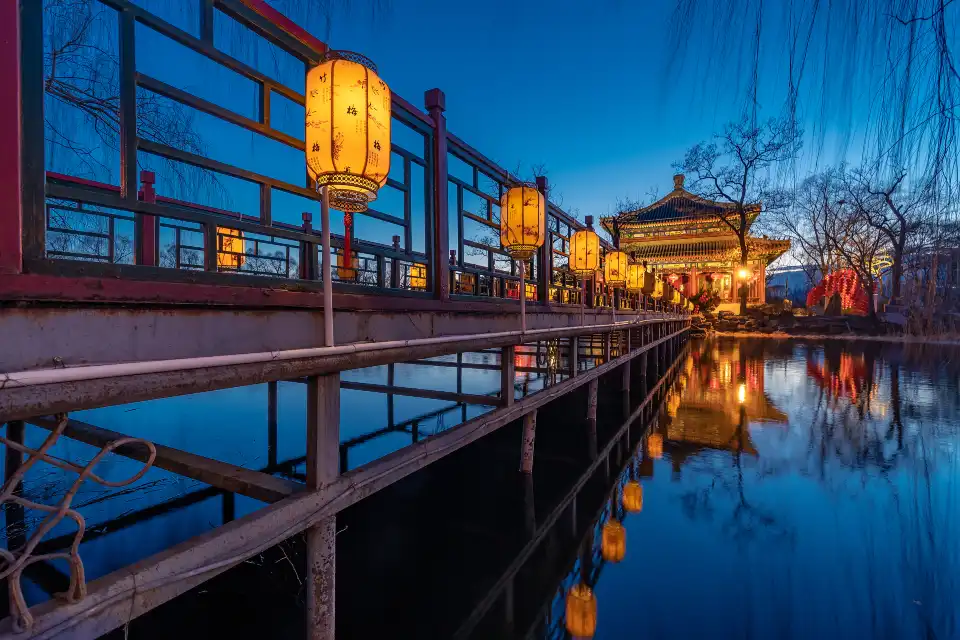
The garden's landscaping excels in water features. Fuhai Lake's expansive surface, named for the idiom "boundless happiness like the eastern sea," once served as the imperial water recreation center. Three square islands connected by bridges at its heart form the Pengdao Yaotai (Jade Terrace on Penglai Isles). Smaller water bodies meander around, with piled rocks forming hills and gathered earth creating ridges—mountains and waters intertwine as if naturally formed. West of Fuhai, the Rear Lake encircles nine islets symbolizing the "nine provinces," each with distinctive scenery that borrows views from others to create harmonious interplay.
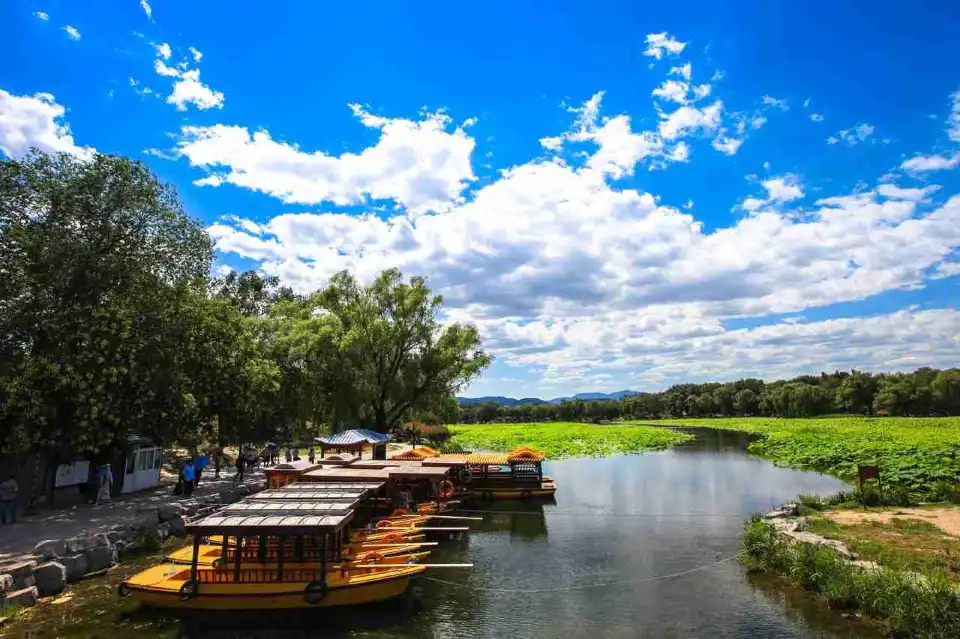
Qichun garden, also known as Wanchun garden, was one of the emperor's main residential gardens during the Jiaqing era. After the Daoguang period, it primarily served as the residence for empress dowagers and imperial concubines. The garden features numerous small scenic spots, making it a collection of miniature water landscapes. It also serves as the main venue for the annual summer lotus festival. In midsummer, when lotuses are in full bloom and the garden is bathed in vibrant red, taking a cruise through the lotus leaves offers a uniquely delightful experience.
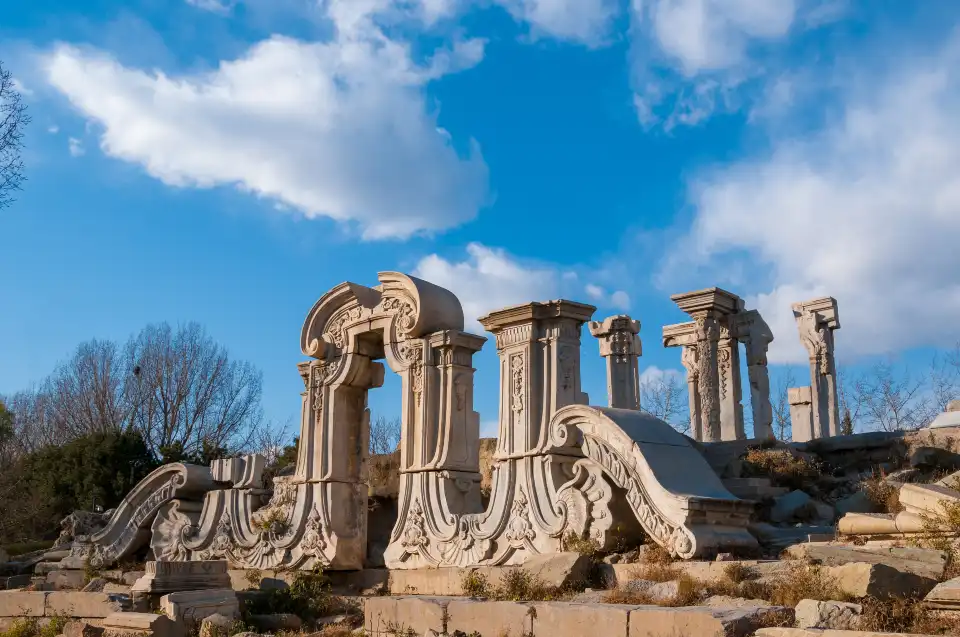
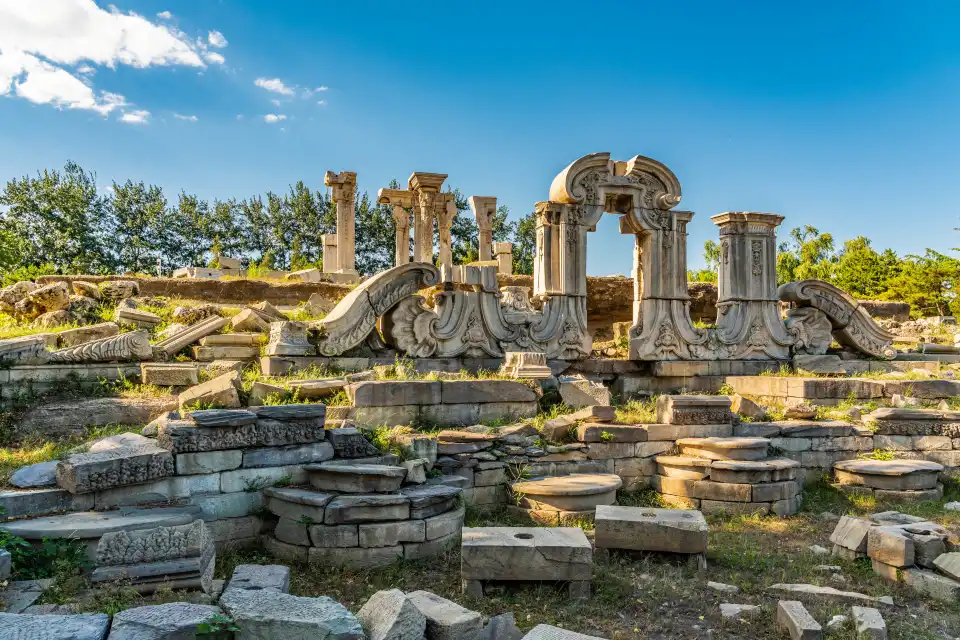
Changchun garden features large water landscapes as its main attraction, with its core architectural complex, Hanjing Hall, serving as Emperor Qianlong's retirement residence. The northeast corner replicates Suzhou's Lion Grove garden under the same name. The northern section houses a group of European-style palaces commonly known as the Western mansions, where structures like the Harmonious Wonder, Haiyantang Hall, Yuanyingguan Observatory, Great Fountain, and Water Viewing Fountain were once scattered—now only stone ruins remain. Among them, the arched stone remnants of the Great Fountain have become Yuanmingyuan Park's iconic image. The Huanghua maze, a European-style rectangular labyrinth within the attraction, is said to have hosted imperial festivities where palace maids carried yellow flower lanterns through its paths during mid-fall nights while the emperor watched from its central pavilion. Visitors today can still attempt navigating this historic maze.
To get an intuitive sense of the park's appearance at its peak, visit the Yuanmingyuan Park full-scale model exhibition northeast of the Hanjing Hall in the Eternal Spring Garden. With the guidance of an on-site guide, you can imagine the past through a large sand table. The Yuanmingyuan Park exhibition hall in the Western-style buildings ruins area also screens the documentary "Yuanmingyuan" on loop. Watching it before visiting the ruins will give you a more three-dimensional experience.


Other visitors' reviews of Yuanmingyuan Park
Show More ReviewsIf you're visiting the Old Summer Palace (Yuanmingyuan) during the May Day holiday, the most worthwhile attraction is undoubtedly the ruins of the Western-style buildings. Although only the ruins of its former glory remain, you can still feel the awe-inspiring splendor of this "Garden of Gardens," reminiscent of the "Versailles of the East." Today, the magnificent scenery of Fuhai Lake within the Old Summer Palace rivals that of Kunming Lake, offering a Beijing version of West Lake's beauty. Also, don't miss the Old Summer Palace Museum located at the south gate, which displays the actual horse head from the 12 Chinese zodiac animals. This is a priceless treasure, a precious artifact donated to the motherland by a Macau gambling tycoon after a high-priced auction. A must-see!