Leshan Giant Buddha 2026: Tickets, Hours & How to Get There
Contents
- Leshan Giant Buddha at a Glance
- How to Get to the Leshan Giant Buddha from Chengdu
- By High-Speed Train
- From Leshan Station to the North Gate
- By Bus from Chengdu
- By Car or Private Driver
- By Organized Day Trip
- Leshan Giant Buddha Tickets and Prices
- Leshan Giant Buddha Opening Hours
- Best Time to Visit the Leshan Giant Buddha
- Best Time of Day
- History of the Leshan Giant Buddha
- Why Haitong Built It
- The 90-Year Construction
- The Engineering Hidden in the Statue
- From Ruin to World Heritage
- What to See Inside the Scenic Area
- The Buddha's Head Viewing Platform
- The Nine-Bend Plank Road
- The Feet Platform and the Three Rivers
- Lingyun Temple
- Wuyou Temple
- Mahao Cliff Tombs
- Oriental Buddha Capital
- Walking Route and Boat Route
- The Classic Route from the North Gate
- Doing It in Reverse
- The Boat Route
- Walking or Boat?
- How Long Do You Need at the Leshan Giant Buddha?
- One-Day Leshan Itinerary from Chengdu
- Where to Eat in Leshan
- What to Order
- Zhanggongqiao Food Street
- Near the Scenic Area
- Where to Stay in Leshan
- Near the North Gate
- Around Zhanggongqiao
- In Leshan City Center
- What Else to Visit Near Leshan
- Mount Emei
- Leshan Old Town and Dingdong Street
- Luocheng Ancient Town
- What a Leshan Day Trip Costs
- Practical Tips for Visiting the Leshan Giant Buddha
- More Chengdu and Sichuan Travel Guides
Show more
Carved into a red sandstone cliff where the Min, Dadu and Qingyi rivers meet, the Leshan Giant Buddha has watched over this stretch of water since the Tang dynasty. At 71 m tall it is the largest stone Buddha in the world, and the 1,300-year-old statue is still the reason most travellers come to Leshan. The site sits about 140 km south of Chengdu, roughly an hour away by high-speed train, which makes it the easiest major sight to add to a Sichuan trip. This article covers how to get there, ticket prices, opening hours, the cliff stair route, the boat option, the history behind the carving, and where to eat and sleep once you arrive.

The statue is a seated Maitreya Buddha, not a standing figure, and it was cut directly into the living rock rather than assembled from blocks. That is why the cliff, the drainage channels and the statue read as one piece of engineering. The numbers below are the ones worth knowing before you book.
| Item | Detail |
|---|---|
| Location | Lingyun Mountain, Shizhong District, Leshan, Sichuan |
| Height | 71 m from the riverbank to the top of the head |
| Built | 713 to 803 AD, Tang dynasty |
| UNESCO status | World Heritage Site since 1996, listed with Mount Emei |
| Entry ticket | CNY 80 adult, CNY 40 concession |
| Boat ticket | CNY 70 per person for the daytime river cruise |
| Opening hours | 07:30-18:30 (Apr 1 to Oct 7), 08:00-17:30 (Oct 8 to Mar 31) |
| Time needed | 3 to 4 hours for the walking route, 1.5 hours for the boat only |
| Distance from Chengdu | About 140 km, 45 to 65 minutes by high-speed train |
Almost everyone takes the train. Chengdu East has more than 50 departures a day to Leshan, the fastest runs take 46 minutes, and a second-class seat costs CNY 43 to 54. The station in Leshan is 9.2 km from the north gate of the scenic area, so the last leg is a short taxi or bus ride. Buses and private cars are the fallback if the trains are sold out or you are travelling in a group.
Book to Leshan station, not Emeishan. Trains leave Chengdu East from about 06:15 to 21:49, and Chengdu South also has services, including the single fastest run of the day at 41 minutes. Check the journey time before you pay: a couple of departures reach Leshan the long way round through Tianfu airport, Zigong and Yibin, take nearly three hours and cost three to four times as much. The useful trains are the C and G series that run direct.
| Train | From | Dep. | Arr. | Fare | Notes |
|---|---|---|---|---|---|
| C6275 | Chengdu East | 09:36 | 10:28 | CNY 43 | 52 minutes, cheapest morning option |
| G3437 | Chengdu East | 11:15 | 12:01 | CNY 54 | 46 minutes, the fastest of the day |
| C5785 | Chengdu East | 15:32 | 16:30 | CNY 54 | 58 minutes, good for an afternoon start |
| D1903 | Chengdu East | 21:24 | 22:22 | CNY 53 | 58 minutes, last practical train of the day |
Tickets go on sale 15 days ahead and weekend morning trains do sell out. Book the outbound and the return together, and keep the passport you booked with: Chinese rail now uses passport scanning at the gate for foreign travellers. If you are still working out which Chengdu station suits you, our guide to Chengdu's railway stations explains the metro connections.

The scenic area is 9.2 km from Leshan station. A taxi or DiDi takes 20 to 25 minutes and costs CNY 25 to 30; show the driver the characters for the north visitor centre rather than the English words, because few drivers read the English name. The K1 tourist bus costs CNY 2 and takes about 40 minutes, and city buses 3 and 13 also run to the north gate for CNY 2. The K1 continues to the Wuyou Temple end of the site, which is useful if you want to walk the route in reverse.
Long-distance buses leave Chengdu's Xinnanmen station for Leshan every 20 to 30 minutes, cost about CNY 75 and take 2.5 hours. They are slower and less predictable than the train, but they run later in the evening and drop passengers closer to the old town. From Leshan bus station, take a local bus or a short taxi to the scenic area.
The drive from central Chengdu is about 140 km on the Chengdu-Leshan expressway and takes 1.5 to 2 hours depending on traffic. A private car and driver for the day usually costs CNY 700 to 900, which makes sense for three or four people travelling together or for anyone combining Leshan with Mount Emei. Parking at the north and south visitor centres is paid and fills up by mid-morning on holidays.
If you would rather not plan the station transfer, a guided day trip from Chengdu covers the train or coach, the entrance ticket and a guide who knows where the stair queue starts. It costs more than doing it yourself, but it removes the two points where first-time visitors lose time: buying the wrong train ticket and arriving at the wrong gate.
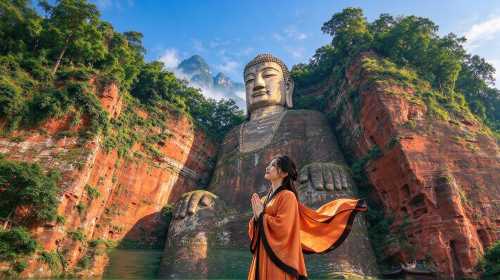
One ticket covers the whole Lingyun Mountain scenic area: the Giant Buddha, Lingyun Temple, Wuyou Temple and the Mahao Cliff Tombs. The boat and the night tours are separate products. Tickets are sold by passport for foreign visitors, and in busy periods the park releases timed entry slots instead of open-ended admission, so book a slot rather than turning up at the gate.
| Ticket | Price | What it covers |
|---|---|---|
| Adult entry | CNY 80 | Buddha, Lingyun Temple, Wuyou Temple, Mahao Cliff Tombs |
| Concession entry | CNY 40 | Ages 7 to 17, full-time students, and 60 to 64 on national holidays |
| Children under 6 or 1.2 m | Free | Must enter with an adult; still reserve a free ticket |
| Seniors 65 and over | Free | Reserve in advance and bring the passport or senior card |
| Daytime river cruise | CNY 70 | 30 to 40 minutes, no landing, best full-front view |
| Night cruise on the three rivers | CNY 138 | Departs around 20:00, illuminated Buddha from the water |
| Night tour of Lingyun Mountain | CNY 80 or 158 | CNY 80 for the mountain only, CNY 158 with the Oriental Buddha Capital basement |
| Scenic area shuttle | CNY 10 or 15 | CNY 10 single ride, CNY 15 unlimited day pass |
| Oriental Buddha Capital | CNY 80 | Separate attraction next door, famous for its reclining Buddha |
Book through the official WeChat account or mini program, or through Trip.com if you want an English checkout and a card payment. The park phone line is 0833-2355557 and answers in Chinese; the visitor centres at the north and south gates have translation screens and staff who can help with passport ticketing. Entry slots during peak periods are usually 07:30-10:30, 10:30-14:30, 14:30-16:30 and 16:30-18:30.
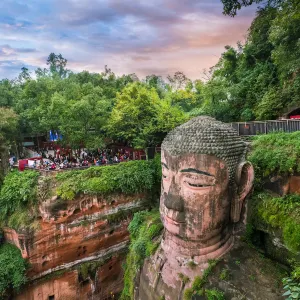
 Glad to have taken the express pass as it was also school holidays in Leshan, so the place is jam-packed with people. Beautiful experience, especially at the temple along the way, beautiful carving, but can’t take pictures in the temple.
Check live prices and availability for the Leshan Giant Buddha ticket on Trip.com before you fix your train times.
The park runs two seasons and closes earlier in winter. Last admission is one hour before closing, and the stair route down to the Buddha's feet can be closed for maintenance or when the queue reaches capacity, so arrive early if the stairs are the main reason for your visit.
| Period | Opening hours | Notes |
|---|---|---|
| April 1 to October 7 | 07:30-18:30 | Peak season; timed slots apply in holidays |
| October 8 to March 31 | 08:00-17:30 | Off season; last entry around 16:30 |
| Daytime boat | 07:30-18:30 summer, 08:00-17:30 winter | Every 30 minutes or when full; suspended in high water |
| Night cruise | Departs about 20:00 | Extra departures when demand is high |
| Night tour of Lingyun Mountain | 19:30-22:30 summer, 19:00-22:00 winter | Last entry 21:40 summer, 21:30 winter |
Spring and autumn are the most comfortable seasons, summer is hot and wet, and winter is quiet but often misty. The single biggest variable is the queue on the cliff stairs, which is shortest before 09:00 and after 16:00. Avoid the first week of May, the first week of October and the two weeks around Chinese New Year if you can choose your dates.
| Season | What it is like | Why go then |
|---|---|---|
| Spring (Mar-May) | Mild, green, occasional rain | Best all-round weather; the cliff vegetation is at its brightest |
| Summer (Jun-Aug) | Hot and humid, 30 C and above | Long opening hours; go at 07:30 to beat both heat and crowds |
| Autumn (Sep-Nov) | Clear, dry, comfortable | Best light for photographs and the steadiest river levels |
| Winter (Dec-Feb) | Cold, damp, misty | Fewest visitors and the cheapest hotel rates of the year |
The first hour after opening is the only reliable way to see the Buddha's head platform without a crowd in front of it. Tour groups arrive from Chengdu between 10:00 and 11:00, and the stair queue peaks between 11:00 and 14:00. If you are coming for the boat, the 08:00 or 09:00 departure gives the calmest water and the cleanest light on the statue's face.
The statue exists because this confluence was dangerous. The Min, Dadu and Qingyi rivers meet in a churn of currents below Lingyun Mountain, and in the Tang dynasty boatmen lost cargo and lives here every year. A Buddhist monk named Haitong decided that a giant Buddha carved into the cliff would calm the water and protect the passage. The project took 90 years and outlived three of its sponsors.
Haitong began fundraising in 713 AD and travelled widely to collect donations. According to local records, when a local official demanded a share of the money, Haitong refused and is said to have sacrificed an eye to make the point. The statue was intended as a religious act, but it also had a practical edge: the rock cut away from the cliff was tipped into the river, and the changed current is one reason the channel became safer.
Haitong died before the head and chest were finished. The project stalled until the regional governor Zhangchou Jianqiong funded the middle section, and it was finally completed in 803 AD under the military governor Wei Gao, 90 years after it began. The finished statue is 71 m tall, with a 14.7 m head, 7 m ears, 24 m shoulders and feet 8.5 m long. Each toe is large enough for a person to sit on.
The carving is wrapped in a drainage system that few visitors notice. Channels run behind the 1,021 stone coils of the hair, behind the ears and along the folds of the robe, carrying rainwater away from the sandstone before it can soak in and split the rock. The head is slightly oversized relative to the body, a deliberate correction that makes the proportions look right when seen from the river below.
Weather and river mist damaged the statue for centuries, and it was repaired repeatedly in the Ming and Qing periods. Major restoration work in the 1960s and again in the 1990s stabilised the cliff and the drainage channels. UNESCO inscribed the site in 1996 as part of the Mount Emei Scenic Area, including the Leshan Giant Buddha, and it remains one of the most visited monuments in Sichuan.

The ticket covers more than the statue. Lingyun Mountain is a small park of temples, cliff carvings and river viewpoints, and the walk between them is what turns a photo stop into a half-day visit. The route below runs from north to south, which is the direction most visitors take.
The head platform sits level with the statue's face and is the first big view most people get. From here you see the 14.7 m head, the coils of hair and the ears that run almost the height of a three-storey building. It is also the tightest space on the site: groups stop here for ten minutes, so come early or accept waiting for a spot at the railing.
The Zhandao, or nine-bend plank road, is a narrow stair cut into the cliff that descends from the head to the feet in a series of switchbacks. It is the most memorable part of the visit and the slowest: the path is single file, and in busy periods the queue can take an hour. The steps are steep and often wet, so wear shoes with grip and keep your bag in front of you.
At the bottom, the statue's feet rest on a platform above the river, and the scale finally makes sense. Look up and the body fills the cliff; look out and you see the meeting of the three rivers that caused the problem in the first place. This is the best place to photograph the whole figure from below, and the only place where the drainage channels in the robe are visible at eye level.
Lingyun Temple sits on the ridge above the Buddha's head and is included in the ticket. The halls are modest compared with the great temples of Chengdu, but the courtyards and the covered walkway are a quiet break from the stairs, and the incense is free. The temple also marks the start of the upper path if you are walking the site in reverse.
Wuyou Temple is at the southern end of the scenic area, a 20-minute walk or a short shuttle ride from the Buddha. It is older and calmer than Lingyun, with a garden, a pond and a hall of arhat statues. Most visitors skip it, which is exactly why it is worth the extra hour if you have the time.
The Mahao Cliff Tombs are Han dynasty cave tombs cut into the cliff near Wuyou Temple, included in the same ticket. The carved interiors are small and plain, but they are 2,000 years older than the Buddha and a reminder that this cliff was used for burials long before it was used for a statue.
The Oriental Buddha Capital is a separate park immediately south of the scenic area, with a 170 m reclining Buddha and a large underground palace of carvings. It costs CNY 80 and is not included in the main ticket. It suits travellers with a second day or a strong interest in Buddhist sculpture; first-timers can skip it without missing the main event.
There are two ways to see the Buddha and they are not interchangeable. Walking puts you at the statue's feet but costs time in the queue. The boat shows you the whole figure in 30 minutes but never lands. Many visitors do the boat first and then walk, which is the most efficient order if you arrive early.
Enter at the north gate, walk up through Lingyun Temple to the head platform, then take the nine-bend plank road down to the feet. From the feet, follow the riverside path south to Wuyou Temple and the Mahao tombs, then exit at the south or east gate. Allow three to four hours at an easy pace, more on holidays.
| Stop | Place | What you see | Time | Tip |
|---|---|---|---|---|
| 1 | North gate and visitor centre | Ticketing, shuttle stop, luggage lockers | 15 min | Use the shuttle if it is hot |
| 2 | Lingyun Temple | Courtyards, incense, ridge views | 30 min | Quiet before 09:00 |
| 3 | Buddha head platform | The face and the hair coils | 20 min | Go straight here first |
| 4 | Nine-bend plank road | Cliff stairs down to the feet | 30-60 min | Queue forms by 11:00 |
| 5 | Feet platform | Full statue from below, three rivers | 20 min | Best wide-angle shot |
| 6 | Wuyou Temple | Garden, arhat hall, river path | 40 min | Most people skip it |
| 7 | Mahao Cliff Tombs | Han dynasty cave tombs | 20 min | Included in the ticket |
| 8 | South or east gate | Exit to the old town or taxi rank | 10 min | Taxi to the station from here |
If the head platform is already crowded, start at the south gate or take the K1 to Wuyou Temple and walk north. You reach the feet first, climb the plank road in the opposite direction, and finish at the head when the morning groups have moved on. The climb up is harder than the descent, but the queue is usually shorter.
The daytime cruise costs CNY 70 and lasts 30 to 40 minutes. Boats leave from Wulong Temple dock or Jiazhou ferry dock, run every 30 minutes or when full, and stop in front of the Buddha for photographs. You do not land, and you do not need a scenic area ticket for the boat. The view from the water is the only place where you can see the entire 71 m figure at once.
| Walking route | Boat route | |
|---|---|---|
| Cost | CNY 80 entry | CNY 70 boat ticket |
| Time | 3 to 4 hours | 30 to 40 minutes |
| What you see | Head, feet, temples, tombs | The whole statue from the river |
| Effort | Steep stairs, queues | None |
| Best for | First-timers who want the full site | Families, mobility limits, photographers |
| Weather risk | Stairs close when wet or crowded | Cruises suspend in high water |
Three hours is enough for the statue and the head platform. Half a day adds Wuyou Temple and a proper lunch. A full day lets you do the boat and the walk without rushing, and two days lets you add Mount Emei, which is 30 minutes further by train and deserves its own day.
| Time | What you can cover | Who it suits |
|---|---|---|
| 2 to 3 hours | North gate, head platform, plank road, feet, exit | Travellers on a tight Chengdu schedule |
| Half day | Add Lingyun Temple, Wuyou Temple and lunch in the old town | Most first-time visitors |
| Full day | Boat in the morning, walking route in the afternoon, Zhanggongqiao for dinner | Photographers and anyone who hates rushing |
| Two days | Leshan on day one, Mount Emei and the Golden Summit on day two | Travellers doing a Sichuan circuit |
This plan assumes a 07:00 start from central Chengdu and a return the same evening. It puts the boat first, because the water is calmest early and the statue faces the morning light, then uses the afternoon for the walking route when the first tour groups have left.
| Time | Stop | What you do | Notes |
|---|---|---|---|
| 07:00 | Chengdu East | Take a C or G train to Leshan | Book the 07:30-08:30 departures |
| 08:30 | Leshan station | Taxi or K1 bus to the north gate | CNY 25 to 30 by taxi |
| 09:00 | Wulong Temple dock | Daytime boat cruise past the Buddha | CNY 70, 30 to 40 minutes |
| 10:00 | North gate | Enter, walk to the head platform | Have the passport ready |
| 11:00 | Plank road | Descend to the feet | Queue is shorter before noon |
| 12:30 | Wuyou Temple | Garden and river path | Exit at the south gate |
| 13:30 | Zhanggongqiao | Lunch: qiaojiao beef and sweet-skin duck | 15 minutes by taxi |
| 15:30 | Leshan old town | Dingdong Street and the riverside | Coffee before the train |
| 17:30 | Leshan station | Train back to Chengdu | Trains run until about 21:30 |
If you want the pandas and the Buddha in one day, start at the Chengdu Research Base at 07:30 and take an afternoon train; the base needs three hours on its own. Our guide to Chengdu Panda Base tickets covers the booking system and the best enclosure order.
Leshan is a serious food city, and locals will tell you it beats Chengdu for snacks. The cooking is Sichuan with a river-town accent: less numbing heat, more braised beef, smoked duck and cold dishes. Most of it is cheap, and the densest cluster is around Zhanggongqiao, 15 minutes by taxi from the scenic area.
Start with qiaojiao beef, a clear broth of beef and offal served with a chilli dip, eaten at low tables on the street. Sweet-skin duck is lacquered with maltose and five spice, chopped into cold pieces and sold by weight. Bobo chicken is skewers of chicken, liver and vegetables steeped in chilli oil, and Leshan tofu nao is a savoury bowl of soft tofu with crispy beans, peanuts and chilli. For dessert, look for ice jelly or fermented rice.
Zhanggongqiao is the concentrated version of all of the above: a pedestrian lane of stalls and small restaurants where you can eat four things in an hour. It is busy at lunch and quiet after 14:00, and prices are higher than in the residential lanes but still low by any international standard. Come hungry and order small portions at several stalls rather than a full meal at one.
The streets around the north visitor centre and the old town have simpler noodle shops and rice-plate restaurants aimed at tour groups. They are convenient rather than memorable. If you only have an hour between the Buddha and the train, eat at the station end of town instead, where the local chains are cheaper and faster.
Most people visit Leshan as a day trip, but staying one night lets you see the Buddha at opening time, eat dinner on Zhanggongqiao and take the night cruise without worrying about the last train. The three areas below cover the main trade-offs: walking distance to the gate, food, or the station.
Hotels around the north visitor centre and the Giant Buddha Cultural Plaza are the best choice for a single night. You can walk to the gate before opening, come back for breakfast, and avoid the taxi queue at the end of the day. Rates run from CNY 300 to 700 for a comfortable mid-range room.
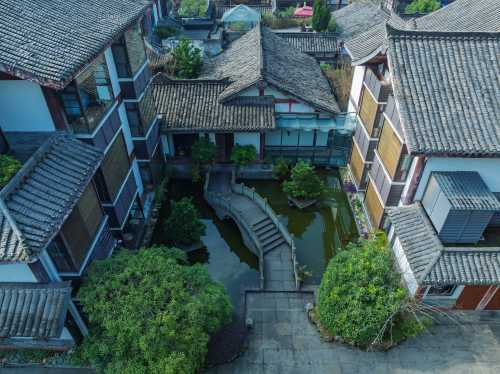
Jinye Zen Inn Resort Hotel (Leshan Giant Buddha)
 No. 3 of Cultural Hotels in Leshan
Staying near Zhanggongqiao puts the food street on your doorstep and the scenic area 15 minutes away by taxi. It suits travellers who care more about dinner than about being first through the gate, and there are more mid-range and boutique options here than near the park.
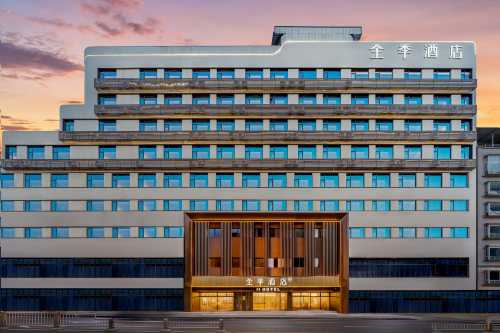
JI Hotel (Leshan Giant Buddha Zhanggongqiao Food Street)
Hotels in the Shizhong District city center are the practical choice for a late arrival or an early train to Mount Emei. The area is 10 to 15 minutes from Leshan station, 20 minutes from the scenic area, and has the widest choice of restaurants open after dark. Rates are lower than at the gate for the same standard of room.
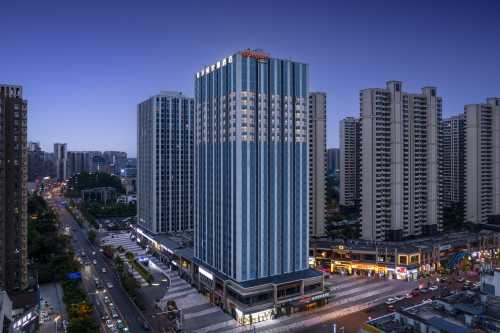
Hampton by Hilton Leshan Shizhong District
No. 2 of 4-Star Select Hotels in LeshanLeshan works as a standalone day trip, but it is also the gateway to the rest of southern Sichuan. Mount Emei is the obvious second stop, and the old town and the riverfront are worth an hour before your train.
Mount Emei is 30 minutes further by train and shares the same UNESCO listing. The Golden Summit sits at 3,079 m, the cable car does most of the climbing, and a full visit takes a day. Our Mount Emei guide covers tickets, the summit and the train connections.
The old town along the river below the scenic area is a grid of snack stalls, teahouses and old wooden houses. Dingdong Street is the most atmospheric lane, and the riverside promenade is a good place to watch the night cruise boats. It is free to walk and takes about an hour.
Luocheng, about 60 km east of Leshan, is a small Ming-era town built around a covered market street that looks like a boat. It is quiet, uncommercial and usually combined with a drive back to Chengdu rather than a train trip. Allow two hours including the drive each way.
A day trip from Chengdu is cheap by international standards. The train is the biggest saving, and the ticket prices below are the official 2026 rates rather than tour-operator bundles.
| Item | Typical cost | Notes |
|---|---|---|
| Return train, Chengdu to Leshan | CNY 86-108 | CNY 43-54 each way, second class |
| Scenic area entry | CNY 80 | Same price all year; concession CNY 40 |
| Daytime boat cruise | CNY 70 | Optional but recommended for the full view |
| Shuttle inside the park | CNY 0-15 | Walking is manageable outside summer |
| Taxi, station to north gate | CNY 25-30 | Each way; K1 bus is CNY 2 |
| Lunch at Zhanggongqiao | CNY 40-80 | Four or five small dishes per person |
| Guided day trip from Chengdu | From USD 60 | Includes train or coach, entry and guide |
| Hotel, if staying overnight | CNY 300-700 | Mid-range, near the north gate |
In practice, a do-it-yourself day trip costs CNY 250 to 350 per person including food and local transport. Add the night cruise and a hotel and you are looking at CNY 700 to 1,000, still far below the cost of a similar monument day in Europe or Japan.

Bring your passport in person: the ticket is tied to the document number, and the gate scans it rather than checking a printout. Wear shoes with grip for the plank road, carry water in summer, and keep a light rain shell in your bag even on a clear morning. The stairs close when wet or overcrowded, so treat the feet platform as a bonus rather than a guarantee. If you are combining Leshan with Dujiangyan or Qingcheng Mountain on the same trip, put Leshan last: it is the longest day and the one most affected by train times.
If Leshan is part of a longer Sichuan trip, these articles cover the rest of the route.
Book the train, the ticket and the boat before you go, and keep the booking name identical to the passport. Leshan runs on real-name reservations, and the gate staff will check the document against the reservation.
Popular recommendations
Dujiangyan from Chengdu 2026: How to Get There & What to See
 OneVoyager
Mount Emei 2026: Tickets, Golden Summit & Getting There
OneVoyager
Chengdu Research Base of Giant Panda Breeding Tickets 2026
OneVoyager
Latest Trip.com Promo Codes, Flight Discounts & Hotel Savings (Weekly Update)
 Trip.com Official