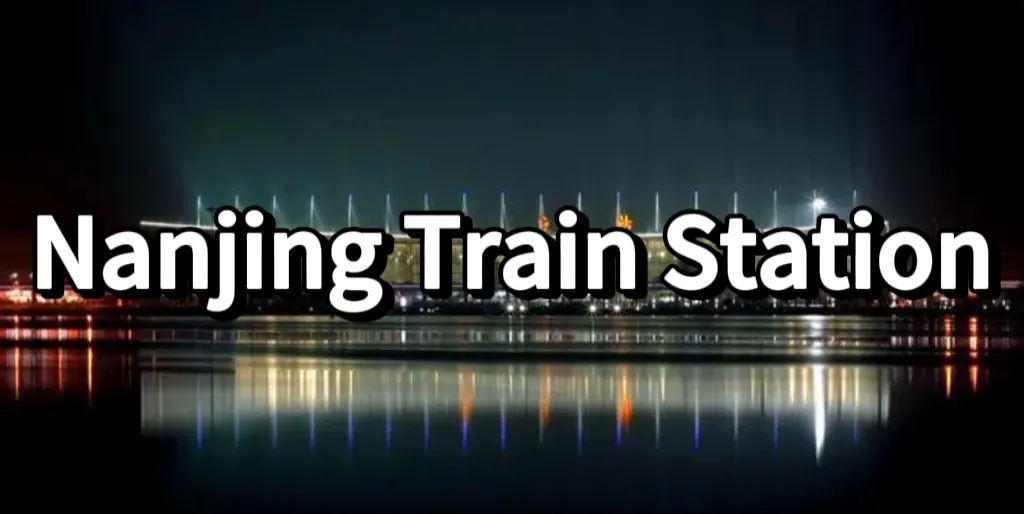
What Kinds of Trains Can You Take at Nanjing Train Station?
Nanjing South Railway Station predominantly handles high-speed trains (G, D types), facilitating fast connections across major Chinese cities. In contrast, Nanjing Railway Station offers a broader spectrum of services including not only high-speed trains but also traditional types (Z, T, K) which are generally slower and stop at more stations along their routes.
Train Type | Description | Top Speed | Major Routes |
G (High-Speed) | High-speed Electric Multiple Units (EMU) Train | Up to 400 km/h | Beijing, Shanghai, Guangzhou |
D (High-Speed) | Electric Multiple Units (EMU) Train for long/middle distances | Up to 250 km/h | Beijing, Shanghai, Xi'an, Chengdu |
Z (Direct Express) | Direct Express with fewer stops | Up to 160 km/h | Long-distance routes across China |
T (Express) | Express with limited stops | Up to 140 km/h | Major cities across China |
K (Fast) | Slower than T trains, with more stops | Up to 120 km/h | Mid to large cities across China |
Which Facilities Does Nanjing Train Station Offer?
from chinadiscovery
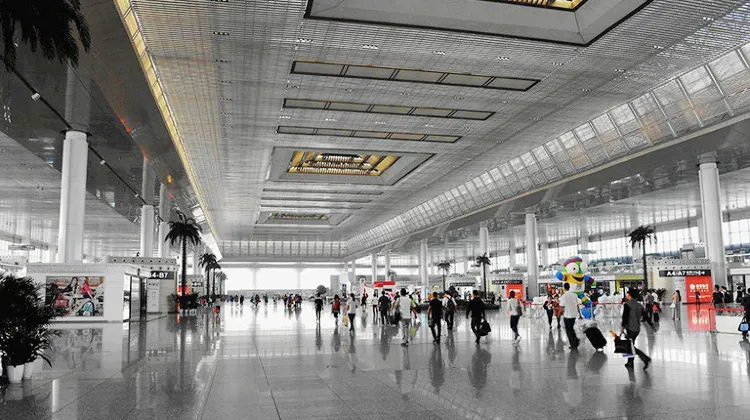
Nanjing South Railway Station is a major transportation hub equipped with extensive facilities to accommodate the needs of travelers:
Station Layout
The station encompasses a terminal building with five floors, including two basement levels. Each floor is designed for specific functions:
- Basement Levels (B1 & B2): These house the metro stations for Lines 1, 3, S1, and S3, along with commercial areas.
- Ground Floor (1F): This level includes ticket offices, arrival and departure gates, access to taxis and buses, and small shops and restaurants.
- Second Floor (2F): Dedicated to railway platforms, it also hosts a self-service ticketing office and taxi drop-off areas.
- Third Floor (3F): Contains the main waiting hall, additional luggage lockers, and various dining and shopping options, including fast food chains and traditional eateries.
Station Services
- Transport Connections: The station integrates seamlessly with metro, bus, and taxi services, providing easy access to both the city center and other parts of Jiangsu Province. It also includes facilities for long-distance and airport shuttle buses.
- Luggage Services: For those needing to store luggage, lockers are available, and there's a left luggage office where travelers can securely store their items for a fee.
- The station offers a variety of dining options and retail shops, providing passengers with plenty of choices to eat and shop while waiting for their trains.
How to Get to Nanjing Train Station?
Source from Chinaairlinetravel
Nanjing South Railway Station is the busiest station in Nanjing. Considering that you are most likely to use Nanjing South Railway Station during your visit or stay in Nanjing, it's important to know the best ways to access this major transit hub. This station, being a central point in the city's transport network, offers several convenient options for getting there, including metro, taxi, and bus services.
By Metro
Nanjing South Railway Station is a major hub accessible via several metro lines, making it highly convenient for travelers. It's connected by Metro Line 1, Line 3, S1, and S3. These lines facilitate direct access to various parts of the city including the downtown area and Nanjing Lukou Airport.
- Metro Line 1 and 3: Connects directly to the station, providing frequent services to the city center and other key areas.
- Metro Line S1: Directly links the station with Nanjing Lukou Airport, ideal for air travelers.
- Metro Line S3: Services the route towards Gaojiachong, extending the connectivity of the station.
Metro operations start early in the morning and run until late at night, ensuring accessibility at almost all hours. The fare ranges typically from 2 to 7 CNY (approximately 0.28 to 0.97 USD), making it an affordable option for everyone.
By Taxi
Taxis offer a quick and comfortable means to get to or from Nanjing South Railway Station, especially if you are carrying heavy luggage or travelling in a group. There are designated taxi drop-off and pick-up areas at the station, ensuring ease of access:
- Drop-off areas: Located at the south entrance on the 2nd floor and the north entrance on both the 1st and 2nd floors.
- Pick-up areas: Available at the west and east exits on the 1st floor.
The taxi fare is structured as follows:
Daytime Fare | Nighttime Fare |
11 CNY (1.5 USD) for first 2.5 km, then 2.9 CNY/km (0.40 USD) | 13 CNY (1.79 USD) for first 2.5 km, then 3.5 CNY/km (0.48 USD) |
By Bus
Several bus routes serve Nanjing South Railway Station, linking it with the city center and other areas, including an airport bus that provides direct access to Nanjing Airport.
Bus routes servicing the station include numbers 19, 84, 129, and the airport bus, among others. They operate from the bus station located on the 1st floor of Nanjing South Railway Station.
However, due to potential language barriers, as most signage and communication are in Chinese, buses may pose a challenge for international travelers.
Which Train Stations Serve Nanjing Travelers?
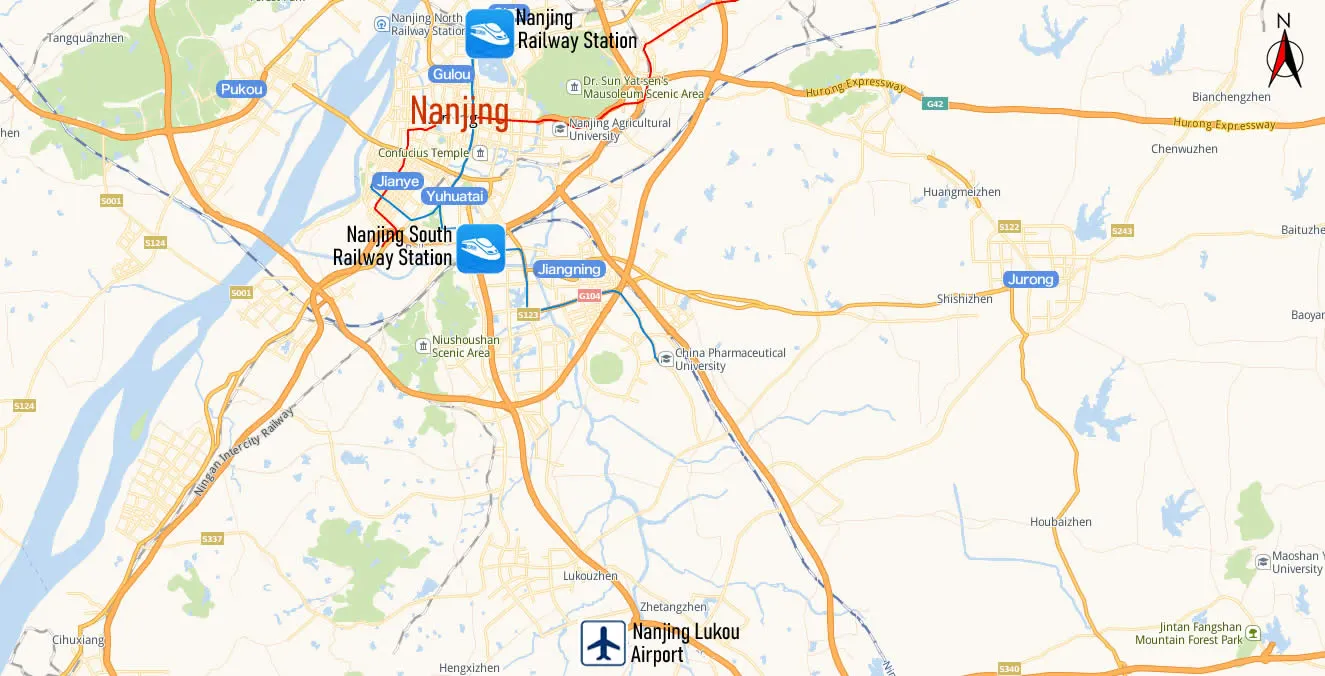
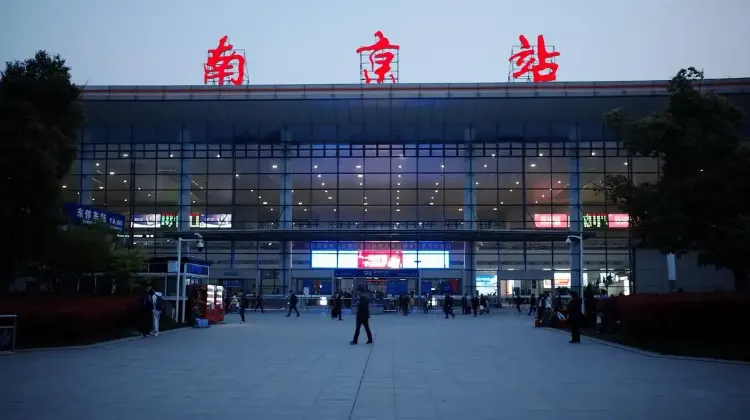
Nanjing is a key railway hub in Jiangsu Province with two major stations: Nanjing South Railway Station and Nanjing Railway Station. These stations are essential for both local commutes and long-distance travel, connecting various parts of China through high-speed and regular train services.
A key gateway for travelers in Jiangsu Province and beyond
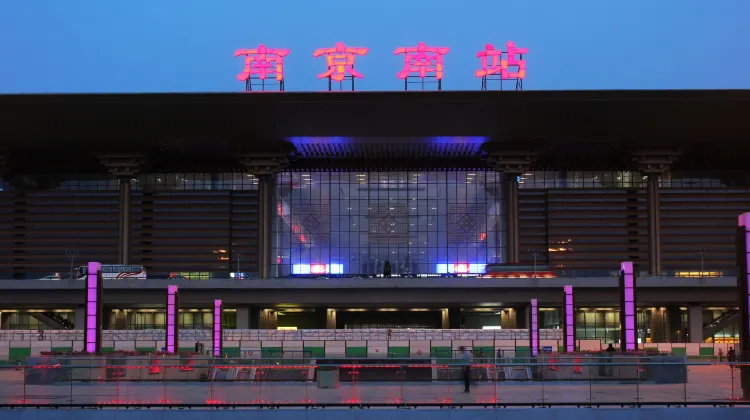
Nanjing South Railway Station
General Information: Nanjing South Railway Station, also known as Nanjingnan, primarily handles high-speed trains. It's recognized as the largest high-speed railway station in Asia and serves significant routes including the Beijing-Shanghai and Nanjing-Hangzhou high-speed railways.
Address:
- Chinese: 南京南站, 南京市雨花台区玉兰路98号
- English: No. 98 Yulan Road, Yuhuatai District, Nanjing City
Distances to Key Locations:
- Downtown Nanjing (Xinjiekou): 11 km
- Confucius Temple & Qinhuai River: 9 km
- Memorial Hall of the Victims in Nanjing Massacre: 14 km
- Sun Yat-sen Mausoleum: 14 km
- Nanjing Lukou International Airport: 33 km
Connected Cities: Beijing, Shanghai, Hangzhou, Suzhou, Ningbo, Wuxi, Changzhou, Yangzhou, etc.