China Train: Seat Classes, Types & Photos

Complete guide to China train classes (business/first/second class, sleepers) and types (G/D/C/Z/T/K) – amenities, pricing, and how to choose for your trip.
[3% Off] Trip.com China Train Promo Codes
China Train Types & Seat Classes at a Glance
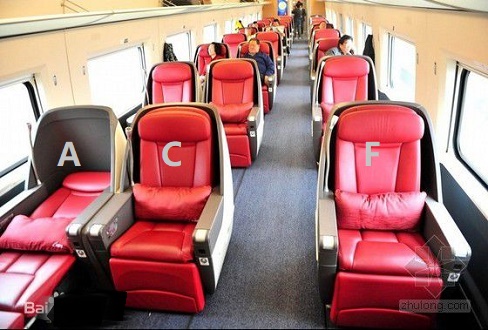
China Bullet Train Seat Map - High Speed Train Seating Map of China
China’s trains are categorized by letter codes (G, D, C, Z, T, K) that indicate speed and route type, while seat classes vary by comfort, space, and amenities.
High-speed trains (G/D/C) focus on short-to-medium distances with fast travel times, offering seated and overnight sleeper options.
| High-Speed Train | Business/VIP Class | First Class | Second Class | Sightseeing Seats | Soft Sleepers |
|---|---|---|---|---|---|
G | Yes | Yes | Yes | Certain models | No |
D | No | Yes | Yes | No | Certain trains |
C | No | Yes | Yes | No | No |
Ordinary trains (Z/T/K) are slower, ideal for long-distance or budget trips, with a mix of seats and sleepers.
| Regular Train | Hard Seats | Soft Seats | Hard Sleepers | Soft Sleepers | Deluxe Sleepers |
|---|---|---|---|---|---|
Z | No | No | No | Yes | Yes |
T | Yes | Yes | Yes | Yes | No |
K | Yes | Yes | Yes | Yes | No |
to Shanghai
to Guangzhou
to Beijing
See all flights

China High-Speed Trains (Bullet Trains): Types & Seat Classes
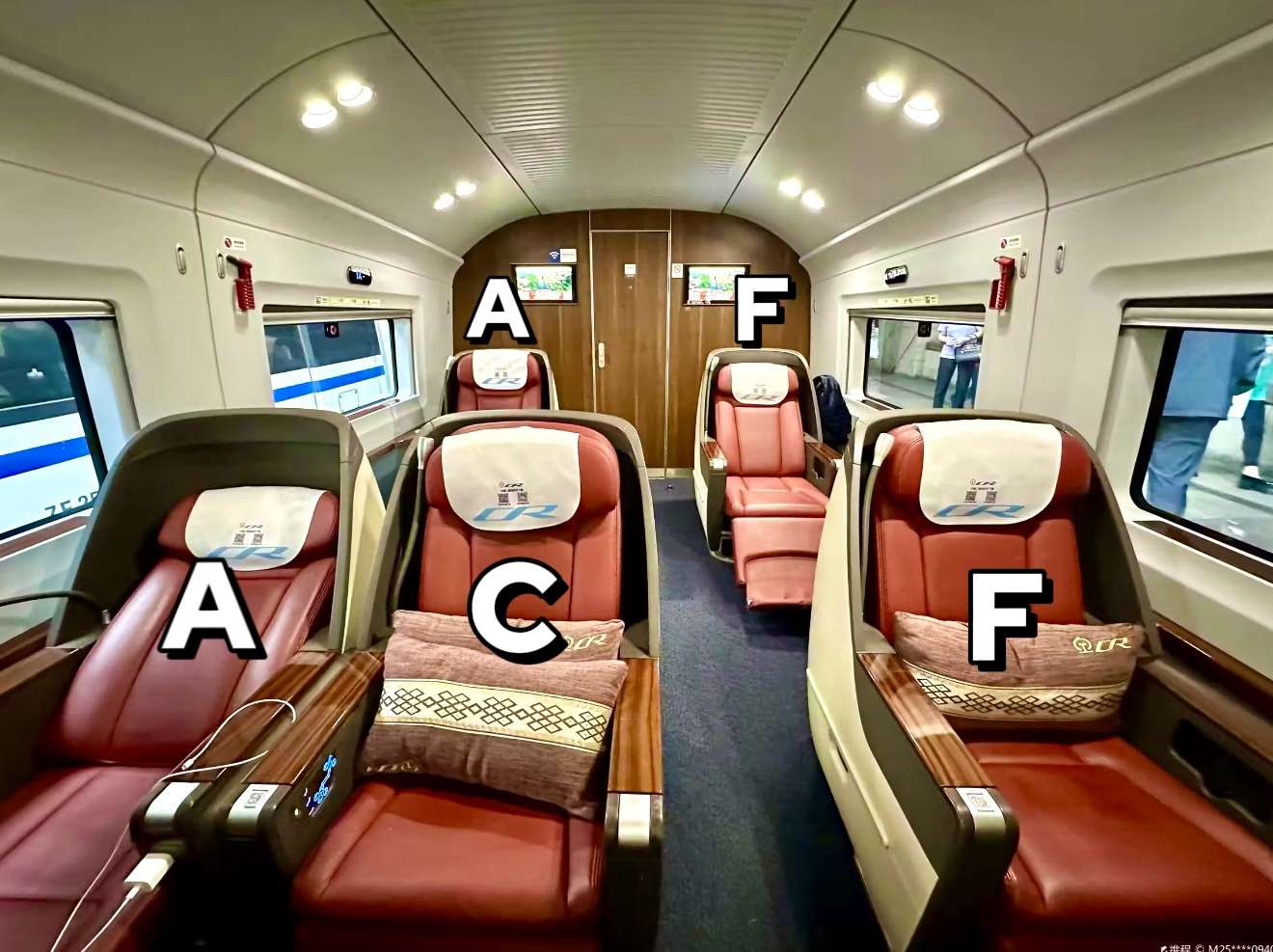
China High-Speed Trains (Bullet Trains): Business Class
High-speed trains (often called “bullet trains”) are the fastest and most popular choice for intercity travel, with speeds ranging from 200–350 km/h. They include three main types: G, D, and C trains.
High-Speed China Train Types (G/D/C)
Train Type | Code Meaning | Top Speed | Route Focus | Key Features |
|---|---|---|---|---|
G Train (Gaotie) | High-Speed Rail | 300–350 km/h | Provincial capitals & first-tier cities (e.g., Beijing-Shanghai, Guangzhou-Shenzhen) | Fastest train type; minimal stops; widest range of seat classes |
D Train (Dongche) | EMU Train | 200–250 km/h | Major cities & regional routes | Fewer stops than ordinary trains; offers overnight sleeper options |
C Train (Chengji) | Intercity Train | 160–250 km/h | Short-distance city pairs (e.g., Beijing-Tianjin, Guangzhou-Zhuhai) | No assigned seats (open seating); frequent departures; budget-friendly |
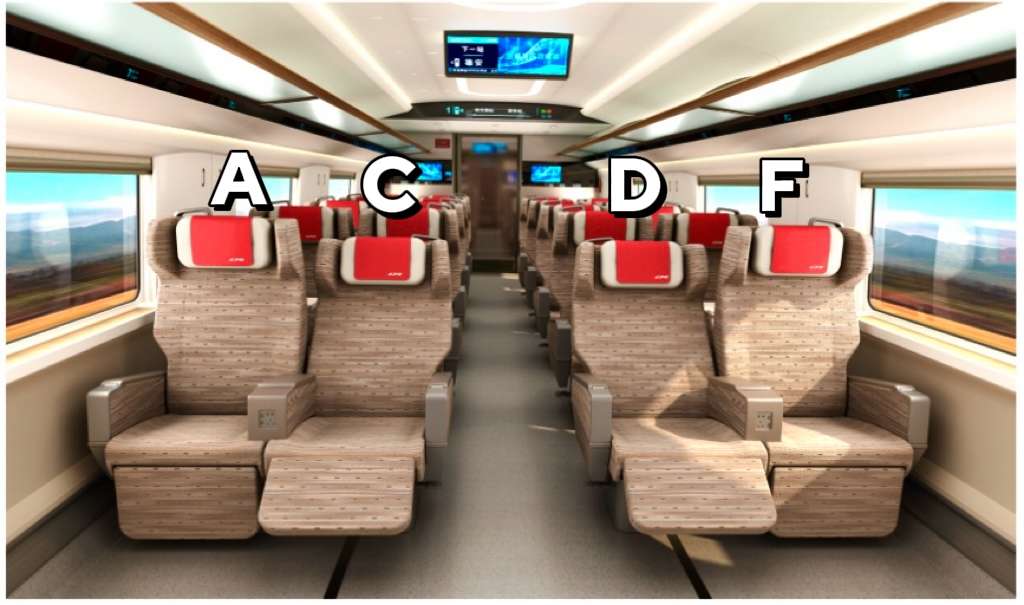
China High-Speed Trains (Bullet Trains): First Class
High-Speed China Train Seat Classes
All G/D/C trains offer different seat classes, with G trains having the most premium options. Below is a detailed comparison:
Seat Class | Layout | Available On | Amenities | Price (vs G-Train Second Class) | Key Notes |
|---|---|---|---|---|---|
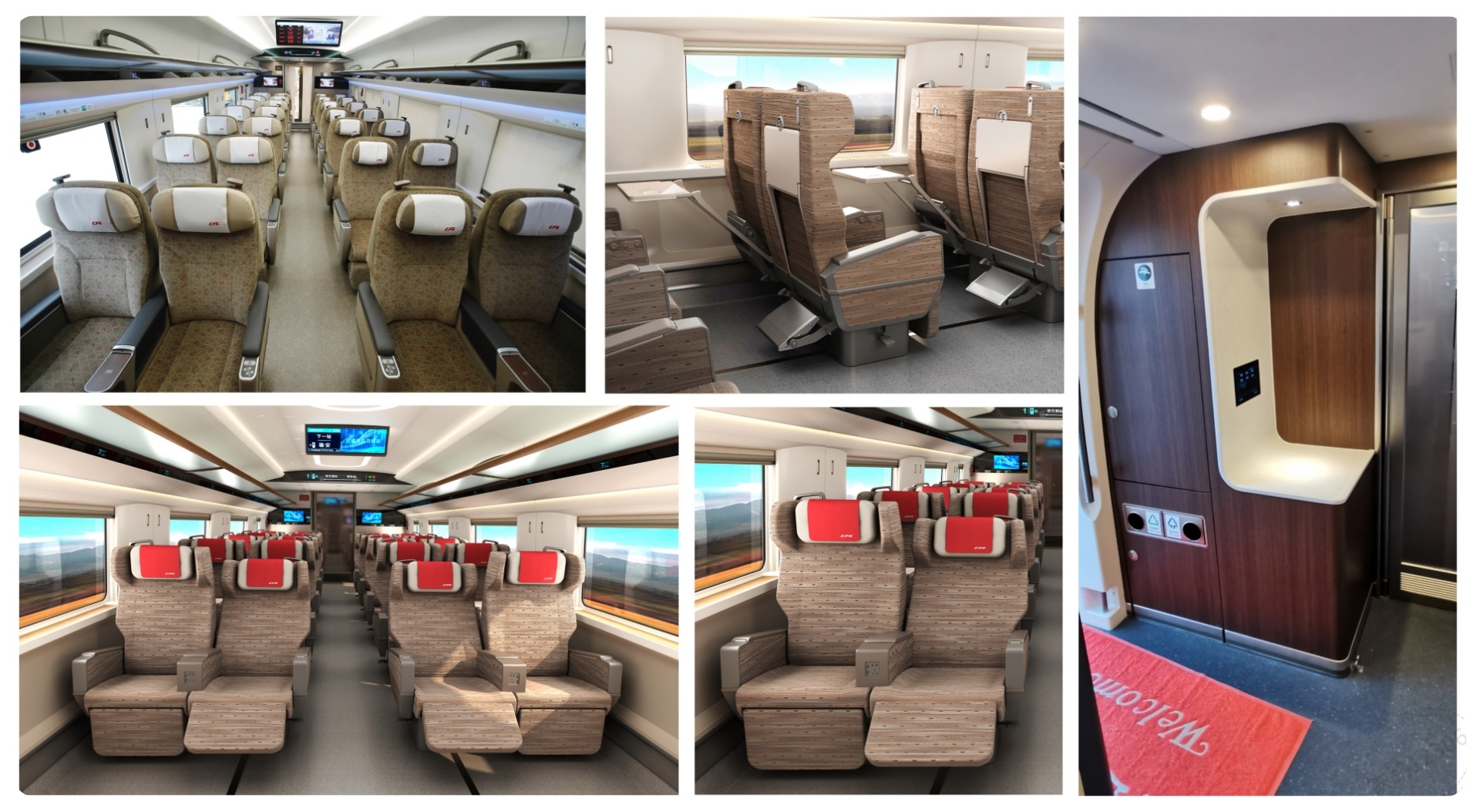
Business Class | 1+1 / 1+2 | G Trains only | 180° lie-flat seats; personal entertainment screens; premium dining; dedicated power outlets; adjustable lighting | 3–4x (e.g., Beijing-Shanghai: ¥2,318) | Most luxurious option; limited seats per carriage |
VIP Seat (Te Deng Zuo) | 2+1 | Select G/D Trains | 120° recline; semi-private compartment (6–8 seats/carriage); quieter surroundings | 2.8–3.2x | Located near the driver’s cab; popular on major routes |
Premium 1st Class | 2+2 / 1+2 | Select Fuxinghao G Trains (e.g., Beijing-Shanghai) | Upgraded cushions; extra legroom; priority services | 2.2x (e.g., Beijing-Shanghai: ¥1,457) | More space than standard First Class |
First Class | 2+2 | All G/D/C Trains | Wider seats; 1.5x more space than Second Class; fold-out tables; power outlets | 1.6x (e.g., Beijing-Shanghai: ¥1,060) | Ideal for journeys over 4 hours |
Second Class | 2+3 | All G/D/C Trains | Slight recline; tray tables; charging ports; compact but comfortable | 1x (e.g., Beijing-Shanghai: ¥662) | Most popular and affordable option |
Second Class Sleeper | 6-berth cabin (upper/middle/lower) | Overnight D Trains | Basic bedding; charging stations per bunk | 1.5–1.8x (vs D-Train Second Class) | Open compartments; budget-friendly for overnight trips |
First Class Sleeper | 4-berth cabin | Overnight D Trains | Private enclosed cabin; premium bedding; more space | 1.9–2.2x (vs D-Train Second Class) | Quieter and more private than Second Class Sleeper |
Open Seating | 2+2 (no assigned seats) | C Trains / S-Trains (suburban) | First-come, first-served; basic seating | 30–50% cheaper (e.g., Beijing-Tianjin: ¥38.5) | For short commutes; no need to reserve specific seats |
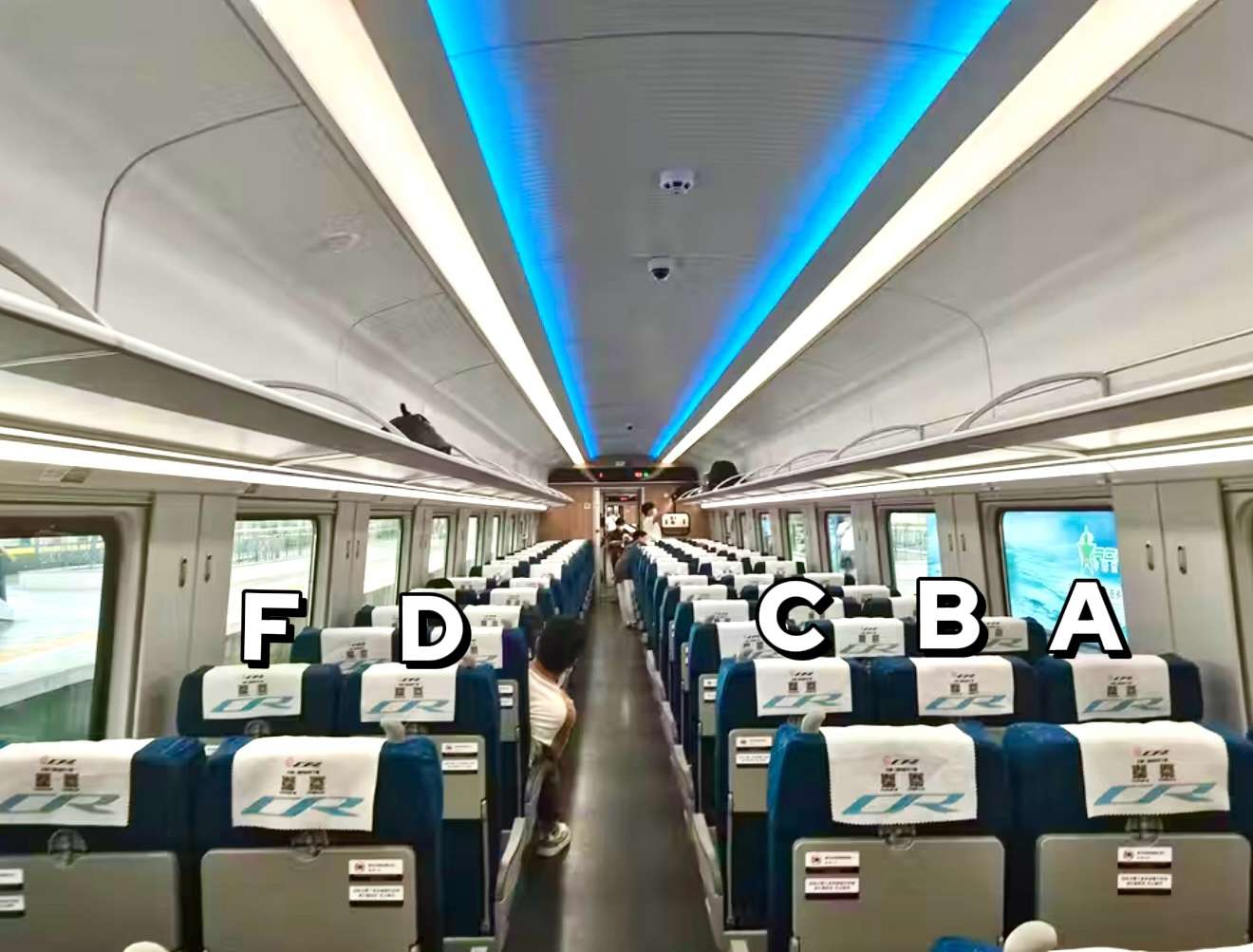
China High-Speed Trains (Bullet Trains): Second Class
China Ordinary Trains: Types & Seat Classes
Ordinary trains are slower but less costly, and are specially designed for long-distance travelers or budget-conscious travelers. They include Z, T and K trains, with an emphasis on sleeper options for overnight trips.
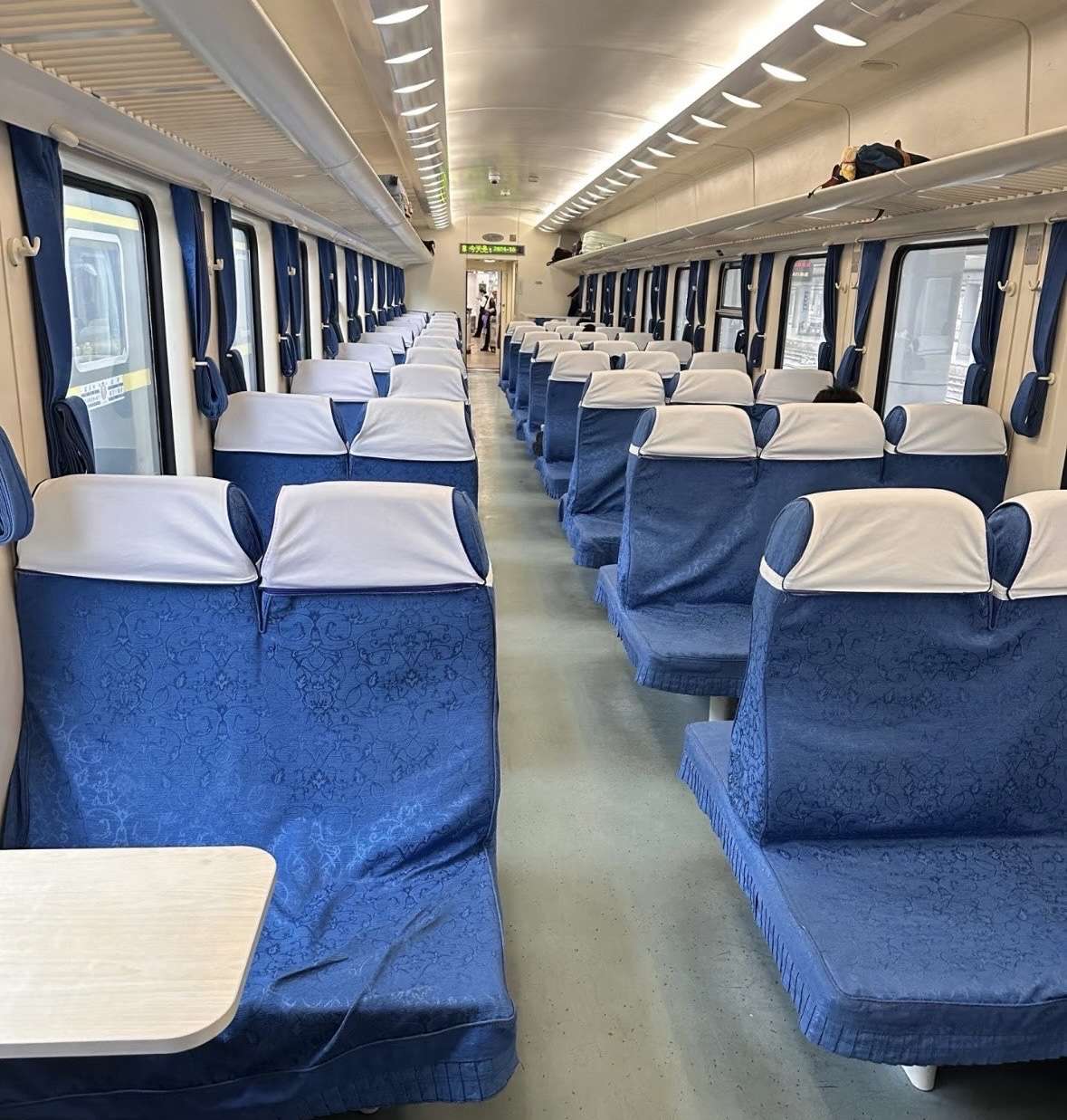
Ordinary China Train Hard Seat
Ordinary China Train Types (Z/T/K)
Train Type | Code Meaning | Top Speed | Route Focus | Key Features |
|---|---|---|---|---|
Z Train (Zhida) | Direct Express | 160 km/h | Major cities (e.g., Guangzhou-Shenyang) | Minimal stops; mostly overnight; offers deluxe soft sleepers |
T Train (Tekuai) | Express | 140 km/h | Long-distance routes with more stops | Balances speed and coverage; all seat/sleeper types available |
K Train (Kuaisu) | Fast Train | 120 km/h | Regional routes with frequent stops | Oldest and cheapest train type; basic facilities |
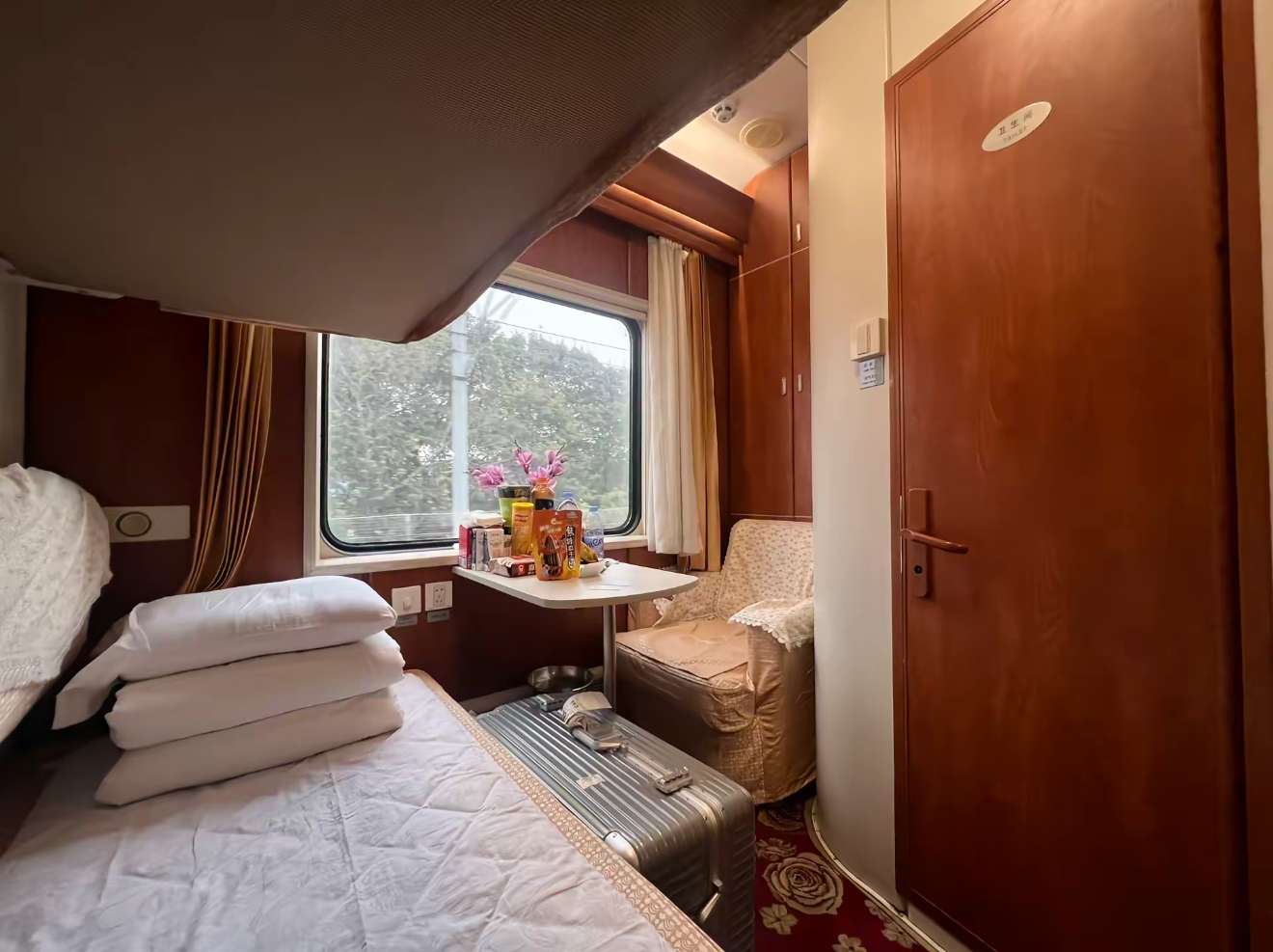
The picture shows the Guangzhou-Shenyang Z14 Deluxe Soft Sleeper
Ordinary China Train Seat Classes
Ordinary trains offer a mix of seats and sleepers, with varying levels of comfort.
Seat Class | Layout | Available On | Amenities | Price (vs Hard Seat) | Key Notes |
|---|---|---|---|---|---|
Hard Seat | 2+3 | Z/T/K/Numbered Trains | Thin padding; non-reclining; no air conditioning; crowded | 1x | Cheapest option; suitable for short daytime trips |
Soft Seat | 2+2 | T/K/Numbered Trains | Padded seats; adjustable backrests; air conditioning; cleaner and less crowded | 1.5x | Compartment-style seating on some trains |
Hard Sleeper | 6-berth bay (upper/middle/lower, no door) | Z/T/K/Numbered Trains | Pillow, sheet, blanket; shared charging sockets in corridors | 2–2.5x | Upper bunk = cheapest; lower bunk = most convenient (sitting space) |
Soft Sleeper | 4-berth cabin (enclosed with door) | Z/T/K/Numbered Trains | Wider berths; comfortable bedding; individual LCD screens; storage space | 3–3.5x | More privacy and space than Hard Sleeper |
Deluxe Soft Sleeper | 2-berth cabin | Few Z/K/Numbered Trains | Private bathroom (toilet/sink); sofa area; wardrobe; premium bedding | 5–6x | Most luxurious ordinary train option (e.g., Guangzhou-Shenyang: ¥1,686.5) |
How to Choose China Train Types & Seat Classes
Choosing the right train and seat depends on your travel goals, budget and the length of your trip:
Choose China Train by Journey Length
- Short trips (≤3 hours): Opt for G/C trains. Second Class or Open Seating (C trains) is cost-effective and convenient.
- Medium trips (3–6 hours): First class (G/D train) offers additional comfort without overspending.
- Long trips (≥6 hours/overnight):
- High-speed: First/Second Class Sleeper (D trains) for faster travel.
- Budget: Hard/Soft Sleeper (Z/T/K trains) for affordability.
Choose China Train by Budget
- Luxury: Business Class (G trains) or Deluxe Soft Sleeper (Z trains) for maximum comfort.
- Mid-range: First Class (G/D trains) or Soft Sleeper (Z/T/K trains).
- Budget: Second Class (G/D/C trains) or Hard Seat/Hard Sleeper (Z/T/K trains).
Choose China Train by Comfort Needs
- Work/relaxation: Business Class or VIP Seat (G trains) with lie-flat seats and privacy.
- Family travel: Soft Sleeper (enclosed cabin) or Second Class (spacious enough for small groups).
- Solo travel: Hard Sleeper (budget-friendly) or First Class (quiet and comfortable).
See all attractions
 167182 booked


China Bullet Train Prices: How Much Do Different Classes Cost?
The ticket prices of China's high-speed rail (G/D/C) depend on 3 key factors: train type (G/D/C), seat class and route length. Longer routes and faster trains (G-class trains) are more expensive, while intercity short trips (C-class trains) are the most economical. The following is a detailed classification of typical prices for popular routes, as well as the reasons for the cost differences. For latest prices, please check the table below!
Top Destination
| Train Route | Duration | Book Online |
|---|---|---|
| Hong Kong to Guangzhou | 47m | Book Ticket |
| Hong Kong to Shenzhen | 14m | Book Ticket |
| Guangzhou to Shenzhen | 29m | Book Ticket |
| Shanghai to Hangzhou | 39m | Book Ticket |
| Shanghai to Suzhou | 23m | Book Ticket |
| Chengdu to Chongqing | 1h 2m | Book Ticket |
| Shanghai to Nanjing | 1h 38m | Book Ticket |
| Beijing to Tianjin | 1h 2m | Book Ticket |
| Wuhan to Changsha | 1h 11m | Book Ticket |
Scroll to see more routes...
Top Destination
| Train Route | Duration | Book Online |
|---|---|---|
| Beijing to Shanghai | 4h 18m | Book Ticket |
| Beijing to Xi'an | 4h 10m | Book Ticket |
| Hong Kong to Beijing | 8h 10m | Book Ticket |
| Hong Kong to Shanghai | 8h 6m | Book Ticket |
| Beijing to Guangzhou | 7h 17m | Book Ticket |
| Beijing to Chengdu | 7h 30m | Book Ticket |
| Shanghai to Chengdu | 11h 11m | Book Ticket |
| Beijing to Harbin | 4h 47m | Book Ticket |
| Beijing to Kunming | 10h 55m | Book Ticket |
Scroll to see more routes...
- Business Class: The most expensive option, about 3 to 4 times more expensive than second class.
- Beijing → Shanghai (G-train): ~¥2,318
- Guangzhou → Shenzhen (G-train): ~¥180
- VIP Seat: Slightly lower than business class (2.8-3.2x second-class).
- Beijing → Shanghai (G-train): ~¥1,980
- Chengdu → Chongqing (G-train): ~¥150
- Premium 1st Class: Exclusively for premium G-class trains (such as the Fuxing bullet train), with a ticket price 2.2x that of second-class carriages.
- Beijing → Shanghai (G-train): ~¥1,457
- Shanghai → Hangzhou (G-train): ~¥130
- First Class: 1.6x the price of second class, providing better space for long-distance travel.
- Beijing → Shanghai (G-train): ~¥1,060
- Guangzhou → Changsha (G-train): ~¥240
- Second Class: The most popular choice, with a price that balances affordability and comfort.
- Beijing → Shanghai (G-train): ~¥662
- Shenzhen → Hong Kong West Kowloon (G-train): ~¥86
[8% Off] China Hotel Recommendations
Top Shanghai Hotels
Top Beijing Hotels
Top Guangzhou Hotels
See All Hotels


FAQs about China Train Classes
-
Are there different classes on the Bullet Train?
-
What is the difference between first class and second class on China high-speed trains?
-
What is the difference between D and C trains in China?
-
What is a G class train in China?
-
What is the most comfortable sleeper class on ordinary trains?
-
Can I upgrade my train seat after booking?
-
Do high-speed trains have dining options?
Disclaimer: This article has been provided by an individual contributor or third party platform. If there is any discrepancy regarding the copyright, please contact us directly and we will delete the content immediately.
Trending Searches
-
More about China Trains
- China High Speed Train Seat Map
- China Train Luggage
- How to Take a Train in China
- 1st class vs 2nd class on China high speed trains
- China Train App
- Shenzhen to Hong Kong
- China Train Types
- China Sleeper Train
- China Train Tickets Change Refund Cancellation
- China Train Classes
- Cheap Train Tickets China
- KTX Booking
- Madrid-Atocha Cercanías to Villarrobledo trains
- London to Newcastle trains
- London to Leeds trains
- Sevilla-Santa Justa to Niebla trains
- Kyoto to Osaka trains
- cherry blossom dc
- Shanghai to Beijing trains
- Bologna to Venice trains