Harbin Heilongjiang China 2026: Best Time & Things to Do
Contents
- Best Time to Visit Harbin
- Winter (December to February): the reason you come
- Spring (March to May): cheap but muddy
- Summer (June to August): China's cool escape
- Autumn (September to October): clear and quiet
- Top Attractions in Harbin
- Central Harbin: the walkable old city
- Songbei: ice, snow and the big venues
- Day trips and family sights
- Harbin Ice and Snow World: Tickets and What's New This Season
- Two- and Three-Day Harbin Itineraries
- 2 days / 1 night: the classic winter hit
- 3 days / 2 nights: add the tigers and the old town
- How to Get to Harbin and Around
- By air
- By high-speed rail
- Airport to the city
- Metro, taxi and DiDi
- What to Eat in Harbin
- Dishes to try
- Where to eat
- Where to Stay in Harbin
- Central Street and Daoli
- Youyi Road and the riverside
- Songbei
- What a Harbin Trip Costs
- Harbin Travel Tips
- More China Travel Guides
Show more
Harbin is the capital of Heilongjiang, China's northernmost province, and the coldest big city on most China itineraries. It was built by Russian railway engineers in 1898, which is why onion domes, cobblestones and Art Nouveau facades sit beside Songhua River apartment blocks. Every winter the river freezes solid and the city turns that ice into the largest sculpture park on earth. This guide covers when to go, what to see, how to get there, what to eat, where to stay and what the trip costs.
Harbin has two usable seasons and two shoulder seasons worth avoiding. Winter delivers the ice festival and the reason most people fly 1,200 km northeast of Beijing. Summer delivers 20-28°C days, green parks and a fraction of the winter crowds. Spring and late autumn are muddy, grey and neither frozen nor green.
| Month | Avg high | Avg low | What to expect |
| January | -13°C | -24°C | Peak ice season, all venues open, Chinese New Year crowds late in the month in some years |
| February | -8°C | -20°C | Still full winter; sculptures soften after mid-month and parks can close early on a warm spell |
| March | 2°C | -8°C | Thaw, slush and closed ice parks |
| April | 12°C | 2°C | Cold wind, bare trees, low prices |
| May | 20°C | 9°C | Blossom along the river, comfortable walking weather |
| June | 25°C | 15°C | Long days, green Sun Island, few foreign visitors |
| July | 28°C | 19°C | Warmest month, Harbin Beer Festival and riverside concerts |
| August | 26°C | 17°C | Warm and humid, summer music festival |
| September | 20°C | 9°C | Clear skies, the best walking month outside winter |
| October | 11°C | 0°C | Golden leaves, then a sharp cold snap by late month |
| November | 0°C | -9°C | Ice parks not yet open, rivers half frozen, grey |
| December | -10°C | -19°C | Ice venues open from mid-month; the month to book early |
This is the season the city is built for. Harbin Ice and Snow World, the Sun Island snow sculpture expo and the Zhaolin Park ice lanterns all run from mid-December into late February, and the official festival ceremony falls on 5 January. Daytime highs sit near -13°C in January and nights near -24°C, with colder snaps below -30°C. The cold is dry and usually windless, which makes it far more bearable than the number suggests - but every inch of skin needs covering.
The best window is 6-20 January: every venue is finished, the New Year rush has gone and prices dip before Chinese New Year. The week of Chinese New Year itself, which falls on 6 February 2027, is the most expensive and crowded of the winter.
March is the worst month of the year here. The ice parks close, the river turns to slush and the streets are wet and grey. April stays cold and windy. By May the city is pleasant - 20°C days, blossom in the riverside parks and hotel rates at their lowest - but the ice festival is six months away.
Harbin's other identity is a summer resort for Chinese travellers escaping 35°C heat further south. Days run 20-28°C, Sun Island is green and walkable, the Harbin Grand Theatre hosts concerts and the Harbin Beer Festival takes over Stalin Park in late July. If you are not chasing ice, this is the more comfortable trip.
September is the pick: crisp air, blue skies and comfortable walking temperatures. October starts golden and ends cold, and the first week is National Day Golden Week, when domestic flights and hotels spike.
The city splits into two halves for sightseeing: the old riverside core in Daoli, where everything is walkable, and Songbei across the Songhua, where the big winter venues sit. Plan one day for each, then add a day trip if you have time.
Central Street (Zhongyang Dajie) is 1.4 km of cobblestones lined with 71 buildings put up between 1898 and 1925 in Russian Renaissance, Baroque and Art Nouveau styles. It runs from the river south to Jingwei Street, and Metro Line 2 stops underneath it. Walk it from south to north in the late afternoon and finish at the river.

 Summer vacation is almost here! Southern friends, come to Harbin! Harbin, the "Oriental Paris," exudes a European atmosphere everywhere you look. Walking along Central Street is like stepping into another country, with Russian-style buildings lining both sides. You can even find Russian cuisine to enjoy. Come and experience it!
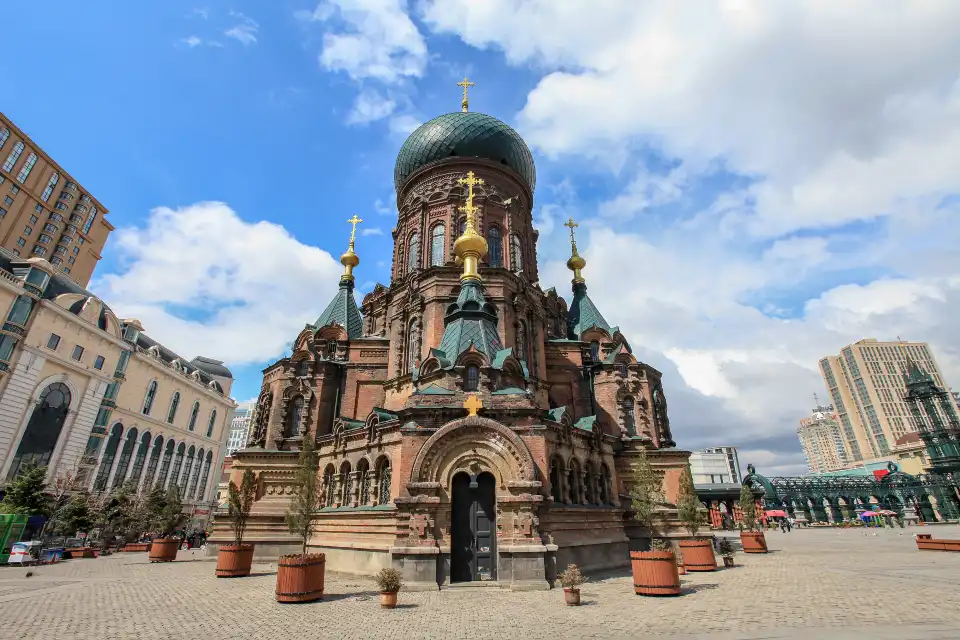
Saint Sophia Cathedral, five minutes' walk east of Central Street, is 53.35 metres tall and the largest Orthodox church in the Far East. The 1907 wooden church on the site was replaced by the current brick building in the 1920s and 1930s; it now holds a small architecture museum. The square in front is free and is the city's most photographed spot after dark.


Zhaolin Park, ten minutes west of Central Street, hosts the ice lantern fair every winter - smaller and cheaper than Ice and Snow World, and free to enter in recent seasons. In summer it is an ordinary city park with a lake and a small amusement area.


Stalin Park and the Flood Control Monument mark the riverbank at the north end of Central Street. In winter the Songhua freezes hard enough to walk on, and the river carnival adds slides, sledges and ice bumper cars on the ice itself.
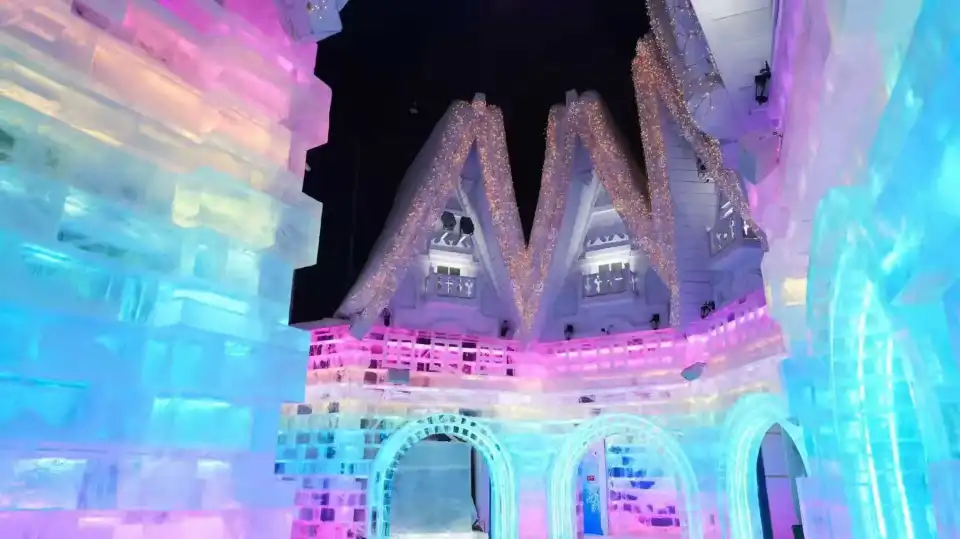
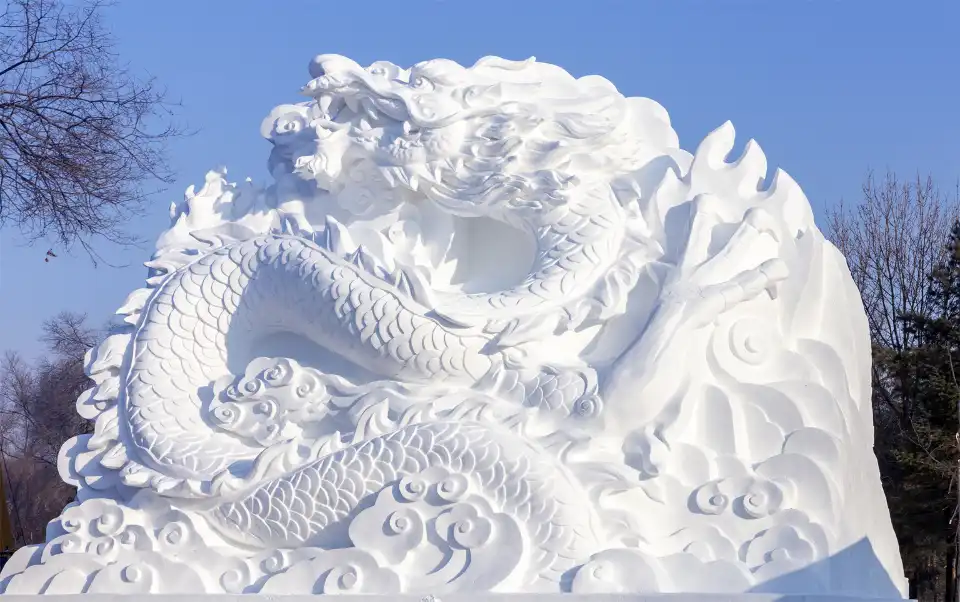
Harbin Ice and Snow World is the headline: a temporary city of illuminated ice castles, slides and towers built fresh each December on the north bank. Sun Island, one Metro stop further, holds the International Snow Sculpture Art Expo - huge white carvings that are best seen in daylight, in contrast to the ice park's night show.


Also in Songbei: the Harbin Grand Theatre, a white flowing opera house by MAD Architects (2015) with a rooftop walkway over the wetlands; Harbin Polarland, a penguin and beluga aquarium that works year-round; and Sunac Land, an indoor ski and water park complex that is useful on the coldest days.


The Siberian Tiger Park, 20 km north of the centre, holds several hundred Amur tigers and is seen from a caged bus. Volga Manor, 30 km southeast, is a rebuilt Russian estate of wooden churches and manor houses that is pleasant in any season. Yabuli, China's biggest ski area, is about 200 km east and works as a day trip by high-speed train or an overnight. China Snow Town (Xuexiang), 280 km southeast, is a two-day add-on rather than a day trip.


The 2026-27 season is the 28th edition and the largest yet: 1.25 million square metres, about 400,000 cubic metres of ice and snow, roughly 100 ice slides, a 120-metre snowflake Ferris wheel and - new this year - a nearly 20,000-square-metre Frozen-themed zone built with Walt Disney China, with Elsa, Anna and Olaf carved in ice. The park is expected to open in mid-December 2026, with the festival ceremony on 5 January 2027; the operator confirms the exact date each year, and the 27th edition opened on 26 December 2025.
Ticket prices for 2026-27 had not been published when this guide was updated. The table below uses the 2025-26 prices as the budgeting baseline.
| Ticket | 2025-26 price | Who it covers |
| Standard adult | CNY 328 | Full-day entry, all outdoor structures and shows |
| Concession | CNY 240 | Children over 1.2 m, students 24 and under, seniors, visitors with disabilities, Harbin residents |
| Priority access | CNY 800 | Fast-track entry and reserved seats for the main rides and shows |
| Free entry | CNY 0 | Children under 1.2 m or under 6, visitors 65 and over, with documents and an advance reservation |


Season dates, ticket release windows and the gap between the city festival and the park opening are covered in our Harbin Ice Festival guide.
Tickets are dated and released on a rolling one-to-seven-day window through the operator's official WeChat mini-program and through Trip.com. Weekdays in mid-January can usually be booked a day or two ahead; opening week, winter weekends and Chinese New Year sell out as soon as the window opens. The park usually runs 10:00-22:00 with last entry around 21:45.
Go in at about 15:00. You get the ice in flat daylight, the switch-on at dusk around 16:30 and the full illuminated park afterwards, all on one ticket. Scan the QR code for the super slide the moment you are through the gate - it issues a timed slot and the queue can run two hours at peak. Metro Line 2 stops at Harbin Ice and Snow World station, Exit 3, about 15 minutes from Central Street.
Day 1: Central Street in the late morning, Saint Sophia Cathedral and its square, lunch of guobaorou and red sausage, then Zhaolin Park in the afternoon. Take Metro Line 2 to Ice and Snow World at about 15:00 and stay until the lights and the shows finish, around 20:00.
Day 2: Sun Island snow sculptures in the morning, when the light is best and the crowds are thin, then the frozen river and Stalin Park after lunch. If your train or flight leaves late, add the Heilongjiang Provincial Museum, which is free but needs an advance booking.
Day 1: old city on foot - Central Street, Sophia, Zhaolin Park, the riverside - and an early dinner near the hotel.
Day 2: Siberian Tiger Park in the morning, back into town for the Lao Daowai Chinese Baroque quarter and lunch, then Ice and Snow World from 15:00.
Day 3: Sun Island expo, Harbin Polarland or the Grand Theatre depending on the weather, then Hongzhuan Street morning market if you are up early enough. Add a fourth day for Yabuli if you ski.
Harbin Taiping International Airport (HRB) is about 35 km southwest of the centre and handles most international arrivals into northeast China. Flights from Beijing take about two hours; from Shanghai and Guangzhou, three to four. Winter weather causes de-icing delays, so allow a buffer on the return leg.
Beijing Chaoyang to Harbin West is 1,249 km and takes 4 hours 33 minutes on the fastest G-train, with about 24 departures a day between 06:35 and 17:47. Second class costs roughly CNY 600-650, first class CNY 960-1,040 and business class CNY 1,900-2,270. Trains run through snow when flights are grounded, which makes rail the safer choice in January. Harbin Station, not Harbin West, is the downtown station - two Metro Line 2 stops from Central Street.

There is no metro link to Taiping airport. Airport buses leave from Gate 7 on level 1 of Terminal 2 and cost CNY 20: Line 3 runs to Central Street in 45-50 minutes, Line 1 to Harbin Station, Line 2 to Harbin West and Line 4 to Ice and Snow World and Harbin North. Buses leave when full, with a maximum wait of about 30 minutes. A metered taxi to the centre costs CNY 100-130 plus the expressway toll and takes 40-60 minutes; DiDi usually quotes slightly less.
Harbin has three metro lines covering the centre, both main stations and Songbei. Fares are CNY 2-6 and trains run roughly 06:00-22:30 with English signage and announcements. Line 2 is the tourist line: Central Street, then under the river to Sun Island and Ice and Snow World. Taxis start at CNY 8 for 3 km and add about CNY 1.9 per km; a cross-town ride is usually CNY 15-30. DiDi works with foreign cards, but drivers rarely speak English - have your destination written in Chinese.
Guobaorou is the city's signature dish: pork slices fried crisp and tossed in a sharp sweet-and-sour sauce. Harbin red sausage is smoked, garlicky and sold by the link on Central Street for about CNY 15. Kvass, the fermented rye drink brought by Russian settlers, is sold from street taps in summer. Madier ice cream costs about CNY 8 and is eaten outdoors at -20°C without irony. Beyond those, look for iron-pot stew (tiedun), sauerkraut and pork hotpot, frozen pears soaked in cold water until they soften, and dalieba, the big Russian-style round loaf.
Central Street has the historic names: Madier for ice cream and Western food, Huamei for Russian dishes, and a cluster of old-brand northeast restaurants on the side streets. Lao Daowai, east of the centre, is where locals go for courtyard restaurants and old recipes. Hongzhuan Street market, near the railway station, is a morning market - get there before 08:00 for soy milk, fried dough sticks and sticky rice buns.
Pick your base by what you are doing. Daoli keeps you inside the walkable old city; Youyi Road gives you river views and quick metro access; Songbei puts you next to the ice venues but away from restaurants.
The most convenient area for a first trip. Sophia, Zhaolin Park and the river are all within a 15-minute walk, and Metro Line 2 runs under the street. Holiday Inn Express Harbin Central Avenue sits on West 4th Street, 200 metres from Central Street, with 78 rooms and a buffet breakfast.

Holiday Inn Express Harbin Central Avenue by IHG
 No. 16 of Global Traveller-Picked Hotels in Harbin
Quieter, with river views and the best hotel restaurants. Shangri-La Harbin is on Youyi Road, five minutes from Shanghai Street station on Line 3 and a 10-15 minute drive from Central Street; river-facing rooms look straight across at the ice park lights in January.

Shangri-La Harbin
No. 4 of Gourmet Hotels in HarbinBest if the ice park is your priority: you can be there in ten minutes and back in your room by 21:00. Wanda Vista Harbin sits inside Sunac Cultural Tourism City, next to the mall and the indoor ski slope, with 45-square-metre rooms and a heated pool.

Wanda Vista Harbin
No. 4 of Cultural Hotels in HarbinWinter rates roughly double around New Year and Chinese New Year. Book two to three months ahead for the festival weeks; a week or two is usually enough in early December.
Figures are per person per day in yuan, excluding flights to China. Winter is the expensive season; summer rates are 30-40% lower.
| Item | Budget | Mid-range | Comfort |
| Hotel per night | CNY 200-350 | CNY 450-750 | CNY 900-1,500 |
| Food per day | CNY 80-120 | CNY 150-250 | CNY 300+ |
| Local transport | CNY 20-40 | CNY 40-80 | CNY 100+ |
| Ice and Snow World | CNY 328 | CNY 328 | CNY 800 |
| Sun Island expo | CNY 198 | CNY 198 | CNY 198 |
Add CNY 20 for the airport bus, CNY 2-6 per metro ride and CNY 15-30 for a cross-town taxi. A comfortable three-day winter trip with one ice-park visit, one snow-expo visit and mid-range hotels lands around CNY 2,500-3,500 per person before flights.
If you are building a longer winter route, these guides cover the rest of the trip:
Popular recommendations
Best Month to Visit China 2026: Weather, Cities & Packing
 _TI***9f
15 Best Ski Resorts in China: Harbin, Yabuli, Altay & Chongli
 OneVoyager

Harbin Ice Festival 2026-27: Dates, Tickets and First-Timer Tips
OneVoyager
Everything you need to know before going to Los Angeles zoo
 _TS***4m