China Train Transfer Guide: How Much Time Do You Need Between Trains?

by James Taylor
August 18, 2026
This guide covers how to tell which kind of transfer you’ve got, how much time to leave for each, whether you'll need to clear security again, what changes when you're travelling on a foreign passport, and what to do if your first train runs late or you miss the connection entirely.
How Much Time Do You Need Between Trains in China?
Transfer type | What it involves | Sensible planning buffer |
In-train seat change (车内换座) | Same physical train, new train number partway. You change seats inside the train | No extra buffer needed |
Same station, in-station transfer confirmed | Follow "Transfer" signage back to the waiting hall, no exit, no re-screening | 30 minutes minimum, 45 is more comfortable |
Same station, no transfer corridor | Exit the station, go through full re-entry and security | 60 minutes or more |
Different stations, same city | Local transport plus a complete new station entry | 2 to 3 hours minimum |
Note: These are general estimations from our editorial team, not official times given by China Railway.
🎁 Browse Cheap Flights to China | Check out the Most Popular Hotels in China | Stay connected with a fast China eSIM
Check Your Ticket for Exact Station Names
One of the most important things to do when working out your transfer is to check the exact station names, not just the city. Many of China’s major destinations have multiple train stations, and they aren’t interchangeable.
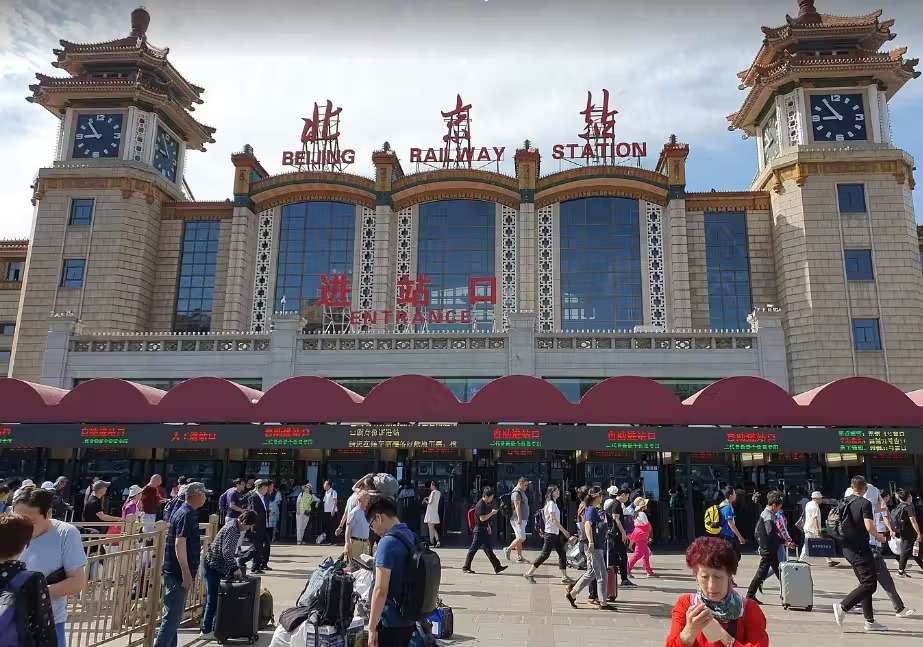
For example, in Beijing, there are multiple train stations, including Beijing South, Beijing West, Beijing Railway Station, Beijing Chaoyang, and Beijing Fentai. Shanghai and Shanghai Hongqiao are also two different stations. In Chengdu, there are four major stations, with Chengdu East handling most high-speed traffic, Chengdu (the original, central station) in the middle of the downtown area, while Chengdu South and Chengdu West each carry their own routes.
A transfer might look fine on the surface, in the same city with a reasonable-looking transfer window, but often your same-city transfer won’t give you enough time.
What Kind of Transfer Do You Have?
The three different types of transfers you can have when building a connecting train itinerary in China.
In-train seat change
The easiest connection you can find is when you don’t even have to leave the train. An in-train seat change is when a train changes its number partway through a journey. You also book this as two separate tickets, but you never need to get off; usually, you’ll just have to change seats.
Same-station transfer
As it says, this is when you arrive at a station and you have to change to another train departing from that same station. You’ll need to disembark your first train, follow the transfer signage, and verify your ticket and passport at the transfer point before heading to the next waiting hall.
Sometimes a train station will have a special transfer corridor to use; other stations might require you to leave with everybody else, and then go back through security to get to your next platform.
Cross-station transfer
This is when your train arrives at one station in a city, and departs from a different station in that same city. You’ll need to exit, and then make your way to the new station using either public transport or a taxi.
✅Claim 5% Off your China eSIM and stay connected and up-to-date on your trains while in China!
China eSIMs
See all attractions
 2018184 booked



Can Transfer Without Leaving the Station?
You often can, but don't assume it at every station.
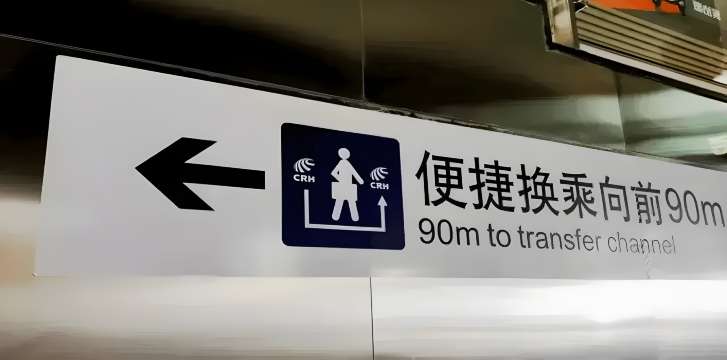
Around 120 of China’s major train stations have dedicated transfer corridors, where you go straight from your arrival platform and back into the waiting hall without exiting with the rest of the passengers and having to reenter through security.
Look for signage reading:
- Transfer
- 换乘 (Huànchéng)
- 便捷换乘 (Biànjié Huànchéng)
✨ Got your train transfer sorted? Now it's time to start planning what to see in your next destination with The best Things to do in China!
The Best Things to do in China

Badaling Great Wall
4.7/5
12033 reviewsGreat! We arrived at 2:00 PM, took the funicular up, walked from Tower 6 to the top, took the train back to Beijing, and it was beautiful, the scenery was amazing.



Emperor Qinshihuang's Mausoleum Site Museum
4.7/5
29905 reviewsDon't miss this experience—pure and fascinating history. Come after 3:30 pm; there's still time to see it before the crowds have dispersed.

Jiuzhaigou National Park
4.8/5
20733 reviewsWorth to go. So pretty. Went on early Dec. So cold. Temperature below 0 celcius.


How Much Time Should You Allow for a Same-Station Transfer?
45 minutes is a comfortable window for a same-station transfer. If it’s a larger destination, bump that up to at least 1 hour.
Low-risk connections: This is when your same-station transfer has a confirmed transfer corridor to use, perhaps you’re traveling lightly, and have no mobility constraints. A local who knows the station might make 15 minutes work; best to give yourself 30 at a minimum, or 45 if you want to be slightly more comfortable.
High-risk same-station connection: If you’re arriving into a large city or an enormous train station, you might want to add some extra time between connections. It’s also a good idea if you’re carrying some heavy or extra luggage, traveling with kids or elderly relatives, traveling during a busy public holiday period, or if missing your connecting train would make you miss a flight or tour further along.
My recommendation is to not book any transfer under 30 minutes; 45 minutes is the comfortable middle ground, and above that if you think you’ll need more time to navigate a station or haggle with your kids to get moving.
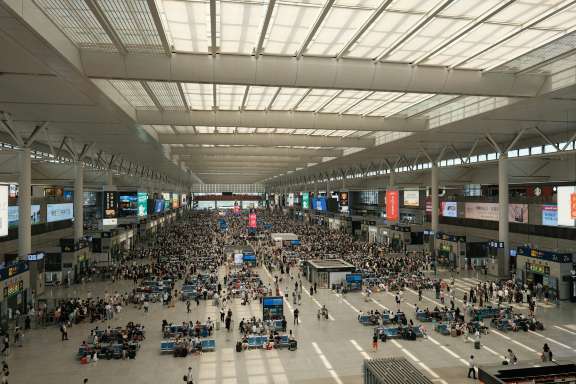
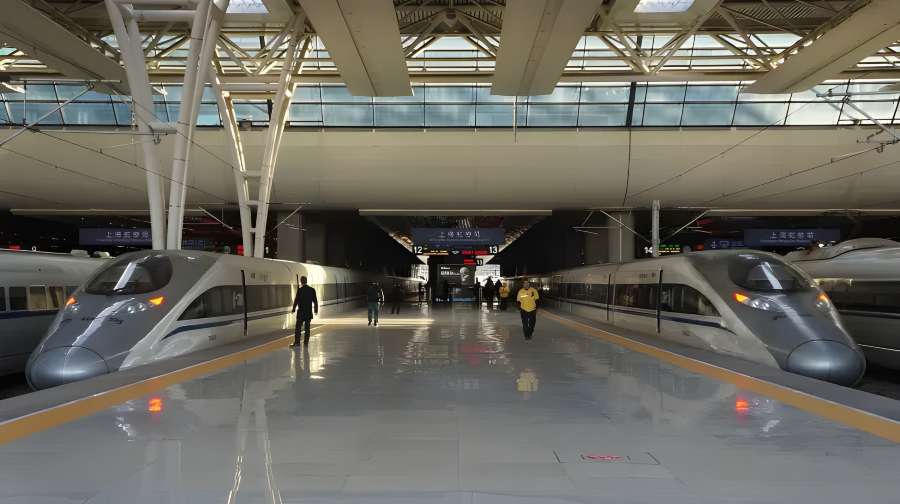
Image sourced from Unsplash.
Cheap Flights in China
Flights from Shanghai
Flights from Beijing
Flights from Guangzhou
See all flights


How Much Time Do You Need Between Different Railway Stations?
If you’re transferring between two stations in the same city, you’ll want to allow around 2 to 3 hours, depending on how far away it is.
Things you need to consider for calculating a transfer time:
- Exiting the first station
- Finding your local transport option (public transport, taxi, etc.)
- Traffic and walking buffer
- Entry and security at the second station
- Passport check
- Another buffer for boarding
There’s a lot to consider here, and a lot of things that will chew into your transfer window. Subway transfers if needed, taxi queues, rush hour traffic, and even the stations themselves might be enormous and take some time to navigate.
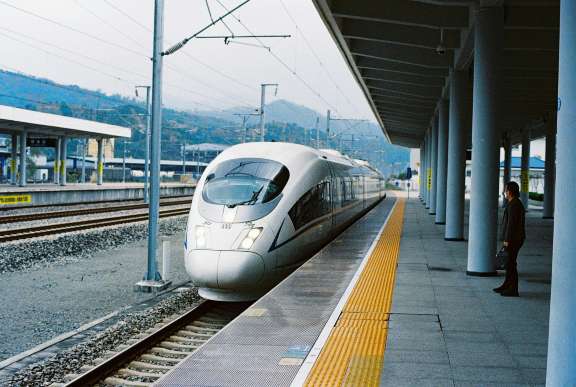
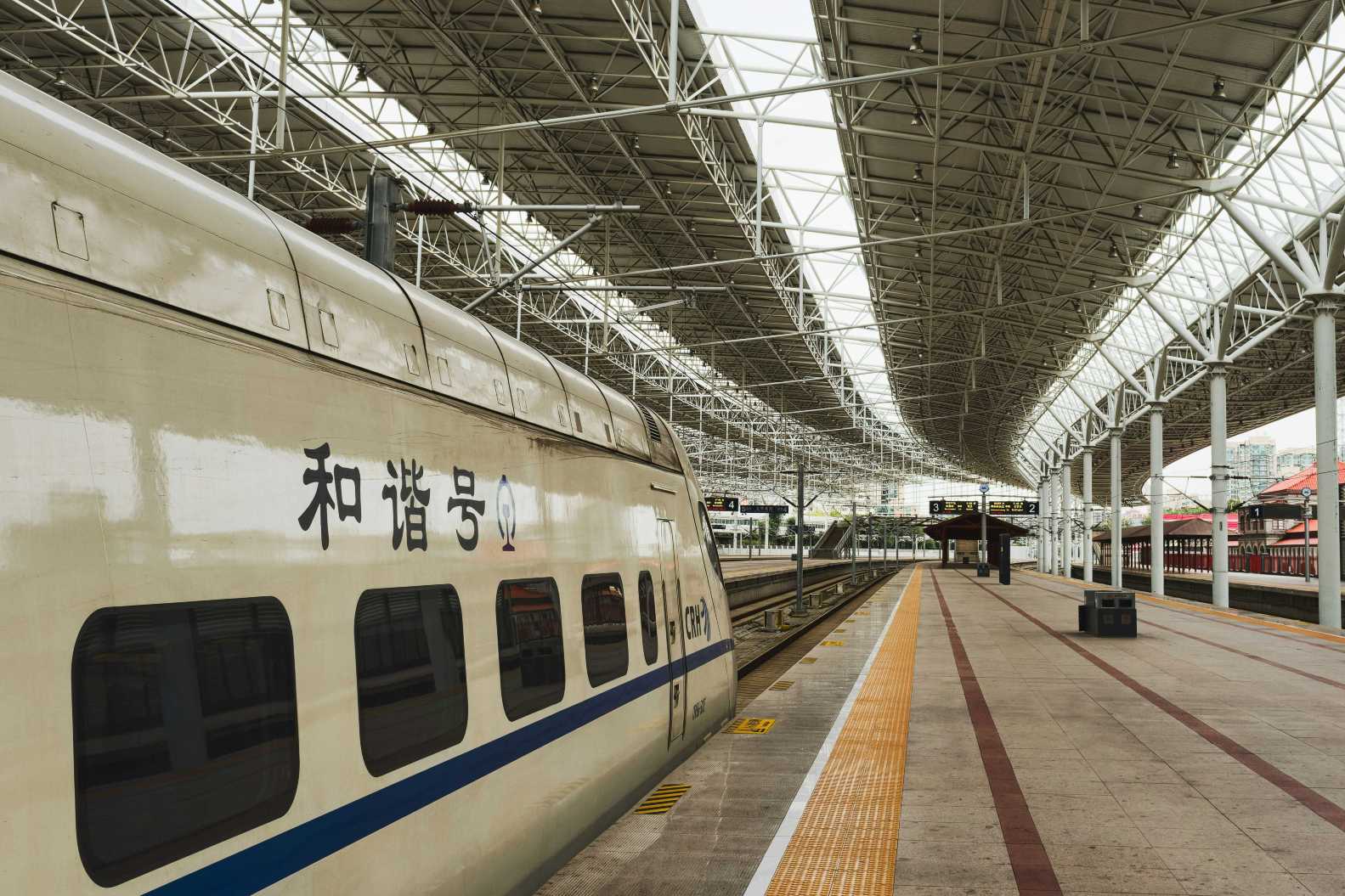
Image sourced from Unsplash.
Do You Go Through Security Again?
Whether you go through security again or not depends entirely on which transfer type you're doing. If the station you’re transferring through has an in-station transfer corridor, you skip the standard security line completely.
If the station doesn’t have that in-station transfer corridor and you need to exit the station before entering again, then you will need to go through security. And of course, if you’re changing stations completely, going through security is a given.
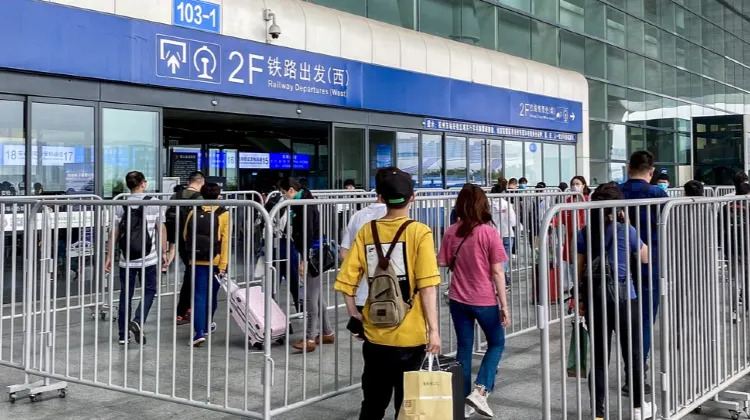
What Changes If You're Traveling With a Foreign Passport?
You can buy and travel on China’s trains using a valid passport, the same as any local. But there’s a difference at the gates: a lot of stations have automated ID readers that don’t always recognize a foreign passport. If that’s the case, you need to look for a lane that has someone manually checking IDs.
📋 Foreign-Passport Transfer Checklist
- Keep your original passport somewhere you can reach it in seconds, not buried in a packed bag
- Use the exact document you booked with. A mismatch between booking and passport is a real problem at the gate
- If the automatic gate doesn't read you, head straight to the manual lane rather than trying it twice
- Local passengers moving through separate automated ID gates next to you is normal, not a sign you're in the wrong place
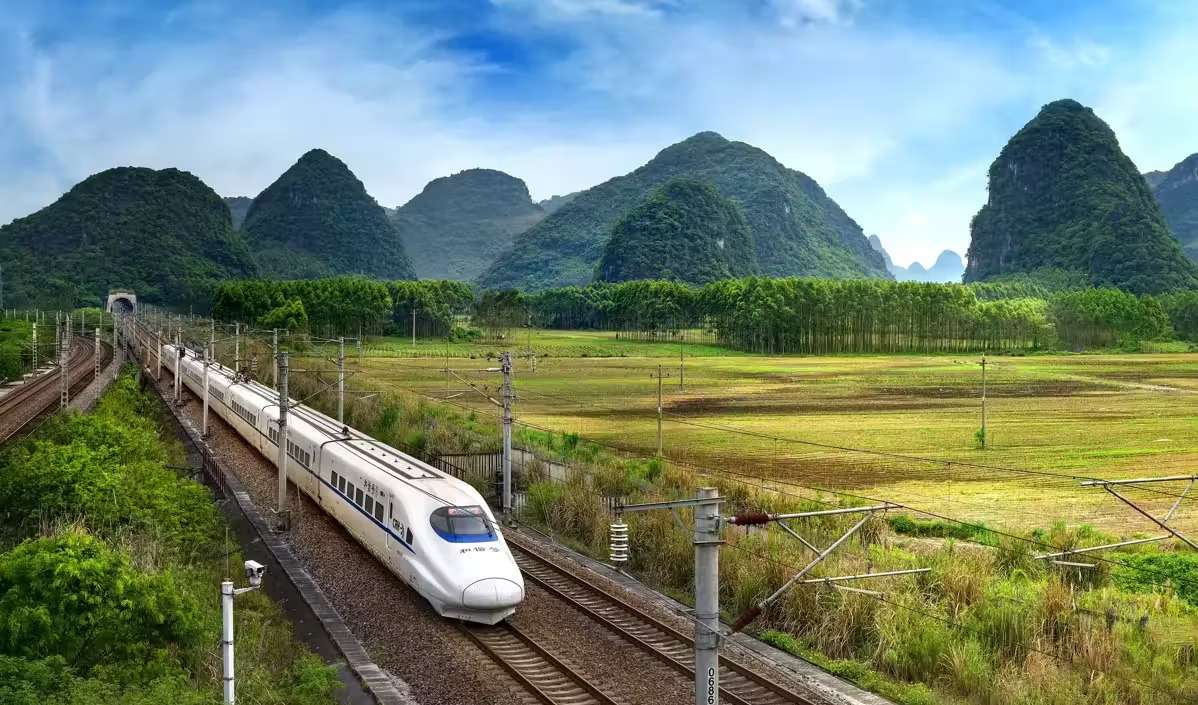
Do You Need to Collect or Recheck Luggage?
On Chinese trains, there’s no checking-in of your luggage; you take it with you on the train, and are expected to carry it off with you.
That’s why it’s important to give yourself some extra time for a transfer if you’re traveling with several pieces of luggage, or a particularly heavy suitcase.
Two Separate Tickets vs a Transfer Suggested by 12306
When there's no direct train, 12306's English site and app will build you a connecting itinerary, offering the same three categories covered above: same-station, same-city, and in-train seat change, pulled from live seat availability. That's a genuinely useful starting point over picking a connecting city yourself, since the obvious geographic midpoint is often not the best route.
Two separately booked tickets, one for each leg, aren't automatically protected the way an airline's through-ticket is. If your first train runs late and makes you miss a self-booked second leg, you don't get the same guaranteed rebooking a single connecting itinerary can offer. Build in a longer connection buffer if you're creating your own multi-leg train journey in China.
What If Your First Train Is Late?
If the delay is the railway's fault: you're covered. Station staff will rearrange your journey for you, and if the new seat costs more than your original, you won't be charged the difference. If it costs less, you get the difference back and they won't charge you a refund fee for it.
If you booked a tight connection yourself: you're not covered by any of that. Two separately booked tickets don't carry the same protection, so a delay on your first leg is your problem rather than the railway's.
Either way, the moment it's clear you won't make the connection, start working on the next train. Here's how that goes.
What If You Miss the Second Train?
The first thing you should do is check what other trains are running that day. There’s a good chance you can move your second leg to a later departure, and you can usually do it yourself in the 12306 app. If you can’t do it there, find some staff in the station to do it for you, asking about 改签 (gǎiqiān), the ticket change process.
The rule is that if you’ve missed your connecting train, you can change to another train free of charge, as long as that train departs before midnight on the same calendar date.
If your only option is a train on the next calendar day, you will need to pay a fee to change your ticket.
Common Transfer Mistakes
Mistake | Why it matters | Safer alternative |
Confusing similar station names | Arriving at Beijing South while your next train leaves from Beijing West | Check the full station name on both tickets, every time |
Assuming every station has an in-station transfer | You might need extra time for a transfer if you need to exit and enter the station before boarding | Confirm the transfer corridor exists, or budget extra time for a full exit and re-entry |
Following "Exit" instead of "Transfer" signage | Forces a full security re-screening | Look specifically for Transfer or 换乘 signage on the platform |
Booking a 10 to 15 minute connection | Usually too little time to transfer, even for locals | 30 minutes minimum, 45 is more comfortable |
Burying your passport in luggage | Slows you down at a manual verification lane | Keep it in an accessible pocket or neck pouch |
Assuming any automatic gate reads any passport | You might need to join another queue with a member of staff, losing time | Head straight for the staffed lane if the gate hesitates |
Estimating cross-station time from the metro ride alone | This ignores the time it takes to walk inside stations, go through security, and things like traffic delays and passport checks | Add at least 45 to 60 minutes onto the raw transit estimate |
Treating two separately booked tickets as protected | A delay on leg one isn't automatically covered on leg two | Build in a generous buffer between separate bookings or simply book your transfer through the official 12306 website |
Decision Tree: Is My China Train Connection Safe?
Scenario | Complexity Level | What to Plan For |
Same station + in-station transfer confirmed | Lowest | Platform-to-waiting-hall walk, passport check, next gate location, luggage. |
Same station + no in-station transfer | Medium | Station exit process, re-entry queues, security re-screening. |
Different stations in same city | High | Local transport (metro/taxi), traffic, finding Station 2 entrance, full entry process. |
Train connecting to an international flight | Very High | High-consequence risk. Requires a substantially larger safety buffer. |
Start here: look at both tickets.
1. Is it the same physical train, with a seat change partway?
- Yes → You're not getting off. No buffer needed.
- No → Go to step 2.
2. Do both tickets show the exact same station name?
- No → This is a cross-station transfer. Treat it as a full urban journey: exit, local transport, and a complete entry process at the second station. Allow 2 to 3 hours.
- Yes → Go to step 3.
3. Does the station have an in-station transfer corridor?
- Yes → Follow the Transfer or 换乘 signage, show your passport and ticket, and head straight to the next waiting hall. No security queue. Allow 30 to 45 minutes.
- No, or you're not sure → You'll exit and re-enter through full security. Allow at least an hour.
4. Is your connection under 30 minutes?
- Yes → Look for a later second train if you can.
- No → Go to step 5.
5. Would missing the second train wreck a flight, tour, or hotel booking?
- Yes → Add another 30 to 60 minutes on top.
- No → Your connection is reasonable. Go and enjoy the trip.
The Best Hotels in China
The Best Hotels in China
Top Shanghai Hotels
Top Beijing Hotels
Top Guangzhou Hotels
See All Hotels






















FAQs About China Train Transfers
-
Is 20 minutes enough to change trains in China?
-
Is 30 minutes enough for a China high-speed train transfer?
-
Do I have to exit the station when changing trains in China?
-
How much time should I allow between different railway stations?
Disclaimer: This article has been provided by an individual contributor or third party platform. If there is any discrepancy regarding the copyright, please contact us directly and we will delete the content immediately.
Trending Searches
-
More about China Trains
- China High Speed Train Seat Map
- China Train Luggage
- How to Take a Train in China
- 1st class vs 2nd class on China high speed trains
- China Train App
- China Train Types
- Shenzhen to Hong Kong
- What To Do If China Train Tickets Are Sold Out
- China Sleeper Train
- China Train Tickets Change Refund Cancellation
- China Train Transfer
- Guangzhou Train Stations
- Chongqing Train Stations
- Trains to Harlech
- Trains to Barcelona
- Is Vietnam Open to Tourists
- Trains to Clapham Junction
- Best European cities to visit
- Trains to Bath
- Trains to London Waterloo