Alipay vs Wechat Pay: Which to Use for Foreign Tourists in China

China's cashless society requires linking international credit cards (Visa/Mastercard) to local apps. Most travel guides suggest downloading both—and while that is accurate, knowing which app excels in specific real-world scenarios prevents payment failures, account blocks, and ordering issues.
to Shanghai
to Beijing
to Guangzhou
See all flights

Alipay vs WeChat Pay: Which is Better for Foreign Tourists

As of 2026, official policy has improved access for foreigners: the single-transaction limit for overseas cards linked to Chinese mobile wallets has been raised to $5,000 USD, with an annual cumulative limit of $50,000 USD, and both platforms have simplified passport verification flows. That said, real-world experience still varies widely.
Overall, Alipay is the more reliable primary payment option for tourists, while WeChat Pay works best as a scenario-specific backup, and the optimal choice varies across transport, shopping, and dining contexts.
Feature | Alipay (支付宝) | WeChat Pay (微信支付) |
Primary Strength | Foreigner-friendly onboarding, robust English UI, built-in translation, integrated transit pass hub. | Native integration with restaurant table-ordering Mini Programs, massive social ecosystem. |
Account Setup & Risk Controls | Dedicated international passport verification path. Lower occurrence of unexpected risk freezes. | Stricter identity checks; risk blocks are harder to resolve without Chinese customer support. |
E-Commerce Ecosystem | Taobao (淘宝), Tmall, Fliggy (Native payment support). | JD.com (京东), Pinduoduo (Alipay is not supported on JD). |
Merchant Card Acceptance | Works reliably at major chains, street stalls, taxis, and online booking services. | Works well at most chains; small personal vendor QR codes may reject foreign credit cards. |
How to Pay in China as a Tourist? All Ways Compared
China’s retail payment landscape is overwhelmingly built around mobile QR payments, which cover nearly all daily scenarios from street snacks to public transport across most urban areas.
For short-term international visitors, the most reliable overall strategy is to set up Alipay as your primary payment method, use WeChat Pay as a targeted backup for restaurant QR ordering and mini-program services, and keep a small reserve of RMB cash plus an international Visa or Mastercard for emergencies, remote areas and large hotel bills.
Digital RMB (e-CNY) is also available as an official, zero-fee digital alternative, though its merchant coverage remains narrower than the two major mobile wallets. The table below compares all mainstream payment options across key factors for travelers.
Payment Method | Primary Use Cases | Setup Effort | Fees for Foreign Users | Merchant Coverage | Key Tradeoffs |
|---|---|---|---|---|---|
Alipay | General daily purchases, public transport, Alibaba ecosystem (Taobao/Tmall), ride-hailing | Moderate (15–20 minutes: passport verification + international card binding) | 0% for transactions ≤ ¥200; ~3% foreign card processing fee for amounts above ¥200 | ~95% of merchants nationwide | ✅ Polished English interface, official foreigner support channels, highest payment success rate for overseas cards ❌ Unusual transactions may trigger risk control holds; VPN usage strongly increases block rates |
WeChat Pay | QR code restaurant ordering, lifestyle mini-programs (bike sharing, movie tickets), small street vendors | Moderate (15–20 minutes; more verification triggers than Alipay) | 0% for transactions ≤ ¥200; ~3% foreign card processing fee for amounts above ¥200 | ~95% of merchants nationwide | ✅ Unmatched in-app service ecosystem; accepted by many small restaurants and micro-merchants ❌ Strict risk controls often impose daily spending limits; very limited English support and issue resolution for foreigners |
RMB Cash | Street stalls, remote/rural areas, emergency backup, small offline purchases | None (exchange foreign currency at airports, bank branches or licensed outlets) | No transaction fees; exchange rate margins apply when converting | 100% legal tender; accepted at all merchants by law | ✅ No phone, app or account required; works universally even with no power or network ❌ Less convenient for large amounts; risk of loss or theft; small vendors may not have change for large bills |
International Credit/Debit Cards (Visa/Mastercard) | Hotel bookings, high-end shopping malls, luxury goods, large-value transactions | Minimal (notify your card issuer of travel dates to avoid fraud blocks) | 1–3% foreign transaction fee (set by your card issuer); no additional merchant fee in most cases | ~40% of merchants; concentrated in tier-1 cities, international hotels and large chain stores | ✅ No extra app or registration needed; avoids the 3% mobile wallet fee on high-value purchases ❌ Not accepted at most casual restaurants, convenience stores, taxis and street vendors; POS terminals are often inactive or unavailable |
Digital RMB (e-CNY) | Low-cost digital payments, offline transactions, privacy-focused use | Moderate (download official app, complete passport verification) | 0% transaction fees | Growing coverage; available at marked merchants in major cities and scenic areas | ✅ Official central bank digital currency; no risk control freezes; supports offline payments ❌ Significantly narrower acceptance than Alipay/WeChat Pay; limited additional features beyond basic payments |
Alipay vs WeChat Pay: Which is Better for Transport?
Both Alipay and WeChat Pay work across almost all transport scenarios in China, with minor differences in reliability:
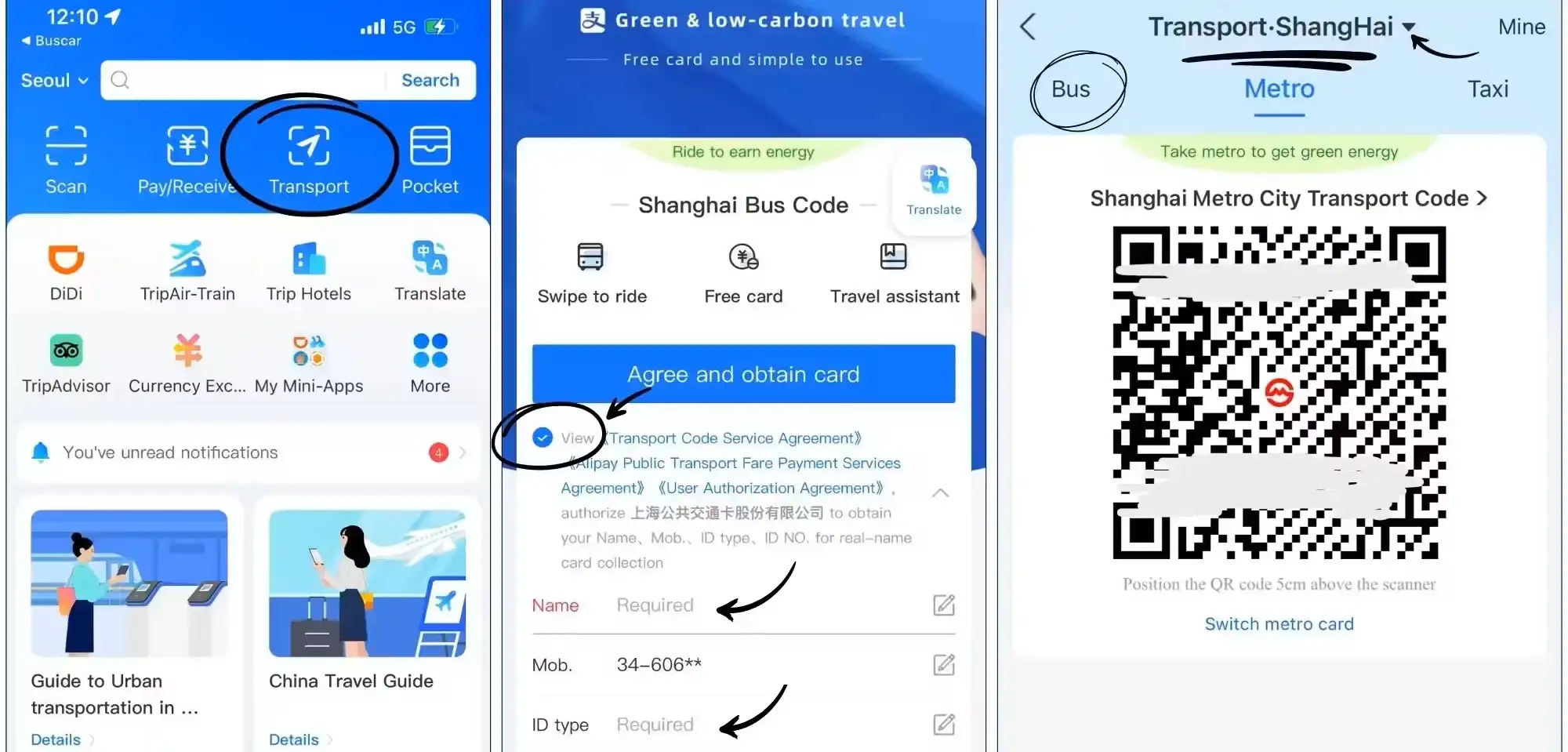
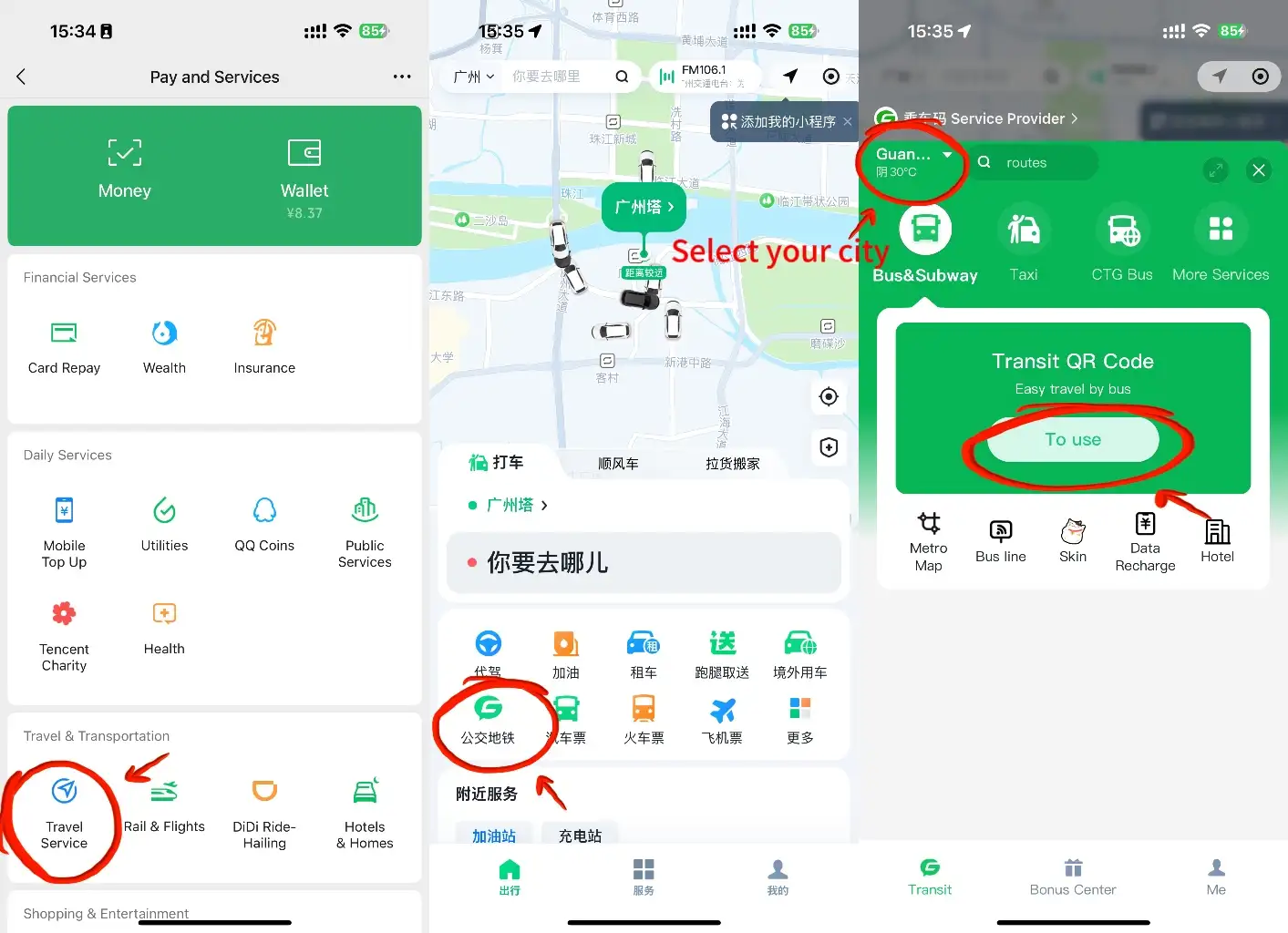
- Subways and buses: Both apps offer transit QR codes via mini-programs with nearly identical city coverage. Alipay’s activation process is simpler and more straightforward for international users.
- Ride-hailing (e.g. DiDi): Both platforms have functional mini-programs for booking rides. Alipay has a higher payment success rate for foreign-issued cards, while WeChat has a more integrated mini-program ecosystem.
- Taxis and private car services: Most drivers accept both payment methods, but some individual drivers and small operators only have WeChat QR codes available.
Recommendation: Use Alipay as your default transport payment method, and keep WeChat as a backup for cases where Alipay is not accepted.
Alipay vs WeChat Pay: Which to Use for Shopping?

- Large malls, chain stores, and scenic spots: Almost universally accept both payment methods. Alipay delivers more consistent success with foreign cards, especially for larger purchases.
- Alibaba ecosystem platforms (Taobao, Tmall, 1688, etc.): Alipay is the official and native payment channel, with full functionality and seamless integration — it is the clear and only optimal choice here.
- Non-Alibaba e-commerce (e.g. JD.com): JD.com began rolling out Alipay support in late 2024, but coverage remains partial as of 2026 — many merchants and product categories still do not accept Alipay. WeChat Pay remains the more reliable mobile payment option for JD.com.
- Small shops and street vendors: Both QR codes are very common, but it is not unusual for a vendor to only support one. Having both apps installed ensures you will never be unable to pay.
Alipay vs WeChat Pay: Dining & Restaurant Scenarios
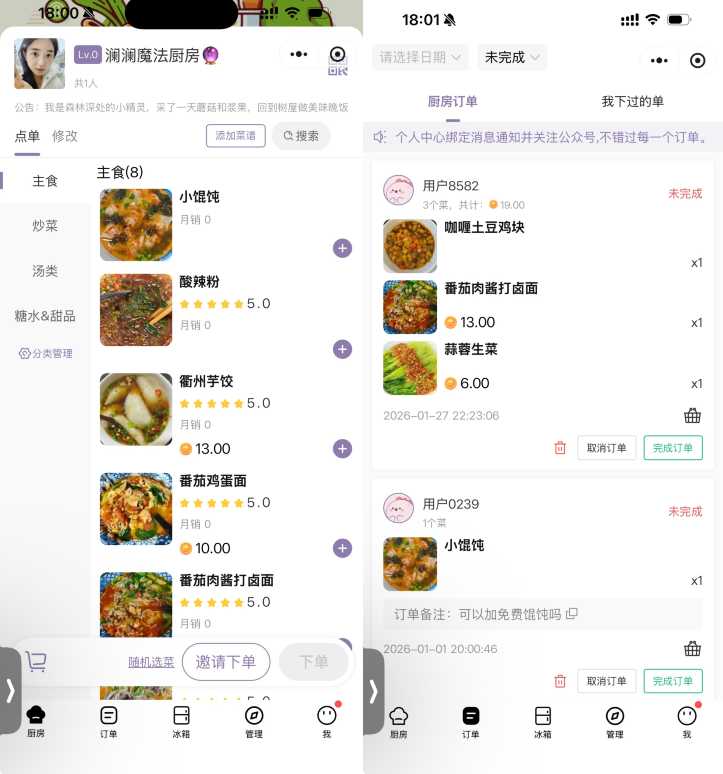
Large chain restaurants and hotel restaurants almost always accept both payment methods with no difference at checkout. However, the vast majority of casual and mid-sized restaurants in China use QR code table ordering. Over half of catering merchants nationwide use mini-programs for ordering, and almost all of these systems are built as WeChat Mini Programs. This means you will need WeChat to scan the table QR code, view the menu, and place your order. For payment, you can either complete the transaction directly in WeChat, or ask the waitstaff if you can pay separately with Alipay at the counter.
See all attractions
 833961 booked




How to Use Alipay in China for Tourists
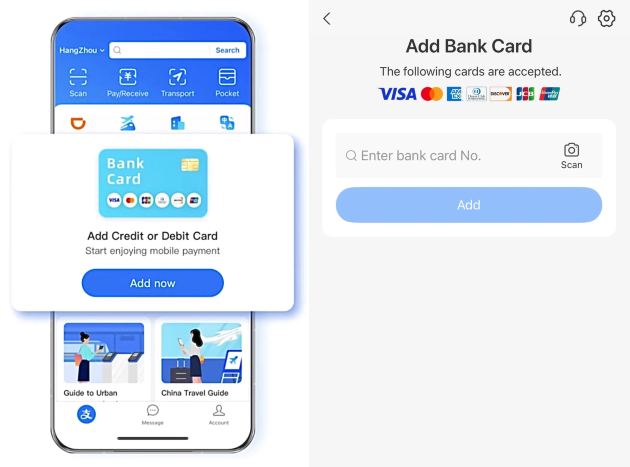
- Pre-departure setup Download the Alipay app, select your home country/region, and register with your international mobile number. Navigate to identity verification, choose “Passport” as your ID type, upload a clear photo of your passport information page, and complete facial recognition. Next, go to the Bank Cards section to add your international Visa or Mastercard credit card (Visa is more widely reliable) and complete the card issuer’s verification step.
- How to pay
- Offline in stores: Tap the “Pay” button on the homepage to display your payment QR code for the merchant to scan. You can also tap “Scan” to scan the merchant’s QR code and enter the amount yourself.
- Online purchases: Select Alipay at checkout on supported platforms; you will be redirected to the Alipay app to confirm and complete the payment.
- Important notes Always turn off VPN before making payments, as IP anomalies will trigger risk control blocks. Transactions under RMB 200 are typically exempt from the 3% foreign card transaction fee, so you can ask merchants to split larger bills to reduce extra costs. If you run into verification failures or payment errors, contact human customer support through the Help Center and submit your passport for manual review.
How to Use WeChat Pay in China for Tourists
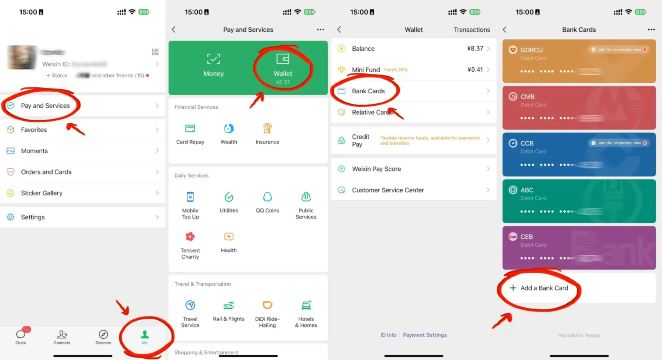
- Pre-departure setup Download the WeChat app, register an account with your mobile number, and complete SMS verification. Go to Me > Services > Wallet > Bank Cards to add your international Visa or Mastercard, and follow the prompts to complete identity verification (you may use your passport). Note that you may encounter more verification steps than with Alipay.
- How to pay
- Offline in stores: Access your payment code via Services > Receive/Pay, or use the main “Scan” function to scan merchant QR codes.
- In-mini-program payments: Scan QR codes on restaurant tables, shop entrances, or service kiosks to open WeChat Mini Programs. You can order food, book tickets, or access services directly inside the mini-program and pay instantly via WeChat Pay.
- Important notes WeChat Pay has much stricter risk control. Frequently switching devices, locations, or using a VPN will very likely trigger account restrictions or daily spending limits (commonly RMB 2,000 per day for foreign users), and there is almost no way for short-term visitors to increase these limits or unlock accounts easily. Some merchant QR codes only work with mainland Chinese bank cards, so foreign cards may be declined without explanation.
Payment Fails in China? What to Do if Alipay or WeChat Pay Is Not Working
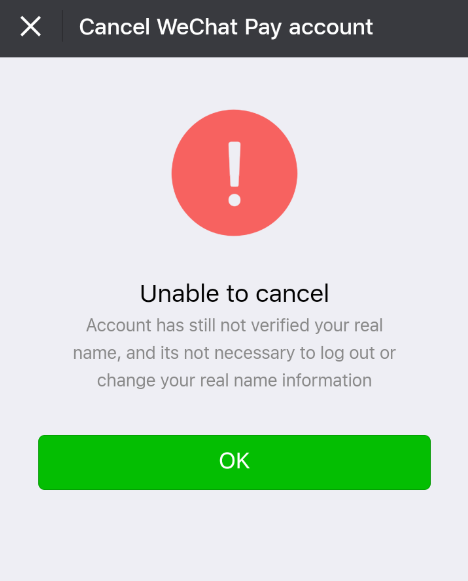
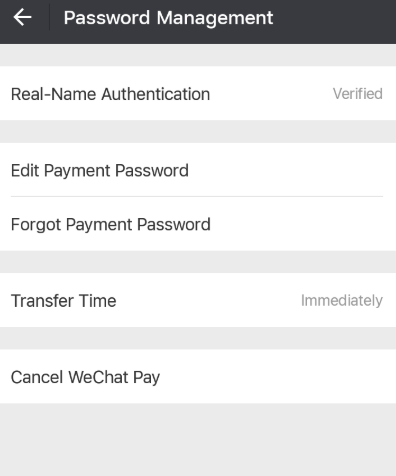
When a payment fails at checkout, the issue usually stems from identifiable technical triggers. Below are the root problems paired directly with their actionable fixes.
- Disable VPN before paying: Both payment systems flag VPN IPs as high risk. Turn off all VPN apps before making a payment. If you use a travel eSIM with built-in VPN routing, switch to local WiFi or disable the VPN feature for payment apps.
- Carry at least two different cards: Prioritize a Visa card for best compatibility, and bring a second card (ideally Mastercard or another issuer) as a backup.
- Keep some RMB cash handy: It is illegal for merchants in China to refuse cash. Having a small amount of cash on hand will cover emergencies, remote areas, or sudden account restrictions.
- Match names where possible: Try to use a bank card where the name matches your passport name as closely as possible. Long names or multiple surnames can cause automatic verification failures.
- Do not share one card across multiple accounts: Binding the same bank card to multiple Alipay/WeChat accounts will trigger risk controls and cause payments to fail.
🔥[Discount] Best China Hotel Recommendations
Top Shanghai Hotels
Top Beijing Hotels
Top Guangzhou Hotels
See All Hotels























What to Prepare for a Trip to China?
- Visa & Entry Tips China’s 240-hour visa-free transit policy now covers 54 countries, incl. the US, UK, Canada, and Brazil, allowing up to 10 days during layovers. Learn more about China Entry Tips to land in China easily.
- Getting Connected VPNs are vital for accessing Google, WhatsApp, Instagram, etc in China. Set one up before arriving. China eSIMs are the easiest option for data and bypassing restrictions. Pocket Wi-Fi devices work best for group but are pricier and require pickup/return.
- Money Exchange & Tax Refunds Exchange money in China banks (better rates than airports). ATMs accept foreign cards, but notify your bank first. For tax refunds, spend over ¥500 at stores with a "Tax-Free" sign. Keep receipts and get forms stamped at customs before departure.
Must-Have Apps in China
- China Payment Apps Forget cash. Chinese use Alipay (I like it better) or WeChat Pay to pay for everything in China. Scan a QR code at noodle stalls, metros, even temples. Link your foreign Visa/Mastercard before landing.
- China Map Apps Amap (Gaode Map) & Baidu Map (limited English) is what locals use, with real-time navigation, metro/bus routes, and traffic updates. Apple Maps does a good job too if you're already an IOS user.
- China Transport Apps Street taxis are cheap, but drivers rarely speak English. Use China Taxi App like DiDi (China’s Uber)—set your destination in English, pay by Alipay.
- China Travel Apps 15+ China trips taught me: Use Trip.com. It's the best English app for booking China trains/flights/hotels + finds Trip.com deals.
- China Dating Apps Locals use Tantan (China’s Tinder) and Momo. WeChat’s “People Nearby” works too, but expect language barriers unless your Mandarin’s decent.
- China Food App Use Meituan (also helps find nearby restaurants) or Ele.me for food delivery—both have English mode. No English menu in restaurants? Scan the QR with Alipay's translator.
FAQs about Alipay vs WeChat Pay
-
Should I use Alipay or WeChat Pay in China?
-
Can US citizens use WeChat Pay?
-
How can I avoid the 3% transaction fee on Alipay?
-
What is the best app to pay in China as a tourist?
-
What is the difference between Alipay and AlipayHK?
-
Do I need both Alipay and WeChat Pay, or is one enough?
Disclaimer: This article has been provided by an individual contributor or third party platform. If there is any discrepancy regarding the copyright, please contact us directly and we will delete the content immediately.
Popular searches
-
Air Travel Guide
-
Latest Flight Deals
-
Popular Flight & Hotel Packages
-
Getting Around
-
eSIM/SIM card
- Tokyo Flight and Hotel
- Koh Samui Flight and Hotel
- Hong Kong Flight and Hotel
- Langkawi Flight and Hotel
- Sanya Flight and Hotel
- BALI Flight and Hotel
- Paris Flight and Hotel
- London Flight and Hotel
- Macau Flight and Hotel
- Barcelona Flight and Hotel
- Sharm El Sheikh Flight and Hotel
- Phuket Flight and Hotel
- Osaka Flight and Hotel
- Dubai Flight and Hotel
- Istanbul Flight and Hotel
- Shanghai Bike Rental
- Santorini Cultural Experience
- Guangdong Day Tours
- Mongolia Activities
- Chiang Rai Day Tours
- Hainan Sports & Adventure
- Zurich Day Tours
- Food & Drink in Sri Lanka
- Xiamen Day Tours
- Peru Activities
- Tokashiki Day Tours
- Xi'an Activities
- Mongolia Day Tours
- Taipei Activities
- Morocco Diving
- Gold Coast Day Tours
- Keelung Classes