

Traveling to China brings unique payment and currency exchange experiences different from most Western countries. Knowing how and when to use cash and mobile payments can help you avoid unnecessary fees and travel hassles.

Do You Need to Exchange Money in China?
Credit: China Daily
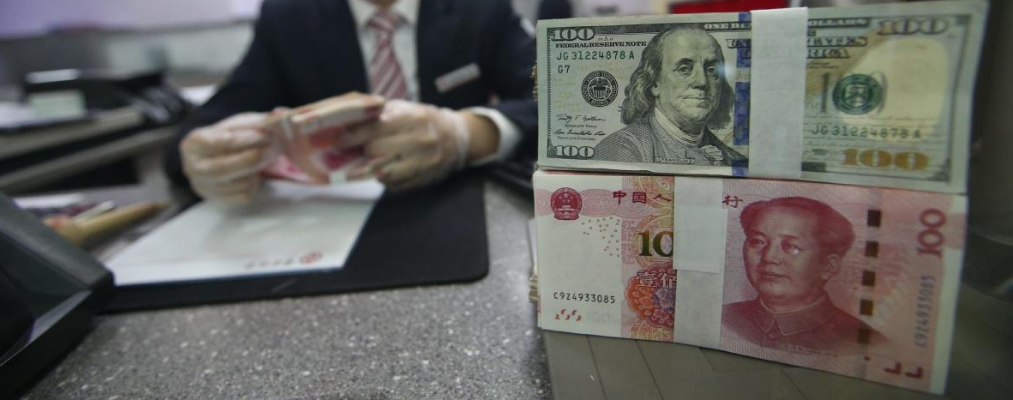
Yes, but the amount depends entirely on your travel destinations. China is overwhelmingly cashless, with Alipay and WeChat Pay dominating daily transactions. Even so, physical cash remains useful for remote rural areas, tiny street vendors, or emergencies when foreign bank cards fail or mobile payment accounts encounter temporary technical issues.
When You Need Cash
- Rural areas: A small number of remote village shops and family-run stores still do not support digital payments, though coverage has expanded massively in recent years.
- Street food & small local stalls: Only a tiny minority of independent vendors accept exclusively cash or domestic-only QR codes; cash-only scenarios are extremely rare across modern China.
- Emergency backup: Foreign tourists’ Alipay or WeChat Pay accounts may face temporary function restrictions due to cross-border account verification rules, making cash a reliable backup option.
Practical strategy: Exchange moderate cash at formal banks or ATMs for rural travel, rely fully on digital payments in urban areas, and keep a small cash reserve for emergencies.
Best Ways to Get CNY
- Major banks (Bank of China, ICBC, China Construction Bank, Agricultural Bank of China) — best rates, formal and secure
- Large-bank ATMs — pick machines with Visa/Mastercard logos for reliable CNY withdrawals
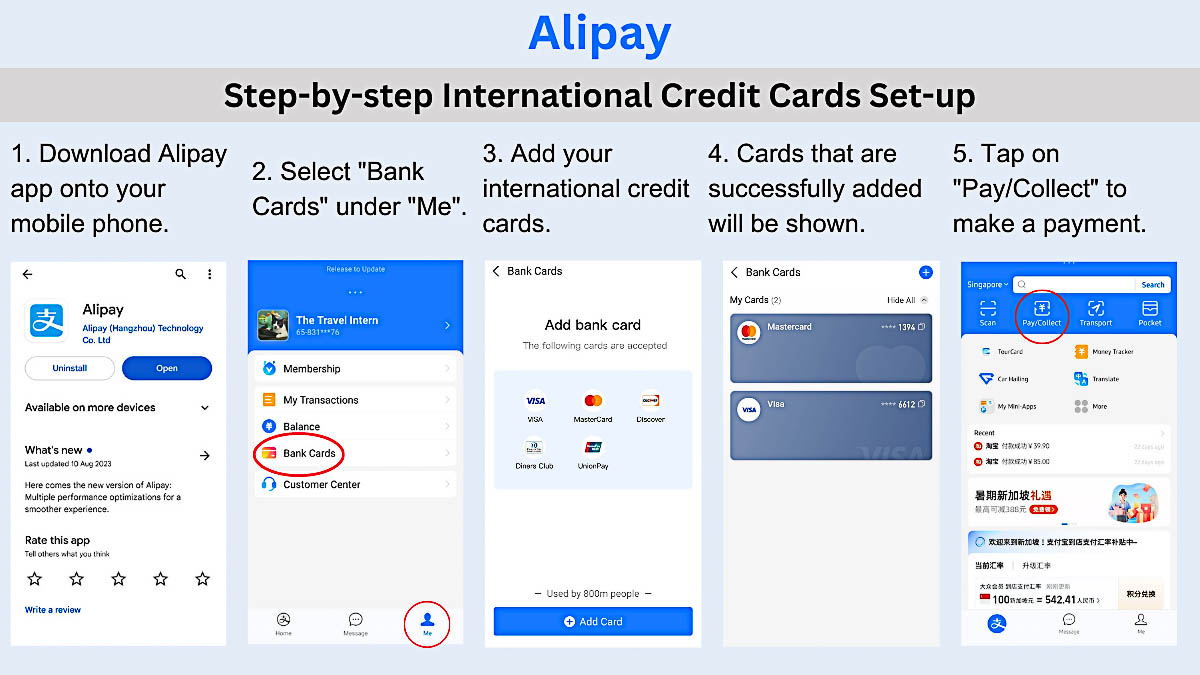
- Digital Wallets (Alipay/WeChat Pay) — link your valid foreign credit/debit cards for daily small and medium transactions
Where to Exchange Money in China

Credit: Wikipedia
Reliability ranking: Banks > Formal ATMs >>> Airport exchange counters > Hotel exchange services. Always carry your physical passport to avoid extra fees or failed transactions.
Banks = Your Best Option
Stick with state-owned major banks: Bank of China, ICBC, China Construction Bank, and Agricultural Bank of China. Authorized by Chinese financial regulators, they offer transparent, standardized exchange rates with zero hidden scams or unfair markups.
- Mandatory rule: A physical valid passport is required for all foreign exchange transactions for non-residents; no passport means no exchange service.
- Business Hours: Monday to Friday, 9:00 AM – 5:00 PM. Core branches in megacities (Beijing, Shanghai, Guangzhou, Shenzhen) offer partial weekend services with stable availability, not random or inconsistent.
ATMs = Most Convenient Daily Option
Urban ATMs operated by major banks support Visa and Mastercard and dispense CNY directly.
Pro tip: Confirm with your home bank in advance whether it charges international withdrawal or foreign transaction fees. Only use ATMs with clear Visa/Mastercard logos; avoid unknown, unbranded machines for safety.
Airport Exchange Counters = Poor Rates
Only use airport exchange services in urgent emergencies (e.g., immediate taxi fare upon landing). Major airport counters in Beijing and Shanghai are legitimate but offer significantly unfavorable exchange rates and high service fees, resulting in far less CNY for your foreign currency.
Hotels = Last Resort Only
High-end hotels may provide currency exchange services, but their rates are consistently worse than banks and ATMs. Only use this option when all banks are closed and your bank cards are declined.
A China eSIM allows seamless access to Google Maps, Instagram, LINE and other international apps immediately after landing, without cumbersome SIM card replacement or VPN adjustments.
Instead of juggling VPNs or hunting for SIM cards, China eSIM lets you stay connected to apps like Google Maps, Instagram, LINE and more from the moment you land.








How to Exchange Foreign Currency to CNY in China
Credit: the travel intern
For foreign tourists exchanging USD, EUR and other foreign currencies into CNY, only a valid physical passport is required. Stricter document rules and additional materials only apply to foreign residents, workers, or large-sum transactions exceeding the annual quota.
3 Main Ways to Get CNY
Method | Best For | Limits & Fees |
|---|---|---|
Bank Exchange | Large sums, optimal official rates | Zero commission fees (no 0.1–0.5% service charge; banks profit only from official bid-ask spreads). A currency declaration form is required for daily transactions exceeding USD 5,000 (updated from the outdated USD 5,000 threshold). |
ATM Withdrawal | Daily small cash needs | Daily withdrawal limit: typically ¥10,000–¥20,000 depending on the bank. No fixed domestic ATM fee; charges are determined solely by your overseas card-issuing bank. |
Alipay Digital Top-up | Daily digital transactions | After ID verification, Alipay foreign users have a single transaction limit of USD 5,000. Transactions follow a dynamic risk-control system, with an annual cross-border transaction quota of USD 50,000 for foreign card users. |
Step-by-Step Bank Exchange Process
Required Documents
- Valid physical passport: Mandatory for all non-resident exchange transactions with no exceptions.
- Declaration form: Only required if your single-day exchange amount exceeds USD 5,000 (or equivalent foreign currency).
Process Flow
- Visit any branch of the four major state-owned banks (Bank of China, ICBC, CCB, Agricultural Bank of China), which provide English-speaking staff and streamlined foreign exchange services.
- Submit your passport and completed declaration form (if applicable). For large-value transactions, simply state the transaction purpose (e.g., travel expenses, daily consumption).
- Receive CNY cash or deposit the funds into your Chinese bank account (if you hold one).
Additional Rules
There is no official daily transaction cap for bank exchange. Banks may conduct routine inquiries for unusually large sums (over ¥50,000) for anti-money laundering compliance.
ATM & Digital Payment Tips
ATM Best Practices
- Withdraw larger single amounts to minimize repeated overseas card fees.
- Only use major bank ATMs with visible Visa/Mastercard logos; avoid unbranded private machines.
Alipay & WeChat Pay for Foreigners
Both platforms fully support mainstream international Visa and Mastercard for binding and cross-border transactions. After downloading and real-name verifying the app, you can top up your wallet directly via your foreign card for daily shopping, dining and transportation payments.
Cash vs. Mobile Payments in China
Over 90% of daily transactions in China are completed via Alipay and WeChat Pay. Digital payments are fast, secure, and widely accepted across malls, restaurants, transportation, and most rural areas. Foreign visitors can bind international cards to both apps for mainstream consumption. Note that a tiny number of small local vendors do not support foreign-linked digital payments, so keeping a small cash reserve is recommended.
Scenarios Where Cash Is Still Needed
- High-value offline purchases: For luxury goods, art, jewelry and other big-ticket items, some merchants prefer cash or bank transfers due to digital payment transaction limits and verification rules.
- Traditional cultural customs: Physical red envelopes are still popular during Chinese New Year, weddings and other celebrations. Digital red envelopes are convenient but lack a traditional ceremonial feel, with no fixed ¥200 personal sending limit.
- Emergencies: Cash serves as a reliable backup when your phone runs out of power, mobile network fails, or digital payment accounts encounter temporary restrictions.
Should I Exchange Money Before Traveling to China?
It is not necessary to exchange large amounts of CNY in advance. Pre-exchanging a small amount in your home country offers landing convenience but comes with worse exchange rates and high fees at overseas airport kiosks. For USD, EUR and AUD holders, you will get far more favorable rates by exchanging in China.
Recommended strategy: Bring only a small emergency reserve of ~¥500 for immediate arrival expenses (taxi, temporary supplies), and complete most currency exchange or digital payment top-ups in China.
Pre-Exchange vs. In-China Exchange Comparison
Option | Pros | Cons |
|---|---|---|
Exchange Before Travel | Convenient for immediate arrival emergencies | Poor exchange rates, high service fees, unnecessary for USD/EUR/AUD holders |
Exchange In China | Optimal official rates, widespread ATMs and bank branches, flexible digital payment options | Passport required for bank transactions; minor cash needed for remote rural areas |
Chinese banks and formal ATMs provide standardized, favorable exchange rates. Urban areas have full ATM coverage supporting Visa/Mastercard, and digital wallets cover nearly all daily consumption scenarios. Cash is only a supplementary backup for rural travel and emergencies.
How to Exchange CNY for Foreign Currency in China
Credit: china.org
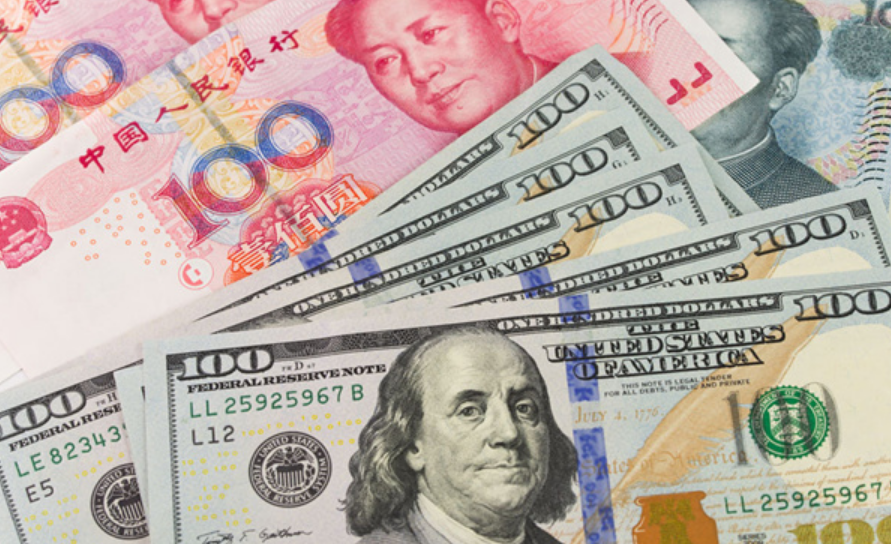
Foreign nationals and Hong Kong, Macao, Taiwan residents can exchange CNY for foreign currency via bank counters (online and mobile banking do not support this service for non-residents).
Core Required Documents
For transactions within the annual quota: Only a valid original passport (or Mainland Travel Permit for Hong Kong, Macao and Taiwan residents) is required. No work permits, tax records, salary slips or labor contracts are needed for standard quota transactions.
Key Official Rules
- Unified annual quota: All non-resident individuals enjoy a USD 50,000 annual convenient foreign exchange quota with no income-based limits. This quota applies equally to all foreign nationals, not only permanent residents.
- No USD 500 simplified threshold: The previous rule allowing document-free exchange under USD 500 is invalid. All formal quota transactions only require a passport.
- Large transactions (over USD 50,000/year): Additional supporting documents (e.g., overseas education certification, medical expense proof, legal income certificates) are required for quota-exceeding transactions.
- Recurring salary-based exchange: Banks may waive repeated document submissions for verified regular salary exchange clients.
For authoritative details, refer to official guidelines issued by the State Administration of Foreign Exchange (SAFE).
Understanding Chinese Currency (CNY/RMB)
Credit: Wikipedia
What is the Chinese Yuan (Renminbi)?
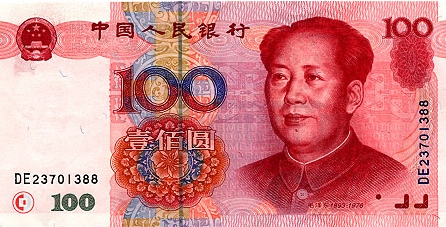
Chinese Yuan (CNY), officially named Renminbi (RMB), is the legal tender of the People’s Republic of China. Its currency symbol is ¥, and the international currency code is CNY. Meaning “the people’s currency”, RMB serves all domestic consumption scenarios, from street vendor purchases to luxury retail shopping.
Banknotes & Coins Denominations
Type | Denominations & Usage Notes |
|---|---|
Banknotes | ¥1, ¥5, ¥10, ¥20, ¥50, ¥100. The ¥2 banknote is still legal tender but rarely circulated in daily use. |
Jiao (Fractional Unit) | ¥0.1 (1 jiao), ¥0.5 (5 jiao). These small fractional denominations are seldom used in modern transactions. |
Coins | ¥1, ¥0.1, ¥0.5. The ¥1 coin is the most commonly used coin in daily life. |
Check Live CNY Exchange Rates

Use these trusted platforms to track real-time CNY exchange rates against USD, EUR and other global currencies:
- Wise: Provides real-time mid-market rates with low cross-border transfer fees
- XE: Reliable for live rate tracking, historical data and customized rate alerts
- Major Chinese Banks: Bank of China, ICBC and other state-owned banks publish official real-time exchange rates with standardized transparent pricing
Factors Influencing CNY Exchange Rates
The CNY exchange rate is jointly affected by domestic regulatory adjustments and global market trends:
- Central bank regulation: The People’s Bank of China implements targeted adjustments to stabilize the RMB exchange rate and maintain domestic economic stability.
- Trade policies: International trade policies, import and export volume fluctuations, and bilateral trade relations impact CNY market value.
- Global market trends: USD index fluctuations, global inflation levels, and international geopolitical situations also drive short-term and medium-term CNY rate changes.
Other Things to Consider for China Travel
[10% Off] Best China Hotel Recommendations
 NO.1
NO.1


























China Money Exchange FAQs
-
Is it better to exchange money before or after arriving in China?
-
Can I use US dollars directly in China?
-
What is the best place to exchange money for China?